
Reviewed · NUREMBERG TOURS
Nuremberg: Medieval Dungeons Guided Tour
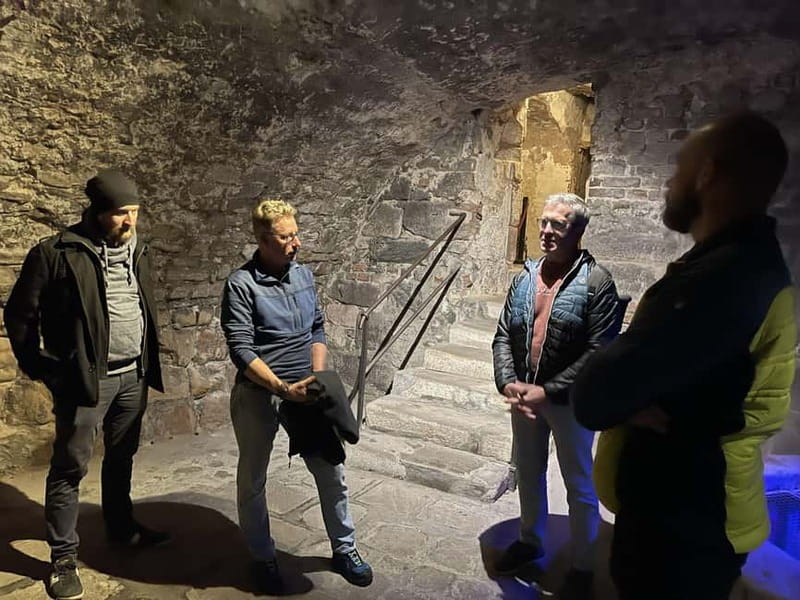
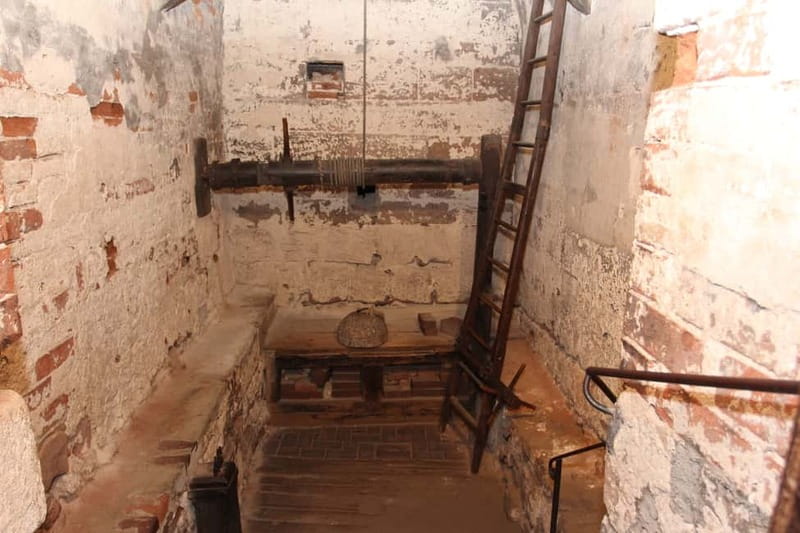
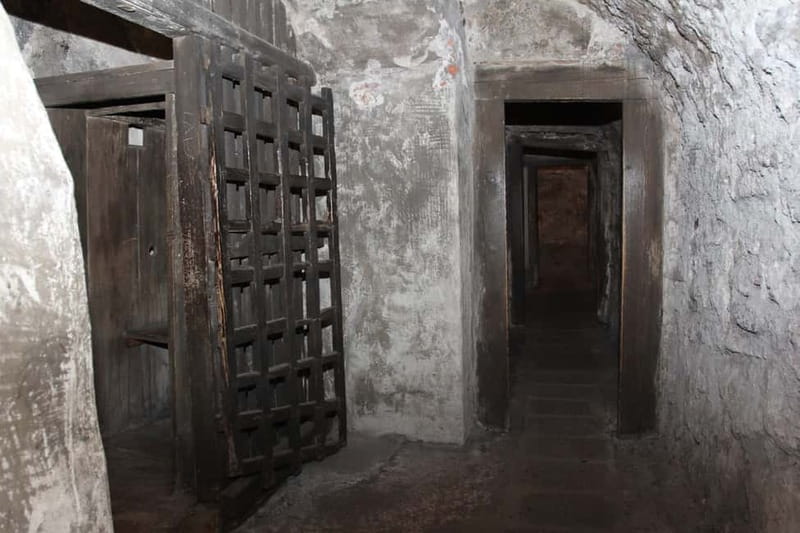
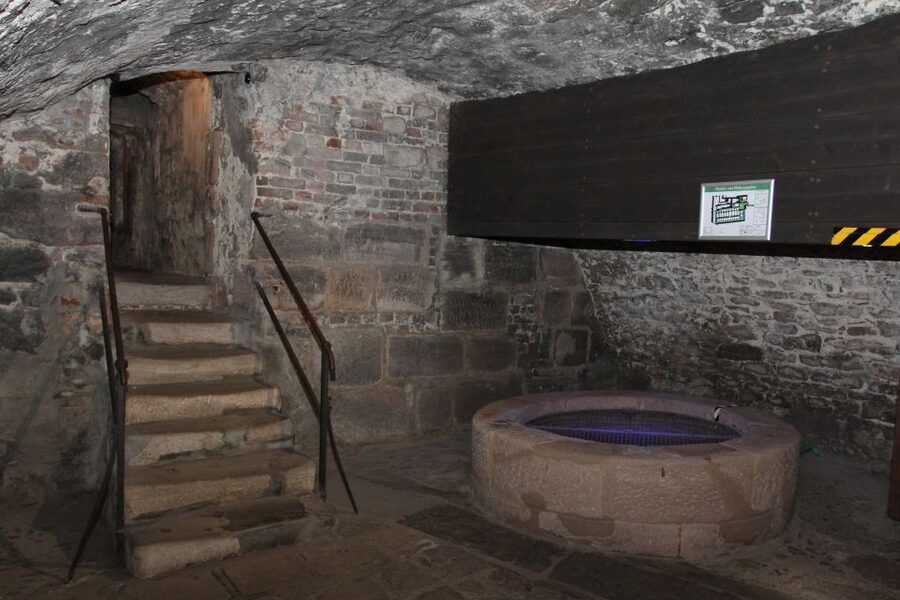
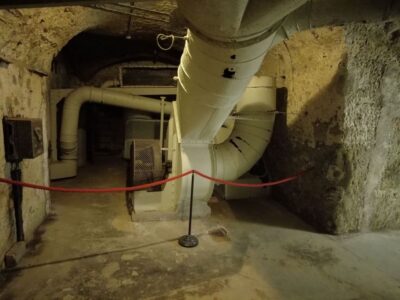
The most sobering part of this tour is the setting itself: you walk through the vaulted cellars beneath Nuremberg’s Old City Hall, where prisoners were held and questioned from the fourteenth century. Twelve small cells, mostly original furnishings, and a preserved torture chamber make medieval justice feel uncomfortably close.
I like two things here. First, the tour is short enough to fit neatly into a day of sightseeing. Second, the guides bring more than gruesome tales. Guides such as Nick, Wolfgang, Alex, Mariana, and Dejan Grasser have been praised for clear storytelling, humor, and thoughtful answers about medieval law and daily life.
The tradeoff is that this is a compact historical site, not a large museum. You see only a handful of rooms, and the cramped stairs and cells are unsuitable for people with mobility impairments or claustrophobia. Children under 10 are not admitted, and the subject matter is genuinely grim.
Key points about Nuremberg’s medieval dungeons
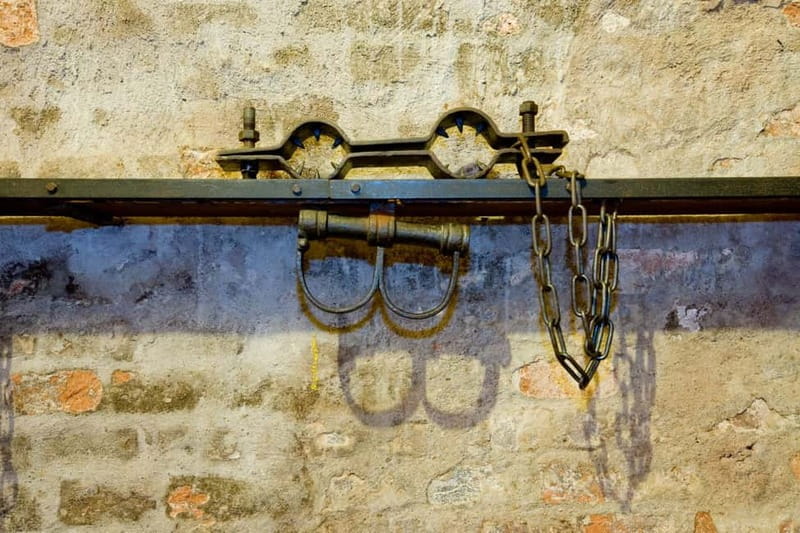
- Twelve cramped cells: Walk through the small underground rooms where prisoners awaited judgment.
- A mostly original setting: The vaulted cellars and furnishings give the tour a direct physical connection to the past.
- Medieval justice explained: Learn why prisoners could be tortured until they confessed, even when they might not have been guilty.
- A short, useful stop: The 45-minute length makes this easy to pair with Old Town sightseeing.
- English and German tours: Live guides are available in both languages, with clear English praised by many participants.
- A serious experience with some humor: Good guides balance the grim material with warmth and occasional jokes.
Entering the cellars beneath Old City Hall
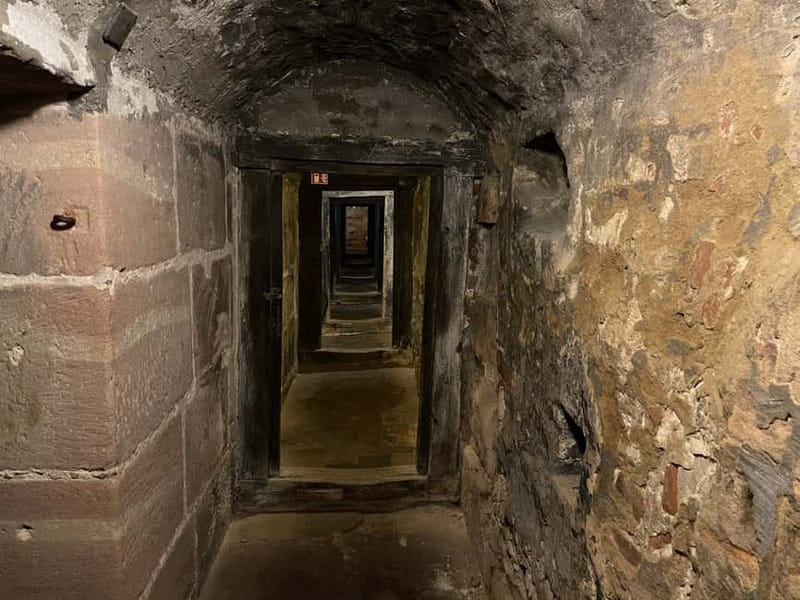
Meet outside the Altes Rathaus, near the middle entrance, and wait outdoors before the tour begins. The location is central, so you can place this visit between other sights in Nuremberg’s Old Town without setting aside half a day.
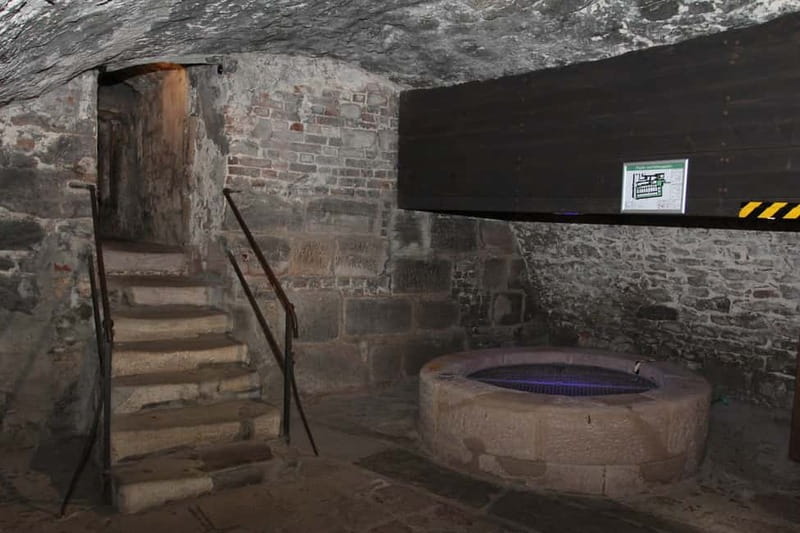
The entrance leads below street level into vaulted cellars. That change matters. Above you is the grand civic building; below you is a practical prison built for confinement, questioning, and punishment. The contrast gives the tour much of its force.
You will not be entering a reconstructed theme-park attraction. The rooms are presented as historic spaces, with much of the furnishing described as original. The result is plain and severe. Stone, low ceilings, tight passages, and small cells do more work than elaborate decoration could.
Wear warm clothing. Underground rooms can feel cool even when the weather outside is mild. You should also bring a charged smartphone, as this is listed among the items to bring. Food and drinks are not allowed inside.
A few more half-days in Nuremberg worth comparing
- Nuremberg: City Tour with the Bimmelbahn Train
★ 4.4 · 2,475 reviews - Nuremberg: Old Town Guided Walking Tour
★ 4.6 · 2,416 reviews - Nuremberg: Tunnels and Secret Passages in the City Wall Tour
★ 4.8 · 2,334 reviews
What the twelve cells reveal
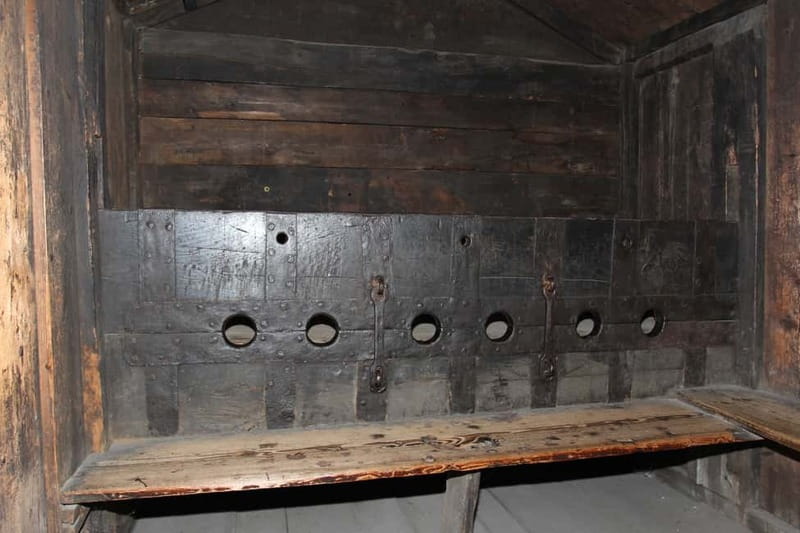
The route takes you through twelve small cells. Do not expect broad galleries or long rows of exhibits. Each room is compact, and the value comes from understanding how the whole prison functioned rather than from seeing a large number of objects.
These were remand cells, used from the fourteenth century for prisoners awaiting judgment. That detail is important. The people held here were not simply serving a fixed sentence. They were confined while officials questioned them and tried to establish guilt.
The guide explains what that meant in practice. A prisoner might remain in the dungeon until confessing, whether or not the confession was true. Medieval authorities treated confession as central to justice, and torture could be used to obtain it.
I find this part more useful than a simple list of punishments. It shows how a legal system can look orderly on paper while giving frightened officials and judges enormous power over helpless people. You begin to see the dungeon not only as a place of pain, but also as part of a wider system of law, suspicion, and social control.
The small size of the cells helps you picture the lack of privacy and comfort. You are not asked to imagine a spacious prison block. You move through tight rooms where confinement itself was part of the punishment.
The torture chamber and medieval justice
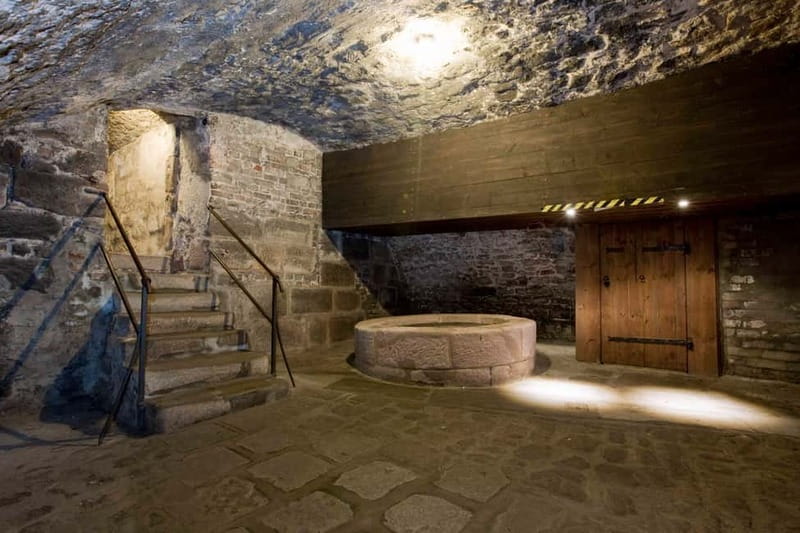
The torture chamber is the tour’s most difficult stop. You will hear accounts of torture and the methods used during the Middle Ages. The presentation is intended to explain what happened, not to turn suffering into entertainment, but the material can still be disturbing.
The central question is how medieval authorities tried to find the truth. The grim answer was often physical coercion. A person could be held until confessing, with the confession treated as proof of guilt. The tour makes clear why being thrown into a dungeon could amount to a death sentence.
You should come prepared for descriptions of cruelty. If you are sensitive to graphic subjects, the experience may be too strong. The information is delivered as part of the site’s legal and social context, but the setting makes it feel immediate.
At the same time, the tour is not presented as 45 minutes of uninterrupted horror. Strong guides add explanation, answer questions, and sometimes use restrained humor to help the group handle the material. Alex is praised for balancing seriousness with humor, while Nick is noted for telling gruesome stories without making them overwhelming.
That balance is one of the tour’s best features. A completely solemn presentation could become heavy. A jokey presentation would feel careless. The better guides keep the tone respectful while making the subject easier to follow.
Guides who make the short tour work
The quality of the guide matters here because the physical route is small. You are not spending hours examining dozens of displays. The guide supplies much of the context and connects the cells to Nuremberg’s medieval justice system.
Named guides praised for their presentation include Nick, Wolfgang, Alex, Mariana, Dejan Grasser, Dimitri, and Hannes. You should not assume you will receive a particular guide, but these names give you a sense of the standard to hope for: clear English, good pacing, strong storytelling, and a willingness to answer questions.
Several guides are described as funny without losing sight of the subject. That is useful in a place like this. The humor is not the point of the tour, but it can keep the experience from becoming a dry lecture or an exhausting catalogue of punishments.
English-language communication is generally an important part of the experience for international visitors. The activity is offered in English and German, and clear spoken English has been singled out as a strength. If you have a question about the legal system, prisoner treatment, or the dungeon’s operation, ask it. The guide-led format allows the visit to go beyond a fixed script.
The supplied details also refer to an audio guide, while the booking information describes a live guide in English or German. If the distinction matters to you, confirm the format and language when selecting a time. Either way, bring a charged smartphone as requested.
Same city, a completely different kind of day:
- Nuremberg: Walking Tour of Former Nazi Party Rally Grounds
★ 4.7 · 1,665 reviews - Medieval Tour in Nuremberg in Spanish
★ 5.0 · 1,374 reviews - Nuremberg: Historischer Kunstbunker WWII Art Bunker Tour
★ 4.8 · 921 reviews - Nuremberg: PLAYMOBIL®- FunPark
★ 4.7 · 863 reviews
Why the 45-minute length is useful
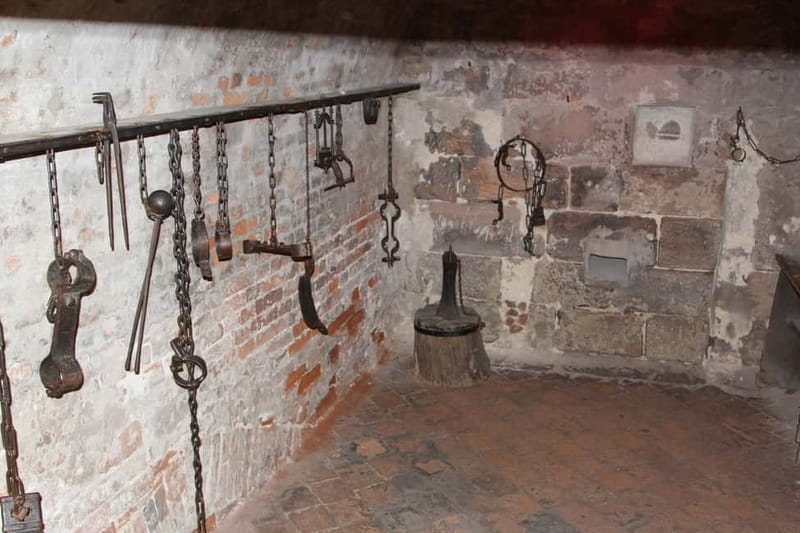
Forty-five minutes is a good fit for this site. The dungeons are compact, and a much longer visit could feel repetitive. You get the main rooms, the cells, the torture chamber, and the historical explanation without giving up a full morning or afternoon.
I would schedule it alongside a broader walk through Nuremberg’s Old Town. The meeting point at the Old City Hall makes that easy. You can see the civic center above ground, then spend less than an hour considering what happened below it.
The short duration also helps on a rainy day. One participant specifically found the tour a good choice in wet weather, and the underground setting keeps you out of the rain for the visit. Still, do not treat it as a casual shelter. The content is serious, and the rooms can feel confined.
Allow a little flexibility around the start time. The stated duration is 45 minutes, though the experience may run closer to 45 to 60 minutes depending on the pace and questions. The tour returns to the meeting point at the end.
Is the $11 price fair?
At about $11 per person, I consider this a good-value historical stop, provided you understand what you are buying. You are paying for access to a small but unusual historic site and for an explanation that gives the rooms meaning.
The price is especially fair if you value guided interpretation. Without context, twelve cramped cells and a torture chamber would tell only part of the story. The guide explains how remand worked, why confession mattered, what prisoners endured, and how medieval punishment fit into the city’s legal system.
There is one reasonable reservation. If you expect a large museum filled with instruments, displays, and many separate rooms, the tour may feel short for the price. One visitor felt that the site offered only about four rooms worth seeing and expected more objects. That is a fair warning.
I would think of the fee as payment for a focused guided visit, not entry to a full museum. The experience earns its value through the setting and the storytelling. At $11, it is easy to recommend if the subject interests you, but less so if you prefer broad collections and self-guided browsing.
Who should take this tour?
This experience suits adults and older children who can handle grim subjects. One family enjoyed it with children aged 12 and 15, while the official restriction excludes children under 10. For younger teenagers, use your judgment. The stories involve torture and imprisonment, even when the guide presents them with care.
You should be comfortable with stairs, narrow spaces, and underground rooms. The activity is not suitable for people with mobility impairments or claustrophobia. A participant noted that the tour involved lots of stairs and cramped areas, so this is not a minor detail to overlook.
It is a strong choice for you if you enjoy:
- Medieval law and punishment
- Historic buildings with original features
- Short guided visits with a clear subject
- Nuremberg’s less polished and more troubling past
- Tours where storytelling matters as much as the objects on display
It is a weaker choice if you dislike enclosed spaces, want a cheerful family attraction, or expect an extensive collection of torture devices. You should also skip it if reports of torture would make the visit distressing.
Practical tips for a better visit
Wear a warm layer, even on a pleasant day. The underground rooms may feel chilly, and you will enjoy the tour more if you are not focused on staying warm.
Arrive at the Old City Hall’s middle entrance and wait outside. The meeting point is not described as an indoor check-in desk, so give yourself enough time to identify the correct entrance.
Bring a charged smartphone. Do not bring food or drinks into the dungeon.
If you want photographs, be ready to move with the group. One participant found the pace a little fast for taking many pictures. Listen first, then take photographs when there is a natural pause, rather than trying to document every cell.
Keep questions for the guide. The strongest part of this visit is the explanation of how medieval justice worked, including the idea that authorities could keep prisoners alive until they confessed. A question about that system will likely add more than another photograph of a stone wall.
Free cancellation is available up to 24 hours before the tour for a full refund, and you can reserve now and pay later. Those terms are useful if your Nuremberg schedule is still shifting.
Should you book Nuremberg’s medieval dungeons?
Book it if you want a short, atmospheric look at medieval justice in the actual cellars beneath the Old City Hall. The original setting, twelve cells, and torture chamber give the tour a strong sense of place, while a good English or German guide turns the visit into more than a walk through dark rooms.
Skip it if you need step-free access, dislike tight spaces, or want a large museum with extensive exhibits. The site is small, and the subject is grim.
For most history-minded visitors, the $11 price and 45-minute length make this an easy addition to an Old Town day. Go in expecting a compact, serious lesson in crime and punishment, not a sprawling attraction, and you are likely to find it worthwhile.
FAQ
Where does the tour begin?
Meet outside Nuremberg’s Old City Hall, or Altes Rathaus, near the middle entrance.
Where does the tour end?
The activity ends back at the meeting point outside the Old City Hall.
How long does the tour last?
The stated duration is 45 minutes. The experience may take approximately 45 to 60 minutes depending on the pace.
What languages are available?
The tour is available in English and German.
Is there a live guide?
The booking information lists a live tour guide in English or German. The activity details also refer to an audio guide, so confirm the exact format when checking availability if this is important to you.
How much does the tour cost?
The listed price is $11 per person.
What will I see inside the dungeons?
You will walk through twelve small cells, see mostly original furnishings, and visit the torture chamber in the vaulted cellars beneath the Old City Hall.
Are children allowed?
Children under 10 are not allowed to visit the dungeons.
Is the tour suitable for people with claustrophobia?
No. The activity is not suitable for people with claustrophobia because the route includes cramped underground spaces.
What should I bring?
Bring warm clothing and a charged smartphone. Food and drinks are not allowed inside the dungeons.
Just added in Nuremberg
- Tour en español al Campo Zeppelin★ 5.0 · 8 reviews
- Stein: Public guided tour of the “Old Mine” museum★ 4.5 · 18 reviews
- “Rotes Bier” and “Blaue Zipfel”. A historical-culinary walk★ 4.4 · 190 reviews
- Nuremberg: Old Town Guided Tour By Bus★ 4.4 · 198 reviews
- Nürnberg Bachelor(ette) Party with Night PubCrawl★ 4.2 · 5 reviews
- Nuremberg: Bar and Club Tour with Free Shots and Free Entry★ 3.8 · 23 reviews
- Nuremberg: WWII Tour, Courtroom 600 and 3rd Reich Sites★ 4.6 · 94 reviews
- Nürnberg kennenlernen: Highlights in der Altstadt★ 4.7 · 189 reviews
Nuremberg Tours, compared.


Walking Tour of Former Nazi Party Rally Grounds
Read our review →


Browse the lists this tour appears in