
Reviewed · MUSEUMS
Berlin: “Pergamonmuseum. The Panorama” Exhibition Tickets
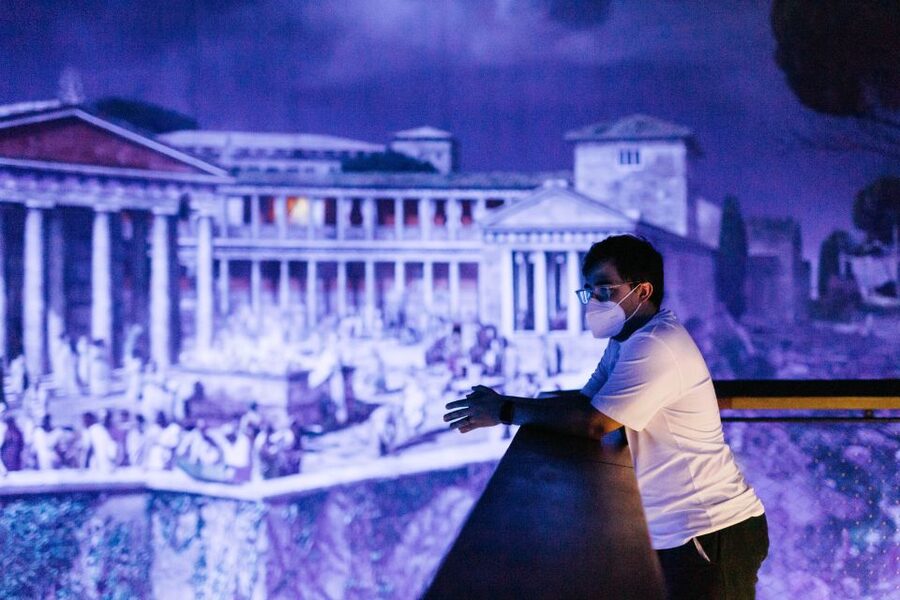
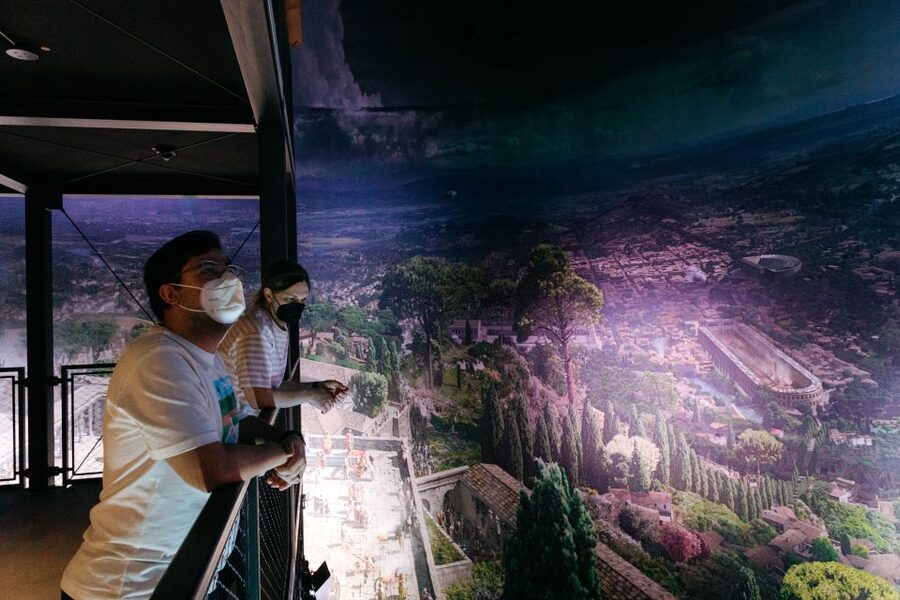
The best part of this Berlin experience is the sudden shift from museum display to ancient city. Inside, Yadegar Asisi’s 360-degree panorama places you above Pergamon in AD 129, with the Roman city, Acropolis, temples, streets, and daily life spread around you. Day turns to night through light and sound, and the scene feels far larger than a normal gallery.
I like the mix of real archaeology and modern theater. I also like the chance to see about 80 original works, including the largest section of the Telephos frieze held here and sculptures linked to Pergamon’s royal palace. The main drawback is the short ticket validity: it is valid for 15 minutes from first activation, even though you may want longer to take in the panorama properly.
Key points to know
- AD 129 in Roman Pergamon: See the city during the reign of Emperor Hadrian, when Pergamon was part of the High Roman Empire.
- A panorama built for slow looking: The auditorium includes steps and changing light, so a quick glance will miss much of the detail.
- Original ancient works nearby: About 80 objects include the Beautiful Head, the giant head of Herakles, royal portraits, and the Prometheus group.
- Music and lighting shape the visit: The change from day to night adds movement to a scene that is otherwise still.
- Separate from the Pergamonmuseum: This ticket admits you to Pergamonmuseum. The Panorama, not the main Pergamonmuseum or other Museum Island museums.
- Plan around access rules: Backpacks are not allowed, and wheelchair access is only partial.
Seeing Pergamon from above in AD 129
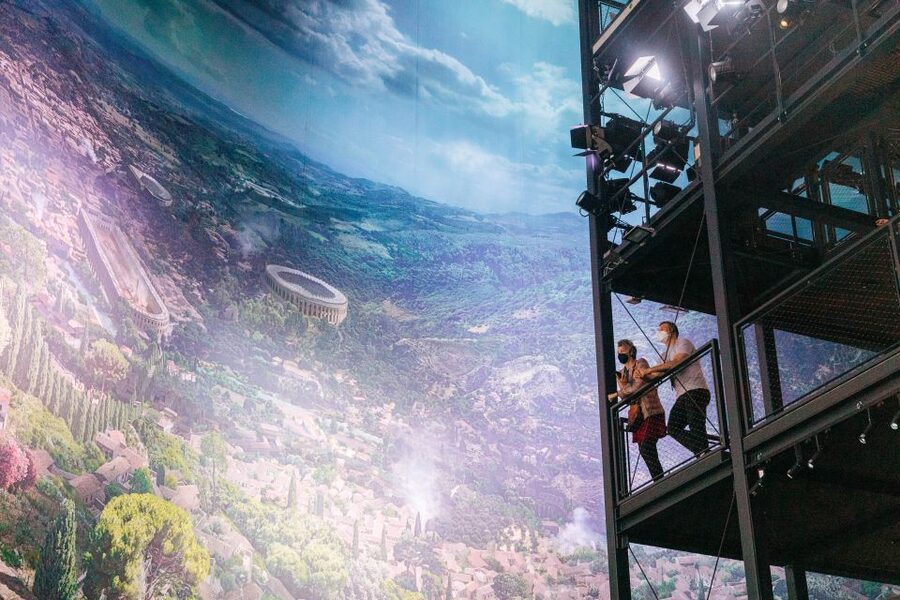
The exhibition takes you to the ancient city of Pergamon on the west coast of Asia Minor, in present-day Turkey. The chosen moment is AD 129, during the rule of Emperor Hadrian from AD 117 to 138.
That date matters. You are not looking at a vague ancient city assembled from assorted ruins. The presentation aims to show Pergamon during the High Roman Empire, when its earlier Greek and royal past still shaped the city but Roman rule governed its public life.
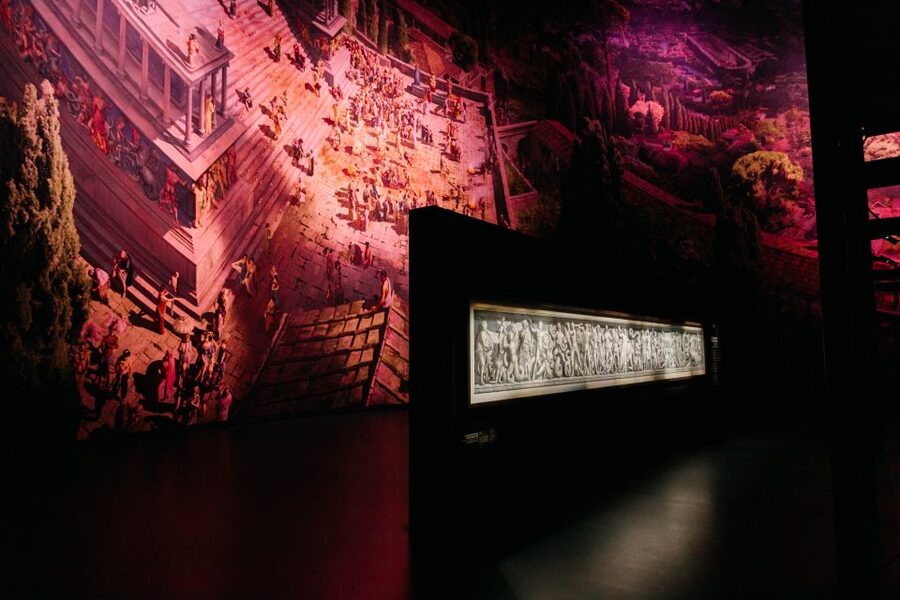
The panorama is the work of Iranian architect Yadegar Asisi. It uses a huge circular image rather than a flat wall, allowing you to look across the city in every direction. The reconstruction has been reworked with 40 new scenes, giving the picture more activity and more small points to study.
You may first notice the overall view: the Acropolis rising above the city, monumental buildings arranged across the hills, and the surrounding urban setting. Then your eye begins to move inward. Figures, architecture, and small episodes appear at different distances, and the experience rewards patience.
This is not a guided walking tour. You do not move through a sequence of reconstructed streets. Instead, you enter a purpose-built room and use the raised viewing area to look across the full scene. That makes the experience easy to fit into a Berlin day, but it also means the quality of your visit depends on how long you give it.
More Museum Tours in Berlin
- Berlin: Jewish Museum Berlin Entrance Ticket
★ 4.5 · 8,393 reviews - Berlin: DDR Museum Tickets
★ 4.3 · 3,443 reviews - Berlin: Natural History Museum Entrance Ticket
★ 4.6 · 3,382 reviews
Why the light and music matter
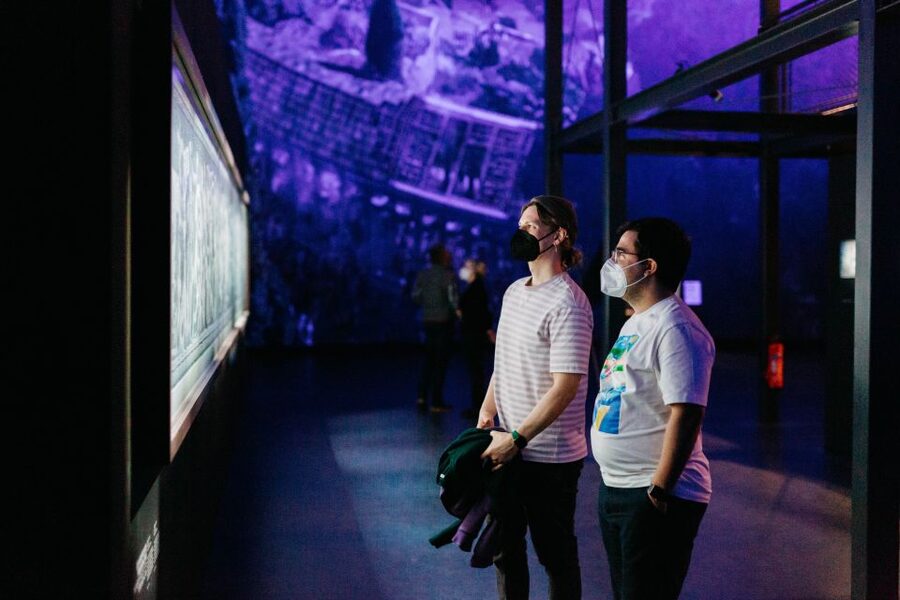
A static reconstruction can be hard to read. The lighting helps solve that problem. As the scene shifts from daylight to darkness and back again, Pergamon changes character without any physical movement in the image.
The music adds another layer. It is not simply background noise in a large room. It helps mark the change in mood and gives the panorama a sense of time passing. Several details in the presentation work together here: the scale of the city, the changing illumination, and the sound that fills the auditorium.
I would not treat this as a replacement for seeing ancient ruins outdoors. You do not feel the weather, distance, or rough stone underfoot. What you gain is a clear view of a complete city, something that surviving archaeological remains rarely provide.
Look carefully for small details in the panorama. Staff members in the room can point out hidden elements and visual surprises. This is useful because the image contains more than you can absorb in one quick circuit.
The original sculptures before the panorama
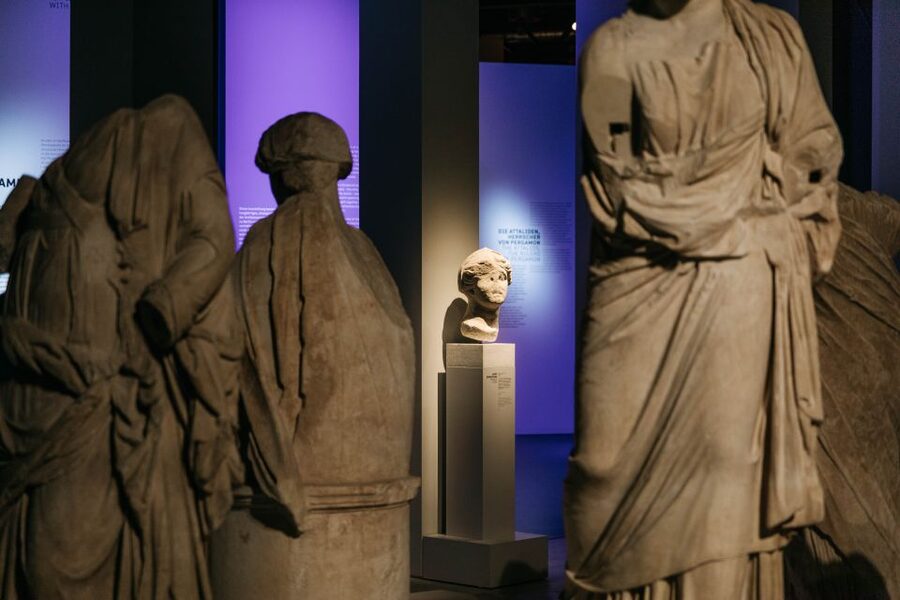
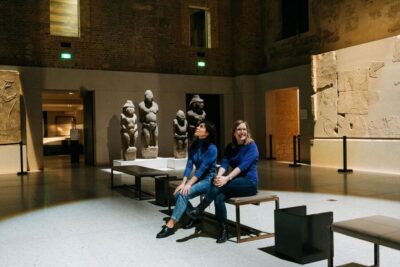
Before or around the main panorama, you can see roughly 80 important works from the Antikensammlung, Berlin’s collection of classical antiquities. These objects give the large city scene a physical anchor.
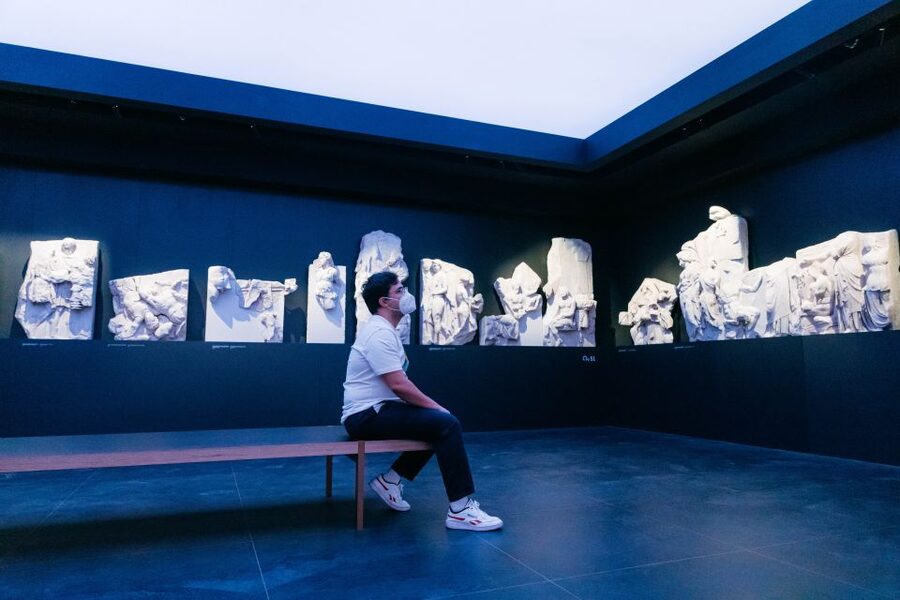
The collection includes the largest piece of the Telephos frieze from the Pergamon Altar. The frieze tells stories connected with Telephos, the legendary founder of Pergamon, and its scale helps you understand the ambition of the original altar.
For a limited period, the exhibition also presents the Pergamon Altar in its original architectural setting on the Acropolis. That context is one of the strongest reasons to visit. A detached fragment in a case can be impressive, but seeing the altar placed within a reconstruction of the hilltop city helps you understand how architecture, sculpture, and ceremony worked together.
Other works add faces and bodies to the city’s story. You can see the Beautiful Head, the giant head of Herakles, portrait sculptures of kings, the Archaistic Dancer from the palace, the Prometheus group, and Athena with a cross-strapped shield.
These pieces are not just a list of famous objects. They give you several ways into the exhibition. The royal portraits connect the city with its rulers. The palace sculpture points to court life and artistic taste. The Herakles head gives you a sense of heroic scale. Athena and the Prometheus group bring mythology and religion into the picture.
If you hurry straight to the panorama, you may miss this part. Give the sculptures enough time to register before you settle into the auditorium. The experience works best as a conversation between the objects and the city around them.
How to use the 15-minute ticket wisely
The ticket is valid for 15 minutes from first activation. That is the detail most likely to affect your planning.
Fifteen minutes is enough for a focused look, especially if you want a quick cultural stop between other Berlin sights. It is not much time if you want to study the sculptures, watch the full lighting sequence, search the panorama for small scenes, and listen to an audio guide.
One practical suggestion is to decide what matters most before you enter. If the full city view is your priority, go directly to the auditorium and take in the panorama first. If the original sculptures are the main reason you came, allow time for them before watching the large projection.
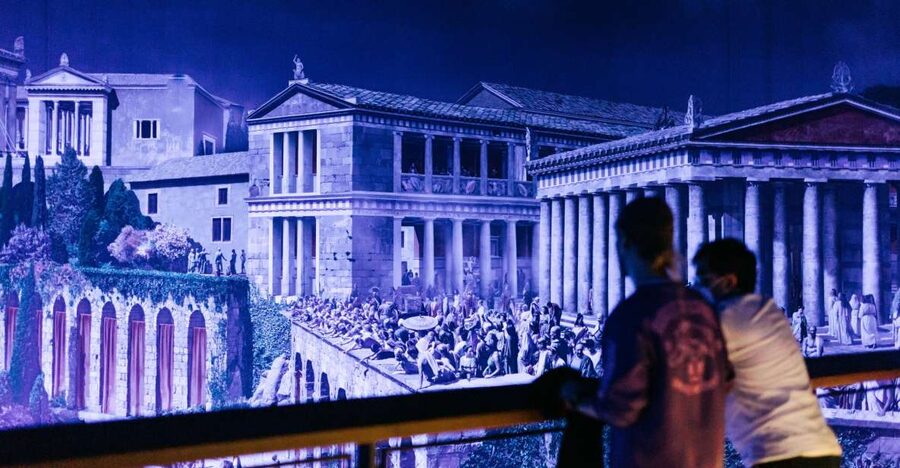
The viewing area includes steps, and one useful approach is to spend time at more than one level. A lower position can make the city feel close and immense. A higher position gives you a wider view of the Acropolis and the full circular composition.
One visitor recommends staying in the auditorium for at least half an hour and gradually using the steps. That advice makes sense artistically, though you should check the conditions of your own ticket because the stated validity is 15 minutes from activation. Do not assume that a short ticket window gives you unlimited time inside.
An audio guide is also available. It can help you understand what you are seeing, especially if ancient Greek and Roman art is not familiar territory. Still, do not let the commentary keep you from looking up. The panorama is visual first.
Same city, a completely different kind of day:
- Berlin: Reichstag, Dome and Government District Guided Tour
★ 4.7 · 18,288 reviews - Berlin: 1-Hour City Tour by Boat with Guaranteed Seating
★ 4.3 · 16,993 reviews - Berlin: Boat Tour Along the River Spree
★ 4.4 · 11,252 reviews - Discover Berlin Half-Day Walking Tour
★ 5.0 · 9,624 reviews
Finding the correct building near Museum Island
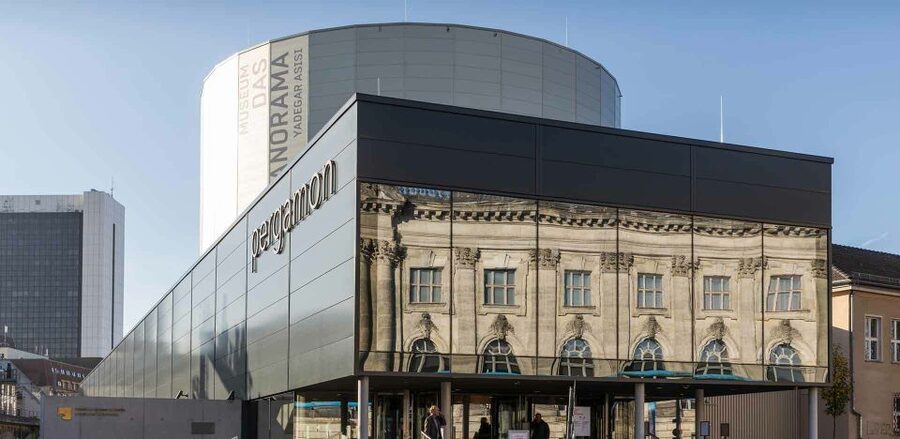
The address is Am Kupfergraben 2, 10117 Berlin. The venue is called Pergamonmuseum. Das Panorama.
This is important because the panorama is not the same as entry to the main Pergamonmuseum. Your ticket covers the panorama exhibition only. It does not include the Pergamonmuseum or other museums on Museum Island.
Use the exact venue name when finding your way. One practical warning is that signs for the Pergamon Museum can send you in the wrong direction or cost you time. Ask for Pergamonmuseum. Das Panorama rather than simply asking for the Pergamon Museum.
That distinction also matters when planning your museum day. You cannot assume that this ticket gets you into the other collections nearby. If you want to visit additional Museum Island museums, you need separate admission arrangements.
The experience is easy to pair with other central Berlin sights because it lasts a short time. The risk is arriving with an oversized plan and treating the panorama as a quick add-on without allowing any quiet looking. The exhibition is short, but it is not a throwaway stop.
A family-friendly history lesson with theatrical effects
This exhibition works well for families because it does not rely only on labels and display cases. The huge city image gives younger visitors an immediate sense of scale, while the light and music create a clear beginning, middle, and end to the presentation.
Adults with an interest in archaeology get more detail from the reconstructions and original works. Children may respond first to the changing day and night scene, the tall buildings, or the giant head of Herakles. Both approaches are valid.
The exhibition also helps explain why archaeological reconstruction matters. Much of an ancient city survives only in fragments. A panorama cannot give you every fact with certainty, but it can show how separate buildings and works of art once belonged to one urban setting.
Keep expectations in check. This is not an archaeological dig, and the panorama is an artistic reconstruction based on historical research. It presents a vision of Pergamon rather than a complete, unquestionable record of every street and building.
That distinction does not make it less useful. It gives you a visual framework for the real objects on display. After seeing the altar, friezes, portraits, and palace sculptures within the city setting, you may find it easier to understand why these works mattered.
Price, value, and who should buy
At $16 per person, the ticket is fairly priced if you want a concentrated exhibition with a strong visual centerpiece. You are paying for the panorama, the special presentation of original works, the sound and lighting program, and access to a temporary exhibition built around one ancient city.
The value is weaker if you expect a full museum day. The ticket does not include the Pergamonmuseum or the other museums on Museum Island. If your main goal is to see several collections, count this as one separate admission rather than a general Museum Island pass.
I think the ticket makes the most sense for three types of people:
- You want a short but memorable cultural stop in central Berlin.
- You enjoy ancient history but need help picturing a ruined city as it once looked.
- You are interested in how digital and theatrical methods can support museum displays.
It is less suitable if you dislike dramatic lighting, music, or artistic reconstructions. One visitor found the 360-degree view interesting but the overall experience underwhelming. That reaction is possible if you prefer quiet galleries and original ruins without added effects.
The exhibition is also a good choice for someone who has already seen many ancient history museums and wants a different presentation. The combination of sculpture, reconstruction, sound, and scale gives familiar material a new frame.
Access, bags, and practical limits
Backpacks are not allowed. Plan to arrive without one or be ready to follow the venue’s storage instructions.
The exhibition is described as wheelchair accessible in general, but access is only partial, and the experience is also listed as not suitable for wheelchair users. Treat that as a real limitation rather than assuming every part of the exhibition can be reached comfortably.
If you buy tickets or other items at the museum shop, you need a non-cash payment method. Visitors under 18 can enter free, but they still need a ticket for admission.
The exhibition is scheduled to close from September 1 through October 13 for renovations. Check the dates carefully before building this stop into your Berlin plans.
The activity is non-refundable, so confirm the date and venue before booking. These details matter more here than on a flexible walking tour because the ticket is tied to a short visit and a specific exhibition building.
Is Pergamonmuseum. The Panorama worth your time?
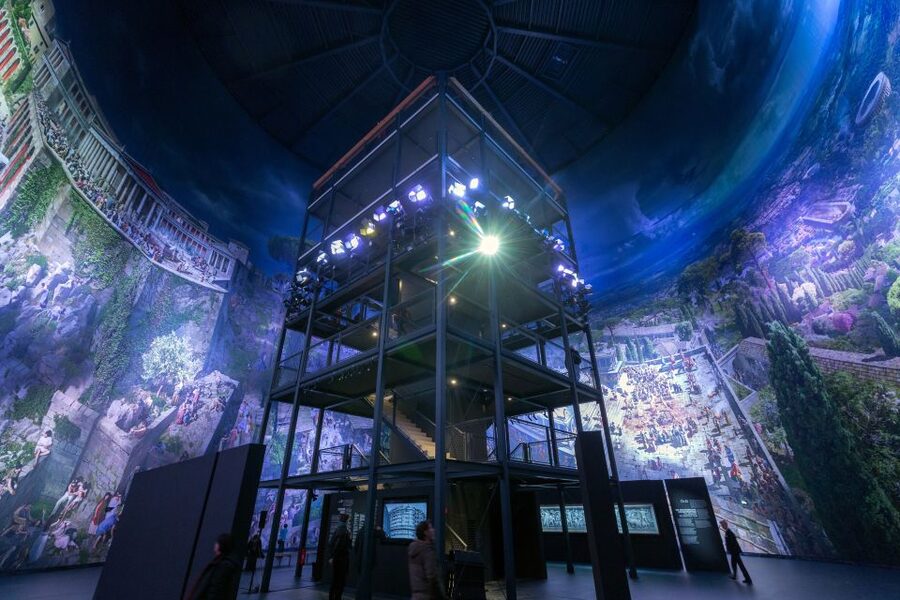
Yes, if you want to see Pergamon as a functioning ancient city rather than a collection of isolated stones. The 360-degree setting, day-to-night lighting, music, and original sculpture create a clear sense of place that a conventional display often cannot provide.
I would book it for the Acropolis reconstruction and the original Pergamon works, especially the Telephos frieze and the sculptures connected with the city’s rulers and myths. I would also book it for a family or a first-time visitor who wants an accessible introduction to classical archaeology.
I would skip it if you want admission to the main Pergamonmuseum, need a long museum visit, or dislike theatrical presentations. Also check the partial wheelchair access and the renovation closure before paying.
For most people, the best plan is simple: find the separate Panorama building, avoid bringing a backpack, see the sculptures, then take your time with the circular view. At $16, it is a focused and worthwhile Berlin stop, provided you understand exactly what the ticket includes.
FAQ
How long is the Pergamonmuseum. The Panorama experience?
The ticket is valid for 15 minutes from first activation. The auditorium can reward longer viewing, so check the admission conditions carefully and plan your priorities before entering.
What does the ticket include?
It includes entry to the exhibition Pergamonmuseum. The Panorama at Am Kupfergraben 2 in Berlin.
Does the ticket include the Pergamonmuseum?
No. Entry to the main Pergamonmuseum and other museums on Museum Island is not included.
How much does admission cost?
The listed price is $16 per person.
Can visitors under 18 enter for free?
Yes. Visitors under 18 can enter free of charge, but every person still needs a ticket for entry.
Are backpacks allowed?
No. Backpacks are not allowed inside the exhibition.
Is the exhibition wheelchair accessible?
Access is only partial. Although the activity is described as wheelchair accessible, it is also listed as not suitable for wheelchair users, so confirm the current access arrangements before booking.
When is the exhibition closed for renovations?
The Panorama is scheduled to close from September 1 through October 13 for renovation work.
Can I pay with cash at the museum shop?
No cash payment is available at the museum shop. You need a non-cash payment method if you plan to buy tickets there.
Just added in Berlin
- Berlin & The Third Reich Private Guided Tour★ 5.0 · 3 reviews
- Third Reich Quest Experience in Berlin★ 4.5 · 7 reviews
- Private Analogue Photography Experience in Berlin★ 5.0 · 3 reviews
- Berlin Urbex Adventure and History Tour★ 5.0 · 9 reviews
- The Beauty of Berlin by Bike: Private Tour★ 5.0 · 59 reviews
- Berlin: Guided Bike tour of the Berlin Wall and Third Reich★ 5.0 · 160 reviews
- Beyond Currywurst: Berlin’s Hidden Street Food & Culture Tour★ 5.0 · 100 reviews
- Berlin Third Reich & Cold War Walking Tour With A Guide★ 5.0 · 7 reviews
Museums, compared.



Skip-the-Line: Berlin Wall Museum at Checkpoint Charlie
Read our review →
Browse the lists this tour appears in