
Reviewed · THIRD REICH TOURS
Berlin: Hitler’s Berlin The Rise & Fall Guided Walking Tour
Berlin’s Nazi past is easiest to understand when you walk through the places where decisions were made, terror was organized, and the regime finally collapsed. This 150-minute tour connects the rise and fall of Nazi Germany in a clear route from the Brandenburg Gate to the Topography of Terror.
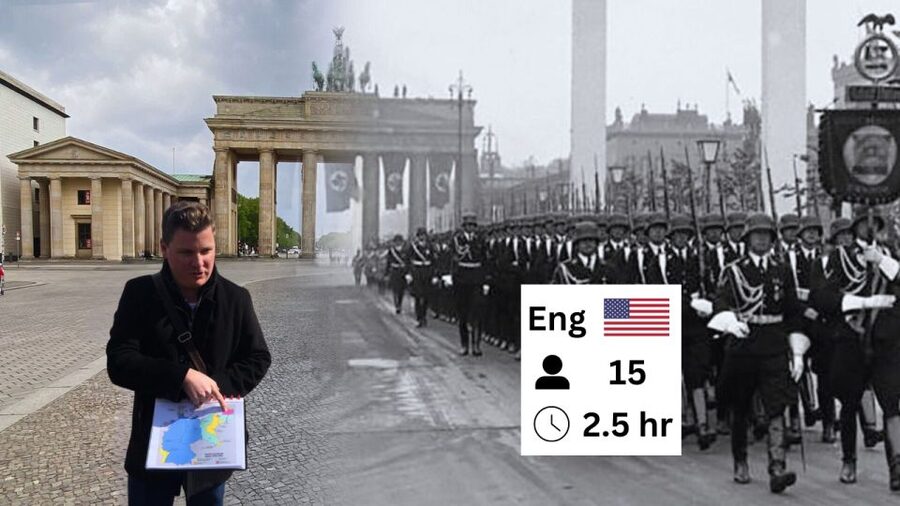
I like two things here: the use of historic maps and Then & Now photographs, which help you read today’s streets, and the way the guides connect politics, propaganda, persecution, and military defeat. The main drawback is simple: this is an outdoor walking tour, so rain, cold, heat, and tired feet can shape the experience.
Key points at a glance
- A 150-minute route through central Berlin: See the Reichstag, Nazi government sites, major memorials, Hitler’s bunker location, and the former Gestapo and SS headquarters.
- Guides with a strong history focus: Scott, Hannah, Matthew, Mark, Ben, Jörg, and other guides have been praised for clear explanations, good pacing, and thoughtful answers.
- A tour about systems, not just landmarks: Learn how the Nazis dismantled democracy, built a dictatorship, and used fear and propaganda to hold power.
- Important memorial stops: The route includes the Memorial to the Sinti and Roma Victims of National Socialism, the Holocaust Memorial, and the Soviet War Memorial.
- Outdoor and accessible: The walk is wheelchair accessible, but you should still expect considerable time outside and bring suitable clothing, comfortable shoes, and water.
- Good value for serious history: At $47 per person, the price is reasonable if you want context and interpretation rather than a quick collection of photo stops.
Why this Berlin history walk works
Many Berlin sights connected with the Nazi period are spread across the center, and their meaning is not always obvious. A government building may look ordinary. A parking lot may hide one of the most infamous locations in modern history. A memorial may need careful explanation to make sense.
This tour gives you a historical thread. You begin with the Nazi seizure of power and finish with the destruction of the regime in 1945. The route shows how Berlin became the capital of the Third Reich, how repression reached into daily life, and how war turned the city into a battlefield.
I especially like that the tour is not built around spectacle. There are no preserved Nazi interiors on this walk and no grand underground bunker room waiting for you. Instead, the guide uses the streets, memorials, surviving buildings, maps, and photographs to explain what happened.
That approach matters in Berlin. Much of the physical evidence was destroyed, rebuilt, or deliberately left understated. A good guide helps you understand both what you are seeing and what is no longer there.
More Third Reich Tours in Berlin
- Berlin: Third Reich and Cold War 2 Hour Walking Tour
★ 4.9 · 6,830 reviews - Berlin’s Best: 2 Hour Walking Tour Third Reich and the Cold War
★ 5.0 · 5,486 reviews - Third Reich Berlin: Hitler and WWII Walking Tour
★ 5.0 · 3,301 reviews
Starting at the Brandenburg Gate
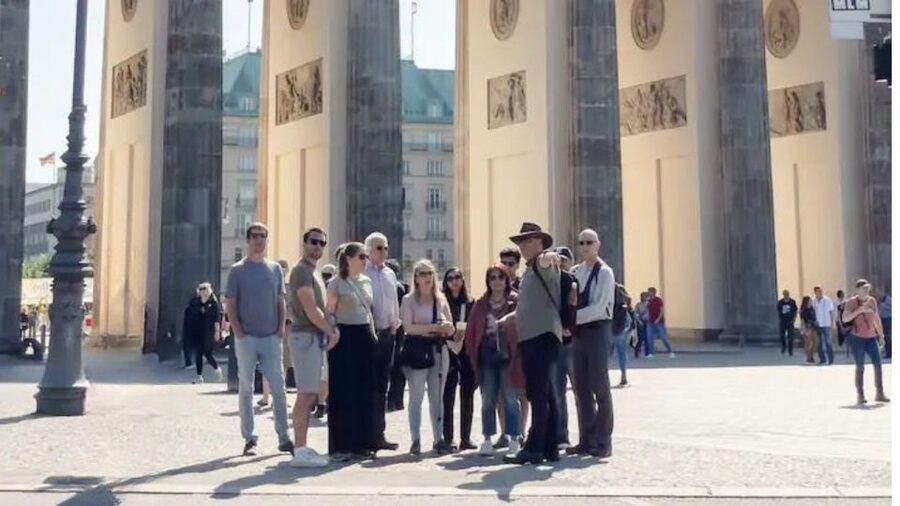
Meet at the Tourist Office by the Brandenburg Gate and look for the blue umbrella. This is a practical meeting point in one of Berlin’s busiest central areas, so arrive with enough time to find the guide and settle in.
The Brandenburg Gate is more than a famous Berlin photograph. It helps introduce the political story of the tour: democracy, dictatorship, war, division, and reunification all gathered around one landmark.
Expect about 10 minutes here for a visit, explanation, photographs, and views along the route. The stop is brief, but it sets up the larger question running through the walk: how did a modern state with democratic institutions become a dictatorship?
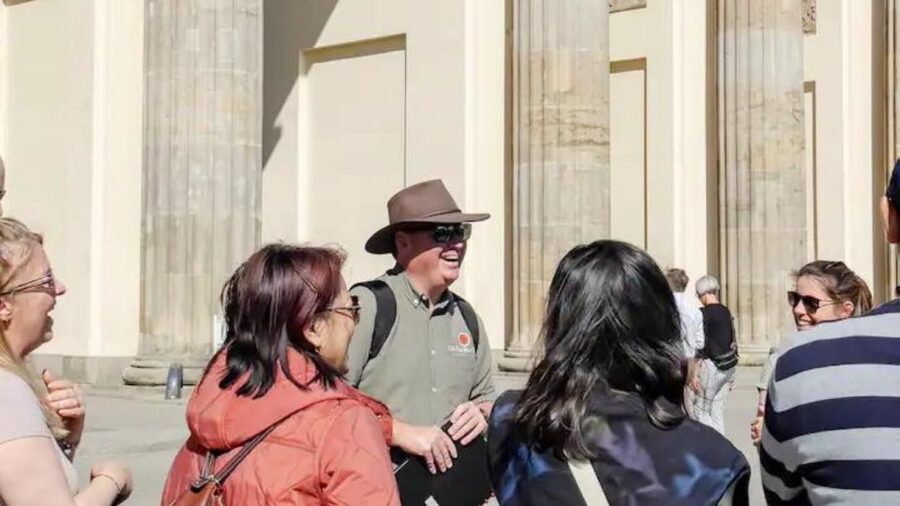
Your guide may use the surrounding buildings and old images to show how the area looked before and during the Nazi period. Guides such as Scott and Hannah have been praised for making difficult material easy to follow, while Matthew is noted for encouraging questions and keeping the discussion open.
Memorials to victims of Nazi persecution
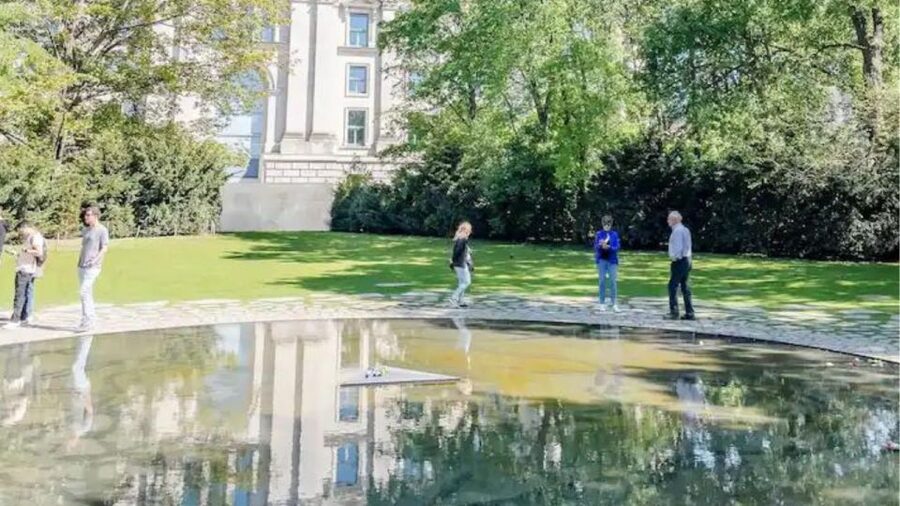
The next stop is the Memorial to the Sinti and Roma Victims of National Socialism. You spend around 10 minutes here with a guided explanation.
This is an important inclusion because a tour focused only on Hitler, generals, and government buildings can leave out the people persecuted by the regime. The memorial brings attention to the Sinti and Roma victims of Nazi racial policy and widens the story beyond the best-known events.
The stop also helps you understand that persecution was not limited to one group. Nazi ideology classified people by race, ethnicity, political belief, disability, religion, and other categories. The guide’s job is to connect those policies to the machinery of the state rather than treating each memorial as an isolated site.
The memorial is a place for quiet attention, not a quick photo opportunity. Your group should be prepared to listen and reflect.
The Reichstag and the destruction of democracy
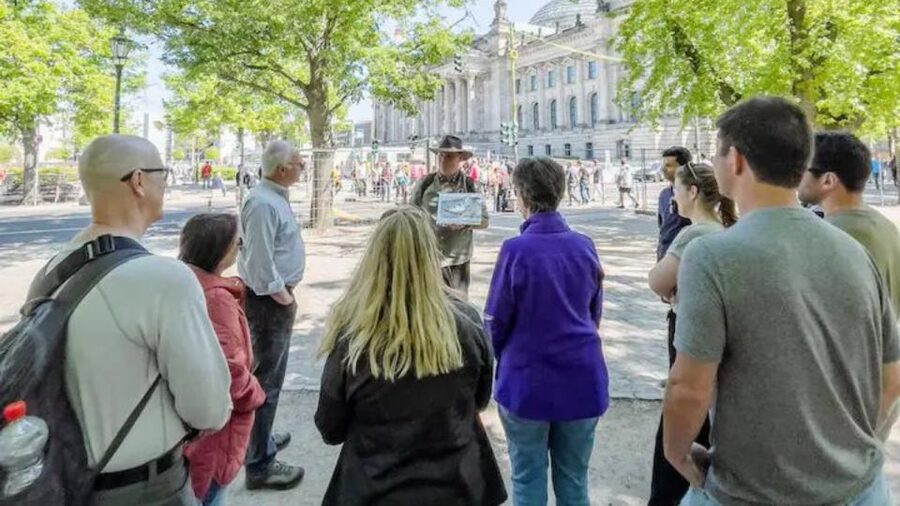
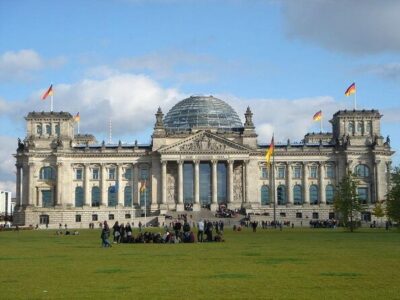
The Reichstag receives about 20 minutes. You visit the building from outside, hear its historical explanation, and walk around the area.
The Reichstag is especially useful early in the tour because it represents the democratic state the Nazis worked to destroy. The building also carries the weight of the fire in 1933 and the political crisis that followed. Your guide explains how emergency powers helped the Nazis weaken civil liberties and consolidate control.
This is where the tour moves from biography to structure. Hitler did not rule through personality alone. The story involves legal changes, political deals, intimidation, propaganda, and the failure of institutions to stop the movement.
You will not be entering the Reichstag as part of this outdoor walk, and indoor access is not included. That is worth noting if you want a full visit to the building or its dome. Still, the exterior has plenty of historical importance, and the guide’s maps and images can make the setting much easier to read.
More Walking Tours in Berlin
- Discover Berlin Half-Day Walking Tour
★ 5.0 · 9,624 reviews - Berlin: Discover Berlin Walking Tour
★ 4.9 · 5,998 reviews - Berlin: Hidden Backyards Guided Walking Tour
★ 4.8 · 5,360 reviews - Berlin: Alternative Berlin Walking Tour
★ 4.6 · 1,204 reviews
The Soviet War Memorial in Tiergarten
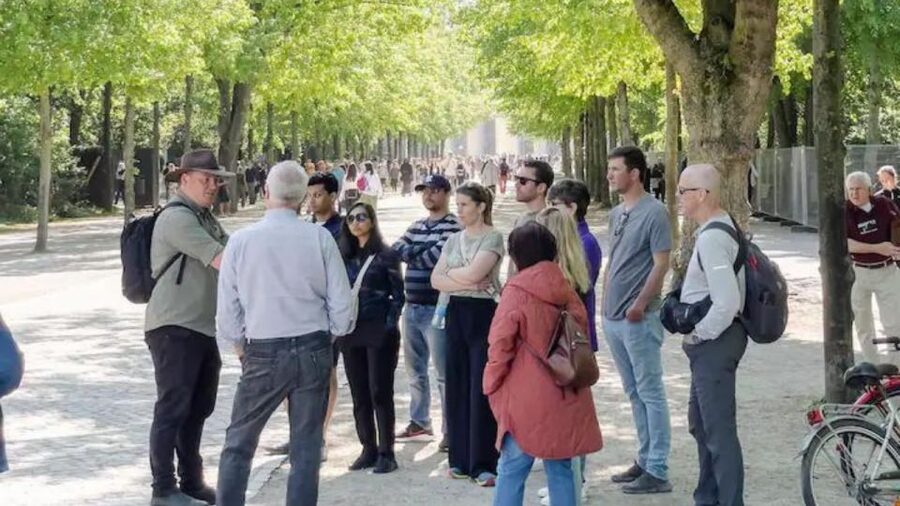
The Soviet War Memorial takes about 20 minutes and provides a different view of the war: the enormous cost of the Battle of Berlin and the Soviet victory over Nazi Germany.
This stop is valuable because it places the final phase of the war in a military setting. The tour has already explained how the regime gained power and organized repression. Here, you see how the Nazi state ended in defeat, destruction, and occupation.
The memorial also adds a postwar layer to the tour. Berlin’s monuments do not only tell the story of Nazi rule. They also reflect the city’s division, the Soviet role in defeating Germany, and the political meanings attached to public space after 1945.
You receive time for photographs and explanation, with scenic views as you walk. The Tiergarten setting offers a short change of pace, though the stop remains part of a serious account of wartime violence.
The Holocaust Memorial and the need for reflection
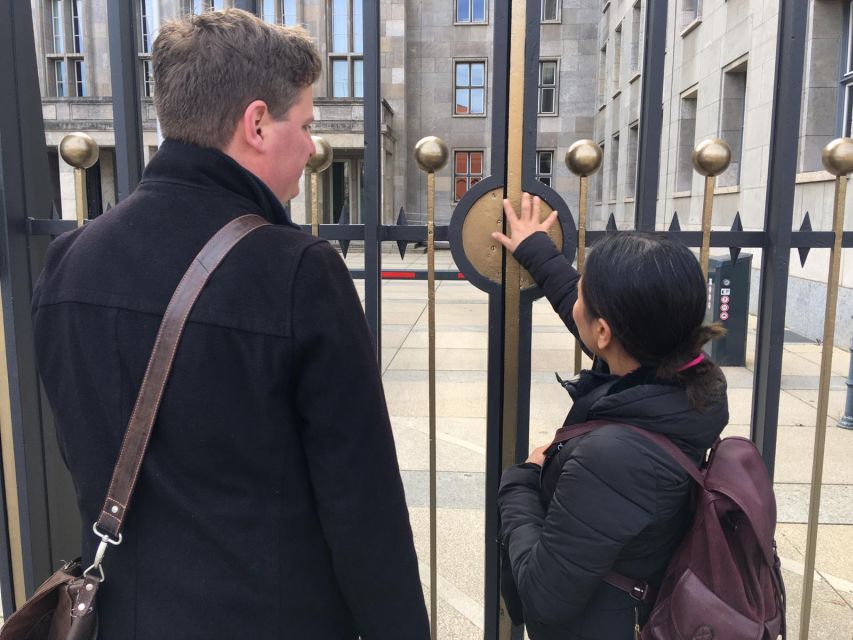
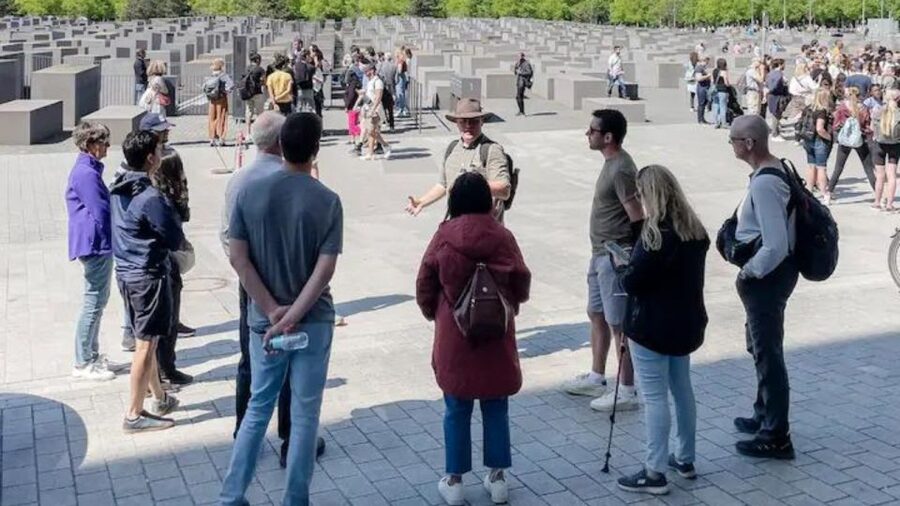
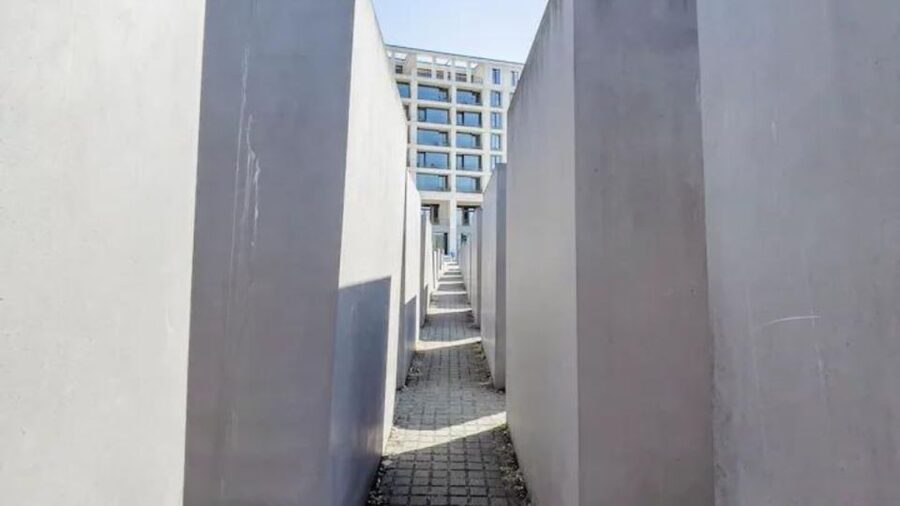
The Memorial to the Murdered Jews of Europe is one of the central stops, with about 20 minutes set aside for a guided visit and reflection.
The field of concrete blocks is powerful, but it can also be confusing without context. Your guide explains what the memorial is intended to convey and places it within the wider history of the Holocaust and Nazi persecution.
This is not simply a place to take unusual photographs. Pay attention to how the space changes as you walk through it, and give yourself time to absorb the subject. The guide’s role here is especially important because the memorial does not tell the full story through labels alone.
The tour does not include entry to indoor museum exhibitions. If you want the underground information center beneath the memorial, you need to arrange that separately. That is not a flaw in the walking route, but you should allow extra time if you want both experiences.
Hitler’s bunker site and the end of the regime
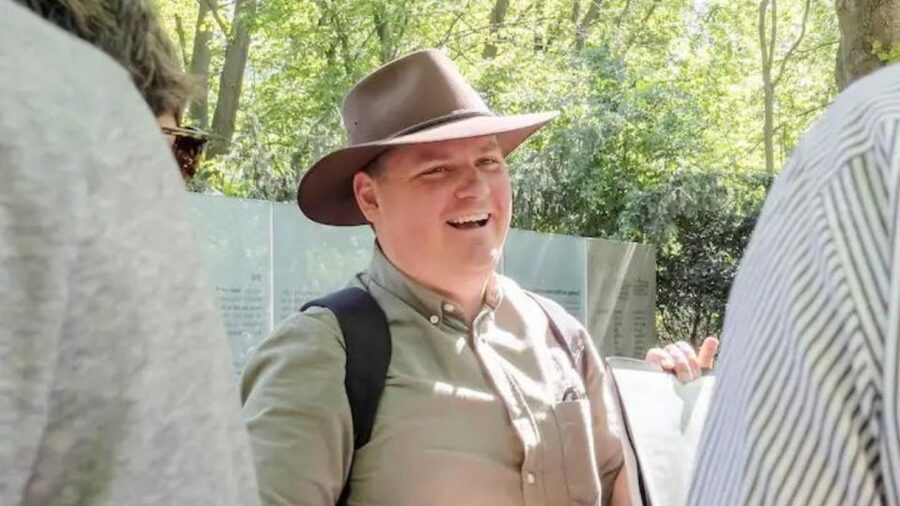
The stop at Hitler’s bunker location lasts about 15 minutes. Today, the site is not a preserved visitor attraction with dramatic rooms or original interiors. You visit the location and learn how the final days of the Nazi leadership unfolded there.
That lack of visible remains is part of the lesson. The site can look ordinary, which makes the guide’s explanation essential. Using historic photographs and maps, the tour helps you understand the layout and the events that brought the war in Europe to its final stage.
This is also where the tour’s full arc comes together. The man who helped turn Berlin into the center of a dictatorship ended his life in a city surrounded, bombed, and defeated by the armies fighting Germany.
Keep your expectations realistic. If you want an underground bunker visit, this walk will not provide it. What you get instead is the location, the historical context, and a sober explanation of what happened there.
Johann Georg Elser and resistance inside Germany
The Johann Georg Elser Memorial receives around 10 minutes. Elser attempted to kill Hitler in 1939 with a bomb at the Bürgerbräukeller in Munich, but Hitler left the building shortly before the explosion.
Including Elser gives the tour room to discuss resistance and moral choice. Nazi Germany was not made up of people who all agreed with Hitler, although the regime’s terror made opposition extremely dangerous.
This stop helps avoid a simple story in which the entire population is treated as either innocent or fully committed. It opens a conversation about individual action, fear, conformity, and the risks taken by people who resisted.
The memorial is a short stop, but it adds needed balance to a route otherwise focused on the institutions of Nazi power.
The German Finance Ministry and surviving government buildings
The German Finance Ministry is a brief five-minute stop. The building is one of the few major structures from the Nazi period still used for government work, and the guide explains its place in the history of the regime and the city.
This is the kind of stop you could easily pass without noticing. That is why guided walking works well here. Berlin’s history often survives in plain sight, mixed with modern offices, traffic, and ordinary daily business.
Do not expect a long visit. The value comes from linking the building to the wider state structure: administration, economic control, war planning, and the practical work required to run a dictatorship.
Topography of Terror and the machinery of repression
The walk ends at the Topography of Terror, where you spend about 15 minutes with the guide. The site occupies the former headquarters area of the Gestapo and SS, two of the main organizations behind Nazi terror and repression.
This is one of the strongest final stops because it brings the tour back to the machinery of power. Earlier, you saw symbols of democracy, memorials to victims, and the location of the regime’s last days. Here, you examine the institutions that helped enforce Nazi policy.
The outdoor visit does not include entry to the indoor exhibition. Still, finishing here makes practical sense. If you want more detail, you can continue into the museum afterward, subject to its opening arrangements. The walking tour gives you the framework first, so the exhibition is easier to understand.
How the guides shape the experience
The guides are the biggest reason this tour works. The company specializes in Second World War history, and the walk is led in English by guides with an academic background in the subject.
Scott is frequently praised for explaining complex facts clearly, answering questions, and keeping the group involved while walking between sites. Hannah is noted for thoughtful stories, a warm manner, and presenting more than one angle when discussing difficult events. Matthew has been praised for detailed answers, a relaxed style, and taking extra time when the group needed it.
Mark, Ben, and Jörg have also led highly regarded tours. The consistent pattern is clear: expect a guide who can explain politics, ideology, military events, and daily life as connected parts of one story.
The tone is serious without becoming a lecture. You can ask questions, and the format allows discussion at the stops. That is useful if you already know the basic chronology and want to test your understanding, but it also works if your background is limited.
Time, walking, weather, and access
The tour lasts 150 minutes, or two and a half hours. That is enough time to cover a lot without turning the walk into a full-day commitment.
You should still expect considerable walking and long periods outdoors. Wear comfortable shoes, carry water, and dress for the forecast. Rain has affected some tours, and guides have sometimes helped with umbrellas, but you should not rely on that. Bring your own umbrella or walking aid if you need one.
The activity is listed as wheelchair accessible. The route includes public streets, memorial areas, and outdoor sites, so anyone with specific mobility needs should confirm current conditions before booking. Hotel pickup, drop-off, food, drinks, and public transportation are not included.
The small-group format is another plus. It gives you a better chance to hear the guide and ask questions than a large coach tour, though the exact group size is not stated.
Is $47 a fair price?
At $47 per person, this is not the cheapest way to see central Berlin. You can walk past several of these sites for free.
The price makes sense if you want the connections between them. You are paying for a trained guide, a structured route, historic maps, Then & Now images, and the chance to ask questions as the story unfolds. A guide can also point out what has disappeared, which is often the hardest part of understanding Nazi Berlin.
The value is strongest for first-time visitors, history students, families with older teenagers, and anyone who wants more than isolated facts. If you have already spent days studying Berlin’s Nazi sites or prefer to read at your own pace, you may find the route too introductory in places.
Free cancellation up to 24 hours before the start and the option to reserve now and pay later add useful flexibility. The tour is offered in English.
Who should book this tour?
Book it if you want a serious, well-organized introduction to Nazi Berlin and prefer learning while walking. It is especially useful early in your stay, since the route gives you a map of the city’s major memorials and government sites.
It also suits people who already know a fair amount about the Second World War. Several guides make room for detailed questions, and the connections between ideology, government, terror, and military defeat can add something beyond a basic timeline.
You may want to skip it if you dislike outdoor walking, need extensive indoor shelter, or expect to enter preserved Nazi buildings. The bunker is a location, not an underground attraction, and the museum interiors are not part of the tour.
Final verdict
I would book this walk for a clear first look at Berlin’s Nazi past. The route covers the major sites, but its real strength is the explanation between them: how democracy was dismantled, how persecution became state policy, and how the regime ended in ruins.
The best guides, including Scott, Hannah, and Matthew, bring patience, clarity, and a willingness to answer hard questions. Bring good shoes, water, and weather protection, then allow extra time at the Topography of Terror if you want to continue with its indoor exhibition.
FAQ
Where does the tour begin?
Meet at the Tourist Office by the Brandenburg Gate. Look for the guide holding a blue umbrella.
Where does the tour finish?
The walk ends at the Topography of Terror.
How long does the tour last?
The tour lasts 150 minutes, or two and a half hours.
Is the tour conducted in English?
Yes. The live tour guide and the activity language are English.
Are indoor museums included?
No. The tour takes place outdoors, and access to indoor museum exhibitions is not included.
Is the tour wheelchair accessible?
Yes, the activity is listed as wheelchair accessible. You should still expect considerable outdoor walking and check whether the route suits your specific mobility needs.
Just added in Berlin
- Berlin & The Third Reich Private Guided Tour★ 5.0 · 3 reviews
- Third Reich Quest Experience in Berlin★ 4.5 · 7 reviews
- Private Analogue Photography Experience in Berlin★ 5.0 · 3 reviews
- Berlin Urbex Adventure and History Tour★ 5.0 · 9 reviews
- The Beauty of Berlin by Bike: Private Tour★ 5.0 · 59 reviews
- Berlin: Guided Bike tour of the Berlin Wall and Third Reich★ 5.0 · 160 reviews
- Beyond Currywurst: Berlin’s Hidden Street Food & Culture Tour★ 5.0 · 100 reviews
- Berlin Third Reich & Cold War Walking Tour With A Guide★ 5.0 · 7 reviews
Third Reich Tours, compared.



Berlin’s Best: 2 Hour Walking Tour Third Reich and the Cold War
Read our review →

Third Reich Berlin: Hitler and WWII Walking Tour
Read our review →
Walking Tour of Former Nazi Party Rally Grounds
Read our review →
Berlin Third Reich Sites: Half-Day Walking Tour
Read our review →Browse the lists this tour appears in