
Reviewed · OLD TOWN TOURS
Berlin: Historic Center Walking Tour with a Real Berliner
Berlin’s past comes at you quickly on this two-hour walk through Mitte. You begin near the city’s oldest quarter, pass the Television Tower and Museum Island, then follow Unter den Linden toward the Brandenburg Gate. The route links Berlin’s medieval beginnings with Prussian power, the Cold War, and reunification.
I like the broad sweep of the story, especially since the guide covers more than the usual World War II talking points. I also like the personal touch from guides such as Carlo, who is described as warm, clear, and willing to help with directions after the walk. The main drawback is pace: two hours is enough for an overview, not a detailed visit inside every landmark.
Key points at a glance
- A strong first-day orientation: The route connects many major sights in central Berlin, helping you understand how the city fits together.
- History beyond the twentieth century: You hear about Berlin as a small trading village, a Prussian royal residence, a divided capital, and the seat of reunited Germany.
- A guide-led walk, not an entry ticket: The focus is on explanation and exterior views. Food, drinks, and hotel transfers are not included.
- Carlo is frequently named as the guide: The guide is praised for clear explanations, friendliness, patience, and answering questions.
- Easy to plan: The tour lasts two hours, costs $44 per person, is wheelchair accessible, and runs in all weather.
- A useful route with one practical question: The tour is listed as ending at Brandenburg Gate, while the meeting information also says the activity ends back at the starting point, so confirm the final meeting-place details when booking.
Why this two-hour Berlin walk works well
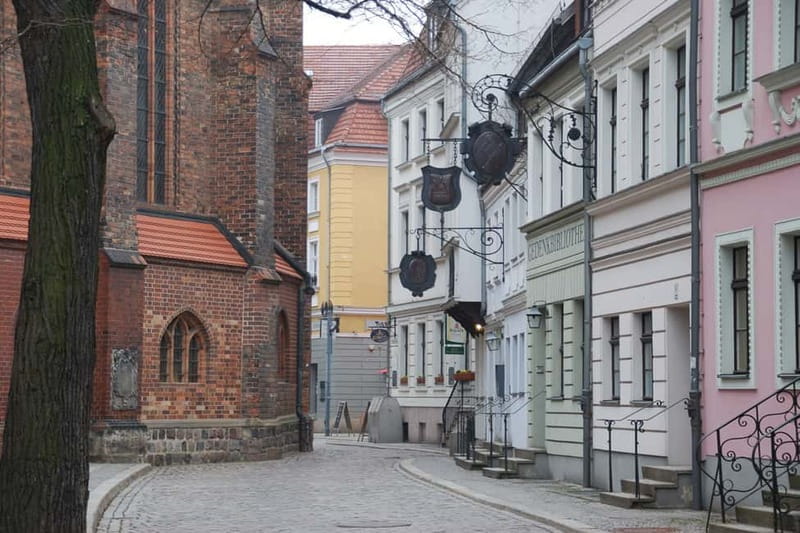
Berlin can feel like several cities placed side by side. Medieval streets sit near grand royal buildings, modern government offices, Cold War reminders, and huge cultural institutions. This walk gives you a clear thread through that mix.
The route is especially useful if you are new to Berlin. You will see many headline sights without spending time figuring out the city’s layout on your own. The guide explains how each place fits into the larger story, rather than simply pointing out buildings and naming dates.
I would treat this as an orientation walk, not as a full museum tour. You are mainly seeing the exteriors of important buildings and hearing their background. That is a good trade for a two-hour introduction, but you should leave time later if you want to visit the Berlin Cathedral, Humboldt Forum, or another museum properly.
The experience costs $44 per person. That is not the cheapest way to walk around central Berlin, but it can be fair value if you want a live guide who gives the city shape and meaning. You are paying for the route, the explanations, and the chance to ask questions, not for transport, meals, or admission to the sights.
More History Tours in Berlin
- Berlin: Natural History Museum Entrance Ticket
★ 4.6 · 3,382 reviews - Berlin Historical Highlights Walking Tour
★ 4.9 · 657 reviews - Berlin Private Complete History All Day Walking Tour
★ 5.0 · 474 reviews
Starting at St. Nicholas’ Church Museum
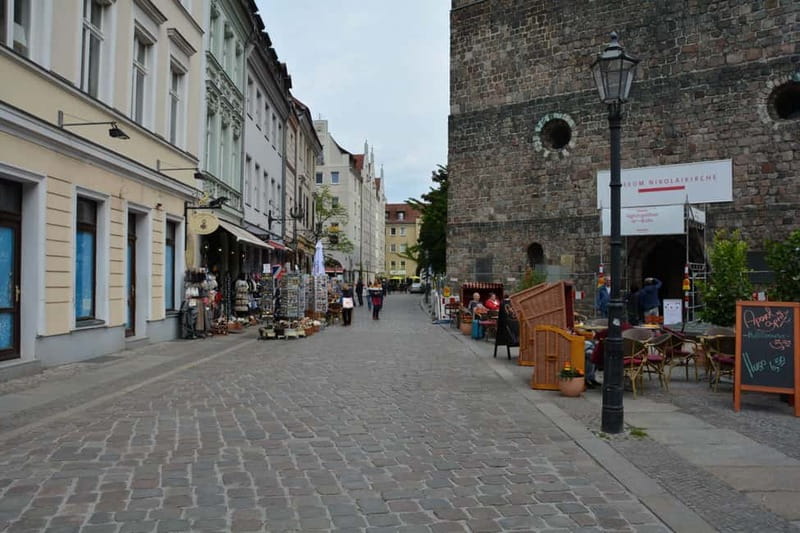
The meeting point is outside the main entrance of the Nikolaikirche Museum, also called St. Nicholas’ Church Museum. Look for the guide carrying the Get Your Guide, You in Berlin flag.
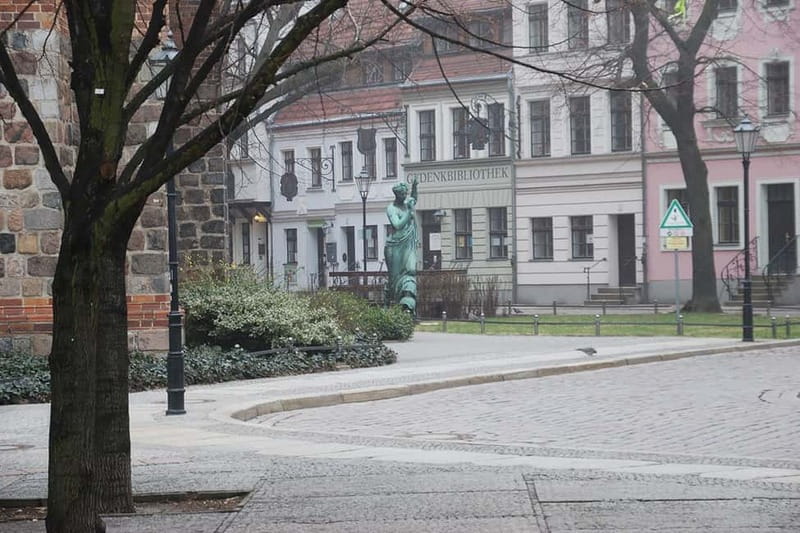
This is a fitting starting point. St. Nicholas’ Church is in Nikolaiviertel, an area tied to Berlin’s earliest urban story. From here, the walk begins close to the river Spree and the city center’s older roots, rather than starting with a grand nineteenth-century monument.
The guide introduces Berlin’s development from a small trading village on the Spree into the capital of Prussia, then Germany, and finally a reunited European capital. That long view matters. It keeps the tour from reducing Berlin to only the Nazi era or the Berlin Wall.
Arrive ready to walk from the start. There is no hotel pickup, and comfortable shoes and clothing are specifically recommended. Since the walk runs in all weather and on public holidays, check the forecast and bring suitable protection.
Nikolaiviertel and Berlin’s early beginnings
Nikolaiviertel gives the opening part of the walk a more intimate scale. Berlin’s center can feel very grand later, with royal avenues and monumental buildings, so beginning in this older quarter helps you picture the city before it became a major capital.
Here, the guide sets out the origins of Berlin and its growth along the Spree. You will hear how a modest settlement developed into an important political and cultural center. The value is not just the facts. It is the contrast between the small beginnings of the city and the imperial buildings you see later.
You should expect a guided walk and sightseeing stop rather than a long indoor visit. If you want to explore the St. Nicholas’ Church Museum itself, allow separate time. The meeting point is the practical focus for this experience.
The Television Tower and the changing skyline
The route includes a view of Berlin’s tallest building, the Television Tower. Its height makes it easy to spot, but its importance is more than practical. The tower is a powerful reminder of the former East Berlin cityscape and the way modern architecture shaped the capital during the divided years.
A guide can make this kind of sight more useful than a quick photograph. You learn where the tower fits in relation to the Spree, Museum Island, and the rest of the central district. That helps you get your bearings quickly, something one solo participant found particularly useful during the first day in Berlin.
Do not expect a tower visit or an observation-deck ticket as part of the $44 price. The experience is a walking tour, and admission fees are not listed as included. You see the Television Tower as part of the city story and route.
More Walking Tours in Berlin
- Discover Berlin Half-Day Walking Tour
★ 5.0 · 9,624 reviews - Berlin: Third Reich and Cold War 2 Hour Walking Tour
★ 4.9 · 6,830 reviews - Berlin: Discover Berlin Walking Tour
★ 4.9 · 5,998 reviews - Berlin’s Best: 2 Hour Walking Tour Third Reich and the Cold War
★ 5.0 · 5,486 reviews
Walking beside the Spree to Museum Island
From the older center, the walk follows the Spree toward Museum Island. This stretch gives you a sense of why the river mattered to Berlin’s growth and why the city center gathered around it.
Museum Island is one of Berlin’s most important cultural areas. The route brings you near the Berlin Cathedral, the Old Museum, and the Humboldt Forum. Each building reflects a different part of the city’s past and its cultural ambitions.
The Berlin Cathedral is hard to miss. Its scale and dome make it one of the central district’s defining buildings. The Old Museum adds another layer, representing the grand museum planning associated with the royal and imperial center. You hear about these buildings from outside, with the guide explaining their place in Berlin rather than leading a museum visit.
This is one of the tour’s strongest sections because several major sights sit close together. You cover a lot without needing public transport. The tradeoff is that the route can feel visually packed. Give yourself time afterward if you want to study the architecture or enter one of the institutions.
The Humboldt Forum and the reconstructed palace
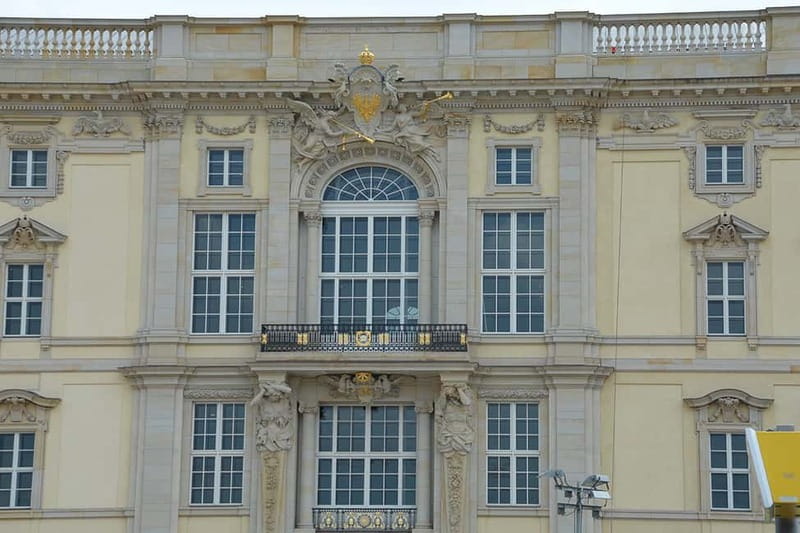
The Humboldt Forum is a key stop because it occupies the site of Berlin’s former City Palace. The building you see today is reconstructed, creating an unusual meeting point between old forms and modern cultural use.
The guide explains the return of the palace’s historic appearance and its role in the city center. This is a good place to think about how Berlin handles buildings connected to kings, emperors, war, destruction, division, and rebuilding. The story is not simple, and a short explanation helps you see why the building attracts attention.
Across the Palace Bridge, the walk continues into the historic center. The bridge itself leads you toward the grander part of the route, where royal and imperial Berlin becomes more visible.
Again, the emphasis is on the outside. If you want to see exhibitions inside the Humboldt Forum, you will need another visit and your own admission arrangements. The tour gives you context first, which can make a later visit more rewarding.
Palace Bridge and Unter den Linden
Crossing the Palace Bridge brings you into the ceremonial heart of Berlin. From here, the walk reaches Unter den Linden, the city’s oldest boulevard.
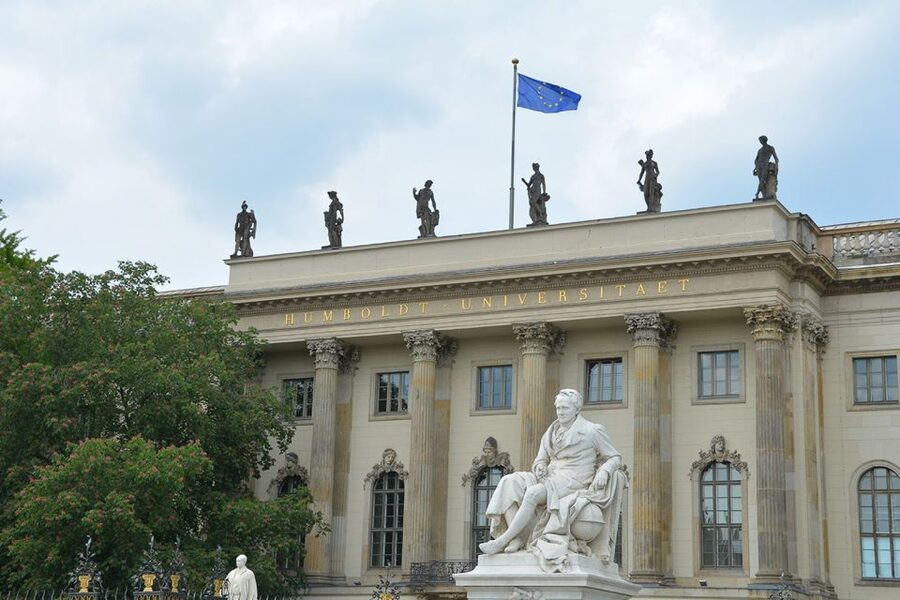
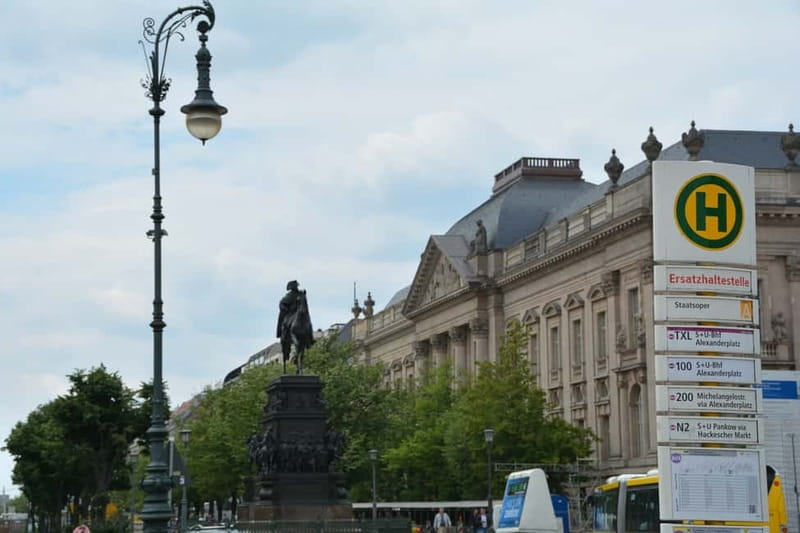
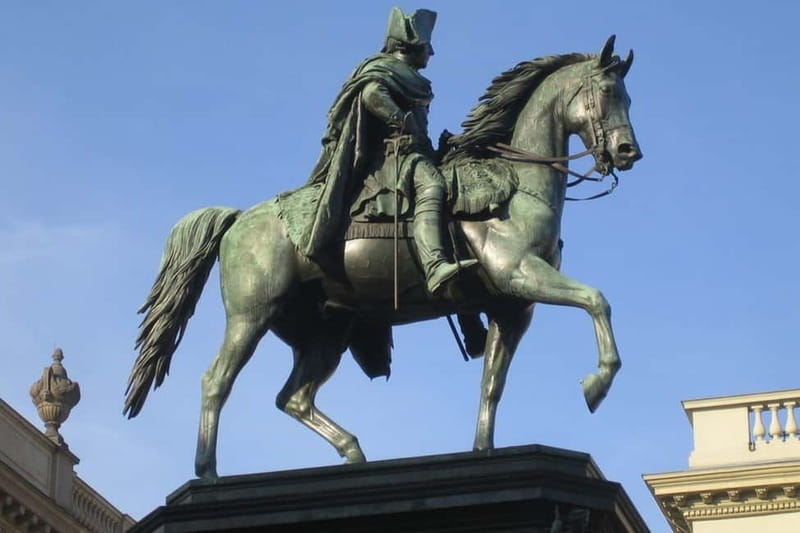
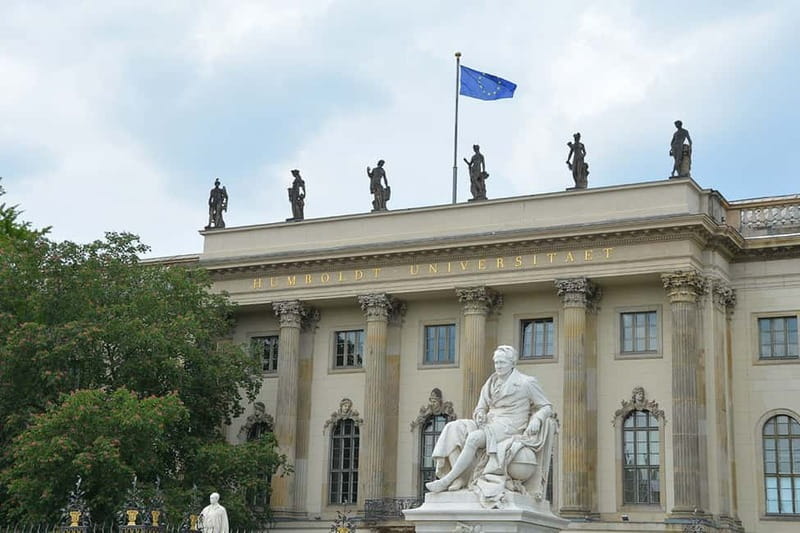
This avenue is where Berlin’s royal and intellectual identities come together. You see the Equestrian Statue of Frederick the Great, the State Opera, Humboldt University, and St. Hedwig’s Cathedral. The guide connects these places with the era when Berlin was the residence of the Prussian kings and later a capital with European influence.
The Equestrian Statue of Frederick the Great points to Prussia’s role in shaping Berlin. The State Opera reflects the city’s long musical and cultural life. Humboldt University adds the academic side, while St. Hedwig’s Cathedral shows the religious variety of the historic center.
I like this section because it gives you more than a list of famous façades. It shows how power, education, music, religion, and public ceremony were arranged along one boulevard. You also get a useful sense of direction for later sightseeing.
The pace may be brisk. There are several buildings close together, and the guide has only two hours to cover the whole route. If you want detailed architectural analysis or time for photographs at every stop, this walk may feel fast. For a first look, the movement keeps the experience lively.
Reaching the Brandenburg Gate
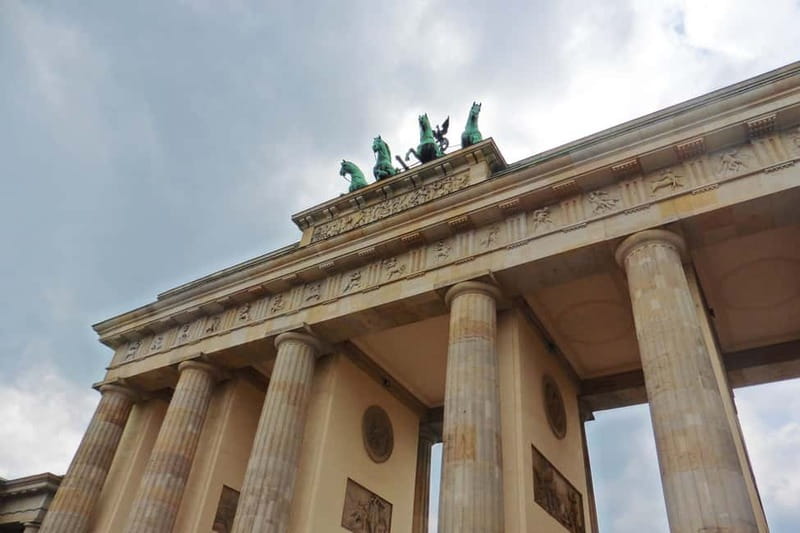
The walk ends at the Brandenburg Gate, Berlin’s most recognizable symbol. It is also the place where the tour’s long historical arc comes together.
The gate once marked an entrance to the city. Later, it became associated with Prussian power, the division of Berlin, and the reunification of Germany. The guide explains its meaning before, during, and after the city was divided. That context is essential because the Brandenburg Gate can otherwise become just another photograph.
The stop also brings the story into the modern era. The guide discusses the gate’s role as a focal point for reunification in 1990, giving you a direct connection between Berlin’s past and its present political identity.
The supplied route information lists Brandenburg Gate as the finish. The meeting details also say the activity ends back at the starting point, so there is a small practical inconsistency. Confirm the final end point before booking if you have a timed museum entry, restaurant reservation, or train to catch.
What the guide adds
The guide is the heart of this experience. The tour is conducted in English, although the broader description refers to a multilingual city guide. Names appearing in the information include Carlo, Karlo, Carlos, and Corlo, likely different spellings of the same guide’s name.
The strongest praise focuses on Carlo’s manner and teaching style. He is described as friendly, professional, warm, and easygoing. He explains complex events clearly, answers questions, and chooses stories that reach from Berlin’s earliest days into the recent past.
One useful detail is that he has been willing to help with practical directions after the walk, including showing someone where to catch a bus. That is not a promised part of the service, so do not book the tour expecting personal transport help. Still, it suggests a guide who pays attention to the person in front of him rather than rushing off at the final stop.
The group size can vary. One booking became a private walk for two people, and another proceeded with just one participant instead of being canceled. You should not assume every departure will be private, but the experience has shown flexibility when attendance is very small.
Who should book it
I would recommend this walk to first-time visitors who want a firm introduction to central Berlin. It is also useful if you arrive early in your trip and want to understand the city before visiting museums on your own.
It suits people who enjoy history explained through places. The route covers medieval origins, Prussian rule, royal buildings, museum culture, the divided city, and reunification. That range is a major strength.
It is less suitable if you want to go inside several attractions, spend long periods taking photographs, or focus on one narrow subject such as the Berlin Wall or World War II. The guide discusses Berlin’s twentieth-century history, but the tour is deliberately broader.
The route is wheelchair accessible, though the experience remains a two-hour outdoor walk. You should still wear comfortable shoes and clothing. It operates in all weather and on public holidays, so plan for rain, cold, or heat.
Free cancellation is available up to 24 hours before the start, and you can reserve now while paying later. Those terms are useful if your Berlin plans are still moving around.
Should you book this Berlin walking tour?
Book it if you want a well-rounded first look at Mitte and prefer a guide’s explanation to wandering between monuments with a map. The route is efficient, the historical span is unusually broad, and Carlo’s clear, friendly style has been a major strength.
At $44, the value depends on how much you use the guide. If you only want to photograph the Brandenburg Gate and Museum Island, you can do that without paying for a tour. If you want to understand how those places connect, two hours with an engaging guide is a sensible start.
I would schedule it near the beginning of your stay, then return to the sights that interest you most. Bring good shoes, dress for the forecast, and confirm the final meeting-point details. For a first introduction to Berlin’s historic center, this is a practical and worthwhile choice.
FAQ
How long does the Berlin historic center walking tour last?
The tour lasts two hours. Check availability for the current starting times.
Where does the tour begin?
It begins outside the main entrance of the Nikolaikirche Museum, also called St. Nicholas’ Church Museum. Look for the guide with the Get Your Guide, You in Berlin flag.
Where does the tour finish?
The route information lists Brandenburg Gate as the final stop. The meeting information also says the activity ends back at the starting point, so confirm the exact end point when booking.
What language is the tour conducted in?
The live tour guide conducts the experience in English.
Is the walking tour wheelchair accessible?
Yes, the activity is listed as wheelchair accessible.
What should I bring, and does the tour run in bad weather?
Bring comfortable shoes and comfortable clothing. The tour operates in all weather conditions and on public holidays.
More Old Town Tours in Berlin
- Berlin: 1-Hour Guided Tour of the Historic Center
★ 4.2 · 33 reviews - Skip-the-line Berlin Cathedral and Old Town Private Tour
★ 4.7 · 4 reviews - Private German Beer Tasting Tour in Berlin Old Town
★ 5.0 · 4 reviews - Dresden: Semperoper and Old Town Tour
★ 4.8 · 5,735 reviews
Just added in Berlin
- Berlin & The Third Reich Private Guided Tour★ 5.0 · 3 reviews
- Third Reich Quest Experience in Berlin★ 4.5 · 7 reviews
- Private Analogue Photography Experience in Berlin★ 5.0 · 3 reviews
- Berlin Urbex Adventure and History Tour★ 5.0 · 9 reviews
- The Beauty of Berlin by Bike: Private Tour★ 5.0 · 59 reviews
- Berlin: Guided Bike tour of the Berlin Wall and Third Reich★ 5.0 · 160 reviews
- Beyond Currywurst: Berlin’s Hidden Street Food & Culture Tour★ 5.0 · 100 reviews
- Berlin Third Reich & Cold War Walking Tour With A Guide★ 5.0 · 7 reviews
Old Town Tours, compared.

Old Town & Viktualienmarkt City Walk in German
Read our review →
The Night Watchman Old Town Walking Tour in German
Read our review →
New Old Town and Highlights German-Language Tour
Read our review →Browse the lists this tour appears in