
Reviewed · THIRD REICH TOURS
Private Walking Tour Berlin Third Reich Hitler and World War II
Berlin’s wartime story becomes far clearer when you connect places rather than view them as isolated monuments. This private tour links government offices, memorials, battle sites, deportation routes, and Hitler’s final bunker, giving you a strong framework for understanding how the Nazi regime worked and how Berlin remembers it today.
I like the hotel pickup and drop-off, especially because the route covers widely scattered sites. I also like the private format: guides such as Daniel, Georgia, Jimmy, Jasper, and Simon have tailored the pace, answered questions, and adjusted stops to suit each group. The main drawback is that some visits are brief, and the listed price of $192.97 per person is a serious spend for a three to four hour outing.
Key points at a glance
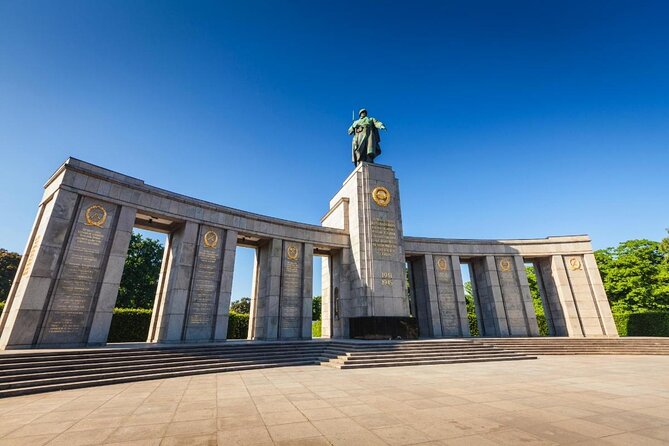
- Twelve important locations: Move from the Soviet Memorial and Moltkebrücke to the Führerbunker site, Holocaust Memorial, and T4 memorial.
- A private English-language guide: Your group has the guide’s full attention, with room for questions and changes in pace.
- Hotel service included: Pickup and drop-off remove much of the planning involved in crossing central Berlin.
- A sober, serious subject: The tour covers dictatorship, war, deportation, genocide, resistance, and the Nazi euthanasia program.
- More than a walking route: Public transport may be used between locations, and the long list of stops works as a citywide history lesson.
- Best for history-focused visitors: It suits families, first-time Berlin visitors, and anyone wanting context before exploring museums independently.
Why this private Berlin history tour works
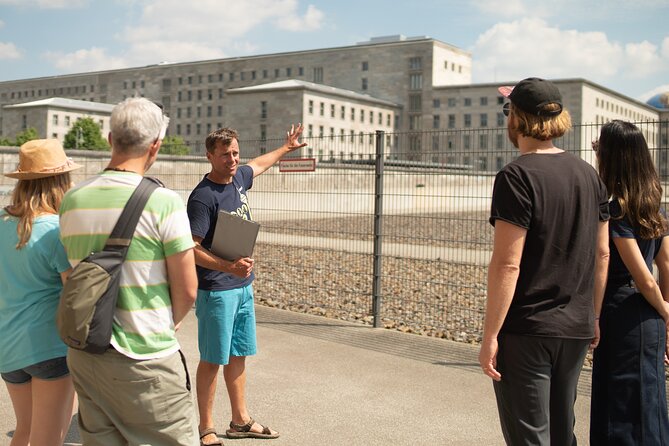
This is not a tour built around a single grand building. It is a moving lesson in how power operated, how war reached the streets, and how Germany has dealt with the crimes of the Nazi period.
You begin with the political and military setting, then move through sites linked to the Nazi government, resistance, propaganda, persecution, and the final battle for Berlin. The route also reaches beyond Hitler himself, which matters. You learn about the people targeted by the regime, those who resisted it, and the institutions that helped carry out its policies.
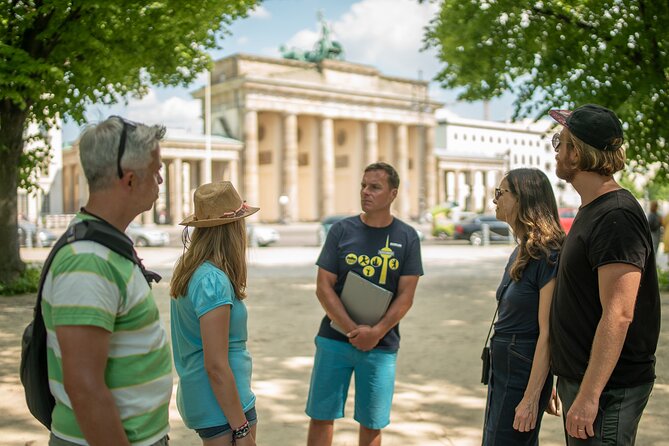
The private setting changes the feel of the day. You can ask why the Reichstag Fire mattered, how deportations were organized, or what the empty bookshelves at Bebelplatz represent. If one subject matters especially to you, your guide can give it more time.
Past guides have included Jimmy, Daniel, Jasper, Georgia, Simon, Ariel, Callum, Tobi, Oren, Martin, and others. Guide assignments can change, but the strongest feedback repeatedly points to clear explanations, personal attention, and an easygoing teaching style. Daniel has been especially praised for meeting groups at their hotel and quickly building a plan around their interests. Jimmy has been noted for engaging children, while Simon has helped visitors use short stops at the Topography of Terror and Holocaust Memorial as a starting point for longer visits later.
More Third Reich Tours in Berlin
- Berlin: Third Reich and Cold War 2 Hour Walking Tour
★ 4.9 · 6,830 reviews - Berlin’s Best: 2 Hour Walking Tour Third Reich and the Cold War
★ 5.0 · 5,486 reviews - Third Reich Berlin: Hitler and WWII Walking Tour
★ 5.0 · 3,301 reviews
The Soviet Memorial sets the wartime stage
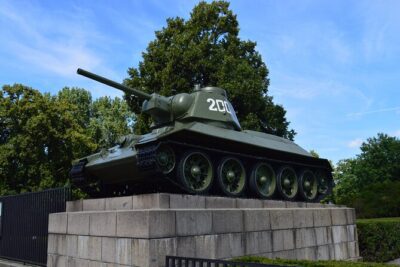
The Soviet Memorial in Tiergarten is an effective first stop because it places the Battle of Berlin in view. Opened in 1949, it commemorates Soviet soldiers killed during the final battle of 1945.
The large soldier’s statue, holding a sword and shield, communicates victory and sacrifice in the language of Soviet memorial design. Your guide can explain the Soviet role in defeating Nazi Germany and the complicated place this monument holds in both German and Soviet memory.
The scheduled visit is about ten minutes, so expect an explanation and orientation rather than a long examination of every detail. That short stop works well at the beginning, since it gives you the military background needed for later sites.
Wilhelmstraße reveals the machinery of Nazi power
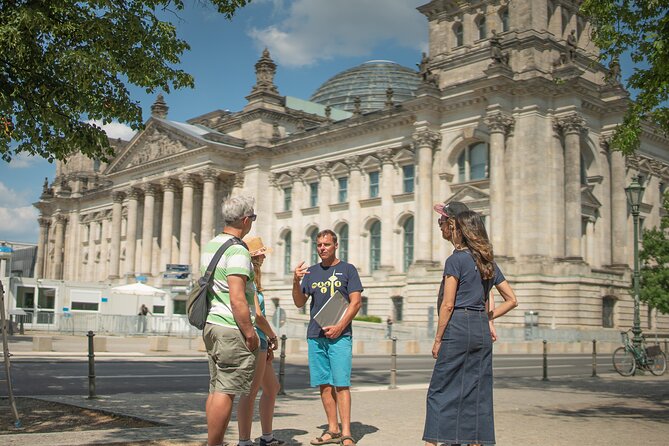
Wilhelmstraße was the administrative heart of Nazi government. Walking here helps you picture the regime as a network of ministries, offices, officials, and decisions, not simply as Hitler giving speeches.
The Detlev-Rohwedder-Haus is a key sight. Built in the 1930s for the Reichsbank, it later housed the Ministry of Aviation under Hermann Göring. Your guide will connect the building to the economic and political work of the Third Reich, then explain how its later use by the Federal Treasury reflects Berlin’s changing political life.
A ten-minute stop at the Aviation Ministry is short, but the broader walk along Wilhelmstraße adds useful context. You will hear about government offices, military parades, propaganda events, and wartime planning. This is one of the places where a private guide helps, since the significance is not always obvious from the street.
Topography of Terror puts repression in human terms
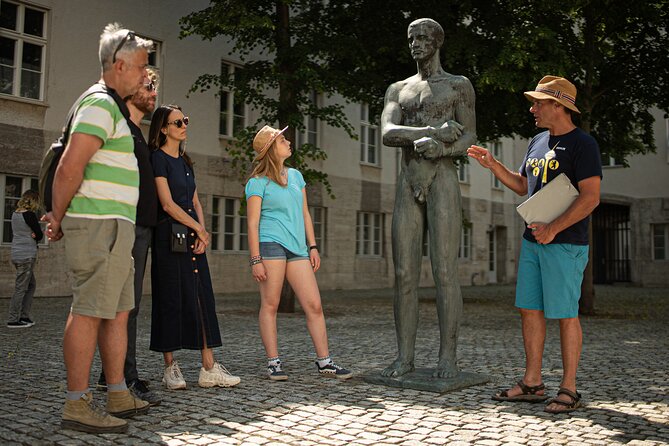
The Topography of Terror occupies the former site of the SS and Gestapo headquarters. Its indoor and outdoor displays use photographs, documents, and personal accounts to explain how the Nazi state persecuted opponents and controlled society.
This is among the most important stops on the route. It shifts attention from military events to state violence: surveillance, imprisonment, political repression, and the methods used against people who challenged the regime.
The planned visit lasts about twenty minutes. That is enough for a guided introduction, but not enough to read every display or follow the full exhibition at your own pace. I would treat this stop as a strong overview, then return independently if the subject catches your attention. One useful feature of the private tour is that your guide can point out what deserves a closer look later.
More Walking Tours in Berlin
- Discover Berlin Half-Day Walking Tour
★ 5.0 · 9,624 reviews - Berlin: Discover Berlin Walking Tour
★ 4.9 · 5,998 reviews - Berlin: Hidden Backyards Guided Walking Tour
★ 4.8 · 5,360 reviews - Berlin: Alternative Berlin Walking Tour
★ 4.6 · 1,204 reviews
The Bendlerblock honors German resistance
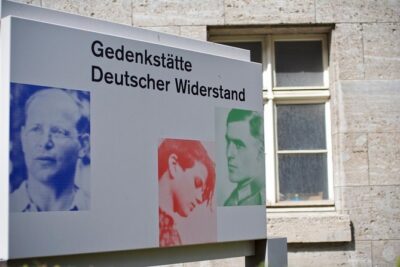
At the German Resistance Memorial Center in the Bendlerblock, the subject changes from Nazi power to opposition against it. The exhibits cover several resistance efforts, including the July 20, 1944 attempt to kill Hitler led by Claus von Stauffenberg.
The site asks difficult questions. Why did people resist? When did they act? What did they risk? Your guide can explain the political and personal motives behind these efforts, as well as the consequences when they failed.
The memorial is particularly useful for visitors who know the Nazi story mainly through Hitler and the war. It shows that resistance existed, although it was dangerous, limited, and often divided. The visit lasts roughly twenty minutes, giving you a focused introduction rather than a full museum visit.
Bebelplatz remembers the destruction of ideas
Bebelplatz is one of Berlin’s most memorable public squares. On May 10, 1933, Nazi-organized book burnings destroyed works considered un-German. The event was a public attack on freedom of thought and a warning about the regime’s intentions.
Your guide will point out the State Opera House and Humboldt University, then direct your attention to the underground memorial. Through a pane of glass, empty bookshelves symbolize the books that were lost and the culture the Nazis tried to erase.
The stop takes about ten minutes, but it carries a large idea in a small space. It also gives the tour a welcome change of pace. After military monuments and government buildings, Bebelplatz shows how propaganda and censorship reached universities, writers, and ordinary public life.
The Reichstag connects dictatorship with democracy
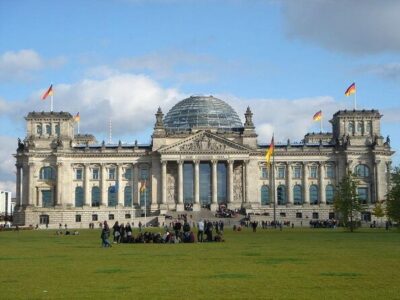
The Reichstag Building offers one of the clearest links between the Nazi era and modern Germany. Completed in 1894, it became central to the political crisis after the Reichstag Fire in 1933.
The Nazis used the fire to justify measures that weakened civil liberties and helped suppress political opposition. Your guide will explain how that event fit into the wider seizure of power, then cover the building’s severe wartime damage and later restoration as a symbol of democratic government.
The outside visit lasts about fifteen minutes. Admission to the building is not included, so do not expect this tour to provide access to the dome or interior exhibits. That is not necessarily a weakness. The tour is concerned with the Reichstag’s historical role, while an additional visit can focus on the building as a working parliament and modern democratic symbol.
The Holocaust Memorial demands time for reflection
The Memorial to the Murdered Jews of Europe consists of 2,711 concrete slabs arranged in rows across a large open space. Their changing height and the uneven paths between them create a disorienting experience.
Your guide will explain the memorial’s design and place it within the history of Nazi persecution of European Jews. You will also have time to walk among the slabs and form your own response. The memorial is not a conventional statue with a simple message. Its meaning changes as the ground drops and the blocks rise around you.
The listed stop is about fifteen minutes. That is enough to introduce the site, but I would return later if possible. The memorial’s underground information center is not part of the stated tour, and the full history of the murdered Jewish communities requires more time than a short stop allows.
The Führerbunker site shows the regime at its end
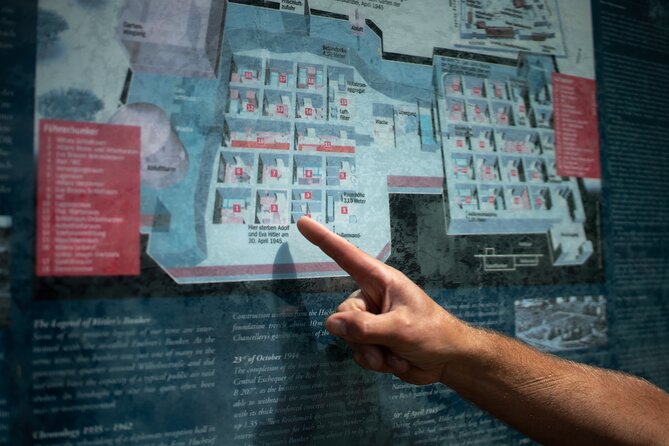
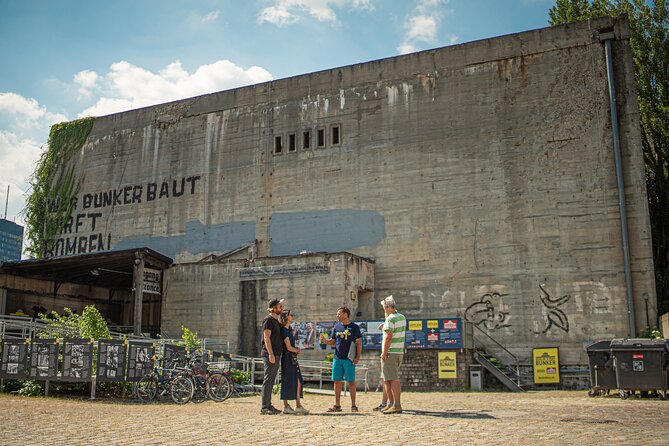
At the Führerbunker site, you stand above the location of Hitler’s last headquarters. The original underground complex was largely destroyed after the war, and there is no dramatic preserved bunker interior to enter.
That absence is part of the point. Your guide will explain the layout, the final weeks of the Nazi leadership, Hitler’s decisions as Soviet forces closed in, and the atmosphere of collapse inside the bunker. The location now looks ordinary, which makes the story more unsettling.
Expect roughly ten minutes here. It is a place for historical explanation, not visual spectacle. The guide’s ability to describe what happened is far more important than what you can see on the surface.
Anhalter Bahnhof links transport with deportation
Anhalter Bahnhof was once one of Berlin’s major railway stations. Its surviving façade hints at its former importance, while its wartime role connects the city’s transport system to the deportation of Jewish families.
Your guide will explain how the station served as a departure point for people sent toward concentration camps. The human scale of this stop matters. Instead of discussing deportation only as a policy, you can picture families passing through a functioning city station before being torn from their homes.
The visit lasts around ten minutes. The station is not presented as a complete museum experience, so expect the guide to supply much of the context. It is a brief but serious stop that shows how persecution depended on ordinary systems, including railways and administration.
The T4 memorial confronts Nazi murder of disabled people
At Tiergartenstraße 4, the T4 memorial commemorates people murdered under the Nazi euthanasia program. The program targeted people with disabilities and mental illnesses who were labeled unworthy of life.
This is one of the tour’s most important additions because it widens the story beyond the Holocaust and wartime battlefields. Your guide will explain the program’s history, the victims, and the ethical questions surrounding medical authority, discrimination, and state-sponsored killing.
The memorial’s design and information panels provide a direct way to learn about a crime that is less familiar to many visitors. The stop lasts about ten minutes, so you should consider returning if you want to study the displays closely.
Moltkebrücke marks the final battle for Berlin
Moltkebrücke is a bridge with a direct connection to the last days of World War II. Soviet troops crossed it in 1945 during their assault on Berlin, making it part of the military push that ended Nazi control of the city.
Your guide will describe the nearby fighting and explain why this crossing mattered. The bridge works as a useful counterpoint to the political sites because it brings the final battle into the physical city.
The visit takes about ten minutes. You will not see a battlefield preserved in place, but the location helps you understand how close the fighting came to government buildings and central Berlin.
What three to four hours really gets you
The route lists twelve stops, with many visits lasting ten to twenty minutes. That means the day is built around movement, short explanations, and a wide view of Berlin’s Nazi and wartime sites.
Because the locations are spread across the city, this is not a continuous stroll. Public transportation may be part of the route, and one review specifically praised the chance to see Berlin while using its transport system. Hotel pickup and drop-off make the overall plan easier, though you should still wear comfortable shoes and dress for the weather.
The tour operates in all weather. Rain, cold, or heat will affect how much you enjoy the outdoor stops, especially in a route with long periods outside. A private guide can adjust the pace, but cannot turn a serious outdoor history tour into an indoor museum visit.
Is $192.97 per person good value?
At $192.97 per person, this is not the budget choice. The value depends heavily on group size and your interest in the subject.
For a couple or a small family, the private format can be worthwhile because the guide can meet you at your hotel, adjust the route, and answer questions without a large group slowing the day. Hotel pickup and drop-off also save planning time. Group discounts are offered, which may improve the price for a larger party.
The cost includes the professional guide and hotel transportation service. Food and drinks are not included, and Reichstag admission is not included. Several memorial sites have no admission charge, but the price is mainly paying for the guide’s time, historical interpretation, and private planning.
I would choose this over a cheaper group tour if you want a focused introduction, have limited time in Berlin, or are traveling with children who need the pace adjusted. If you prefer to read every museum panel or spend an hour at each memorial, use this as an orientation and plan return visits.
Who should book this experience?
I would recommend it to first-time visitors who want a clear framework for Berlin’s Nazi past. It also suits families, since a private guide can explain difficult subjects at an appropriate level and keep younger listeners involved.
History students, World War II readers, and visitors interested in Holocaust remembrance will find plenty to discuss. The tour also works for people who already know the basic story but want to connect political buildings, memorials, and battle locations on a map.
It may not suit you if you want a relaxed sightseeing walk with light commentary. The material includes dictatorship, murder, deportation, political terror, and the persecution of disabled people. It is serious from start to finish, though guides can add broader Berlin context and, when appropriate, connect the Third Reich to the Cold War.
Practical booking advice
Confirmation is normally sent when you book. If you reserve within two days of the tour, confirmation may take up to 48 hours and remains subject to availability.
Free cancellation is available up to 24 hours before the start time. Changes or cancellations inside that window are not accepted for a refund. Wear weather-appropriate clothing, bring comfortable shoes, and allow for the possibility of public transport between sites.
The tour is offered in English and is described as suitable for most participants. Pickup and drop-off are included, but confirm the meeting details when booking, especially if your hotel is not clearly covered. One group successfully arranged hotel pickup even though it was not initially shown as a possible starting point, so it is worth asking rather than assuming.
Should you book this private Berlin Third Reich tour?
Book it if you want a serious, personalized history lesson that covers far more than Hitler’s headquarters. The strongest parts are the private pacing, hotel service, wide range of sites, and guides who can connect individual stories to large political events.
Do not book it expecting long museum visits or an inexpensive walking tour. Several stops last only ten or fifteen minutes, and the price is high for a short half-day. For many visitors, though, the route offers exactly what Berlin can be hard to provide on your own: a clear story linking government power, repression, resistance, genocide, and the city’s final battle.
FAQ
How long does the private Berlin Third Reich tour last?
The tour lasts approximately three to four hours.
What language is the tour offered in?
The tour is offered in English.
Is hotel pickup included?
Yes. Hotel pickup and hotel drop-off are included.
Is this a private tour?
Yes. Only your group participates in the private activity.
What is the price?
The listed price is $192.97 per person. Group discounts are offered.
Is admission to the Reichstag included?
No. Admission to the Reichstag Building is not included.
Are food and drinks provided?
No. Food and drinks are not included.
What happens if the weather is bad?
The tour operates in all weather conditions, so you should dress appropriately.
Can I cancel for a full refund?
Yes. You can cancel at least 24 hours before the local start time for a full refund. Cancellations or changes made less than 24 hours before the start time are not accepted.
Just added in Berlin
- Berlin & The Third Reich Private Guided Tour★ 5.0 · 3 reviews
- Third Reich Quest Experience in Berlin★ 4.5 · 7 reviews
- Private Analogue Photography Experience in Berlin★ 5.0 · 3 reviews
- Berlin Urbex Adventure and History Tour★ 5.0 · 9 reviews
- The Beauty of Berlin by Bike: Private Tour★ 5.0 · 59 reviews
- Berlin: Guided Bike tour of the Berlin Wall and Third Reich★ 5.0 · 160 reviews
- Beyond Currywurst: Berlin’s Hidden Street Food & Culture Tour★ 5.0 · 100 reviews
- Berlin Third Reich & Cold War Walking Tour With A Guide★ 5.0 · 7 reviews
Third Reich Tours, compared.

Berlin’s Best: 2 Hour Walking Tour Third Reich and the Cold War
Read our review →
Third Reich Berlin: Hitler and WWII Walking Tour
Read our review →
Walking Tour of Former Nazi Party Rally Grounds
Read our review →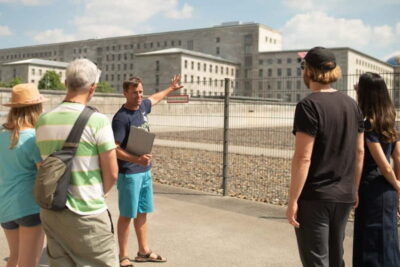
Berlin Third Reich Sites: Half-Day Walking Tour
Read our review →Browse the lists this tour appears in