
Reviewed · MUSEUMS
Berlin: Classical concerts at the Bode Museum Berlin
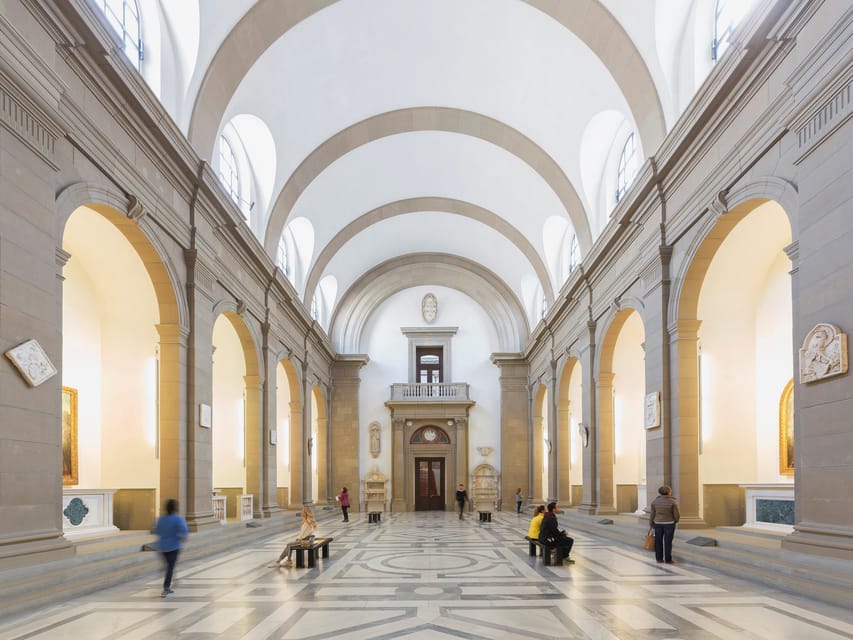
The best part of this experience is the setting: you hear classical music inside the Bode Museum’s Gobelin Room, on the first floor of one of Berlin’s grand museum buildings. The program changes by date, so you might hear Bach violin sonatas, Mozart opera, Haydn, Romantic duets, or piano music.
I like the mix of music, art, and history, and I like that museum admission comes with the concert ticket. The main drawback is practical: finding the concert room can be confusing, and you choose a seating category rather than a particular seat.
Key points to know before booking
- A different program each date: Choose from Baroque music, Mozart, Haydn, Beethoven, Romantic works, opera, or piano.
- The Gobelin Room is on the first floor: Present your voucher at the museum box office to receive your tickets.
- The concert may run longer than 90 minutes: Most performances include a 20-minute interval and can last up to two hours.
- Museum entry is included: You can add a cultural visit to your concert evening without paying a separate museum admission fee.
- Named Berlin performers lead the programs: Artists include Marianne Boettcher, Beatrice Wehner-Schaller, Inês Pinto, and the Mozart Ensemble Berlin.
- Check the price carefully: A concert ticket listed at $37 may offer good value, but one booking comparison found a much higher price than buying directly at the venue.
Music in the Bode Museum’s Gobelin Room
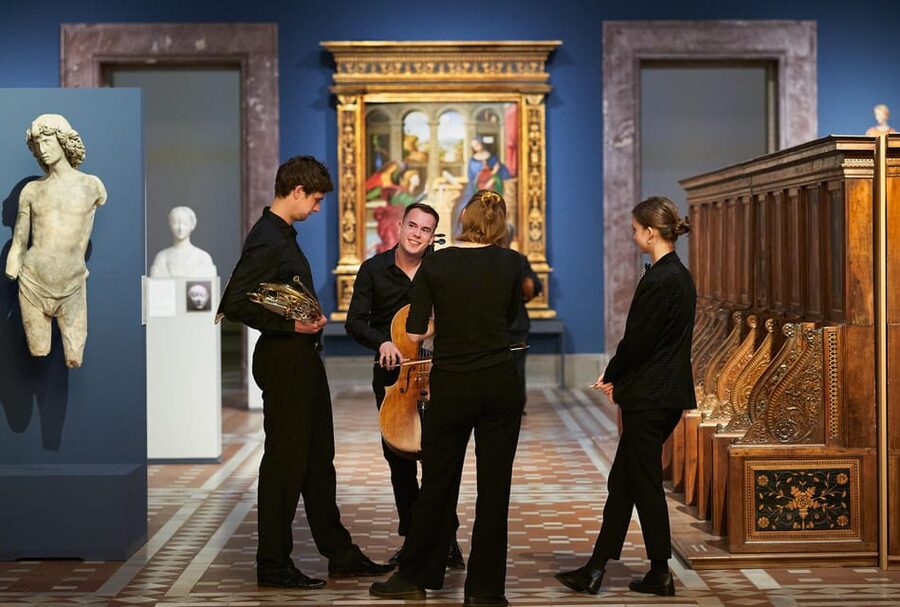
This is not a concert in a plain modern hall. The performance takes place in the Gobelin Room of the Bode Museum, a formal room on the first floor. The room gives the evening a sense of place that a standard concert venue cannot match.
The appeal is simple. You are not only listening to a violin, piano, organ, voice, or chamber ensemble. You are doing so among museum interiors and historic decoration, with the Bode Museum itself forming part of the experience.
That setting matters most for shorter chamber programs. A recorder and chest organ recital, a violin and harpsichord pairing, or a solo piano evening can feel closely tied to the room. Large operatic expectations would be out of place here, but the intimate scale suits early music and chamber works well.
The exact atmosphere depends on your date. The February program, Italian Masters of the Baroque, features Susanne Ehrhardt on recorders and Christian Finke on chest organ. In May, Marianne Boettcher pairs with Yuko Tomeda for Bach’s violin sonatas on violin and harpsichord.
More Museum Tours in Berlin
- Berlin: Jewish Museum Berlin Entrance Ticket
★ 4.5 · 8,393 reviews - Berlin: DDR Museum Tickets
★ 4.3 · 3,443 reviews - Berlin: Natural History Museum Entrance Ticket
★ 4.6 · 3,382 reviews
Choosing the right concert date
The date is more important here than with a standard sightseeing ticket. Each performance has its own style, instruments, and mood, so I would choose the program first and the calendar second.
The February 14 program, Italian Masters of the Baroque, is a natural pick if you enjoy early music and the clear, focused sound of recorders and organ. It should appeal to listeners who prefer a small instrumental program to a full opera production.
On March 28, The Birth of Romanticism is performed by the Mozart Ensemble Berlin. The title suggests a program built around the change from Classical forms toward the more expressive sound of the Romantic period.
The April schedule offers the widest range. Pure Romance Romantic Duets, on April 1, features soprano Inês Pinto, alto Kristina Naudé, and pianist Beatrice Wehner-Schaller. This is the date to choose if you want the human voice at the center of the evening.
Italian Impressions, on April 2, brings together violinist Marianne Boettcher, flutist Yasuko Fuchs-Imanaga, and guitarist Karin Leo. The unusual combination of violin, flute, and guitar gives this date a different character from the piano and vocal programs.
Haydn’s The Seven Last Words, performed by the Mozart Ensemble Berlin on April 3, is likely the most solemn selection in the schedule. The work is substantial enough to reward careful listening, especially if you prefer reflective instrumental music.
April 4 is devoted to Piano Music to Dream To, performed by Maria-Magdalena Pitu-Jokisch. This is the simplest choice for a quiet evening built around one pianist and a more inward mood.
Romanticism in Women’s Hands follows on April 5, with Beatrice Wehner-Schaller at the piano. The title gives this recital a clear focus, making it a good choice for listeners interested in Romantic piano music and women composers or performers.
On April 6, Beethoven-Liszt in Dialogue features Naoko Fukumoto on piano. This date should suit you if you want a concentrated keyboard program linking two major composers.
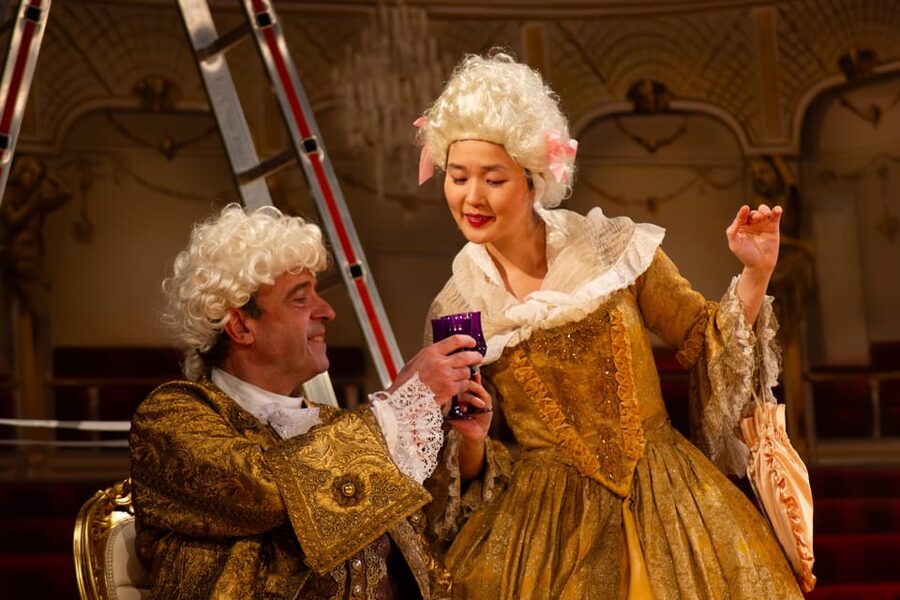
The May dates return to early music and opera. Bach Violin Sonatas 2, on May 9, pairs Marianne Boettcher with harpsichordist Yuko Tomeda. On May 10, the program combines Mozart’s Bastien and Bastienne with Gluck’s The Converted Drunkard, staged by Roland Treiber and performed by the Mozart Ensemble Berlin with several singers.
From Bach and Mozart to Romantic opera

The program list covers several periods, but it is not a random collection of famous names. It gives you a useful choice of musical scale.
Baroque selections such as Bach and the Italian Masters program center on instruments and musical structure. You may find these dates especially satisfying if you enjoy hearing how a recorder, harpsichord, organ, or violin carries the work without a large orchestra.
Mozart appears in several forms. The Mozart Ensemble Berlin performs The Birth of Romanticism and Haydn’s The Seven Last Words, then supports the staged May 10 opera program. This gives the ensemble a broad role across the calendar, from instrumental works to theater.
The vocal dates add another layer. Pure Romance uses soprano, alto, and piano, while the May 10 program includes multiple singers and staging. Bastien and Bastienne features Yuri Mizobuchi as Bastien, Inês Pinto as Bastienne, and Stephen Barchi as the magician.
The same May 10 concert also includes The Converted Drunkard. Its cast includes Marcel Benedikt as Jacob Ofenloch, Kristina Naudé as Barbara, Inês Pinto as Bastienne, Yuri Mizobuchi as Bastien, and Stephen Barchi as Luke. Roland Treiber handles the staging.
Some content is presented in its original language. That matters most for the opera date. If you need every word translated, check the program details before booking. If you are comfortable hearing opera in its original form, the language becomes part of the period feel.
What the 90-minute format really means
The advertised duration is 90 minutes, but the practical timing is more flexible. The concert can last between 90 minutes and two hours, and it usually includes a 20-minute break.
Plan your evening around the longer figure. A concert beginning at a set time may not finish as quickly as a strict 90-minute event, especially when an interval is included. I would avoid booking a tight dinner reservation immediately afterward.
The break can be useful. It gives you time to stretch, collect your thoughts, and take in the room rather than rushing through one uninterrupted block of music. It also makes the program easier to manage if you are combining the concert with other Berlin activities.
There is no food included, so arrange refreshments separately. The experience is focused on the performance and museum setting, not on a meal or reception.
More live music in Berlin:
- Berlin: Classical Concert at Kaiser Wilhelm Memorial Church
★ 4.6 · 387 reviews - Berlin: Classical concerts in Köpenick Palace – Aurora Hall
★ 4.1 · 5 reviews - Dresden: Gala Concert in the Dresden Zwinger
★ 4.7 · 1,510 reviews - Munich: Classical Concert at the Residenz Palace
★ 4.5 · 148 reviews
Finding the room without a fuss
The Gobelin Room is on the first floor of the Bode Museum. To receive your concert tickets, present your voucher at the box office.
Give yourself extra time for this step. One booking experience found the concert hall difficult to locate and could not find anyone from the booking company at the appointed time. That is a useful warning, even though it does not mean every arrival will be troublesome.
I would arrive early, go straight to the museum box office, and ask for clear directions to the Gobelin Room. Do not assume the room will be obvious once you enter. A few spare minutes can keep the start of the concert calm.
You receive a seating category rather than a specific seat. This gives you less control than a theater booking, so arrive with realistic expectations. If sitting in a particular location matters to you, this arrangement may be a drawback.
Is $37 a fair price?
At $37 per person, the package can be good value if you want both a concert and a museum visit. You get the performance ticket plus free museum admission, and the setting is part of what you are paying for.
The value depends heavily on the program. A date with performers you particularly want to hear, such as Marianne Boettcher, Inês Pinto, or the Mozart Ensemble Berlin, may justify the price more easily than a date you choose only because it fits your schedule.
I would also compare prices before paying. One booking found the advertised price through a third-party seller was €64, while the venue’s own prices were reported as €48 or €40. Prices can change, but the lesson is clear: check the Berliner Schlosskonzerte option before finalizing your purchase.
The ticket includes museum admission, which improves the overall value if you plan to look around before the music begins. It is less useful if you only want a concert and have already visited the museum, or if the same performance is much cheaper at the box office.
Free cancellation up to 24 hours before the event and reserve-now, pay-later booking add flexibility. Those terms are helpful when your Berlin schedule is still changing, but you should confirm the conditions shown for your chosen date.
Who will enjoy this Berlin concert?
I would recommend this experience first to people who already like classical music, chamber music, opera, or historic performance spaces. The variety of dates means you can choose a program that fits your taste rather than accepting a fixed playlist.
It also suits a museum-focused Berlin itinerary. The Bode Museum provides the setting, and admission is included, so the concert can become part of a larger visit to Museum Island.
Couples and solo visitors may find the format especially easy to fit into an evening. The program is long enough to feel substantial, but not so long that it takes over an entire day.
Families with children should choose carefully. The supplied information does not give an age recommendation, and some works are serious or contemplative. A 90-minute to two-hour concert may be a poor match for a child who is not used to classical performances.
The experience is wheelchair accessible. That is useful, though seating is selected by category rather than by exact seat, so you should raise any seating needs when collecting your tickets.
My practical verdict
I like this concert series because it offers something more memorable than a standard music hall, yet it does not require a full evening at the opera. The Bode Museum room, the changing programs, and the named artists give you real choices.
The strongest dates for a first booking are the ones with a clear personal hook. Pick Bach if you want focused early music, the Romantic duet program if voices are your priority, Beethoven and Liszt for piano, or the May 10 staged Mozart and Gluck program if you want opera and theater.
Book it if the music matches your taste and you value the museum setting. Think twice if you need exact seat selection, a guaranteed 90-minute finish, or the lowest possible ticket price without comparing the venue’s own rate.
FAQ
Where does the concert take place?
The concert takes place in the Gobelin Room on the first floor of the Bode Museum in Berlin.
What is included in the ticket?
The ticket includes admission to the museum and entry to the concert.
How long does the concert last?
The stated duration is 90 minutes, but performances can last between 90 minutes and two hours. They usually include a 20-minute break.
Can I choose a specific seat?
No. You can select a seating category, but not a particular seat.
How do I receive my concert tickets?
Present your voucher at the Bode Museum box office to receive your tickets.
Is the experience wheelchair accessible?
Yes, the activity is listed as wheelchair accessible.
Are meals or drinks included?
No. Food is not included.
Are all performances in German?
Some content is shown in its original language. The information does not state that every performance is in German.
Which artists perform in the series?
The schedule includes artists such as Susanne Ehrhardt, Christian Finke, Marianne Boettcher, Beatrice Wehner-Schaller, Inês Pinto, Kristina Naudé, Naoko Fukumoto, Maria-Magdalena Pitu-Jokisch, and the Mozart Ensemble Berlin.
Can I cancel my booking?
You can cancel up to 24 hours in advance for a full refund, according to the stated booking terms.
Just added in Berlin
- Berlin & The Third Reich Private Guided Tour★ 5.0 · 3 reviews
- Third Reich Quest Experience in Berlin★ 4.5 · 7 reviews
- Private Analogue Photography Experience in Berlin★ 5.0 · 3 reviews
- Berlin Urbex Adventure and History Tour★ 5.0 · 9 reviews
- The Beauty of Berlin by Bike: Private Tour★ 5.0 · 59 reviews
- Berlin: Guided Bike tour of the Berlin Wall and Third Reich★ 5.0 · 160 reviews
- Shared Underground Party Tour in Berlin★ 4.5 · 9 reviews
- Beyond Currywurst: Berlin’s Hidden Street Food & Culture Tour★ 5.0 · 100 reviews
Museums, compared.




Skip-the-Line: Berlin Wall Museum at Checkpoint Charlie
Read our review →
Browse the lists this tour appears in