
Reviewed · HISTORICAL TOURS
Güstrow: Guided tour of the historic city center
Güstrow’s great surprise is Ernst Barlach’s Floating, a striking figure suspended inside the brick Gothic cathedral. It gives this small northern German town an artistic pull that goes well beyond pretty streets and old façades.
I like the tour’s compact 90-minute length and its mix of Gothic, Renaissance, and classicist buildings. I also like the free city museum admission, which adds value before or after the walk. The main drawback is that some people want more stops in the old town, while others feel the cathedral receives a little too much attention.
The guide speaks German only, and the meeting point is easy to find at Güstrow Information on Franz-Parr-Platz 10. The tour costs $10 per person, a fair price for a live guide, a central walking route, and museum admission.
Key points to know before booking
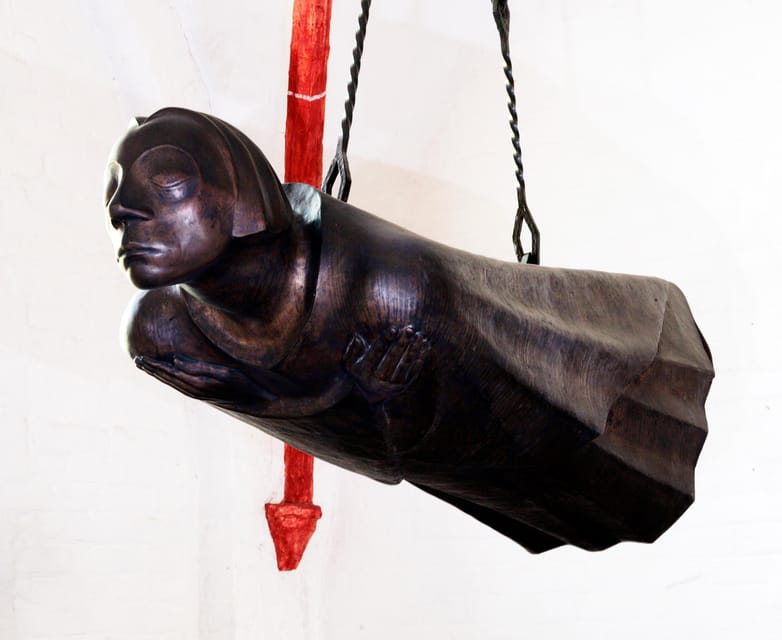
- Ernst Barlach’s Floating is the emotional center of the tour, inside Güstrow Cathedral.
- Güstrow’s old town survived largely intact for 500 years, giving the walk a pleasing mix of periods and styles.
- The Renaissance castle is a major stop, though it is currently under restoration.
- The market square brings together the town hall, parish church, and town houses from several architectural periods.
- The German-speaking guides are praised for clear, lively storytelling and patient answers.
- The $10 price includes a 90-minute tour and free city museum admission, but separate entrance fees are not included.
Why Güstrow rewards a guided walk
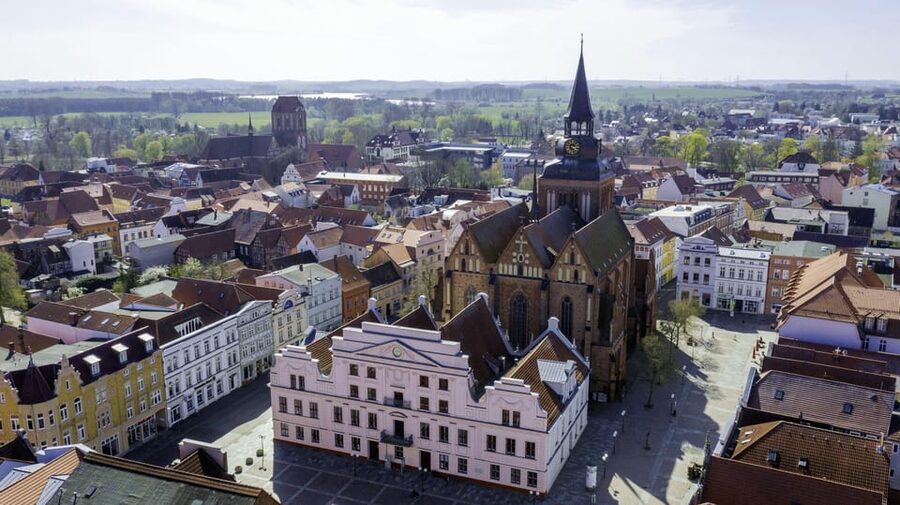
Güstrow is a former residential and administrative town in northern Germany. That background helps explain the town’s architectural range. It was important enough to attract rulers, officials, artists, and writers, yet small enough for its historic center to remain readable on foot.
You will not simply see one preserved street followed by another. The route brings together brick Gothic churches, Renaissance buildings, classicist town houses, historic squares, and traces of the people who shaped the town. Wallenstein, August the Strong, Tsar Peter the First, Georg Friedrich Kerting, John Brinkmann, Ernst Barlach, and Uwe Johnson are all linked with Güstrow in different ways.
That is where a guide earns the $10 fee. On your own, you can photograph a handsome façade. With a guide, you get the reason it matters, who used it, and how it fits into Güstrow’s wider story.
The town is also a good choice if you prefer places that feel less hurried than Germany’s best-known city centers. The route covers the central sights in a short time, so you can pair it with the city museum, a meal, or further wandering.
More History Tours in Rostock:
- Rostock: Guided tour of the historic city center
★ 4.5 · 311 reviews - Leipzig: City History Canal Sightseeing Tour on a Motorboat
★ 4.7 · 6,232 reviews - Berlin: Natural History Museum Entrance Ticket
★ 4.6 · 3,382 reviews
Starting at Güstrow Information on Franz-Parr-Platz
The tour begins at Güstrow Information, Franz-Parr-Platz 10, 18273 Güstrow. This gives you a clear place to arrive, and the walk returns to the same location after about 90 minutes.
I recommend arriving with enough time to check the start details and get comfortable before the guide begins. The experience is a walking tour through winding streets and historic squares, so practical shoes make sense even though the route is not long.
The tour is listed as wheelchair accessible. That is useful for many visitors, but historic town centers can still include uneven paving or tight spaces. If you have particular mobility needs, it is sensible to confirm the route details with Güstrow Information before you go.
The activity is offered in German. If you are comfortable following German spoken at a normal tour pace, you can expect a live explanation rather than an audio guide or printed route.
Güstrow Cathedral and Barlach’s Floating
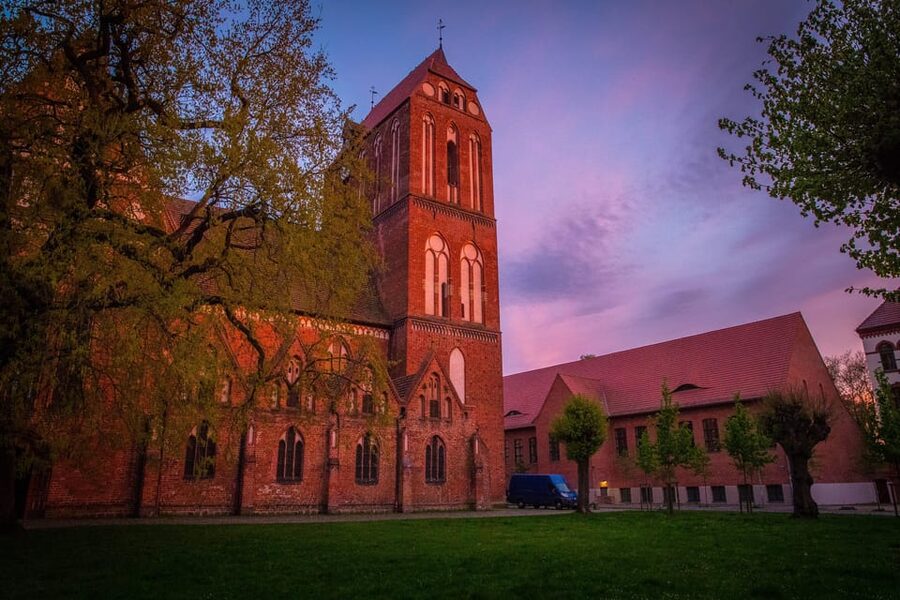
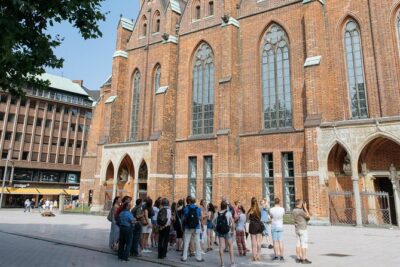
The cathedral is the strongest individual stop. It is built in the brick Gothic style, a form closely associated with northern Germany, where local building traditions made extensive use of brick rather than pale cut stone.
Inside, you see Ernst Barlach’s Floating, one of Güstrow’s best-known works. The figure is suspended in the cathedral, an unusual setting that gives the sculpture a solemn force. Even if you are not deeply familiar with Barlach, the contrast between the medieval church interior and the modern artwork makes this stop memorable.
The sculpture also provides a useful change of pace. The rest of the tour asks you to read streets, façades, squares, and political history. Here, the focus is more direct and visual. You have time to consider the work itself and the atmosphere created by placing it in a sacred Gothic building.
This is also the section where the tour may feel uneven for some people. One rating specifically described the cathedral portion as a little heavy and wished there were more of the town center. If you prefer architecture and urban history over art, you may want to treat the cathedral as one important part of the walk rather than the whole reason to book it.
The old town’s mix of Gothic, Renaissance, and classicist design
The old town is the main stage of the tour. Güstrow is described as having remained largely undestroyed for 500 years, and that continuity is what makes the walk worthwhile. You can compare buildings from different periods without constantly losing the thread of the historic center.
Look for the contrast between brick Gothic details, Renaissance forms, and classicist town houses. A good guide helps you notice the distinctions instead of reducing everything to old German architecture. The point is not simply that the buildings are historic. It is that each period left a different mark on the town’s streets and public spaces.
The winding route should suit you if you enjoy looking closely. Güstrow’s appeal is not based on one grand boulevard. It comes from the relationship between streets, squares, churches, civic buildings, and residential façades.
The strongest feedback about the guiding focuses on the explanations. Guides are praised for having extensive subject knowledge while keeping the delivery lively, personal, and easy to follow. One recent booking described a very friendly guide who answered questions patiently and clearly enjoyed the work.
That warmth matters in a town of this size. A dry list of dates would make the route feel like homework. A guide who connects the buildings with personalities and local stories makes the same streets much easier to remember.
A few more half-days in Rostock worth comparing
- All-in-One Berlin Shore Excursion from Warnemunde
★ 4.5 · 293 reviews - Best Berlin Shore Excursion from Warnemunde or Rostock Port
★ 4.8 · 200 reviews - Rostock: City Walking Tour
★ 4.9 · 198 reviews - Rostock: Full-Day, Half-Day, or Sunset Sailing Experience
★ 4.7 · 174 reviews
The market square and its many periods
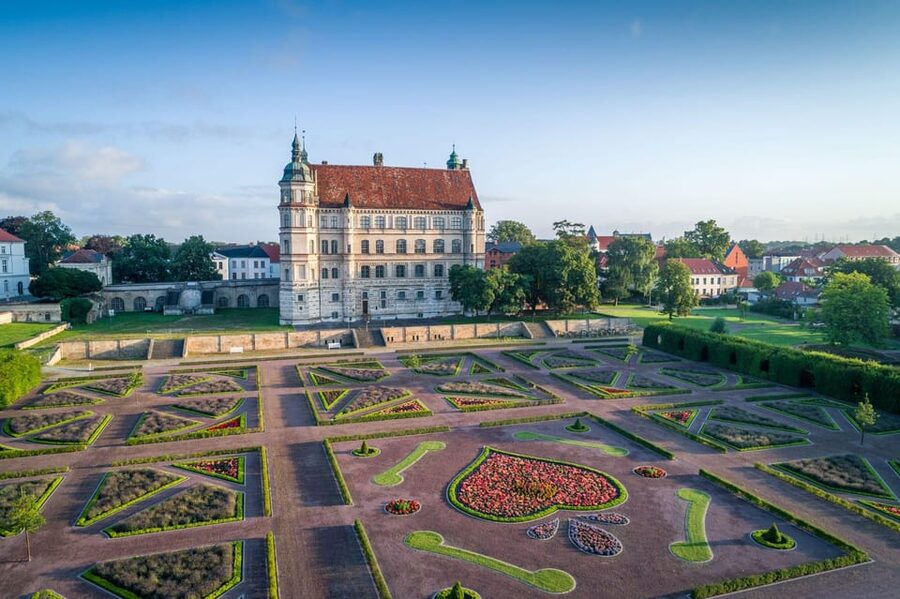
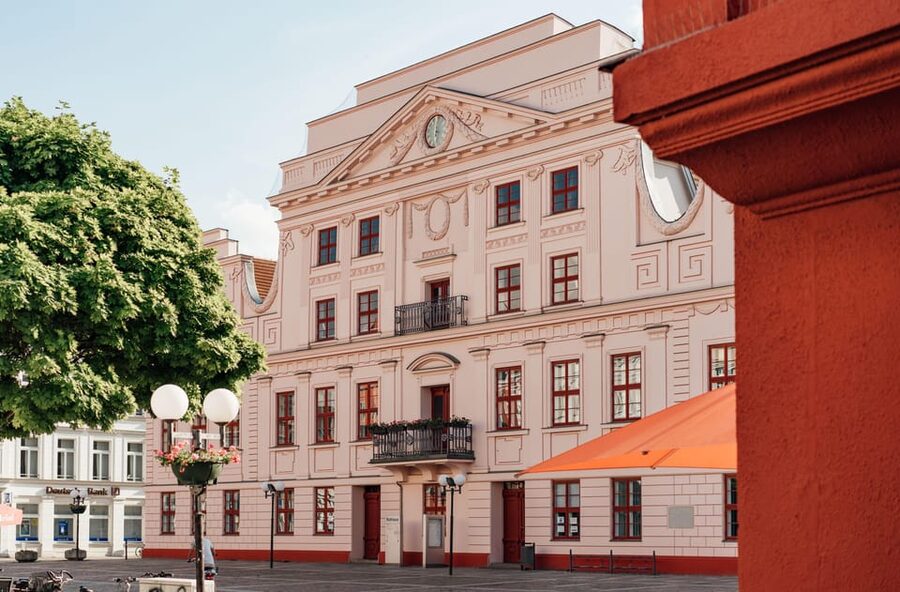
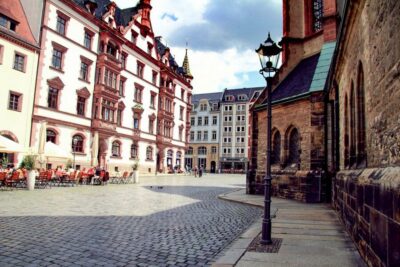
The market square gives you one of the clearest views of Güstrow as a former administrative center. Around it are the town hall, parish church, and town houses from different stylistic periods.
This is a good place to pause and compare the roles of the buildings. The town hall represents civic power. The parish church brings religious life into the same public space. The surrounding houses show how private and commercial life filled in the edges.
You will likely get more from this stop if you pay attention to the whole square rather than waiting for one famous façade. The value is in the grouping. Güstrow’s architectural story becomes easier to understand when several periods appear together.
Some participants wanted one or two additional stops in the center. That is a fair criticism, especially if you arrive expecting a full town tour rather than a focused introduction. At the same time, the guide may run slightly beyond the scheduled time when questions and explanations take longer. One person specifically appreciated the extra time, while still wishing for more locations.
In other words, the pace depends partly on the guide and the group. You get detail, but not every corner of the old town.
The Renaissance castle under restoration
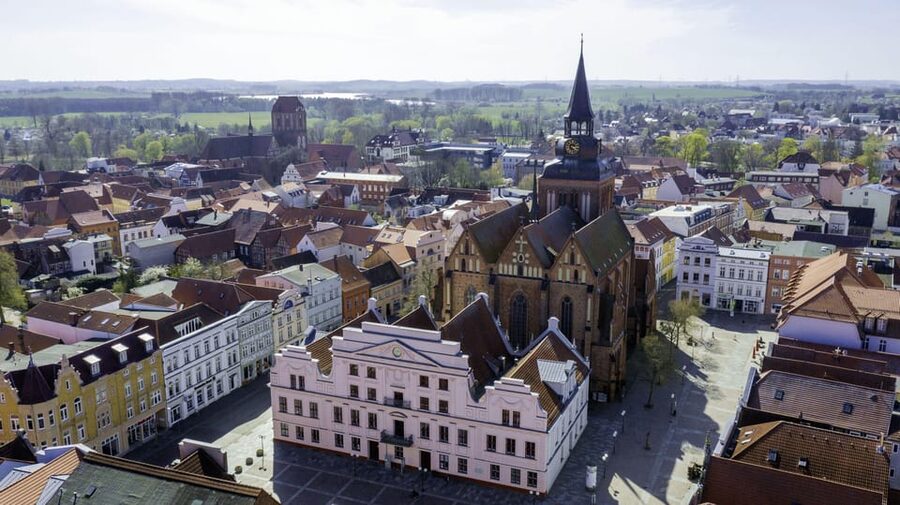
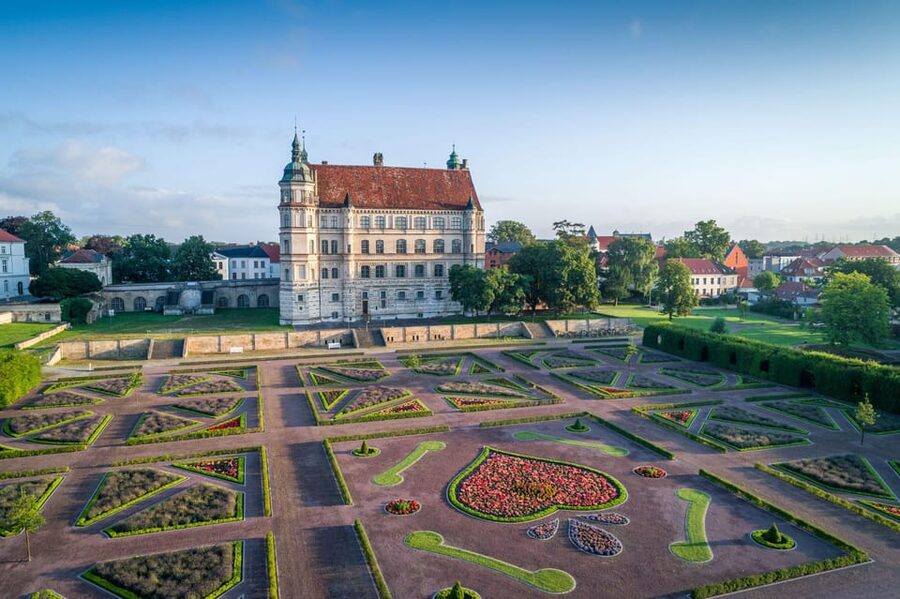
Güstrow’s Renaissance castle is another major reason to take the walk. It is presented as one of the most important Renaissance castles in northern Europe, though it is currently under restoration.
That condition affects your expectations. This is not a promise of a fully open, polished palace visit with every room available. Instead, the castle is an architectural and historical stop, with the guide explaining its importance and place in Güstrow’s former residential life.
For many people, restoration is part of the story. Historic buildings need work, and seeing a major monument in that stage reminds you that preservation is an ongoing process rather than a finished product.
The castle also helps connect Güstrow’s streets with the people who once used the town as a seat of power. The references to figures such as Wallenstein, August the Strong, and Tsar Peter the First add a wider European frame to what might otherwise seem like a small local center.
If entering the castle is essential to your plans, check the current arrangements before booking. Entrance fees are not included, and the tour information does not promise interior access. The safe assumption is that the guided walk explains the castle from the city route, with any separate admission handled on its own.
The free city museum adds real value
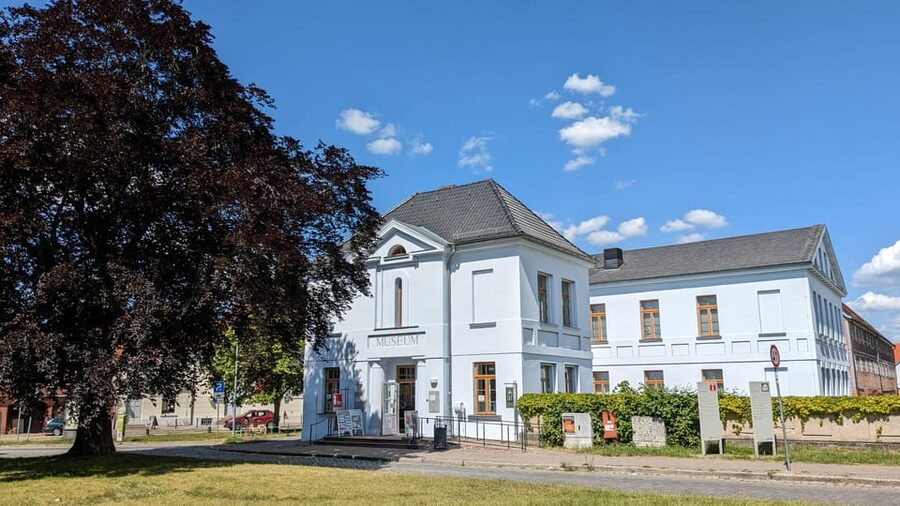
Admission to the city museum is included before or after the walking tour. That is an easy benefit to overlook, but it makes the $10 price more attractive.
A museum visit can help you place the streets and buildings in context. Take the tour first if you like having questions in mind as you look at exhibits. Choose the museum before the walk if you prefer to start with background and then recognize the places in person.
The order may depend on opening times and the tour schedule, so check availability for the day you plan to visit. The key point is that you are not paying only for a short walk. You also receive a museum visit without an added charge.
Other entrance fees are not included. The exact cost and access arrangements for any separate site should be checked locally.
What the guiding is really like
The clearest pattern in the feedback is the quality of the guides. The strongest comments describe guides as friendly, engaged, well prepared, and able to explain a great deal without becoming dull.
That does not mean every visitor will want the same balance. One person found the tour highly informative but wished the route showed more of the center. Another felt there was too much information about the cathedral. These are useful warnings for you: this is a story-led tour, not a fast photo walk.
You should book it if you enjoy asking questions and learning why a place looks the way it does. You may prefer to explore independently if you want to cover a large number of streets quickly or spend only a few minutes inside the cathedral.
The group size is not specified. In at least one case, the experience felt personal because the booking was for a very small group. You should not assume every departure will be private, but the guide’s willingness to answer questions is a strong part of the experience.
Is 90 minutes enough for Güstrow?
Ninety minutes is enough for a useful introduction, not a complete examination of every monument. You see the key central sights, hear the main stories, and finish with a better sense of how Güstrow fits together.
The short duration works well for a day trip or a stop between other northern German destinations. It also leaves time for the free museum, further walking, and the parts of the town that the guided route cannot cover.
The tradeoff is clear. More explanation at the cathedral and castle means less time for secondary streets. If you want every major building identified, you may find the route too brief. If you want a focused overview with a capable local guide, the timing is sensible.
I would treat the tour as an orientation. Afterward, return to the market square, cathedral, or castle area at your own pace. The guide gives you the framework. Your extra walk supplies the details.
Who should book this Güstrow tour?
This tour suits you best if you:
- Have a strong interest in architecture, art, or German town history.
- Want a short introduction before exploring alone.
- Enjoy stories about artists, rulers, and local figures.
- Can follow a German-speaking guide.
- Appreciate a small-town setting rather than a major tourist center.
- Want a low-cost activity that includes city museum admission.
It is less suitable if you need an English-language tour, want guaranteed interior access to the Renaissance castle, or prefer a route packed with many quick stops.
The wheelchair-accessible listing is helpful, but the route runs through a historic center. Confirm any specific access concerns before arrival.
Price, cancellation, and practical value
At $10 per person, the tour offers good value. You receive a 90-minute guided walk, a live German-speaking city guide, and free city museum admission. That is a modest cost for a structured introduction to Güstrow’s main sights.
Entrance fees are not included, so budget separately if you plan to visit any paid attraction. The castle’s restoration also means you should confirm what can currently be entered or viewed.
You can cancel up to 24 hours before the activity for a full refund. Reserve now and pay later is available, which helps if your northern Germany schedule is still shifting. Starting times depend on availability, so check the date before you make other plans.
Should you book the Güstrow city tour?
I would book this tour if Güstrow is part of your route and you want the town to make sense quickly. The cathedral with Barlach’s Floating, the preserved old center, and the Renaissance castle give the walk more substance than a basic street circuit.
Go in expecting a focused German-language tour rather than a complete survey of every corner. If you are happy with detailed explanations, patient questions, and a few central highlights, the $10 price is easy to justify.
If you want more time in the old town, use the tour as your introduction, then continue on your own. That combination gives you the guide’s stories without giving up the freedom to explore at your preferred pace.
FAQ
Where does the Güstrow guided tour begin?
The tour begins at Güstrow Information, Franz-Parr-Platz 10, 18273 Güstrow.
How long does the tour last?
The guided walk lasts 90 minutes, or 1.5 hours.
What language is the tour conducted in?
The live tour guide speaks German. No other tour language is listed.
What does the tour cost?
The listed price is $10 per person.
Is the city museum included?
Yes. Free city museum admission is included before or after the tour.
Are entrance fees included?
No. Separate entrance fees are not included in the tour price.
Is the tour wheelchair accessible?
Yes. The activity is listed as wheelchair accessible.
What are the main sights on the route?
The route includes Güstrow Cathedral, Ernst Barlach’s Floating, the historic old town, the market square, the town hall, the parish church, historic town houses, and the Renaissance castle.
Can I cancel for a full refund?
Yes. You can cancel up to 24 hours in advance for a full refund. Reserve now and pay later is also available.
Just added in Rostock
- Rostock: Tour with the Rostocker Executioner★ 4.7 · 28 reviews
- Rostock: Hot Rod Sightseeing Tour to Warnemünde★ 5.0 · 19 reviews
- Rostock: Private Guided Walking Tour★ 5.0 · 4 reviews
- Rostock: Hot Rod Harbor City Tour★ 4.9 · 16 reviews
- Discover Rostock: A Guided City Tour for Cruise Guests★ 3.7 · 7 reviews
- Distillery tour with guide!★ 4.7 · 14 reviews
- Brewery tour with guide!★ 4.8 · 13 reviews
- Berlin & Sachsenhausen Concentration Camp Tour from Warnemünde and Rostock Port★ 4.5 · 60 reviews
Historical Tours, compared.
City History Canal Sightseeing Tour on a Motorboat
Read our review →


Browse the lists this tour appears in