
Reviewed · WALKING TOURS
Rostock: City Walking Tour
Rostock’s appeal comes into focus on foot, where a medieval town hall, Gothic churches, old lanes, and the harbor area fit into one tidy two-hour outing. This is a tour for getting your bearings rather than sitting through a long lecture on Hanseatic trade.
I like the private group format, which gives you room to ask questions and keeps the pace suited to your party. I also like the guide’s reported focus on seeing the city instead of piling on dates and facts. The main drawback is that the tour is offered in German and is not suitable for people with mobility impairments.
Key points to know
- Meet under Rostock’s griffin: Your guide waits at the main entrance of the Rathaus, beneath the city’s Greif symbol.
- See several sides of the city: The route links medieval buildings, Gothic churches, the university square, the old wall, and the historic harbor area.
- A true private tour: The $147 price covers up to six people, so the per-person cost drops sharply with a full group.
- Focused on walking: Expect a clear city introduction, not a long academic talk about the Hanseatic League.
- German is the tour language: Confirm this suits your group before booking.
- Plan for uneven walking: Mobility impairments are listed as a limitation, so this is not the best choice for anyone needing an accessible route.
Rostock in two hours, without the history lecture
Rostock was an important Hanseatic city, but you do not need a full course in Baltic trade to enjoy its center. The strength of this walk is its broad sweep. In two hours, you move from civic buildings to churches, from narrow old-town streets to open riverside routes, and from medieval traces to parts of the city shaped in the 20th century.
That variety matters. A shorter walk focused only on grand buildings can make Rostock feel like a museum. A route that includes the harbor area and everyday streets gives you a better sense of how the city is arranged. You see the historic center as a lived-in place, not just a set of postcard views.
The guide is there to connect those pieces. You can ask about a building, a street, or a detail you might otherwise pass without noticing. The tour’s strongest praise centers on clear explanations, useful background, and a sensible balance between talking and walking.
More Walking Tours in Rostock:
- Warnemünde: Guided Walking Tour
★ 4.3 · 102 reviews - Rostock: Private Guided Walking Tour
★ 5.0 · 4 reviews - Discover Berlin Half-Day Walking Tour
★ 5.0 · 9,624 reviews
Starting beneath the griffin at the Rathaus
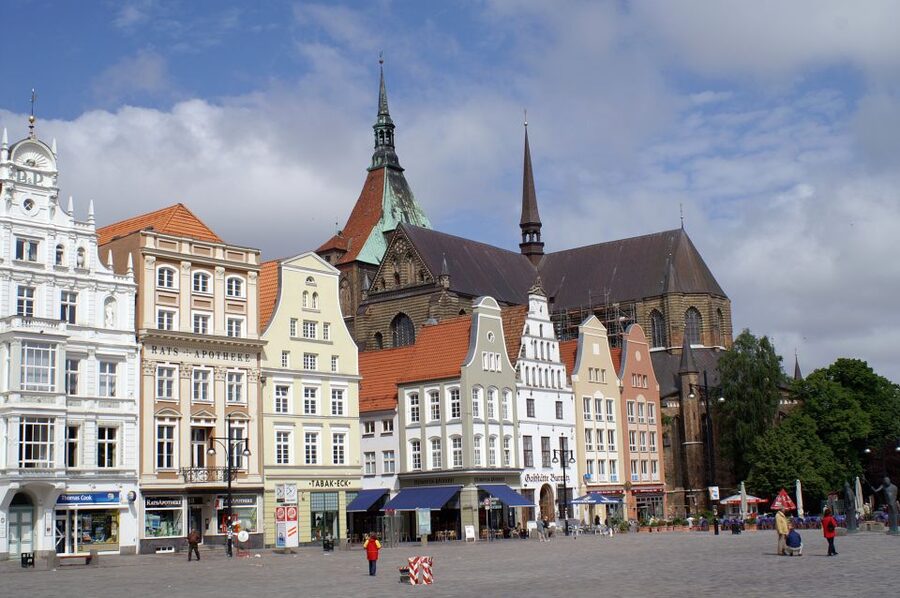
Your meeting point is easy to identify: the main entrance of Rostock’s Rathaus, under the symbol of the Greif, or griffin. That detail is useful in a busy square, since you are not searching for a vague meeting point somewhere in the old town.
The Rathaus gives the tour an appropriate beginning. It is one of the city’s central landmarks and a natural place to start understanding Rostock’s civic past. From here, your guide can set the scene for the town center before leading you into the surrounding streets.
I would arrive a little early, especially if you are meeting on a tight schedule. The tour lasts only two hours, so losing the first few minutes to finding the guide would cut into the walk. The supplied directions identify the main entrance clearly, but they do not include transport instructions or parking details.
Old-town lanes and medieval architecture
Once the walk moves into the old town, expect a mix of major sights and smaller streets. The route includes old-town alleys, where the scale changes from formal squares to more intimate passages. These lanes are valuable because they help you read the city’s layout rather than simply tick off individual monuments.
The guide is expected to point out details that are easy to miss when you explore alone. The experience description specifically promises lesser-known corners, though it does not name them in advance. That is a good reason to ask questions as you go. You may find that the most useful part of the walk is not a famous facade, but an explanation of how several streets and buildings fit together.
This portion also lets you compare different periods of Rostock’s development. Medieval architecture is part of the story, but the walk also reaches into the 20th century. The result should feel more balanced than a route that presents the city as frozen in the Middle Ages.
Gothic churches and the city’s skyline
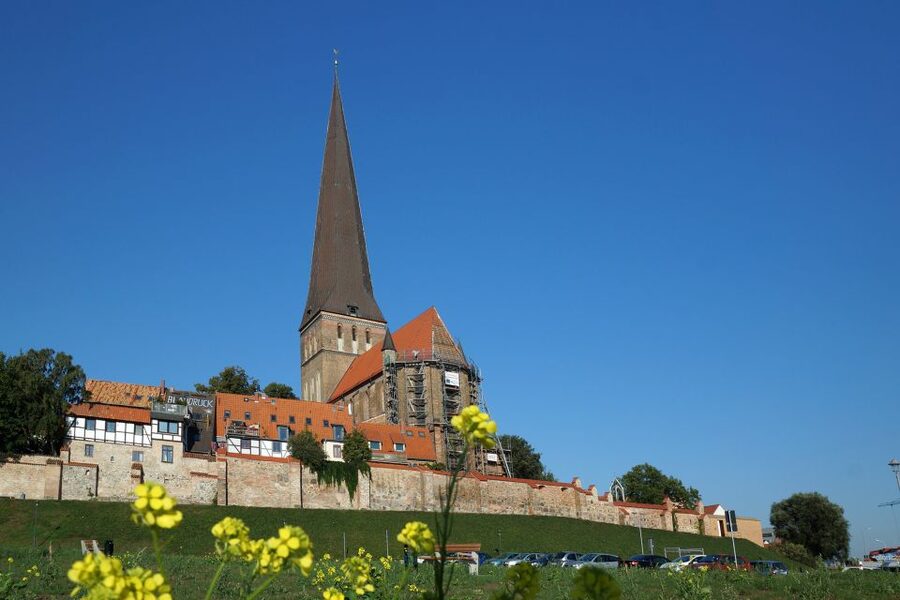
The tour includes Rostock’s Gothic churches, which provide some of the clearest evidence of the city’s medieval importance. The description does not name individual churches or promise interior visits, so you should expect to see and discuss key church buildings rather than assume admission is included.
Church stops can take up a lot of time on walking tours. Here, the feedback points to a more measured style. One recent assessment praised the guide for avoiding too many historical dates, while still explaining the sights clearly. That approach suits a two-hour route. You get enough context to understand why the buildings matter, without losing the rhythm of the walk.
If religious architecture interests you, ask your guide about the details you notice. If it does not, the tour appears flexible enough to keep moving and cover more of the city. The private format helps here, since your group can ask for clarification instead of following a fixed crowd.
A few more half-days in Rostock worth comparing
- Rostock: Guided tour of the historic city center
★ 4.5 · 311 reviews - All-in-One Berlin Shore Excursion from Warnemunde
★ 4.5 · 293 reviews - Best Berlin Shore Excursion from Warnemunde or Rostock Port
★ 4.8 · 200 reviews - Rostock: Full-Day, Half-Day, or Sunset Sailing Experience
★ 4.7 · 174 reviews
The medieval city wall and Rostock’s changing shape
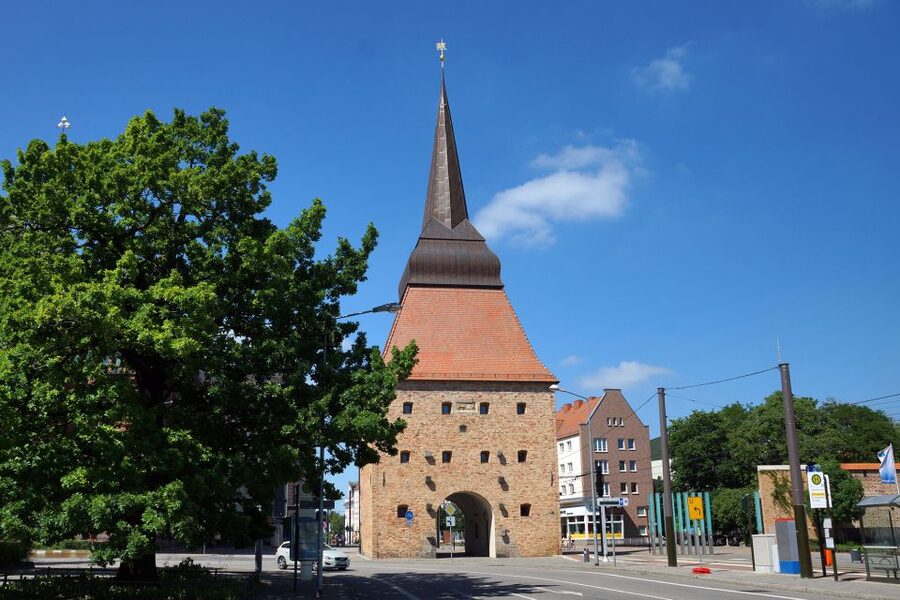
The medieval city wall gives you a physical sense of Rostock’s former boundaries. A surviving wall or wall section can explain the city more quickly than a page of dates: it shows where the historic town ended and how tightly organized it once was.
The route also links the old center with areas shaped by later history. The mention of 20th-century Rostock is important because it keeps the tour from becoming a simple medieval greatest-hits walk. You get a chance to see how the city changed over time, even if the supplied description does not specify which 20th-century sites appear.
Do not expect a long stop at every landmark. The tour is designed as an overview, and two hours passes quickly once you include walking between the Rathaus, churches, wall, university square, and harbor area. If one subject matters most to you, tell the guide early so the conversation can give it proper attention.
University square and the riverside route
University square adds a different mood to the itinerary. After medieval churches and civic buildings, an academic square shows another side of central Rostock. It is also a useful place to pause and understand how the old town functions beyond its historic monuments.
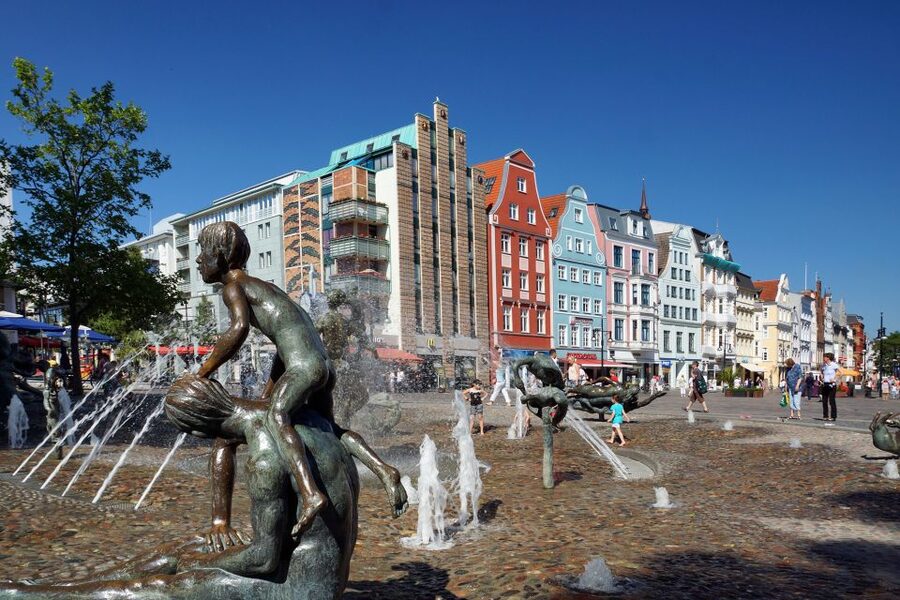
The riverside boulevards then open the route toward the harbor area. This change in setting is one of the tour’s most appealing features. Narrow lanes and enclosed squares can make a historic center feel dense, while the water and wider routes give you a clearer sense of space.
The walk is not described as a harbor cruise or a boat trip. You are seeing the historic harbor area on foot, as part of a city tour. That distinction matters if you are expecting a dedicated port excursion. For a first look at Rostock, though, including the harbor gives the city a stronger connection to its Hanseatic past.
Why the private group format matters
The price is $147 for a group of up to six people. At the maximum group size, that works out to $24.50 per person, which is a sensible price for a private two-hour tour with a live guide. For two people, the cost is $73.50 each, and for a solo booking the value is less compelling.
The calculation changes depending on your party. Families, couples traveling with friends, and small groups who prefer a private outing will get the best value. You are paying for personal attention and the ability to ask questions, not for entrance tickets or transportation. The included feature is the expert guide, so the value depends heavily on how much you want interpretation during your first hours in town.
A private group also avoids the usual large-group problem: waiting for a distant guide to finish speaking before you can move on. The positive feedback points to a comfortable pace, clear explanations, and the freedom to ask for information. Those are exactly the benefits you want from a small city walk.
German-language guiding and what to expect
The live tour guide language is German. That is not a minor detail. If everyone in your party is comfortable in German, the tour should be easy to follow and conversational. If not, you should confirm language suitability before booking, since no other language is listed.
The guide style appears to favor practical storytelling. One especially useful comment praised the way the tour kept its focus on walking and seeing Rostock rather than spending ten minutes on a single explanation of the Hanseatic League. Another praised the chance to ask questions and receive clear answers without being overwhelmed by dates.
That balance is ideal if you want an introduction you can use for the rest of your stay. You will not leave knowing every chapter of Rostock’s past, but you should have a framework for understanding the places you see afterward. If you want a specialist lecture on Hanseatic economics, church interiors, or military architecture, this may feel too broad.
Timing, walking demands, and practical comfort
Two hours is long enough to cover the main center without taking over your day. You can use it early in a visit to get oriented, then return later to the places that catch your interest. It also works well before an afternoon activity, provided you allow time to reach the meeting point.
This is a walking tour through old streets, squares, boulevards, and the harbor area. The activity is specifically marked as unsuitable for people with mobility impairments. The supplied information does not describe pavement, slopes, rest stops, or the availability of seating, so you should not assume the route can be adapted.
Wear shoes you can walk in comfortably and keep your schedule flexible enough for a steady town-center stroll. No transportation is included, and the tour is not presented as a hop-on, hop-off experience. Its purpose is to show you Rostock at street level.
Cancellation is flexible up to 24 hours before the start for a full refund, and you can reserve now and pay later. Those terms are useful if your plans around Rostock are still changing, but they do not alter the tour’s main limits: German guiding and a route that requires walking.
Who will get the most from this Rostock walk?
I would recommend this tour to you if you want a private introduction to Rostock and prefer local explanation over a recorded audio guide. It fits a small family or group of friends especially well, since six people can share the fixed price.
It is also a good match if you like a measured amount of history. The strongest feedback favors explanations that are informative but not overloaded with numbers. You can see the town hall, churches, wall, university square, lanes, boulevards, and harbor area while keeping the day moving.
You may want another option if you need an accessible route, require a language other than German, or want a highly specialized historical tour. The description gives a strong general outline, but it does not promise museum entry, interior church visits, food stops, or transportation.
Should you book the Rostock City Walking Tour?
Book it if you want to understand Rostock’s center in two hours and your group can comfortably walk and follow German guiding. The combination of a private group, a broad route, and a guide who keeps history in proportion makes the tour useful for a first visit.
The $147 price is fair for six people and harder to justify for one or two unless personal attention matters greatly to you. Meet at the Rathaus under the griffin, arrive ready to walk, and ask about the lesser-known corners along the way. With a 4.9 rating from 198 bookings, the experience has a strong record, but its fit for you still depends on the language and mobility requirements.
FAQ
Where does the tour meet?
Meet your guide in front of Rostock’s Rathaus at the main entrance, under the symbol of the Greif, or griffin.
How long does the walking tour last?
The tour lasts two hours.
What language is the tour conducted in?
The live tour guide language is German.
Is this a private tour?
Yes. The activity is arranged as a private group tour.
How many people can join for the listed price?
The price of $147 covers a group of up to six people.
What sights are included?
The walk includes key sites in Rostock’s town center, old-town alleys, the historic harbor area, the Rathaus, Gothic churches, the medieval city wall, riverside boulevards, and the university square.
Is the tour suitable for people with mobility impairments?
No. The activity is specifically listed as unsuitable for people with mobility impairments.
Can I cancel for a refund?
Yes. You can cancel up to 24 hours in advance for a full refund. You can also reserve now and pay later.
Just added in Rostock
- Rostock: Tour with the Rostocker Executioner★ 4.7 · 28 reviews
- Rostock: Hot Rod Sightseeing Tour to Warnemünde★ 5.0 · 19 reviews
- Rostock: Private Guided Walking Tour★ 5.0 · 4 reviews
- Rostock: Hot Rod Harbor City Tour★ 4.9 · 16 reviews
- Güstrow: Guided tour of the historic city center★ 4.6 · 12 reviews
- Discover Rostock: A Guided City Tour for Cruise Guests★ 3.7 · 7 reviews
- Distillery tour with guide!★ 4.7 · 14 reviews
- Brewery tour with guide!★ 4.8 · 13 reviews
Walking Tours, compared.





Berlin’s Best: 2 Hour Walking Tour Third Reich and the Cold War
Read our review →


Third Reich Berlin: Hitler and WWII Walking Tour
Read our review →Browse the lists this tour appears in