
Reviewed · THIRD REICH TOURS
Nuremberg: Tour of Former Nazi Party Rally Grounds
Nuremberg’s former rally grounds are shocking because the grand scale is still easy to read in the stone, roads, and unfinished Congress Hall. This 90-minute private tour gives the site a human guide and historical context instead of leaving you to puzzle over huge structures on your own. I like the focus on the political machinery behind National Socialism, and I like that the price covers up to eight people. The main drawback is that the tour is in German, and entrance fees are not included.
You meet in front of the Documentation Centre Nazi Party Rally Grounds at Bayernstraße 110. The meeting point has caused some confusion, so save the guide’s phone number from your booking confirmation and arrive with the DokuZentrum clearly in mind. Individual start times can be requested, which helps if your schedule does not fit a fixed departure.
Key points to know before you book
- A private group for up to eight: The $128 price is charged per group, not per person, so it can be good value for a family or small party.
- The tour is in German: This is important for anyone who needs English or another language.
- The unfinished Congress Hall shows the regime’s scale: Its size makes the planned mass gatherings feel less like an abstract idea.
- Zeppelin Field and the great streets are part of the story: You see the spaces built for ceremony, control, and spectacle.
- The site connects to the 1946 Nuremberg Trials: The guide places the rally grounds within the wider story of National Socialism and its aftermath.
- Entrance fees are separate: The tour includes the guide and tour itself, not museum admission or meals.
Why Nuremberg’s rally grounds matter
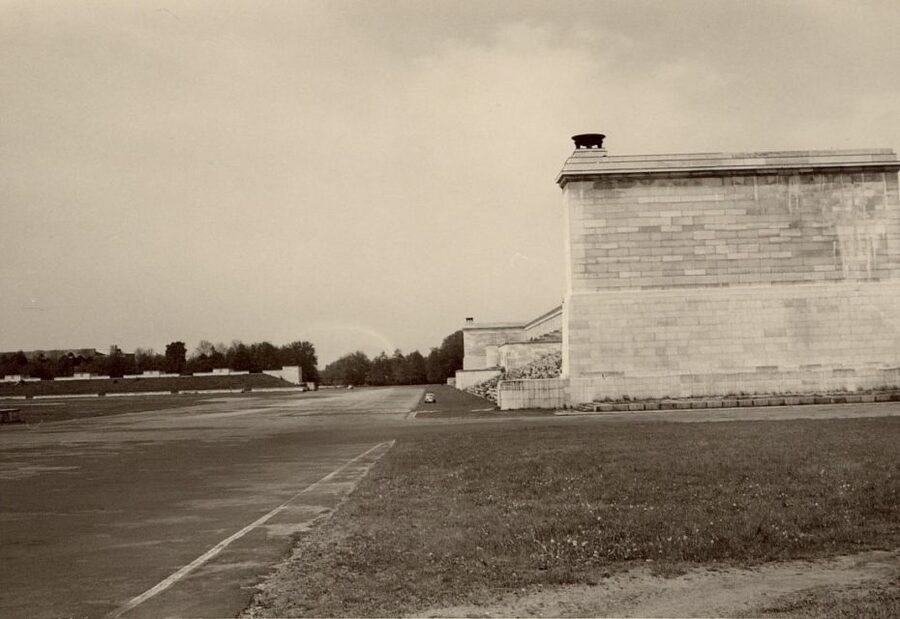
This is not a cheerful city tour stop. The former Nazi Party Rally Grounds present a difficult chapter of German history in physical form. The buildings were planned to express power, order, and obedience, and their scale still affects the way you experience the area.
The Nazi regime selected the southeastern part of Nuremberg for a gigantic assembly and demonstration site. Albert Speer, the regime’s chief architect, planned an area that could hold up to 400,000 people. That figure is hard to grasp until you see the long roads and immense structures intended to frame mass political events.
I find the site most useful when you look beyond the architecture. The stones were not simply meant to provide shelter or public space. They were tools of political theatre. Every broad approach, grand façade, and carefully ordered gathering area helped turn the individual into part of a mass.
A guide matters here because the remains do not explain themselves. Without context, you may see only large old buildings and open ground. With a good explanation, you can understand how architecture, propaganda, ceremony, and public control worked together.
More Third Reich Tours in Nuremberg
- Nuremberg: Walking Tour of Former Nazi Party Rally Grounds
★ 4.7 · 1,665 reviews - Nuremberg Old Town and Nazi Party Rally Grounds Walking Tour in English
★ 4.5 · 504 reviews - Nuremberg Old Town and Nazi Rally Grounds Walking Tour
★ 4.7 · 377 reviews
Starting at the Documentation Centre
The meeting point is in front of the Documentation Centre Nazi Party Rally Grounds, at Bayernstraße 110. This gives you a clear landmark, but the exact meeting spot may not feel obvious once you arrive. One participant had trouble locating it and solved the problem by calling the guide using the number on the booking confirmation.
My practical advice is simple: arrive early, keep that phone number ready, and do not assume every part of the complex looks like a conventional museum entrance. If you are arranging a custom departure, confirm the exact time and meeting instructions in advance.
The Documentation Centre itself is a useful reference point, even though this experience does not include entrance fees. The tour is designed as a guided visit to the former rally grounds, so you should not assume admission to an indoor exhibition is part of the price. If you want to visit the center as well, plan for that separately.
Starting here also gives the guide a natural place to explain the purpose of the grounds before you walk farther into them. That opening context is valuable. It helps you read the buildings as planned instruments of power rather than as isolated ruins.
The unfinished Congress Hall and the problem of scale
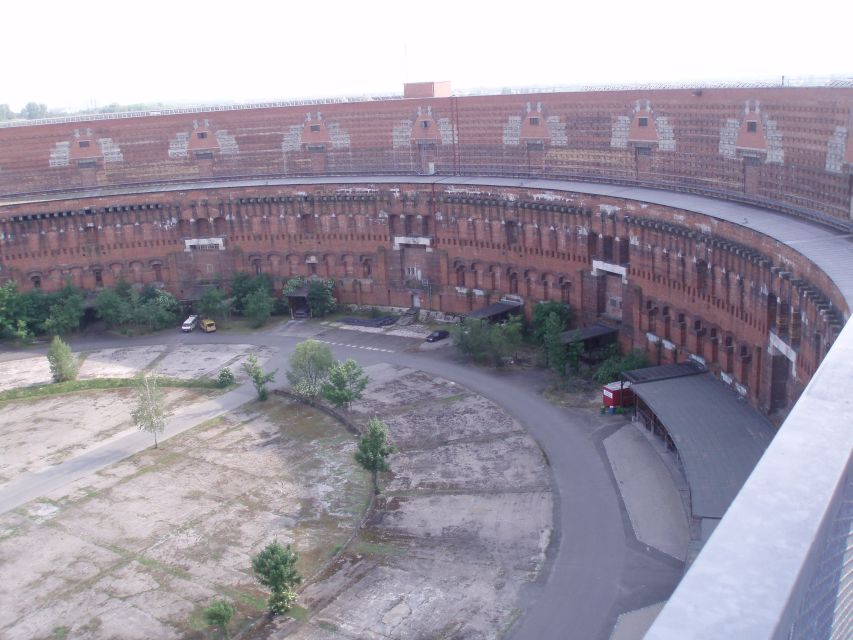
One of the main sights is the unfinished Congress Hall. It was intended to be a masterpiece of monumental Nazi architecture, yet it was never completed. That unfinished state is part of what makes the building so striking.
You can see the ambition in the size of the structure. The project was meant to support the regime’s image of permanence and authority. Instead, it remains a reminder of plans that were grandiose, destructive, and incomplete.
The building is often discussed alongside the Colosseum, an association that points to its intended sense of imperial scale. You do not need to admire the design to understand its impact. The sheer mass is the point. It was meant to make the state appear larger than ordinary life.
This is also where a live guide adds the most value. You can take photographs of an enormous building on your own, but the guide can explain what it was meant to do politically and how it fit into the wider grounds. The strongest feedback about this tour focuses on detailed explanations and the guide’s ability to answer questions fully.
That makes this a good choice if you want more than a quick look. The tour is not just a walk past large structures. It gives you a way to connect architecture with ideology.
Zeppelin Field and the spaces built for mass gatherings
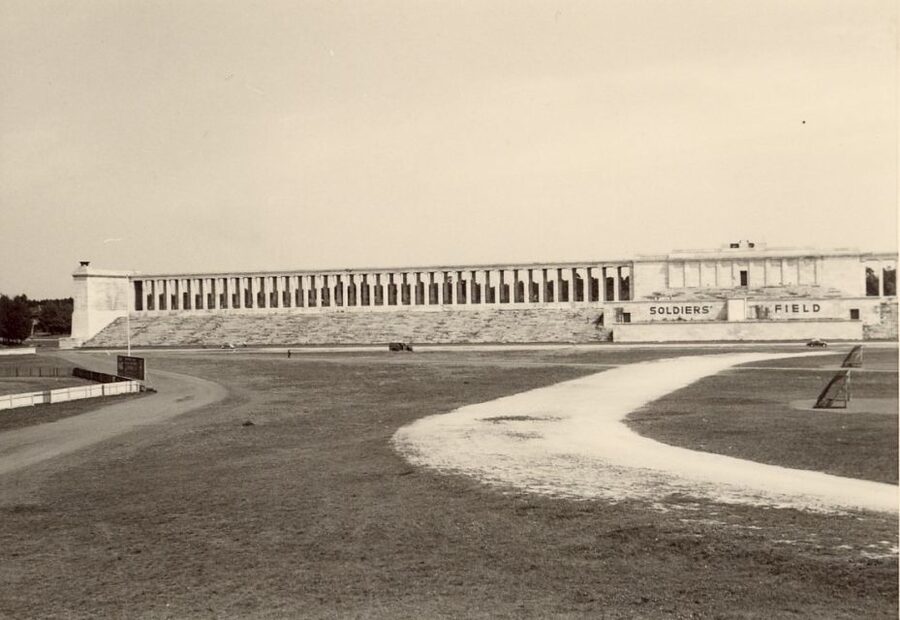
The route also includes Zeppelin Field, one of the best-known parts of the former rally grounds. Here, the size of the area helps you understand how the regime used crowds, ceremony, and visual order.
The field was not designed for a small meeting or a local celebration. It belonged to a system of mass gatherings that made political loyalty look unanimous. The open space and formal arrangement were part of the message.
As you walk through the area, pay attention to how the setting directs your attention toward the central spectacle. The important detail is not only what was built, but how people were expected to stand, move, watch, and respond. The great streets and broad approaches supported the same goal.
I like this portion of the tour because it shows the practical side of propaganda. A speech or banner can disappear, but the physical setting can continue to shape how you imagine the event. The grounds make the regime’s planned scale visible without requiring you to picture it from a textbook description.
Still, you should come prepared for a serious experience. The site is not presented as a theme park or a polished monument. Its meaning comes from the uncomfortable connection between impressive construction and an oppressive political system.
Same city, a completely different kind of day:
- Nuremberg: City Tour with the Bimmelbahn Train
★ 4.4 · 2,475 reviews - Nuremberg: Old Town Guided Walking Tour
★ 4.6 · 2,416 reviews - Nuremberg: Tunnels and Secret Passages in the City Wall Tour
★ 4.8 · 2,334 reviews - Nuremberg: Medieval Dungeons Guided Tour
★ 4.8 · 1,726 reviews
The great streets and the planned city of power
The tour includes walks along the great streets that were laid out for the rally grounds. Their width and length were not accidental. They helped organize movement and created a suitable setting for military displays, marches, and huge public ceremonies.
This part of the route can seem less dramatic than the Congress Hall or Zeppelin Field, but it is important. A regime does not display power only through one building. It uses routes, sight lines, gathering spaces, and repeated symbols to shape public life.
Your guide can help you notice how these elements fit together. The buildings were not scattered attractions. They formed a planned assembly and demonstration area for an enormous number of people. That plan tells you much about how National Socialism wanted to present itself.
The walk also gives the 90-minute tour a useful rhythm. You move between major structures rather than spending the entire time in one spot. Since the grounds are large, comfortable shoes and weather-ready clothing are sensible choices, although the supplied information does not specify the exact walking route or conditions.
What the tour explains about National Socialism
The advertised focus is broader than architecture. You learn about the days of National Socialism and the political background that gave the rally grounds their purpose.
That distinction matters. A tour of the buildings alone could turn the site into a study of monumental design. The better approach is to ask why the regime wanted such buildings, who they were meant to impress, and how mass gatherings supported its political goals.
The guide’s role is central. The strongest praise for this experience concerns the depth of the explanations, the extra information added during the walk, and the ability to answer questions. One German-speaking guide was described as highly experienced and full of useful historical detail, though no guide name is provided in the available information.
You should use the private format to ask questions. With only your own group, you are not tied to the pace of a large crowd, and you can ask for clarification when a point is difficult. The private setup is especially useful for families or groups with different levels of background knowledge.
The tour does not pretend that this history is easy. Its value is in giving you a structured way to face it. You leave with a clearer sense of how political messages were built into streets and buildings, not just delivered in speeches.
The 1946 Nuremberg Trials connection
The grounds are also linked to the Nuremberg Trials in 1946. That connection gives the tour a second historical movement: first, the creation of a site for Nazi spectacle, then the legal reckoning that followed the regime’s crimes.
The rally grounds help explain the public face of National Socialism. The trials represent the attempt to confront the leaders and crimes of that system through international law. Seeing both parts of the story in relation to one another gives the visit more weight.
The available tour information does not promise a courtroom visit or a separate trials museum stop, so keep your expectations precise. You are visiting the former rally grounds and hearing about their place in the wider history. If the trials are a major interest, you may want to arrange additional sightseeing on your own.
Even so, the connection prevents the tour from becoming only an architectural walk. It places the physical remains within the history of political crimes, defeat, and accountability.
Is the $128 group price good value?
At $128 for a private group of up to eight, the value depends on how many people join. For one or two people, the cost is fairly high for a 90-minute tour. For six to eight people, the per-person cost drops sharply, making it a practical option for a family or small group.
The price includes the tour and guide. It does not include entrance fees or meals, so budget separately if you want to enter the Documentation Centre or eat before or after the walk.
You are paying mainly for interpretation and flexibility. The grounds are free to look at from the outside, but understanding the political planning behind them is harder without guidance. A private guide can also spend more time on your questions than a large scheduled group normally allows.
I would choose this experience for a group that wants a focused historical visit and is comfortable in German. I would hesitate if you speak no German, need a long indoor museum visit, or want a tour packed with several parts of Nuremberg. This is a narrow subject, handled in a short time.
Who will get the most from this 90-minute walk?
History students, architecture enthusiasts, and visitors interested in the Nazi period will find the subject especially worthwhile. The tour also suits anyone who wants to understand why Nuremberg remains closely connected with both Nazi spectacle and postwar justice.
Families can benefit from the private format because the guide can adjust explanations and answer questions without a large group listening. The subject is serious, so parents should decide how much historical detail is suitable for younger children.
German speakers are the clear best fit because the live guide speaks German. If your group needs another language, confirm that before booking rather than assuming a translation option is available.
The short duration works well before or after other Nuremberg plans. Ninety minutes is enough to cover the key structures and political background, but not so long that the visit takes over your day.
Practical advice for a smoother visit
Wear shoes suitable for walking around a large former rally complex. The itinerary includes the great streets, Congress Hall, and Zeppelin Field, so you should expect movement between major areas rather than a single indoor stop.
Give yourself time to find the Documentation Centre before the start. The meeting point is in front of the building at Bayernstraße 110, but one person found it unclear in practice. Keep the phone number from your confirmation available in case you need to contact the guide.
Ask about an individual start time if the available departure does not suit your plans. The activity allows requests for custom start times, though you should arrange this before arriving.
The tour is offered as a private group, so make sure your full party knows the meeting point and language. Since the fee covers up to eight people, adding another person does not increase the listed group price, though the booking details should reflect your actual party size.
Free cancellation is available up to 24 hours in advance for a full refund, and you can reserve now and pay later. Those terms help if your Nuremberg schedule is still shifting, but they do not replace checking the final booking conditions for your chosen date.
Should you book the former rally grounds tour?
Book it if you want a serious, guided explanation of Nuremberg’s Nazi past and you can follow German. The unfinished Congress Hall, Zeppelin Field, and great streets make the regime’s planned scale visible, while the guide supplies the political meaning that the buildings cannot provide on their own.
The $128 rate is strongest for a private group of several people. Solo visitors and couples may find it expensive for 90 minutes, especially since entrance fees are separate.
I would make this a priority for a small German-speaking group with an interest in history, architecture, or the Nuremberg Trials. I would skip it if you want a general city tour, need English guidance, or prefer a museum-only visit. For the right audience, it is a focused and sobering way to understand why these grounds still matter.
FAQ
Where does the tour meet?
The meeting point is in front of the Documentation Centre Nazi Party Rally Grounds, DokuZentrum, at Bayernstraße 110 in Nuremberg.
How long does the tour last?
The tour lasts 90 minutes.
What is included in the price?
The price includes the tour and a tour guide.
Are entrance fees included?
No. Entrance fees are not included.
Are meals included?
No. Meals are not included.
How many people can join the private group?
The price is listed for a private group of up to eight people.
What language does the guide speak?
The live tour guide speaks German.
Can I request a different start time?
Yes. Individual start times are possible upon request.
Can I cancel the tour for a refund?
Yes. You can cancel up to 24 hours in advance for a full refund.
Just added in Nuremberg
- Tour en español al Campo Zeppelin★ 5.0 · 8 reviews
- Stein: Public guided tour of the “Old Mine” museum★ 4.5 · 18 reviews
- “Rotes Bier” and “Blaue Zipfel”. A historical-culinary walk★ 4.4 · 190 reviews
- Nuremberg: Old Town Guided Tour By Bus★ 4.4 · 198 reviews
- Nürnberg Bachelor(ette) Party with Night PubCrawl★ 4.2 · 5 reviews
- Nuremberg: Bar and Club Tour with Free Shots and Free Entry★ 3.8 · 23 reviews
- Nuremberg: WWII Tour, Courtroom 600 and 3rd Reich Sites★ 4.6 · 94 reviews
- Nürnberg kennenlernen: Highlights in der Altstadt★ 4.7 · 189 reviews
Third Reich Tours, compared.



Berlin’s Best: 2 Hour Walking Tour Third Reich and the Cold War
Read our review →

Third Reich Berlin: Hitler and WWII Walking Tour
Read our review →
Walking Tour of Former Nazi Party Rally Grounds
Read our review →
Berlin Third Reich Sites: Half-Day Walking Tour
Read our review →Browse the lists this tour appears in