
Reviewed · THIRD REICH TOURS
Munich: Third Reich and World War II Private Guided Tour
Munich’s Nazi past is not hidden behind a museum wall. It runs through Marienplatz, Hofbräuhaus, Odeonsplatz, and Königsplatz, places you may already plan to see. This private walk connects those familiar sights to Hitler’s rise, the Beer Hall Putsch, wartime destruction, resistance, and Munich’s liberation in 1945.
I like the private format, which gives you room to ask hard questions instead of following a fixed script. I also like the choice between a focused three-hour walk and a longer visit to the NS Documentation Center. The main drawback is the price: at $311 per person, this is a serious splurge, especially for a solo visitor or a small group.
Key points
- Marienplatz begins the story, linking Munich’s central square to Nazi propaganda events and the city’s wartime destruction.
- Hofbräuhaus marks a key political moment, where Hitler made a speech connected with the founding of the National Socialist German Workers’ Party in 1920.
- The Beer Hall Putsch route leads to Feldherrnhalle, the site of Hitler’s failed attempt to seize power in Bavaria.
- Resistance receives real attention, including the White Rose Group led by five university students.
- Königsplatz reveals the scale of Nazi spectacle, including mass rallies and book burning.
- The 4.5-hour option adds the NS Documentation Center, with photographs, documents, films, and media stations covering the Nazi era, war, and postwar Munich.
Starting at Marienplatz, where Munich’s story turns dark
Meet your guide in front of Hotel BEYOND by Geisel at Marienplatz 22, opposite St. Peter’s Church. Do not go into the hotel. Its staff are not handling the tour, so wait outside at the stated meeting point.
Marienplatz is a smart place to begin. You are in the heart of Munich, surrounded by the New Town Hall and the daily movement of the city, yet this square also hosted Nazi propaganda events. That contrast gives the tour its purpose from the first few minutes. You are not studying a distant chapter in a textbook. You are looking at a place where political theater took place in public.
The New Town Hall is another useful starting point. The building was reconstructed after the bombings that destroyed much of central Munich in 1945. Your guide uses the surviving architecture and the rebuilt city to explain both the wartime damage and Munich’s postwar appearance.
I appreciate this opening because it puts responsibility and memory beside sightseeing. You can admire the Rathaus facade while also asking how the city became the capital of the National Socialist movement. A private guide can adjust the pace here and explain the context that a quick photograph cannot provide.
More Third Reich Tours in Munich
- Munich: Third Reich & WWII Walking Tour
★ 4.6 · 6,181 reviews - Third Reich Walking Tour Munich
★ 4.5 · 4,291 reviews - Munich: Birthplace of the Third Reich Guided Walking Tour
★ 4.6 · 771 reviews
Hofbräuhaus and the party’s early public face
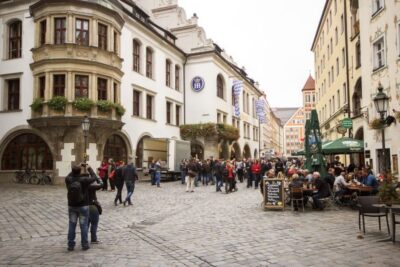
The walk continues to Hofbräuhaus am Platzl, one of Munich’s best-known beer halls. On an ordinary visit, you might focus on beer, food, and Bavarian decoration. This tour asks you to look at the building as a political setting.
The guide explains how Adolf Hitler used the beer hall for public speaking and discusses the speech connected with the founding of the National Socialist German Workers’ Party in 1920. That origin story matters because it shows how the movement built support through meetings, speeches, symbols, and public gatherings before it controlled the German state.
This stop is especially useful if you are trying to understand how an extremist movement gained a foothold in everyday civic life. The setting was not an isolated military site. It was a popular public venue in the middle of Munich. That makes the discussion uncomfortable, but also easier to grasp.
The tour does not treat Hitler as a lone figure who appeared from nowhere. It also examines supporters, political conditions, and the role Munich played in the movement’s growth. You will have a chance to ask about citizens who backed National Socialism, those who resisted it, and the difference between active support, passive cooperation, and opposition.
Following the Beer Hall Putsch to Feldherrnhalle
One of the strongest parts of the route follows the Beer Hall Putsch toward Feldherrnhalle and Odeonsplatz. In 1923, Hitler and his followers attempted to storm the Bavarian Defense Ministry. The effort failed, but its political consequences helped shape Hitler’s later strategy.
At Feldherrnhalle, the physical route gives the event a clear sequence. You can see how a political march moved through the city and why the location became important to Nazi propaganda. The failed putsch later gained a heroic place in Nazi mythology, even though it was a failed attempt to seize power.
The guide also connects the putsch with Hitler’s imprisonment and the writing of Mein Kampf. That does not make the book easier to read or excuse its ideas. It helps explain how a failed coup became part of a wider political campaign.
Odeonsplatz adds another layer. Munich’s grand public spaces were useful for ceremonies, military display, and mass politics. The tour helps you read those spaces as designed settings, not just attractive squares. If you enjoy understanding how architecture and public ritual shape political power, this section will be one of the most rewarding.
The walking route is also practical. You move between major Old Town sights rather than spending the full three hours in a single museum. Wear comfortable shoes and expect to remain outdoors for much of the standard tour. The experience is wheelchair accessible, though a private guide remains the best person to ask about the exact route and any current access conditions.
The White Rose and Munich’s difficult questions
The tour gives attention to resistance, including the White Rose Group led by five university students. That is an important choice. A tour about Munich’s Nazi past should not stop with Hitler, party offices, and military ceremonies.
The White Rose story shifts the focus from leaders and institutions to individual decisions. It raises practical questions about courage, risk, conscience, and the limits of opposition under dictatorship. You are encouraged to ask difficult questions about Munich’s citizens and their part in the rise and fall of National Socialism.
This section may be especially valuable for families and students because it shows that history was not made only by famous politicians. Young people made choices too, even when the consequences were severe. The supplied information does not give a separate list of White Rose sites on the route, so you should think of this as a guided historical discussion rather than a promise of a specific memorial stop.
The tour also visits the Monument to the Victims of National Socialism. This stop brings the cost of the regime into view. It is a place for remembrance rather than political spectacle, and it helps balance the earlier focus on Nazi organization and propaganda.
Same city, a completely different kind of day:
- Dachau Concentration Camp Memorial Site Tour from Munich by Train
★ 4.5 · 5,637 reviews - Munich Hop-On Hop-Off Tour: 1-Day or 2-Day Ticket
★ 4.3 · 4,161 reviews - From Munich: Dachau Memorial Site Day Tour
★ 4.8 · 2,723 reviews - From Munich: Dachau Memorial Site Half-Day Trip
★ 4.7 · 2,526 reviews
Führerbau and the Munich Agreement
The former Nazi Party office buildings provide another shift in tone. You will see Führerbau, known as the Führer’s Building, where Neville Chamberlain and Hitler signed the Munich Agreement in 1938.
That event makes the building significant far beyond Munich. The agreement is tied to the policy of appeasement and to the political crisis surrounding Czechoslovakia before the Second World War. The tour places the building within the larger story of international diplomacy and Nazi expansion.
I find this kind of stop useful because the building itself may not explain its importance. A guide gives you the political setting and shows why one room, one signature, or one official meeting can affect millions of people. The stop also reminds you that the Third Reich’s rise involved diplomacy and foreign policy as well as rallies and violence.
The former party offices can be visually less dramatic than Munich’s grand churches and squares. That is part of the point. Political power often worked from ordinary-looking offices, supported by paperwork, meetings, and government machinery. You will get more from the stop if you listen for how the system functioned, not only for striking architectural details.
Königsplatz, mass rallies, and the end of the standard walk
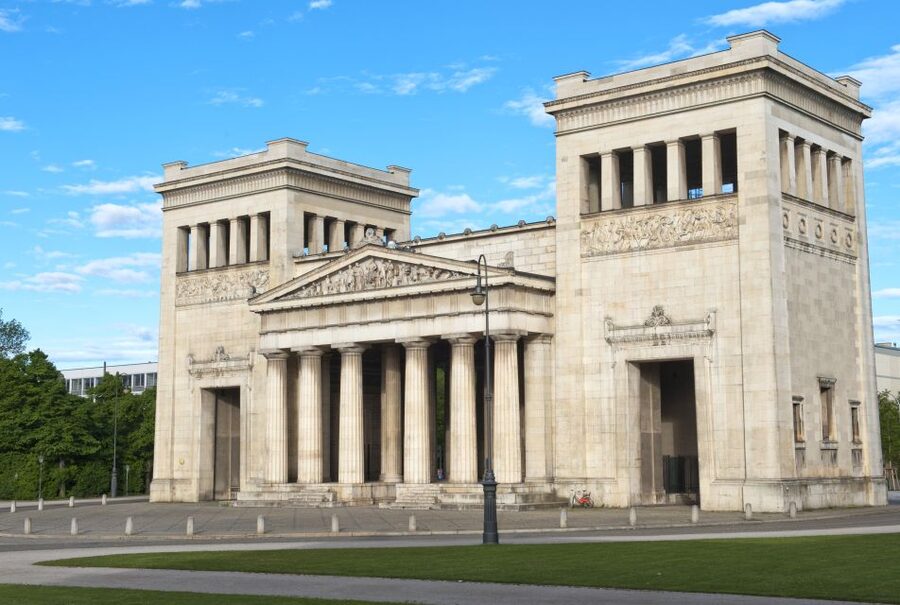
The three-hour walk ends at Königsplatz. During the Nazi era, the square was used for mass rallies and book burning. Its broad design made it suitable for large public events, and the tour explains how the Nazis used such spaces to create a sense of unity and control.
Königsplatz is a fitting final stop because it brings together the tour’s main themes: public image, political ritual, propaganda, and the use of Munich’s historic spaces. You have followed the movement from its early speeches to its failed coup, organized offices, international diplomacy, resistance, and wartime aftermath.
The standard walk is listed as three hours, while the full option lasts 4.5 hours, or 270 minutes. That distinction matters. Three hours is enough for a serious introduction, but the subject is too large to cover every event in equal detail. If this is your only organized look at Munich’s Nazi past, I would strongly consider the longer option.
Adding the NS Documentation Center for 4.5 hours
The extended version includes the Munich Documentation Center for the History of National Socialism with your guide. Its displays use photographs, documents, texts, film projections, and media stations to explain the movement’s origin and rise, the war period, and Munich after the war.
The center gives you something the outdoor walk cannot: sustained access to primary material and a more organized timeline. Streets and buildings show where events happened. Museum exhibits can show the faces, words, records, and images connected with those events.
Your guide remains with you during the museum visit and can answer questions about causes and consequences. That is useful because exhibits about National Socialism can be dense and emotionally difficult. A private guide can help distinguish between propaganda produced by the regime, evidence about the regime, and later interpretations.
The longer option also reduces the risk of leaving with a collection of disconnected names and dates. The walk supplies place and atmosphere. The documentation center supplies evidence and chronology. Together, they offer a fuller account of Munich’s role before, during, and after the war.
There is a tradeoff. Four and a half hours on one difficult subject can feel heavy, especially if you have young children or several other tours planned that day. The three-hour choice may suit you better if you want a clear historical walk without committing most of an afternoon.
What the private format is worth at $311
The listed cost is $311 per person. That is expensive for a three-hour walk, and I would not recommend judging the price only by the number of places you see. The value lies in having a private historian guide, a flexible conversation, and, with the longer choice, guided access to the documentation center.
For a full private group, the price may make more sense because the cost is tied to a personal tour rather than a large shared group. For one person or two people, it is harder to justify unless this subject is a major reason for your Munich visit.
The tour is offered in English, German, French, Italian, and Spanish. That language choice can make a real difference with a complicated subject. The available guide names are not fixed in the information provided, but Mireya is one guide associated with the experience, and a direct note says she was great. You should not assume she will lead your departure, so confirm the guide when booking if that matters to you.
The high overall rating of 4.8 from 20 ratings suggests a strong record, but the written comments are brief. One says Mireya was great, while another simply calls everything perfect. Those comments support the sense that guide quality matters here, but they do not tell you exactly how much time each site receives or how the guide handles sensitive questions.
You can cancel up to 24 hours before the tour for a full refund, and reserve now while paying later. Those terms are useful if your Munich schedule is still shifting. The tour is wheelchair accessible, and the private format may make pacing easier, though you should still confirm the route details before setting out.
Who will get the most from this Munich walk
I would choose this experience if you want to understand how Munich became central to the Nazi movement rather than simply see the city’s famous buildings. It suits history-minded adults, students, families with older children, and anyone who wants time for questions.
The tour is also a good fit if you have limited time in Munich but want a serious introduction to the period. The three-hour route links the main sites efficiently and gives you a clear structure.
I would choose the 4.5-hour version if you have a strong interest in modern German history, want to examine documents and photographs, or prefer a guide to help you process a museum visit. I would choose the shorter version if you have a packed itinerary, tire easily on long walks, or want to leave room for other parts of Munich.
This is not a light sightseeing stroll. The subject includes dictatorship, propaganda, war, bombing, persecution, resistance, and death. That is exactly why the private format helps. You can pause, ask for context, or spend more time on the sections that matter most to you.
Should you book it?
Book this tour if you want a serious, place-based explanation of Munich’s Nazi past and value private guiding enough to pay a premium. The route is strong because it links ordinary city sights with the Beer Hall Putsch, Nazi party offices, the Munich Agreement, the White Rose, wartime destruction, and Königsplatz.
Choose the 4.5-hour option if the history is a main reason for your visit. Choose three hours if you want a focused introduction. Skip it if you are looking only for cheerful sightseeing or if $311 per person is beyond your budget. For those ready to confront Munich’s hardest chapter, this is a thoughtful and well-structured way to begin.
FAQ
Where does the tour meet?
Meet your guide in front of Hotel BEYOND by Geisel at Marienplatz 22, 80331 Munich, opposite St. Peter’s Church.
Should I enter the hotel for the meeting?
No. The hotel is only the meeting point, and its staff are not informed about the tour.
How long is the tour?
The standard walking tour lasts three hours. The extended option lasts 4.5 hours, or 270 minutes.
What does the 4.5-hour option include?
It includes the walking tour and a visit to the Munich Documentation Center for the History of National Socialism with your guide.
What languages are available?
The live guide option is available in English, German, French, Italian, and Spanish.
Is this a private tour?
Yes. The experience is offered for a private group.
Is the tour wheelchair accessible?
Yes, the activity is listed as wheelchair accessible.
Can I cancel for a full refund?
Yes. You can cancel up to 24 hours in advance for a full refund.
Just added in Munich
- Private transfer: Vilshofen to Munich with 2h sightseeing stop★ 5.0 · 6 reviews
- Pub crawl incl. Oktoberfest museum guided tour with beer tasting (private)★ 5.0 · 5 reviews
- South Tyrolean specialties and wine tasting★ 5.0 · 5 reviews
- Size Matters Beer Tour Munich★ 4.6 · 105 reviews
- Short & sweet: Tasting the Viktualienmarkt★ 4.8 · 37 reviews
- Secret Food Tours Munich★ 4.8 · 5 reviews
- Munich: Romantic Wine Experience for Two at Viktualienmarkt★ 4.2 · 14 reviews
- Munich: Resistance against Hitler – Historical Walking Tour★ 5.0 · 5 reviews
Third Reich Tours, compared.


Berlin’s Best: 2 Hour Walking Tour Third Reich and the Cold War
Read our review →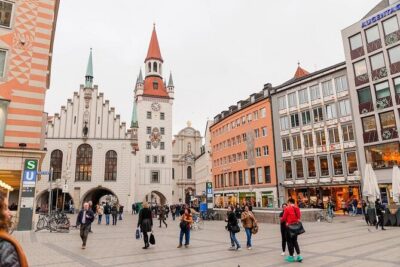
Third Reich Berlin: Hitler and WWII Walking Tour
Read our review →
Walking Tour of Former Nazi Party Rally Grounds
Read our review →
Berlin Third Reich Sites: Half-Day Walking Tour
Read our review →Browse the lists this tour appears in