

Reviewed · MUSEUMS
Munich: Deutsches Museum Entry Ticket
The Deutsches Museum puts the first diesel engine, historic printing presses, a lunar rover, airplanes, and hands-on experiments under one roof on Munich’s Museumsinsel. It is less a quick museum stop than a full day of science and technology, with 20 permanent exhibitions spread across 20,000 square meters.
I like the hands-on stations, which turn difficult subjects into something you can test and see. I also like the mix of famous objects and live demonstrations, including the model railway, microscopy theater, and chemistry displays. The main drawback is simple: if science and technology are not your thing, the museum’s single-minded focus may wear thin.
Key points to know before you go

- Twenty permanent exhibitions: Topics range from aviation and astronautics to chemistry, atomic physics, printing, railways, and more.
- A collection of more than 125,000 objects: Look for the first diesel engine, historic printing presses, a lunar rover, and notable airplanes.
- Hands-on learning: Interactive stations and experiments make the museum a good choice for families and curious adults.
- Live demonstrations: The model railway, microscopy theater, and chemistry presentations add action beyond static displays.
- One-day entry for about $17: You can explore at your own pace and return to exhibits during the same day.
- Central Museumsinsel location: The museum is at Museumsinsel 1, close to Munich’s city center and open daily from 9:00 to 17:00.
Why the Deutsches Museum deserves a full day
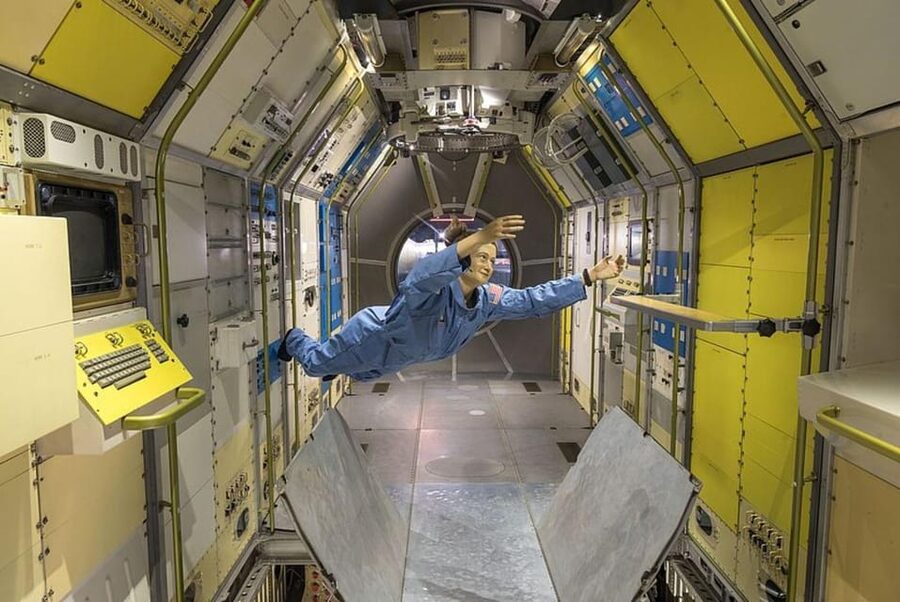
This is not a small collection you can squeeze between lunch and a city walk. The Deutsches Museum is one of the world’s major museums devoted to natural science and technology, and its main building currently offers about 20,000 square meters of exhibition space.
That scale affects how you should plan your visit. You can see the headline objects in a few hours, but you will need much longer if you want to read the displays, try the experiments, and catch the demonstrations. I would treat this as a main activity for the day, not as a quick rainy-weather backup.
The museum has around 1.5 million visitors each year, yet the best reason to visit is not its size alone. The exhibits connect everyday machines and major scientific discoveries with the ideas behind them. You are not simply looking at old equipment. You are encouraged to ask how it works, why it mattered, and what may come next.
The $17 price is fair for the amount of access included. Your ticket covers all exhibitions for one day, so the value improves if you spend several hours inside. A short visit still works, but you may feel you have paid for far more museum than you had time to see.
More Attraction Tickets in Munich
- Munich Hop-On Hop-Off Tour: 1-Day or 2-Day Ticket
★ 4.3 · 4,161 reviews - Munich: Studio of Wonders Entry Ticket
★ 3.9 · 602 reviews - Munich: Day Ticket to Sea Life
★ 4.2 · 389 reviews
Getting started on Museumsinsel
Your visit begins at the main entrance at Museumsinsel 1, 80538 Munich. The museum sits on a small river island near the center of Munich, making it easy to pair with other central sightseeing, though the museum itself can easily fill the better part of a day.
The building is open daily from 9:00 to 17:00, with last admission at 16:30. Do not arrive at the last minute and expect a useful visit. The final half hour is enough for entry, but not enough to make sense of a museum this large.
There is no fixed tour group or required order. You choose the exhibitions that interest you, then move on when your attention starts to fade. That freedom is useful because the collection appeals to different kinds of minds. A child may want experiments and machines, while an adult may spend more time with industrial history, aviation, or scientific instruments.
The downloadable Deutsches Museum App includes a multilingual audio guide. I would install it before entering if possible, then use it selectively rather than listening to every stop. With 20 exhibitions, an audio guide can add context, but trying to follow every explanation may slow you down.
Twenty exhibitions covering science and technology
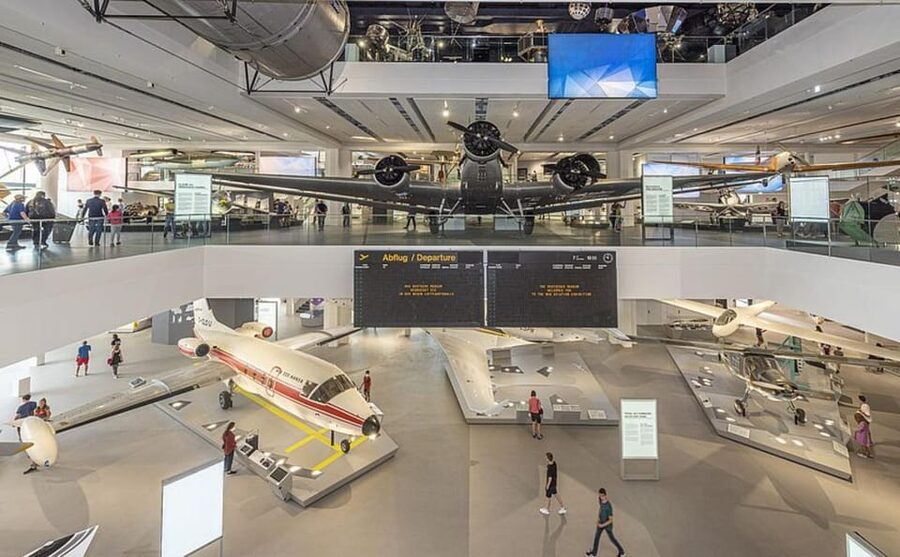
The museum’s permanent exhibitions cover a wide range of subjects. Aviation and astronautics offer a clear draw for anyone interested in flight and space. Atomic physics and chemistry move into less visible forces, where demonstrations and interactive displays help make the subject easier to follow.
The variety is one of the museum’s best features. You can begin with a large machine, move to a scientific experiment, then shift to printing, railways, or communications. That change of pace keeps the visit from becoming one long row of similar objects.
It also means you should not try to see every display with equal attention. Pick a few subjects that matter to you, then give those sections time. The rest can be a quick look. This is a better approach than rushing through all 20 exhibitions and remembering only the building’s size.
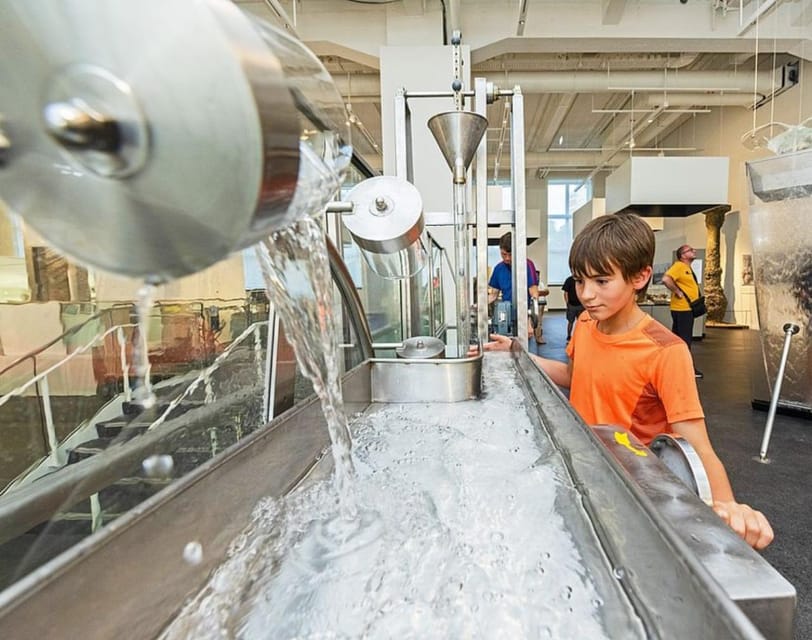
For families, the museum’s interactive design is especially useful. Hands-on stations give children something to do while adults read the background information. For adults, the experiments offer a way to test principles that might otherwise remain abstract.
Still, the museum does not turn every subject into entertainment. Some sections may feel technical or text-heavy, particularly if you arrive expecting a general-interest history museum. The experience works best when you accept that science is the main subject, not just a theme added around famous objects.
Famous machines and objects worth seeking out
The collection contains more than 125,000 objects. You will not see all of them during one visit, but the major displays give you a sense of how technology has changed daily life and industry.
The first diesel engine is a major highlight. It represents a turning point in the history of engines and industry, and it gives the museum a strong link between scientific theory and the machines that changed transportation and manufacturing.
Historic printing presses show another side of technology. Printing is easy to take for granted now, but the machines make the physical process visible. They also help explain how information could be produced and shared on a much larger scale.
The lunar rover brings the collection into the space age. Alongside aviation and astronautics exhibits, it helps connect early mechanical invention with modern exploration beyond Earth. The airplanes provide another clear visual draw, particularly for anyone who enjoys seeing engineering at full size rather than in diagrams.
These objects are valuable because they anchor the museum’s bigger themes. Instead of moving through a list of inventions, you can see how power, transport, communication, and exploration developed over time.
More Museum Tours in Munich
- Munich: Beer and Food Tour with Dinner & Oktoberfest Museum
★ 4.7 · 1,086 reviews - Munich: FC Bayern Museum + Arena View
★ 4.5 · 944 reviews - Munich: FC Bayern Museum Entry Ticket
★ 4.6 · 193 reviews - Munich: Magic Bavaria – Museum of Fun, Photos and Illusions
★ 4.3 · 133 reviews
Demonstrations that add movement to the visit
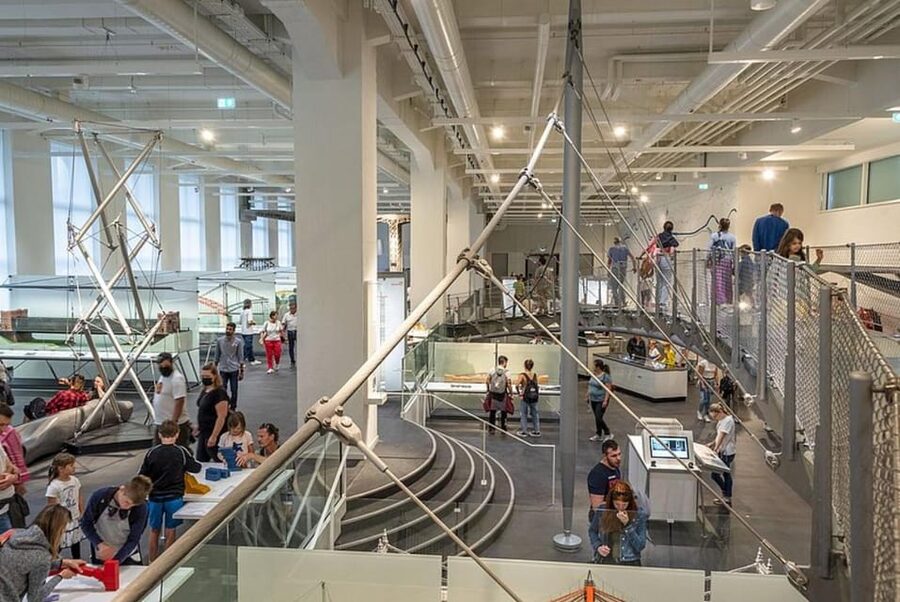
Static displays can only take you so far. The museum adds unique demonstrations and shows that reveal scientific principles in action.
The model railway is a natural favorite. It turns a technical subject into a moving scene, showing how rail transport works as a system rather than as a collection of separate parts. It is also a good change of pace after a quieter section.
The microscopy theater offers a look at a world too small to see with the naked eye. That kind of presentation can make a difficult subject feel immediate, especially when you are trying to understand scale and detail.
The chemistry demonstrations bring another practical element. Chemistry can seem invisible in a textbook, but a live presentation gives you something happening in front of you. Check the day’s schedule when you arrive so you can plan around the demonstrations rather than discovering them after they finish.
The exact timing of each show is not provided with the ticket information, so I would not build a rigid hour-by-hour plan before arrival. Give yourself room to adjust. If a demonstration is underway, stay for it. You can always return to a nearby exhibition later.
How to plan your route through the museum
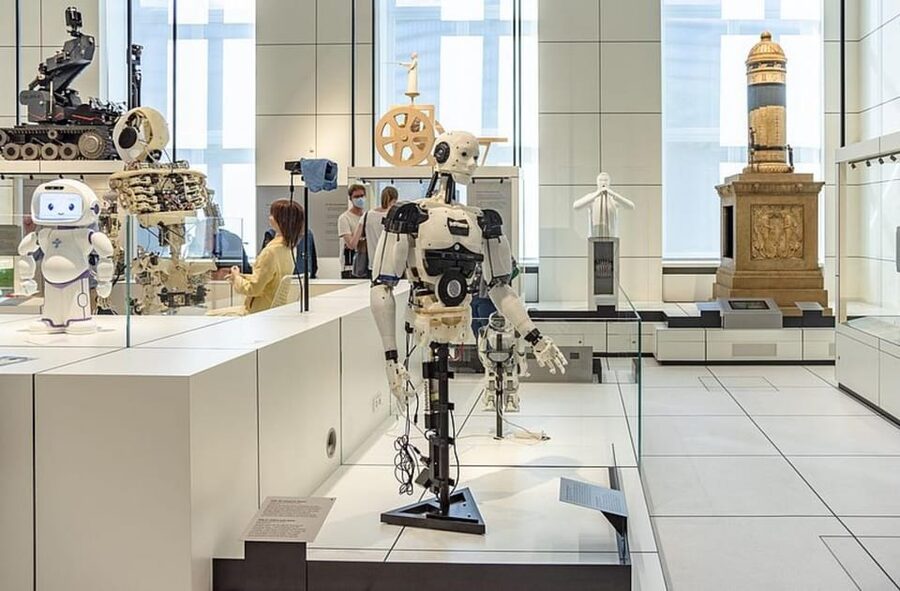
With 20 exhibitions, the main challenge is not finding something interesting. It is deciding when to move on.
I suggest starting with the subjects that most attract you, especially if you have limited time. Aviation, astronautics, the lunar rover, historic engines, and the model railway make strong first choices because they offer memorable objects and visible machinery.
Next, use the hands-on stations to break up the object displays. Experiments are not only for children. They help adults understand the principles behind the museum’s machines, especially in chemistry and atomic physics.
After that, return to any section where you want more time. The one-day ticket lets you explore without the pressure of seeing everything in one pass. You can spend an hour on a favorite subject, take a break, and then continue elsewhere.
The museum does not provide a guided itinerary with a named guide. You are responsible for setting your pace, choosing your route, and deciding how much of the audio guide to use. That suits independent visitors, but anyone who prefers a tightly organized tour may find the freedom less helpful.
A good choice for families and curious adults
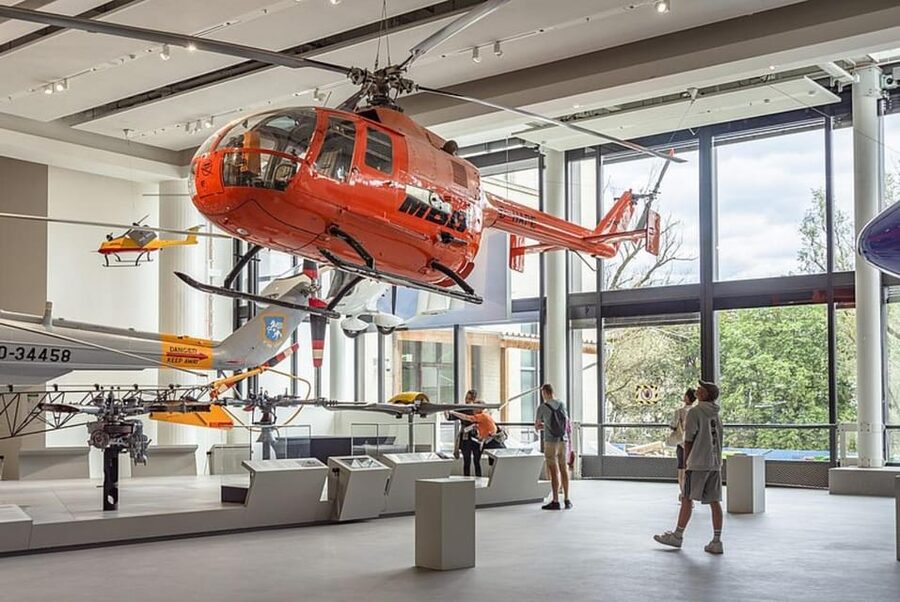
Children under 12 must be accompanied by an adult. That rule matters because the museum is large, and young children will need help moving between exhibitions and choosing what to see.
The hands-on stations make the museum a practical family choice. Children can engage with experiments rather than being asked to remain quiet in front of glass cases for hours. Parents should still plan for uneven attention. Not every exhibition will suit every age group.
The museum also works well for adults traveling alone or as a couple. If you enjoy understanding how things work, you can spend time with industrial machinery, scientific instruments, printing, transportation, and space technology. The audio guide adds structure when you want it, but you can ignore it when you prefer to look around independently.
Students, pupils, trainees, and full-time students can select the youth admission category when booking. Severely disabled adults receive discounted admission, with an accompanying person admitted free. Severely disabled children and young people from 6 to 17 years old, along with accompanying persons who meet the stated conditions, may enter free.
The entire route from the entrance to the restrooms is barrier free, and the museum is wheelchair accessible. That is useful in a building of this size, where long distances and crowded exhibit areas can otherwise make a visit tiring.
What the ticket includes and what it does not
The ticket includes entry to the Deutsches Museum, access to all exhibitions, and the downloadable multilingual audio guide through the Deutsches Museum App. You are not paying extra for each permanent exhibition once inside.
This is an admission experience, not a guided walking tour. There is no listed guide, fixed group size, or set sequence of stops. You arrive at the main entrance, then create your own visit.
That distinction affects the value. If you want someone to explain every major object and keep you moving, this ticket will not provide that service. If you like setting your own priorities, it gives you more control than a guided tour.
The reserve-now-and-pay-later option can help if you are still arranging a Munich schedule. Free cancellation is available up to 24 hours in advance for a full refund. Check the booking conditions at the time you reserve, since availability and starting times are part of the booking process even though the ticket itself is valid for one day.
The main drawback: too much museum for a short visit

The Deutsches Museum’s strength is also its challenge. Twenty exhibitions and 20,000 square meters can leave you mentally tired, particularly if you try to read every panel.
A half-day visit can still be worthwhile, but you need to choose. A full day gives you time for the headline objects, experiments, and at least some demonstrations. If your Munich schedule is already packed, you may enjoy the museum more by selecting two or three subjects instead of treating it as a checklist.
The museum’s narrow subject focus is another consideration. This is not an art museum or a general cultural collection. It is devoted to natural science and technology. That clear focus will be a major advantage for some people and a reason to skip it for others.
I would also avoid assuming that the most famous object will be your favorite. The first diesel engine, lunar rover, and airplanes are obvious starting points, but the smaller experiments may provide the clearest understanding of how a principle works.
Should you book the Deutsches Museum?
Book this ticket if you enjoy science, machines, engineering, space, transportation, or hands-on learning. It is also a strong family activity, thanks to the experiments, demonstrations, and barrier-free layout. At about $17, the one-day access offers solid value if you can give the museum several hours.
Skip it if you want a short, highly guided activity or if your interests lie mainly in art, architecture, or traditional city history. The museum asks for time and attention, and its technical focus is very clear.
For most curious visitors, I would book it and plan a flexible half-day or full day. Start early, choose your priority exhibitions, use the app when you want extra context, and leave room for a model railway, microscopy theater, or chemistry demonstration.
FAQ
Where is the Deutsches Museum located?
The museum is at Museumsinsel 1, 80538 Munich, on Museumsinsel near the city center.
How long is the ticket valid?
The ticket is valid for one day.
What are the museum’s opening hours?
The Deutsches Museum is open daily from 9:00 to 17:00. Last admission is at 16:30.
What does the ticket include?
It includes entry to the museum, access to all exhibitions, and a downloadable multilingual audio guide through the Deutsches Museum App.
How many permanent exhibitions can I visit?
The ticket provides access to 20 permanent exhibitions.
Is the Deutsches Museum wheelchair accessible?
Yes. The museum is wheelchair accessible, and the route from the entrance to the restrooms is barrier free.
Must children be accompanied by an adult?
Yes. Children under 12 must be accompanied by an adult.
Can I cancel the booking?
Yes. You can cancel up to 24 hours in advance for a full refund.
Just added in Munich
- Private transfer: Vilshofen to Munich with 2h sightseeing stop★ 5.0 · 6 reviews
- Pub crawl incl. Oktoberfest museum guided tour with beer tasting (private)★ 5.0 · 5 reviews
- South Tyrolean specialties and wine tasting★ 5.0 · 5 reviews
- Size Matters Beer Tour Munich★ 4.6 · 105 reviews
- Short & sweet: Tasting the Viktualienmarkt★ 4.8 · 37 reviews
- Secret Food Tours Munich★ 4.8 · 5 reviews
- Munich: Romantic Wine Experience for Two at Viktualienmarkt★ 4.2 · 14 reviews
- Munich: Resistance against Hitler – Historical Walking Tour★ 5.0 · 5 reviews
Museums, compared.




Skip-the-Line: Berlin Wall Museum at Checkpoint Charlie
Read our review →
Browse the lists this tour appears in