
Reviewed · MUSEUMS
Heusenstamm:tour of the Depot of the museum of communication
The most surprising part of this Heusenstamm tour is its scale. You walk among only a selection of the Museum of Communication’s 375,000 objects, including rare 1930s television sets, landmark radios, old telephone boxes, buses, and sleighs. It feels less like a standard museum visit and more like a guided look behind the scenes.
I like the chance to see the world’s largest telephone collection, and I like that the tour connects early messaging with radio, television, and internet radio. The main drawback is time: 90 minutes is not enough to take in every detail, so you will need to accept a brisk overview rather than a slow, object-by-object visit.
Key points to know before you go
- The collection is far larger than the public display: Heusenstamm gives you a look at the depot behind Frankfurt’s Museum of Communication.
- The objects range well beyond telephones: Expect radios, televisions, buses, sleighs, telephone boxes, and more.
- The tour is conducted in German: A live guide explains the objects and their place in communication history.
- Your ticket includes two museum experiences: Entry to the Heusenstamm depot and the Museum of Communication Frankfurt are included.
- Plan extra arrival time on Friday afternoons: Road traffic can be heavy, and the entrance may be partly hidden by a nearby agricultural sales stand.
- The tour costs $16 per person: That is good value if you intend to visit the Frankfurt museum as well.
Why the Heusenstamm depot is worth your time
Most communication museums focus on polished displays: a few telephones behind glass, a radio cabinet, perhaps a television from the family room. Heusenstamm offers something different. It gives you a sense of the working collection, where the objects are kept together in much greater numbers.
That changes the way you look at the subject. A single telephone tells you what a telephone looked like. A large collection lets you trace changes in shape, materials, controls, and social use. The same is true of radios and televisions. You can follow the move from bulky tube receivers to later forms of broadcasting and finally to internet radio.
I like this kind of museum because it makes ordinary objects seem less ordinary. A telephone box is not just street furniture. It reflects a time when making a call meant finding a public connection. A radio is not simply an old appliance. It represents a major shift in how news, music, and entertainment entered the home.
The depot also helps explain why the Frankfurt museum can display only a fraction of the full collection. There are too many objects for one exhibition building to show at once. Heusenstamm gives you a look at the scale behind the public museum, even though the short tour cannot cover everything.
More Museum Tours in Frankfurt:
- Frankfurt: Museum of Communication Exhibitions
★ 4.4 · 45 reviews - Frankfurt: Struwwelpeter Museum Entry Ticket w/Audio Guide
★ 4.5 · 22 reviews - Berlin: Jewish Museum Berlin Entrance Ticket
★ 4.5 · 8,393 reviews
The first 90 minutes: an overview of communication
The visit lasts about an hour and a half. That is long enough for a clear guided route, but not long enough for a detailed study of every display. I would approach it as an introduction to the collection, not as a specialist archive visit.
Your guide leads you through large and small objects from the history of communication. The focus is not only on the machines themselves, but on how people used technology to send messages, share information, and connect across distance.
The tour is in German, so your enjoyment will depend partly on your comfort with the language. The guide’s background information adds real value because many objects need context. Without explanation, a strange receiver or unfamiliar telephone can look like a piece of industrial furniture. With a guide, you can place it in the sequence of technological change.
The pace matters. You might find yourself stopping for a rare television, then moving on before you have examined every switch or dial. That can be frustrating if you collect vintage equipment or want detailed photographs. It works better if you focus on the broad story and choose a few favorite objects to study closely.
From early messages to the internet
The tour begins with the basic human problem of communication over distance. Long before internet radio, people needed systems for sending news, instructions, and personal messages. The depot’s objects help show how that problem was handled as technology changed.
The phrase early messaging covers more than one device. It includes the tools and systems that allowed information to move faster and farther. The appeal here is seeing the physical side of that process. Communication once depended on large machines, wires, cabinets, public boxes, and specialized equipment.
As the tour moves forward, the objects show how communication entered domestic life. Radios and televisions brought outside voices and images into private homes. Later developments made access more personal and portable. The final link to internet radio gives the story a modern endpoint without making the tour only about old equipment.
I find this timeline useful because it puts today’s communication habits in perspective. A smartphone can make the past feel impossibly slow, but these older inventions were once startlingly quick. Each new step changed not only technology, but also expectations about news, entertainment, and contact with other people.
The world’s largest telephone collection
Telephones are a major strength of the depot. The collection is described as the world’s largest, and the sheer number of phones gives the tour a clear center of gravity.
You can expect to see the telephone not as one finished invention, but as a long series of practical solutions. Shapes changed. Controls changed. Materials changed. Public and private use developed in different ways. The familiar telephone box also belongs to this story, linking personal communication with the public spaces where people once made calls.
This is where the guided format helps most. A row of old telephones can blur together if you do not know what separates one period from another. The guide can point out the details that matter, explain how the devices fit into everyday life, and connect the objects to the larger story of networking.
If you enjoy industrial design, you will want to keep an eye on the form of the phones, not just their age. If you are more interested in social history, consider what each object says about access. A telephone in a private home and a telephone in a public box served different needs and different users.
A few more half-days in Frankfurt worth comparing
- Frankfurt: River Main Sightseeing Cruise with Commentary
★ 4.3 · 5,127 reviews - Frankfurt: Hop-On, Hop-Off Grand or Express Bus Ticket
★ 3.9 · 2,088 reviews - Frankfurt: 1-Hour Panorama Boat Cruise on the river Main
★ 4.4 · 1,822 reviews - Frankfurt: New Old Town and Highlights German-Language Tour
★ 4.7 · 1,316 reviews
Radios, tube receivers, and design icons
Radio history gets its own strong section in the tour. You will see design icons from radio history and follow the shift from early tube receivers toward later technology.
The old tube receivers are especially useful for understanding how radio once looked in the home. These were not tiny objects tucked away in a pocket. They could be substantial pieces of furniture, designed to be seen and used by the household.
The design is part of the story. Radio makers had to turn technical equipment into something people wanted in their living rooms. Cabinet shapes, dials, speaker grilles, and controls all mattered. The radio became both a machine and a household object.
The tour then carries the story toward internet radio. That jump is valuable because it shows that communication history is not frozen in the past. The basic goal remains the same: sending sound to people at a distance. The equipment, delivery system, and scale have changed dramatically.
You should not expect a long technical lecture on each radio. The 90-minute format favors a broad explanation. Still, the combination of design, engineering, and daily use gives this part of the tour plenty to hold your attention.
Rare televisions from the 1930s
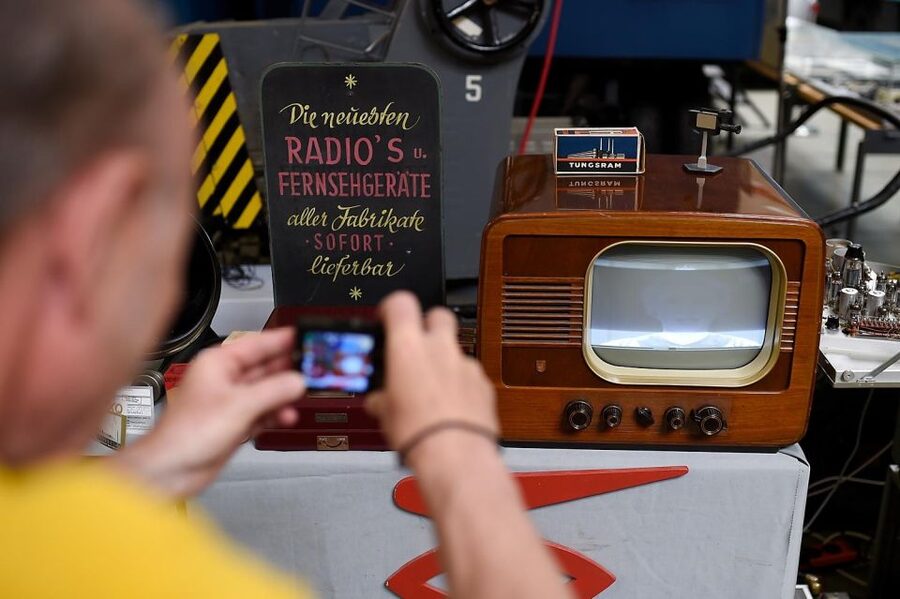
The 1930s television sets are among the most unusual objects mentioned in the collection. Early television technology is easy to imagine as a black box, but the actual sets reveal how experimental and unfamiliar the medium once was.
These televisions help mark the point when moving images began to enter the home. They also show how different early viewing equipment was from the thin screens you know today. The value is not simply rarity. These sets represent the early stage of a major change in how people spent time, received news, and watched entertainment.
Photography is encouraged by the nature of the objects, though the supplied information does not specify a separate photography policy. The tour also highlights opportunities to photograph yourself with rare historic vehicles, so bring a camera if you enjoy visual records of unusual museum pieces.
Because the guide is speaking in German, a close look at the objects may be just as important as the spoken explanation. The shape, size, and controls tell part of the story even if you do not catch every sentence.
Buses, sleighs, and telephone boxes
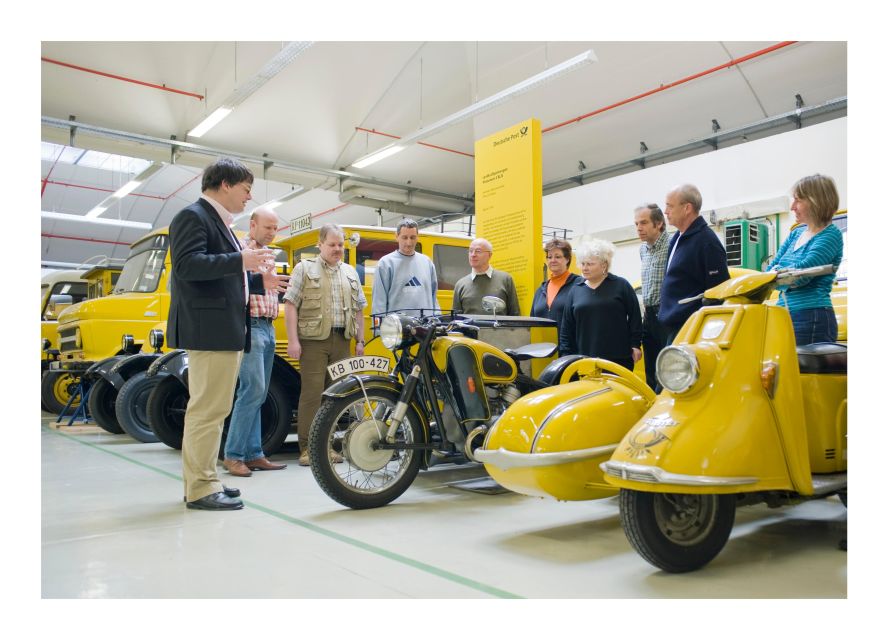
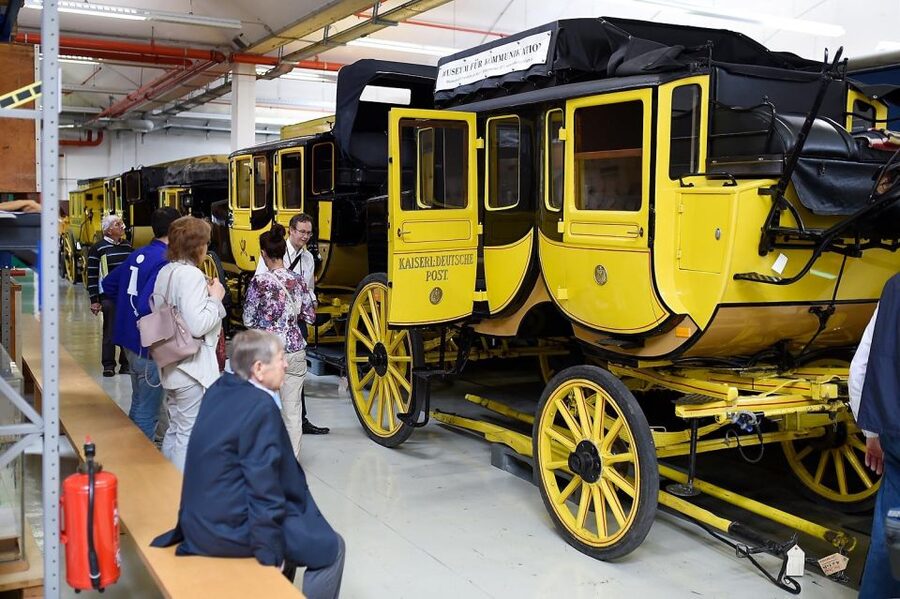
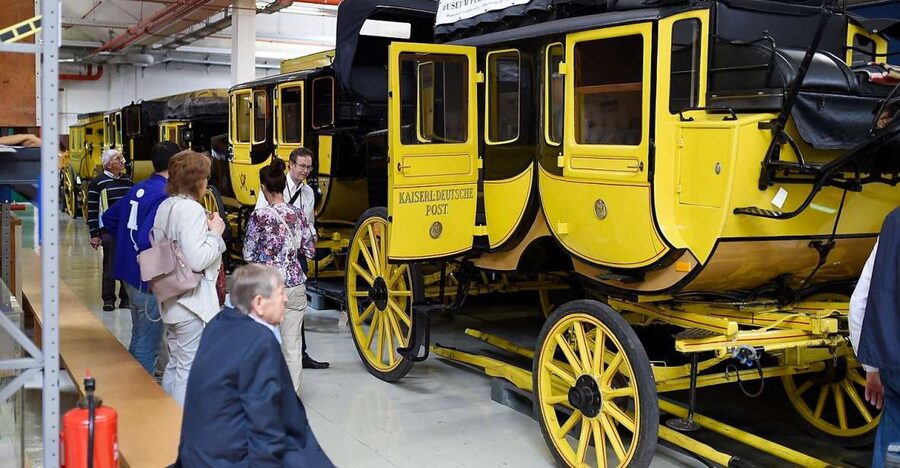
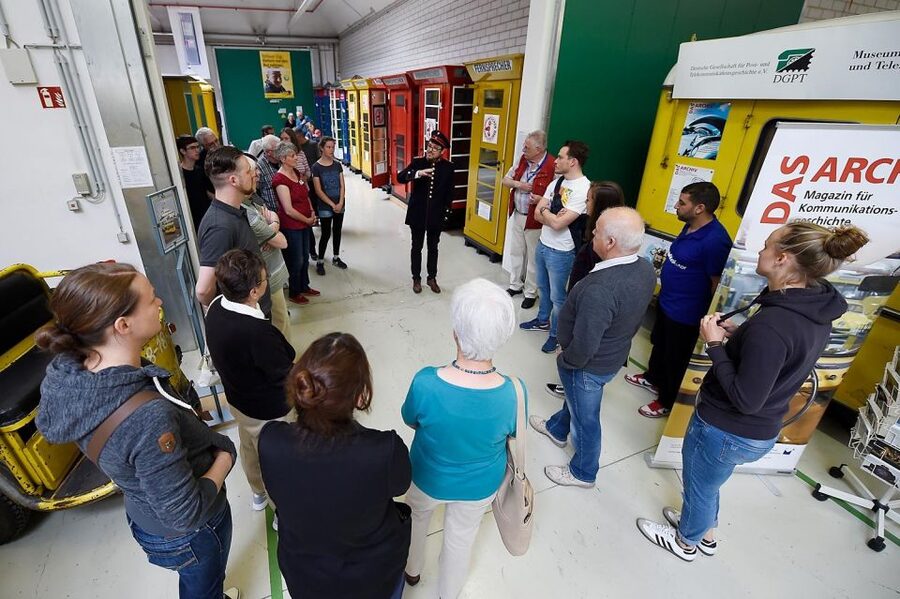
The depot is not limited to objects you can hold in your hand. Large items such as buses, sleighs, and telephone boxes give the collection a surprising physical presence.
These pieces broaden the meaning of communication. A bus can connect people and places. A sleigh points to older forms of transport and message delivery. A telephone box shows how communication was built into public space. Together, they remind you that messages do not travel through devices alone. They rely on transport, buildings, streets, and shared systems.
The large objects are also a practical reason to choose Heusenstamm over a standard museum gallery. A public exhibition may show a photograph, model, or small part of a vehicle. A depot can hold the full-size object, giving you a better sense of its scale.
The downside is that large collections can feel crowded with information. You may want to linger beside one vehicle while the group continues. I would note the largest objects early, then decide which ones deserve your limited time.
More than machines: the art collection
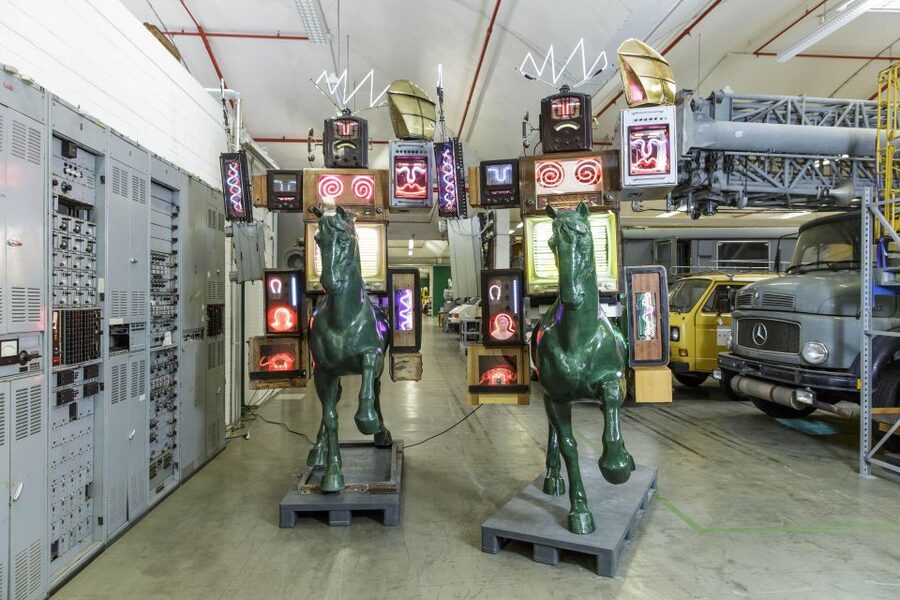
The depot’s art collection includes more than 300 paintings, ranging from the 17th century to contemporary works. This adds an unexpected layer to a tour that could otherwise feel focused only on technology.
The paintings connect communication with culture and human expression. They also provide a change of pace after rows of equipment. You can move from practical devices to works that show how people represented ideas, society, and the modern world.
The information provided does not identify individual paintings or describe a fixed art-focused section of the route. Treat this part as an additional reason to pay attention, rather than as a separate gallery visit with a full art-history lesson.
For me, the value is in the contrast. Communication is not only wires, screens, and receivers. It also includes the images people create, preserve, and share. A collection that brings paintings and technology together offers a broader view of how people record and exchange ideas.
What the $16 price really includes
At $16 per person, the price is reasonable if you use both admissions. Your ticket includes the 90-minute guided tour and entry to the Museum Depot in Heusenstamm. It also includes entry to the Museum of Communication Frankfurt.
That second admission is important. If you only want a short look at the depot and will not visit the Frankfurt museum, the value is less clear. If you plan to see both, the package becomes much more useful because you get the large collection experience in Heusenstamm and the public museum experience in Frankfurt.
Food and drinks are not included, so plan those separately. No meal is part of the 90-minute visit, and the available information does not describe a café stop during the route.
The flexible booking terms also help if your schedule is still changing. You can cancel up to 24 hours in advance for a full refund, and you can reserve now while paying later. Those policies are useful, but the main value still comes from the two museum admissions and the rare access to the depot.
Arrival advice for Heusenstamm
Give yourself extra time to reach the depot. Friday afternoon traffic can be heavy, and the entrance may be partly hidden by an agricultural sales stand. That is the kind of small arrival problem that can turn a relaxed museum visit into a rushed one.
I would avoid cutting it close. The tour has a fixed duration and a live guide, so arriving late could mean missing part of the route. Check the starting time when you book, then build in a cushion for the drive and for finding the entrance.
The supplied information does not provide detailed public transport directions, parking instructions, or a precise meeting point. You should confirm those details before setting out, especially if you are not familiar with Heusenstamm.
Who will enjoy this most
This tour suits you if you like technology, industrial design, social history, vintage appliances, or museums with large collections. It also works well for anyone who wants something less polished and more storage-room-like than a standard exhibition.
Families with older children may find the buses, sleighs, telephone boxes, and televisions more engaging than a room of small technical parts. The tour can also appeal to photographers who enjoy unusual shapes and historic equipment.
It is less suitable if you want a slow, quiet visit with detailed labels in English. The live tour is in German, and the 90-minute limit means the guide must keep moving. You should also choose another activity if your main goal is food, shopping, or a broad sightseeing route through Heusenstamm.
Should you book the Heusenstamm depot tour?
Book it if you want to see the scale of a major communication collection and you are comfortable with a German-language tour. The rare televisions, design-focused radios, large vehicles, telephone boxes, and huge telephone collection give the visit plenty of substance.
The strongest reason to go is not one single object. It is the sense of how much exists beyond the public displays in Frankfurt. Just remember that 90 minutes provides an overview, not a complete examination.
For $16, the tour is a good choice when you plan to use the included Frankfurt museum entry. Allow extra time for arrival, expect a brisk route, and treat the guide’s German commentary as an important part of the experience. If those conditions suit you, Heusenstamm offers an unusual and worthwhile look at how people learned to communicate across distance.
FAQ
How long does the Heusenstamm depot tour last?
The guided walking tour lasts 1.5 hours, or 90 minutes.
What language is the guided tour in?
The live tour guide speaks German. The supplied activity information lists German as the available language.
What does the $16 ticket include?
The price includes entry to the Museum Depot in Heusenstamm, the 1.5-hour guided walking tour, and entry to the Museum of Communication Frankfurt.
What can I see at the depot?
The collection includes telephones, 1930s television sets, radios, telephone boxes, buses, sleighs, and more. It also includes more than 300 paintings from the 17th century to contemporary works.
Can I cancel the booking?
You can cancel up to 24 hours in advance for a full refund. You can also reserve your place and pay later.
Are food and drinks included?
No. Food and drinks are not included in the activity price.
Just added in Frankfurt
- Private Tour with Native English speaking Local★ 4.9 · 60 reviews
- Hohenzollern Castle: Full-Day Tour from Frankfurt★ 4.3 · 11 reviews
- Frankfurt: Guided walk between palm trees and skyline★ 4.8 · 9 reviews
- Frankfurter Kunstverein: Admission ticket★ 3.7 · 54 reviews
- Frankfurt: Walking Tour – discover the city with VR glasses★ 4.2 · 12 reviews
- Welcome to Frankfurt: Private Tour with a Local★ 4.7 · 81 reviews
- Frankfurt: Verbrecherjagd und gefährlich leckeres Schnitzel★ 4.4 · 22 reviews
- Frankfurt: The Black Death Tour★ 4.3 · 50 reviews
Museums, compared.





Skip-the-Line: Berlin Wall Museum at Checkpoint Charlie
Read our review →
Browse the lists this tour appears in