
Reviewed · MUSEUMS
Frankfurt: Museum of Communication Exhibitions
The most interesting thing here is the sweep of the story. In one museum, you move from cuneiform tablets to data glasses, seeing how people have sent messages, shared ideas, and shaped public life across time. The displays mix machines, personal stories, and hands-on elements, so this is more than a row of old gadgets.
I like the permanent exhibition’s four-part structure, built around acceleration, networks, control, and participation. I also like the chance to pause on the café terrace with a view of the Main River. The main drawback is noise: the lobby and some exhibition areas can become loud, making a weekday visit a better choice if you want quiet time with the displays.
Key points at a glance
- 2,500 square meters of media history: Follow communication from early writing systems through modern digital tools.
- Old machines with real character: See telegraphs, telephones, fax machines, radios, televisions, and other communication equipment.
- Interactive displays: The museum uses curious objects and practical experiences to show how media changed daily life.
- KLIMA_X temporary exhibition: Consider how everyday choices connect to climate change and possible solutions.
- Main River terrace: Take a coffee break after the galleries, though food and drinks cost extra.
- Easy, flexible visit: Entry costs $10 per person, is valid for one day, and the museum is wheelchair accessible.
Frankfurt’s communication story begins with objects
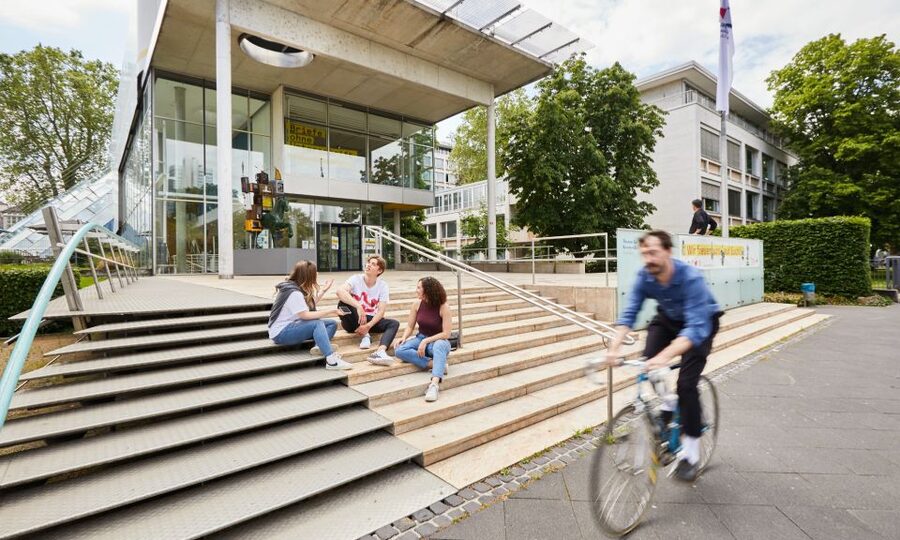
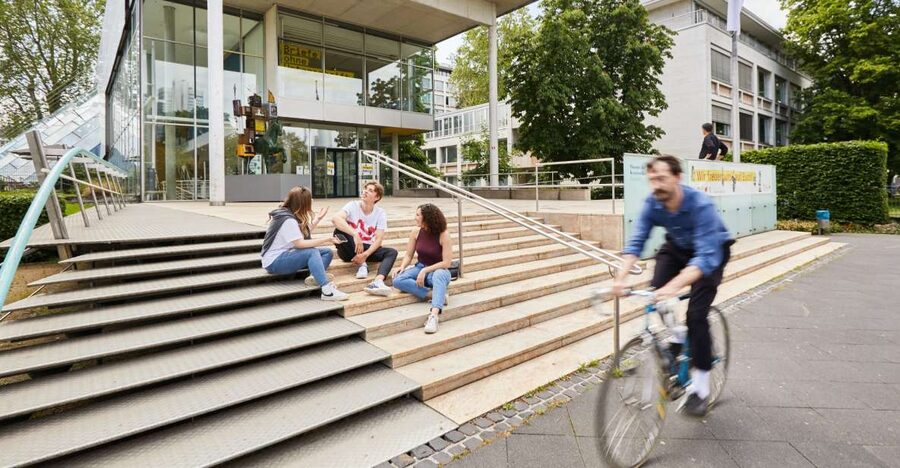
The Museum of Communication sits on Schaumainkai, in Frankfurt’s museum district, and its building is part of the experience. Inside, the permanent exhibition, Mediengeschichte|n neu erzählt!, uses roughly 2,500 square meters to explain how communication has changed.
You are not simply shown a timeline and sent on your way. The displays connect inventions with human behavior. A telegraph is not just an old machine. It represents a sharp increase in the speed of news. A telephone is not only a device with a receiver. It changes who can reach whom, and how quickly.
That approach gives the museum a useful shape. The exhibition is organized around four broad ideas: acceleration, networks, control, and participation. These themes help you make sense of the objects instead of treating them as unrelated antiques.
I especially like this method for families and curious adults who may not know much about media history. You can look at the machinery, then ask what problem it solved and what new problems it created. The museum encourages that kind of thinking without requiring a technical background.
More Museum Tours in Frankfurt:
- Heusenstamm:tour of the Depot of the museum of communication
★ 4.8 · 54 reviews - Frankfurt: Struwwelpeter Museum Entry Ticket w/Audio Guide
★ 4.5 · 22 reviews - Berlin: Jewish Museum Berlin Entrance Ticket
★ 4.5 · 8,393 reviews
From cuneiform tablets to data glasses
The permanent collection covers a remarkable span. You begin with early forms of written communication and continue toward modern digital technology. Cuneiform tablets represent the effort to preserve information, while data glasses point toward communication that is increasingly personal, portable, and connected to the body.
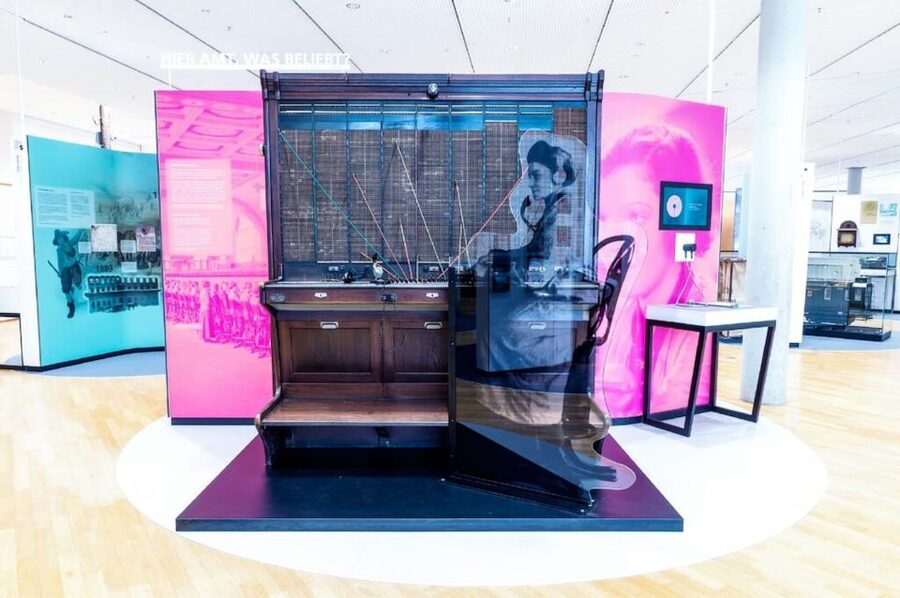
Between those two points, the museum presents the many stages that changed how people speak, record, broadcast, and exchange information. You can expect displays featuring telegraphs, phones, fax machines, radios, and television sets. Each object marks a different moment in the push to send information farther, faster, or to more people.
The older equipment has a hands-on quality, even when you cannot operate every item. Telegraphs make the distance between sender and receiver feel physical. Early telephones show how communication once depended on substantial hardware. Fax machines and radios recall a more recent period that may still be familiar to many adults, but already feels dated beside smartphones and data networks.
The museum also adds unusual stories and personal fates to the technology. That matters because inventions rarely change life on their own. People decide how to use them, who gets access, and what becomes normal. The displays help connect machines with those human choices.
Four ideas that give the galleries a clear shape
The first theme, acceleration, looks at the shrinking time between sending and receiving. A message that once took days or weeks could eventually cross great distances in seconds. This helps explain why the telegraph was such a major shift, even though its equipment now looks basic.
Networks form the second theme. Communication works through connections, not isolated devices. Telephones, broadcast systems, and later digital tools all depend on a larger system of senders, receivers, cables, signals, and users. You will see how the meaning of a device changes once many people can use the same network.
Control raises harder questions. Communication systems can spread information, but they can also organize, monitor, restrict, or influence it. This section gives the museum more weight than a simple display of vintage electronics. It asks you to consider who controls the channels and how that control affects society.
Participation completes the picture. Modern communication is not only something delivered to you by newspapers, broadcasters, or institutions. You also create, share, comment, and respond. The contrast between older one-way media and newer interactive systems makes the final part especially useful for understanding your own habits.
The displays work for mixed-age groups
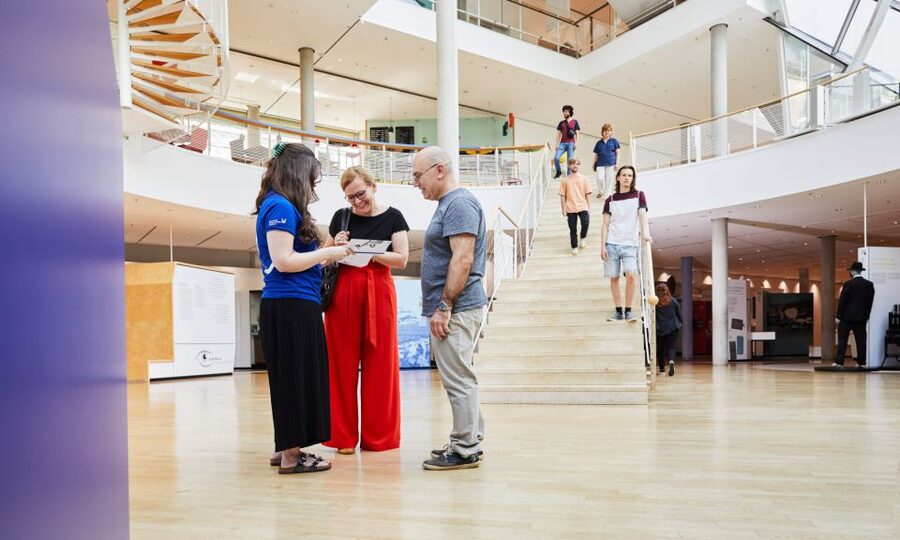
This museum has plenty for adults, but it does not demand an adult attention span from beginning to end. Interactive displays give younger visitors a reason to stop, while the machines and stories offer enough detail for parents and older children.
The setting can change the quality of your visit. Noise is the clearest concern. A loud lobby or busy gallery can make it hard to focus on text panels and explanations. If you prefer a calm visit, plan for a weekday and allow yourself extra time rather than trying to rush through.
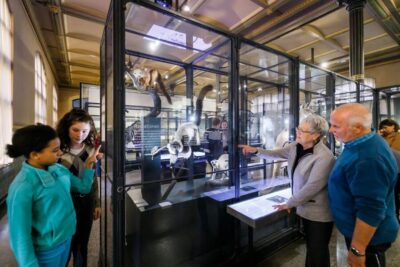
The building also includes details that add atmosphere. Bookshelves, old chests, and unusual decorative touches give parts of the museum a more playful feel. One distinctive feature noted by visitors is a display involving sheep and telephones, an odd image that helps keep the museum from feeling too formal.
These details matter because communication can be an abstract subject. A collection of old equipment may become dry if every display is only a technical explanation. Visual surprises and odd objects give you small moments of relief between the more serious themes.
A few more half-days in Frankfurt worth comparing
- Frankfurt: River Main Sightseeing Cruise with Commentary
★ 4.3 · 5,127 reviews - Frankfurt: Hop-On, Hop-Off Grand or Express Bus Ticket
★ 3.9 · 2,088 reviews - Frankfurt: 1-Hour Panorama Boat Cruise on the river Main
★ 4.4 · 1,822 reviews - Frankfurt: New Old Town and Highlights German-Language Tour
★ 4.7 · 1,316 reviews
KLIMA_X turns communication toward climate action
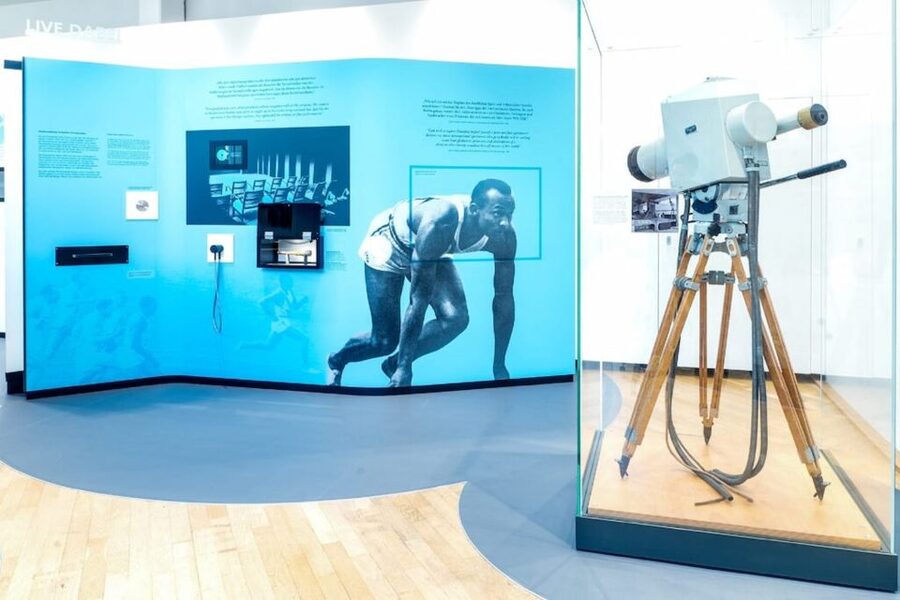
The temporary KLIMA_X exhibition shifts the subject from how people communicate to how people respond to a shared crisis. It examines climate change and asks you to consider the actions that can help improve the present situation.
The exhibit is designed for reflection rather than a quick checklist. You are reminded that useful changes can begin with simple methods and everyday decisions. The focus connects personal behavior with a much larger public conversation, which fits the museum’s wider interest in communication, participation, and social responsibility.
I would give this exhibition proper time instead of treating it as a side room. Climate topics can be familiar, but the museum setting encourages you to think about how information changes behavior. What do people understand? What do they ignore? What helps an issue move from public discussion to practical action?
Because KLIMA_X is temporary, its availability may change. Check the current program if this exhibition is a major reason for your visit. The permanent collection remains the main reason to come, but the climate exhibit adds a current concern to the older story of media and society.
A café terrace with a Main River view
After the galleries, the café terrace provides a natural pause. A coffee with a view of the Main can help you reset after several hours of objects, screens, text, and questions about modern life. It is one of the better features for making this a relaxed half-day or full-day outing rather than a short stop.
Food and drinks are not included in the $10 admission. Bring that extra cost into your budget, especially if you plan to stay for a long visit. One practical warning is important: the café may not accept Mastercard or Visa, so carry another payment option.
The terrace is also useful if your group has different interests. Someone who wants to keep studying the displays can take more time, while another person can take a break outside. The Main River setting gives the visit a pleasant ending without requiring another attraction or activity.
Is the $10 admission good value?
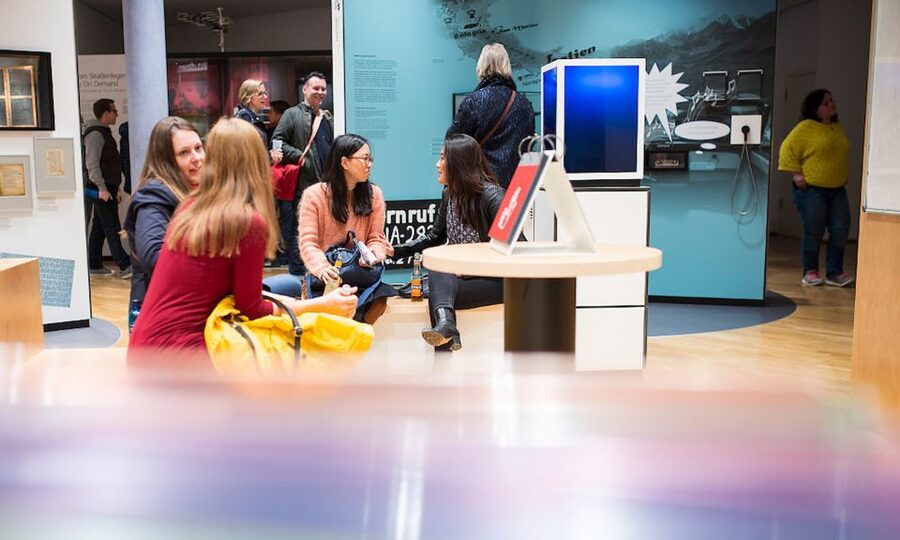
At $10 per person, the museum offers good value if you enjoy taking your time. The ticket gives you entry for one day, not a tightly timed tour, so you can set your own pace and return to a display that caught your attention.
The value is strongest for people who like museums that explain connections. You are not paying only to see a few famous objects. You get a large permanent exhibition, interactive elements, old communication technology, and a temporary exhibition focused on climate action.
The value is less clear if you want a quick collection of spectacular objects with little reading. Some displays require attention, and the themes become more meaningful when you stop to consider how each technology changed everyday life. A rushed visit could make the ticket feel less worthwhile.
There is no tour guide included, so you explore independently. That suits visitors who like freedom and families who need flexible pacing. If you prefer a guided explanation at every stop, this format may feel less structured.
Planning your visit on Schaumainkai
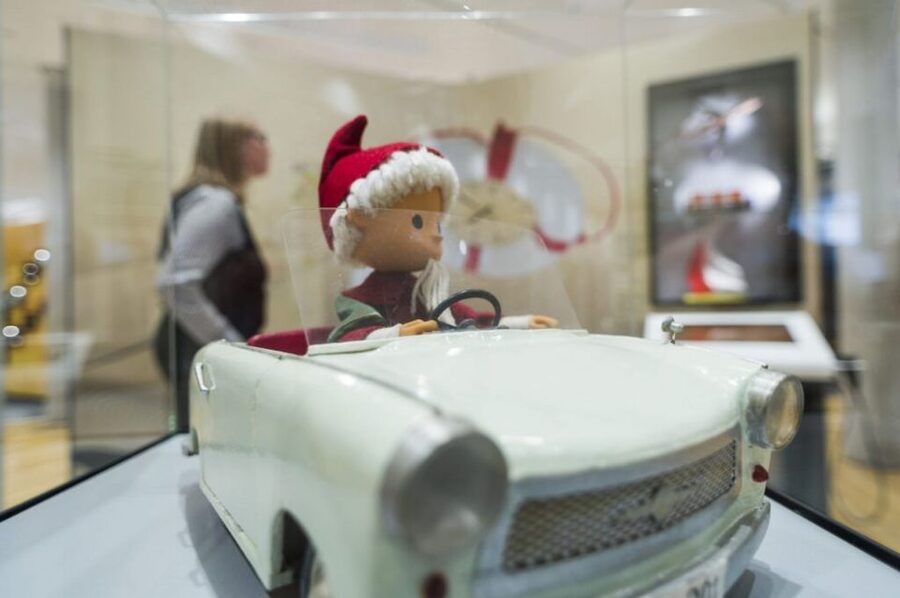
You should head directly to the Museum of Communication in Frankfurt. The visit is valid for one day, and you can check available starting times when booking. Skip-the-line entry is offered, which can be useful when you want to spend your time inside rather than waiting at the ticket desk.
The museum is wheelchair accessible. That makes the visit easier to plan for people who need step-free access, though the supplied information does not specify details about every gallery, restroom, or terrace area.
Public holiday hours are listed as 10:00 AM to 6:00 PM. Opening information can vary on other days, so check the current schedule before setting your plans. Since the experience is self-guided, your visit length depends on how closely you read and how long you spend with the interactive displays.
The booking terms are flexible. You can cancel up to 24 hours in advance for a full refund, and a reserve-now, pay-later option is available. These features help if your Frankfurt schedule is still changing.
Who will enjoy this museum most?
I would recommend it to families, technology fans, history-minded visitors, and anyone curious about how daily life has changed. It is also a sensible rainy-day choice because the main experience takes place indoors and offers enough material for a substantial visit.
The museum works particularly well for anyone who remembers some of the older technology on display. Fax machines, radios, and early television equipment can turn into personal memory, while younger visitors may see them as strange and unfamiliar objects.
It also suits people who prefer a museum with a clear social purpose. The exhibition asks questions about speed, access, control, and participation. KLIMA_X adds climate responsibility to that conversation.
You may want to choose another activity if you dislike explanatory displays, interactive museum formats, or noisy public spaces. The sound level can be a real issue, especially during busy periods. A weekday visit gives you the best chance of a calmer experience.
My booking advice
Book the Museum of Communication if you want a reasonably priced, flexible visit that connects old inventions with present-day questions. The $10 entry is fair for the amount of material, and the Main River terrace gives you a comfortable place to finish.
Choose a weekday if quiet matters to you. Bring a payment method besides Mastercard or Visa for the café, and allow more than a quick hour if you want to understand the four main themes and spend time in KLIMA_X.
I would make this a solid Frankfurt museum choice for families and curious adults. It is not a guided tour and not a fast list of famous objects. Its strength is the way it asks you to look at familiar technology, then think about how communication shapes the world around you.
FAQ
Where is the Museum of Communication Frankfurt?
The museum is located on Schaumainkai in Frankfurt, in the German state of Hessen.
How much does admission cost?
Admission costs $10 per person.
How long is the ticket valid?
The entry ticket is valid for one day.
Is a tour guide included?
No. The ticket includes museum entry, but a tour guide is not included.
What can I see in the permanent exhibition?
You can follow communication from cuneiform tablets to data glasses and see historic telegraphs, phones, fax machines, radios, and television sets.
What is KLIMA_X?
KLIMA_X is a temporary exhibition about climate change. It encourages you to consider practical actions that can help improve the current climate situation.
Is the museum wheelchair accessible?
Yes. The museum is wheelchair accessible.
Are food and drinks included?
No. Food and drinks are not included in the admission price.
Does the museum have a café?
Yes. You can take a break at the café terrace, which offers a view of the Main River.
What are the public holiday opening hours?
On public holidays, the museum is open from 10:00 AM to 6:00 PM.
Just added in Frankfurt
- Private Tour with Native English speaking Local★ 4.9 · 60 reviews
- Hohenzollern Castle: Full-Day Tour from Frankfurt★ 4.3 · 11 reviews
- Heusenstamm:tour of the Depot of the museum of communication★ 4.8 · 54 reviews
- Frankfurt: Guided walk between palm trees and skyline★ 4.8 · 9 reviews
- Frankfurter Kunstverein: Admission ticket★ 3.7 · 54 reviews
- Frankfurt: Verbrecherjagd und gefährlich leckeres Schnitzel★ 4.4 · 22 reviews
- Frankfurt: Walking Tour – discover the city with VR glasses★ 4.2 · 12 reviews
- Welcome to Frankfurt: Private Tour with a Local★ 4.7 · 81 reviews
Museums, compared.
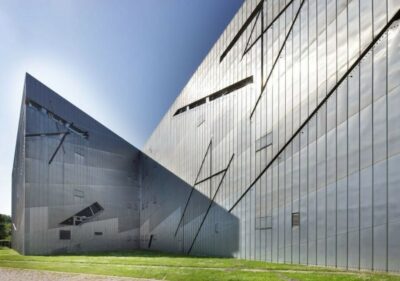


Skip-the-Line: Berlin Wall Museum at Checkpoint Charlie
Read our review →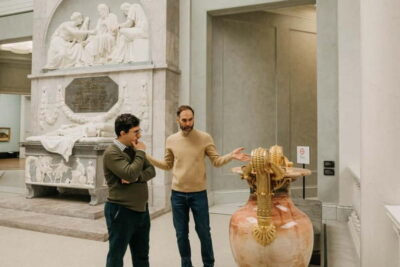
Browse the lists this tour appears in