
Reviewed · MUSEUMS
Dresden: Ticket + Tour Gallery Old Masters
Dresden’s Old Masters Picture Gallery is not short on famous paintings, but this tour adds something a gallery visit often lacks: a way to understand what you are actually seeing. You’ll study works by Raphael, Titian, Rembrandt, Vermeer, and others while learning about technique, purpose, materials, and the hidden changes revealed by X-rays.
I like the hands-on science, especially the X-ray images and samples of rare historic pigments. I also like the way the guide begins with five brief examples, giving you a useful visual toolkit before spending more time with major paintings such as Raphael’s Madonna and Dresden’s Sleeping Venus.
The main limitation is simple: the tour takes place in German only. It is also impossible to promise that every named painting will be on view, since works may be restored or lent to another museum. Still, equivalent works are used when needed, and the two-hour format gives you a focused introduction rather than an exhausting march through every room.
Key points at a glance
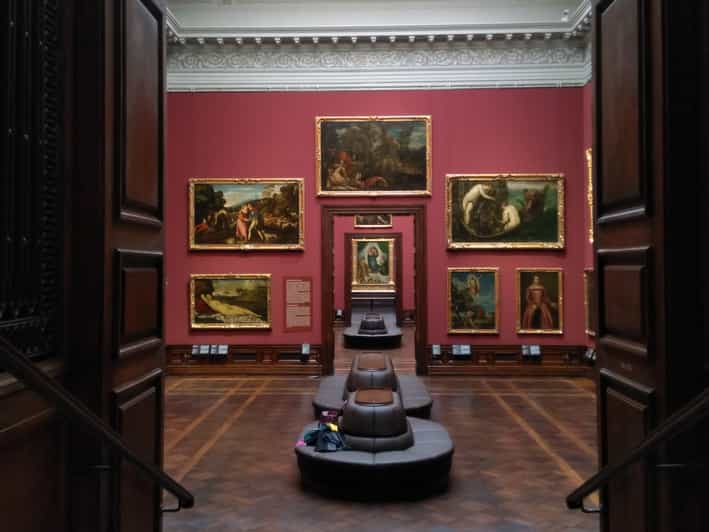
- See famous works with a purpose: Raphael, Titian, Giorgione, Rembrandt, Vermeer, Botticelli, and Jan van Eyck may all enter the discussion.
- Learn to read a painting: The tour explains symbols, materials, composition, and the reasons a work was created.
- Look inside the art: X-ray images reveal changes beneath the surface, while pigment samples make old painting methods easier to grasp.
- Start with five quick examples: Each painting represents a different type or category, helping you learn the basics before closer study.
- Plan for German: The live guide speaks German only, so this experience suits German speakers best.
- Allow two focused hours: Admission is included, the ticket line is skipped, and the tour returns to the gallery meeting point.
Why this gallery tour feels different
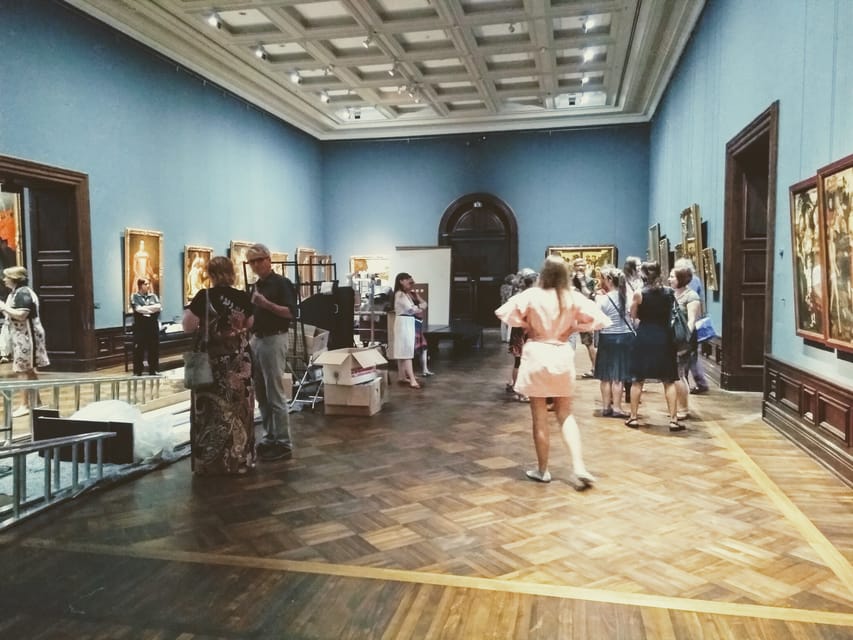
A normal museum visit can leave you admiring a painting without knowing why it matters. You may recognize Raphael’s name, notice that a canvas looks beautiful, and then move on. This tour tries to fill in the missing pieces: who commissioned the work, what viewers were expected to notice, which materials were used, and how the artist built the image.
That makes the experience useful for people who do not have much formal art training. You do not need to arrive with a stack of art-history books. The guide introduces classic art in general, then shows you practical ways to look at it.
I especially like the move from broad orientation to close inspection. The first five paintings receive only a couple of minutes each. That sounds quick, but it keeps the opening lively and lets you compare different kinds of paintings without getting stuck on one example.
You might see early oil paintings, works made with gold, and paintings by artists such as Botticelli and Jan van Eyck during this opening section. The point is not to memorize a list of names. It is to notice how materials and technique change the way an image looks.
More Museum Tours in Dresden
- Dresden: Church of Our Lady Guided Tour of Gallery
★ 4.7 · 2,421 reviews - Dresden: Zwinger Museum Entry Ticket
★ 4.7 · 1,436 reviews - Dresden: Guided Walking Tour and Chocolate Museum Ticket
★ 4.5 · 385 reviews
Getting started in Dresden’s Old Masters Picture Gallery
The meeting point is inside the gallery, in the cloakroom. From the ticket point, go downstairs, take a right through the door, and then use the stairs on the right-hand side. Arrive about 10 minutes before the scheduled start.
Admission is included, and the activity skips the ticket line. That matters in a popular museum, since you can begin thinking about the collection instead of sorting out entry details. The tour both begins and ends at the Old Masters Picture Gallery, so you do not need to arrange transport between separate sites.
Leave luggage and large bags elsewhere. They are not allowed on the tour. This is one of those small practical points that can save you an awkward return to your accommodation or a scramble for storage.
The gallery is wheelchair accessible. If you need accessibility assistance beyond that, the supplied information confirms the building’s accessibility but does not provide further details, so ask when booking.
Five paintings that teach you how to look
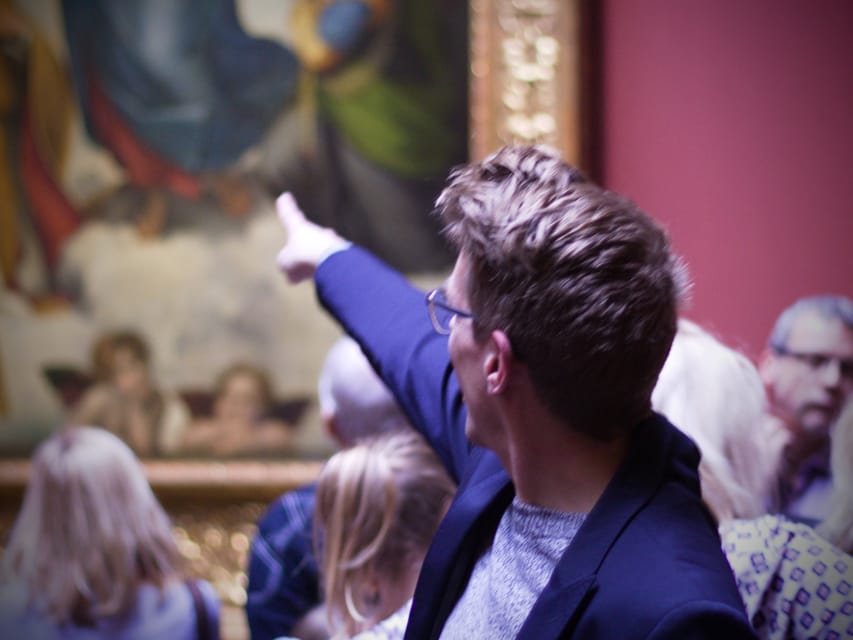
The first stage is a short orientation to the building, the exhibition concept, and classic art. Then the guide examines five paintings, each representing a different category or approach.
This section is more important than it may sound. Looking at five works in quick succession helps you compare rather than simply admire. You may begin to notice the difference between a religious image made for devotion, a mythological scene made for an educated courtly audience, and a portrait designed to project identity or status.
The tour also addresses why certain works were created. That question gives the paintings a practical setting. Instead of treating art as decoration on a wall, you start to see it as something commissioned for a purpose, shaped by belief, money, politics, taste, and available technology.
The guide also introduces technical basics in an approachable way. You will hear about materials and methods without being buried under specialist vocabulary. Digital images and short videos add visual help, which is useful when a point is difficult to explain while standing in front of a crowded or delicate original.
Early oil painting, gold, and the mechanics beneath the surface
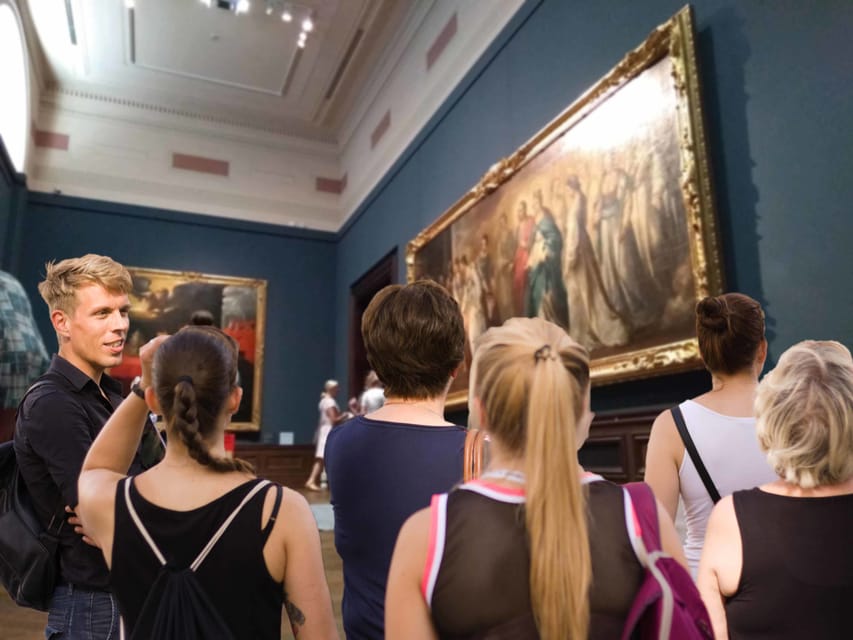
One of the most useful parts of the experience is the look at early oil paintings. Oil paint allowed artists to build color, texture, light, and fine detail in ways that earlier methods could not manage as easily. Seeing those works in person makes the technical story less abstract.
The gallery also includes paintings made with gold. Gold changes more than a picture’s color. It can create a reflective surface, mark sacred importance, and alter how an image responds to the light around it. A guide can point out effects that you might otherwise mistake for simple decoration.
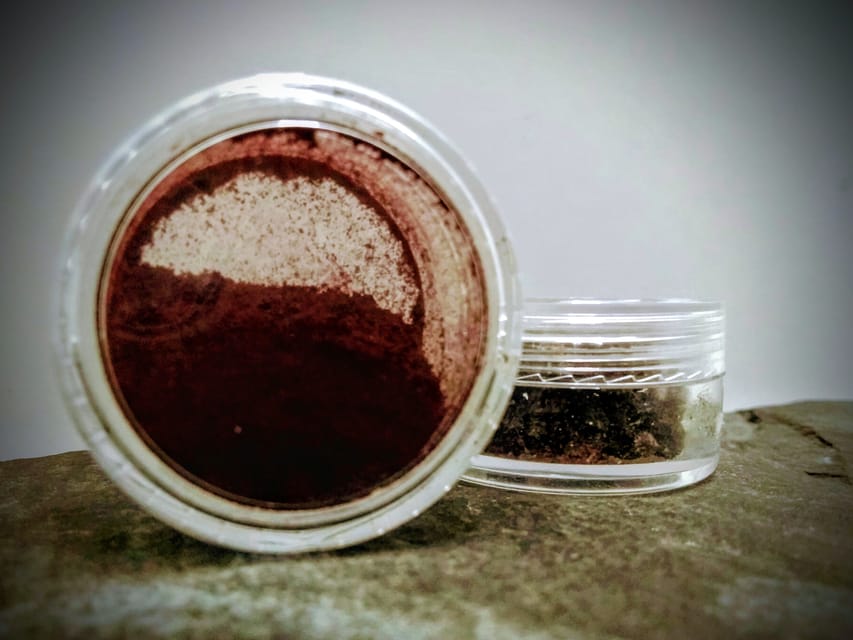
The historic pigment samples add a welcome physical element. You cannot handle the paintings, of course, but touching samples of rare colors gives you a sense of the materials behind them. It is a small detail, yet it helps connect the finished masterpiece with the workshop process that produced it.
This is where the tour earns its price for many people. You are not paying only to stand near well-known names. You are getting an explanation of how a painting functions as an object, from its surface to the layers below.
Same city, a completely different kind of day:
- Dresden: Semperoper Tickets and Guided Tour
★ 4.7 · 12,102 reviews - Dresden: The Original Night Watchman Tour in Lantern Light
★ 4.6 · 6,653 reviews - Dresden: Semperoper and Old Town Tour
★ 4.8 · 5,735 reviews - Dresden: River Sightseeing Boat Cruise
★ 4.3 · 5,323 reviews
Raphael’s Madonna and the art of close looking
After the quick survey, the pace slows for more detailed examination. Raphael’s Madonna receives particular attention, and the guide uses the painting to show how religious images communicate through gesture, expression, placement, and visual symbols.
Religious art can look obscure if you do not know the signs. The tour teaches you how to spot meaningful details rather than treating the image as a wall of attractive figures. Once you know what to look for, small choices in posture, clothing, objects, and setting can carry much more weight.
This is also a good moment to consider the difference between seeing a famous painting and understanding its effect. Raphael’s reputation can make a work feel untouchable, as if you are meant only to admire it from a respectful distance. A clear guide brings the image back to eye level and gives you concrete things to examine.
The tour does not promise to turn you into an art historian in two hours. It does something more practical: it gives you a method you can use on the rest of your museum visit.
Titian, Giorgione, and Dresden’s Sleeping Venus
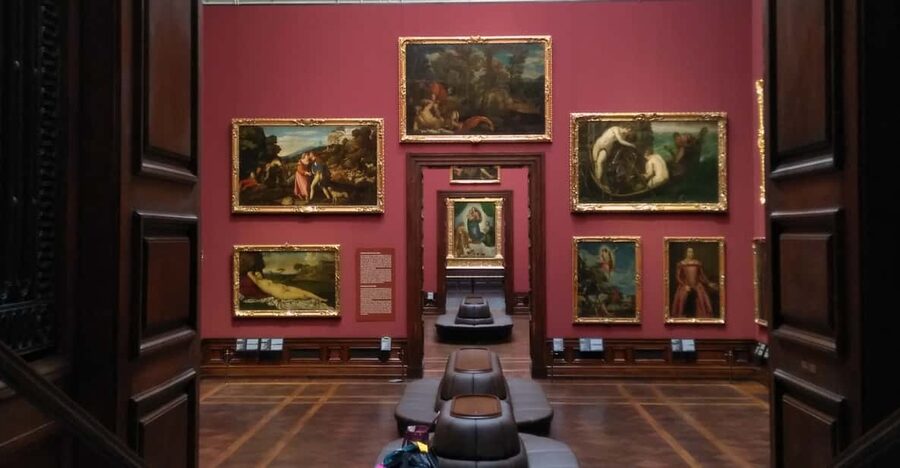
The next major focus is the relationship between two Renaissance stars, Titian and Giorgione. Their connection gives the tour a chance to show how artists influence one another and how a painting can sit between personal styles, workshop practices, and changing ideas about beauty.
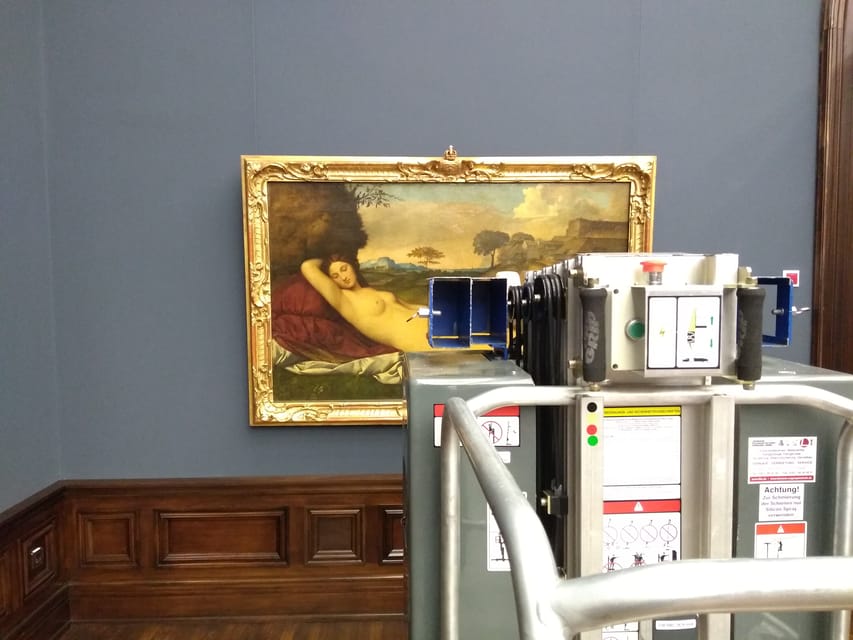
Dresden’s Sleeping Venus is the centerpiece of this section. The painting is presented as an early and highly important nude image of a woman in modern Western art. Its calm pose may seem straightforward at first, but the guide explains why the work is more surprising than it appears.
The background of the painting matters, as does the way the image was made. You will not just hear that the work is famous. You will consider what kind of viewer it addressed, how the nude figure functions within the composition, and why the painting had such an impact.
The X-ray images are especially valuable here. They let you see changes beneath the visible surface, offering clues about the painting’s construction and alterations. This is the closest the tour comes to opening the artwork up and showing its internal logic.
X-rays do not replace seeing the original. They add a second view, one that reminds you that a finished painting is often the result of decisions, revisions, and adjustments. That idea can change how you look at every old painting afterward.
Rembrandt, Vermeer, Botticelli, and the wider collection
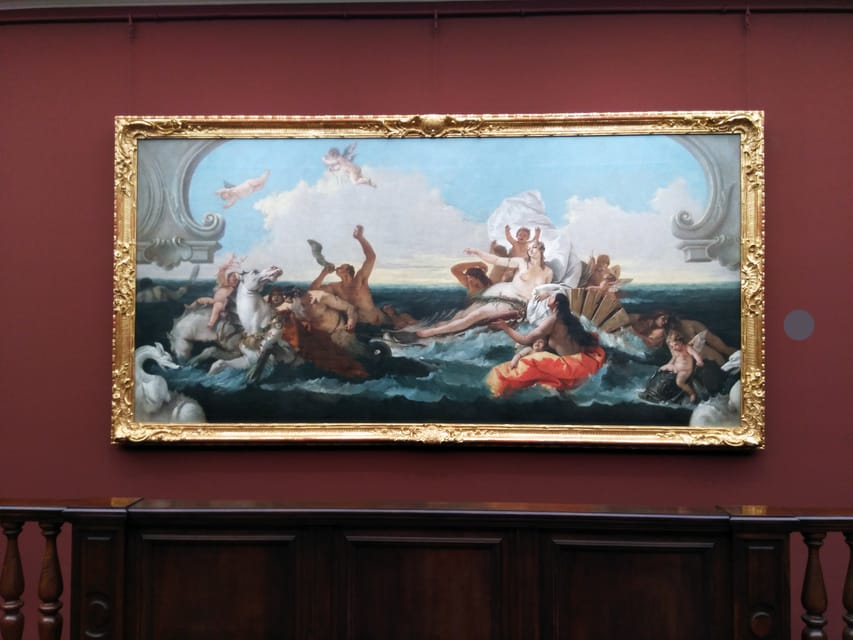
Rembrandt and Vermeer are included among the artists connected with the tour, along with Botticelli and Jan van Eyck. The exact selection can change, so you should think of these names as likely reference points rather than a fixed guarantee.
That flexibility is necessary in a working museum. Paintings may be removed for restoration or loaned to another institution. The museum also controls which works are on display. If a named painting is unavailable, the guide adjusts the program with equivalent or additional material.
This is worth keeping in mind before booking. If you have come only to see one specific painting, you could be disappointed if it is temporarily absent. If you are interested in how old art works and connects, the changing selection is less of a problem.
The guide’s comparisons between artists can be one of the tour’s strongest features. Thomas, one guide associated with this experience, is praised for connecting different old-master painters and explaining how those links help you appreciate the pictures. That kind of comparison is more useful than hearing isolated facts about each artist.
You begin to see the collection as a conversation across time. One artist borrows a pose, another changes the use of light, and a later painter answers an earlier idea in a new medium or setting.
A German-language tour with a lively teaching style
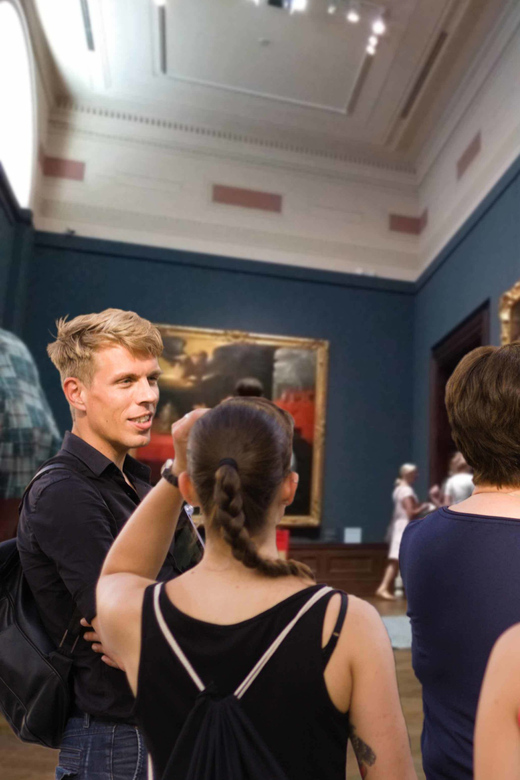
This is a German-speaking tour, and the guide leads the activity in German only. That should be your first booking check. If you do not understand German well, the scientific and historical explanations will be difficult to follow, even if you can enjoy the paintings independently.
For German speakers, the format sounds friendly rather than stiff. The guide is expected to explain complex ideas in an easy, entertaining way, using digital images and videos when they help. Thomas, in particular, is described as funny, passionate, and effective at making connections among artists.
Those qualities matter in a museum. Two hours of art history can become tiring when the guide simply recites dates and names. Here, the intended rhythm is shorter examples, clear explanations, visual aids, and longer attention on a few major works.
You should still expect an educational tour, not a casual stroll. The material covers materials, scientific examination, religious symbols, artistic purpose, and Renaissance connections. The lighter presentation helps, but you will get the most from it if you are ready to pay attention.
Is $44 a fair price for two hours?
At $44 per person, the cost is above a basic museum admission, but admission is included. The ticket-line skip also saves time, and the guide adds something you would not get from simply entering with an audio guide or printed map.
The value depends on how you use museums. If you prefer to wander alone and spend 20 minutes with one favorite painting, the fixed two-hour structure may feel restrictive. You are paying for a guided selection rather than unlimited independent time.
For someone who wants an informed introduction to the Old Masters Picture Gallery, the price is reasonable. You receive entry, a live German-speaking guide, technical explanations, visual material, and access to details such as X-rays and pigment samples. The tour also helps you make better use of the rest of your gallery visit.
I would book it for a first visit, especially if you often look at old paintings and wonder what you are supposed to notice. Art-history students, curious beginners, and German-speaking museum fans are likely to get the most from it.
Who should book this two-hour experience?
Choose this tour if you want to:
- Learn how to examine religious and Renaissance paintings.
- See major artists in the context of one another.
- Understand oil paint, gold surfaces, pigments, and X-ray analysis.
- Prefer a guided experience with a clear beginning and end.
- Speak German well enough to follow detailed explanations.
- Have limited time and want a focused introduction to the gallery.
You may want to skip it if you need an English-language tour, dislike scheduled group activities, or have your heart set on one specific painting. The museum can remove works from display, and the tour cannot control that.
Families with older children may find the X-rays and pigment samples more engaging than a standard art lecture, although the information provided does not specify a minimum age or a child-focused format. The accessible building also makes the tour possible for wheelchair users.
Book at least far enough ahead to check the starting time that fits your day. The activity lasts two hours, and start times vary by availability. You can cancel up to 24 hours before the activity for a full refund, and the reserve-now, pay-later option gives you some flexibility.
Should you book the Old Masters tour?
Book it if you want more than a parade of famous names. The strongest reason to go is the combination of close looking and practical explanation: you learn why the paintings were made, how artists built them, and what X-rays can reveal beneath the surface.
The German-only format is the deciding factor. If you understand German, this is a focused and good-value way to meet Dresden’s Old Masters, with Raphael, Titian, Giorgione, Rembrandt, and others placed into a larger story. If you do not, choose an option in a language you can follow, since the guide’s explanations are the main point of the experience.
FAQ
Where does the tour start?
The tour starts at the Old Masters Picture Gallery. Your guide waits in the cloakroom.
How do I find the meeting point?
From the ticket point, go downstairs, take a right through the door, and then use the stairs on the right-hand side.
How early should I arrive?
You should arrive about 10 minutes before the activity starts.
How long does the tour last?
The guided tour lasts two hours.
What language is the tour in?
The tour is conducted in German only, with a live German-speaking guide.
Is admission to the gallery included?
Yes. Admission to the Old Masters Picture Gallery is included in the price.
Does the tour skip the ticket line?
Yes. The activity includes skip-the-ticket-line access.
Are all the named paintings guaranteed to be on display?
No. The museum may remove paintings for restoration or lend them to another museum. The guide adjusts the program with equivalent or additional works when necessary.
Can I bring luggage or a large bag?
No. Luggage and large bags are not allowed on the tour.
Is the gallery wheelchair accessible?
Yes, the activity is listed as wheelchair accessible.
Can I cancel the booking?
Yes. You can cancel up to 24 hours in advance for a full refund. You can also reserve now and pay later.
Just added in Dresden
- Test Drive Electric Vehicles from the VW brand (ID. model)★ 4.8 · 190 reviews
- SRF CoBi | City Tour by ConferenceBike★ 4.7 · 38 reviews
- Dresden: Scavenger Hunt to Elbe River & Castles★ 4.7 · 15 reviews
- Dresden: Bike Rental – City Bike with Option Children Seat★ 4.5 · 13 reviews
- Private trip from Prague to Dresden, Moritzburg & Meissen★ 5.0 · 5 reviews
- Moritzburg: Scavenger Hunt Self-Guided Walking Tour★ 4.8 · 12 reviews
- Historical tour of the old town including a Saxon dinner★ 4.7 · 23 reviews
- Climb the mountains together with goats★ 4.8 · 8 reviews
Museums, compared.


Skip-the-Line: Berlin Wall Museum at Checkpoint Charlie
Read our review →
Browse the lists this tour appears in