
Reviewed · BERLIN WALL AND COLD WAR TOURS
The Cold War and The Wall – Private Tour with Jacob
Berlin’s Cold War story is spread across the city, and this private tour connects its major places into one clear route. You move from the Victory Column and Brandenburg Gate to Checkpoint Charlie, the Palace of Tears, and Alexanderplatz while learning how the Wall shaped daily life.
I like the private format, since Jacob can adjust the pace and answer your questions without a group crowding around. I also like the useful route planning, with hotel, airport, and train station pickup, plus a large subway map to help you keep exploring afterward. The main drawback is that public transport costs extra, and ten stops in under three hours means some visits are brief.
Key points to know before booking
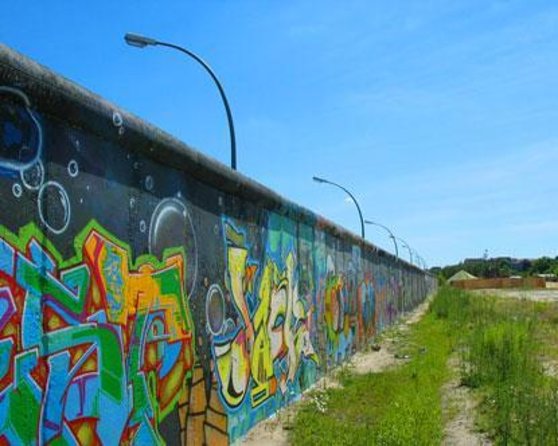
- The route covers ten Cold War locations, including Checkpoint Charlie, the Palace of Tears, Potsdamer Platz, and Alexanderplatz.
- Jacob, also identified as Nadav Jacobs, guides the private tour, giving you a more personal way to ask questions and shape the discussion.
- The tour costs $310 per group of up to six, making the value much better for a full group than for one or two people.
- Pickup is available from a Berlin hotel, rental apartment, train station, or airport, which can simplify the start of your day.
- Public transport is not included, so plan on about 3 to 11 euros for a two-hour or day ticket.
- The tour ends at Alexanderplatz, a useful central location for continuing your Berlin sightseeing.
Berlin’s Cold War story in one compact route
This is a history-focused walking tour, but it is not limited to one section of the former Wall. The route crosses central Berlin and links political power, escape attempts, border controls, everyday East German life, and the city’s post-Cold War rebirth.
That range is the tour’s main strength. You are not simply shown a remaining Wall segment and given a short explanation. You follow the old division through streets and squares that now look open and ordinary. The contrast helps you understand how strange and disruptive the division was.
The tour lasts about 2 hours and 45 minutes. Ten stops fit into that time, so you should expect short explanations at several locations rather than long museum visits. The schedule works best if you want a strong overview and a guide to connect the pieces.
More Berlin Wall and Cold War Tours in Berlin:
- Berlin: Third Reich and Cold War 2 Hour Walking Tour
★ 4.9 · 6,830 reviews - Berlin’s Best: 2 Hour Walking Tour Third Reich and the Cold War
★ 5.0 · 5,486 reviews - Berlin: DDR Museum Tickets
★ 4.3 · 3,443 reviews
From the Victory Column to the 1953 uprising
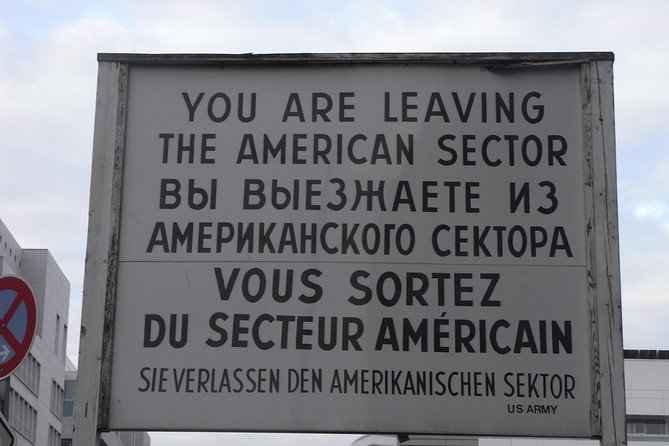
The first stop is the Siegessäule, or Victory Column, on Straße des 17. Juni. The location introduces the 1953 East German uprising, an important early challenge to communist rule.
The name Straße des 17. Juni itself recalls the date of that revolt. That gives you a useful starting point: the Cold War was not only a contest between Washington and Moscow. It was also about East German workers, government pressure, public protest, and the limits of Soviet-backed control.
The stop is scheduled for about 15 minutes and does not require an admission ticket. The Victory Column is also a useful orientation point, since the broad road and open setting make the old political geography easier to picture.
Brandenburg Gate and the Wall’s rise and fall
At the Brandenburg Gate, the focus turns to the erection and fall of the Berlin Wall. Few places better capture the city’s divided identity.
The gate once sat near the border between East and West Berlin. After reunification, it became a symbol of an open city. During the Cold War, however, the area around it represented restriction and separation. The guide’s task here is to connect the famous image with the events that changed access, travel, and daily routines.
You spend about ten minutes at this stop. That is enough for the main explanation and photographs, but not a long historical lecture. If the Wall’s construction and collapse are your main interests, ask Jacob to clarify the timeline and point out how the area changed after reunification.
Potsdamer Platz, from empty border zone to public square
Potsdamer Platz shows how quickly Berlin’s center changed after the Cold War. The tour covers the city divide here and the post-Cold War freedom concert.
The square was once cut by the border and left in a heavily divided part of the city. Today, its modern urban character can make the former division hard to imagine. That is exactly why this stop matters. It gives you a sharp before-and-after comparison without needing a long museum visit.
The scheduled time is about 15 minutes. You will get the broad story rather than a full architectural tour. Still, the stop helps explain that reunification was not simply the removal of a wall. Berlin also had to reconnect streets, public spaces, and civic life.
A few more half-days in Berlin worth comparing
- Berlin: Reichstag, Dome and Government District Guided Tour
★ 4.7 · 18,288 reviews - Berlin: 1-Hour City Tour by Boat with Guaranteed Seating
★ 4.3 · 16,993 reviews - Berlin: Boat Tour Along the River Spree
★ 4.4 · 11,252 reviews - Discover Berlin Half-Day Walking Tour
★ 5.0 · 9,624 reviews
The Aviation Ministry and a daring escape attempt
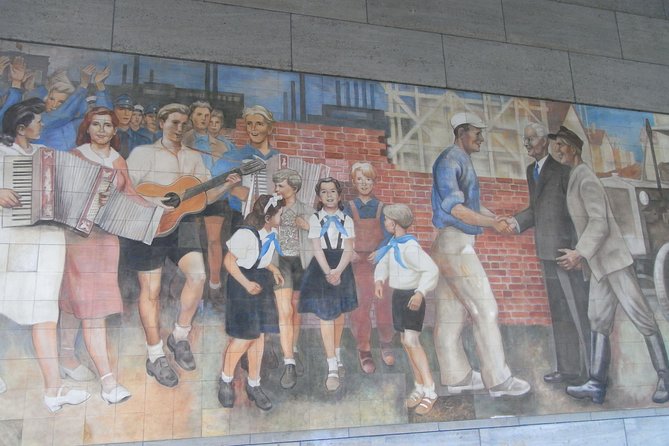
The former Aviation Ministry offers a more political and personal look at East Germany. Here, the discussion includes Max Lingner’s communist utopian imagery and Heinz Holzapfel’s escape attempt.
The building connects official ideals with the reality of communist control. Max Lingner’s work represents the polished vision that the state wanted to project. Holzapfel’s story brings the focus back to a person trying to get out.
You spend about ten minutes here. This is one of the stops where a private guide has real value, because the significance is not always obvious from the street. Ask questions if you want to understand how political art and individual escape stories fit into the larger Cold War picture.
The Trabi Museum and everyday life in East Germany
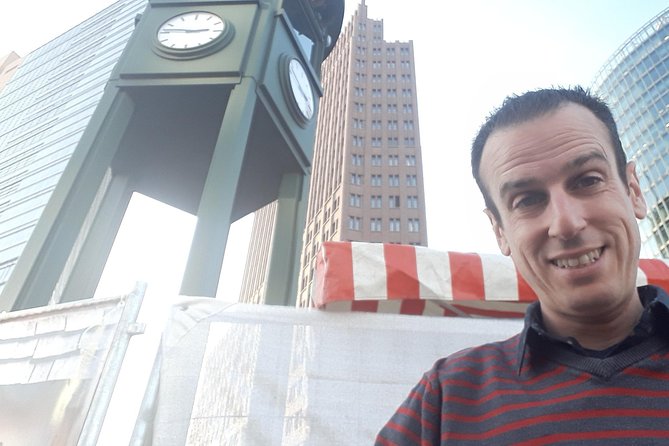
The Trabi Museum gives the itinerary a welcome change of scale. Instead of only discussing leaders, borders, and protests, you look at the East German Trabant, the small car that became an everyday symbol of life behind the Iron Curtain.
The stop lasts about 30 minutes, the longest scheduled visit on the route. That extra time suggests a more focused look at the car and what it represented. The Trabant was not just transportation. It also reflected limited consumer choice, long waits, and the practical side of life in East Germany.
The supplied details list admission as free. Even so, you should confirm any current museum arrangements when booking, since opening conditions can change. This stop will suit you if you enjoy social history and ordinary objects as much as major political events.
Checkpoint Charlie and the famous border crossing
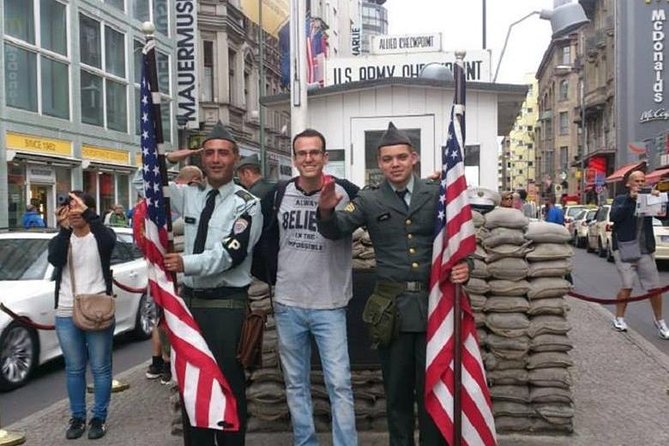
Checkpoint Charlie is one of Berlin’s best-known Cold War locations. The tour presents it as the main crossroads between East and West and explains its role in Cold War history.
The site is visually familiar, but the setting can be easy to oversimplify. A guide helps place the crossing in the larger system of permits, guards, surveillance, and political tension. The name has become shorthand for the divided city, yet the real story was about who could cross, under what conditions, and with what risks.
The stop lasts about ten minutes. That is enough for an introduction, but you may want to ask Jacob for more detail if border crossings are your priority. The short visit also reflects the nature of central Berlin today. You are seeing an important historical location within a busy modern city, not a preserved border complex.
Friedrichstrasse and Unter den Linden
Friedrichstrasse, known here as the checkpoints street, takes the route into another part of the former border zone. The 20-minute stop gives more time to explain how movement through central Berlin was controlled.
This is a good place to pay attention to the street itself. A divided city was experienced through ordinary routes: getting to work, meeting family, traveling by train, or trying to cross from one side to the other. The tour’s value comes from tying those daily movements to the political system.
The itinerary then continues along Unter den Linden, East Germany’s main avenue leading toward the border. You spend about 20 minutes here as well. The broad avenue helps show how the East German state presented its capital and connected government, monuments, and border areas.
Together, Friedrichstrasse and Unter den Linden add needed street-level context. You are not only visiting famous photo stops. You are following the routes where the division was managed and displayed.
The Palace of Tears and controlled departures
The Palace of Tears is one of the strongest stops for understanding personal separation. It served as a main checkpoint for citizens leaving East Berlin, under strict communist control.
The name comes from the farewells that took place there. Families and friends could be separated at the border, and departure was governed by rules that ordinary people could not easily challenge. The site turns a political system into a human story.
The tour allows about 20 minutes here. That makes it one of the more substantial stops, alongside the Trabi Museum. If you want to understand what the Wall meant beyond concrete and barbed wire, this is a place to listen closely and ask about travel controls and family separation.
Alexanderplatz and the space race
The tour ends at Alexanderplatz, where the TV Tower and the space race provide the final Cold War theme.
The TV Tower was a major East German symbol. Its height and design projected modernity, technical skill, and state confidence. Connecting it with the space race shows how both sides used science and technology to make political claims.
Alexanderplatz is a practical finish. You can continue exploring central Berlin from here, and the area is well connected by public transport. The final stop lasts about ten minutes, so it works as a closing chapter rather than an extended visit to the tower.
What the private format adds
A private tour changes the rhythm. You are not tied to a large group’s interests, and Jacob can spend more time on topics that catch your attention. The tour is designed for groups of up to six, so it can work well for a family, a group of friends, or a small party with a shared interest in twentieth-century history.
The personal element was especially clear in the way Jacob provided ideas for further places to visit independently. That is useful on a first Berlin trip, since this route only scratches the surface of the city. Nadav Jacobs is also named in the experience details, so confirm the guide’s name when you book if that matters to you.
You also receive an A3 guidance picture folder and a large subway station map. These are modest extras, but they have practical value. The map can help you understand Berlin’s connections after the tour, and the picture folder can reinforce what you saw during the walk.
Price, pickup, and the real value
The price is $310 per group of up to six. At six people, that works out to about $51.67 per person. At three people, it is about $103.33 each. For one person or a couple, the price is much harder to justify unless private attention and pickup are especially important to you.
Hotel, rental apartment, train station, and airport pickup are offered in Berlin. That can save time and remove some uncertainty at the start, though the tour does not include a private van and driver unless you request one separately.
Public transport costs extra, at roughly 3 to 11 euros for a two-hour or day ticket. Since the route covers many central locations, this is worth planning for. The tour description calls it a private walking tour, but the number of stops and the transport note suggest you should expect public transport to be part of the day.
Weather, timing, and who will enjoy it most
The tour operates in all weather. Bring an umbrella and wear shoes suited to walking and standing outdoors. No special admission fees are listed for the stops, but the experience is still weather-dependent because much of the storytelling happens on city streets.
The tour suits first-time visitors who want a clear Cold War introduction without spending a full day in museums. It also works for repeat visitors who want more context for places they may have already seen.
You should choose a longer or more specialized tour if you want extended time inside museums, detailed military history, or a slow study of the Wall’s surviving sections. Ten stops in 2 hours and 45 minutes creates a strong overview, but it does not allow every topic to be explored at length.
Should you book The Cold War and The Wall tour?
Book it if you want a private, tightly organized introduction to Berlin’s divided past, especially if you are traveling with four to six people. The route covers major landmarks, lesser-known political stories, everyday East German life, and the emotional cost of border control.
Think twice if you are traveling alone, watching your budget, or hoping for long visits at each location. For the right group, the $310 price buys a personal guide, pickup options, transport guidance, and a connected story that can make central Berlin far easier to understand.
FAQ
How long does the private Cold War tour last?
The tour lasts approximately 2 hours and 45 minutes.
How much does the tour cost?
The price is $310 per group, with up to six people included.
Who guides the tour?
The guide is identified as Jacob, and the provider information also names Nadav Jacobs. You can confirm the guide’s name when booking.
Where does the tour start and finish?
The tour starts in Berlin, with pickup available from a hotel, rental apartment, train station, or airport. It ends at Alexanderplatz, 10178 Berlin.
Is public transportation included?
No. Public transport tickets cost extra, at roughly 3 to 11 euros for a two-hour or day ticket.
What places are included?
Stops include the Victory Column, Brandenburg Gate, Potsdamer Platz, the former Aviation Ministry, the Trabi Museum, Checkpoint Charlie, Friedrichstrasse, Unter den Linden, the Palace of Tears, and Alexanderplatz.
Can I cancel for a full refund?
Yes. You can cancel at least 24 hours before the experience start time for a full refund. Cancellations or changes made less than 24 hours before the start time are not refunded or accepted.
Just added in Berlin
- Berlin & The Third Reich Private Guided Tour★ 5.0 · 3 reviews
- Third Reich Quest Experience in Berlin★ 4.5 · 7 reviews
- Private Analogue Photography Experience in Berlin★ 5.0 · 3 reviews
- Berlin Urbex Adventure and History Tour★ 5.0 · 9 reviews
- The Beauty of Berlin by Bike: Private Tour★ 5.0 · 59 reviews
- Berlin: Guided Bike tour of the Berlin Wall and Third Reich★ 5.0 · 160 reviews
- Beyond Currywurst: Berlin’s Hidden Street Food & Culture Tour★ 5.0 · 100 reviews
- Berlin Third Reich & Cold War Walking Tour With A Guide★ 5.0 · 7 reviews
Berlin Wall and Cold War Tours, compared.

Berlin’s Best: 2 Hour Walking Tour Third Reich and the Cold War
Read our review →
Skip-the-Line: Berlin Wall Museum at Checkpoint Charlie
Read our review →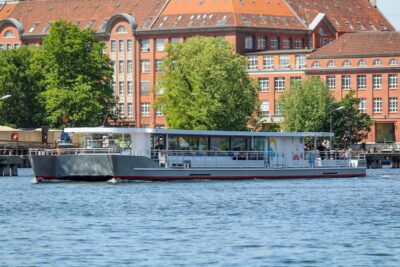
East Side Gallery Spree Cruise in a Solar Catamaran
Read our review →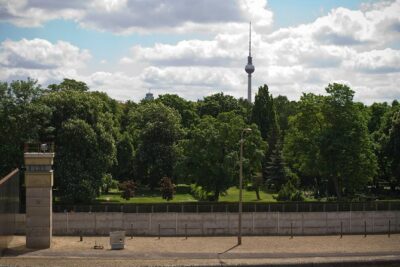
Cold War, Berlin Wall, Spies and the East Side Gallery
Read our review →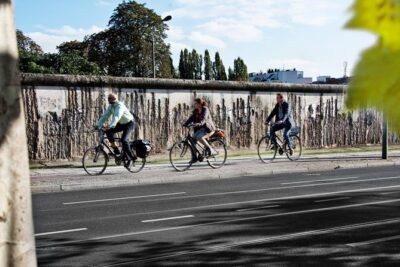
Guided Bike Tour of the Berlin Wall and Third Reich
Read our review →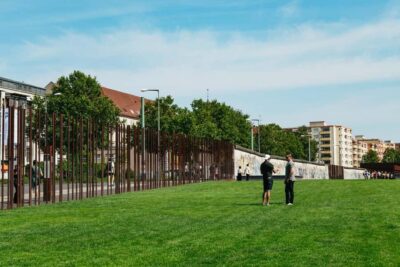
Browse the lists this tour appears in