
Reviewed · HISTORICAL TOURS
Munich: Private Walking Tour of the Historical City Center
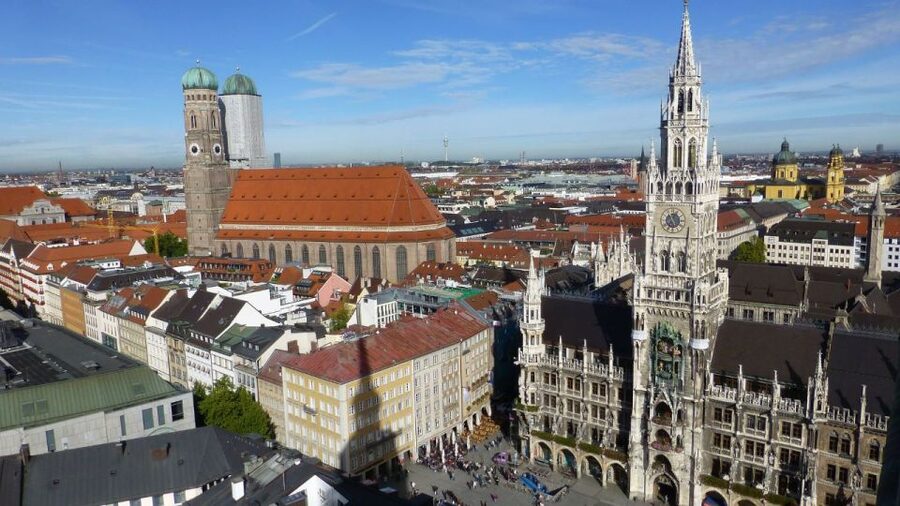
Munich’s past comes into focus on foot, especially when your guide links ordinary streets with the Beer Hall Putsch, Georg Elser’s failed attempt to kill Hitler, and the city’s old royal and beer traditions. Marienplatz makes a smart starting point, with the New Town Hall, Old Town Hall, and famous Glockenspiel all close together.
I like the private format, which lets you ask questions and set a comfortable pace, and I like the route’s mix of major sights and lesser-known stories. The optional Residenz Museum visit adds royal interiors to the walk. The main caution is guide quality: one visitor found the guide quiet and hard to understand, while another praised Tom as a natural storyteller.
Key points to know before booking
- Three hours on foot: The tour covers Munich’s central sights at walking pace, so comfortable shoes matter.
- Private group up to 15: You get your own guide, but the fixed price is best value when shared by several people.
- History with some hard edges: Expect clear discussion of Hitler, Eva Braun, the Beer Hall Putsch, and Georg Elser.
- Residenz is optional: Choose that version if you want a look inside Munich’s former royal residence, but entrance fees are not included.
- A useful first-day route: Marienplatz, Frauenkirche, Odeonsplatz, Hofbräuhaus, and Viktualienmarkt give you a good first map of central Munich.
Starting at the Fish Fountain in Marienplatz
Meet your guide at the fish fountain in front of the Town Hall at Marienplatz 8. This is the heart of central Munich, and it is a practical place to begin because several important sights sit within a short walk.
The square takes its name from Mary’s Column, the Marian column at its center. Your guide explains why it was erected and how that name became attached to the square. This small detail helps you read the city rather than simply photograph it.
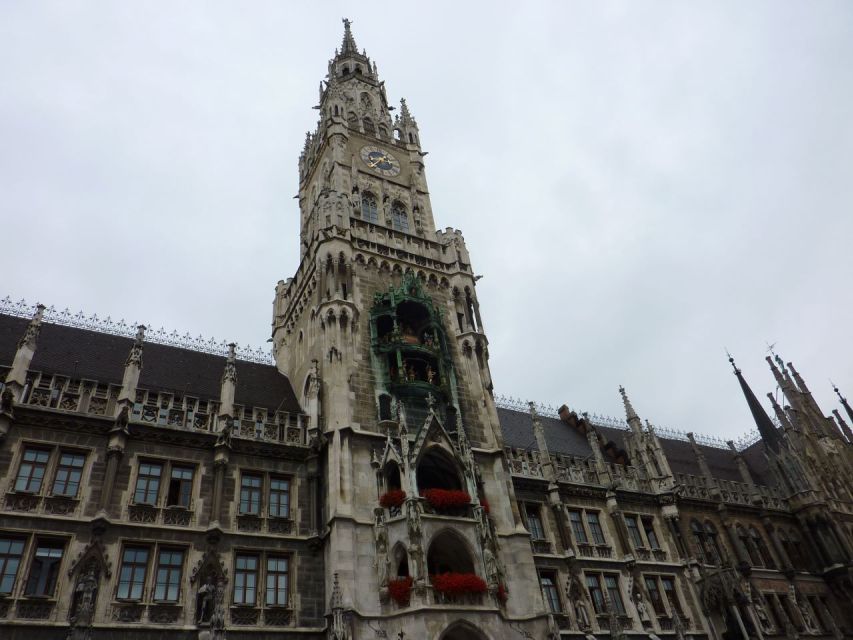
You will see both the Old Town Hall and the New Town Hall. They tell different parts of Munich’s civic story, and the contrast is useful from the start: one building points to the older town government, while the other dominates the square with its elaborate Gothic appearance and tall clock tower.
Give yourself a few minutes before the tour to locate the meeting point. Marienplatz can be crowded, and the fish fountain is easier to find when you arrive early and look for the Town Hall directly behind it.
More History Tours in Munich
- Munich: Guided Tour of the historic Town Hall on Marienplatz
★ 4.8 · 63 reviews - Munich Craft Beer & Cultural Tour With Snack
★ 5.0 · 46 reviews - Munich History Tour: Private & Personalized with a Local Guide
★ 4.5 · 33 reviews
Reading the Rathaus-Glockenspiel
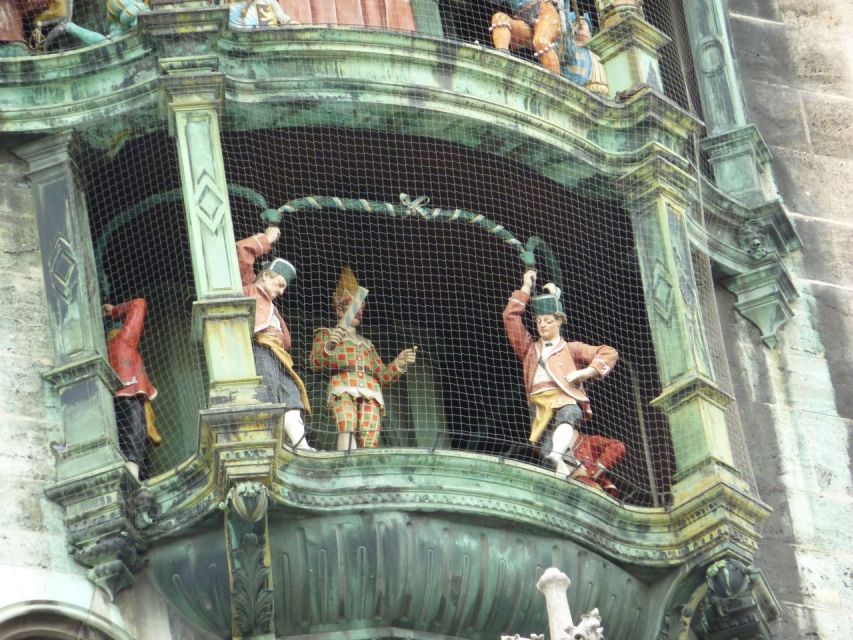
The New Town Hall’s clock tower is one of Munich’s best-known sights, but the moving figures are more than decoration. The Rathaus-Glockenspiel presents scenes connected with Munich’s past, and your guide explains the meaning behind the display.
That explanation is the real reason to include it on a walking tour. On your own, you can watch the figures turn and hear the bells. With a guide, you get the story that gives the performance context.
The tour information does not promise a particular viewing time for the Glockenspiel, so do not book this walk solely around seeing a full performance. You will still learn about the clock tower, but the exact timing depends on the start time and the day’s schedule.
St. Peter and the monks who shaped Munich
The route continues to St. Peter, described as Munich’s oldest Catholic church. Here you hear how monks helped give rise to the city. That connection matters because Munich’s name and early growth are tied to its religious beginnings.
This stop adds a layer that a simple photo walk can miss. The city center is not only a collection of grand facades and beer halls. It also reflects the work of religious communities that helped establish Munich in its earliest days.
The tour includes legends as well as documented events. That can make the walk more memorable, but it also means you should listen for the difference between a local story and a historical fact. A good guide will make that distinction clear as the route moves along.
Frauenkirche and the Devil’s Footprint
You will get a view of the double towers of the Frauenkirche, Munich’s largest church. The twin towers are among the clearest markers in the city center, and they help you keep your bearings as you move between the main squares.
Your guide also describes the church’s Devil’s Footprint and the legend connected with it. This is a classic example of the tour’s approach: major architecture paired with a story that gives you something specific to remember.
The available information does not say that the tour enters the Frauenkirche, so you should expect an explanation and exterior view rather than assume an interior visit. Entrance fees are not included in the tour price, and the listed inclusion is the guide.
More Walking Tours in Munich
- Munich: Third Reich & WWII Walking Tour
★ 4.6 · 6,181 reviews - Third Reich Walking Tour Munich
★ 4.5 · 4,291 reviews - Munich: Night Watchman Walking Tour
★ 4.7 · 2,092 reviews - Munich Ghosts and Spirits Evening Walking Tour
★ 5.0 · 1,900 reviews
Munich, Eva Braun, and the darker 20th century
The walk does not avoid Munich’s difficult role in modern German history. You hear about Eva Braun, a young German woman from Munich who later became Hitler’s wife. The subject is handled as part of the city’s wider story, not as a reason to glamorize the Nazi leadership.
You also learn about Georg Elser, a Munich carpenter who planned an assassination attempt against Hitler. His aim was to stop the coming war, but the attempt failed. This is one of the most striking details on the route because it shows that opposition existed inside Germany before the war spread across Europe.
The value here is the local scale. Instead of discussing the period only through dates and national leaders, the tour ties it to Munich streets and people. If you want a full museum treatment of Nazi Germany, this three-hour walk is not enough. If you want a grounded introduction while seeing the center, it gives you a useful starting point.
Odeonsplatz and the Beer Hall Putsch
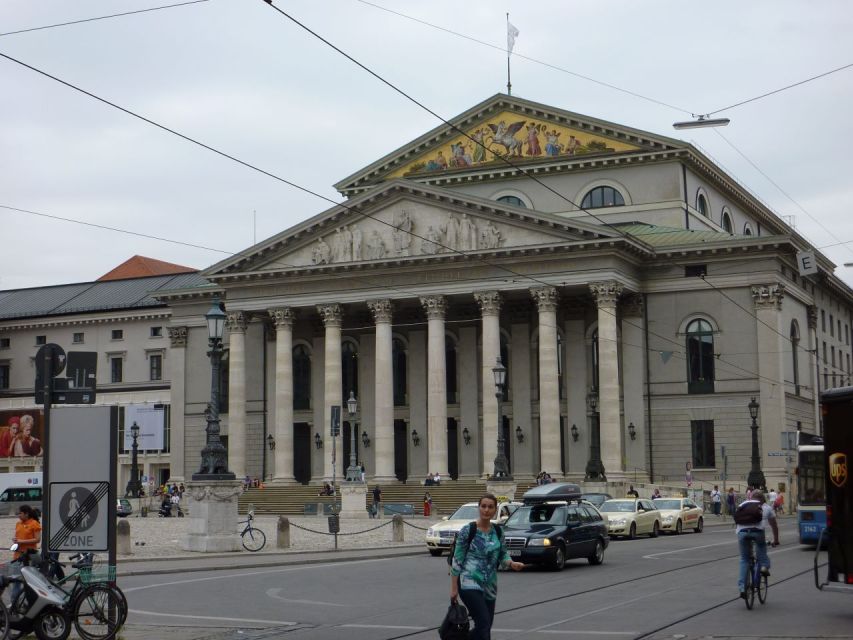
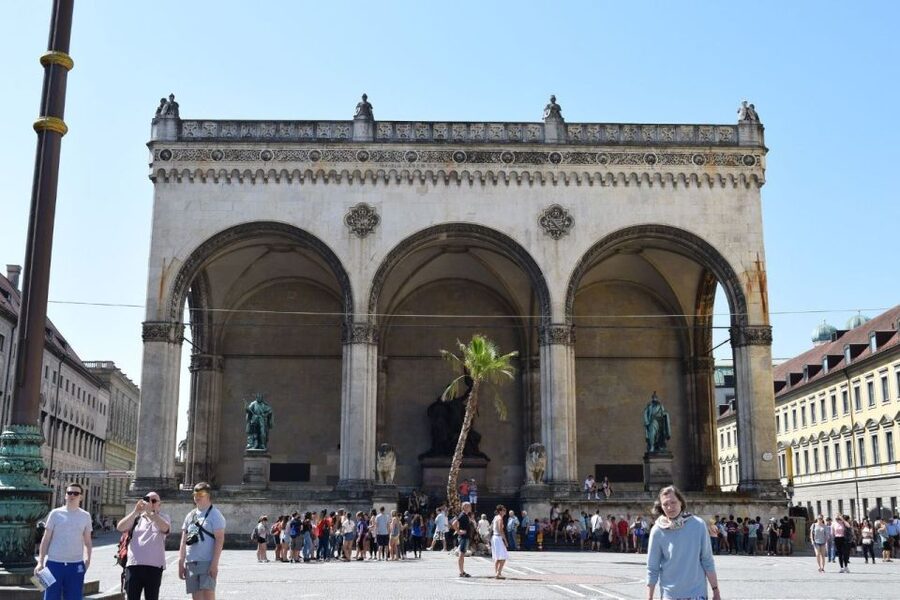
At Odeonsplatz, the guide explains the Beer Hall Putsch. In this 1923 attempt to seize power, about 2,000 men led by Adolf Hitler marched toward central Munich. The event failed, but it became an important early step in the Nazi movement’s rise.
Odeonsplatz is therefore more than a grand open space for photographs. It is one of the places where Munich’s political past became visible in the street. Standing there while hearing what happened helps connect the event to the city’s buildings and public spaces.
This section may feel heavier than the beer gardens and market stops that follow. That contrast is useful. Munich’s public image often centers on pretzels, beer, and ornate architecture, but the city also played a major role in the rise of Nazism. A worthwhile guide gives both sides their proper weight.
Hofbräuhaus and Munich’s long beer culture
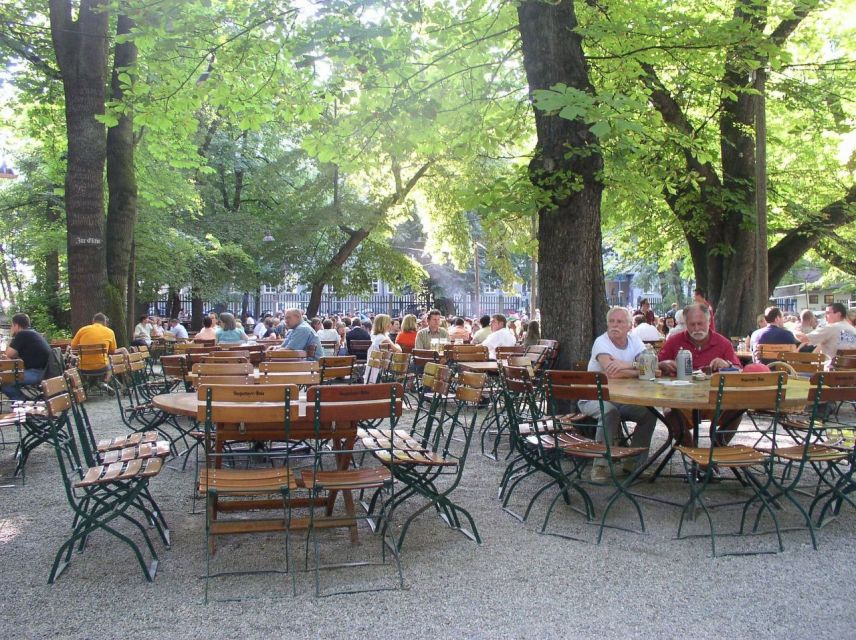
The walk also introduces Munich’s beer traditions, including Hofbräuhaus, the royal brewery established in 1589. Beer culture is not a modern marketing layer added for tourists. It has deep roots in the city’s royal and social life.
You will see some of Munich’s famous beer gardens, many of which trace their traditions back nearly 450 years. Your guide explains how the brewery and beer garden customs fit into local life.
Do not expect food or drinks to be included. You can enjoy the information without stopping for a meal, or return later if you want to sit down. Because the tour lasts three hours, the schedule is designed around walking and interpretation rather than a long beer hall visit.
This part suits first-time visitors who want more than a list of famous drinking spots. It also gives you useful orientation for a later meal. If you prefer a dedicated tasting tour, this is not that experience. Beer is one thread in a broader city walk.
Viktualienmarkt, Munich’s food stop
The route finishes by passing Viktualienmarkt, a public market with local delicatessen, fresh produce, and one of the most central beer gardens in Munich. It is a good final stop because it shifts the focus from royal buildings and political events to daily food culture.
You can use the market as a place to continue exploring after the guide leaves. The tour does not include food or drinks, so plan to buy anything you want separately.
I like this ending because it leaves you with a practical next step. After three hours of landmarks and stories, you can inspect the produce stalls, consider local specialties, or settle into the beer garden. It also puts you near the center rather than ending at an isolated attraction.
The optional Residenz Museum choice
You can select an option that includes a guided visit to the Residenz Museum. This gives the tour a stronger royal focus and adds indoor rooms to a route that otherwise centers on streets, squares, churches, markets, and exteriors.
Choose the Residenz option if you want to see how Bavarian rulers lived and if palace interiors are high on your list. Choose the walking-only version if you mainly want orientation and city stories, or if you already plan a separate Residenz visit.
Entrance fees are not included, so check the cost of the chosen option before booking. The supplied details do not specify how much extra time the museum option adds, so confirm the available duration and start time when you choose.
What the private format is worth at $288
The listed price is $288 per group of up to 15 people, not per person. For a full group, that works out to a modest amount per person. For two people, it is a much more expensive way to see central Munich than joining a public group walk.
The value comes from having a guide focused on your group. You can ask about the stories that interest you most, request a slower pace, and avoid being folded into a large crowd. Families and small groups who want a private introduction may find the flat group price sensible.
The tradeoff is that the experience depends heavily on the assigned guide. One booking involved only two people, yet the guide was described as quiet, difficult to understand, and not very engaging. That person still found the walk acceptable, but felt it was simply a pleasant circuit through central Munich.
Another booking praised Tom’s knowledge of Munich and his natural storytelling. That difference is important. The route itself is solid, but the guide’s voice, volume, and ability to tell a story will shape the day.
The tour is offered in English or German. If you have a choice, select the language in which you can follow historical names, dates, and political events most easily.
Pace, access, and practical planning
This is a walking experience lasting three hours. The route includes several central sights, so wear shoes that can handle continuous city walking. The meeting point is central, but the tour should not be treated as a museum visit with long periods of sitting.
The experience is not suitable for wheelchair users. If mobility access is important for your group, ask the provider about alternatives before booking rather than assuming the historic-center route can be adjusted.
Free cancellation is available up to 24 hours before the tour for a full refund, and you can reserve now and pay later. These policies are useful if your Munich schedule is still changing, but they do not alter the main decision: you are paying for a private guide’s time and interpretation.
Who will get the most from this Munich walk
I would recommend this tour to a first-time visitor who wants a quick, story-filled introduction to the center. In three hours, you cover Munich’s main square, two town halls, St. Peter, the Frauenkirche, Odeonsplatz, Hofbräuhaus, and Viktualienmarkt.
It also suits people who want the Nazi-era material included in a broader city tour. The sections on Georg Elser and the Beer Hall Putsch are specific enough to give the walk weight without turning the entire outing into a political-history lecture.
Families and private groups may appreciate the flexible format, especially if they want to ask questions along the way. The Residenz option is useful for anyone who wants to add royal Munich to the same outing.
I would be more cautious if you want detailed interior access, a food tasting, or a specialist WWII tour. The walk gives you an introduction to each subject, not an exhaustive treatment. And because the guide matters so much, clear speech and strong storytelling should be priorities when you book.
Should you book it?
Book this private walk if you want to get your bearings in central Munich while hearing stories that connect churches, squares, beer culture, and the city’s role in Nazi history. The private group price can be good value for a family or larger party, and the optional Residenz visit lets you shape the day around your interests.
For only two people, compare the cost with public walking tours before committing. Also keep guide quality in mind. Tom received especially strong praise for storytelling, but guide assignments can vary, and one visitor found the guide too quiet to follow comfortably.
My practical call: choose it for a private, flexible introduction to Munich, especially on your first day. Skip it if you want a specialized museum tour, a meal-based experience, or guaranteed wheelchair access.
FAQ
Where does the Munich walking tour begin?
It begins at the fish fountain in front of the Town Hall at Marienplatz 8, 80331 München.
How long does the tour last?
The tour lasts three hours.
How many people can join the private group?
The price covers a private group of up to 15 people.
Which languages are available?
The live guide is available in English or German.
Is the Residenz Museum included?
You can choose an option that includes a guided visit to the Residenz Museum. Entrance fees are not included.
Is the tour suitable for wheelchair users?
No. The experience is listed as unsuitable for wheelchair users.
Just added in Munich
- Private transfer: Vilshofen to Munich with 2h sightseeing stop★ 5.0 · 6 reviews
- Pub crawl incl. Oktoberfest museum guided tour with beer tasting (private)★ 5.0 · 5 reviews
- South Tyrolean specialties and wine tasting★ 5.0 · 5 reviews
- Size Matters Beer Tour Munich★ 4.6 · 105 reviews
- Short & sweet: Tasting the Viktualienmarkt★ 4.8 · 37 reviews
- Secret Food Tours Munich★ 4.8 · 5 reviews
- Munich: Romantic Wine Experience for Two at Viktualienmarkt★ 4.2 · 14 reviews
- Munich: Resistance against Hitler – Historical Walking Tour★ 5.0 · 5 reviews
Historical Tours, compared.
City History Canal Sightseeing Tour on a Motorboat
Read our review →

Browse the lists this tour appears in