
Reviewed · HISTORICAL TOURS
Munich: National Socialism Historical Tour in GERMAN
Munich’s Nazi past comes into sharp focus on this two-hour walking tour, which follows the central streets and squares tied to the rise of National Socialism. You’ll hear about November 9, 1923, the Beer Hall Putsch, the NSDAP’s growth, and Germany under Nazi rule while standing in the places where these events unfolded.
I like the route’s clear sequence, from Königsplatz to Odeonsplatz, and the guide’s use of period photographs. Those images can make a street corner easier to understand than a long lecture. The main consideration is that the tour is conducted only in German, and it is a walking experience in all weather.
Key points to know before you book
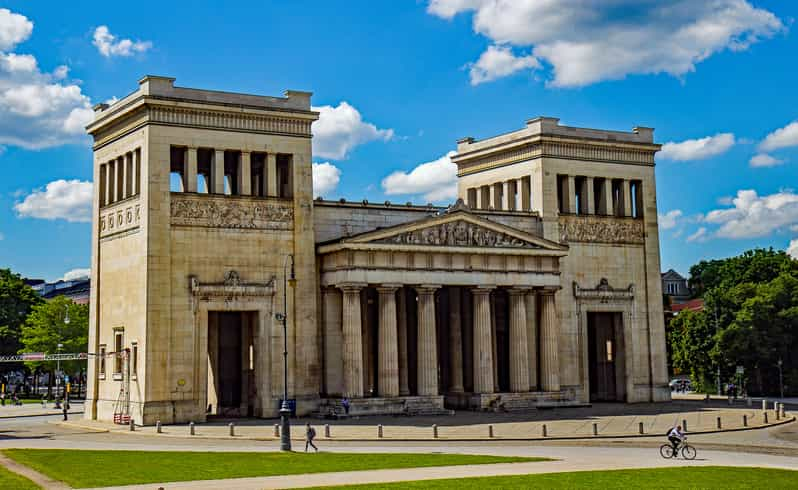
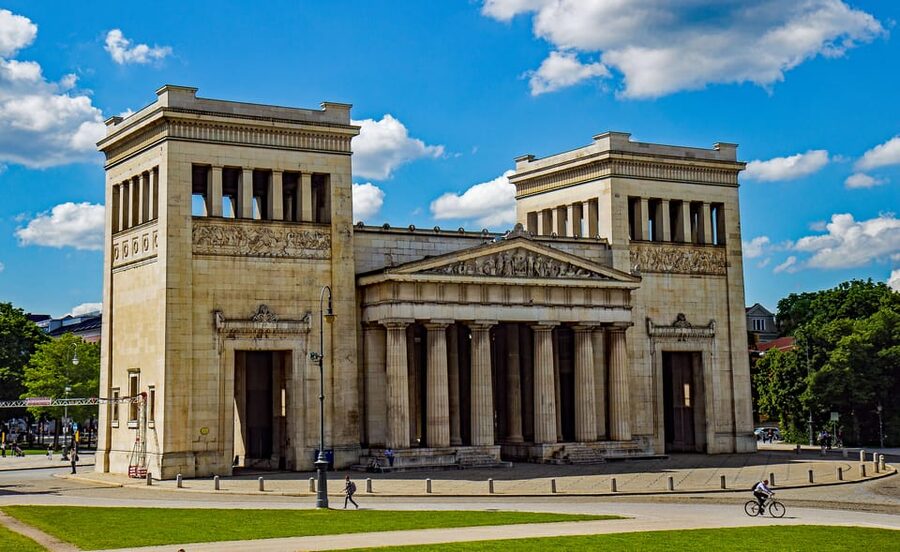
- Königsplatz begins the story: Start at one of Munich’s most important Nazi-era sites and learn why the city became known as the City of the Movement.
- Historic photographs add context: Your guide carries black and white images of Munich in the 1920s and 1930s.
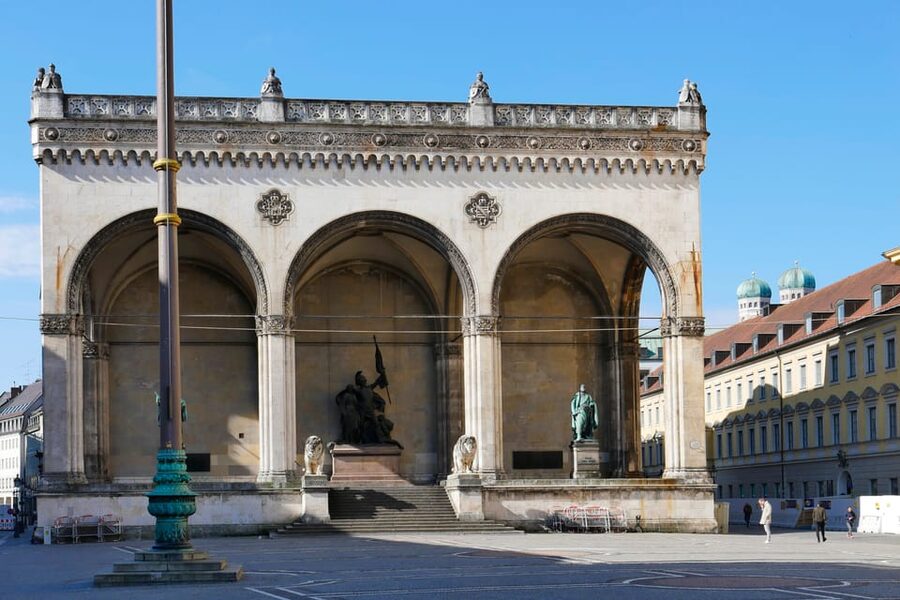
- The route links major locations: Walk along Briennerstrasse, pass the former Gestapo headquarters, and finish at Feldherrnhalle on Odeonsplatz.
- The former Führerbau is a key stop: Learn about the building connected with the 1938 Munich Agreement and see the site of today’s Munich Documentation Centre for the History of National Socialism.
- German is the only tour language: You need enough German to follow a serious discussion of political history.
- Private or group options are available: The choice lets you balance a more personal format against the likely social feel of a shared walk.
Why this Munich history walk matters
Munich was not simply the setting for later Nazi events. It was an early center of the movement, and this tour explains that role by taking you to the actual streets and buildings connected with it.
That makes the experience different from a general city walk. You are not moving from one pretty square to another. You are following a political story through central Munich, seeing how public spaces, party offices, government buildings, and ceremonial sites became tied to National Socialism.
The subject is difficult, but the format is direct. A professional guide explains how the NSDAP rose to power, what Germany was like under National Socialism, and why Munich held such importance in that period. You should expect a serious tone rather than entertainment or light sightseeing.
I also like that the walk does not depend only on dates and names. The historic photographs give you something visual to compare with the present-day city. A modern street can look ordinary until you see how it appeared in the 1920s or 1930s, or how it was used during a major political event.
More History Tours in Munich
- Munich: Guided Tour of the historic Town Hall on Marienplatz
★ 4.8 · 63 reviews - Munich Craft Beer & Cultural Tour With Snack
★ 5.0 · 46 reviews - Munich History Tour: Private & Personalized with a Local Guide
★ 4.5 · 33 reviews
Starting at Königsplatz
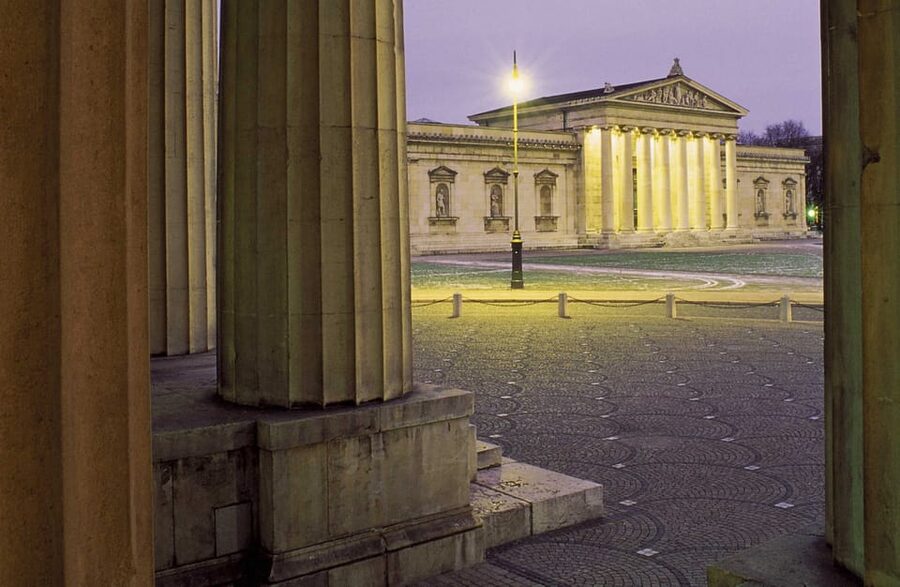
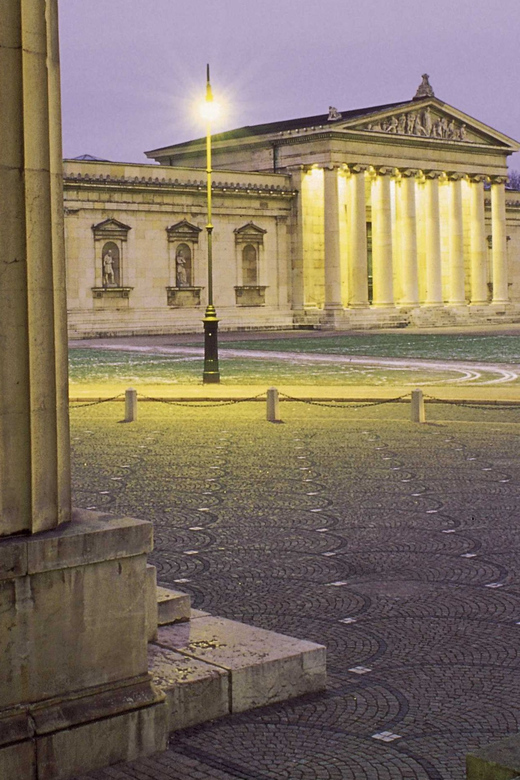
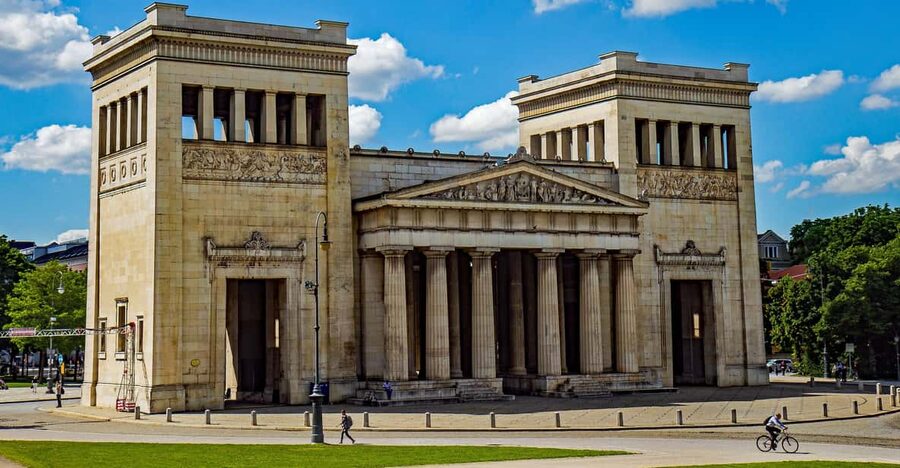
The meeting point is in front of the main entrance of the Staatliche Antikensammlungen at Königsplatz. This is a practical place to begin because the square provides a clear starting point and immediately places you in an important part of Munich’s political history.
Look for a guide carrying a big blue bag marked with the white words Weis(s)er Stadtvogel. That detail matters at a busy city meeting point. Give yourself enough time to find the Staatliche Antikensammlungen rather than arriving at Königsplatz and searching the whole square.
The opening section introduces Munich as the so-called City of the Movement. The phrase refers to the city’s role in the early development of National Socialism during the 1920s and 1930s. Your guide sets out the political background before the walk moves through specific sites.
Königsplatz is also a useful place to begin because it helps you understand the scale of public space in political life. Large squares can be used for ceremonies, gatherings, demonstrations, and displays of power. The tour’s point is not just to identify a building, but to show how the city itself became part of the movement’s public image.
The former Führerbau and the Munich Agreement
From Königsplatz, the group walks to the former Führerbau, known in English as the Führer’s building. The building is linked with the signing of the Munich Agreement in 1938, one of the most important events discussed on the route.
Today, the site is connected with the Munich Documentation Centre for the History of National Socialism. The tour information does not promise admission to the center, so you should treat this as a guided outdoor route rather than a museum visit. Entrance fees are not included.
That distinction is important when you plan your day. If you want time with exhibitions and documents inside a museum, you may need to arrange that separately. This walk gives you the location and the guide’s explanation, then continues through the city. It is a good choice if you want a focused introduction without committing to a longer indoor visit.
The Führerbau stop also gives the tour a useful change of scale. You move from the early political story at Königsplatz to a building tied to international diplomacy and Nazi-era power. The guide can connect Munich’s local role with events that affected Germany and Europe far beyond the city.
Walking along Briennerstrasse
The route continues along Briennerstrasse. This keeps the experience grounded in ordinary city movement rather than confining the subject to one memorial or museum.
As you walk, your guide discusses the development of National Socialism and the events that shaped Munich during the 1920s and 1930s. The supplied plan does not list every stopping point along Briennerstrasse, so do not expect a fixed series of named interiors. The value here is the explanation given as you move between the major sites.
This part of the tour will suit you if you learn best through connections. A guide can show how one location relates to another, how political power was organized in the city, and how the movement’s history reached beyond a single building.
The walk also keeps the pace manageable. Two hours is long enough for a serious overview, but short enough to fit around other Munich plans. You will need comfortable shoes, since the route is on foot and takes place rain or shine.
Same city, a completely different kind of day:
- Munich: Third Reich & WWII Walking Tour
★ 4.6 · 6,181 reviews - Dachau Concentration Camp Memorial Site Tour from Munich by Train
★ 4.5 · 5,637 reviews - Third Reich Walking Tour Munich
★ 4.5 · 4,291 reviews - Munich Hop-On Hop-Off Tour: 1-Day or 2-Day Ticket
★ 4.3 · 4,161 reviews
Passing the former Gestapo headquarters
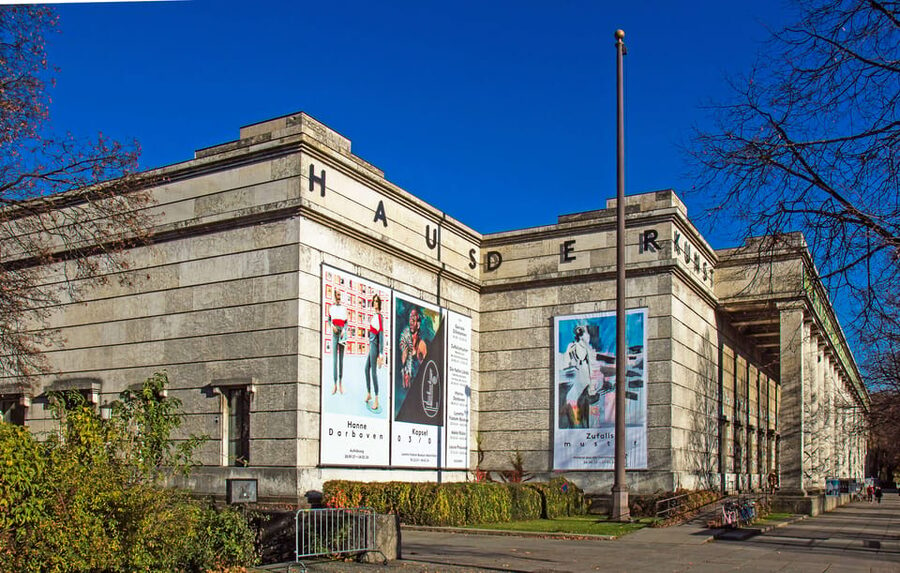
The former Gestapo headquarters is another significant point on the route. The tour passes the location on the way to Feldherrnhalle and uses it to explain the machinery of Nazi power and repression.
This is one of the places where the guide’s role matters most. A building can tell you that an office once existed, but it cannot by itself explain what that office meant. The discussion helps connect the physical location with the broader history of Germany under National Socialism.
Do not expect an entrance to the former headquarters based on the information provided. The tour is built around a guided walk through distinctive locations, and admission fees are not included. If you want indoor displays, confirm separately what is open and what requires a ticket.
The route’s structure is helpful here. The former Gestapo headquarters appears after the political locations around Königsplatz and Briennerstrasse, so the story moves from the rise of the movement toward its institutions of control. That progression gives the walk a clear shape.
Feldherrnhalle and November 9, 1923
The final major stop is Feldherrnhalle at Odeonsplatz. This is where the tour discusses the Beer Hall Putsch of November 9, 1923, a key event in Hitler’s early rise.
The date is worth keeping in mind. The provided tour details refer to November 9, 1923 in the highlights, while one itinerary note contains a 1933 date. The Beer Hall Putsch is associated with 1923, so the tour’s main historical point is the 1923 event.
At Feldherrnhalle, you will hear how the failed putsch became part of the Nazi movement’s political story. This is a strong ending because the site brings together public space, political violence, and the campaign to build support for the NSDAP.
Your guide’s black and white photographs should be especially useful here. Historic images can show how the square looked, how people gathered, and how the event was presented in Nazi-era public memory. They also help you separate the present-day appearance of Odeonsplatz from its earlier political use.
The stop is not presented as a theatrical reenactment. It is a chance to examine a specific event and understand why it mattered to the party’s later rise. You will get more from it if you arrive ready to listen carefully rather than expecting a fast list of facts.
How the photographs improve the experience
The photographs are one of the most useful features of this walk. They provide visual evidence while you stand in the places being discussed.
A photo can show changes in architecture, street layout, signs, uniforms, crowds, or public ceremony. It can also help you picture a moment that would otherwise remain abstract. For a subject as dense as National Socialism, that visual link can make the explanation easier to follow.
The photographs also give the tour a more personal rhythm. Instead of listening continuously as you walk, you may pause to look at an image and compare it with the present scene. The information says the guide brings a number of black and white photographs, but it does not specify the exact number or every subject shown.
I would see this as a supplement to the guide, not a replacement for a museum collection. The photos help illustrate the talk, while the main experience remains the walking route and spoken explanation.
German language and guide format
This activity is offered in German only. That is the most important booking decision for many people.
You do not need a tour in several languages, but you do need to understand German well enough to follow political terms, historical explanations, dates, and names. A casual grasp of German may not be enough for the full value of this subject.
You can choose between a private tour and a group tour. The information does not give a maximum group size, so you should not assume the group will be small. A private format may suit you if you want to ask detailed questions or prefer a more personal pace. A group walk may be better if you like hearing a shared explanation and want the standard two-hour format.
No guide’s personal name is provided, so the practical point is the guide’s role and the blue bag identification rather than expecting a named specialist.
Is $34 a fair price?
At $34 per person, this is fairly priced for a two-hour guided history walk if you value interpretation and a carefully chosen route.
You are paying for a professional city guide, not for food, transport, hotel pickup, or museum admission. The cost makes the most sense when you want a concentrated introduction to Munich’s Nazi-era history and do not want to plan the route yourself.
The price is less attractive if you only want to see the buildings from the outside and already know the history. In that case, you could walk through central Munich independently, though you would miss the guide’s explanations and the historic photographs.
Private and group options also affect the value. A private walk normally gives you more control over questions and pace, while a group format can keep the per-person cost more manageable. Since no group size is listed, check the available option before booking if crowd size matters to you.
Practical details for the two-hour route
The walk lasts two hours, with starting times dependent on availability. It begins at the Staatliche Antikensammlungen and ends at Feldherrnhalle on Odeonsplatz.
There is no hotel pickup or drop-off. You need to make your own way to Königsplatz and arrange your return or onward transport from Odeonsplatz. Food and drinks are also not included, so plan those before or after the tour.
Wear comfortable shoes. The walk takes place rain or shine, and no indoor shelter is promised for the route. A rain jacket or other weather protection is sensible when the forecast is poor.
The tour is listed as wheelchair accessible, but it is also marked as not suitable for people with mobility impairments. Those details do not fully agree. If you use a wheelchair or have difficulty walking, contact the provider before booking and ask about the exact route, surfaces, pauses, and access at each stop.
Cancellation is free up to 24 hours before the start, and you can reserve now and pay later. Those terms are useful if your Munich schedule is still changing.
Who should take this tour?
I would choose this walk if you want a focused introduction to Munich’s Nazi-era history, especially if you prefer learning outdoors and seeing locations in sequence.
It suits you particularly well if:
- You understand German comfortably.
- You want a two-hour activity rather than a full museum session.
- You are interested in the rise of the NSDAP and the events of November 9, 1923.
- You like historic photographs and visual comparisons.
- You want either a private walk or a shared group format.
- You are comfortable walking outside in changing weather.
It may not suit you if you want an English-language tour, extensive indoor exhibitions, included admissions, or a relaxed sightseeing walk with little political detail. The subject is serious, and the value comes from concentration and context.
Should you book the National Socialism Historical Tour?
Book it if you want to understand why Munich played such a central role in the rise of National Socialism and you are comfortable doing that work in German. The route is compact, the price is reasonable for a guided two-hour experience, and the photographs add a useful visual layer.
Skip it if you need English, cannot manage a walking route, or want a museum visit with admission included. Before booking, confirm the mobility arrangements and decide whether a private or group format fits you better. For the right audience, this is a purposeful way to connect Munich’s streets with one of the darkest chapters in German history.
FAQ
How long does the Munich National Socialism Historical Tour last?
The tour lasts two hours.
What language is the tour conducted in?
The live tour guide speaks German. No other tour language is listed.
Where does the tour meet?
Meet in front of the main entrance of the Staatliche Antikensammlungen at Königsplatz.
How will I recognize the guide?
The guide will carry a big blue bag with the white words Weis(s)er Stadtvogel on it.
Does the tour include museum entrance fees?
No. Entrance fees are not included.
Is hotel pickup and drop-off provided?
No. You must make your own way to the meeting point and arrange your onward transport after the tour.
Can I cancel the booking?
Yes. You can cancel up to 24 hours in advance for a full refund. You can also reserve now and pay later.
Just added in Munich
- Private transfer: Vilshofen to Munich with 2h sightseeing stop★ 5.0 · 6 reviews
- Pub crawl incl. Oktoberfest museum guided tour with beer tasting (private)★ 5.0 · 5 reviews
- South Tyrolean specialties and wine tasting★ 5.0 · 5 reviews
- Size Matters Beer Tour Munich★ 4.6 · 105 reviews
- Short & sweet: Tasting the Viktualienmarkt★ 4.8 · 37 reviews
- Secret Food Tours Munich★ 4.8 · 5 reviews
- Munich: Romantic Wine Experience for Two at Viktualienmarkt★ 4.2 · 14 reviews
- Munich: Resistance against Hitler – Historical Walking Tour★ 5.0 · 5 reviews
Historical Tours, compared.
City History Canal Sightseeing Tour on a Motorboat
Read our review →

Browse the lists this tour appears in