
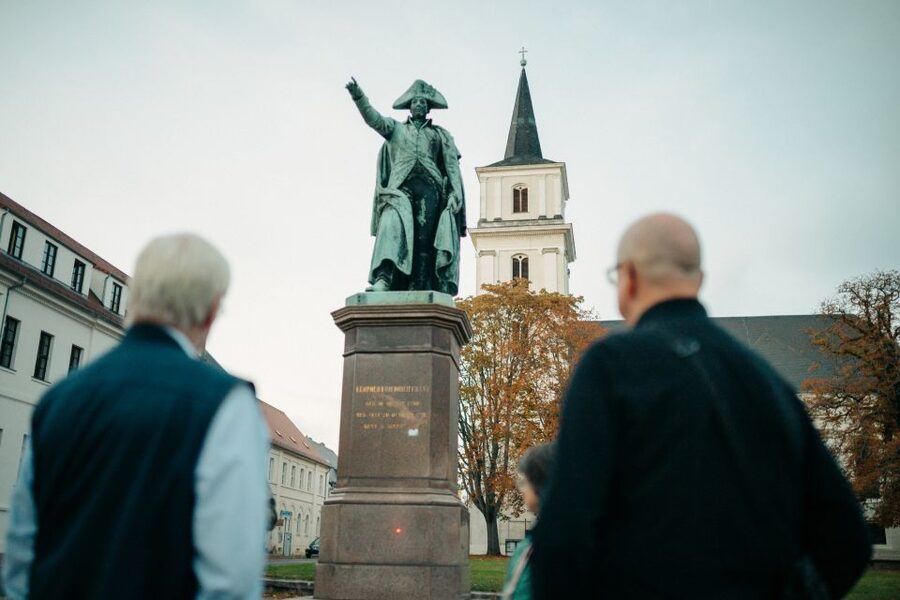
Reviewed · HISTORICAL TOURS
Dessau: Guided Walking Tour through History
Dessau’s story is bigger than its modest size suggests. In 90 minutes, this walking tour links the city’s 800-year past with Bauhaus, the Basic Law, music, aviation, architecture, and the people who left Dessau to make their mark elsewhere. I like the way it treats the city as a set of connected stories rather than a single museum subject.
I especially like the small anecdotes, which can make familiar streets more memorable, and the chance to spot less obvious details in the center. The main consideration is language: the live tour is in German, and the rain-or-shine policy means you should dress for the forecast.
Key points at a glance
- Bauhaus in its wider setting: Learn how and why Bauhaus came to Dessau, rather than seeing it as an isolated design movement.
- Eight centuries in 90 minutes: The tour connects princely rule, Enlightenment thinkers, industry, music, law, and modern architecture.
- Anecdotes matter: Short local stories add human detail to the historic names and urban spaces.
- A city of famous names: Hear about Leopold III. Friedrich Franz, Moses Mendelssohn, Kurt Weill, Hugo Junkers, Walter Gropius, Wassily Kandinsky, and others.
- Good practical value: At $13 per person, the tour gives you a guided introduction before you spend more time exploring on your own.
- Useful for many visitors: It is wheelchair accessible, lasts 1.5 hours, and allows cancellation up to 24 hours before the start.
Why Dessau’s story works best on foot
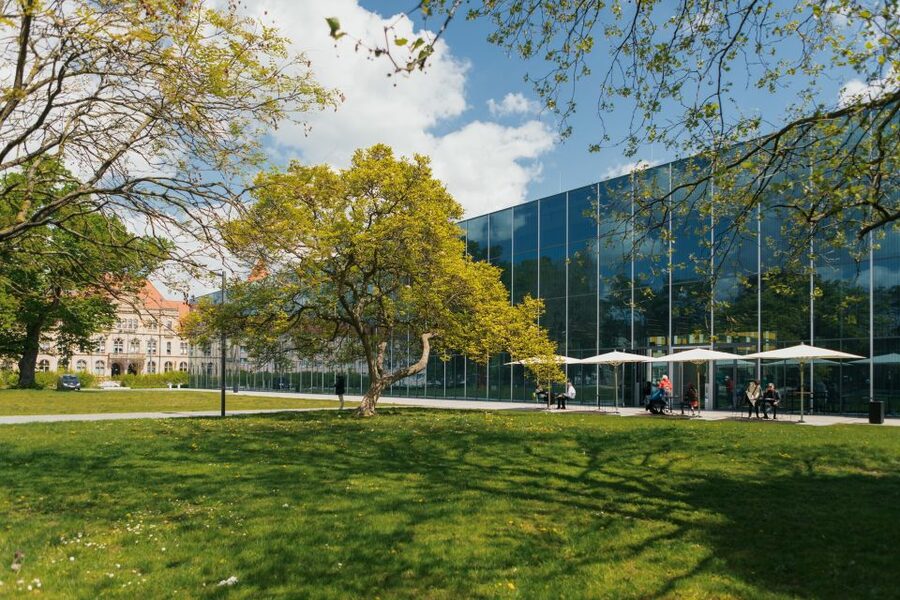
Dessau is not simply a place to visit for Bauhaus buildings. Its appeal comes from the way several very different chapters sit within one city: princely culture, Enlightenment thought, industrial invention, music, modern design, and the legal story of postwar Germany.
A walking tour gives those subjects a physical setting. Instead of hearing a list of names in a museum room, you move through the city center and see how public spaces carry traces of different periods. The guide’s job is to connect those pieces so Dessau becomes more than a stop between larger destinations.
The tour describes Dessau-Roßlau as a city shaped by roughly eight hundred years of change. That long view is useful because Bauhaus can otherwise take up all the oxygen. Walter Gropius, Wassily Kandinsky, and the school’s arrival in Dessau are important, but they are only part of the city’s story.
You can expect the guide to place modern design beside older civic and cultural themes. Prince Leopold III. Friedrich Franz and Friedrich Wilhelm Erdmannsdorff represent one side of Dessau’s past. Moses Mendelssohn brings an important intellectual voice. Kurt Weill points toward music and the city’s cultural reach. Hugo Junkers connects Dessau with engineering and industry.
The walk does not treat these figures as disconnected celebrities. Its purpose is to unite them into one picture, with contrasts left intact. That approach should suit you if you enjoy learning why a city developed as it did, not just collecting a few photographs.
More History Tours in Germany:
- Leipzig: City History Canal Sightseeing Tour on a Motorboat
★ 4.7 · 6,232 reviews - Berlin: Natural History Museum Entrance Ticket
★ 4.6 · 3,382 reviews - Leipzig: 1.5-Hour Historical Walking Tour in German
★ 4.7 · 2,217 reviews
From princely Dessau to the age of ideas

The historic names in this tour help show that Dessau was not created by Bauhaus in the twentieth century. Prince Leopold III. Friedrich Franz and Friedrich Wilhelm Erdmannsdorff belong to earlier chapters, when rulers and architects helped shape the character of the city and its surroundings.
The supplied details do not give a fixed list of buildings or stops, so you should not expect a room-by-room tour of a palace or a detailed architectural inspection of one landmark. Instead, the guide uses the city center and its urban spaces to explain how earlier eras still belong in the modern story.
That can be a real advantage. A short walking tour has to choose its subjects carefully. Rather than spending all 90 minutes on one period, this one gives you a framework for understanding Dessau as a place that changed direction several times.
Moses Mendelssohn adds another layer. His inclusion signals that the tour is not limited to rulers, buildings, and famous designers. It also considers people whose ideas reached beyond their birthplace. You will hear why some of Dessau’s children became better known abroad than at home, a useful question for a city whose influence is larger than its name recognition.
If you already know a little about German history, these connections may help fill gaps. If you know very little, the guide’s stories should give you a manageable starting point without requiring a long background reading session.
How Bauhaus fits into the walk
Bauhaus is likely to be a major reason you consider booking this experience. Dessau is closely associated with the school, but the important question is not simply where Bauhaus was located. The tour asks how Bauhaus came to Dessau and what that arrival meant for the city.
That wording matters. It places the school in a local setting rather than presenting it as a free-floating movement of famous architects and designers. Walter Gropius and Wassily Kandinsky appear alongside older figures and other local personalities, giving you a broader sense of the city’s cultural life.
You should also keep expectations in check. This is a 1.5-hour city walk, not a specialist Bauhaus architecture tour. The description promises context, anecdotes, and city-center discoveries, but it does not promise entry to Bauhaus buildings, interior visits, or a technical design lecture.
For many people, that is the right balance. You can use the walk to understand the place before visiting other Dessau sights on your own. The guide may help you see why Bauhaus belongs in the city’s story, rather than treating it as an unrelated attraction that happened to land there.
I would choose this tour early in a Dessau visit if Bauhaus is your main interest. The broad introduction can help you decide which other places deserve more of your time. If you want only detailed design analysis, a more specialized experience may be a better match.
The Basic Law and other unexpected connections
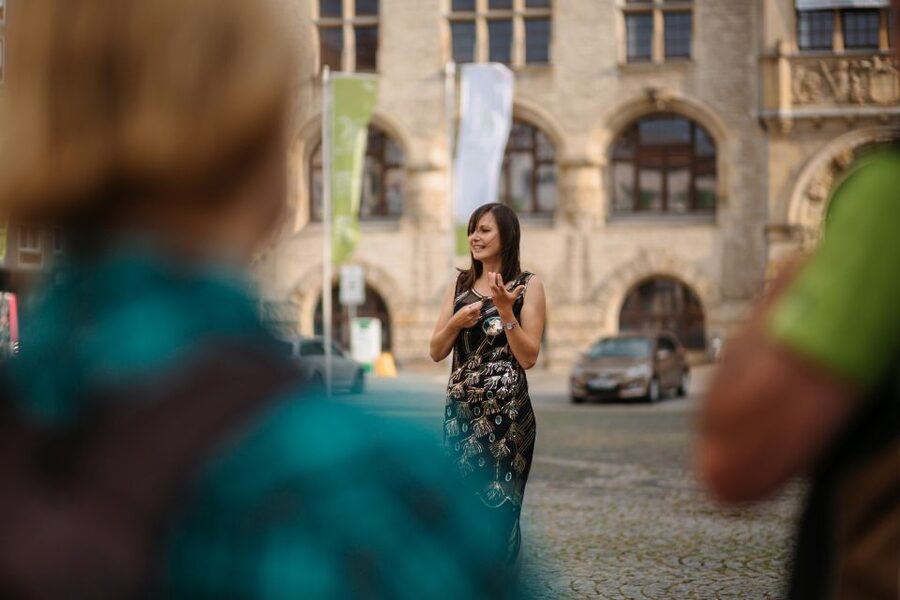
One of the tour’s more unusual subjects is Dessau’s connection with the Basic Law. That is a strong reason to choose this walk over a standard orientation tour. The Basic Law is central to modern Germany, yet it is not the first subject most people associate with Dessau.
The available information does not specify the exact place or event the guide uses to explain this connection. You should therefore expect a historical explanation during the walk, not a guaranteed visit to a particular building tied to the Basic Law.
Still, the subject shows the range of the tour. It moves beyond architecture and local personalities into the political story of Germany. That variety can keep the 90 minutes lively, especially if you enjoy surprises that change your first impression of a city.
The same is true of the references to Max and Wilhelm Müller, Hugo Junkers, and Kurt Weill. Each name points toward a different part of Dessau’s identity. The guide’s task is to show how industry, music, public life, and design shaped the same urban setting.
This mixture is also where the tour’s value lies. At $13 per person, you are not paying for a long attraction with elaborate equipment. You are paying for a person who can arrange scattered facts into a story as you walk. If the guide does that well, the cost is modest for the time and orientation you receive.
More Walking Tours in Germany:
- Discover Berlin Half-Day Walking Tour
★ 5.0 · 9,624 reviews - Berlin: Third Reich and Cold War 2 Hour Walking Tour
★ 4.9 · 6,830 reviews - Munich: Third Reich & WWII Walking Tour
★ 4.6 · 6,181 reviews - Berlin: Discover Berlin Walking Tour
★ 4.9 · 5,998 reviews
City-center details and the role of anecdotes
The tour promises hidden treasures in the city center. That phrase should be read sensibly. It does not necessarily mean secret attractions or places normally closed to the public. It means details and stories you could easily miss while walking alone.
The small anecdotes are especially important here. A short local story can explain why a street, square, person, or building matters in a way a plaque may not. Two people who live in Dessau found the tour pleasant and said they learned new things about their own city, with the anecdotes receiving particular praise. That is a useful sign: the content is not aimed only at first-time visitors.
One German-language comment also described the experience as very informative and noted the interesting places along the route. Those comments fit the tour’s purpose. It is less about ticking off a famous sight and more about changing the way you read the center.
You will need to stay alert to the guide’s commentary. The experience is built around spoken stories, and the details may be easy to miss if you drift behind the group or focus only on taking pictures. A 90-minute walk is short enough to remain focused, but it is still worth putting your camera away when the guide is explaining a connection.
The route should also suit you if you like a little local color with your history. The tone is not presented as a formal academic lecture. It is designed to bring urban spaces to life through people from different periods, from princes and architects to musicians, industrialists, and thinkers.
What the 90-minute format means for you
Ninety minutes is a practical length. You get enough time to build a clear picture of Dessau without giving up half a day. It can fit neatly before lunch, after arriving in town, or between other visits.
The short format also means the guide must move briskly across a wide range of subjects. You will hear about eight centuries, but you will not receive an exhaustive account of each one. Think of the walk as a well-chosen introduction, with enough detail to guide your own later exploration.
This is where your interests matter. If you like connections between politics, art, music, design, and local personalities, the range should feel rewarding. If you prefer one subject explained in depth, the number of historical figures may feel crowded.
The tour is conducted in German. That is the clearest practical limitation. If you are comfortable following German conversation, you can enjoy the anecdotes and links between periods. If you are not, the experience may be difficult because the main value comes from the spoken explanation, not simply from seeing the streets.
No group size is provided, so you should not assume a private walk or a small party. You will meet at the ticket counter and show your voucher before the tour begins. The activity is wheelchair accessible, which makes the city-center format useful for many visitors, though the information does not give detailed route notes about surfaces, slopes, or restroom access.
The tour runs rain or shine. Bring suitable clothing and shoes, especially if the forecast is unsettled. There is no shelter guarantee in the information provided, so do not book this expecting an indoor substitute if the weather turns wet.
Is $13 a fair price?
At $13 per person, this is an inexpensive way to get local context. The value is strongest if you are new to Dessau or want help deciding what to see next. A trained guide can connect Bauhaus with earlier history, the Basic Law, music, industry, and local personalities in a way that would take time to piece together alone.
The price is less compelling if you want entry to major attractions included. The information describes a guided walk through the history of Dessau-Roßlau, not admission to museums or private interiors. You should budget separately for any sights you visit afterward.
The free cancellation policy also lowers the risk. You can cancel up to 24 hours in advance for a full refund, and the reserve-now, pay-later option lets you hold a place without paying immediately. Those terms are useful when your schedule depends on trains, weather, or other stops in town.
The strongest value comes from using the tour as a first step. Listen for the names, places, and periods that interest you most, then spend more time on those subjects afterward. At this price, the walk does not need to cover every corner of Dessau to be worthwhile.
Who should book this Dessau walk?
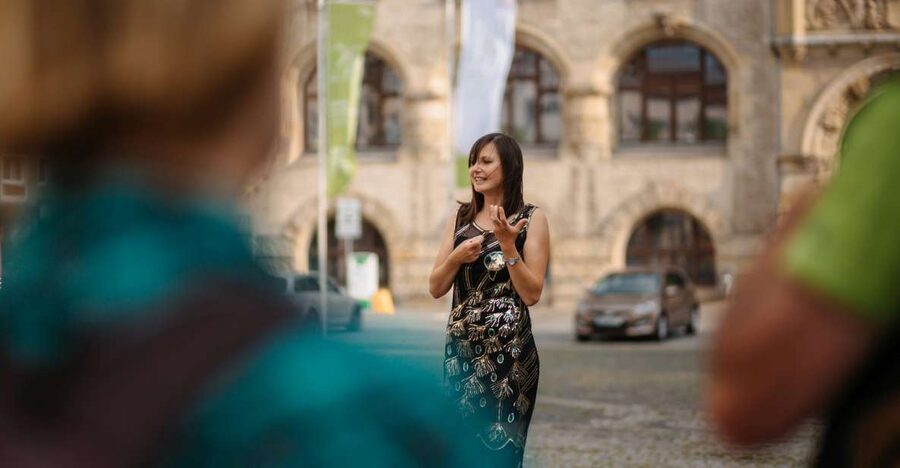
I would recommend it to first-time visitors who want a clear orientation, history-minded visitors who enjoy unexpected links, and Bauhaus fans who want local context before focusing on design. It also suits people who prefer a human guide to reading a city entirely from signs and brochures.
It may work well for residents too. The fact that local Dessau residents learned something new suggests the content reaches beyond basic sightseeing. If you already know the main landmarks, the anecdotes and less obvious connections may give you a fresh angle.
Families and mixed-interest groups may also find the broad range helpful, though the German-only format is important. A group with different interests can follow subjects ranging from music and engineering to architecture and politics, rather than sitting through a narrow specialist lecture.
I would hesitate if you need an English tour, want a fully indoor activity, or are looking for detailed Bauhaus interiors. The tour is also not ideal if heavy rain would spoil your day, since it continues in all weather.
Should you book it?
Book this tour if you want Dessau to make sense before you explore it on your own. For $13, the 90-minute walk gives you a human guide, local anecdotes, and a broad historical frame that stretches from princely Dessau to Bauhaus and modern Germany.
Skip it if German is not suitable for you or if your main goal is an in-depth architectural tour with guaranteed interior access. For everyone else, especially visitors curious about the city beyond its Bauhaus label, this is a sensible and fairly priced introduction.
FAQ
How long does the Dessau walking tour last?
The tour lasts 1.5 hours, or 90 minutes.
What language is the tour conducted in?
The live tour guide speaks German.
How much does the tour cost?
The listed price is $13 per person.
Where do I show my voucher?
Show your voucher at the ticket counter before the tour begins.
Is the tour wheelchair accessible?
Yes, the activity is listed as wheelchair accessible.
Can I cancel the tour for a refund?
Yes. You can cancel up to 24 hours in advance for a full refund.
Does the tour run in bad weather?
Yes. The tour takes place rain or shine.
Just added in Germany
- Berlin & The Third Reich Private Guided Tour★ 5.0 · 3 reviews
- Third Reich Quest Experience in Berlin★ 4.5 · 7 reviews
- Private Analogue Photography Experience in Berlin★ 5.0 · 3 reviews
- Berlin Urbex Adventure and History Tour★ 5.0 · 9 reviews
- The Beauty of Berlin by Bike: Private Tour★ 5.0 · 59 reviews
- Berlin: Guided Bike tour of the Berlin Wall and Third Reich★ 5.0 · 160 reviews
- Beyond Currywurst: Berlin’s Hidden Street Food & Culture Tour★ 5.0 · 100 reviews
- Berlin Third Reich & Cold War Walking Tour With A Guide★ 5.0 · 7 reviews
Historical Tours, compared.
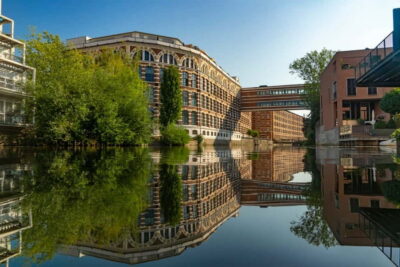
City History Canal Sightseeing Tour on a Motorboat
Read our review →


Browse the lists this tour appears in