
Reviewed · BERLIN WALL AND COLD WAR TOURS
Berlin Wall: City Tour of Divided Germany
Berlin’s Cold War border was not tucked away in a remote museum. It cut through the heart of the city, past government buildings, major squares, railway stations, and ordinary homes. This two-hour walk follows that line from the Tränenpalast to Checkpoint Charlie, turning familiar Berlin sights into evidence of a once-divided city. I especially like the route’s strong sense of place and the guides’ use of personal stories. The main drawback is simple: this is a German-language tour, so it will not suit you if you need English commentary.
The $21 price is fair for a focused history walk that connects several major sights in one sitting. You should expect a brisk outdoor tour, not a museum visit, and comfortable shoes matter. A small group may make the experience more personal, though group size is not guaranteed.
Key points at a glance
- Start at the Tränenpalast: The former Friedrichstraße border station sets the tone with a direct look at how travel between East and West was controlled.
- Follow the former border: The route links the Spree, parliament district, Brandenburg Gate, Holocaust Memorial, Potsdamer Platz, and Checkpoint Charlie.
- Hear Berlin’s personal stories: Guides named Stefan and Stephan are associated with detailed, personal accounts that add human weight to the political history.
- See the Wall’s urban impact: The tour shows how the border affected government buildings, transport, public spaces, and everyday routines.
- Finish at Checkpoint Charlie: The famous crossing point provides a well-known final stop after seeing less obvious traces of the division.
- Plan for German commentary: The live guide speaks German, and the entire two-hour experience takes place outdoors.
Why this Berlin Wall tour works
Many Berlin history tours gather around one famous section of the Wall. This one takes a wider view. It shows how division shaped the city center, not just the surviving concrete.
That difference matters. You will see the border in relation to the Spree, the Reichstag, the Brandenburg Gate, and Potsdamer Platz. These are not isolated memorials. They were parts of a city split by two political systems, two currencies, two sets of laws, and two very different daily routines.
I like the route because it gives you a useful order. You begin at a border station, follow the former line through the government district, pass major symbols of Berlin, and finish at Checkpoint Charlie. The sequence helps you understand the city as a connected place rather than a collection of separate sights.
The tour also seems to benefit from a personal style of guiding. Comments about Stefan and Stephan point to guides who add stories about people, not only dates and political decisions. That can make a difficult subject easier to grasp. Berlin’s division was not merely a dispute between governments. It affected families, workers, commuters, students, and anyone trying to cross the city.
More Berlin Wall and Cold War Tours in Berlin:
- Berlin: Third Reich and Cold War 2 Hour Walking Tour
★ 4.9 · 6,830 reviews - Berlin’s Best: 2 Hour Walking Tour Third Reich and the Cold War
★ 5.0 · 5,486 reviews - Berlin: DDR Museum Tickets
★ 4.3 · 3,443 reviews
Starting at the Tränenpalast and Friedrichstraße
Meet at the entrance of the Tränenpalast, or Palace of Tears, in front of Friedrichstraße station on Reichstagufer. The building has only one entrance, so you do not need to search around the station for a different meeting point.
This is a fitting place to begin. Friedrichstraße was the single border station during the Cold War, making it a powerful introduction to the practical side of division. A railway station normally suggests movement and freedom. Here, it also meant inspection, separation, and uncertainty.
The name Tränenpalast refers to the tears shed during farewells. That gives you a sense of the emotional setting, but the value of beginning here is also practical. The guide can explain how a central transport point became part of the border system before you walk through the wider city.
Arrive ready to start on time. The meeting point is outside, and the tour is conducted on foot. The supplied information does not give a precise group size, but one past outing was described as a small group that became especially intense and personal. You might get that same close-up feel, but it is not something to count on for every departure.
Following the Spree toward the parliament district
From Friedrichstraße, the route follows the Spree toward the parliament and government district. This section helps you see how close the border came to the institutions that now represent a united Germany.
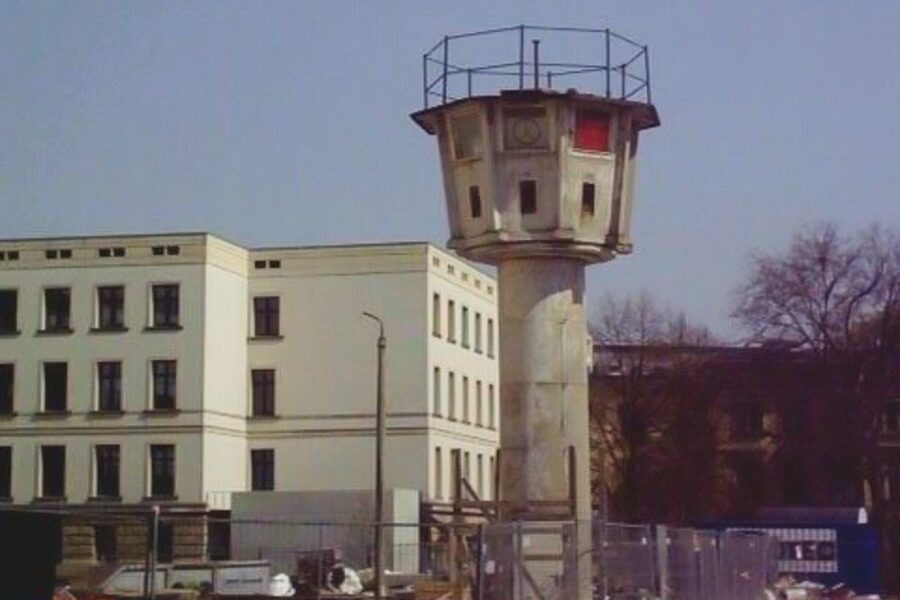
Some buildings in this area sat partly along the former border strip. That detail is easy to miss if you only visit the Reichstag or walk along the river as a sightseeing stop. A guide can point out how the division ran through a working capital, placing offices, public buildings, and open spaces beside a heavily controlled frontier.
I find this part useful because it corrects a common picture of the Wall. It was not always a solid slab of concrete running through empty ground. In places, the border zone involved walls, fences, patrol areas, restricted strips, and controlled passages. The route gives you a chance to see the city’s political center through that lens.
Keep your attention on the guide rather than expecting a single dramatic object at every stop. The value here comes from location and explanation. You are learning why a normal-looking street or riverbank mattered.
Brandenburg Gate, once a symbol of separation
The Brandenburg Gate is one of Berlin’s essential sights, but this tour places it in a more serious setting. The border ran at the gate, turning a famous civic landmark into a symbol of division and the fate of the city.
Today, it is easy to read the gate as a symbol of unity. The tour asks you to picture the opposite: a major monument near a closed frontier, visible to people on both sides but not freely accessible in the same way. That shift in viewpoint is one of the walk’s strongest features.
You will not simply stop for a photograph and move on. The guide uses the location to explain how Berlin’s split was displayed in public space. The gate carried a meaning far beyond its architecture.
This is also a good point to consider the limits of the tour. Two hours is enough for an intelligent overview, not a full study of every political event connected with the gate. If you want long museum visits or extensive discussion of postwar diplomacy, you will need additional time elsewhere.
A few more half-days in Berlin worth comparing
- Berlin: Reichstag, Dome and Government District Guided Tour
★ 4.7 · 18,288 reviews - Berlin: 1-Hour City Tour by Boat with Guaranteed Seating
★ 4.3 · 16,993 reviews - Berlin: Boat Tour Along the River Spree
★ 4.4 · 11,252 reviews - Discover Berlin Half-Day Walking Tour
★ 5.0 · 9,624 reviews
The Holocaust Memorial and the former death strip
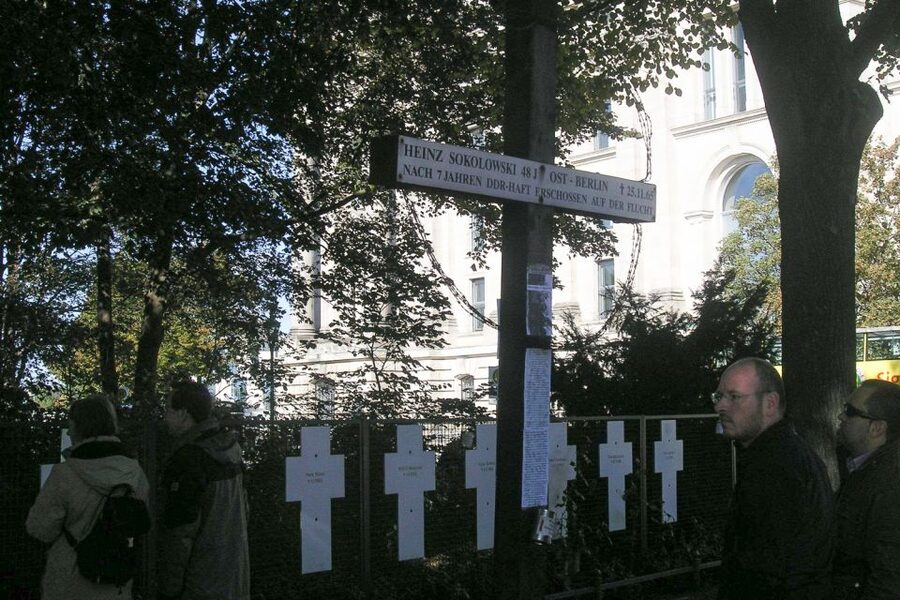
The route continues from the Brandenburg Gate to the Holocaust Memorial, located at the former death strip. This is a difficult but important connection.
The memorial addresses the murder of Europe’s Jews, while the former death strip recalls the later division of Berlin. The tour places these sites within the same urban setting without treating them as interchangeable. You should expect the guide to use the location to discuss how the city’s twentieth-century history remains physically layered.
This stop calls for attention and respect. It is not simply another photo opportunity. The walk connects the open area around the memorial with the border zone that once made movement dangerous. That contrast can sharpen your understanding of how public ground was used for memory, control, and political messaging.
The experience remains outdoors, so weather will affect your comfort. Wear shoes suitable for walking and bring clothing suited to the season. A December review described a very satisfying tour despite cold temperatures, but cold weather still makes a two-hour walk more demanding.
Potsdamer Platz and the Tiergarten Triangle
Potsdamer Platz is one of the clearest places to see Berlin’s physical change. The split was particularly visible here in the former Tiergarten Triangle.
For you, this stop offers a useful before-and-after view. Potsdamer Platz is now associated with modern city life, large buildings, and renewed development. On the tour, you encounter it as a place where division left a sharp mark. The guide can show how the border cut across an area that had once been a major center of Berlin.
This is where the route moves beyond famous political symbols and into urban planning. The Wall did not just keep people apart. It interrupted streets, altered land use, and left awkward gaps in the city. The Tiergarten Triangle helps make that disruption easier to picture.
The stop is especially valuable if you have already seen Potsdamer Platz without knowing its border story. Familiar surroundings often become more meaningful when you learn what stood there, or what could no longer be reached, during the Cold War.
The longest remaining stretch of the Wall
The walk includes the longest remaining stretch of the Wall. The supplied details do not name the exact section, so you should not assume it is the East Side Gallery. Still, this part gives you a chance to see more than a short preserved fragment.
A longer stretch helps explain the Wall as a system. You can consider its scale and the way it shaped the space around it. One isolated panel may look like a monument. A sustained section makes it easier to understand the barrier as part of a controlled border running through an entire city.
This is also a good moment to listen for the human stories behind the structure. The most praised part of the guiding is not only the factual information. It is the personal material, including details that you might not hear from a sign or a standard city commentary.
Do not expect the route to provide time for every remaining Berlin Wall site. The walk is designed to connect several locations in two hours, so each stop has to remain focused.
Checkpoint Charlie as the final stop
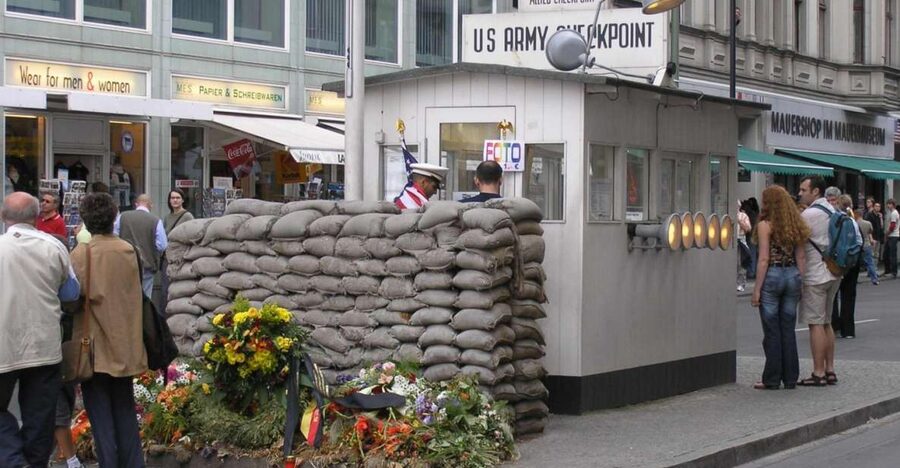
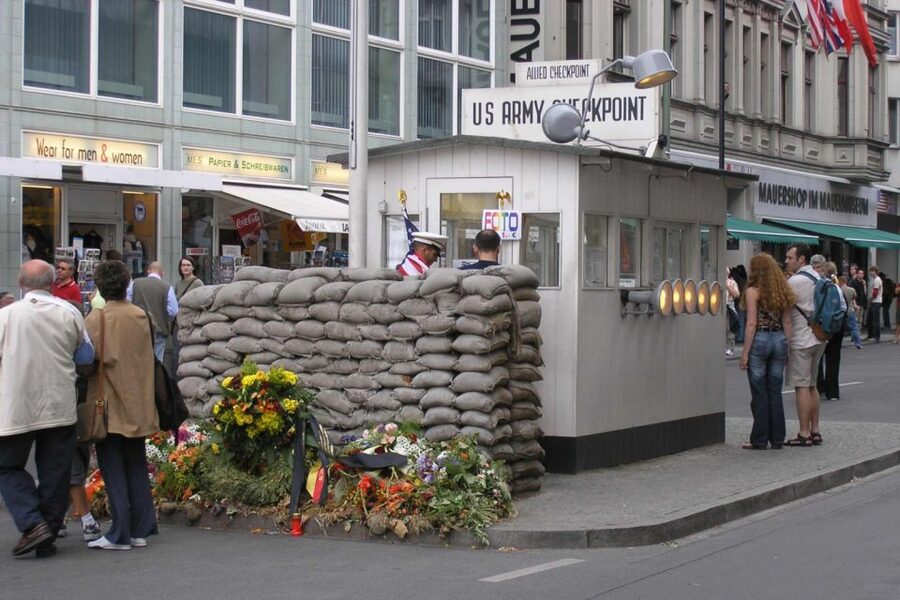
The tour finishes at world-famous Checkpoint Charlie. It is one of Berlin’s best-known Cold War sites, and it can feel heavily commercialized when visited without context.
That is why it works better at the end of this route. By the time you reach it, you have seen a former border station, the government district, Brandenburg Gate, the former death strip, Potsdamer Platz, and a longer section of the Wall. Checkpoint Charlie then becomes part of a wider story rather than the whole story.
The stop also shows the difference between a famous name and a complete understanding. Many people know Checkpoint Charlie from photographs and guidebooks. Fewer realize how many other parts of central Berlin were tied to the same border. This tour gives you that broader frame.
Since the tour ends here, you can decide what to do next based on your own plans. The activity information does not include admission to another attraction, so treat Checkpoint Charlie as the final outdoor stop rather than a ticketed museum visit.
Guide style, language, and group feel
The live tour is conducted in German. That is the most important booking consideration. You need enough German to follow spoken explanations about political history, personal experiences, and the details of each location.
The guide names appearing in the available feedback are Stefan and Stephan. The spelling varies, so do not assume a particular guide will lead your departure. What is consistent is the praise for personal stories, strong explanations, and an informative approach.
One outing ran an extra hour because the guide extended it. That suggests some departures may become more generous when the group is engaged, but the advertised duration remains two hours. Plan your day around two hours and treat any extension as a bonus, not a promise.
The overall rating is 4.9 from 103 reviews, with repeated approval for the guide quality and the personal nature of the information. The most useful takeaway is not the number itself. It is that the quality of this experience depends heavily on the person leading it, and the available feedback points in a good direction.
Is $21 good value?
At $21 per person, this is a reasonably priced way to cover a lot of central Berlin history in a short time. You are paying for a guided city walk, not transportation, museum entry, food, or a private tour.
The value comes from the route. Visiting all these places on your own would cost no admission, but you would need to research the former border line, understand what each location meant, and connect the sites in the right order. A good guide saves that preparation time and adds stories that plaques cannot provide.
I would consider the price particularly fair if you have only a short stay in Berlin or want a clear introduction before visiting more museums. It is less suitable if you prefer to move slowly, read every display, or explore at your own pace.
The free cancellation up to 24 hours before the start and the option to reserve now and pay later add useful flexibility. Keep in mind that the tour is German-language and outdoors, so those practical points matter more than the booking flexibility if the format does not fit you.
Who should book this walk?
I would recommend it to you if you want to understand how the Berlin Wall affected ordinary city life, not just see a famous piece of concrete. It suits visitors who enjoy walking, political history, city planning, and stories tied to real places.
It is also a good choice if you have already seen Brandenburg Gate or Potsdamer Platz and want to understand their Cold War meaning. The route gives those familiar sights a sharper context.
You may want a different experience if you need English, have difficulty walking for two hours, or prefer indoor attractions. The tour includes several major outdoor stops, but no information is provided about accessibility, seating, or indoor breaks. Comfortable shoes are specifically recommended.
Should you book the Berlin Wall City Tour?
Book it if you can follow German and want a compact, place-based explanation of divided Berlin. The route is well chosen, the price is modest, and the strongest part appears to be the guide’s personal storytelling, especially when discussing how the border affected people’s daily lives.
Skip it if you are looking for an English-language tour, a museum-focused visit, or a slow architectural walk. For everyone else, this is a practical two-hour introduction to Berlin’s divided past, with enough stops to make the city feel newly readable.
FAQ
How long does the Berlin Wall city tour last?
The tour lasts two hours. One past departure was extended by an additional hour, but you should plan for the stated two-hour duration.
What language is the tour conducted in?
The live guide speaks German. The available activity information lists German as the tour language.
Where is the meeting point?
Meet at the entrance of the Tränenpalast, or Palace of Tears, in front of Friedrichstraße station on Reichstagufer, 10117 Berlin, Germany.
Does the Tränenpalast have more than one entrance?
No. The meeting information states that the Tränenpalast has only one entrance.
Which sights are included on the route?
The route includes Friedrichstraße station and the Tränenpalast, the Spree, the parliament and government district, Brandenburg Gate, the Holocaust Memorial, Potsdamer Platz, the former Tiergarten Triangle, the longest remaining stretch of the Wall, and Checkpoint Charlie.
What should I bring?
Bring comfortable shoes because the experience is a walking tour lasting two hours.
How much does the tour cost?
The listed price is $21 per person.
Can I cancel for a full refund?
Yes. You can cancel up to 24 hours in advance for a full refund. You can also reserve now and pay later.
Just added in Berlin
- Berlin & The Third Reich Private Guided Tour★ 5.0 · 3 reviews
- Third Reich Quest Experience in Berlin★ 4.5 · 7 reviews
- Private Analogue Photography Experience in Berlin★ 5.0 · 3 reviews
- Berlin Urbex Adventure and History Tour★ 5.0 · 9 reviews
- The Beauty of Berlin by Bike: Private Tour★ 5.0 · 59 reviews
- Berlin: Guided Bike tour of the Berlin Wall and Third Reich★ 5.0 · 160 reviews
- Beyond Currywurst: Berlin’s Hidden Street Food & Culture Tour★ 5.0 · 100 reviews
- Berlin Third Reich & Cold War Walking Tour With A Guide★ 5.0 · 7 reviews
Berlin Wall and Cold War Tours, compared.

Berlin’s Best: 2 Hour Walking Tour Third Reich and the Cold War
Read our review →
Skip-the-Line: Berlin Wall Museum at Checkpoint Charlie
Read our review →
East Side Gallery Spree Cruise in a Solar Catamaran
Read our review →
Cold War, Berlin Wall, Spies and the East Side Gallery
Read our review →
Guided Bike Tour of the Berlin Wall and Third Reich
Read our review →
Browse the lists this tour appears in