
Reviewed · HISTORICAL TOURS
Augsburg: Historical Highlights Private Walking Tour
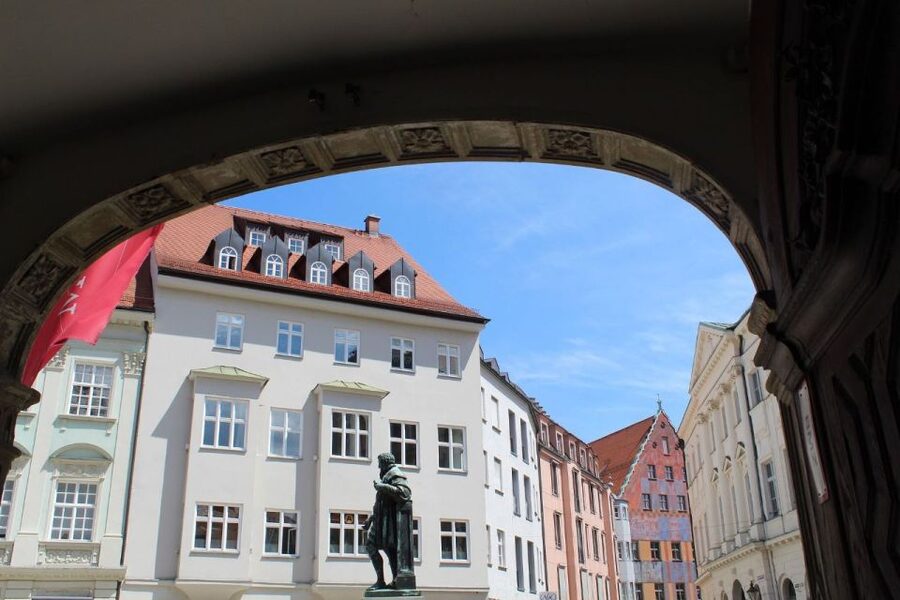
Augsburg packs 2,000 years of history into a compact old-city walk, from its Roman foundation in 15 B.C. to the Fugger family, Mozart’s family, and Berthold Brecht. I like the way this tour connects grand civic buildings with personal stories, so the city feels more human than a string of dates and façades.
I also like the private format, which lets you ask questions and adjust the focus as you go. The guide can spend more time on Roman Augsburg, the Fuggers, music, or literature. The main caution is price: at $362 per group, it can be good value for a larger party, but expensive for one or two people, especially since entrance fees are not included.
Key points at a glance
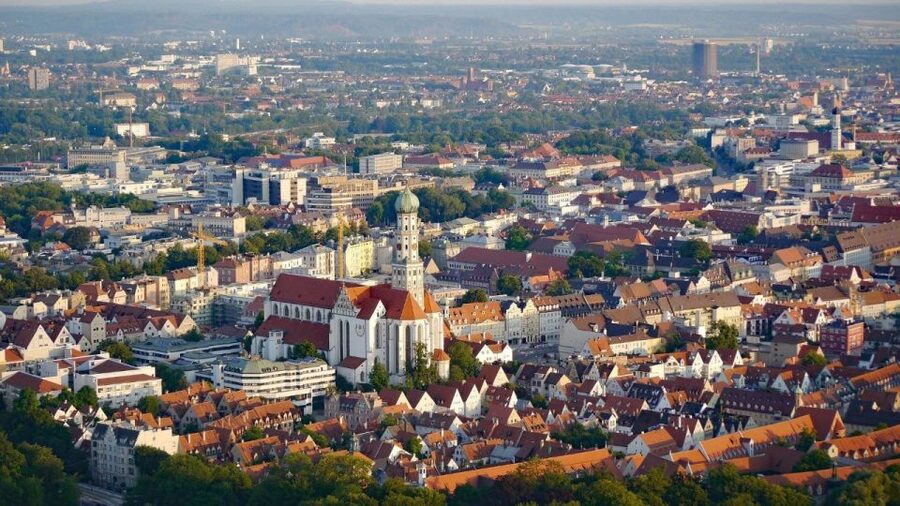
- Roman Augsburg begins in 15 B.C.: Learn how a provincial Roman capital grew into Germany’s third-oldest city.
- The Town Hall is the architectural centerpiece: See the building described as the world’s first six-story structure.
- The Fuggerei adds a social-history angle: Visit the oldest social settlement in the world, founded by the Fugger family.
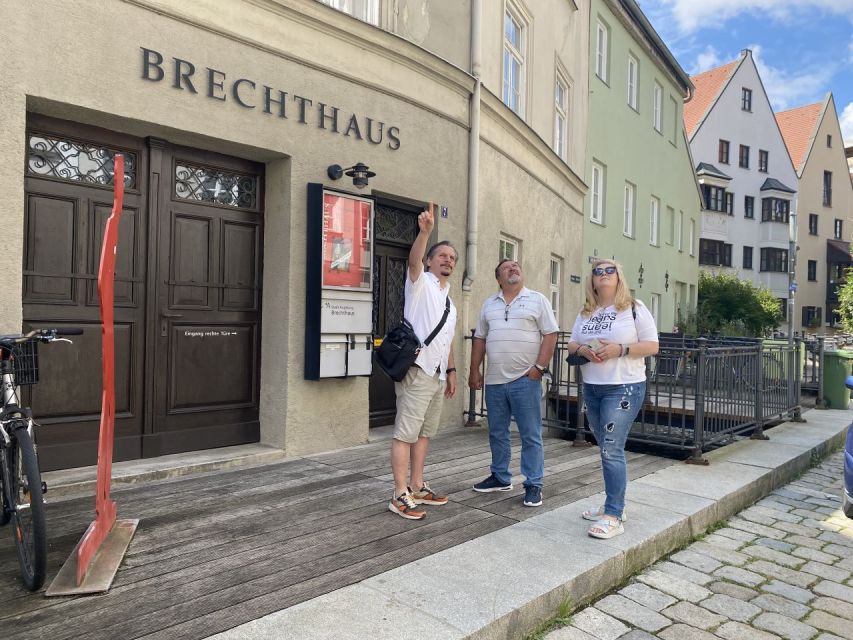
- Mozart and Brecht give the walk a personal touch: See the birthplaces connected with Wolfgang Amadeus Mozart’s father and Berthold Brecht.
- You can shape the private tour: Tell your guide which subjects interest you most during the walk.
- The tour ends at SchaezlerPalais: This palace survived World War II without a scratch, a striking fact in a city marked by wartime destruction.
A two-hour walk through Augsburg’s long past
This tour works best as an introduction to Augsburg. In two hours, you will not see every museum or absorb every corner of the old city, but you will get a clear framework for understanding it.
Augsburg is the capital of Swabia in Bavaria and the third-oldest city in Germany. Its story begins as a Roman colony founded in 15 B.C. That date gives the walk a useful starting point. You are not simply touring a medieval center. You are following a city that changed roles over many centuries, from Roman provincial capital to an important commercial and civic center, and later to a modern Bavarian city.
I like this broad time span because it keeps the tour from becoming too narrow. One stop may explain Roman power, another the wealth of the Fugger family, and another the artistic life of more recent Augsburg. The result is a walking tour with several different voices.
The format is private, with a maximum group size of 15. That matters. A large family or small organization can stay together without being added to an unfamiliar group, while a couple or small party can ask questions without waiting for a crowd to move along.
The guide speaks English or German. No individual guide name is provided, so you should not book this expecting a particular person. What you can expect is a live local guide who adjusts the walk to your interests.
More Walking Tours in Bavaria
- Augsburg: Walking Tour with Fuggerei
★ 4.6 · 2,245 reviews - Regensburg: Guided City Walking Tour of the Old Town
★ 4.7 · 1,395 reviews - Passau: City Highlights Guided Walking Tour
★ 4.8 · 351 reviews
Starting at the Fuggerei
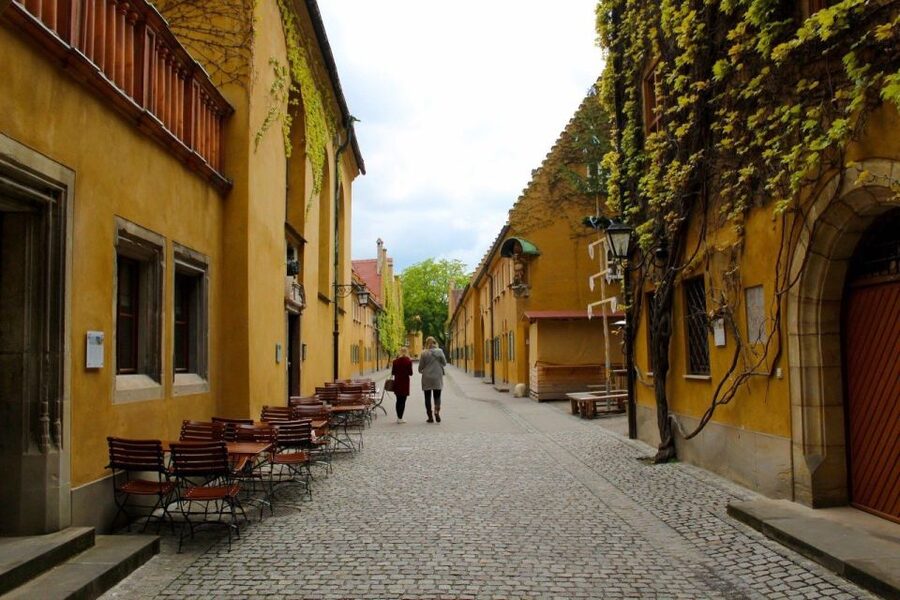
The meeting point is the Fuggerei, which is also one of the tour’s central subjects. This is a practical starting place because the site introduces Augsburg’s most famous family, the Fuggers, and the city’s role in European commerce.
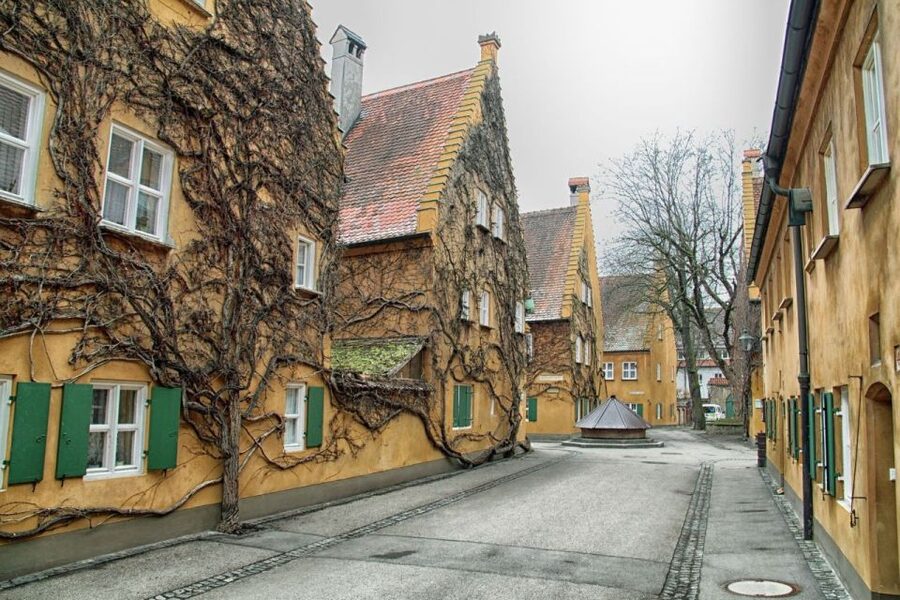
The Fuggerei was founded by the Fugger family as a social settlement. It is described as the oldest social settlement in world history. That makes it more than another attractive old quarter. It shows how private wealth was used to create housing for people in need, and it gives your guide a chance to explain the Fugger family’s place in Augsburg’s development.
I would pay close attention here to the difference between a rich merchant family and a modern public institution. The Fuggers were private financiers, yet their foundation left a lasting mark on daily life in the city. That contrast makes the site useful for understanding power, charity, and social order in earlier centuries.
The Fuggerei is also the meeting point, so plan to arrive there rather than at the Town Hall. The tour may cover the site from the outside or discuss it as part of the route, but entrance fees are not included. If entering paid attractions matters to you, ask the guide or provider what the current plan is before the walk begins.
Reading Augsburg through the Town Hall
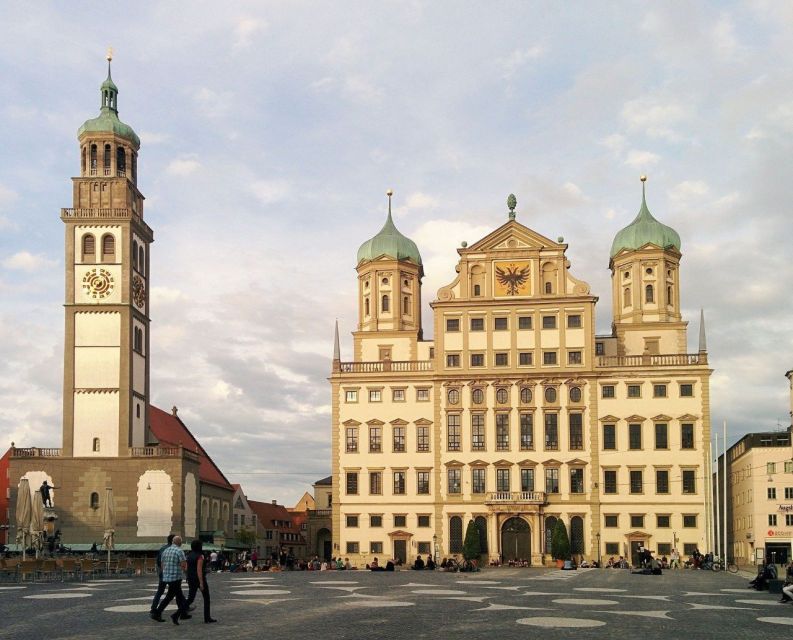
The Town Hall is likely to be the visual centerpiece of the route. It is presented as the first building in the world to have six floors, a detail that gives the stop a memorable hook.
The building represents more than a municipal office. It reflects Augsburg’s civic confidence and the wealth that allowed the city to build on a grand scale. Your guide can place the Town Hall in the wider story of Augsburg’s merchants, officials, and regional importance.
This is one of the places where a private guide can add value. A quick photo stop tells you what the building looks like. A well-shaped explanation can show why it mattered, who paid for it, and how it fits the city’s rise.
Do not assume that the tour price includes a visit inside the Town Hall. Entrance fees are excluded, and the supplied details do not promise interior access. If you want to see a particular room or interior feature, confirm that before booking or ask about it when you meet the guide.
For a two-hour walk, the Town Hall also helps anchor the route. After the older Roman and Fugger material, you have a clear civic landmark that ties Augsburg’s political and economic story together.
Roman Augsburg and the making of a provincial capital
The Roman section gives the city its oldest layer. Augsburg was founded as a Roman colony in 15 B.C. and later grew into the capital of a province in the Roman Empire.
That is a useful distinction. The city was not merely a small outpost at the edge of Roman territory. It developed into a regional center with enough importance to serve as a provincial capital. Your guide should explain what that growth required and how Roman foundations shaped the city’s later importance.
You will not get a full archaeological course in a two-hour walk. Instead, expect a concise explanation of how the city began and why its location and status mattered. I like this approach for a first visit because it gives you a timeline you can use for the rest of your stay.
If Roman history is your main reason for booking, tell the guide at the start. The tour is customizable, and you can ask for more attention to the Roman period rather than treating it as a short opening chapter. The same applies if you are more interested in medieval commerce or modern literature.
More History Tours in Bavaria:
- Regensburg: City Highlights Historical Boat Tour
★ 4.0 · 259 reviews - Classic city tour in the World Heritage City of Augsburg
★ 4.0 · 41 reviews - Historical Walking Tour of Augsburg
★ 4.9 · 10 reviews - Augsburg – Private Historic Tour
★ 5.0 · 3 reviews
The Mozart family connection
One of the walk’s more surprising stops is the birthplace of Wolfgang Amadeus Mozart’s father. This is not the composer’s birthplace, and that distinction matters. The stop connects Augsburg with the Mozart family and with the musical history of the wider German-speaking world.
It is a small but effective detail. A city tour can easily become a parade of rulers and wealthy families. A birthplace linked to a famous musician gives the route a personal face and shows how Augsburg’s cultural connections reached beyond Bavaria.
I would treat this as a story stop rather than a major museum visit. The supplied information does not promise entry or an extended display. You will see the place and hear its connection to Mozart’s father, with the guide providing the context.
This is also a good example of why the private format helps. If music matters to you, you can ask the guide to spend more time on the Mozart connection. If it is less important, you can move on without losing a large part of the tour.
Berthold Brecht’s birthplace
The tour also visits the birthplace of Berthold Brecht, the acclaimed German artist and writer. Brecht gives Augsburg a modern literary voice, balancing the older Roman and merchant stories.
This stop broadens the tour in a useful way. You are not left with the impression that Augsburg’s importance ended with the Fugger family. The city also shaped writers and artists whose work became known far beyond Bavaria.
As with the Mozart connection, the value here comes from the guide’s explanation. The tour is not advertised as a literary seminar, and no admission is included. Instead, you get a place, a biography, and a chance to see how one person’s life connects with the city.
If you know Brecht’s work, this may be one of the most meaningful stops. If you do not, it still gives you a reason to notice Augsburg’s cultural life beyond its architecture.
Finishing at SchaezlerPalais
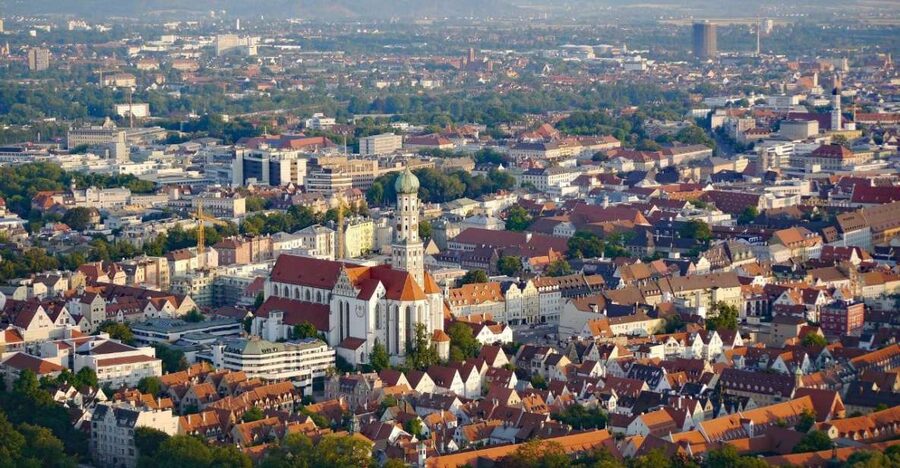
The walk ends at SchaezlerPalais, a palace that survived World War II without a scratch. That fact gives the final stop unusual weight.
Augsburg, like many German cities, has a complicated wartime story. A palace surviving intact while other parts of a city suffered makes the building more than a handsome ending. It becomes a reminder of how unevenly war can affect historic places.
The supplied details do not promise interior access, so you should think of SchaezlerPalais as the final landmark and story rather than a guaranteed palace visit. Still, ending here gives the tour a strong closing point. You finish with architecture, survival, and a reminder that Augsburg’s past is not limited to its oldest period.
I appreciate that the route does not end only with the biggest or oldest building. SchaezlerPalais gives the guide a chance to connect the city’s older monuments with the events of the twentieth century.
What the private format adds
The private format is the tour’s main advantage. You can ask questions as they come up, request more detail on a favorite subject, and set the pace with your own group.
That flexibility was especially important in the strongest participant comments. The guide was described as highly informative, lively, and experienced, with one private group noting that the guide adapted the walk to its wishes and shared a broad command of the city’s story. Another participant called the tour the most informative city tour they had taken.
Those comments point to the right expectation. This is not a self-guided route with a script in your hand. The guide is the product. A good guide can connect the Roman colony, the Fugger settlement, the Town Hall, Mozart’s father, Brecht, and SchaezlerPalais into one understandable story.
The private setup also makes the tour suitable for groups with different interests. One person can ask about architecture while another asks about literature or social history. You do not have to choose a single theme before booking, since the focus can be adjusted during the walk.
The tradeoff is cost. A $362 group price is easier to justify when shared among several people. At the full limit of 15, the cost works out to roughly $24 per person before currency conversion, but a couple would carry the entire fee. One German participant specifically felt the price was high compared with a similar tour costing 115 euros, so budget-minded visitors should compare options.
Timing, walking, and practical limits
The tour lasts two hours. That is long enough to cover the main highlights without taking up an entire morning or afternoon.
You should still expect a real city walk, not a seated presentation. The activity is not suitable for wheelchair users, so anyone with mobility concerns should ask the provider for current route details before booking. The exact walking distance and terrain are not provided.
Entrance fees are not included. The tour price covers the local professional guide and private guiding, not admissions to any paid site. Ask about the Fuggerei, Town Hall, or SchaezlerPalais if seeing interiors is important to you.
The cancellation policy is flexible: you can cancel up to 24 hours before the tour for a full refund. You can also reserve now and pay later, which helps if your Augsburg plans are still shifting.
The tour is offered in English and German. Since no guide names are supplied, the practical choice is to select your language and explain your interests when you meet.
Who will get the most from this walk
I would recommend this tour to first-time visitors who want a clear introduction to Augsburg rather than a specialist visit to one museum. It is also a good fit for families, couples, and small private groups who prefer conversation over a fixed large-group script.
History-minded visitors will like the Roman and Fugger material. Architecture fans will have the Town Hall and SchaezlerPalais. Music and literature enthusiasts get the Mozart family and Brecht connections. The route has enough variety that you do not need to arrive with one narrow interest.
It is less suitable if you want extensive interior visits, a low-cost group tour, or a fully accessible route. It may also feel expensive for solo visitors or couples unless the personal guide and customized focus are worth the extra cost.
The strongest praise centers on the guide’s ability to make the city informative and enjoyable without turning the walk into a dry lecture. That is exactly what you should look for here: a flexible conversation about Augsburg, shaped around the parts of the city that interest you most.
Should you book the Augsburg Historical Highlights tour?
Book it if you want a private overview of Augsburg and value the ability to customize the story. The Roman foundation, Fuggerei, Town Hall, Mozart family connection, Brecht birthplace, and SchaezlerPalais give the two hours a strong range.
Think twice if price is your main concern or if you need wheelchair access. For a group of several people, the $362 fee can make sense. For one or two people, compare it with less expensive tours first, then decide how much the private format and personal attention matter to you.
FAQ
How long is the Augsburg Historical Highlights tour?
The tour lasts two hours.
How much does the private tour cost?
The price is $362 per private group of up to 15 people.
Where does the tour meet?
The meeting point is the Fuggerei in Augsburg.
Which languages are available?
The live tour is available in English and German.
Is this a private group tour?
Yes. The tour is private, with a maximum group size of 15 people.
Are entrance fees included?
No. Entrance fees are not included in the tour price.
Is the tour suitable for wheelchair users?
No. The activity is listed as not suitable for wheelchair users.
Can I cancel for a full refund?
Yes. You can cancel up to 24 hours in advance for a full refund.
Just added in Bavaria
- Rafting classic Iller – Level 2 white water tour★ 4.5 · 29 reviews
- Canyoning Starzlachklamm★ 5.0 · 51 reviews
- Family rafting Iller – white water rafting level 1★ 5.0 · 12 reviews
- Bavarian Schnitzel Cooking Class in Oberaudorf Farmhouse★ 5.0 · 21 reviews
- Classic city tour in the World Heritage City of Augsburg★ 4.0 · 41 reviews
- Augsburg – Private Historic Tour★ 5.0 · 3 reviews
- Kloster Andechs: Brauerei-Tour mit Virtual Reality entdecken★ 4.7 · 15 reviews
- Regensburg citytour rickshaw-pedicab★ 4.3 · 20 reviews
Historical Tours, compared.
City History Canal Sightseeing Tour on a Motorboat
Read our review →


Browse the lists this tour appears in