
Reviewed · BERLIN WALL AND COLD WAR TOURS
Berlin Wall: Small Group Guided Tour
The most powerful part of this walk is how it turns Berlin’s Wall from a famous photograph into a route through ordinary streets. You begin at Bornholmer Straße, where East and West Berliners first met in celebration on the night the border opened, then follow traces of the old frontier toward Bernauer Straße and Mauerpark.
I like the small group limit of 12 people, which gives you room to ask questions. I also like the personal angle: guides such as Marcus and Katrine have shared firsthand memories of life in East Berlin. The main consideration is language. This tour is conducted in German, and the 2.5-hour walk takes place in all weather.
Key points at a glance
- Start at Bornholmer Straße: See the former crossing where the Wall first opened to Berliners on November 9, 1989.
- Walk the old death-strip route: Cherry trees, surviving traces, and memorial sites help explain how the border worked.
- Hear personal East Berlin stories: Guides including Marcus, Katrine, Markos, and Steffen have been praised for clear explanations, humor, and lived experience.
- Visit Mauerpark and the Schwedter Steg: The route connects Cold War history with one of today’s popular public gathering places.
- Allow three hours, not just 2.5: Some walks have run longer, especially when the group asks questions.
- Check the language and endpoint: The tour is in German, and the description gives conflicting information about whether the walk ends at Nordbahnhof or returns to the starting office.
Why this Berlin Wall walk works
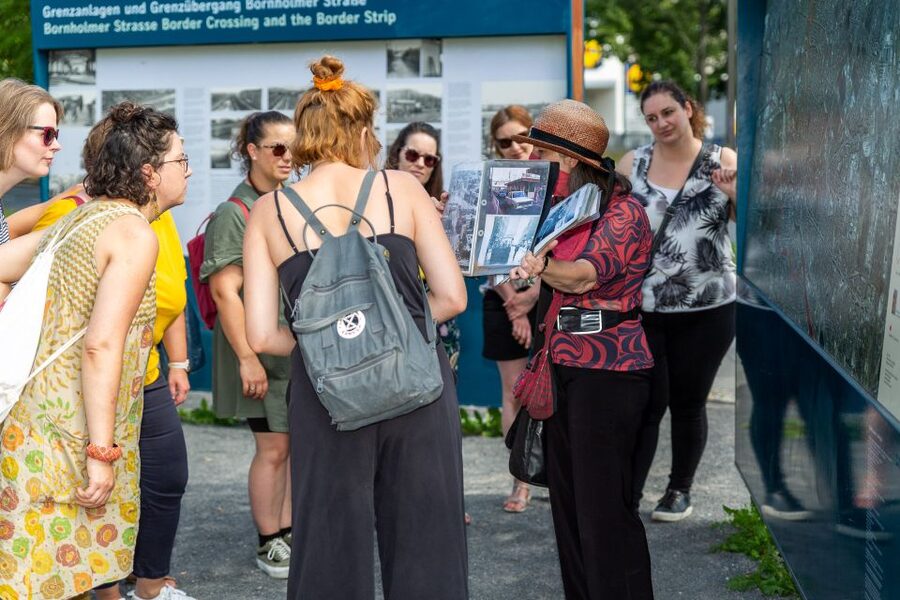
Berlin has plenty of Wall fragments, but fragments alone can leave you with a broken-up story. This route is more useful because it follows a section of the former border on foot. You see where the barriers once ran, then learn how escape routes, watch posts, border crossings, and open ground fit together.
The walk also avoids treating the Wall as a single monument. You pass places with different meanings: a crossing point, a former death strip, memorials, a railway bridge, a tunnel, and a public park. That variety helps you understand that the Wall was not only a concrete barrier. It cut across homes, streets, railway lines, and family life.
The group size matters here. With no more than 12 people, you can usually hear the guide and ask questions without waiting for a large crowd to move along. The strongest praise has focused on guides who explain the subject with humor and personal detail. Marcus has shared his own experiences of life when the Wall was up, while Katrine grew up and socialized in East Berlin before reunification.
Those details do not replace the larger political story. They add a human scale to it. You are not only hearing when the Wall was built or when it fell. You are considering what it meant to shop, work, visit friends, and raise a family in a divided city.
More Berlin Wall and Cold War Tours in Berlin:
- Berlin: Third Reich and Cold War 2 Hour Walking Tour
★ 4.9 · 6,830 reviews - Berlin’s Best: 2 Hour Walking Tour Third Reich and the Cold War
★ 5.0 · 5,486 reviews - Berlin: DDR Museum Tickets
★ 4.3 · 3,443 reviews
Starting at Bornholmer Straße
The tour begins at the Berlin Bike Tours office, close to the former border crossing at Bornholmer Straße. This is a sensible starting point because the location carries one of the clearest moments of the Wall’s history.
On the night the border opened, people from East Berlin crossed here and met West Berliners. The scene became one of the first public signs that the divided city was changing. Beginning here gives the tour an emotional starting point before you move into the quieter physical traces of the border.
The meeting point is easy to reach. Björnsonstraße tram stop is about one minute away, served by M1, M13, and M50. Bornholmer Straße S-Bahn station is about two minutes on foot, with S1, S2, S8, S25, and S85 trains. Schönhauser Allee is roughly a 10-minute walk and connects to the S-Bahn, U2, and additional lines.
I would arrive a little early. The first meeting point is near a busy transport area, and you will want to find the office without rushing. The tour is a walking experience from the start, so comfortable shoes matter more than anything else you bring.
Reading the former death strip
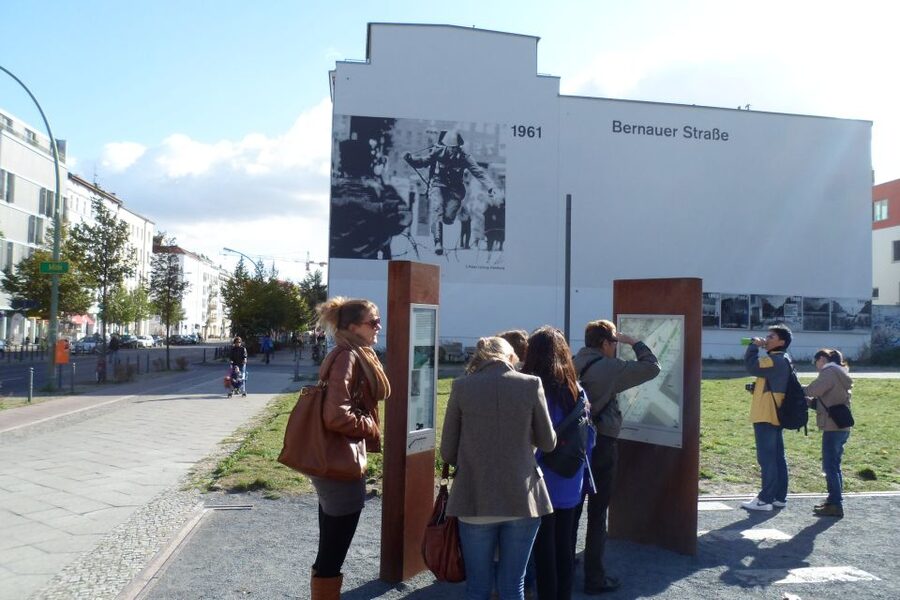
From Bornholmer Straße, the route follows the old border zone. Some parts of the Wall are easy to identify. Others are less obvious, and the guide explains how researchers and local historians document traces that have disappeared from plain sight.
This is one of the tour’s most useful features. Berlin’s former border is not always marked by a dramatic slab of concrete. Streets and buildings have changed, and some evidence survives only through maps, records, pavement lines, or small physical clues. A guide can point out what you would probably walk past alone.
The term death strip refers to the open area between sections of the border system. It was designed to give guards clear sight lines and make escape difficult. The exact layout varied, but the system could include walls, fences, patrol roads, lighting, watchtowers, and open ground.
You should expect a walking explanation rather than a museum-style presentation. The guide may stop to show you where the barriers once stood, then connect the site to stories about divided families and attempted escapes. That combination of place and story is the main reason to choose a guided route instead of simply visiting a Wall fragment on your own.
The unusual story of Berlin’s cherry trees
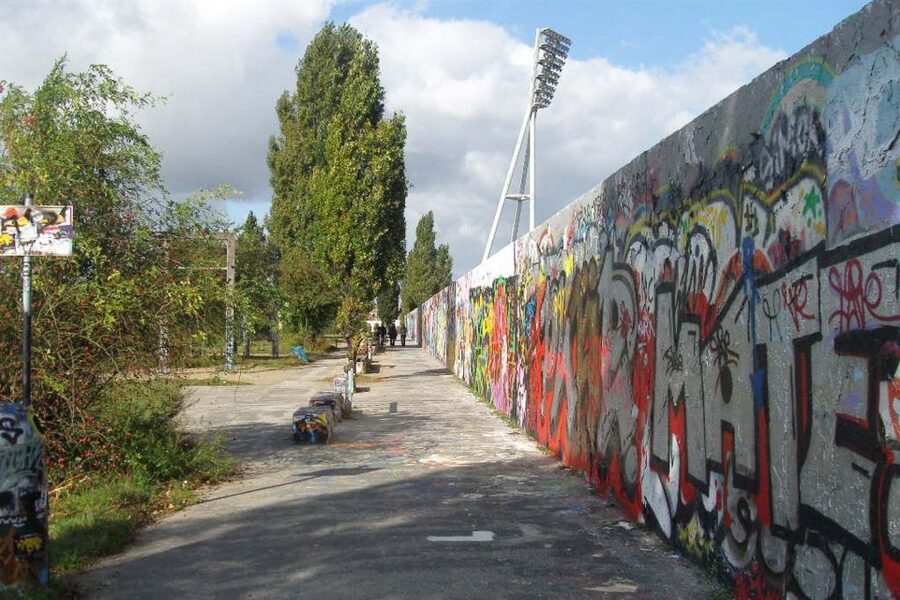
One of the more memorable details is the line of cherry trees along parts of the former border. These trees are not just decorative planting. They are tied to a particular history of support and remembrance connected with the former Wall.
The trees give this section a softer appearance, which can feel strange when you learn what the open strip was used for. That contrast is part of the value of the stop. You see a pleasant public space while being reminded that the same ground once separated people under armed surveillance.
The cherry trees also help you notice how completely some parts of the city have changed. If you walk through the area without context, the border may seem absent. With a guide, the trees become markers in a story about division, reunification, and the effort to preserve memory.
A few more half-days in Berlin worth comparing
- Berlin: Reichstag, Dome and Government District Guided Tour
★ 4.7 · 18,288 reviews - Berlin: 1-Hour City Tour by Boat with Guaranteed Seating
★ 4.3 · 16,993 reviews - Berlin: Boat Tour Along the River Spree
★ 4.4 · 11,252 reviews - Discover Berlin Half-Day Walking Tour
★ 5.0 · 9,624 reviews
Ulbrichtkurve and the physical shape of the border
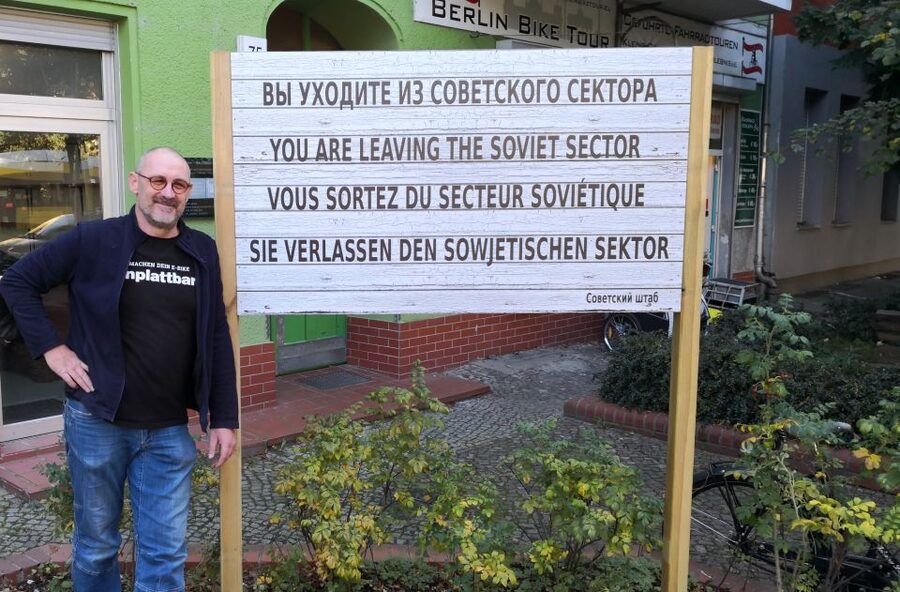
The walk continues to the well-known Ulbrichtkurve. The name refers to a curve in the border route associated with the Wall’s alignment and the city’s divided infrastructure.
This is the sort of stop that benefits from a guide’s explanation. A curve in a street or path may not look important by itself, but it can show how the Wall was fitted into the existing city. The border did not follow a neat, modern line. It bent around transport routes, buildings, gardens, and old neighborhoods.
You will spend much of the tour outdoors, and the route is not built around long indoor breaks. That makes the experience direct, but it also means cold, rain, and wind can affect your comfort. The operator provides rain ponchos when needed, but wear layers and shoes suited to several hours on foot.
Crossing the Schwedter Steg near Mauerpark
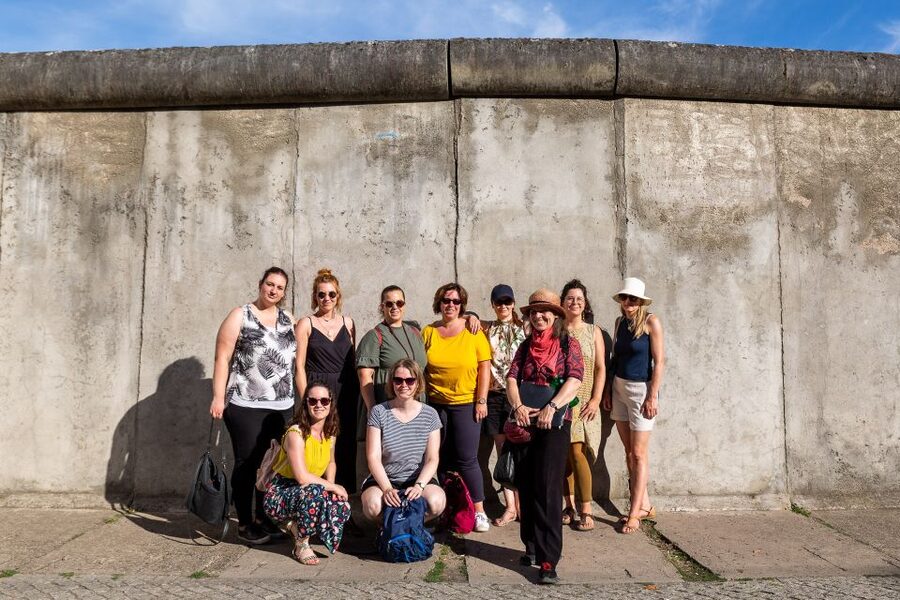
The Schwedter Steg Bridge is another strong point on the route. Near Mauerpark, it gives you a view of how the old border interacted with railway lines and open ground.
Mauerpark itself shows Berlin’s post-Wall personality. The area is now one of the city’s best-known social and cultural gathering places, with an atmosphere very different from the controlled border zone that once occupied nearby ground. The contrast is important: the tour does not leave the Cold War story behind, but it shows how the same spaces gained new public uses.
You may also have time to stop for coffee along the way. Food and drinks are not included, so bring money or plan to buy something during the break. The coffee stop adds a welcome pause, particularly on a cold day, but it also means the tour’s exact pace can vary.
Gleim Tunnel and the modern city above the past
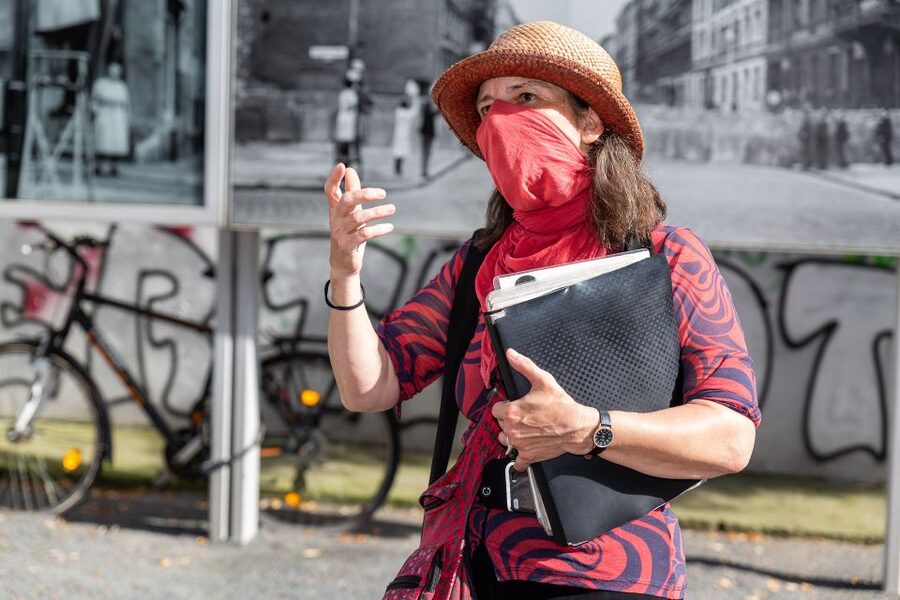
The Gleim Tunnel provides another example of old infrastructure taking on a new role. The tunnel is associated with a large annual party, which gives you a glimpse of Berlin’s habit of turning unusual urban spaces into places for public events.
That detail may seem lighter than the border stories, but it helps explain modern Berlin. A route that once ran beside a heavily guarded frontier can now connect neighborhoods, parks, and social spaces. The city’s present-day use of these places does not erase the past. It shows how public memory and ordinary city life can occupy the same ground.
The guide’s role is especially important here because the stop could otherwise feel like a simple piece of urban trivia. A good explanation links the tunnel to the Wall’s route and to the changing function of the area.
The memorial stops near Bernauer Straße
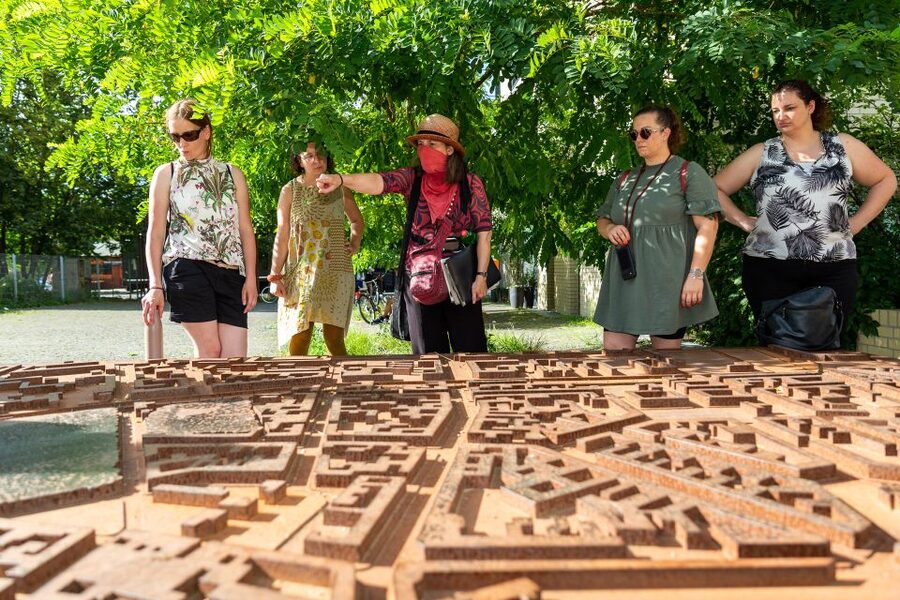
The Wall memorials are the emotional center of the walk. Memorial sites around Bernauer Straße help you understand the cost of division in a way that a single preserved wall section cannot.
Here, the story reaches families separated by the border, escape attempts, demolished buildings, and the daily pressure of living beside a fortified frontier. The guide explains not only what remains, but also what was removed and why the site is remembered.
The route is especially useful for first-time visitors to Berlin because it connects several forms of evidence. You can see surviving structures, hear personal accounts, and learn how the city marks places where the original buildings and barriers are gone.
Do not expect every section to look dramatic. Some of the best explanations may happen beside an ordinary street or an empty strip of ground. That is exactly why this kind of walk can be more revealing than a quick photograph at a famous Wall fragment.
What the guide can add
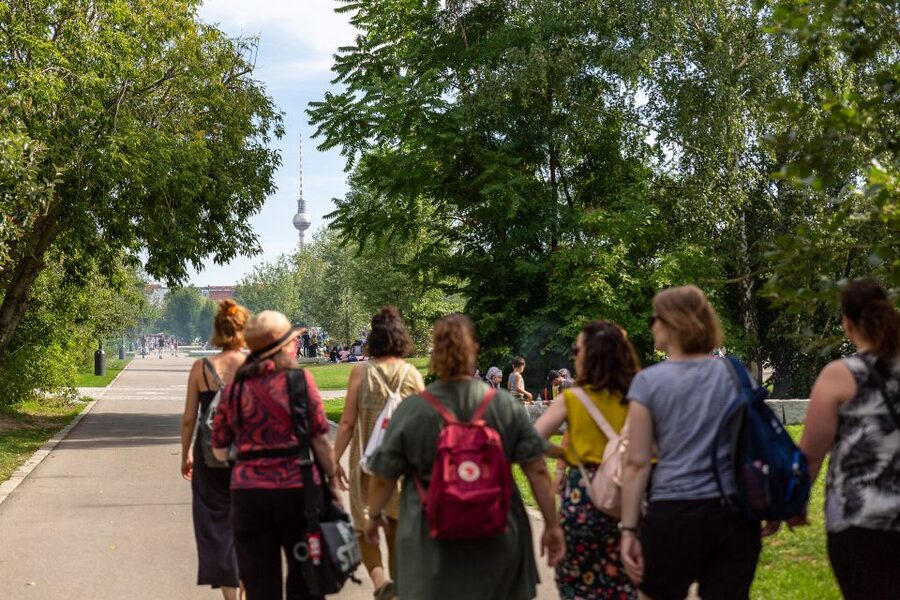
The quality of this experience depends heavily on the individual guide. The available feedback points to strong performances from Marcus, Katrine, Markos, and Steffen, although you cannot assume which guide will lead your departure.
Marcus has been praised for answering many questions in a small group and for explaining his own experience of East Berlin. Katrine’s background is also especially relevant because she was born and raised in East Berlin before the Wall fell. Markos has managed to hold the attention of younger participants, including a 13-year-old, while also offering practical suggestions for other things to do in Berlin.
Steffen has been noted for using humor and stories, and one walk lasted about three hours instead of the stated 2.5 hours. That can be a benefit if you enjoy conversation, but it matters if you have a train, meal, or museum booking immediately afterward.
The tour language is German. If you do not understand German comfortably, this is not the right choice, even if the route itself interests you. The personal stories and explanations are the main reason to book, so you need to follow the guide rather than simply tag along.
Price, pace, and practical value
At $24 per person, the price is modest for a 2.5-hour guided walk in central Berlin. You are paying mainly for local interpretation, route planning, and the ability to connect scattered Wall traces into one story.
The value is strongest if you want context. If you only want to photograph a preserved section of concrete, you can visit Wall sites on your own. If you want to understand why the border ran where it did, how the death strip worked, and what life was like around it, the guide earns the fee.
The small group makes the price more attractive. A maximum of 12 people is small enough for questions, but the tour still needs at least two participants to operate. If the minimum is not reached, the operator can cancel at short notice and notify you.
The cancellation terms need careful attention. General information allows free cancellation up to 24 hours before the activity for a full refund, but groups of three or more have a stated cancellation deadline of three days before the scheduled tour. If you are booking for several people, confirm which rule applies before you rely on the shorter deadline.
There is also a small contradiction in the route information. The walk is described as ending at Nordbahnhof, a former ghost station, while the meeting details say the activity ends back at the starting point. Confirm the final endpoint before booking onward transport.
Who should book this walk?
I would choose this for a visitor who wants Berlin’s Wall story explained through places rather than presented as a list of dates. It suits adults, history-minded visitors, and families with older children who can manage a long outdoor walk.
It is also a good choice if you have already seen Checkpoint Charlie and want a less commercial, more residential side of the Wall story. Bornholmer Straße, the former death strip, Mauerpark, and Gleim Tunnel offer a wider view of how the border ran through the city.
I would skip it if you need an English-language tour, dislike walking in poor weather, or have a tight schedule after the stated finish. You should also think twice if your main goal is a large preserved Wall structure, since some important stops are physical traces that only become meaningful through explanation.
Is this Berlin Wall tour worth booking?
Book it if you want a small German-language walk with personal stories, a route through several lesser-known Wall sites, and enough time to ask questions. The strongest feature is not one single monument. It is the way the tour links Bornholmer Straße, the former death strip, cherry trees, memorials, Mauerpark, and Nordbahnhof into one continuous account.
For German speakers, the $24 cost offers good value, especially with a guide such as Marcus, Katrine, Markos, or Steffen bringing different personal and local perspectives. Check the weather, leave room in your schedule for a walk that may run to three hours, and clarify the endpoint and cancellation deadline for your booking.
FAQ
How long does the Berlin Wall tour last?
The stated duration is 2.5 hours. Some walks have taken about three hours, so avoid scheduling a tight appointment immediately afterward.
What language is the tour conducted in?
The live tour guide speaks German. No other tour language is provided in the activity details.
Where does the tour begin?
Meet at the Berlin Bike Tours office near Bornholmer Straße. Björnsonstraße tram stop is about one minute away, and Bornholmer Straße S-Bahn station is about two minutes away on foot.
What places do you visit?
The route includes Bornholmer Straße, the former death strip and its cherry trees, Ulbrichtkurve, the Schwedter Steg Bridge near Mauerpark, Gleim Tunnel, Wall memorials, Mauerpark, and the former ghost station at Nordbahnhof.
Does the tour operate in bad weather?
Yes. The walk takes place in all weather, and rain ponchos are provided when necessary.
Can I cancel for a full refund?
Free cancellation is available up to 24 hours in advance according to the general booking terms. For tours booked by groups of three or more, the stated cancellation deadline is three days before the scheduled tour, so confirm the applicable rule when booking.
Just added in Berlin
- Berlin & The Third Reich Private Guided Tour★ 5.0 · 3 reviews
- Third Reich Quest Experience in Berlin★ 4.5 · 7 reviews
- Private Analogue Photography Experience in Berlin★ 5.0 · 3 reviews
- Berlin Urbex Adventure and History Tour★ 5.0 · 9 reviews
- The Beauty of Berlin by Bike: Private Tour★ 5.0 · 59 reviews
- Berlin: Guided Bike tour of the Berlin Wall and Third Reich★ 5.0 · 160 reviews
- Beyond Currywurst: Berlin’s Hidden Street Food & Culture Tour★ 5.0 · 100 reviews
- Berlin Third Reich & Cold War Walking Tour With A Guide★ 5.0 · 7 reviews
Berlin Wall and Cold War Tours, compared.

Berlin’s Best: 2 Hour Walking Tour Third Reich and the Cold War
Read our review →
Skip-the-Line: Berlin Wall Museum at Checkpoint Charlie
Read our review →
East Side Gallery Spree Cruise in a Solar Catamaran
Read our review →
Cold War, Berlin Wall, Spies and the East Side Gallery
Read our review →
Guided Bike Tour of the Berlin Wall and Third Reich
Read our review →
Browse the lists this tour appears in