
Reviewed · WALKING TOURS
Trier: City Walking Tour
Trier’s city walk packs nearly 2,000 years into a short route. You begin at the Porta Nigra, pass the cathedral and Church of Our Lady, then finish among the grand baroque buildings near the Electoral Palace. Along the way, four UNESCO World Heritage monuments give the tour real weight, not just pretty streets.
I like the clear historical order, from Roman Trier to medieval power struggles and then baroque splendor. I also like the modest $17 price, especially if you want a quick introduction before exploring on your own. The tradeoff is time: 90 minutes is enough for an overview, but not enough for long interior visits or a slow look at every detail.
Key points to know before you book
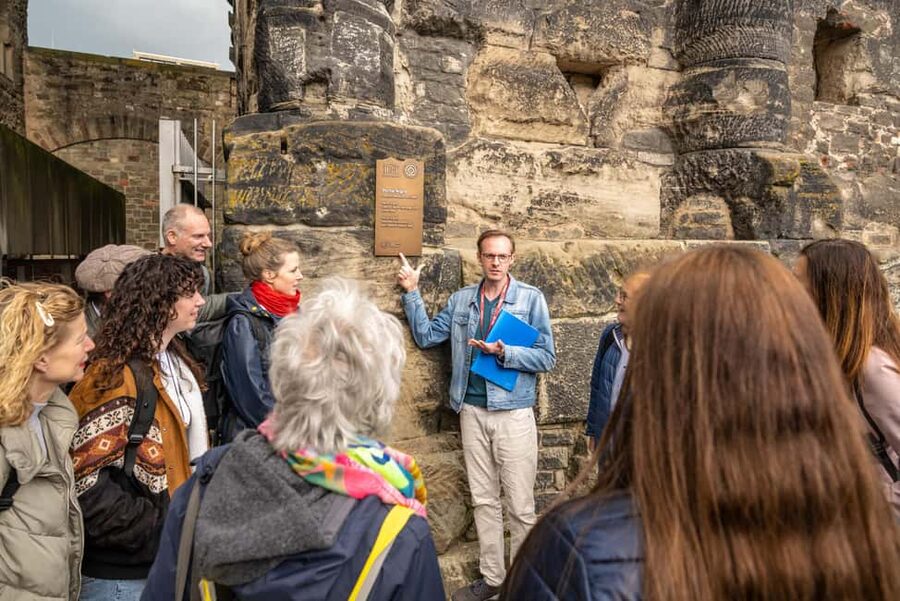
- Four UNESCO monuments in one walk: See the Porta Nigra, Trier Cathedral, Church of Our Lady, and Aula Palatina.
- A route through three eras: Roman beginnings lead into medieval streets and then the baroque court district.
- Official local guides: The tour is operated by Trier Tourismus und Marketing GmbH, with live guides in German or English.
- Easy meeting point: Start in front of the Tourist Information beside the Porta Nigra.
- Good value for a first look: The 90-minute route gives you a useful city-center orientation for $17.
- Wheelchair accessible: The activity is listed as accessible, though the walk still covers city streets and public spaces.
Starting at the Porta Nigra, Trier’s great Roman gate
The meeting point is unusually convenient. You gather in front of the Tourist Information, right beside the Porta Nigra, so you can find the group without hunting through side streets. If you have a question before the walk begins, the staff inside the Tourist Information can help direct you to the official tour.
The Porta Nigra is the right place to start. Trier’s most famous building gives you an instant sense of the city’s Roman importance. Its dark stone and massive form are far more memorable than a quick photograph suggests, and the guide uses it to set the scene for the ancient city.
I like this opening because it gives the walk a strong visual anchor. You are not starting with a vague explanation about Trier. You are standing beside the monument that defines the city center.
The guide leads you through the Roman story before moving into later periods. That structure helps you keep the dates and buildings straight, especially if Trier is your first stop in Germany’s Rhineland-Palatinate region.
More Walking Tours in the Moselle Valley
- Trier: Guided City Walk with Wine Tasting
★ 4.8 · 979 reviews - Trier: Guided Old Town Highlights and History Walking Tour
★ 4.7 · 687 reviews - Trier: Private Guided Walking Tour
★ 4.2 · 32 reviews
Medieval Trier around Dreikönigenhaus and Judengasse
After the Roman opening, the route turns toward medieval Trier. The Dreikönigenhaus and Judengasse help shift the focus from imperial Rome to a city shaped by merchants, citizens, religious authority, and local defense.
The Dreikönigenhaus is especially useful for understanding how medieval town buildings could serve more than one purpose. The tour explains how fortified citizens used architectural tricks to protect their property. That detail makes the medieval period feel practical rather than distant. You hear about people trying to safeguard homes, goods, and status in a crowded city.
Judengasse adds another layer to the walk. The name points to Trier’s Jewish quarter and gives the guide a chance to explain how different communities formed part of the medieval city. The route does not treat Trier as a collection of isolated monuments. It connects buildings with the people and power systems around them.
The history here can become dense, so the guide’s storytelling matters. A strong explanation helps you see why a narrow lane or unusual facade deserves attention. The tour description also promises stories of citizens fighting the bishop for imperial immediacy, with the conflict sometimes involving knights, monkeys, and church towers. That strange mix of politics, spectacle, and local legend should keep the medieval section lively.
Hauptmarkt and the struggle for civic power
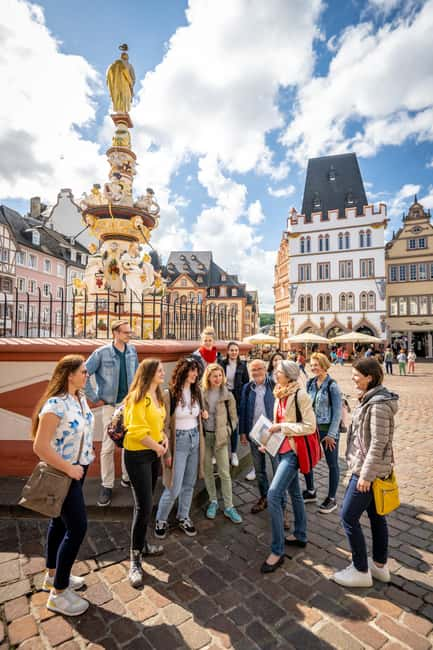
The Hauptmarkt is one of the route’s central stops. This square brings together Trier’s commercial and civic life, and it gives you a better sense of how the medieval city operated as a public stage.
Here, the tour moves beyond dates and rulers. You hear about self-confident citizens who challenged the bishop’s control and sought greater political independence. That struggle helps explain why Trier’s story is not simply one of Roman glory followed by religious grandeur. Local citizens also pushed back against powerful church leaders.
The square is a good place for this part of the story because its buildings make the contest for space and authority easier to picture. The guide points out architectural clues as the group moves through the center, including the relationship between civic buildings, religious sites, and defensive structures.
You will also get practical orientation here. The Hauptmarkt connects several major sights, so knowing how it fits into the center can help you return later for your own photographs or a slower walk.
Trier Cathedral and the Church of Our Lady
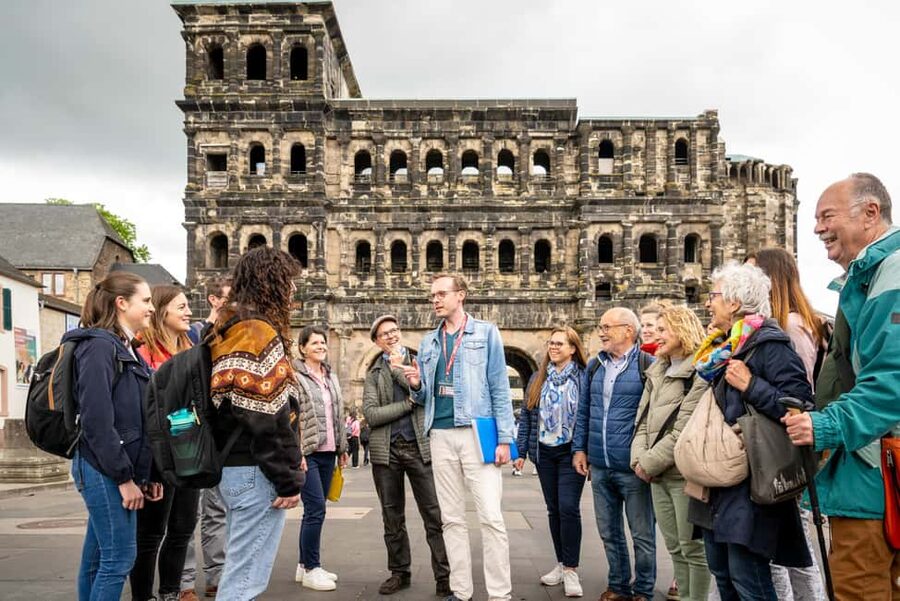
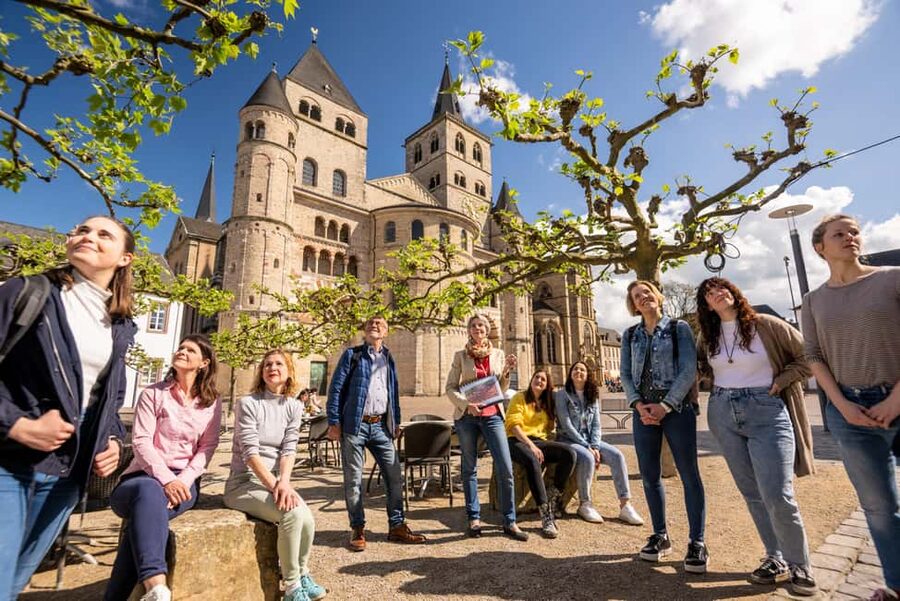
The cathedral and Church of Our Lady form the religious heart of the route. Both are part of the UNESCO World Heritage Site, so this is one of the tour’s most important sections.
Trier Cathedral represents the long reach of the city’s Christian history. The Church of Our Lady adds a different architectural and artistic presence beside it. Seeing the two together is valuable because you can compare their forms instead of treating each church as a separate stop on a checklist.
The guide explains the role of St Peter as the city’s patron saint and places these buildings within Trier’s wider religious story. That context makes the cathedral courtyard more than a place to pause. It becomes a space where Roman foundations, medieval faith, and later political power meet.
The information provided for this tour does not promise a full interior visit or extended time inside either church. Plan on an exterior-focused walk unless the guide says otherwise. If you want to study the cathedral or Church of Our Lady in detail, leave time for a return visit after the tour.
That limitation is worth noting. A 90-minute city walk must keep moving, and a guide cannot give every major building the attention it deserves. Still, the route gives you the background needed to make a later independent visit more rewarding.
Same city, a completely different kind of day:
- Cochem: Panoramic Cruise on the Moselle River
★ 4.4 · 1,004 reviews - Trier: Discovery Tour – Germany’s Oldest Wine Cellar
★ 4.7 · 218 reviews - From Alken: Return Day Trip by Boat to Cochem
★ 4.6 · 141 reviews - Cochem: Panorama-Schiff-Tour 1 Stunde bis Ernst und zurück
★ 4.3 · 122 reviews
The Aula Palatina and the final Roman landmark
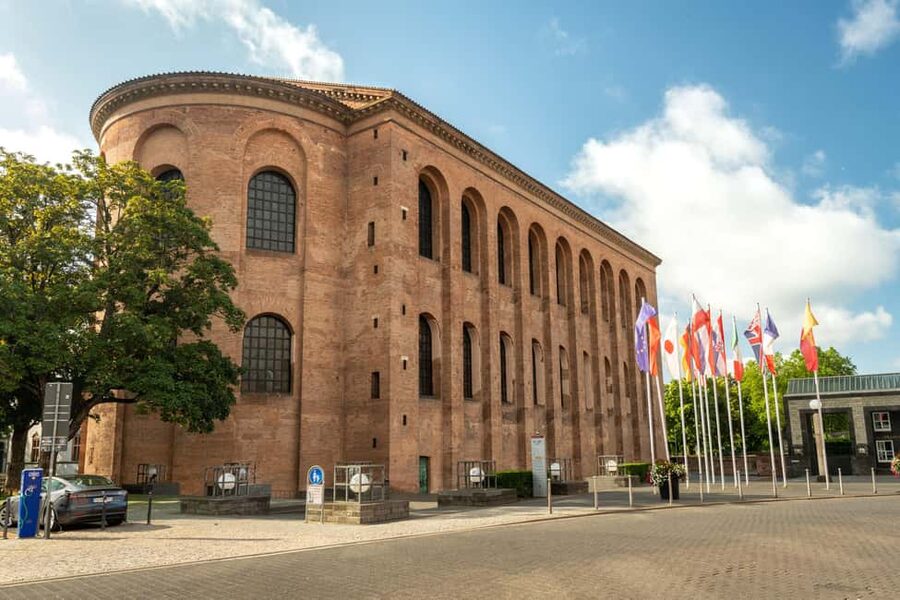
The Aula Palatina, also known as the basilica, brings the Roman story back into view. Its large scale helps you understand the importance of Trier long after you have left the Porta Nigra.
The building is one of the four UNESCO monuments included in the walk. Together, the Porta Nigra, cathedral, Church of Our Lady, and Aula Palatina show how much of Trier’s identity remains concentrated in a walkable central area.
The Aula Palatina also helps balance the tour. If the early part of the route focuses on the city gate and the medieval streets, this stop reminds you that Roman Trier was more than one surviving monument. The guide can connect the basilica to the city’s role in antiquity and explain why its form remains so striking.
The itinerary lists the Aula Palatina as a guided sightseeing stop, followed by the Electoral Palace and Palace Garden area. You should expect the tour to end near the Kurfürstliches Palais rather than return to the Porta Nigra.
Baroque Trier at the Electoral Palace
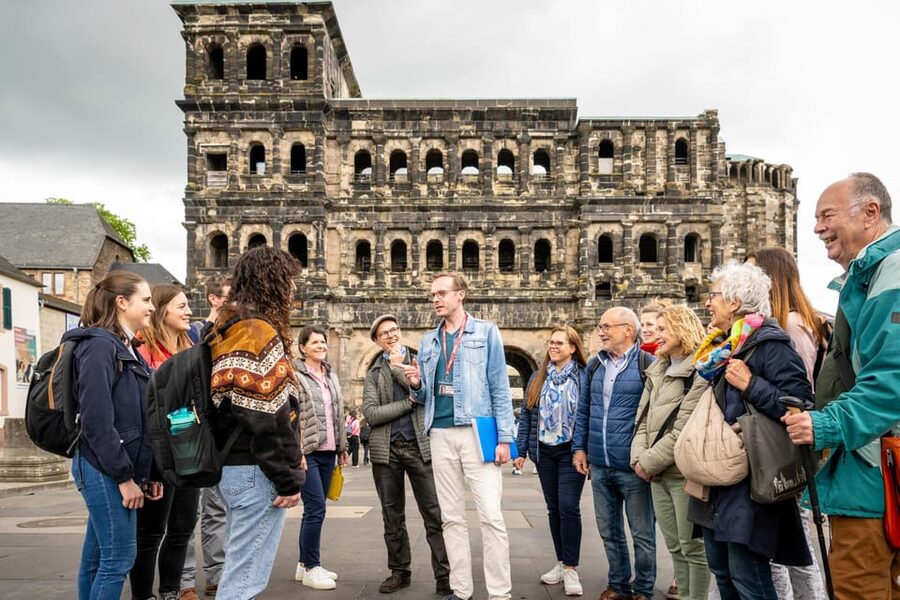
The final section moves into the baroque period. The cathedral courtyard and Electoral Palace show how Trier’s rulers used architecture to project wealth, order, and authority in modern times.
The Electoral Palace is a fitting endpoint because it looks and feels different from the Roman gate and medieval lanes. The changing architecture lets you read the city as a timeline. First comes Roman power, then medieval religious and civic conflict, followed by the polished display of the baroque court.
The Palace Garden area provides a graceful finish to the route. The tour does not promise a full palace interior visit, so think of this part as an exterior introduction and a useful orientation point.
Ending here can be convenient if you want to continue exploring Trier’s central sights. It also means you should remember where the tour finishes when planning the rest of your day. The starting point is beside the Porta Nigra, while the listed drop-off points are near the Electoral Palace and Palace Garden.
What the $17 price really gets you
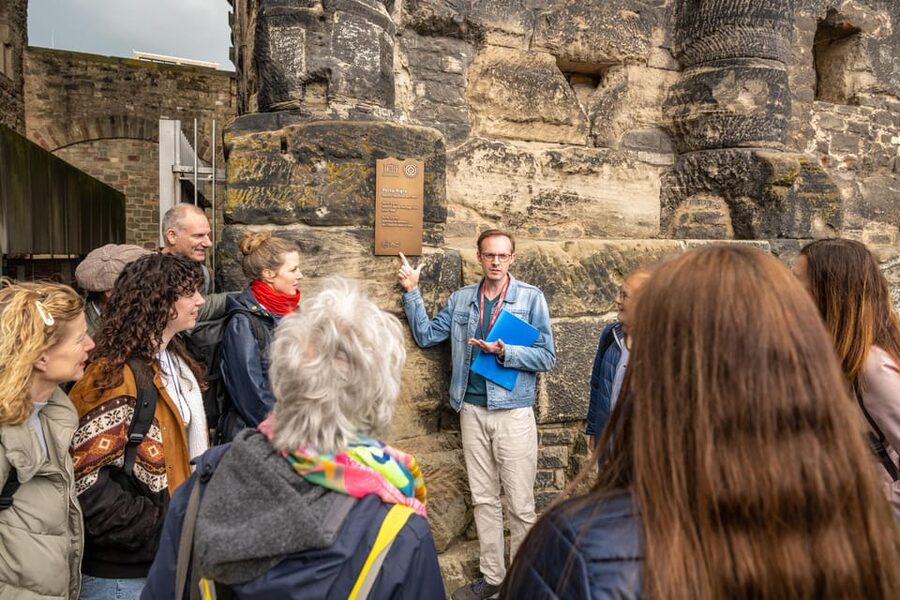
At $17 per person, this is a reasonable buy for a guided introduction to Trier. You are paying for 90 minutes with an official local guide, a structured route, and explanations that connect the city’s main monuments.
The value is strongest if you are new to Trier or have limited time. Four UNESCO buildings in one walk would be difficult to place in context by yourself, especially when the route also includes the Hauptmarkt, Dreikönigenhaus, Judengasse, and cathedral courtyard.
The tour is less useful if you already know central Trier well or want long visits inside individual monuments. It is an overview, not a museum tour or a private deep study of Roman architecture.
The price also makes the walk easy to pair with independent sightseeing. You can take the tour first, note the places you want to revisit, and then spend the rest of your day at your own pace. That is often a better use of money than paying for a much longer tour when you mainly need orientation.
Guide language, pace, and accessibility
Live guiding is available in German and English. The supplied feedback includes high marks for an eloquent guide and for a tour described as very informative, which fits the experience’s main purpose: clear storytelling during a compact city walk.
No guide names are provided, so you should not book expecting a particular person. The important point is that the guides are official Trier guides working through the city’s tourism organization.
The tour lasts 1.5 hours. Wear comfortable shoes, since the route moves through the center on foot and includes several stops rather than one fixed building. The activity is listed as wheelchair accessible, which is useful if you need an accessible city introduction. For specific mobility needs, it is still sensible to confirm details with the Tourist Information before starting.
The group size is not specified. That means the experience may feel different depending on the day and departure time. If you prefer a private or very small group, this tour does not promise that arrangement.
Who will get the most from this walk
I would recommend this tour to first-time visitors who want the basic shape of Trier before exploring alone. It suits anyone interested in Roman monuments, medieval city politics, church architecture, or baroque court buildings.
It is also a good choice for a short stay. The route covers the central highlights without taking half a day, leaving you time to return to the cathedral, Porta Nigra, or Electoral Palace afterward.
Families and mixed-interest groups may also find the changing subjects helpful. Roman gates, fortified houses, political disputes, church towers, knights, monkeys, and grand palace architecture give the guide several ways to hold attention.
You may want something else if your main goal is a long interior visit, detailed architectural analysis, or a private conversation about one period. In that case, use this walk as an introduction, then choose a more focused visit later.
Small practical details that make the walk easier
Arrive at the Tourist Information in front of the Porta Nigra rather than waiting somewhere inside the monument area. The staff at the office can answer questions because this is an official Trier tour.
Check the available start times when booking. The duration is fixed at 90 minutes, but departure times can vary.
You can cancel up to 24 hours in advance for a full refund, and the reserve-now, pay-later option lets you keep your plans flexible. Those terms are useful if your route through the region is not fully settled.
The tour is offered in German and English. Make sure you select or confirm the language you need before setting out.
Should you book Trier’s city walking tour?
Book it if you want a well-priced introduction to Trier’s center, especially if you care about the city’s Roman monuments but also want to understand its medieval and baroque sides. The four UNESCO buildings give the route substance, while the stories about civic resistance and local power keep it from becoming a simple parade of facades.
Skip it if you already know the center and want a slow, detailed visit inside each major building. For most first-time visitors, though, $17 for 90 minutes with an official guide is a sensible way to get your bearings and decide where to spend the rest of your day.
FAQ
Where does the Trier city walking tour meet?
The meeting point is in front of the Tourist Information, right beside the Porta Nigra.
How long does the tour last?
The walking tour lasts 1.5 hours.
What languages are available?
Live guiding is available in German and English.
Which UNESCO monuments are included?
The tour includes the Porta Nigra, Trier Cathedral, the Church of Our Lady, and the Aula Palatina.
Does the tour include a local guide?
Yes. A local official Trier guide leads the walk.
Is the walking tour wheelchair accessible?
Yes. The activity is listed as wheelchair accessible.
How much does the tour cost?
The listed price is $17 per person.
Just added in the Moselle Valley
- From Alken: Moselle Valley Sightseeing Cruise★ 4.5 · 10 reviews
- Kröv, Mosel: PLANWAGENFAHRT through the vineyards with wine tasting★ 5.0 · 5 reviews
- Luxembourg to Trier: Tour of Germany’s Oldest City.★ 4.6 · 9 reviews
- Evening-Cruise to the fireworks of the Cochemer Winefest.★ 4.5 · 4 reviews
- Cochem: Private Guided Walking Tour★ 4.8 · 9 reviews
- Cochem: Bike and Boat Tour with Picnic and Wine Tasting★ 3.7 · 35 reviews
- Trier: Private Guided Walking Tour★ 4.2 · 32 reviews
- Cochem: Panorama-Schiff-Tour 1 Stunde bis Ernst und zurück★ 4.3 · 122 reviews
Walking Tours, compared.




Berlin’s Best: 2 Hour Walking Tour Third Reich and the Cold War
Read our review →


Third Reich Berlin: Hitler and WWII Walking Tour
Read our review →Browse the lists this tour appears in