
Reviewed · MOSELLE VALLEY TOURS
Luxembourg to Trier: Tour of Germany’s Oldest City.
Trier gives you a lot of history in a compact city. In one walk, you can pass through the Porta Nigra, see a Roman imperial throne room, step into one of Germany’s oldest cathedrals, and visit the birthplace of Karl Marx. The train ride from Luxembourg makes this a simple country change without the fuss of a long transfer.
I especially like the small groups of no more than 15 and the two hours of free time after the guided walk. Guides such as Anna and Paulina bring a personal touch, while the train ticket is included. The main drawback is the pace: Trier has more Roman sites, museums, and churches than you can comfortably cover in half a day.
- A one-hour train ride links Luxembourg’s Gare Centrale with Germany’s oldest city.
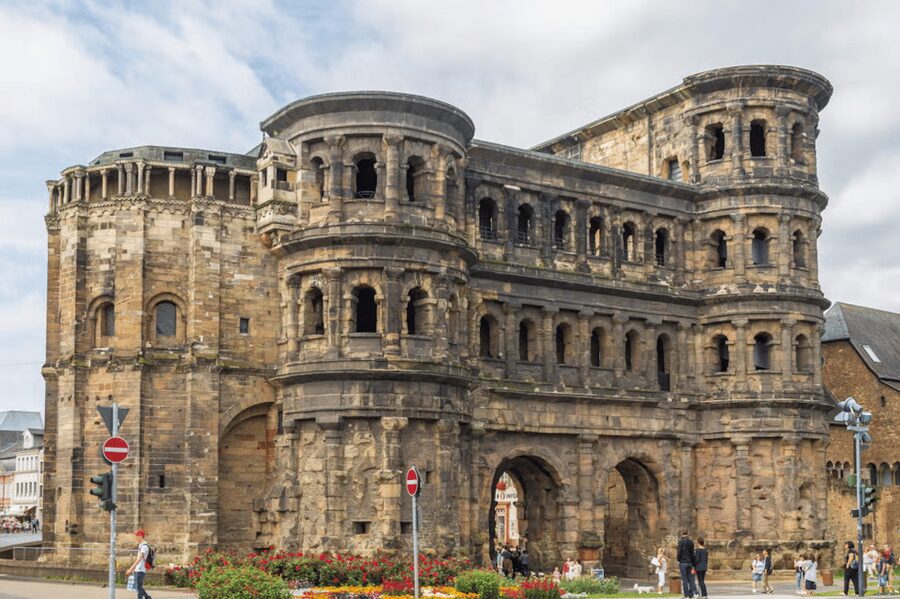
- The Porta Nigra gives you an impressive Roman starting point right at Trier’s old town.
- Aula Palatina preserves the vast imperial hall built for Constantine in 310.
- Karl Marx House adds a modern political chapter to a day centered on ancient Rome.
- Two hours of free time let you choose between lunch, museums, shopping, or a second look at the sights.
- English and Spanish guiding is available in groups capped at 15 people.
Why Trier Makes Such a Good Day Trip From Luxembourg
Trier is close enough to Luxembourg to make a practical day trip, yet it feels distinct. You cross an international border, switch from Luxembourg’s polished capital to a German city shaped by Roman, medieval, religious, and modern political history, and do it without spending most of the day in transit.
The trip begins at Luxembourg Central Station, at the entrance beside the Oberweis café. From there, the included round-trip train takes about an hour. That matters. You avoid the need to organize a separate rail ticket and can use the ride to settle into the day before the walking begins.
The total activity lasts 330 minutes. The program includes about two hours of guided sightseeing and two hours of independent time, with the train journey filling out the rest. You should still expect a fairly full day, since the historic center is best explored on foot.
Trier is often described as Germany’s oldest city. Its Roman foundations are not hidden behind a single museum display. They appear in the city streets, monumental gates, baths, amphitheater, and imperial buildings. The guided format helps you connect these scattered pieces instead of seeing them as a series of old stones.
Starting at the Porta Nigra
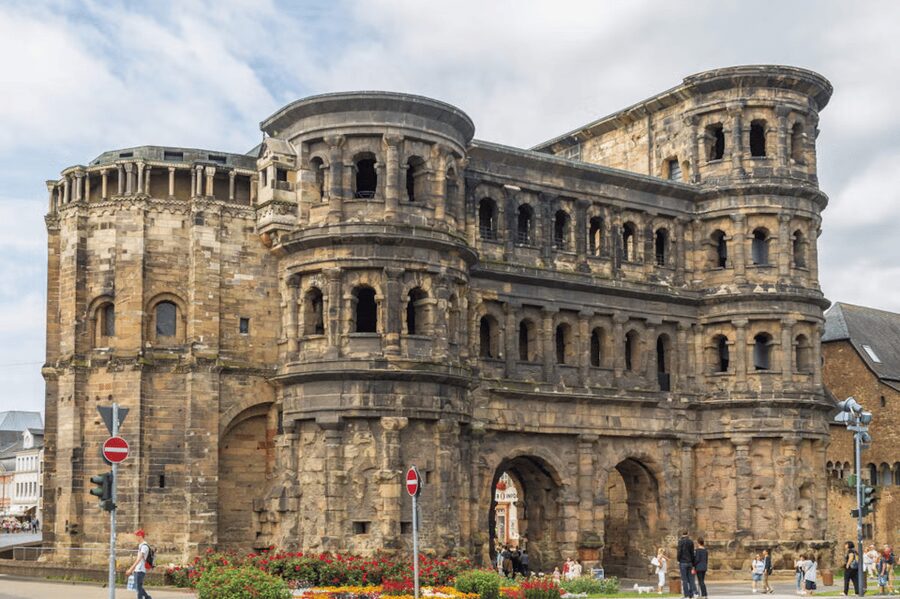
The first major stop is the Porta Nigra, Trier’s huge Roman city gate. It is the largest Roman-style entrance in the world, and it makes a strong opening because you can see it before you have even reached the heart of the old town.
The dark color of the sandstone is part of the gate’s story. The name means Black Gate, and the guide explains why the stone took on its present appearance. This is a useful moment to pay attention rather than simply take a photograph, since the building’s weathered surface is one of the features that makes it immediately recognizable.
A 30-minute guided visit gives you an introduction to Roman Trier and the city’s old defenses. You will not have time here for a long, unhurried examination of every detail, but the stop puts the rest of the day in context.
I like this beginning because it is easy to find and visually powerful. It also places you directly at the edge of Trier’s historic center, so the day moves naturally from the Roman gate into streets, squares, and churches.
A few more half-days in the Moselle Valley worth comparing
- Cochem: Panoramic Cruise on the Moselle River
★ 4.4 · 1,004 reviews - Trier: Guided City Walk with Wine Tasting
★ 4.8 · 979 reviews - Trier: Guided Old Town Highlights and History Walking Tour
★ 4.7 · 687 reviews
Entering Constantine’s Aula Palatina
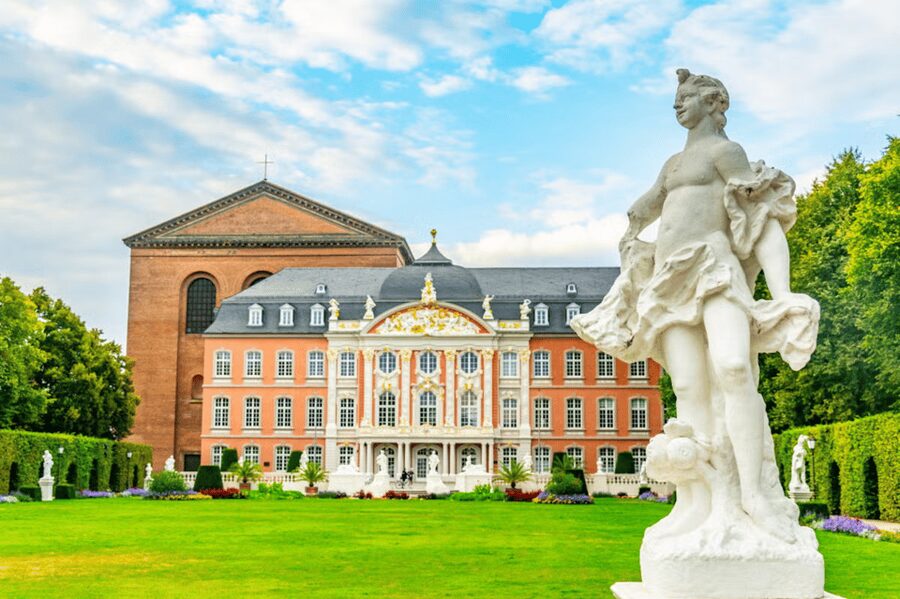
The next important stop is the Basilica of Constantine, also called the Aula Palatina. Built in 310, it was an imperial audience hall. The apse once held the throne of the Roman emperor, so this is not simply an old church. It was designed to make imperial power feel enormous.
The interior is known for its scale. Even without elaborate decoration, the long hall and tall walls give you a clear sense of the building’s original purpose. This is one of the places where a guide adds real value, since it can be hard to understand why a plain-looking space mattered so much until you learn how it functioned.
The schedule allows about 25 minutes here. That is enough for the main explanation and a look inside, but it will feel brief if you enjoy architectural details or want quiet time to study the walls. Keep your expectations realistic: this is a focused introduction, not a slow architectural tour.
The Aula Palatina also helps break up the Roman story. At the Porta Nigra, you see defensive architecture. Here, you see the ceremonial side of Roman government.
Roman Trier at the Amphitheater and Baths
The walk continues with Trier’s Roman remains, including the second-century amphitheater and the St. Barbara Roman Baths. Both are UNESCO World Heritage sites, and together they show the scale of Roman public life.
The amphitheater is a reminder that Roman Trier was not a small outpost. Public entertainment required a large audience, a carefully planned structure, and the civic wealth to maintain it. The guide brings the site to life by explaining how it fitted into the city rather than treating it as an isolated ruin.
The St. Barbara Baths offer a different view. Roman bathing complexes were social and civic spaces as much as places to wash. The remains help you picture the engineering and public investment behind daily Roman life.
The written schedule includes a short guided stop under the name Lokelani Condominiums Rental. That label does not clearly identify a Trier sight, so you should rely on the guide’s live explanation for the exact location and purpose of this part of the walk. The confirmed Roman stops are the amphitheater and St. Barbara Baths.
These sites are important, but they can be less immediately striking than the Porta Nigra or cathedral. Some of the remains require imagination. If you prefer intact buildings, the basilica and cathedral may hold your attention more easily.
From Roman Power to Karl Marx House
The route then shifts from ancient Rome to modern political thought at Karl Marx House. Marx was born in Trier in 1818, and the house dates to 1727. It now operates as a museum devoted to his life and the development of socialism and communism.
This is a smart addition to the day. Without it, Trier could feel like a Roman and church-history exercise. Karl Marx House shows how the city continued to matter long after the Roman period ended.
The guided portion allows about 20 minutes. That gives you an introduction to the building and its subject, but not enough time for a detailed museum visit. If the topic interests you, use part of your two-hour free period to return or spend more time inside, if the day’s arrangements allow it.
I also like the change in subject. You move from emperors and public baths to an influential modern thinker whose ideas shaped politics across the world. The contrast keeps the walk from becoming repetitive.
Same city, a completely different kind of day:
- Trier: Discovery Tour – Germany’s Oldest Wine Cellar
★ 4.7 · 218 reviews - From Alken: Return Day Trip by Boat to Cochem
★ 4.6 · 141 reviews - Cochem: Panorama-Schiff-Tour 1 Stunde bis Ernst und zurück
★ 4.3 · 122 reviews - Trier: City Walking Tour
★ 4.6 · 118 reviews
Seeing St. Peter’s Cathedral
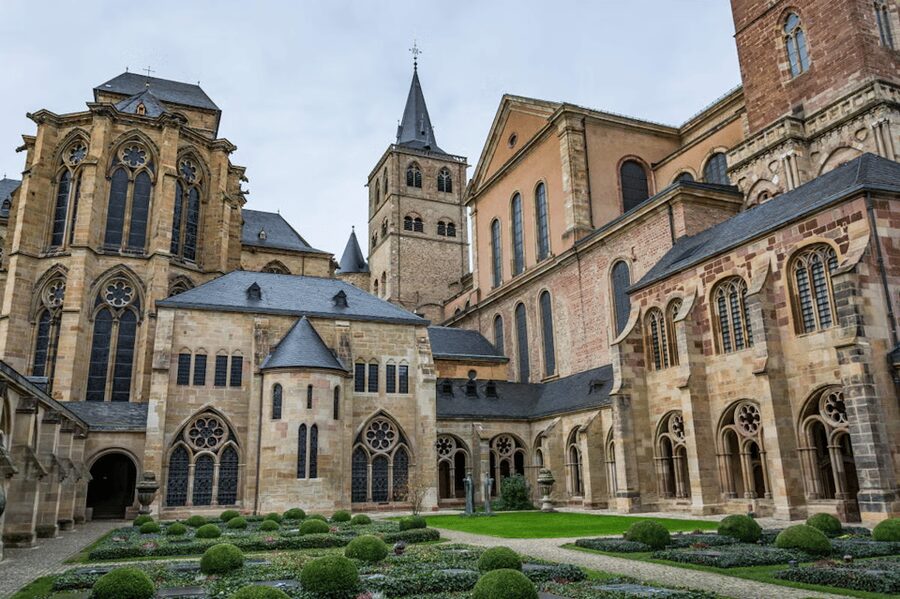
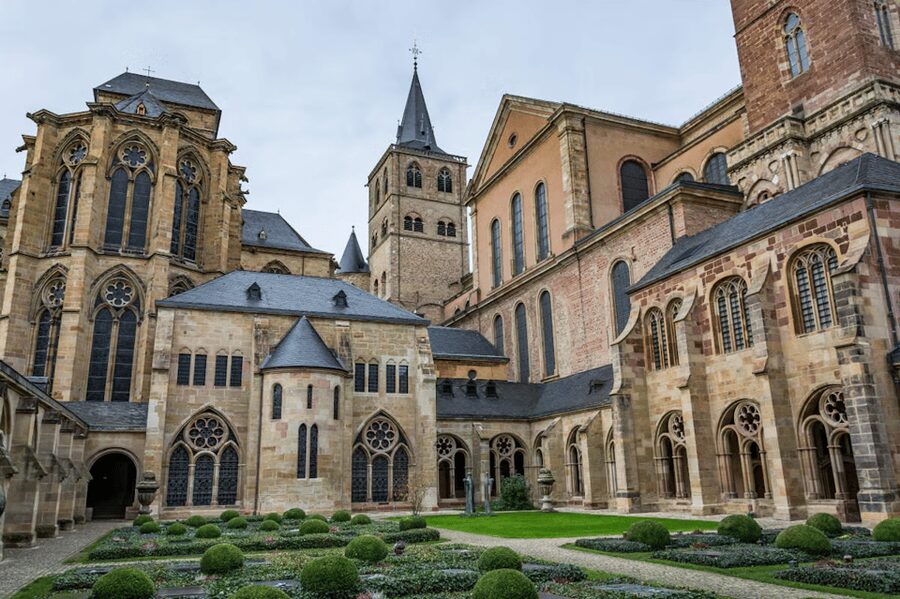
Trier Cathedral, formally St. Peter’s Cathedral, is one of the day’s most important stops. Its walls include original 10th-century sections, and the interior contains altars, tombs, and a long record of Christian worship.
The cathedral is especially useful for understanding how Trier changed over time. Roman imperial authority gave way to a city shaped by the church, and the cathedral carries that later story in its structure and furnishings.
The schedule allows about 20 minutes. That is enough to see the principal interior features and hear the main explanation, but the building rewards a slower visit. Notice the mixture of periods rather than expecting one uniform design.
The tour also points out a mysterious guardian below the cathedral. This small detail adds a bit of local character to what might otherwise be a formal church visit. You may want to stay alert when the guide mentions the lower areas, since the most memorable details are not always at eye level.
A cathedral stop can be tiring late in a walking tour, especially if you have already spent time on Roman ruins. Still, this is one of the places I would not skip. It gives the day religious depth and shows why Trier remained important across many centuries.
Market Square and Your Two Hours of Free Time
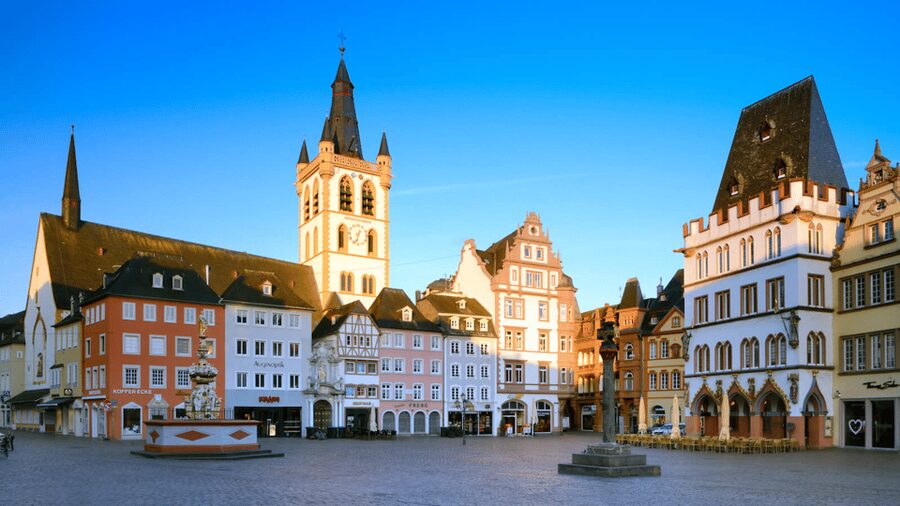
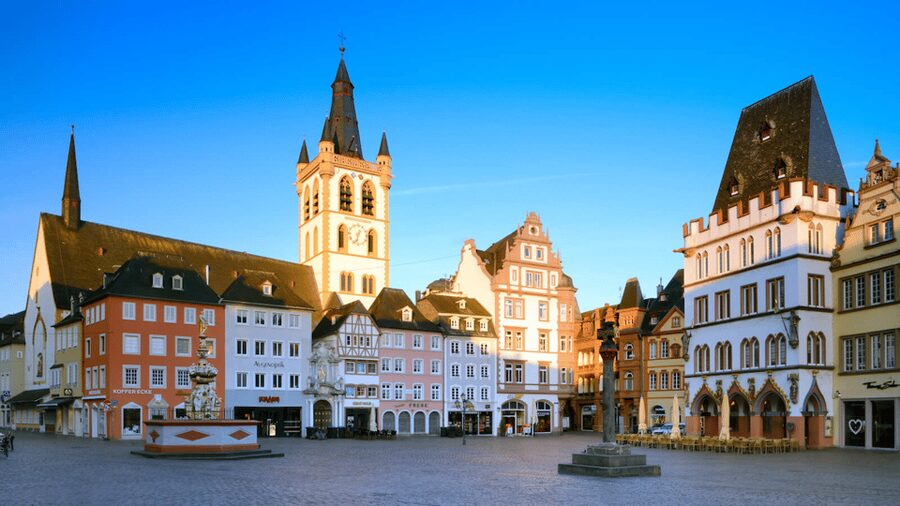
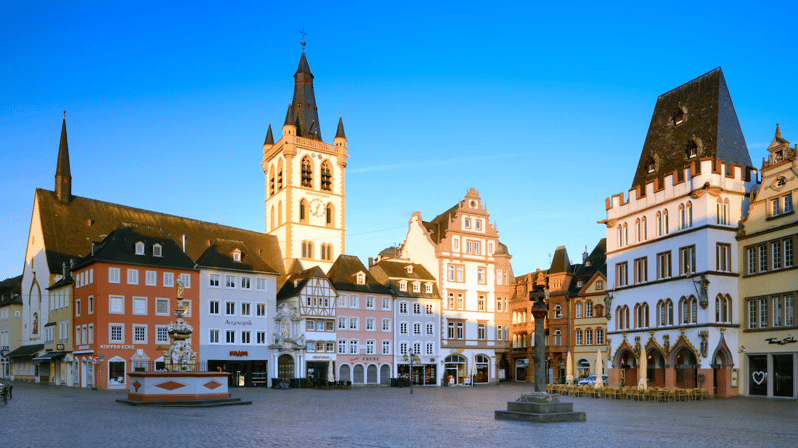
The guided walk ends around Trier’s Market Square. Colorful façades, flower and fruit stalls, and the St. Peter Fountain make this one of the most pleasant places to pause.
The square is practical as well as attractive. After two hours of structured sightseeing, you can slow down, find a café, browse the surrounding streets, or simply sit and watch city life. The free period is a major strength of this experience because you are not kept moving from one monument to the next until it is time to leave.
Use the time according to your interests:
- Choose a café break if the Roman sites and walking have filled your morning.
- Return to a church or museum that received only a short introduction.
- Explore the old town around the Market Square at your own speed.
- Look for a meal or snack before the train back to Luxembourg.
- Take photographs of the square’s façades and fountain in better light.
The two-hour block also gives you some protection against the tour’s quick pace. You do not need to make every stop last longer than the guide’s schedule allows, because you still have time later to follow your own interests.
Do keep an eye on the return meeting instructions. The information provided confirms the return to Luxembourg Gare Centrale, but it does not give a separate free-time meeting location or exact train departure time. Listen carefully before setting off on your own.
What the $129 Price Includes
At $129 per person, this is not the cheapest way to visit Trier. The value depends on how much help you want with transport and orientation.
The price includes the round-trip train ticket and the guided tour of the route. That removes two tasks from your day: buying the correct cross-border rail ticket and planning a route through Roman sites, the cathedral, Karl Marx House, and Market Square.
For a first visit, that structure can be worth paying for. Trier’s sights are spread through the old center, and the guide gives you a historical thread instead of leaving you to work out the sequence alone. The small group limit also makes it more personal than a large coach excursion.
The price is less compelling if you already know Trier well or mainly want to visit one museum at length. Two hours of free time is useful, but the guided schedule does not leave a full day for independent museum visits.
A rating of 4.6 from nine verified bookings points to a generally strong experience, though the sample is small. Anna is described as a warm and informative guide, while Paulina is noted for presenting the history clearly and with enthusiasm. Those details matter because this tour depends heavily on the person leading the walk.
Who Will Enjoy This Half-Day City Visit
I would choose this experience if you are staying in Luxembourg and want a simple way to add Germany to your trip. It suits first-time visitors who want Roman sites, major churches, and a little modern history without arranging several separate visits.
It is also a good fit for people who prefer small groups. A maximum of 15 participants is large enough to keep the price from becoming extreme, but small enough for questions and direct contact with the guide.
The tour works especially well for:
- History fans who want Roman ruins and imperial architecture.
- First-time visitors to Trier who value a planned route.
- Couples and families who prefer rail travel to a long bus ride.
- English- and Spanish-speaking visitors.
- Anyone who wants both a guided introduction and independent time.
You may want a different plan if you need an accessible, slow-moving day, since the program includes several walking stops and the available information does not describe accessibility arrangements. You should also bring your passport or national ID because this is an international day trip. Pets are not allowed.
Booking Advice for a Flexible Day
Free cancellation up to 24 hours before departure and the option to reserve now and pay later make this easier to fit into a changeable Luxembourg itinerary. Still, check the available starting times before booking, since the exact departure schedule is not fixed in the information provided.
The language choice is important. Live guiding is offered in English and Spanish, so select the option that lets you follow historical explanations without effort.
I would also arrive with comfortable walking shoes, a charged phone, and enough room in your plan for the free-time period. The tour is not simply a train transfer with a quick photograph at the Porta Nigra. It is a guided city walk followed by time for you to make Trier your own.
Should You Book the Luxembourg to Trier Tour?
Book it if you want a well-organized introduction to Trier, value an included train ticket, and like the idea of combining Roman ruins with a cathedral and Karl Marx House. The small group, two-hour free period, and guides such as Anna and Paulina add useful personal touches.
Skip it if you want a slow museum day or prefer to set your own route from the first minute. Trier has enough to fill more than one visit, and this 330-minute program gives you a strong overview rather than complete coverage.
For most first-time visitors based in Luxembourg, the balance is good. You cross into Germany easily, see the city’s defining sights, and still get a couple of hours to follow your own interests.
FAQ
How long does the tour from Luxembourg to Trier last?
The activity lasts 330 minutes. The plan includes about one hour by train each way, roughly two hours of guided sightseeing, and two hours of free time in Trier.
Where does the tour begin?
You meet at Luxembourg Gare Centrale, at the station entrance next to the Oberweis café.
Is the train ticket included?
Yes. A round-trip train ticket from Luxembourg to Trier is included in the price.
What languages does the guide speak?
The live tour is available in English and Spanish.
How much free time do I get in Trier?
You get two hours of free time after the guided portion of the city walk.
What should I bring?
Bring your passport or national identity card. Pets are not allowed on the activity.
Just added in the Moselle Valley
- From Alken: Moselle Valley Sightseeing Cruise★ 4.5 · 10 reviews
- Kröv, Mosel: PLANWAGENFAHRT through the vineyards with wine tasting★ 5.0 · 5 reviews
- Evening-Cruise to the fireworks of the Cochemer Winefest.★ 4.5 · 4 reviews
- Cochem: Private Guided Walking Tour★ 4.8 · 9 reviews
- Cochem: Bike and Boat Tour with Picnic and Wine Tasting★ 3.7 · 35 reviews
- Trier: Private Guided Walking Tour★ 4.2 · 32 reviews
- Cochem, Moselle: Castle, boat and wine tour★ 3.7 · 96 reviews
- Cochem: Panorama-Schiff-Tour 1 Stunde bis Ernst und zurück★ 4.3 · 122 reviews
Moselle Valley Tours, compared.
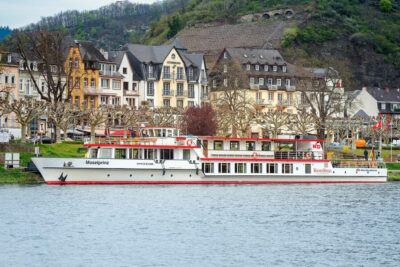
Cochem: Panoramic Cruise on the Moselle River
Read our review →
Cochem: Panorama-Schiff-Tour 1 Stunde bis Ernst und zurück
Read our review →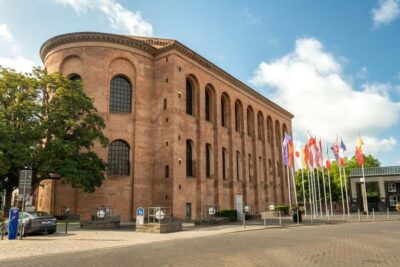
Reil, Mosel: Guided organic wine tasting and cellar tour
Read our review →Browse the lists this tour appears in