
Reviewed · OLD TOWN TOURS
Trier: Guided Old Town Highlights and History Walking Tour
Trier’s story is unusually easy to read on foot. In about 90 minutes, this tour connects the Roman Porta Nigra with the cathedral, Main Market, and the home of Karl Marx, showing how one city changed across nearly two thousand years. I like the focused route and the chance to ask for restaurant and bar tips before you head off on your own.
I also like the price: at $16 per person, it is a sensible way to get your bearings before exploring Trier independently. Guides Patrick and Herbert have been praised for making the history clear, funny, and enjoyable for children. The main consideration is that the tour is in German, and the listed inclusions do not mention admission to indoor sights.
Key points at a glance
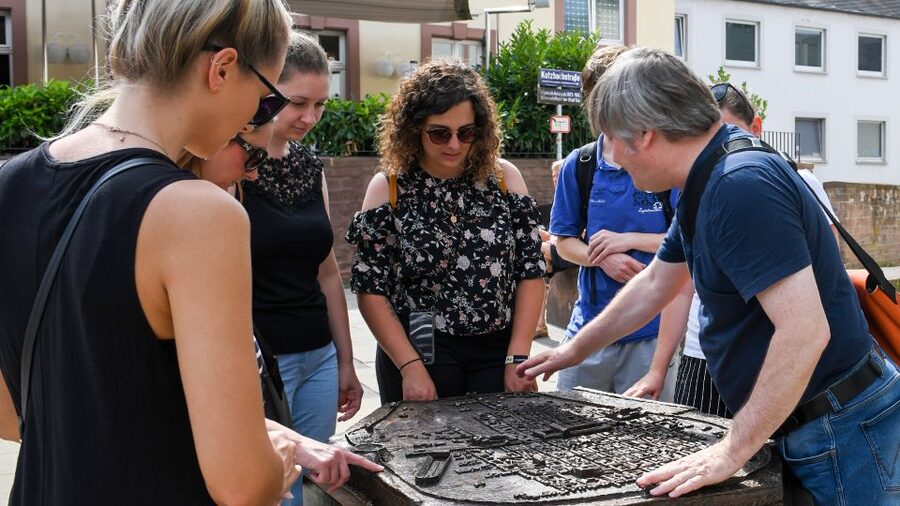
- Roman Trier begins at the Porta Nigra: Learn why the city’s best-known gate was built around 170 AD and what daily life was like under Roman rule.
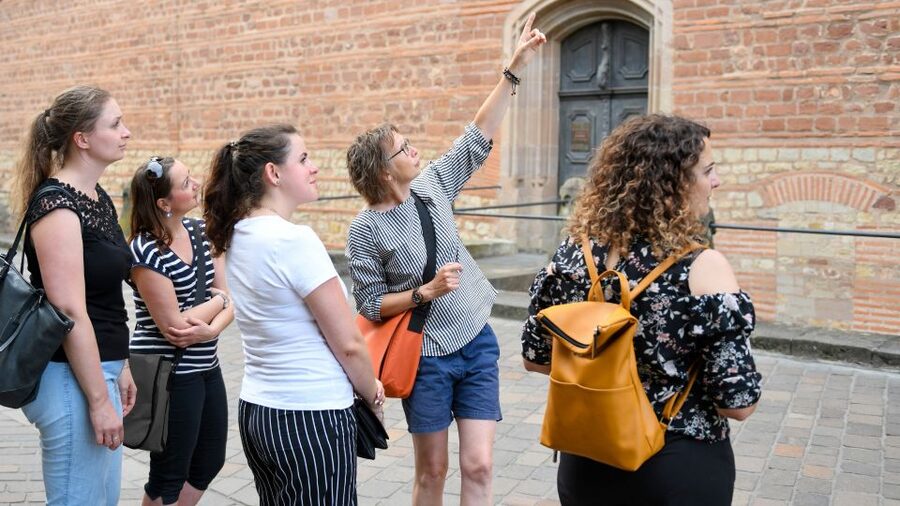
- The route covers several eras: Roman remains, medieval architecture, the cathedral, Main Market, and Karl Marx’s former residence all fit into one short walk.
- German is the tour language: Guides explain the sights live, with Patrick and Herbert among the guides named in recent booking feedback.
- The 90-minute format is easy to fit in: It works well on a first day in Trier or before a longer independent visit.
- Children aged 0 to 5 join free: The tour has also been described as enjoyable for families with older children.
- The price leaves room in your budget: At $16, you are paying mainly for the guide’s explanations and local orientation, not entry tickets.
Why Trier is best understood on foot
Trier is the kind of city where a short walk can cross several chapters of European history. A Roman gate may be only a few minutes from a medieval square, while a modern street leads to the home of one of the nineteenth century’s most influential political thinkers.
That makes a guided walk useful. Without context, you can admire old stonework and move on. With a guide, the same building becomes part of a longer story about Roman rule, medieval religious power, urban change, and modern political thought.
This is not a full-day sightseeing program. The 1.5-hour length keeps the pace manageable and leaves you plenty of time to visit Trier’s sights on your own afterward. I see that as a strength for most people. You get a clear introduction without giving up half your day.
The tradeoff is depth. You will hear the main story and see major landmarks, but you should not expect a detailed museum visit or a long examination of every period. This is a city orientation with historical detail, not a substitute for every indoor attraction in Trier.
More Walking Tours in the Moselle Valley
- Trier: Guided City Walk with Wine Tasting
★ 4.8 · 979 reviews - Trier: City Walking Tour
★ 4.6 · 118 reviews - Trier: Private Guided Walking Tour
★ 4.2 · 32 reviews
Starting at the Porta Nigra
Meet your guide in front of the Mercure Hotel, directly opposite the Porta Nigra. This is a practical meeting point because the gate is hard to miss and gives the tour an immediate sense of place.
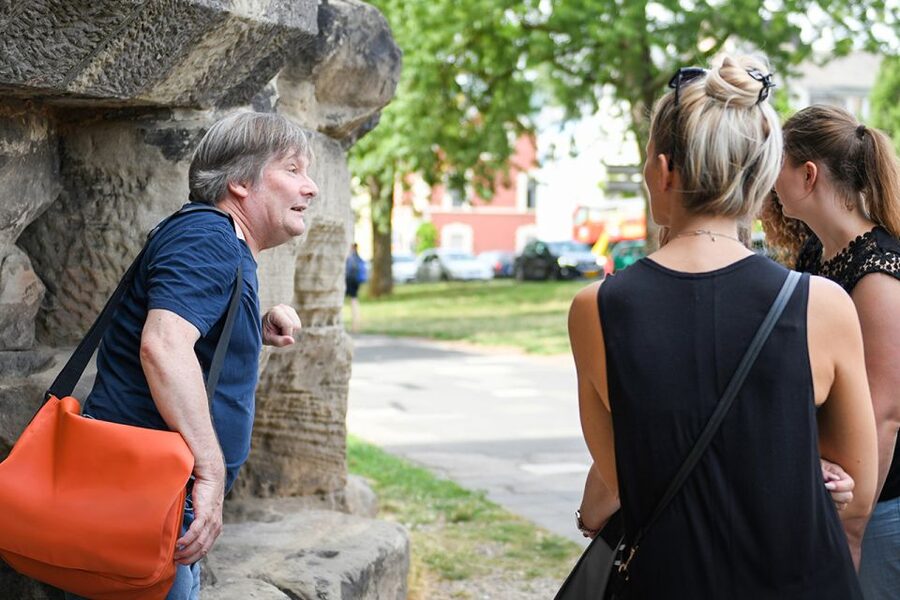
The Porta Nigra was built by the Romans as early as 170 AD. Its huge blocks and darkened stone give it the look of a fortified entrance, but the guide’s explanation helps you think about its original role as part of a Roman city. You will learn about Trier’s beginnings and about ordinary life under Roman rule.
That focus on daily life matters. Roman history can become a parade of emperors, dates, and battles. A better city walk brings the story down to street level: how people lived, how the city functioned, and why a gate like this mattered to anyone entering or leaving.
The tour information names the Porta Nigra as a key stop, but it does not list a separate admission ticket. You should expect the guide to interpret the landmark as part of the walking route rather than assume that an interior visit is included. If entering the gate is important to you, check the current arrangements when you book.
The meeting point also makes this tour easy to pair with independent sightseeing. You can arrive early to look at the gate yourself, take photographs, and then join the group without wasting time finding a tucked-away address.
From Roman stones to medieval Trier
After the Roman opening, the walk turns to the city’s later layers. Trier’s architecture shows how places are reused and reshaped instead of frozen in one period.
You will see examples of medieval architecture and hear how the city developed toward the present day. The value here is the connection between buildings. A single old structure is interesting; a street where Roman, medieval, and later elements sit within the same walk gives you a better sense of how Trier grew.
The guide also adds stories about people who shaped the city. That human side keeps the tour from becoming a list of dates. Patrick and Herbert are among the guides named in booking feedback, with Patrick praised for answering questions and Herbert for mixing substantial historical detail with humor and a personal touch.
Guide quality matters more on a short tour than on a long excursion. There is no time for a slow start or a long lecture. You need someone who can explain the point of a building, answer a quick question, and keep the route moving. The available feedback suggests that this tour’s strongest feature is the way its guides handle that balance.
Still, your experience depends on the guide assigned on the day. Patrick and Herbert may not lead every departure, so treat their names as useful examples rather than a booking guarantee. If a particular guide matters to you, confirm availability with the provider before paying.
The cathedral and Main Market
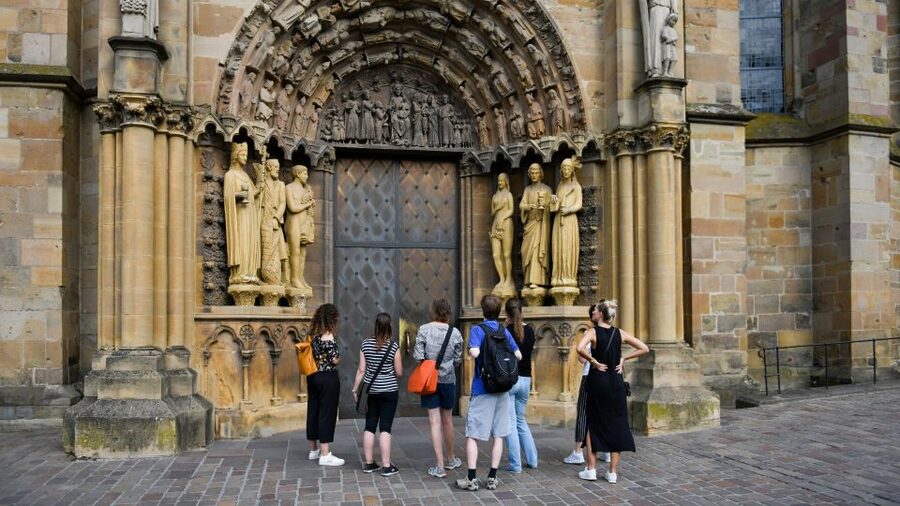
The cathedral is one of the tour’s major highlights. It gives the walk a change of scale and mood after the Roman gate and medieval streets.
You will admire the building as part of Trier’s architectural story and hear how the city’s appearance changed over time. The supplied details do not promise an interior visit, so plan on viewing the cathedral as a stop on the walking route unless the guide or provider confirms otherwise.
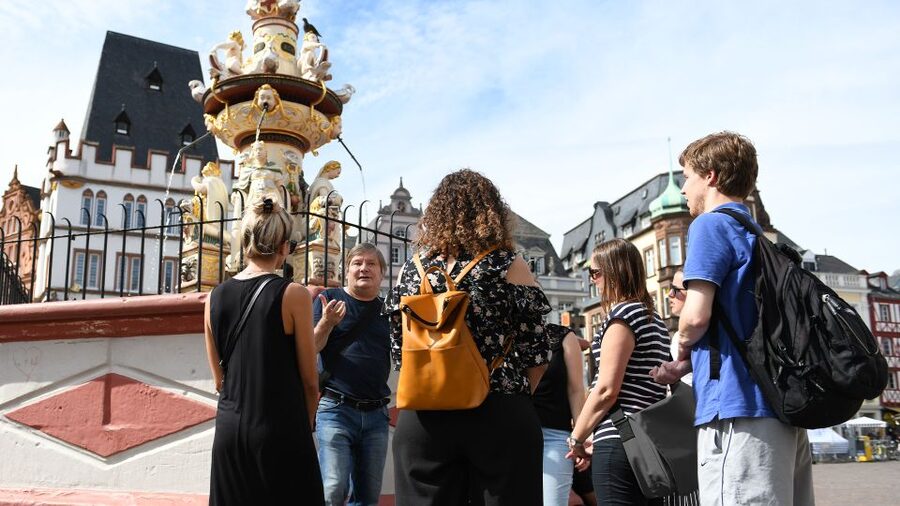
The Main Market adds a more public, urban setting. This is where Trier’s history feels less like a collection of monuments and more like a city people have used for generations. A guide can point out how the square fits into the city’s development and help you notice details you might otherwise pass without a second look.
These stops are especially useful early in your visit. After the tour, you will have a mental map of central Trier and a better idea of where to return for photographs, a slower look, or an indoor visit. The walk does not try to make every decision for you. It gives you enough background to choose your next stop with more confidence.
More Old Town Tours in the Moselle Valley:
- Dresden: Semperoper and Old Town Tour
★ 4.8 · 5,735 reviews - Nuremberg: Old Town Guided Walking Tour
★ 4.6 · 2,416 reviews - Munich: Old Town & Viktualienmarkt City Walk in German
★ 4.7 · 2,304 reviews - Dresden: Night Watchman Tour Through The Old Town
★ 4.8 · 1,758 reviews
Following Karl Marx through the modern city
The tour also visits the residential house associated with Karl Marx. Marx was born in Trier and later became one of the most influential philosophers and political thinkers of the modern era.
Including his former home broadens the tour beyond ancient stones and church architecture. It shows that Trier’s story did not end with the Romans or the Middle Ages. The city also shaped, and was shaped by, modern ideas and political change.
You will see the house where he lived and hear about his connection to Trier. The available information does not say that entry to the residence is included, so treat it as an exterior stop unless your guide tells you otherwise.
I like this part of the route because it keeps the city from feeling like a museum set in the past. The Roman gate explains the beginning of the story, while Marx’s house points toward the debates and movements of the modern world. That contrast gives the walk a useful arc.
It can also help families and younger visitors. A child may not remember every Roman date, but the idea that a famous thinker lived in an ordinary city house can make history feel more immediate. The tour is not designed only for specialists. The feedback from families suggests that guides can make the material accessible to children, especially when humor is part of the presentation.
What the German-language format means
This is a live guided tour in German. That is the single most important booking detail.
If you are comfortable following German conversation, the format should give you a more natural exchange with the guide. You can ask questions as you go rather than rely on a recorded audio track. The comments about Patrick and Herbert point to a conversational style, with time for questions and clear explanations.
If you do not understand German, this is probably not the right tour for you. The supplied information lists German only, with no English option or written translation mentioned. Do not book it assuming the guide will switch languages for the group.
A live German tour can also be a good choice for German-speaking families. Children aged 0 to 5 can join free, and the 90-minute length is easier for young attention spans than a long museum program. The route remains a walking tour, so comfortable shoes are sensible even though the distance is not given.
Is $16 a good value?
At $16 per person, the tour is priced as an affordable introduction rather than a major excursion. You are paying for a live guide, a planned route, and historical interpretation across several important parts of Trier.
The value is strongest if you are visiting for the first time. In 90 minutes, you can learn where the city’s Roman, medieval, religious, and modern stories meet. That context may save you from wandering past major sights without understanding why they matter.
The price is less compelling if you already know central Trier well or plan to spend your time inside museums. The tour does not list entry tickets, transport, meals, or a long stop at any one attraction. Its purpose is explanation and orientation.
I would also ask the guide for restaurant and bar suggestions at the end. That small option adds practical value, especially if you have just arrived and want a local idea for the evening. It is not a meal or tasting tour, but a good recommendation can make the next part of your visit easier.
Booking is relatively flexible. You can reserve now and pay later, and cancellation is free up to 24 hours before the activity for a full refund. Check the available start times because the tour schedule is not fixed in the information provided.
Who should book this walking tour?
I would recommend it to first-time visitors who want a short introduction before exploring independently. It is also a good fit for German-speaking families, couples, and anyone who prefers history explained by a person rather than read from a guidebook.
The tour suits you especially well if you want to:
- See the Porta Nigra, cathedral, Main Market, and Marx house in one outing
- Understand how Trier moved from Roman rule into the medieval and modern periods
- Ask questions during the walk
- Keep the rest of your day open
- Get ideas for restaurants and bars afterward
- Spend modestly while still having a structured introduction
You may want something else if you need an English-language tour, hotel pickup, wheelchair details, or guaranteed entry inside the landmarks. None of those features is listed, so confirm before booking rather than making assumptions.
Should you book it?
Book this tour if you speak German and want a lively, low-cost way to read Trier’s city center. The route links the Porta Nigra, cathedral, Main Market, and Karl Marx’s former home, while the guides bring the dates and buildings into a story that is easier to remember.
The strongest reason to choose it is the combination of short length, central sights, and human explanation. The main limitation is equally clear: German is the only listed language, and indoor admission is not part of the stated inclusions.
For $16, I think it is a sound first-day choice. Take the tour early, ask for food and drink suggestions, then return to the sights that caught your attention.
FAQ
Where does the tour meet?
Meet your guide in front of the Mercure Hotel, opposite the Porta Nigra in Trier.
How long does the walking tour last?
The tour lasts 1.5 hours.
What language is the tour conducted in?
The live tour guide speaks German. German is the only language listed for this activity.
What sights are included in the route?
The route highlights the Porta Nigra, Trier Cathedral, the Main Market, and the residential house associated with Karl Marx. It also covers Trier’s Roman origins, medieval architecture, and development into the modern city.
Is admission to the Porta Nigra included?
The activity includes a walking tour and live guide, but no admission ticket is listed. Check current details if you want to enter the Porta Nigra.
Are children allowed to join?
Yes. Children aged 0 to 5 years can join for free.
How much does the tour cost?
The listed price is $16 per person.
Can I cancel for a refund?
Yes. You can cancel up to 24 hours in advance for a full refund.
Can I reserve now and pay later?
Yes. The reserve-now, pay-later option lets you hold your place without paying at the time of booking.
More History Tours in the Moselle Valley
- Leipzig: City History Canal Sightseeing Tour on a Motorboat
★ 4.7 · 6,232 reviews - Berlin: Natural History Museum Entrance Ticket
★ 4.6 · 3,382 reviews - Leipzig: 1.5-Hour Historical Walking Tour in German
★ 4.7 · 2,217 reviews - Berlin: World Heritage Cruise to Potsdam
★ 4.5 · 1,435 reviews
Just added in the Moselle Valley
- From Alken: Moselle Valley Sightseeing Cruise★ 4.5 · 10 reviews
- Kröv, Mosel: PLANWAGENFAHRT through the vineyards with wine tasting★ 5.0 · 5 reviews
- Luxembourg to Trier: Tour of Germany’s Oldest City.★ 4.6 · 9 reviews
- Evening-Cruise to the fireworks of the Cochemer Winefest.★ 4.5 · 4 reviews
- Cochem: Bike and Boat Tour with Picnic and Wine Tasting★ 3.7 · 35 reviews
- Cochem: Private Guided Walking Tour★ 4.8 · 9 reviews
- Trier: Private Guided Walking Tour★ 4.2 · 32 reviews
- Trier: City Walking Tour★ 4.6 · 118 reviews
Old Town Tours, compared.

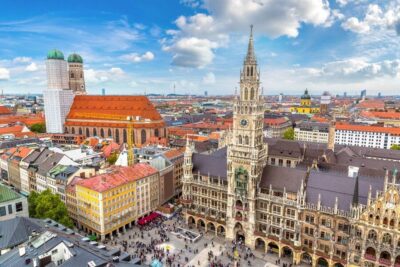
Old Town & Viktualienmarkt City Walk in German
Read our review →
The Night Watchman Old Town Walking Tour in German
Read our review →
New Old Town and Highlights German-Language Tour
Read our review →Browse the lists this tour appears in