Reviewed · BERLIN TOURS
Queer Berlin Tour: Birthplace of LGBTQ+ Movements
Berlin’s queer past comes alive on the streets of Schöneberg, where cabaret, science, politics, nightlife, and danger once shared the same few blocks. This three-hour walk connects Magnus Hirschfeld’s pioneering work, Christopher Isherwood’s Weimar-era Berlin, Nazi persecution, postwar gay life, and David Bowie’s Berlin years.
I especially like two things here: the tour moves beyond famous names into actual places, and the guides bring their own perspective. Dan uses photos and a story-specific soundtrack, while Justin draws on his American background to make Berlin’s history easier to place. The small-group format can make the walk feel personal.
The main drawback is its scope. The route covers a lot of ground and several eras in three hours, so you should expect a brisk, information-packed walk rather than a slow architectural tour. Bring comfortable shoes, and contact the provider ahead of time if mobility is a concern.
Key points at a glance
- Schöneberg’s queer streets: See Nollendorfplatz, former club sites, Christopher Isherwood’s old flat, and the former El Dorado Cabaret.
- Magnus Hirschfeld’s legacy: Learn about the Institute for Sexual Science, early gay rights work, and the Nazi destruction of its library.
- Berlin’s darker chapters: Visit the memorial to homosexuals persecuted under Nazism and hear about persecution during the Third Reich and the Cold War.
- Cabaret and music history: Connect Marlene Dietrich, Romy Haag, David Bowie, and the world that inspired Cabaret.
- A citywide route: The walk links Schöneberg with the Tiergarten, Unter den Linden, and Alexanderplatz.
- Small groups and personal storytelling: Dan and Justin are named guides, and the experience is offered privately or in small groups.
Why queer Berlin begins in Schöneberg
This is not a general city walk with a few LGBTQ+ facts added at the end. The route treats queer life as a central part of Berlin’s story.
You begin in or near Nollendorfplatz, depending on the option you book. Schöneberg is the heart of the experience. The neighborhood became known for its gay bars, clubs, apartments, cabarets, and meeting places long before most cities openly acknowledged queer communities.
Calling it the world’s first gay ghetto needs a little care. In this context, the phrase refers to a district where queer people could find a visible social life, not a walled or forced settlement. That distinction matters. Schöneberg offered freedom and danger at the same time, and the tour explores both sides.
You’ll hear about legendary lesbian bars as well as gay venues. That broader focus is useful because Berlin’s queer past was not limited to one group or one style of nightlife. The walk also links public history with private lives, showing how people used clubs, rented rooms, artistic circles, and coded behavior to find one another.
A few more half-days in Berlin worth comparing
- Berlin: Gay Berlin Out in Schöneberg Walking Tour
★ 4.8 · 281 reviews - Street Art & Berlin Gay, Queer, Trans History + Free Gay Map
★ 4.9 · 15 reviews
Nollendorfplatz and the streets of former nightlife
Nollendorfplatz is a strong opening point because it places you in the middle of Schöneberg’s social history. From here, the guide leads you through streets connected with former nightclubs, bars, and apartments.
Some stops are about buildings that remain. Others are about places that have changed or disappeared. That mix is part of the point. Berlin’s queer geography has been repeatedly damaged by war, dictatorship, redevelopment, and changing nightlife habits.
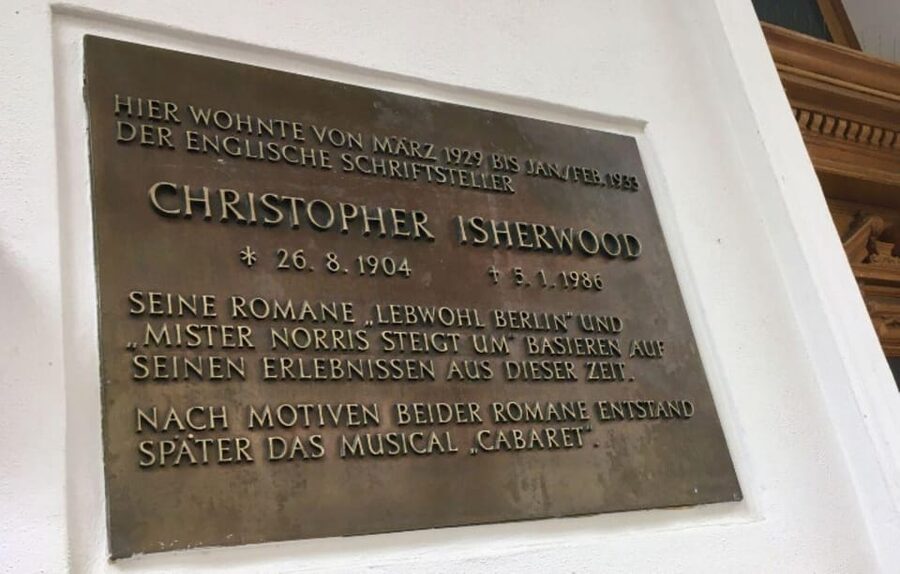
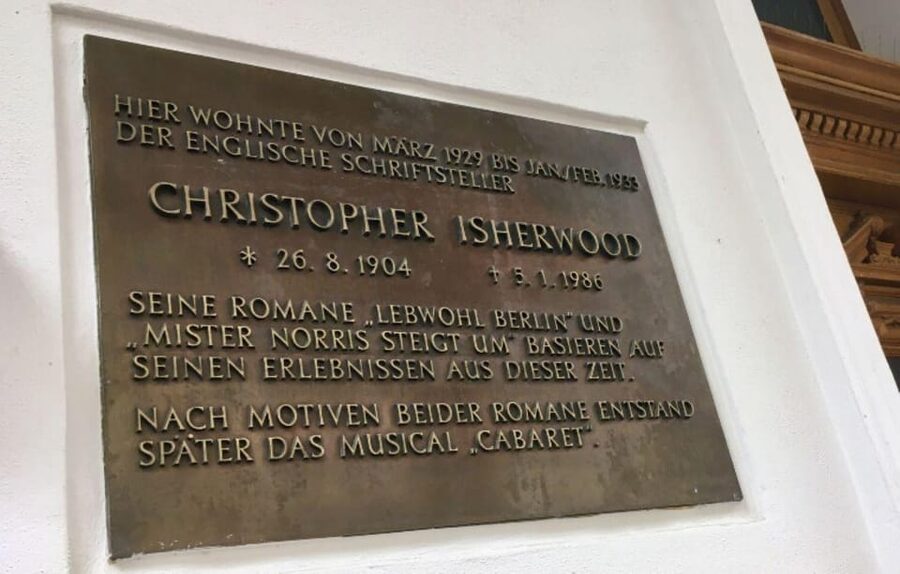
Christopher Isherwood’s former flat is one of the most compelling addresses. Isherwood lived in Berlin during the Weimar period, and his observations helped shape the world later known through Cabaret. The tour connects his apartment with the clubs he frequented and with the people who moved through that scene.
You should not expect a preserved literary museum. The value is in seeing the ordinary setting behind a famous story. A flat, a street, or a former club site can make the era feel less like a stage set and more like a daily life built around real choices and risks.
The route also passes a rent-boy dive that remains gay-run. This is an unusual detail, and it gives the tour a rougher edge than a standard monument walk. It shows that queer history is not only about celebrated writers and performers. It also includes working people, sex workers, landlords, bartenders, and the less polished parts of urban life.
El Dorado, Marlene Dietrich, and the risks of fame
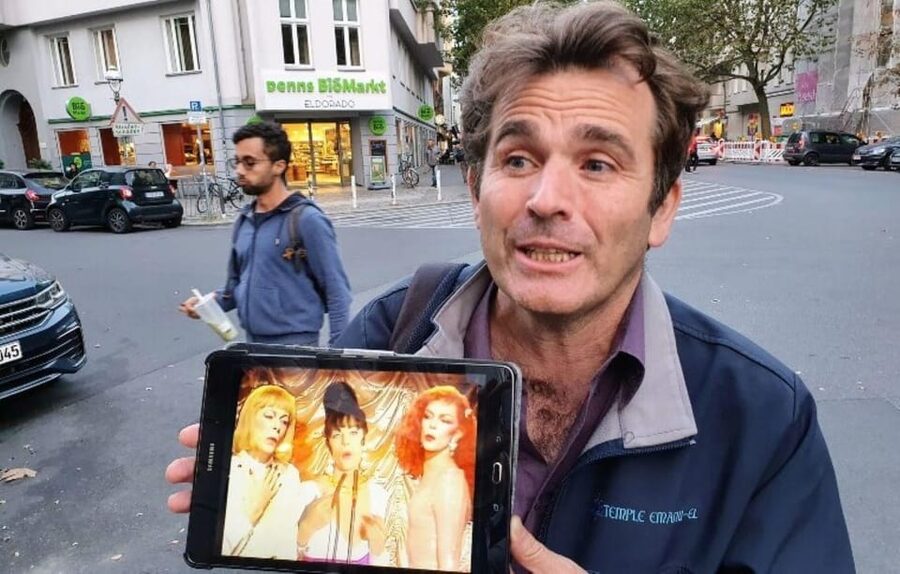
The former El Dorado Cabaret is another key stop. Marlene Dietrich performed there, and the venue attracted a striking mix of artists, socialites, politicians, and sexual outsiders.
The site also opens a difficult story about Ernst Röhm, the openly gay head of the Sturmabteilung, the Nazi Brown Shirts. His presence in Berlin’s queer nightlife complicates any easy division between a tolerant gay city and a uniformly hostile Nazi movement.
Röhm was later killed during the Night of the Long Knives, also called the moral purge of 1934. His story does not mean Nazi persecution was limited to one political purge, nor does it erase the suffering of other gay men and lesbians. Instead, it shows how personal identity, power, and political loyalty could collide in a brutal dictatorship.
I like that the tour does not treat cabaret as a harmless party scene. The music and glamour mattered, but so did surveillance, public exposure, and the loss of civil rights. You get the pleasure and the threat in the same story.
Magnus Hirschfeld and the destroyed Institute for Sexual Science
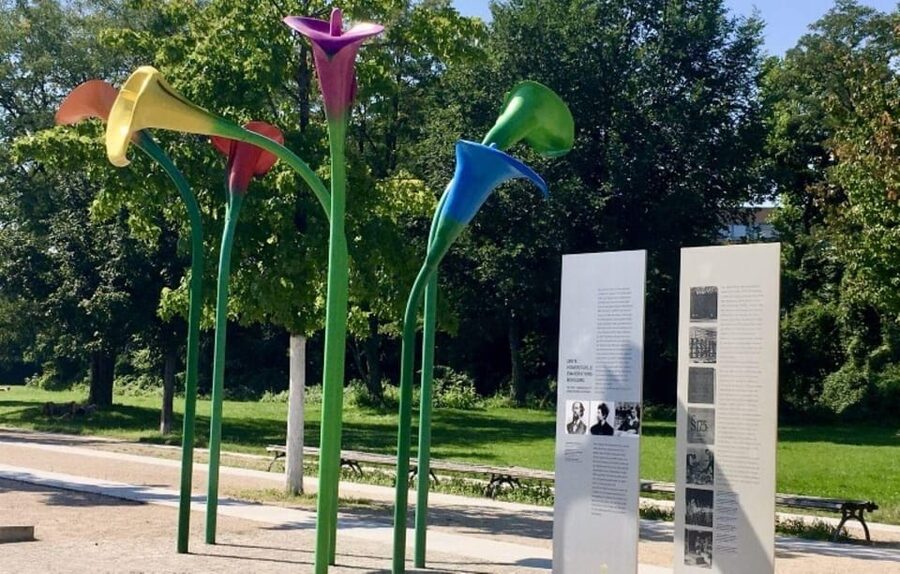
One of the most important stops is the site of the Institute for Sexual Science, founded by Magnus Hirschfeld. The institute was an early center for research, medical advice, and advocacy involving sexuality and gender.
Hirschfeld coined the term transsexualism and helped pioneer the gay rights movement. He also co-authored Different from the Others, an early pro-gay film released in 1919. These details make clear how far ahead Berlin’s scientific and cultural work could be during the early twentieth century.
The Nazi government closed the institute in 1933 and burned its library. That act destroyed books, research, case records, and part of the public memory of queer life. The physical site is therefore important precisely because so much of what stood there was erased.
The colorful Memorial to the First Homosexual Emancipation Movement helps mark this history. It is not simply a photo stop. Your guide uses it to explain the connection between Hirschfeld’s work, early activism, and the later struggle to recover queer history.
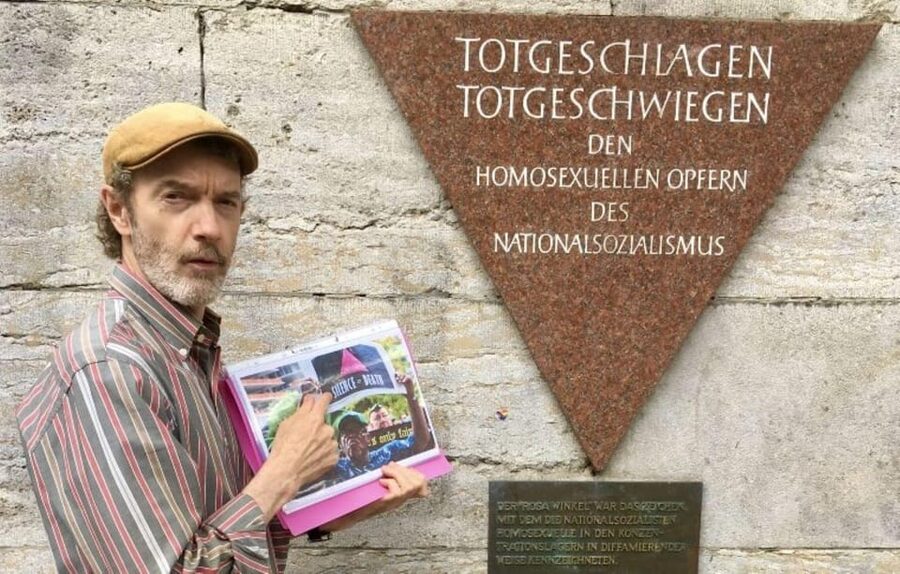
You’ll also visit the Memorial to Homosexuals Persecuted Under Nazism. The tour addresses the genocide and persecution of homosexual people under National Socialism, including the ways the Nazi state categorized and punished them. This section changes the mood, as it should. The walk is often lively, but it does not soften the violence that followed Berlin’s freer years.
Same city, a completely different kind of day:
- Berlin: Reichstag, Dome and Government District Guided Tour
★ 4.7 · 18,288 reviews - Berlin: 1-Hour City Tour by Boat with Guaranteed Seating
★ 4.3 · 16,993 reviews - Berlin: Boat Tour Along the River Spree
★ 4.4 · 11,252 reviews - Discover Berlin Half-Day Walking Tour
★ 5.0 · 9,624 reviews
Tiergarten and a citywide queer story
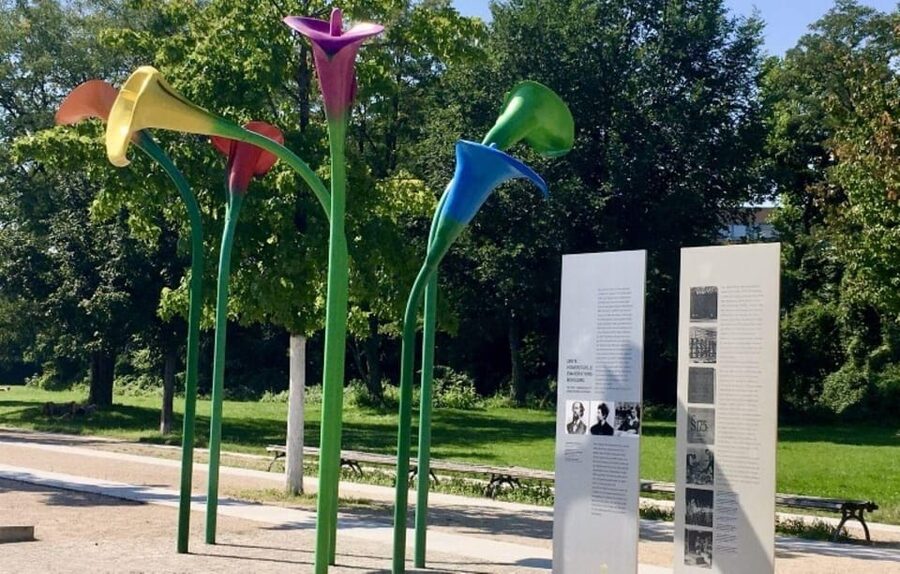
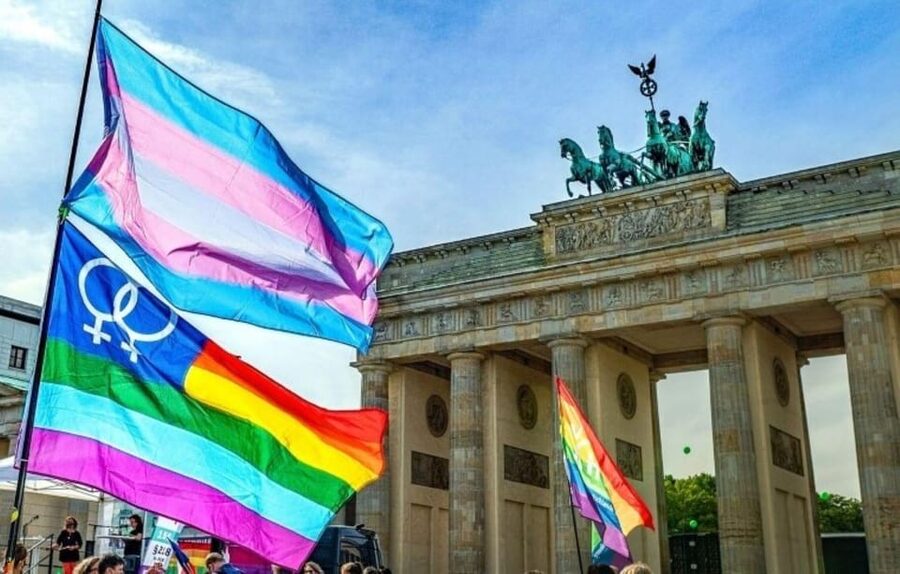
The route includes the Tiergarten and its colorful monument to the Gay Emancipation Movement. This brings the story out of Schöneberg and places it in one of Berlin’s major central parks.
The monument is useful because it links earlier pioneers with later public recognition. Berlin’s queer history was not confined to nightclubs. It involved science, law, art, publishing, protest, and memorial work across the city.
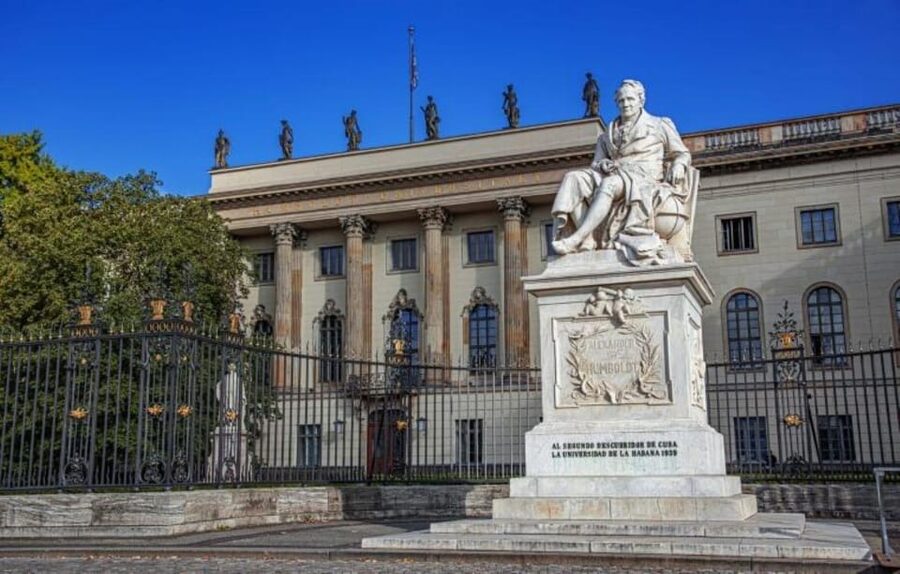
The walk then reaches historic Unter den Linden. Here, the guide introduces earlier Berlin figures such as Prussian King Frederick the Great and explorer Alexander von Humboldt, along with the ways they concealed or managed their sexuality.
The point is not to force modern labels onto people from earlier centuries. It is to ask how historians can understand private lives when public figures had strong reasons to hide them. That makes this portion different from the Schöneberg stops, which focus more on visible community life and nightlife.
The route’s wide scope is a strength, but it also creates the chief practical weakness. You are moving between neighborhoods and periods quickly. If you prefer one site explored at length, this walk may feel compressed. If you want to understand how queer stories fit into the whole city, the range works well.
Alexanderplatz and queer life behind the Iron Curtain
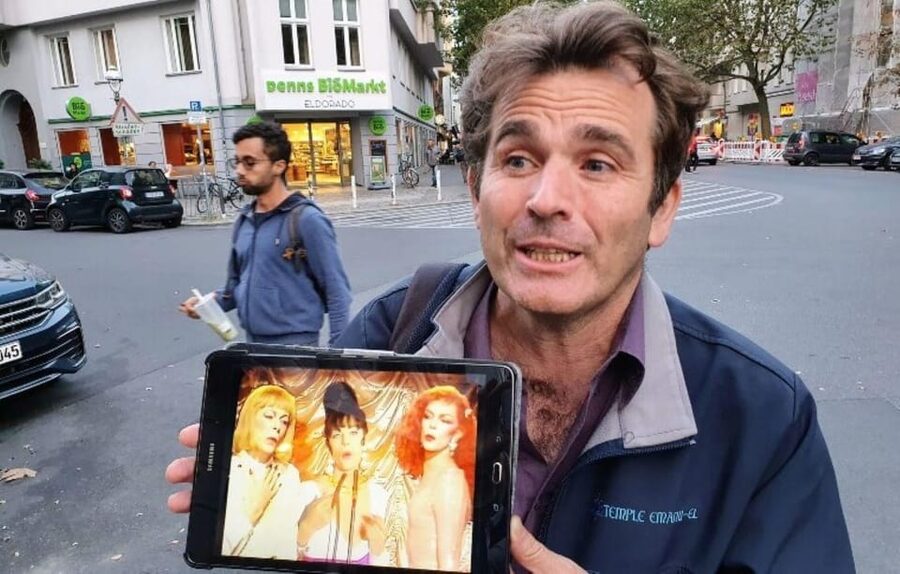
The final major stop is Alexanderplatz, the center of Cold War East Berlin. Here, the story shifts from Weimar nightlife and Nazi persecution to the experiences of gay men and lesbians behind the Iron Curtain.
This matters because Berlin’s queer history did not end at the Wall. Political systems shaped everyday life, public expression, policing, and access to community on both sides of the divided city.
The tour concludes with a look at today’s Queer Berlin. That ending gives the walk a present-day frame without pretending that the old struggles are finished. You leave with a sense of continuity: the clubs and circles of early Schöneberg, the losses under Nazism, postwar rebuilding, Cold War constraints, and current public life all belong to the same city.
The listed drop-off points are Berlin and Impala Coffeeshop. The exact starting point depends on the option you select, so check that detail before setting out.
Romy Haag, David Bowie, and postwar Schöneberg

The postwar section adds a different kind of cultural history. You’ll hear about Chez Romy Haag, a major nightclub of the 1970s, and Romy Haag herself, a transgender actress, singer, and dancer.
Haag met David Bowie there, and their relationship helped inspire Bowie’s song Heroes. This story gives the tour a bridge from Berlin’s cabaret past to the city’s role in modern music.
The stop is also a reminder that queer Berlin changed after the war rather than simply returning to its 1920s form. New performers, clubs, and styles created a different social world. The guide places that world within Schöneberg’s older tradition of nightlife and self-expression.
If music is your main interest, this section may be one of the highlights. If you know Bowie’s Berlin period, you’ll appreciate the local setting. If you do not, the story still adds a clear human link to a famous song.
The guides and the feel of the walk
The quality of a history walk depends heavily on the person leading it. Dan has led this route with personal knowledge of Berlin’s queer scene and uses images and music to support the stories. His experience of Berlin before the Wall fell adds a direct connection to the city’s later decades.
Justin brings a different strength. He was born and raised in the United States, so he can compare Berlin’s history with familiar American references. That can help you place the timeline, especially when the tour moves between the Weimar era, Nazism, the Cold War, and the present.
Both guides are named in the available information, but the guide you receive depends on the date and booking. Tours are offered in German and English, with private and small-group options.
A small group is worth considering if it fits your budget. The route includes sensitive subjects, personal stories, and questions about identity. A smaller setting can make it easier to ask questions and follow the guide’s thread. The tradeoff is that a private or small-group format may cost more than a large public walk.
Is $153 a fair price?
At $153 per person, this is not a cheap way to spend three hours in Berlin. You are paying for a specialist subject, a long route, an expert guide, and the possibility of a private or small-group format.
The value depends on your interests. If you already plan to visit Berlin’s main landmarks on your own, this walk adds context you are unlikely to get from a standard sightseeing route. It connects scattered places that can seem unrelated when visited alone.
The price is harder to justify if you want only a quick introduction to LGBTQ+ Berlin. The tour covers a great deal, and some places are historic sites rather than preserved interiors. You are paying for interpretation and connections, not entry to a museum collection.
Metro fare is not included. Since the route covers several districts, budget separately for public transport if needed. Comfortable walking shoes are essential, and you should raise mobility concerns before booking.
Free cancellation is available up to 24 hours before the start, and you can reserve now and pay later. Those policies are useful if your Berlin schedule is still shifting.
Who should book this Berlin walk?
I’d recommend it to you if you want queer history treated as a serious part of Berlin’s political, cultural, and social story. It suits visitors who enjoy walking, personal storytelling, music history, and places that look ordinary until someone explains what happened there.
It is especially useful for first-time visitors who want Schöneberg in context, as well as returning visitors who have already seen the Brandenburg Gate, Museum Island, and Alexanderplatz without learning much about LGBTQ+ life.
You may want a different experience if you have limited mobility, dislike brisk city walks, or prefer long visits inside museums. The route is broad, and the amount of information is high.
FAQ
How long does the Queer Berlin Tour last?
The walking tour lasts three hours.
What languages are available?
The tour is available in German and English.
Where does the tour start?
The starting location depends on the option you select when booking. Nollendorfplatz is one of the main guided stops.
Is public transportation included?
No. Metro fare is not included in the tour price.
Is the tour private or shared?
Private and small-group options are available.
Can I cancel for a full refund?
Yes. You can cancel up to 24 hours in advance for a full refund.
Should you book the Queer Berlin Tour?
Book this walk if you want more than a list of famous queer Berlin names. You’ll visit Schöneberg, connect Christopher Isherwood and Cabaret to real streets, learn about Hirschfeld’s destroyed institute, confront Nazi persecution, and follow the story through the Cold War and into modern Berlin.
The strongest reason to go is the storytelling. Dan and Justin bring different personal angles, and the use of photos and music gives the walk a more immediate feel. The main caution is the price and pace. At $153, you should care deeply about the subject and be ready to walk for three hours.
For that audience, this is a thoughtful and unusually focused way to understand Berlin.
Just added in Berlin
- Berlin & The Third Reich Private Guided Tour★ 5.0 · 3 reviews
- Third Reich Quest Experience in Berlin★ 4.5 · 7 reviews
- Private Analogue Photography Experience in Berlin★ 5.0 · 3 reviews
- Berlin Urbex Adventure and History Tour★ 5.0 · 9 reviews
- The Beauty of Berlin by Bike: Private Tour★ 5.0 · 59 reviews
- Berlin: Guided Bike tour of the Berlin Wall and Third Reich★ 5.0 · 160 reviews
- Berlin Third Reich & Cold War Walking Tour With A Guide★ 5.0 · 7 reviews
- Shared Underground Party Tour in Berlin★ 4.5 · 9 reviews
Berlin Tours, compared.
Reichstag, Dome and Government District Guided Tour
Read our review →
Reichstag, Plenary Chamber, Cupola & Government Tour
Read our review →