
Reviewed · WALKING TOURS
Berlin: Gay Berlin Out in Schöneberg Walking Tour
Berlin’s queer story comes alive around Nollendorfplatz, where ordinary streets mark the former sites of clubs, meeting places, and political gathering points. This 2.5-hour walk traces the area from its open, creative heyday after World War I through Nazi persecution, postwar revival, and the continuing LGBTQIA+ life of Schöneberg.
I like the way the tour links famous names, vanished venues, and surviving streets instead of treating history as a list of dates. I also like Tobias’s use of archive photographs and text, which helps you picture places that no longer look as they did. The main drawback is simple: many stops are former sites, so you should expect a street-based history walk rather than preserved interiors or museum displays.
Key points to know before you book
- The Nationalhof site reveals the political side of queer Berlin, not just its nightlife.
- Motzstraße marks the former El Dorado cabaret, one of the area’s best-known historic locations.
- Tobias leads in English or German, with humor, personal stories, and visual material.
- The route includes lesbian history, including the quarter around Schwerin Straße.
- The walk connects the 1920s with modern Schöneberg, showing how the district changed and returned as a gay center.
- At $23, the tour offers strong value if you want context you would be unlikely to pick up from a casual stroll.
Why Schöneberg is the right place to learn Berlin’s queer story
Schöneberg is not presented as a separate attraction cut off from the rest of Berlin. It is a working neighborhood of streets, shops, cafés, apartment buildings, and public spaces. That matters because the tour shows how queer life developed within the city rather than inside one official venue.
The main focus is the area around Nollendorfplatz. Between the end of World War I and the early 1930s, Berlin became known for an unusually open and active gay scene. Clubs, cabarets, meeting places, and political groups gave people room to form communities and argue for rights.
That openness was not secure. The rise of the Nazi Party brought persecution and destroyed much of the public life the tour examines. You are not simply hearing about glamorous nightlife, then. You are following a story of freedom, danger, silence, and return.
Tobias gives the walk a human scale by connecting places to the people who used them. His approach includes major figures in the early gay rights movement, writers, performers, activists, and people whose lives reflected the changing language around gender and sexuality.
More Walking Tours in Berlin
- Discover Berlin Half-Day Walking Tour
★ 5.0 · 9,624 reviews - Berlin: Third Reich and Cold War 2 Hour Walking Tour
★ 4.9 · 6,830 reviews - Berlin: Discover Berlin Walking Tour
★ 4.9 · 5,998 reviews
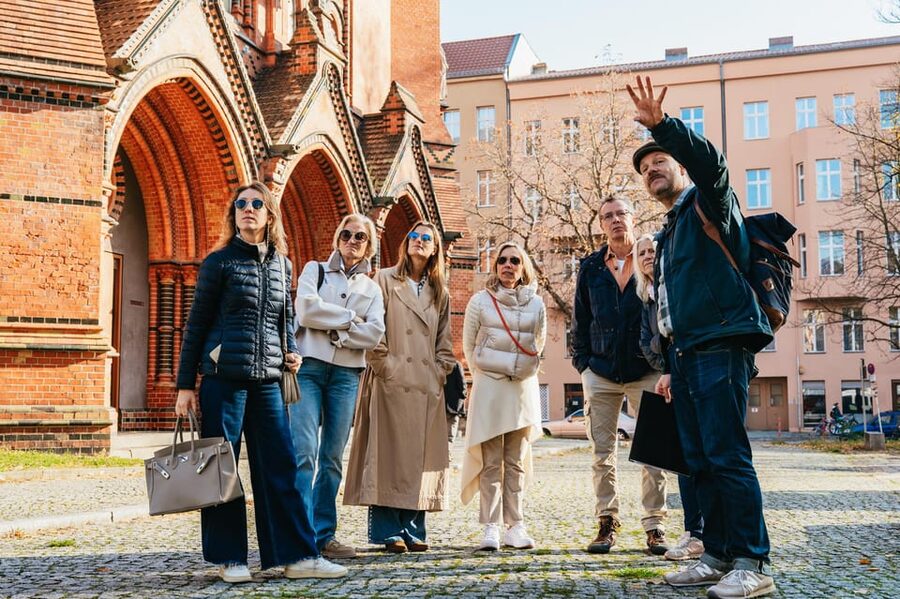
Nollendorfplatz and the former Nationalhof
The walk centers on landmarks around Nollendorfplatz, including the former locations of the Nationalhof, Hollandais club, and Kleist Casino. These names may mean little before the tour, but they become useful reference points once you understand how the district operated.
Nationalhof is especially important because it was tied to the gay rights movement of the 1920s. The stop helps shift the focus away from the usual image of Berlin as a city of cabaret and late nights. Political organizing, public debate, and the effort to challenge discrimination were part of the same world.
You should keep your expectations practical here. The tour visits locations and tells you what happened there, but the original venues are not presented as working historic interiors. The value is in seeing the actual urban setting and learning how these places fitted into the neighborhood.
I find this kind of stop more useful than a polished museum reconstruction. You can look at the street, compare the present-day setting with archive images, and think about how quickly a place can lose its visible past.
Motzstraße and the El Dorado cabaret
Motzstraße brings the social side of the story into view. The tour visits the site of El Dorado, the famed cabaret club associated with Berlin’s interwar queer culture.
El Dorado is an ideal example of why this walk benefits from a guide. A modern street rarely explains what once happened there. Without context, you could easily pass the site and see only shops, traffic, and apartment buildings. Tobias uses historical images and stories to make the former club easier to picture.
The cabaret also opens a wider discussion about performance and identity. Berlin’s nightlife gave people ways to express themselves, meet others, and test the limits of public behavior. That freedom attracted artists and writers, but it also existed alongside prejudice and legal restrictions.
The stop works best if you enjoy social history more than a simple checklist of buildings. You will not be touring a preserved stage or entering a functioning El Dorado. You are using the street as a starting point for understanding a lost chapter of the district.
Christopher Isherwood’s Nollendorfstraße home
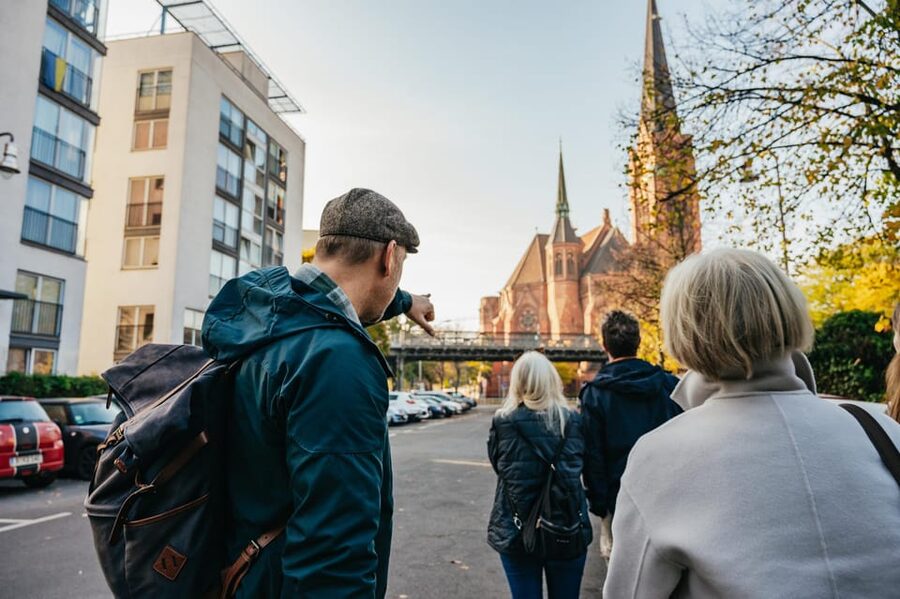
A stop on Nollendorfstraße connects Schöneberg to Christopher Isherwood, whose writing helped shape later gay liberation culture. His former home gives the tour a literary angle and shows how writers turned Berlin’s streets and characters into a lasting record.
The Isherwood connection is useful because it links local history to the way Berlin is remembered outside Germany. His work helped introduce many readers to the city’s queer life, particularly the social world before the Nazi takeover.
I like this stop because it keeps the focus on a real address instead of treating Isherwood as a distant literary name. You see where he lived and consider how an ordinary residential setting could become part of an international cultural story.
The tour does not reduce the neighborhood to one famous author. Isherwood is one thread among many, and Tobias also discusses people connected with activism, nightlife, performance, and gender history.
Same city, a completely different kind of day:
- Berlin: Reichstag, Dome and Government District Guided Tour
★ 4.7 · 18,288 reviews - Berlin: 1-Hour City Tour by Boat with Guaranteed Seating
★ 4.3 · 16,993 reviews - Berlin: Boat Tour Along the River Spree
★ 4.4 · 11,252 reviews - Berlin: Hop-on Hop-off Bus Tour with Live Commentary
★ 4.3 · 8,579 reviews
From Nazi destruction to a postwar return
The walk’s hardest section is also one of its most important. The open queer scene of the interwar period was crushed after the Nazis came to power. The tour places the earlier clubs and rights movement against that political change, showing how quickly public freedom can disappear.
This part gives needed balance to the more colorful cabaret stories. If you only hear about the 1920s as a glamorous period, you miss the fear and loss that followed. Tobias’s subject is not nostalgia for a vanished party district. It is the history of a community that built public space, lost it, and later rebuilt it.
The story then moves to the late 1960s, when Schöneberg began to bloom again as West Berlin’s main gay district. That return was not a copy of the earlier period. The political climate, social language, and community needs had changed.
You will hear how the area developed from the late 1960s up to the present. This gives the route a useful timeline: early activism, destruction under Nazism, postwar silence and division, renewed community life, and today’s more varied LGBTQIA+ presence.
Schwerin Straße and the lesbian quarter
One of the strongest features of the route is its attention to lesbian history. The walk goes through the lesbian quarter around Schwerin Straße rather than treating gay male history as the whole story of Schöneberg.
That broader focus matters. Queer neighborhoods are not single communities with one shared experience. Women, trans people, intersex people, and gender nonconforming people have their own histories, meeting places, struggles, and public stories.
The information provided for this tour shows that Tobias includes those perspectives in the walk. If you want a tour focused only on famous gay men and cabarets, this route may be wider than expected. For most people, that is a major strength.
The area also helps you notice how community districts change. A neighborhood can keep its symbolic importance even as individual clubs close, new businesses appear, and the original social patterns shift.
Eisenacher Straße and Schöneberg today
Eisenacher Straße is one of the places where the tour brings the story into the present. It still reflects the varied life of the district, allowing Tobias to explain how Schöneberg functions today rather than ending the story in the 1930s or 1970s.
This present-day section keeps the walk grounded. You are not looking only at plaques and old photographs. You are also seeing the streets as they are now, with their everyday mix of local life and LGBTQIA+ venues and activity.
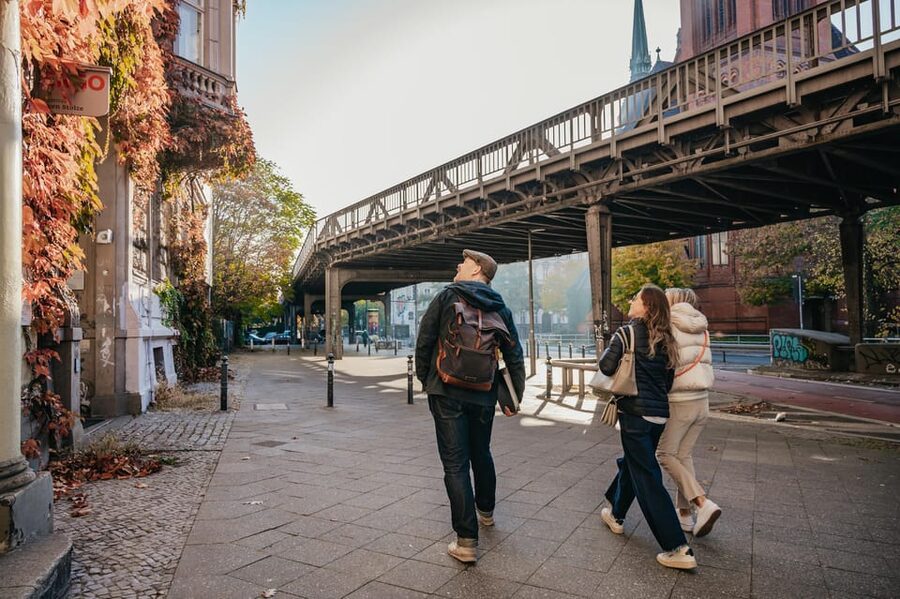
The route’s movement through Motzstraße, Nollendorfstraße, Schwerin Straße, and Eisenacher Straße gives you a feel for the area’s scale. It is a neighborhood walk, not a bus tour where places flash past the window. You have time to look at buildings, pause for explanations, and ask questions.
The full walk lasts 2.5 hours. That is long enough to establish a clear story without turning into an all-day history lesson. Several people appreciated the comfortable pacing, opportunities to pause, and Tobias’s willingness to answer questions as the walk continued.
Tobias’s guiding style and the use of archive material
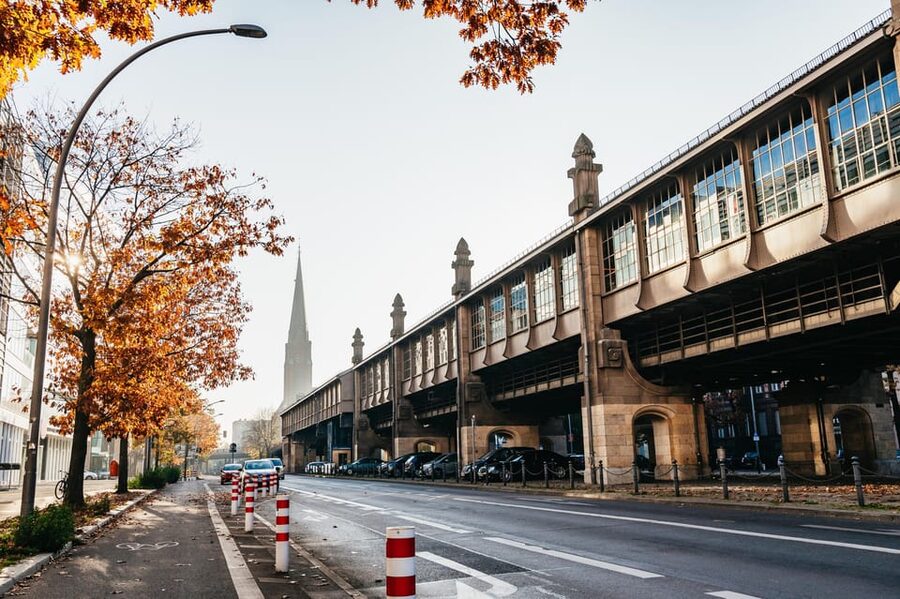
Tobias is the named guide most closely associated with this experience. His style combines careful research with humor and personal anecdotes. He speaks English and German, and his English is described as fluent and easy to follow.
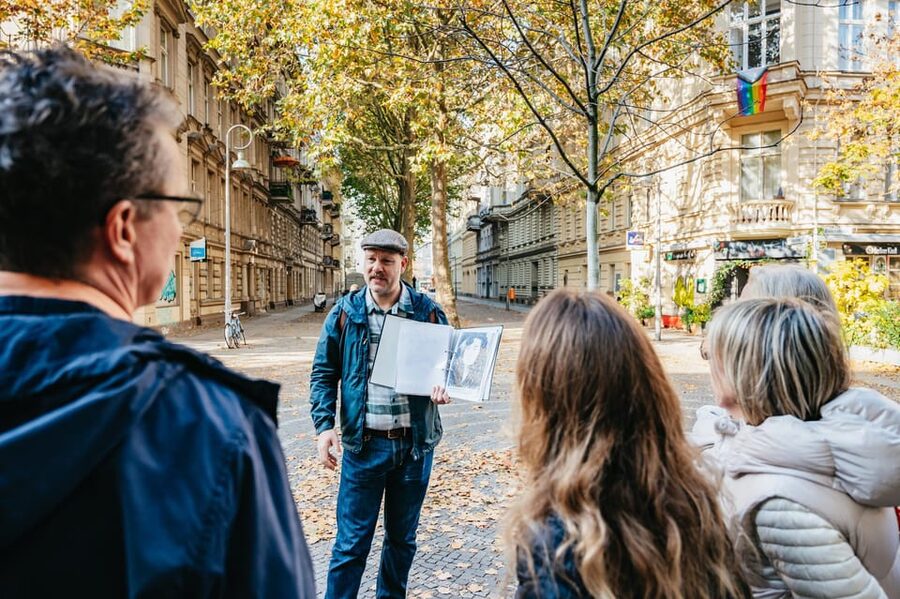
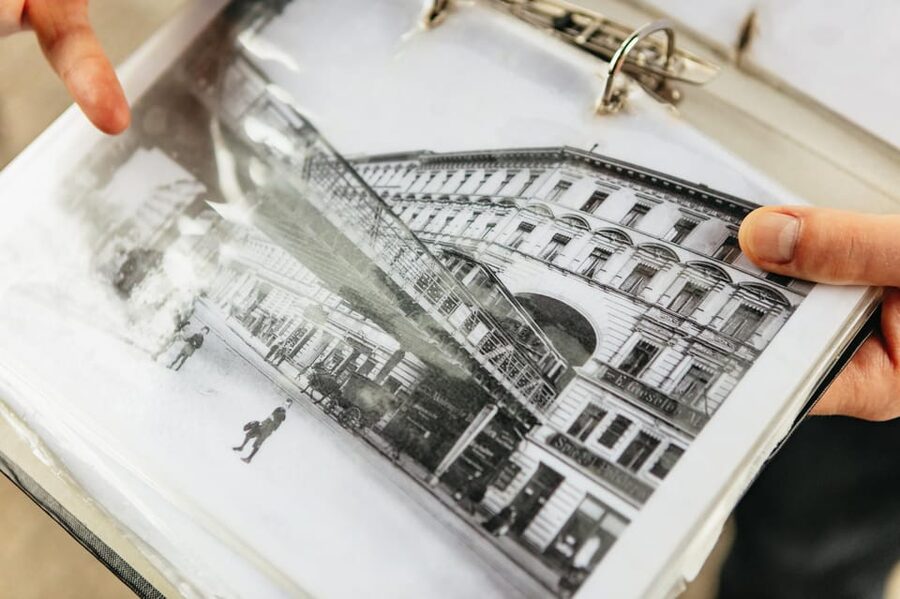
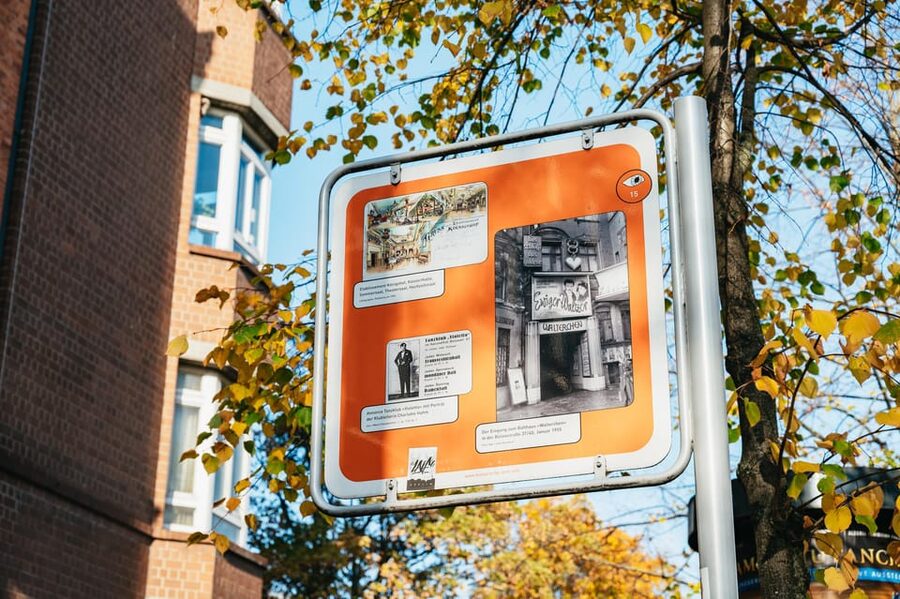
His approach is not a dry lecture. He brings archive photographs and text, which is especially useful when the tour visits former clubs or places that have changed beyond recognition. The visual material lets you compare the street in front of you with its earlier appearance.
I also like the personal element. Tobias sometimes connects the history to his own life and husband, giving the subject a present-day voice without turning the tour into a personal memoir. His warmth helps with difficult material, while his humor keeps the pace from becoming heavy.
The tour seems well suited to questions. Tobias is described as patient, approachable, and flexible, and he has adjusted the walk in bad weather and when transport delays affected the start. That does not mean weather is irrelevant. Berlin rain, snow, and winter cold can make any walking tour harder, so dress for the forecast.
What the $23 price gets you
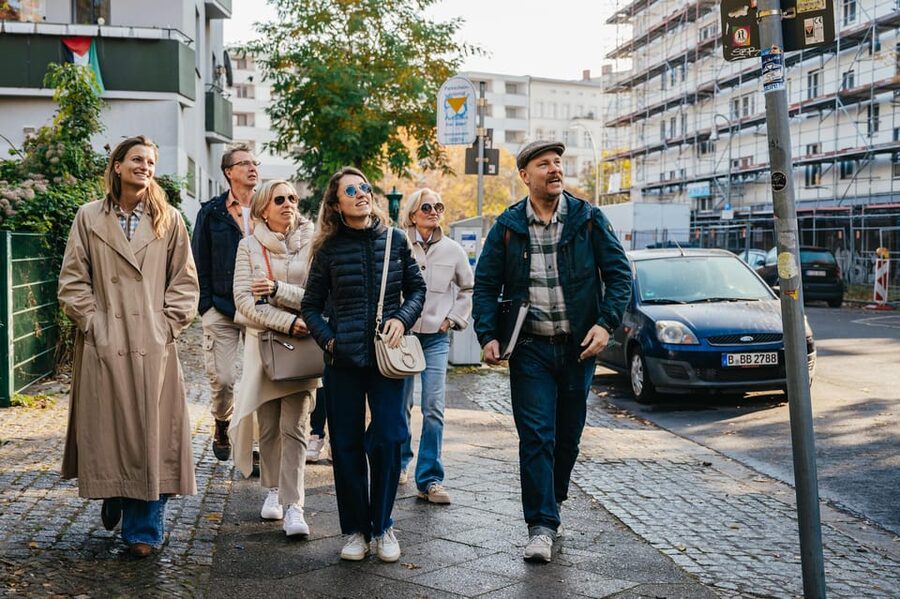
At $23 per person, this is a good-value specialist walk. You are paying for 2.5 hours with a live guide, a planned route, historical research, and visual aids. There is no food or drink included, but that keeps the price focused on the actual subject.
The value is strongest if you would otherwise walk through Schöneberg without knowing what you are seeing. A guide can point out former locations that are easy to miss and explain how the same neighborhood changed across a century.
The price is less attractive if you want nightlife, drinks, or access to historic interiors. This is not a pub crawl, cabaret performance, or museum tour. It is a history walk through public streets.
Several people have found the tour strong enough to recommend as a first introduction to Berlin’s LGBTQIA+ past. I would place it early in a Berlin visit if the subject matters to you. It can give later walks through Schöneberg more meaning, and it may point you toward local cafés, bookshops, and current community spaces to visit afterward.
One small caution concerns the end of the experience. A recommended café may not provide the same quality of service on every visit, so treat any suggested stop as an optional follow-up, not part of the tour itself.
Who should book this Schöneberg walk
I would recommend it to anyone interested in queer history, Berlin social history, literature, urban change, or the story of civil rights movements. You do not need prior knowledge. The route begins with places and people, then builds the larger timeline around them.
It is also a good choice for visitors who want a focused neighborhood walk rather than another general tour of Berlin’s major sights. You will spend the time on one district and one subject, with enough detail to understand why Schöneberg mattered.
The walk suits couples, solo visitors, and small groups. It can also work for people who identify with different parts of the LGBTQIA+ community because it includes gay, lesbian, trans, intersex, and gender nonconforming stories.
You should choose something else if you dislike walking, want an activity centered on food or nightlife, or expect every stop to contain a preserved building. The route’s power comes from explanation, not spectacle.
Meeting points vary by the option booked, so check your confirmation carefully. The activity is wheelchair accessible, and private arrangements with special times and meeting points can be requested for a group by telephone.
Should you book it?
Book this tour if you want to understand why Schöneberg became one of the world’s best-known LGBTQIA+ districts and how that story survived political repression and social change.
For $23, Tobias gives you a focused route, strong historical context, archive material, and a personal guide to places you might otherwise pass without notice. The main limitation is that much of the tour takes place at former sites, so you are buying insight rather than entry to preserved clubs.
I would especially recommend it during your first few days in Berlin. It gives you a useful map of queer Schöneberg, introduces figures such as Christopher Isherwood, and connects the 1920s gay rights movement with the district’s life today.
FAQ
How long is the Gay Berlin Out in Schöneberg walking tour?
The tour lasts 2.5 hours.
How much does the tour cost?
The listed price is $23 per person.
Which languages are available?
The tour is offered in English and German.
Who guides the tour?
Tobias is the named guide associated with the experience. He leads the walk and uses historical photographs and text during the tour.
What places does the walking tour visit?
The route explores the area around Nollendorfplatz and includes the former sites of Nationalhof, Hollandais, Kleist Casino, and El Dorado. It also visits Christopher Isherwood’s former home on Nollendorfstraße, the lesbian quarter around Schwerin Straße, and Eisenacher Straße.
Is food or drink included?
No. Food and drinks are not included.
Is the tour wheelchair accessible?
Yes, the activity is listed as wheelchair accessible.
Can I cancel the booking?
You can cancel up to 24 hours in advance for a full refund. Reserve now and pay later is also available.
More LGBTQ-Friendly in Berlin
- Street Art & Berlin Gay, Queer, Trans History + Free Gay Map
★ 4.9 · 15 reviews - Queer Berlin Tour: Birthplace of LGBTQ+ Movements
★ 5.0 · 6 reviews
Just added in Berlin
- Berlin & The Third Reich Private Guided Tour★ 5.0 · 3 reviews
- Third Reich Quest Experience in Berlin★ 4.5 · 7 reviews
- Private Analogue Photography Experience in Berlin★ 5.0 · 3 reviews
- Berlin Urbex Adventure and History Tour★ 5.0 · 9 reviews
- The Beauty of Berlin by Bike: Private Tour★ 5.0 · 59 reviews
- Berlin: Guided Bike tour of the Berlin Wall and Third Reich★ 5.0 · 160 reviews
- Shared Underground Party Tour in Berlin★ 4.5 · 9 reviews
- Beyond Currywurst: Berlin’s Hidden Street Food & Culture Tour★ 5.0 · 100 reviews
Walking Tours, compared.




Berlin’s Best: 2 Hour Walking Tour Third Reich and the Cold War
Read our review →


Third Reich Berlin: Hitler and WWII Walking Tour
Read our review →Browse the lists this tour appears in