
Reviewed · WALKING TOURS
Berlin: Jewish Walking Tour including World War II
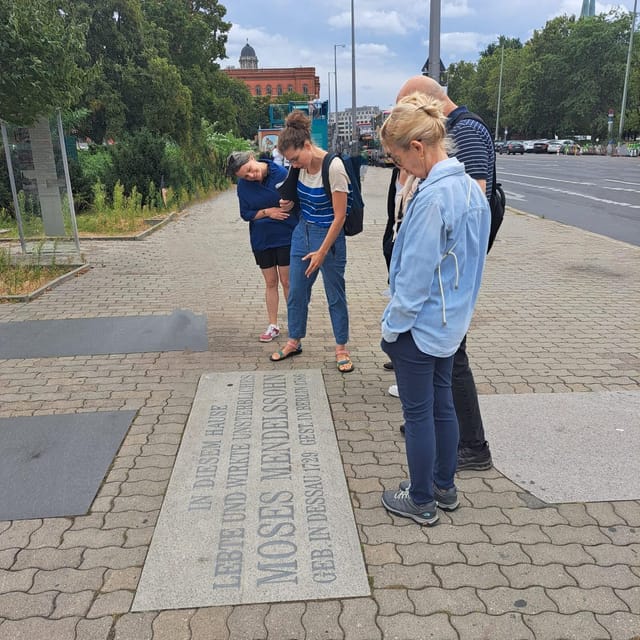
Berlin’s Jewish story unfolds in sharp turns on this walk, from the arrival of Moses Mendelssohn and the community’s golden years to Nazi persecution and life in Berlin today. I like the way the route connects grand institutions with smaller memorials, and I like that guide Tal brings both professional experience and personal stories to a difficult subject. The main drawback is the price, $318 per person, which makes this a serious investment unless you value a private guide and focused historical discussion.
The walk also asks a lot of your attention. It lasts about three and a half to four hours, includes a short break, and covers several stops in Mitte. The old cemetery and Otto Weidt Museum are included when open, but the museum inside the New Synagogue requires a separate ticket. Accessibility information is conflicting, so ask before booking if you have mobility concerns.
Key points at a glance
- Moses Mendelssohn’s Berlin: Follow the story of the philosopher and the Jewish community’s return to Berlin in the second half of the 17th century.
- A neighborhood shaped by migration: Hackescher Markt helps explain the arrival of Eastern European Jews, known as Ostjuden, and the tensions they faced.
- Personal stories from the Holocaust: Otto Weidt’s workshop and the Block of Women add human detail to the wider history of Nazi persecution.
- Major Mitte landmarks: See the old synagogue site, New Synagogue, community schools, the old Jewish cemetery, and other institutions.
- A private, adaptable walk: Tal can adjust the route and add places such as the Kindertransport Memorial or Grunewald Deportation Memorial for extra time and cost.
Why this Jewish Berlin walk matters
This is not a tour about one period alone. You move through several chapters: the community’s re-establishment, the intellectual life associated with Moses Mendelssohn, the arrival of Jews from Eastern Europe, the upheaval of World War II, and the difficult work of rebuilding afterward.
That broad span is the tour’s greatest strength. You are not left with the impression that Berlin’s Jewish life began and ended with the Holocaust. The Nazi period is central, as it must be, but the route also gives attention to schools, religious debate, social divisions, and present-day institutions.
Tal is a certified Berlin guide and has professional and academic experience with German Jewish history. His postdoctoral work examines how current Charité Hospital staff deal with the hospital’s past during the 1930s and 1940s. That background matters because the tour deals with memory as well as dates and buildings.
The tone appears to be serious but not stiff. Tal’s approach includes personal stories from the era, which can make the material easier to grasp than a string of statistics. At the same time, this is not a light sightseeing stroll. You should be ready for painful subjects and extended discussion.
More Walking Tours in Berlin
- Discover Berlin Half-Day Walking Tour
★ 5.0 · 9,624 reviews - Berlin: Third Reich and Cold War 2 Hour Walking Tour
★ 4.9 · 6,830 reviews - Berlin: Discover Berlin Walking Tour
★ 4.9 · 5,998 reviews
Starting at Hackescher Markt
Meet in front of Starbucks at Hackescher Markt, in Mitte. The location is easy to identify, but the important part is what lies around it. Hackescher Markt became a focal point for Eastern European Jews who came to Berlin after fleeing pogroms.
The tour uses this area to explain the term Ostjuden and the complicated response it produced within Berlin’s Jewish community. German Jews who had become established in the city could feel embarrassment or distance toward newer arrivals from the east. That social divide adds a useful layer to the story. Jewish Berlin was not one unified group with identical customs, politics, or levels of acceptance.
You begin with a neighborhood rather than a museum room. That gives you a sense of how community institutions were placed within ordinary city life. It also helps set up later discussions about movement, belonging, and the shift of Jewish life toward the western part of Berlin.
Mendelssohn, schools, and community life
As the route continues, Tal explains the community’s re-establishment in the latter half of the 17th century and brings in Moses Mendelssohn, one of the key figures in Berlin’s Jewish intellectual life.
Mendelssohn is more than a name attached to a grave. His era opens questions about education, integration, religious practice, and the place of Jewish thinkers in German society. The tour also points out institutions such as the Mendelssohn School and a girls’ school, showing that community life depended on education as much as worship.
You may also hear about disagreements within the community over changes in religious practice, including the introduction of an organ. This is a small but revealing detail. It shows that Jewish life in Berlin included internal argument over modernity, worship, and identity long before the Nazi period.
These stops are especially useful if you want more than a Holocaust memorial tour. You see a community with schools, debates, ambitions, and ordinary institutions. The drawback is that some stops are described only as community sites, so the exact amount of time at each one may depend on Tal’s route and your interests.
The Block of Women and the 1943 protest
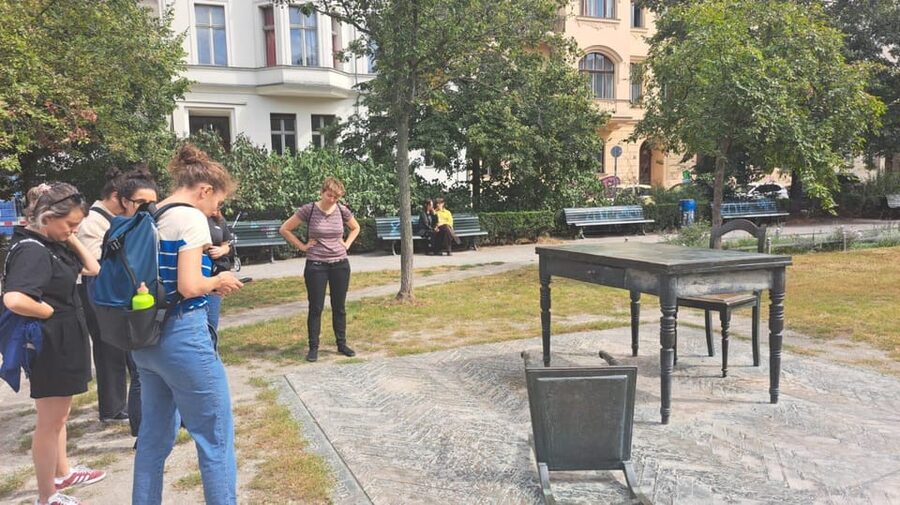
The Block of Women memorial marks one of the route’s most powerful episodes. It commemorates the women’s protest of 1943, when non-Jewish German women protested the detention of their Jewish husbands.
The stop helps you consider resistance in a more precise way. It does not turn Berlin’s wartime history into a simple tale of widespread courage. Instead, it points to one specific public protest and the pressure that led to the release of the men being held.
Tal spends about 20 minutes here, enough time to explain the event without making the memorial the entire focus of the day. This is a good example of why a guide adds value. The monument itself cannot explain the circumstances, the people involved, or how the episode fits into Berlin under Nazi rule.
The subject can be emotional, and the tour moves through several similarly serious locations. Take the short break seriously. Water, comfortable shoes, and weather-appropriate clothing will help you stay focused.
More Jewish Heritage Tours in Berlin:
- Berlin: Jewish Museum Berlin Entrance Ticket
★ 4.5 · 8,393 reviews - Nazi Berlin and the Jewish Community Tour
★ 4.8 · 55 reviews - Path of Resistance: Berlin’s Hidden Holocaust Stories
★ 5.0 · 33 reviews - Private Tour: Jewish Heritage Walking Tour of Berlin
★ 5.0 · 29 reviews
Otto Weidt’s workshop and individual courage
The Otto Weidt Workshop for the Blind is one of the tour’s most distinctive stops. Entry is included when the museum is open, and the visit lasts about 30 minutes.
Otto Weidt operated a workshop that employed blind and deaf Jewish people. During the Holocaust, he worked to protect people connected with the workshop. The site gives the history a human scale: instead of only hearing about government policy and mass deportation, you learn about a workplace and the choices made by one person trying to save lives.
This stop is valuable because it links labor, disability, and persecution. It also offers a more intimate setting than the larger memorials and public landmarks. You can expect a guided explanation from Tal, with the museum visit providing the physical setting for the story.
The museum is not open every day, according to the tour information. If it is closed, entry is not included because there is no visit to make. Confirm the operating day when you reserve, especially since this is one of the route’s strongest stops.
Flash photography is not allowed, and smoking is not allowed during the experience. Those rules are simple, but they matter in a memorial setting.
The old cemetery and Moses Mendelssohn’s grave
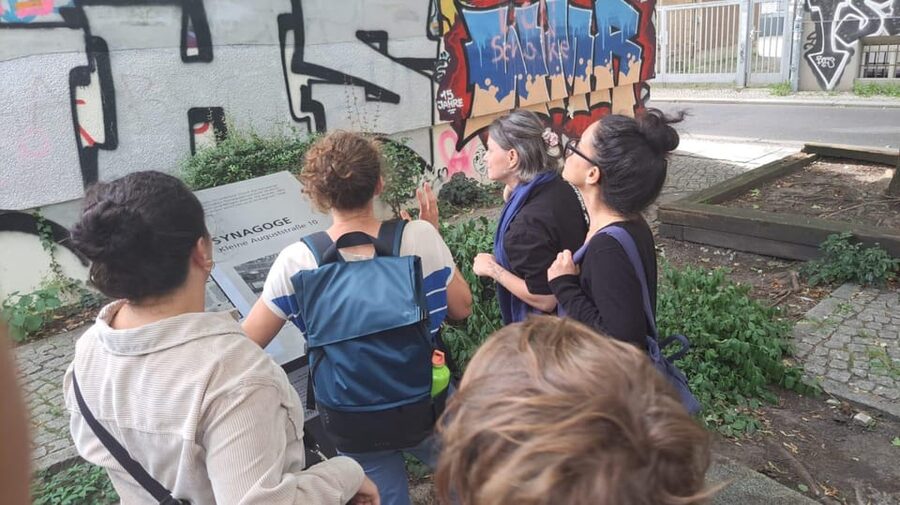
The old Jewish cemetery is another important stop, and it is included except on Jewish holidays and Saturdays. It is described as the community’s first cemetery and includes the grave of Moses Mendelssohn.
A cemetery changes the pace of the tour. After streets, memorials, and institutions, you enter a place where the passage of generations becomes visible. Mendelssohn’s grave gives the earlier part of the tour a physical anchor.
This is also a stop where respectful behavior matters. The tour information asks you to bring a head covering or kippah, and Jewish customs may affect access. Check the date of your visit before booking if the cemetery is central to your plans.
The itinerary identifies the finish as the Memorial Jewish Cemetery, while the general meeting information says the activity ends back at the meeting point. Because those details do not fully match, confirm the final drop-off point with Tal before the tour begins. That small check can save confusion at the end of a long walk.
The old synagogue site and New Synagogue
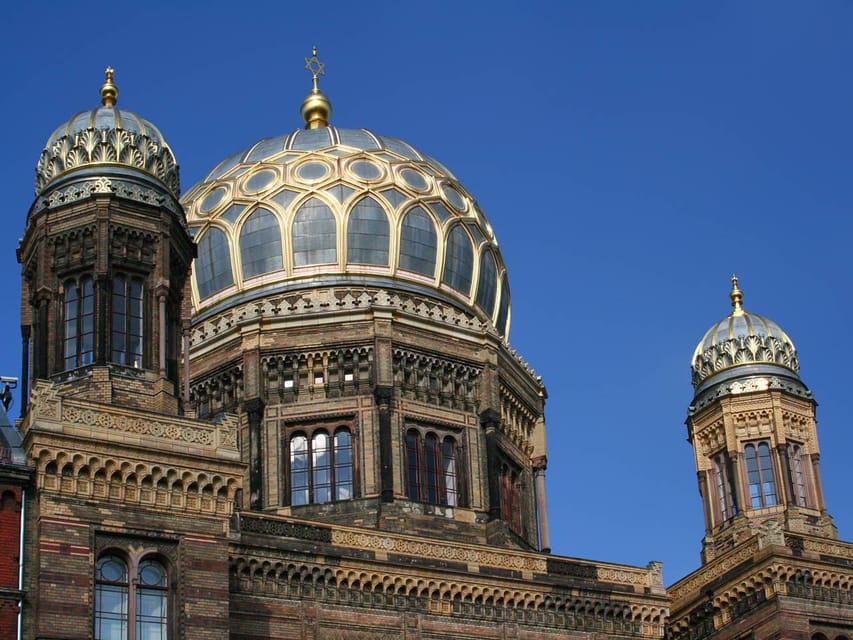
The route includes the site of the community’s first synagogue and the New Synagogue Berlin, also known as the Jewish Centre. These locations help show the growth and confidence of Berlin’s Jewish community during its most prosperous period.
The New Synagogue is viewed from the outside on this tour. Its architecture reflects the importance of the institution, and Tal uses it to discuss both the community’s golden era and its destruction and decline under Nazism.
The separate Centrum Judaicum museum inside the New Synagogue is not included. If you want an interior museum visit, you must buy that ticket separately. This is an important cost and timing detail, since a private walking tour can feel expensive even before adding extra admissions.
Still, seeing the building as part of a wider route has value. You are not just looking at a facade. By this point, you have heard about schools, cemeteries, migration, religious disputes, and persecution. The synagogue becomes part of a larger story about public Jewish life in Berlin.
Optional extensions beyond Mitte
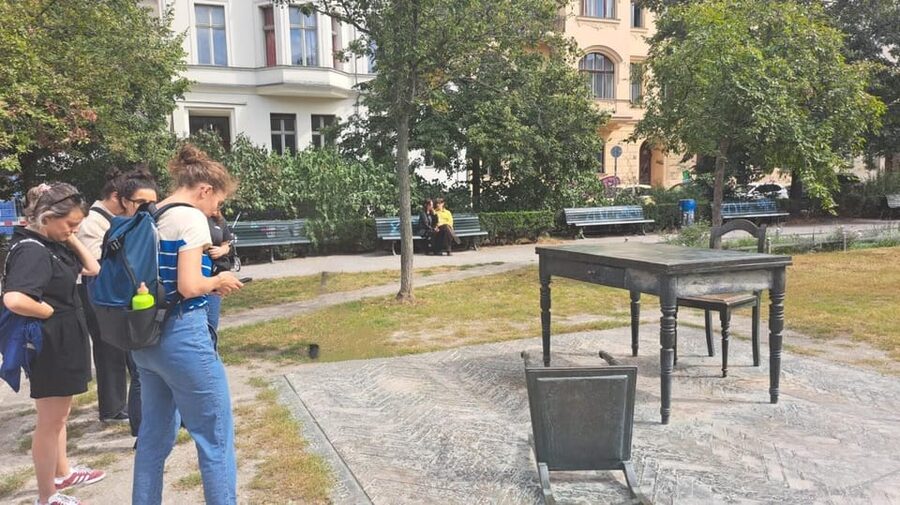
Tal can extend the tour for additional time and cost. These add-ons suit readers who want to focus more heavily on deportation, remembrance, or the community’s later generations.
The Schönhauser Allee Cemetery is the final resting place of well-known figures from Berlin’s golden era. It offers another way to explore the community’s leaders and cultural life, though it will make an already long outing longer.
At Friedrichstraße Station, the Kindertransport Memorial recalls the children sent out of Nazi-controlled Europe. This is a powerful subject, but it also shifts the tour toward the experience of children and rescue efforts beyond Berlin itself.
The Grunewald Deportation Memorial marks the deportation of Berlin’s Jews. It is a direct link to the machinery of persecution and gives the wartime section a more explicit deportation focus.
These extensions are not casual add-ons for anyone short on time. They make sense if you have a particular interest in cemeteries, children during the Holocaust, or deportation. Ask Tal how much extra time and cost each option involves before adding one.
How the $318 price makes sense
At $318 per person, this is not a budget walking tour. The price is easier to justify for people who want a private group, a named guide with specialized training, and the freedom to shape the conversation around specific interests.
The base experience includes the guide, walking tour, Otto Weidt Museum entry when open, and old cemetery entry when access is permitted. Meals and drinks are not included, and the New Synagogue museum ticket is extra.
You are paying for interpretation more than transportation or entertainment. There is no coach, no meal, and no large attraction ticket package. The value depends on how much you want to ask questions and how important it is to have a private discussion in English or Hebrew.
For a couple, family, or small group with a strong interest in Jewish Berlin, the private format may be worthwhile. For a solo visitor watching every euro, $318 could be difficult to defend, particularly if you do not plan to use the customization option.
The five available ratings are all at the top level, with particular praise for Tal’s passion, historical context, personal stories, and ability to provide new insight into Berlin’s Jewish past and present. Those qualities are central to the tour’s value. You should book it for the guide’s interpretation, not simply for a checklist of buildings.
Walking demands, clothing, and access
Plan on three and a half hours, with some descriptions placing the full experience closer to four hours. You will be on foot through Mitte, so wear comfortable shoes and bring water.
A hat and sunscreen are useful in warm weather. Check the forecast and dress accordingly, since much of the experience takes place outside. Bring a head covering or kippah for the cemetery.
The accessibility information needs clarification. One section describes the tour as wheelchair accessible, while another says it is not suitable for people with mobility impairments or wheelchair users. Treat the more restrictive guidance as the safer assumption and contact the provider before booking if this affects you.
The tour is offered in English and Hebrew. It is a private group experience, which gives you more room to ask questions and request emphasis on particular subjects.
Who should book this tour?
I would choose this walk if you want Jewish Berlin presented as a long, complicated story rather than a series of tragic sites. It is a good fit for visitors interested in Moses Mendelssohn, Jewish migration, religious change, Holocaust history, and the city’s present-day community.
It also suits people who prefer a guide-led experience over independent reading. Tal’s academic work and personal storytelling can help connect a school, cemetery, or workshop to the larger history.
I would hesitate if you want a short, light introduction to Berlin or if $318 per person stretches your budget. You should also think twice if you have difficulty walking or need confirmed wheelchair access, since the supplied information is inconsistent.
FAQ
How long does the Berlin Jewish walking tour last?
The tour lasts about 3.5 hours, with the full description giving an approximate range of 3.5 to 4 hours. It includes a short break.
Where does the tour start?
The meeting point is in front of Starbucks at Hackescher Markt in Berlin’s Mitte district.
Where does the tour end?
The activity information says it ends back at the meeting point, while the itinerary identifies the Memorial Jewish Cemetery as the final stop. Confirm the exact ending point with Tal before starting.
Which languages are available?
The live tour guide is available in English and Hebrew.
Is this a private tour?
Yes. The experience is offered for a private group.
Is admission to the museums included?
Entry to the Otto Weidt Museum is included when the museum is open. Entry to the old Jewish cemetery is included except on Jewish holidays and Saturdays. The museum inside the New Synagogue, known as Centrum Judaicum, requires a separate ticket.
Can the tour be extended?
Yes. Optional extensions can include Schönhauser Allee Cemetery, the Kindertransport Memorial at Friedrichstraße Station, and the Grunewald Deportation Memorial. Extra time and cost apply.
What should I bring?
Bring comfortable shoes, water, a hat, sunscreen, weather-appropriate clothing, and a head covering or kippah.
Can wheelchair users join the tour?
The information is conflicting. One section describes the tour as wheelchair accessible, while another says it is not suitable for wheelchair users or people with mobility impairments. Contact the provider for a clear answer before booking.
Should you book it?
Book this tour if you want careful historical context, a private guide, and a route that includes both major sites and smaller community landmarks. Tal’s focus on personal stories, Jewish migration, religious debates, and Berlin’s wartime past gives the walk more substance than a simple memorial circuit.
Skip it if you need a low-cost outing, a short route, or guaranteed wheelchair access. For everyone else, the strongest reason to go is the chance to connect Berlin’s Jewish past and present in one thoughtful, demanding afternoon.
Just added in Berlin
- Berlin & The Third Reich Private Guided Tour★ 5.0 · 3 reviews
- Third Reich Quest Experience in Berlin★ 4.5 · 7 reviews
- Private Analogue Photography Experience in Berlin★ 5.0 · 3 reviews
- Berlin: Guided Bike tour of the Berlin Wall and Third Reich★ 5.0 · 160 reviews
- Berlin Urbex Adventure and History Tour★ 5.0 · 9 reviews
- The Beauty of Berlin by Bike: Private Tour★ 5.0 · 59 reviews
- Beyond Currywurst: Berlin’s Hidden Street Food & Culture Tour★ 5.0 · 100 reviews
- Berlin Third Reich & Cold War Walking Tour With A Guide★ 5.0 · 7 reviews
Walking Tours, compared.

Berlin’s Best: 2 Hour Walking Tour Third Reich and the Cold War
Read our review →
Third Reich Berlin: Hitler and WWII Walking Tour
Read our review →Browse the lists this tour appears in