
Reviewed · STREET ART
East Meets West: Berlin Food Culture & Street Art
Berlin’s food culture makes the most sense on foot, and this tour connects it to the city’s divided past. You move from Friedrichshain and the East Side Gallery into Kreuzberg, stopping for six local tastings, Berliner beer, Turkish food, Ukrainian soul food, schnitzel, currywurst, and vegan doughnuts.
I like the small maximum of eight people, which gives guides such as Lee, Elena, Tiago, and Will room to answer questions. I also like the mix of food and political history, especially the contrast between former East Berlin and West Berlin. The drawback is that the tour costs $169.38 and some stops are quick, so you should book it for cultural context and variety, not a long meal at each restaurant.
Key details before you book
- Six tastings across two former Berlins: The route begins in Friedrichshain and ends near Kottbusser Tor in Kreuzberg.
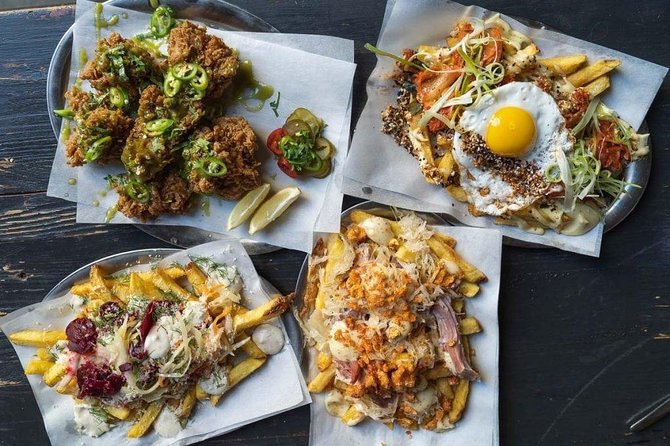
- Food reflects modern Berlin: Expect German classics, Turkish street food, Ukrainian dishes, vegan doughnuts, coffee, beer, and other international flavors.
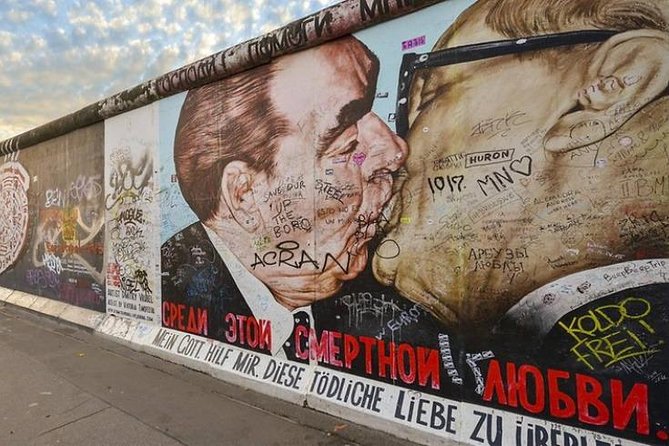
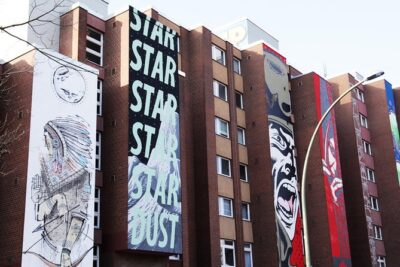
- Street art has a political edge: The East Side Gallery and Kreuzberg murals help explain how Berlin turned walls into public storytelling.
- Guides shape the experience: Lee, Elena, Tiago, and Will have led this tour, with praise for their history and local food knowledge.
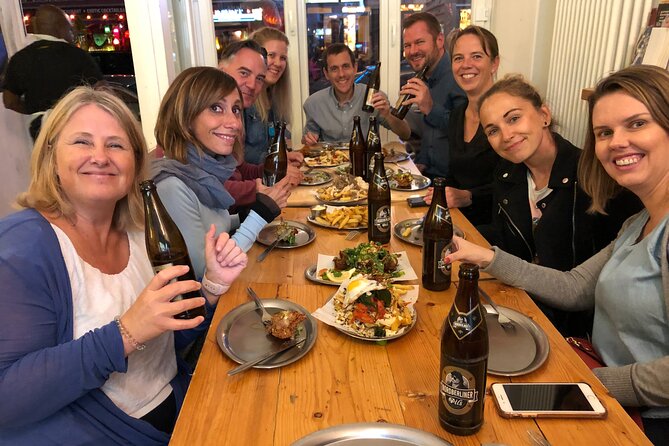
- Come hungry: The portions add up, and one participant said the tastings were enough to replace both breakfast and dinner.
- Plan for walking and public transport: Comfortable shoes are important, and a BVG ticket is not included.
A food tour that also explains Berlin’s divided past
This is not just a crawl from one snack counter to the next. The route uses food to explain how Berlin changed after World War II, during the Communist era, and after the Berlin Wall fell.
You meet at Industriepalast Hostel on Warschauer Strasse at noon. From there, the tour crosses neighborhoods that once belonged to different political systems. Friedrichshain represents former East Berlin, while Kreuzberg was part of West Berlin. That shift gives the walk a clear story rather than a loose collection of tastings.
The tour lasts about three and a half hours. That is enough time for a broad introduction to Berlin’s food scene, though not enough for long visits at every stop. You will spend much of the afternoon walking, standing, eating, and listening, so this works best if you enjoy a moving schedule.
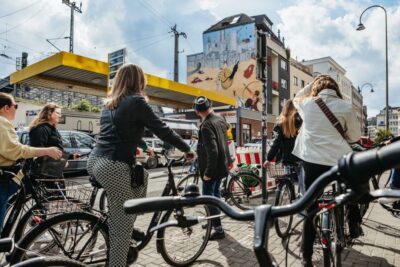
The group limit of eight matters. A guide can keep the pace relaxed, explain a mural without shouting over a crowd, and respond when you ask about Nazi Germany, immigrant communities, or Berlin’s food habits. Guides named in past tours include Lee, Elena, Tiago, and Will. Your assigned guide may be different, but the experience depends heavily on the individual leading it.
More Food Tours in Berlin
- Berlin Center Food Tour with 8+ Authentic Local Tastings
★ 5.0 · 1,227 reviews - Kreuzberg: Culinary Food Tour
★ 4.5 · 770 reviews - Berlin: Mitte Culinary Food Tour
★ 4.5 · 447 reviews
Friedrichshain and the East Side Gallery
Friedrichshain is the opening chapter. Once part of East Berlin, it is associated with revolutionary East Berliners and the city’s changing creative culture. The first neighborhood visit is brief, about 20 minutes, so do not expect a full walking tour of every street.
The stronger visual stop comes at the East Side Gallery. Here you see one of the longest surviving sections of the Berlin Wall, covered with political and artistic murals. You can touch an actual remaining section of the Wall while the guide explains what the barrier meant and how the artwork changed its public meaning.
This stop is useful because Berlin’s Wall sites vary greatly. Some are short fragments, some are memorial spaces, and some are reconstructed. The East Side Gallery gives you a long physical stretch and a clear sense of scale. It is also an active public area, so the visit is about seeing and discussing the murals rather than having a quiet museum experience.
The planned stop is about 20 minutes. That is enough for an introduction and a few key murals, but you may want to return later if you are interested in street art. The tour gives you context and orientation, not an exhaustive study of every painting.
Crossing into Kreuzberg
After Friedrichshain and the Wall, the route moves toward Kreuzberg, formerly in West Berlin. The crossing is more than a change of neighborhood. It helps you picture how Berlin functioned when people on opposite sides of the city lived under different governments, travel rules, and political systems.
Kreuzberg today is known for food, bars, music, immigrant communities, and street art. The tour spends roughly 30 minutes introducing the area before moving into its tasting stops. You will hear about the neighborhood’s role in Berlin’s modern identity and how Turkish residents helped rebuild and reshape it during the 1980s and 1990s.
This is where the tour’s title makes sense. East and West Berlin are not presented as separate museum pieces. They are connected by the people who moved through the city, the buildings and walls that survived, and the food traditions that took root after the war.
Schnitzel, currywurst, and the Berlin classics
At Scheers Schnitzel, you try a Berlin-style schnitzel at a local institution. The stop lasts about 15 minutes, so expect a focused tasting rather than a sit-down meal.
Schnitzel gives you a useful point of comparison. It is familiar German food, but the Berlin setting and preparation make it part of the city’s everyday food culture. If you want a tour built around traditional German cooking alone, this itinerary may feel too international. If you want to see how German staples fit into a mixed city, the stop works well.
Later, Ketels Curry introduces currywurst, one of Berlin’s best-known fast foods. The tour includes the story behind the dish and why it changed the city’s culinary habits. That backstory is one of the more distinctive parts of the route, since it goes beyond simply handing you a sausage with sauce.
You should expect small servings at individual stops, but the overall amount of food is substantial. Several people specifically praised the generous portions and advised arriving hungry. Skipping a large breakfast makes sense, especially since the tour begins at noon.
More Street Art Tours in Berlin
- Berlin: City Street Art Guided Walking Tour
★ 4.8 · 886 reviews - Berlin: 3-Hour Street Art Tour
★ 4.7 · 778 reviews - Berlin Street Art Walking Tour – Off The Grid
★ 5.0 · 270 reviews - Berlin Street Art & Graffiti Walking Tour
★ 5.0 · 109 reviews
Street art beyond the Wall
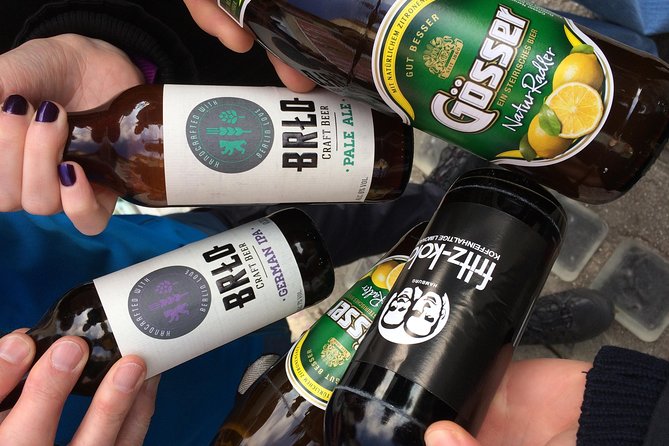
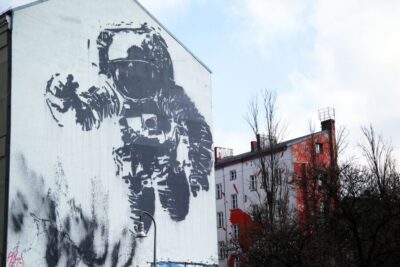
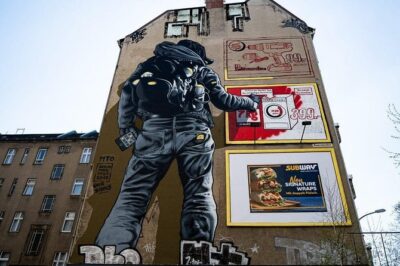
The East Side Gallery is the most obvious art stop, but Kreuzberg gives you a different view of Berlin’s creative culture. Here, street art is woven into the neighborhood rather than concentrated along one preserved section of Wall.
The tour pauses at a famous mural and explains how images can tell stories about East and West, Berlin’s past, and its future. The visit lasts about 15 minutes. That makes it a good introduction if you want to understand the city’s visual culture, but it will not satisfy someone looking for a detailed street-art lecture or a long list of artists.
I like this part because it keeps the art tied to place. You are not simply looking at large paintings as decoration. You are learning why Berlin became associated with public art, political messages, and creative reuse of neglected spaces.
Still, keep expectations in check. One less satisfied participant wanted more sightseeing and felt the route offered only a limited look at the city beyond the East Side Gallery and the bridge crossing. If famous landmarks are your main goal, choose a dedicated Berlin sightseeing tour instead.
Ukrainian soul food and the city’s newer arrivals
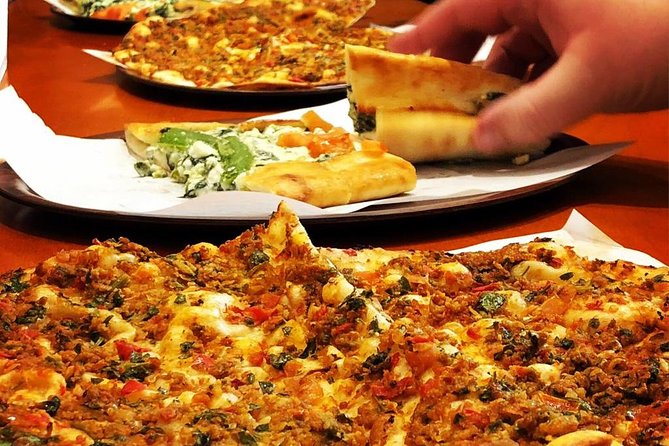
At Slava Berlin, you taste modern Ukrainian food and nalivanki in an immigrant women-led restaurant. The stop lasts around 20 minutes and adds a newer layer to the city’s food story.
This is an important contrast with the older Turkish influence in Kreuzberg. Berlin’s food culture is not frozen in the period of the Wall or the postwar years. New communities continue to add dishes, businesses, and ideas to the city.
The food stops are not all designed to represent old Berlin. Some show how Berlin keeps changing. That makes the tour more useful than a simple list of famous German dishes, especially if you want a sense of the city as it is now.
Dietary needs should be provided when you book. A vegetarian option is available, but the operator asks for advance notice. The tour includes alcohol, including Berliner Pilsner, so mention any needs or preferences ahead of time.
Markthalle Neun and Berlin’s food scene
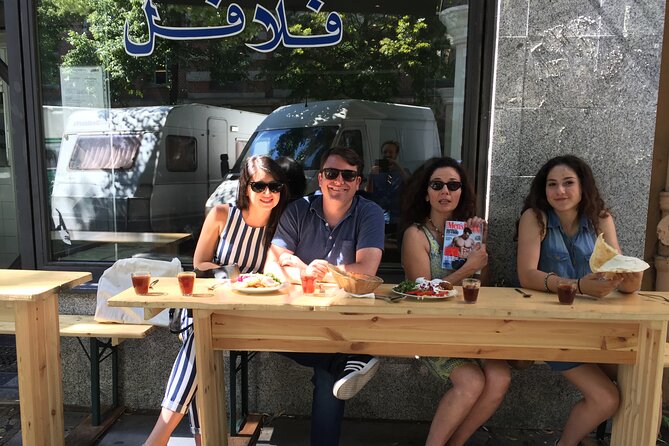
Markthalle Neun is one of the longest stops, at about 30 minutes. The restored market hall dates to the early 1900s and survived the destruction of World War II as well as later pressure to become a more commercial venue.
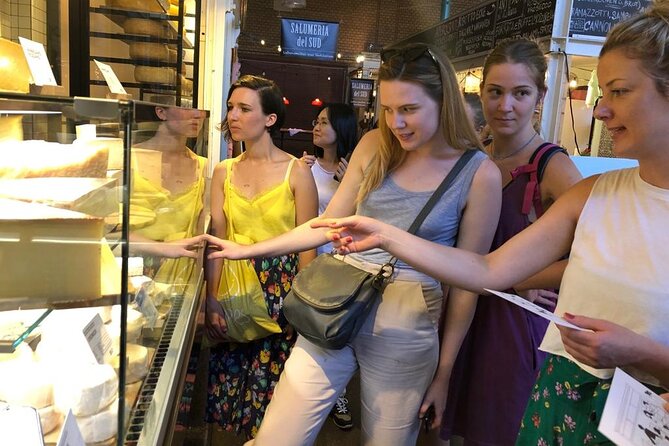
The market is a useful pause in the route. Instead of one restaurant or snack counter, you get a wider view of Berlin’s independent food scene and the connections between city producers, cooks, and market events.
Do not assume you will have unlimited time to browse. The tour has several stops still ahead, and the visit is part of a moving schedule. Think of Markthalle Neun as a guided introduction. You may want to return on your own if its food stalls or event calendar appeal to you.
This stop also helps explain the price. You are paying for a guide who connects food, neighborhoods, politics, and migration, not just for six free samples. Even so, $169.38 is a serious price for a three-and-a-half-hour tour. The value is strongest for visitors who would otherwise spend time searching out several neighborhoods and restaurants without knowing the backstory.
Turkish Kreuzberg and Little Istanbul
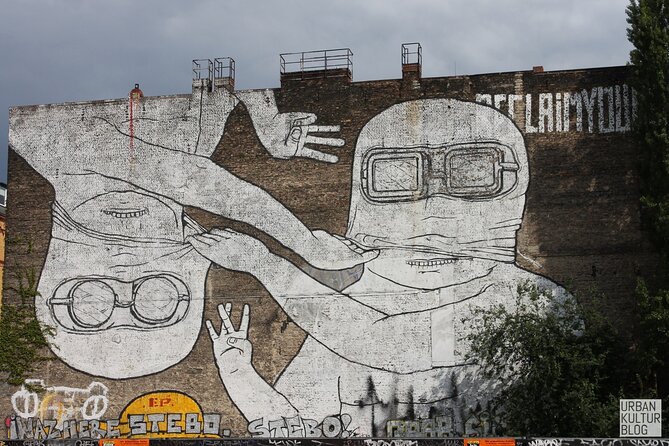
At Leylak, the route turns to Anatolian street food. The stop is about 20 minutes and reflects the major Turkish influence on Kreuzberg and on Berlin as a whole.
The tour describes Berlin as home to the largest Turkish community outside Turkey. That gives the food a clear place in the city’s social history. Turkish families helped rebuild parts of Kreuzberg and changed its cultural identity, particularly during the 1980s and 1990s.
This is one of the tour’s most useful sections for anyone who wants more than a standard German menu. You taste food while learning how migration shaped a neighborhood’s businesses and daily life.
The phrase Little Istanbul is used for an area with a strong Turkish presence. It is a shorthand, not a replacement for the neighborhood’s full identity. Kreuzberg includes many communities and influences, and the tour also makes room for Ukrainian, German, Chinese, and vegan food.
Vegan doughnuts and Berlin’s modern edge
The final food stop is Brammibal’s Donuts at Maybachufer. You try vegan doughnuts and hear about Berlin’s reputation as one of Europe’s leading vegan cities.
This is a smart ending because it keeps the food story moving forward. The route begins with schnitzel and currywurst, then reaches vegan baking and newer forms of city dining. Berlin’s food identity includes both meat-heavy classics and plant-based businesses.
The doughnuts are served late in the tour, after several savory tastings. If you have a sweet tooth, this may be the highlight. If you are already full, it is one more reason to avoid eating a large meal before the tour.
The route ends near U Kottbusser Tor, served by the U8 and U1 lines. You will need to arrange your own BVG transport ticket, since public transit is not included.
How much value do you get for $169.38?
The price is high compared with a basic food walk, but the tour includes six tastings, beverages, Berliner Pilsner, a local guide, and three and a half hours of walking and discussion. The tastings cover several food traditions rather than repeating the same type of snack.
I would judge the value in three ways:
- If you want a meal, $169.38 is expensive. The portions are filling, but they come in small servings at separate locations.
- If you want a history tour with food included, the price is easier to defend. You cover Friedrichshain, the East Side Gallery, Kreuzberg, Markthalle Neun, and several food communities.
- If you are traveling alone or in a pair, the small group can make the cost worthwhile because you get direct access to the guide.
The tour has a 4.9 rating from 157 reviews, with 97 percent recommending it. The strongest praise focuses on the guides, variety, unexpected food stops, and the amount of history woven into the route. A few criticisms point to limited sightseeing, basic explanations, or food that felt inexpensive for the price.
That mixed picture is fair. The tour is not a luxury dining experience. It is a guided neighborhood walk with many tastes attached. Book it for the combination, not for premium restaurants.
Who should take this tour?
I would recommend it to first-time Berlin visitors who want an introduction to the city’s eastern and western neighborhoods without spending a full day on a formal history tour.
It also suits repeat visitors who have already seen the Brandenburg Gate, Reichstag, and Museum Island and want a more local food route. The Turkish, Ukrainian, vegan, and German stops give you a better sense of present-day Berlin than a standard list of landmarks.
You should be comfortable walking for several hours, standing at food counters, and eating on a schedule. Wear comfortable shoes and bring a rain jacket or poncho if the weather looks uncertain.
This is less suitable if you want a slow lunch, extensive museum time, or a detailed tour of Berlin’s major monuments. It may also disappoint if you expect every stop to be a full restaurant meal.
The tour is offered in English, allows service animals, and most people can participate. Confirmation arrives when you book, but the operator may change the meeting time or place by season and will reconfirm by email. Free cancellation is available up to 24 hours before the start time.
Should you book East Meets West?
Book this tour if you want Berlin explained through what people eat, where communities settled, and how the Wall still shapes the city. The small group, broad food range, and guides such as Lee, Elena, Tiago, and Will are its best features.
Skip it if $169.38 feels too steep for tastings, or if you mainly want famous sights and long museum stops. For the right person, this is a filling, thoughtful introduction to Friedrichshain and Kreuzberg. For someone seeking a polished food-and-wine meal, it is the wrong format.
FAQ
Where does the tour begin?
It begins at Industriepalast Hostel, Warschauer Strasse 43, 10243 Berlin, Germany.
What time does the tour start?
The listed start time is 12:00 pm.
Where does the tour end?
The tour ends at U Kottbusser Tor in Kreuzberg, near the U8 and U1 lines.
How long does the experience last?
It lasts approximately three hours and 30 minutes.
How many people can join the group?
The maximum group size is eight travelers.
What food and drinks are included?
The experience includes six local tastings, beverages, food tastings, and local Berliner Pilsner beer.
Is public transportation included?
No. You need to buy your own BVG transport ticket.
Is a vegetarian option available?
Yes. You should advise the operator about vegetarian needs when booking.
What should you wear?
Comfortable walking shoes are recommended. A rain jacket or poncho is also useful, depending on the weather.
Can you cancel for a full refund?
Yes. You can cancel at least 24 hours before the start time for a full refund. Cancellations or changes made less than 24 hours before the start time are not accepted for a refund.
Just added in Berlin
- Berlin & The Third Reich Private Guided Tour★ 5.0 · 3 reviews
- Third Reich Quest Experience in Berlin★ 4.5 · 7 reviews
- Private Analogue Photography Experience in Berlin★ 5.0 · 3 reviews
- Berlin Urbex Adventure and History Tour★ 5.0 · 9 reviews
- The Beauty of Berlin by Bike: Private Tour★ 5.0 · 59 reviews
- Berlin: Guided Bike tour of the Berlin Wall and Third Reich★ 5.0 · 160 reviews
- Beyond Currywurst: Berlin’s Hidden Street Food & Culture Tour★ 5.0 · 100 reviews
- Berlin Third Reich & Cold War Walking Tour With A Guide★ 5.0 · 7 reviews
Street Art, compared.

Neustadt District Street Art Guided Walking Tour
Read our review →
Browse the lists this tour appears in