
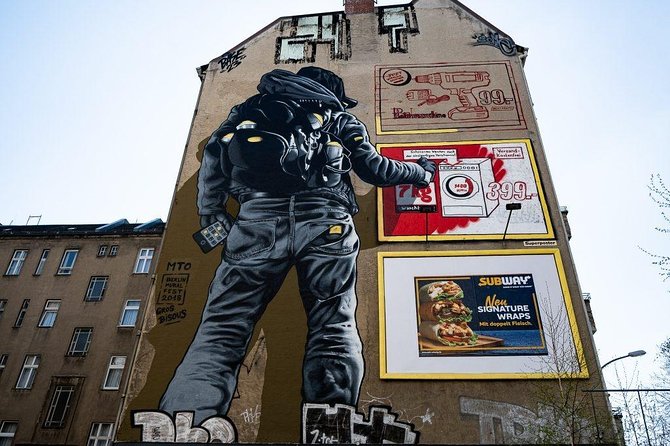
Reviewed · STREET ART
Berlin Street Art Walking Tour – Off The Grid
Berlin’s street art is not just decoration. It is argument, identity, risk, humor, and neighborhood history sprayed, pasted, and painted across walls. This tour takes you through Friedrichshain and Kreuzberg, where a working artist guide such as Rob, Ben, or Antonio explains how to read what you see.
I like two things right away: the guides bring real experience from Berlin’s graffiti scene, and the route gets you away from the standard tourist circuit. You also stop at a street art gallery, pause for coffee, and have time to photograph the work. The main catch is practical: public transport and stairs are part of the outing, and you need an AB-zone ticket.
Key points to know before booking
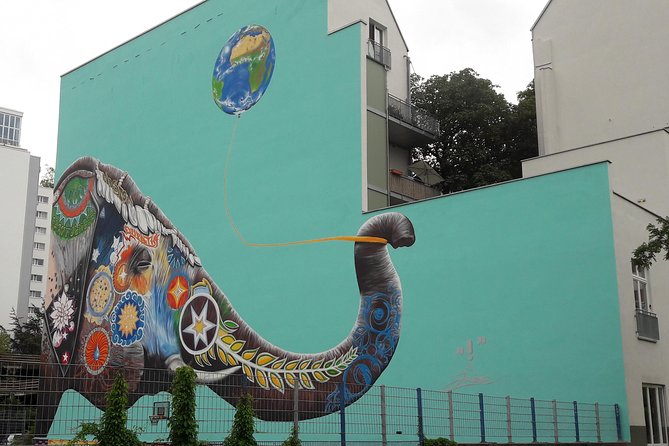
- Artist-led explanations: Rob, Ben, and Antonio have been praised for making graffiti techniques, politics, and local artists easy to understand.
- Friedrichshain to Kreuzberg route: You explore creative neighborhoods rather than spending the afternoon at the East Side Gallery.
- Gallery and café break: Commissioned urban artwork, coffee, snacks, and a restroom stop add welcome variety to the walk.
- More stopping than marching: The tour lasts about three hours, but much of that time is spent discussing individual pieces.
- Bring public transport fare: The route uses the metro or train, and an AB-zone ticket may be needed.
- Small-group feel: The maximum group size is 20 people, with an average rating of 4.9 from 270 reviews and 96 percent recommending it.
Berlin street art is the subject, not a backdrop
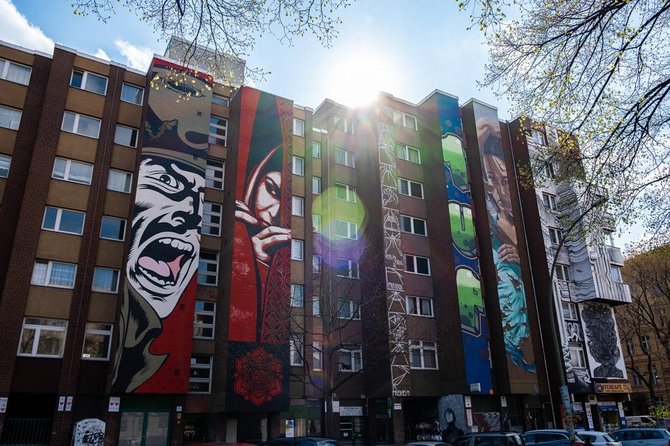
The best reason to book this tour is that it teaches you how to look. Berlin has plenty of large murals that photograph well, but a good guide helps you notice the smaller marks too: a tag, a paste-up, a stencil, or a clever use of a damaged wall.
You learn that graffiti and street art are related but not identical. The distinction matters to the people who make the work. The tour deals with technique, intention, legality, risk, and the social rules of the scene. That makes the afternoon more useful than simply collecting a few colorful photos.
The political side is important. Berlin’s walls often carry opinions about power, housing, identity, money, and public space. You may not agree with every message, but learning why artists choose a certain wall or style gives the work more weight.
The guides are a major part of the experience. Rob is often praised for his humor, clear explanations, and enthusiasm. Ben is also a practicing graffiti artist, and Antonio Castello brings first-hand knowledge of local artists, politics, and legal issues. Your guide can vary, but the central benefit remains the same: you are hearing from someone close to the subject rather than from a general city guide.
More Street Art Tours in Berlin
- Berlin: City Street Art Guided Walking Tour
★ 4.8 · 886 reviews - Berlin: 3-Hour Street Art Tour
★ 4.7 · 778 reviews - East Meets West: Berlin Food Culture & Street Art
★ 5.0 · 157 reviews
Starting at Warschauer Strasse at 1 pm
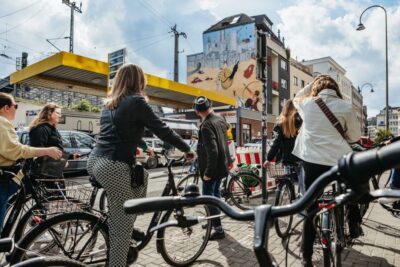
The tour starts at Warschauer Strasse 53 at 1 pm. This places you in Friedrichshain, one of Berlin’s best areas for seeing street art in its everyday setting.
Do not expect a formal opening ceremony or a long lecture before you move. The strength of this tour is the way it connects the city around you with the art on the walls. Your guide can point out a piece, explain its style or maker, then place it within Berlin’s wider scene.
The route is not limited to giant legal murals. That is good news if you want a fuller picture of the city’s art culture. The famous East Side Gallery is not the focus, so book this experience for context and variety, not for a checklist of Berlin’s most photographed wall paintings.
You will likely stop often. One criticism of street art walks is that people imagine three hours of nonstop walking. Here, that is not the format. You walk between works, then stand while the guide explains what you are seeing. There is also time to look around and take pictures.
Friedrichshain: learning to read the walls
Friedrichshain gives the tour a useful starting point because the district lets you see different scales of urban art close together. One wall may carry a polished commissioned mural. Around the corner, you might find quick graffiti lettering or a small pasted image that means more to local artists than to casual passersby.
Your guide explains the tools and methods behind the work. You can expect discussion of styles, materials, placement, and the practical problems artists face when putting up a piece. The tour also covers the difference between planned public art and unauthorized work.
That distinction helps you understand why a commissioned mural and a fast illegal tag should not be judged by the same rules. They come from different traditions, serve different purposes, and carry different risks.
I especially like this part for people who think graffiti is simply damage. The guide does not ask you to admire everything. Instead, you get enough background to make your own judgment. You may still dislike a particular tag, but you will better understand why it exists and what its maker is trying to do.
The neighborhood setting also matters. This is not art sealed inside a museum. It changes, fades, gets painted over, or disappears when a building changes hands. The tour gives you a snapshot of a scene that is always moving.
A gallery stop for commissioned urban art
At some point, the route includes a street art gallery showing examples of commissioned urban artwork. This stop gives you a useful contrast with the outdoor pieces.
Inside a gallery, the work can be viewed more closely and with fewer distractions. You may see techniques or details that are hard to catch on a large wall. The setting also raises a central question: what happens when street art moves into a paid, organized space?
That question is part of Berlin’s current art scene. Commissioned murals can give artists time, materials, safety, and a larger audience. They can also change the raw quality that attracted people to street art in the first place. A good guide can discuss that tension without pretending there is one simple answer.
The gallery stop also breaks up the walking. This is useful on a hot day, a cold afternoon, or a damp one. It gives you a change of pace and lets the guide show work that may not be available on the street during your visit.
More Walking Tours in Berlin
- Discover Berlin Half-Day Walking Tour
★ 5.0 · 9,624 reviews - Berlin: Third Reich and Cold War 2 Hour Walking Tour
★ 4.9 · 6,830 reviews - Berlin: Discover Berlin Walking Tour
★ 4.9 · 5,998 reviews - Berlin’s Best: 2 Hour Walking Tour Third Reich and the Cold War
★ 5.0 · 5,486 reviews
The café pause makes the three hours easier
The tour includes a café stop where you can get coffee, hot chocolate, or a snack. There is also a chance to use the restroom.
That may sound minor, but it improves the afternoon. Street art tours can involve a lot of standing outdoors, and a warm drink is welcome on a chilly Berlin day. One guide, Rob, has been singled out for making this pause feel like part of the experience rather than a forced interruption.
You still pay for anything you order, since food and drinks are not listed as included. Think of the stop as useful breathing room, not a meal break. Eat beforehand if you need a full lunch.
The café also gives you a chance to ask questions in a less hurried setting. If you are curious about a technique, an artist, or the line between graffiti and street art, this is a good moment to ask.
Crossing into Kreuzberg
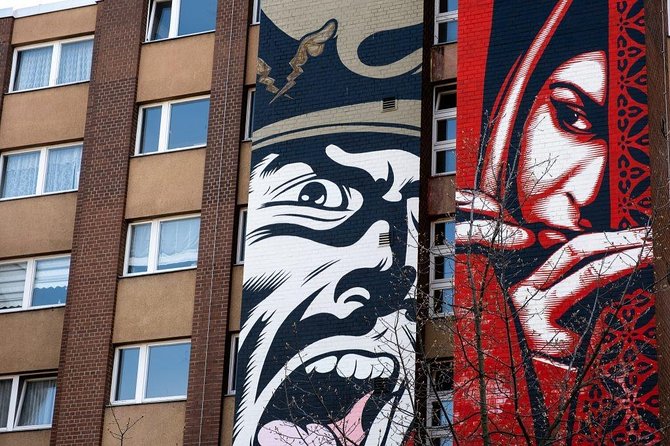
The route continues toward Kreuzberg and finishes in Wrangelkiez, close to the U1 line. This change of district adds range to the outing.
Kreuzberg is a strong place to discuss the relationship between art and neighborhood life. Walls can act as informal bulletin boards, political statements, personal signatures, or attempts to claim space. The guide helps connect those uses with the wider culture of Berlin’s graffiti scene.
The finish in Wrangelkiez is practical. You are not returned to the starting point, so plan your evening from Kreuzberg rather than Warschauer Strasse. The U1 makes it easier to continue to another part of the city, but check your route before you set off.
The trip between areas uses public transport. The supplied information warns that an AB-zone ticket may be required, and one review specifically notes two train rides and several stairs. I would buy the correct ticket before the tour begins, or arrive early enough to use the ticket machine without rushing.
This is one of the few parts of the experience that could catch you off guard. The public transport adds useful reach to the route, but it also means this is not a purely street-level walk. If stairs are difficult for you, ask the operator about the current route before booking.
How much walking is involved?
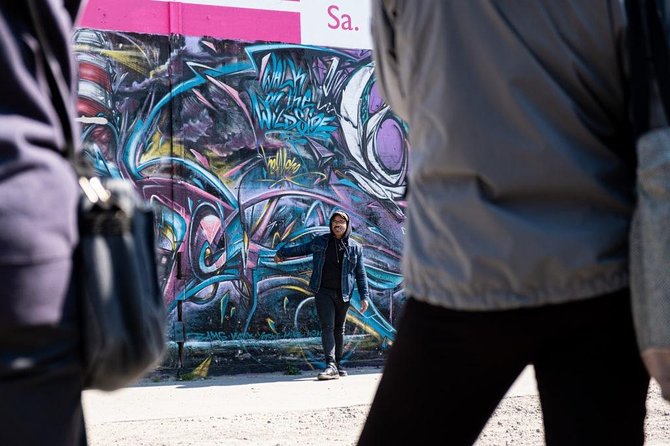
You should be comfortable walking for around three hours, but the pace is not a forced march. The group stops regularly for explanations, photographs, and short periods of looking around.
The tour description recommends good walking shoes. Take that advice seriously. Berlin sidewalks can be uneven, and the day may include station stairs, pavement, and stretches between neighborhoods.
The group can include up to 20 people. That is small enough for a guide to address the group clearly, though it is not a private tour. If the group reaches its maximum, you may need to stay close so you can hear during street crossings and busy transport sections.
One useful criticism concerns attention at crossings and while boarding trains. I would keep children and anyone who walks slowly near the guide, especially when the group moves through stations. The guide may be excellent at explaining art, but the city still requires ordinary street awareness.
Weather, clothing, and the right season
This is an outdoor experience, and the tour requires suitable weather. If poor weather forces cancellation, you are offered another date or a full refund.
You should still dress for Berlin’s changeable conditions. Bring an umbrella if rain is possible, and wear shoes that can handle a long afternoon on foot. A cold day need not ruin the tour, but standing still while listening can feel colder than walking.
The tour has operated in chilly November weather and during high heat, so conditions can vary widely. On hot days, carry water. On wet or cold days, dress for waiting outside, not just for walking between locations.
Because the art changes over time, the exact route and pieces can change too. That is not a flaw. It is part of the subject. Street art is temporary, and a route built around current work cannot promise the same wall every week.
The value of the $24.20 price
At $24.20 per person, this is a reasonably priced three-hour activity in Berlin. You are paying for a local guide, a professional presentation, a gallery stop, and a route across two major creative districts.
The value is strongest if you want interpretation. If you only want to photograph murals, you can walk around Friedrichshain and Kreuzberg on your own. You will save money, but you will miss the explanations about technique, artist communities, legal limits, and political meaning.
The tour also helps you use your time well. In one afternoon, you see outdoor work, commissioned pieces, smaller neighborhood details, and more than one district. The public transport connection extends the route without making the price high.
The café purchase and transport ticket cost extra. Those expenses are modest, but include them in your planning. The ticket requirement is especially important because the tour uses public transport during the route.
With a 4.9 rating from 270 reviews and 96 percent recommending it, the experience has a strong record. More important than the numbers is the pattern behind them: people repeatedly value the guides’ passion, humor, first-hand experience, and ability to make the subject accessible to different ages.
Who will enjoy this tour most?
I would recommend it to anyone curious about Berlin beyond museums and famous landmarks. You do not need to know graffiti terms before arriving. The guide explains the basics and gives you enough context to keep learning afterward.
It suits:
- Art students and creative people who want to see technique in an urban setting
- First-time Berlin visitors looking for neighborhoods beyond the usual sights
- Families with older children and teenagers interested in visual culture
- Adults who want a lively introduction rather than an academic lecture
- Anyone who has wondered why Berlin has such a strong graffiti identity
The tour also works for mixed-age groups. A 15-year-old art lover can enjoy the visual side, while older visitors can focus on politics, city change, and the debate over public space.
It may not suit you if you want a private tour, dislike public transport, have trouble with stairs, or need a fully weatherproof activity. It is also not the right choice if your main goal is the East Side Gallery. That location is not the focus here.
Booking details that matter
The tour is offered in English and usually sells about 22 days ahead, so I would not leave it until the last day of a short Berlin visit.
Confirmation is sent at booking. The tour starts at 1 pm and lasts about three hours. It ends in Kreuzberg near the U1 line, not back at Warschauer Strasse.
Free cancellation is available up to 24 hours before the start time for a full refund. Changes or cancellations inside that 24-hour window are not accepted for a refund. The experience may also be canceled if the minimum number is not met, in which case you are offered another date, another experience, or a full refund.
Should you book Berlin Street Art Walking Tour: Off The Grid?
Yes, if you want Berlin’s street art explained by someone connected to the scene. The strongest feature is not the number of walls you see. It is the way guides such as Rob, Ben, and Antonio turn scattered images into a story about technique, politics, local artists, and public space.
Book it for an authentic neighborhood walk, not a famous-wall checklist. Bring an AB-zone ticket, good shoes, and rain protection. If you can manage public transport, stairs, and three hours outside, the $24.20 price buys a useful introduction to one of Berlin’s most distinctive cultural subjects.
FAQ
Where does the Berlin street art tour start?
The tour starts at Warschauer Strasse 53, 10243 Berlin, at 1 pm.
Where does the tour finish?
It finishes in Wrangelkiez in Friedrichshain-Kreuzberg, close to the U1 line.
How long does the tour last?
The tour lasts approximately three hours.
Is public transport used during the tour?
Yes. Public transport is used throughout the route, and you should have an AB-zone transport ticket. The route can include train rides and stairs.
Is the tour offered in English?
Yes. The experience is offered in English.
What happens if the weather is too poor for the tour?
If the tour is canceled because of poor weather, you are offered a different date or a full refund.
Just added in Berlin
- Berlin & The Third Reich Private Guided Tour★ 5.0 · 3 reviews
- Third Reich Quest Experience in Berlin★ 4.5 · 7 reviews
- Private Analogue Photography Experience in Berlin★ 5.0 · 3 reviews
- Berlin Urbex Adventure and History Tour★ 5.0 · 9 reviews
- The Beauty of Berlin by Bike: Private Tour★ 5.0 · 59 reviews
- Berlin: Guided Bike tour of the Berlin Wall and Third Reich★ 5.0 · 160 reviews
- Berlin Third Reich & Cold War Walking Tour With A Guide★ 5.0 · 7 reviews
- Shared Underground Party Tour in Berlin★ 4.5 · 9 reviews
Street Art, compared.

Neustadt District Street Art Guided Walking Tour
Read our review →

East Meets West: Berlin Food Culture & Street Art
Read our review →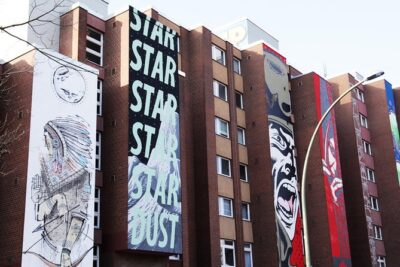
Browse the lists this tour appears in