
Reviewed · WALKING TOURS
Discover Berlin Half-Day Walking Tour
Berlin’s story is written into its streets, and this walk reads the city in the right order. You move from Museum Island and Prussian Berlin through Nazi sites, the Berlin Wall, and Checkpoint Charlie, seeing how one capital was built, broken, divided, and rebuilt.
I like two things here. First, the route gives you a strong city map on your first day. Second, the guides add human detail, from East Berlin memories to the careful explanation of Nazi crimes. The main tradeoff is simple: three and a half hours on foot is a lot, especially in cold, wet, or snowy weather.
Key points at a glance
- A long but useful route: You cover central Berlin from Hackescher Markt and Museum Island to Checkpoint Charlie.
- Four major historical chapters: The walk links Prussian rule, the Nazi period, postwar division, and modern Berlin.
- Major sights without admission fees: You see Brandenburg Gate, the Reichstag, the Holocaust Memorial, Bebelplatz, and the Berlin Wall area from outside.
- Guides make the difference: Tobi, Rebecca, Georgia, Ruaridh, Emma, and others are praised for humor, clear English, personal stories, and thoughtful treatment of painful subjects.
- Good first-day plan: The tour helps you decide which museums, memorials, and neighborhoods deserve a longer visit.
- Know the limits: Food, drinks, and museum entry are not included, and the route ends somewhere different from the meeting point.
Why this walk works as a first look at Berlin
Berlin can feel scattered at first. Its sights are spread across several districts, and the city’s story does not fit neatly into one museum. This tour solves part of that problem by linking the main historic center into one long walk.
You begin at Neue Promenade 3, near Hackescher Markt. From there, the guide sets out the broad story: Berlin’s early development, the rise of Prussia, the imperial capital, the Nazi dictatorship, the Cold War division, and the city’s present-day renewal.
That sequence matters. Brandenburg Gate means more when you know how it once marked the edge of the old city. The Berlin Wall means more when you have already seen the grand boulevard, government buildings, and memorials that were later divided by the Iron Curtain.
I would book this near the start of a Berlin stay. It gives you a working map and helps you choose where to return. One family used it to decide which sights deserved another visit, while another visitor used the route as a practical overview before exploring in more detail.
More Walking Tours in Berlin
- Berlin: Third Reich and Cold War 2 Hour Walking Tour
★ 4.9 · 6,830 reviews - Berlin: Discover Berlin Walking Tour
★ 4.9 · 5,998 reviews - Berlin’s Best: 2 Hour Walking Tour Third Reich and the Cold War
★ 5.0 · 5,486 reviews
Museum Island begins the story
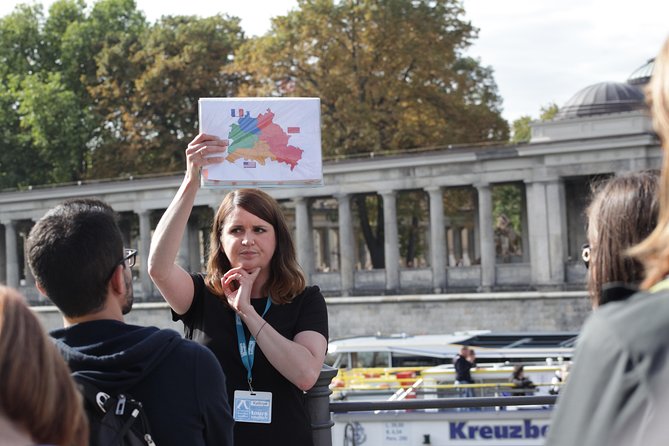
The opening stretch takes you through Hackescher Markt, James Simon Park, and Museum Island. The guide pauses at the major sites rather than taking you inside them, so think of this as an outdoor orientation, not a museum tour.
Museum Island brings together some of Berlin’s grandest buildings. You pass the Neues Museum, Pergamonmuseum, Altes Museum, Berliner Dom, Lustgarten, and the rebuilt Stadtschloss area. The guide explains how this part of Berlin became a center of royal power, art, scholarship, and public culture.
You also see the Berlin State Library, once associated with Albert Einstein, and Neue Wache, a memorial with a stark interior sculpture. These short stops can feel dense because the buildings are close together and each carries a different story.
The route includes the Neue Synagogue and the Centrum Judaicum. This is an important reminder that Berlin’s Jewish life is not only part of the city’s Holocaust story. The walk gives you a place to connect that earlier community with the later destruction and the city’s effort to remember it.
You will also pass the Fernsehturm, Berlin’s famous television tower, and the red-brick Rotes Rathaus. The tower points to the former East Berlin skyline, while the town hall helps place the old civic center in the wider city.
A useful warning: there are many stops in this section, often only five minutes each. You get context and photographs, but not much time to linger. If the Altes Museum, Berliner Dom, or Pergamonmuseum catches your eye, mark it for a separate visit.
Unter den Linden and Bebelplatz
From Museum Island, the walk follows the grand axis of Unter den Linden. This boulevard once linked the royal palace with the western approach to Berlin and became one of the city’s showpiece streets.
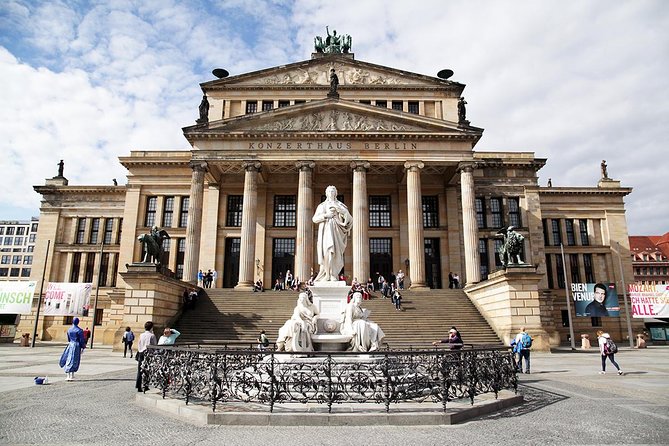
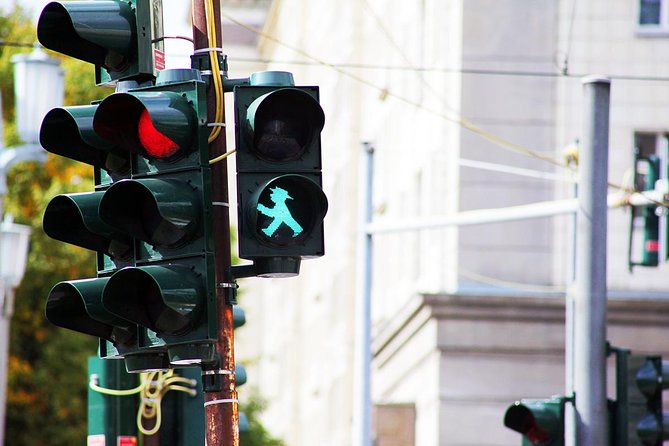
You pass Schlossbrücke, the German Historical Museum, Staatsoper Unter den Linden, St. Hedwig’s Cathedral, Humboldt University, and the Ampelmann shop. Each stop adds another layer, from monarchy and military power to education, religion, and the everyday symbols of divided Berlin.
Bebelplatz is one of the most affecting stops. It was the site of the Nazi book burning in 1933. The memorial is set into the pavement, where an underground room of empty bookshelves can be seen through glass. The guide explains why this act mattered and how cultural repression formed part of the larger Nazi system.
The tour does not treat these sites as isolated photo stops. It connects them. A university square, an opera house, a cathedral, and a book-burning memorial sit within a short walk of one another, showing how politics reached into public life, education, religion, and art.
This part of the route is also a good example of the tour’s pace. The guide needs to keep the group moving, so you should not expect long pauses at every building. If you want a slow look inside Humboldt University or St. Hedwig’s Cathedral, plan to return later.
Brandenburg Gate and the Reichstag
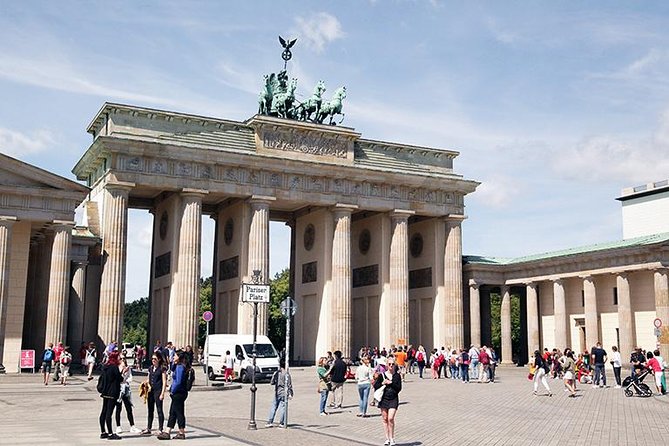
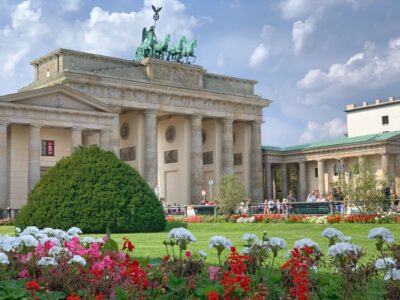
Pariser Platz leads you to Brandenburg Gate, perhaps Berlin’s most recognizable landmark. The gate once marked the western end of Unter den Linden. Later, it became a symbol of division because the Berlin Wall ran nearby. After reunification, it became a symbol of a city joined again.
The guide explains those changes while giving you time to look at the gate from both sides. The surrounding square is open and grand, with the Reichstag close by.
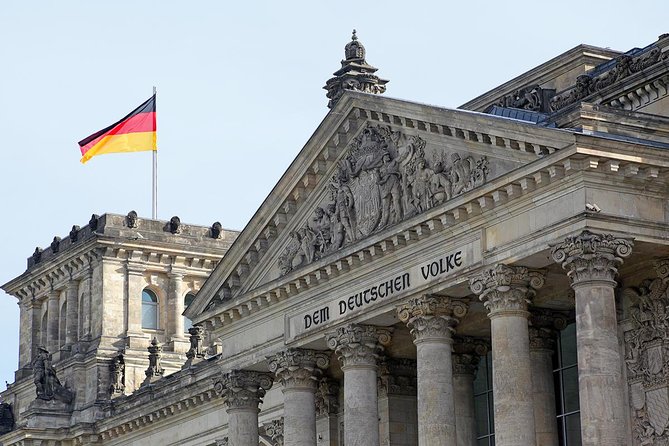
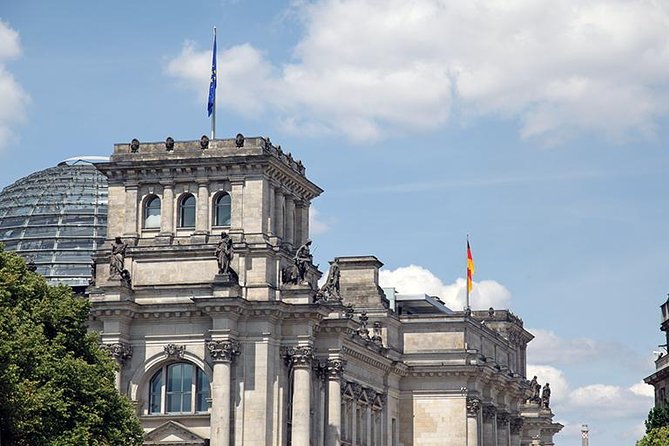
At the Reichstag, Germany’s parliament, you hear how this building fits into Berlin’s political story. The walking tour does not include entry to the dome or interior. That is worth knowing before you book, since the building’s glass dome is a separate attraction.
The route may also point out the Victory Column, though this is a brief stop rather than a visit to the monument. From here, the guide brings the city’s twentieth-century story into sharp focus.
Same city, a completely different kind of day:
- Berlin: Reichstag, Dome and Government District Guided Tour
★ 4.7 · 18,288 reviews - Berlin: 1-Hour City Tour by Boat with Guaranteed Seating
★ 4.3 · 16,993 reviews - Berlin: Boat Tour Along the River Spree
★ 4.4 · 11,252 reviews - Berlin: Hop-on Hop-off Bus Tour with Live Commentary
★ 4.3 · 8,579 reviews
The Holocaust Memorial and Hitler’s bunker site

The Memorial to the Murdered Jews of Europe is one of the tour’s key stops. Its field of concrete blocks changes as you walk through it, creating a feeling of uncertainty without relying on a long written explanation.
The guide discusses the memorial’s purpose and the murder of Europe’s Jews under the Nazi regime. This is handled as a serious historical stop, not as a quick photo opportunity. Ruaridh, Rebecca, and other guides have been praised for treating difficult subjects with care and respect.
Nearby, you see the site associated with Hitler’s bunker. There is no grand structure to enter. The location is marked in an ordinary urban setting, and that plainness is part of the point. The guide explains what happened there and why the site has not been turned into a shrine.
You also pass Platz des Volksaufstandes von 1953, linked to the East German uprising, and the former Aviation Ministry. These locations help bridge the gap between the Nazi period and the Cold War. Berlin’s twentieth century was not one single disaster followed by a clean recovery. One political system collapsed, another took hold, and the city remained divided.
Following the Wall toward Checkpoint Charlie
The walk then traces part of the former death strip and heads toward Checkpoint Charlie. This was the best-known crossing point between East and West Berlin, used by foreign visitors, diplomats, and others with permission to pass.
Today, Checkpoint Charlie is a busy urban stop with strong symbolic power. The guide helps separate the real Cold War border crossing from the modern displays and photo opportunities around it. You learn about the risks of moving between East and West, the role of the wall, and the events that led to its fall in 1989.
The route also includes the Memorial of the Berlin Wall and a stretch where you can consider how the barrier cut through ordinary streets. You do not get a full visit to the Berlin Wall Memorial site, but the walk gives you enough context to understand why the wall was more than a concrete barrier. It divided homes, workplaces, transport routes, and families.
For me, this is where the tour is most useful. Berlin’s Cold War sights can look like scattered fragments. A guide explains how the border functioned and why certain streets mattered, so the remains become easier to read.
Topography of Terror and the city’s hard memory
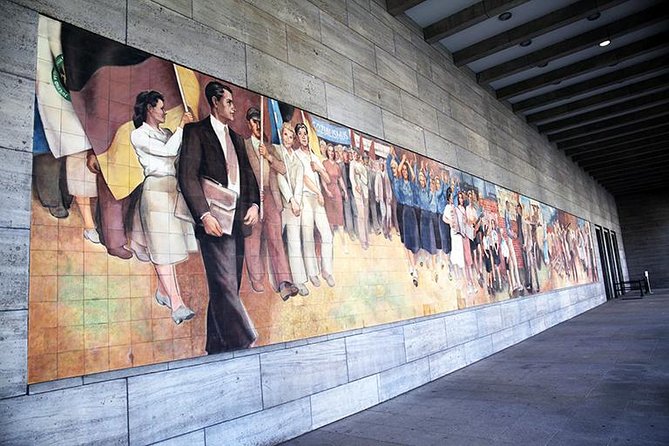
The Topography of Terror is located at the former headquarters of the Gestapo and SS. The tour pauses here to explain the site’s role in Nazi repression and the city’s choice to confront that past directly.
You can look down toward excavated cellar areas where political prisoners were tortured and killed. The setting is stark. It does not soften the subject, and the guide’s tone matters here.
The museum itself is a separate place to explore, and the walking tour does not give you time for a full indoor visit. I would return if you want detailed documents, photographs, and longer explanations. The tour gives you the essential setting and meaning, then keeps moving.
That balance works for a first visit. You receive enough information to understand why the place matters, without spending the entire day inside one exhibition.
What the guides add
The guide can shape the whole experience. The strongest examples include Tobi, who has been praised for humor and attention to individual needs, including explaining points in more than one language; Rebecca, noted for patience and lively facts; and Georgia, praised for warmth and a clear delivery.
Emma, Anika, Jonathan, Ben, Phillip, Luisa, Gregor, Lewis, Walid, and Sarah are also named by people who found the tour engaging. Their styles vary, but the common strengths are clear: good storytelling, a firm grasp of Berlin’s past, and an ability to answer questions without losing the group.
The East Berlin perspective can be especially useful. One guide shared personal insight into life in the former East, while another added everyday details rather than sticking only to dates and political events. That kind of context helps you picture how division affected ordinary life.
Do not assume you will receive one specific guide. The names above show the range of guides used for the experience, not a guarantee for your date.
Pace, group size, and practical comfort
The advertised duration is about three hours and thirty minutes, though some outings have lasted closer to four hours. You cover a large area and stop often, so the pace is steady rather than leisurely.
The maximum group size is 25 people. That is small enough for a guide to manage questions, though the group may still feel large at busy public sites. One person noted that a guide was easy to hear even with a group of about 30, but you should still stay near the guide when crossing streets or moving between landmarks.
Wear comfortable shoes. This is a genuine walking tour, not a sightseeing trip with short transfers between stops. You may get a short break at a bakery or coffee house, depending on the outing, but food and drinks are not included. Bring your own plan for refreshments.
Weather matters. A cold-weather outing can still work well, but you need a warm coat, gloves, and shoes suited to long hours outdoors. One guide kept a snowy day enjoyable through humor and clear storytelling, but no guide can remove the cold from Berlin in winter.
The tour is offered in English and uses a mobile ticket. Service animals are allowed, public transportation is nearby, and most people can take part. The route ends in a different location from the starting point, so do not leave a car or other belongings at the meeting point.
Is $24.19 good value?
At $24.19 per person, the price is low for a guided outing lasting three and a half hours. You are paying for a professional guide, not for museum entry, food, or transport.
The value comes from the amount of ground covered and the connections between sites. Seeing Brandenburg Gate, the Reichstag, the Holocaust Memorial, Bebelplatz, the Wall area, Topography of Terror, and Checkpoint Charlie on your own is possible, but the historical links are easy to miss.
You should not compare this with a private tour. The group can include as many as 25 people, and the short stops mean the guide must keep to a schedule. For a first orientation, the price is strong. For slow photography, long museum visits, or personal attention throughout, choose a smaller or private outing instead.
Who should book this walk?
I would recommend it to first-time visitors, families with older children or teenagers, and anyone who wants Berlin’s major historical chapters explained in one route. It also suits solo visitors who want an easy way to get oriented without arranging every stop themselves.
History fans will appreciate the range, but the tour is not only for specialists. Guides use humor, personal stories, and everyday examples to keep the material approachable. The tone remains respectful when the subject turns to Nazi crimes, persecution, and the Cold War.
You should think twice if you dislike long walks, want to enter every major building, or prefer to explore at your own speed. The route is full, and the schedule leaves little time for lingering.
Should you book the Discover Berlin Half-Day Walking Tour?
Yes, if you want a strong first look at central Berlin for a modest price. Book it early in your stay, then return to the museums and memorials that interest you most.
The main reason to choose it is not simply the number of sights. It is the way the route links Prussian grandeur, Nazi terror, divided Berlin, and reunification into one readable story. Just bring good shoes, allow for changing weather, and remember that the city’s hardest history deserves your full attention.
Free cancellation is available if you cancel at least 24 hours before the start time. Within 24 hours, no refund is provided.
FAQ
Where does the tour start?
The tour starts at Neue Promenade 3, 10178 Berlin, Germany.
Where does the tour end?
The activity ends in a different location from the starting point. The exact end details are provided with the booking information.
How long does the walking tour last?
The advertised duration is approximately three hours and thirty minutes. Some outings have taken closer to four hours.
What language is the tour offered in?
The tour is offered in English.
What is included in the price?
A professional guide is included.
Are food and drinks included?
No. Food and drinks are not included unless specifically stated. Some outings may allow a short bakery or coffee break, but you pay separately.
Does the tour enter the museums and buildings?
The route stops at many museums, memorials, and landmarks, but the listed price does not include admission tickets. The experience is primarily an outdoor walking tour.
How many people can join the tour?
The maximum group size is 25 people.
Is the tour accessible by public transportation?
Yes. The meeting area is near public transportation.
Can I cancel for a full refund?
Yes, if you cancel at least 24 hours before the experience start time. Cancellations made within 24 hours are not refunded.
More Half-Day in Berlin
- Berlin Third Reich Sites: Half-Day Walking Tour
★ 5.0 · 835 reviews - Half-Day Berlin Highlights Segway Expedition
★ 4.6 · 60 reviews - Half-Day Guided Bike Tour of Central Berlin’s Highlights
★ 4.5 · 32 reviews - From Munich: Dachau Memorial Site Half-Day Trip
★ 4.7 · 2,526 reviews
Just added in Berlin
- Berlin & The Third Reich Private Guided Tour★ 5.0 · 3 reviews
- Third Reich Quest Experience in Berlin★ 4.5 · 7 reviews
- Private Analogue Photography Experience in Berlin★ 5.0 · 3 reviews
- Berlin Urbex Adventure and History Tour★ 5.0 · 9 reviews
- The Beauty of Berlin by Bike: Private Tour★ 5.0 · 59 reviews
- Berlin: Guided Bike tour of the Berlin Wall and Third Reich★ 5.0 · 160 reviews
- Beyond Currywurst: Berlin’s Hidden Street Food & Culture Tour★ 5.0 · 100 reviews
- Berlin Third Reich & Cold War Walking Tour With A Guide★ 5.0 · 7 reviews
Walking Tours, compared.

Berlin’s Best: 2 Hour Walking Tour Third Reich and the Cold War
Read our review →
Third Reich Berlin: Hitler and WWII Walking Tour
Read our review →
Browse the lists this tour appears in