
Reviewed · THIRD REICH TOURS
Hitler’s Berlin – the rise and fall (Small Group)
Berlin’s Nazi past is not tucked away in one museum. It is spread across the center of the city, beside the Reichstag, under ordinary streets, and in memorials that ask you to stop and think. This walking tour links those places into one clear story, from the Nazi Party’s rise to Hitler’s final days and the destruction of the regime.
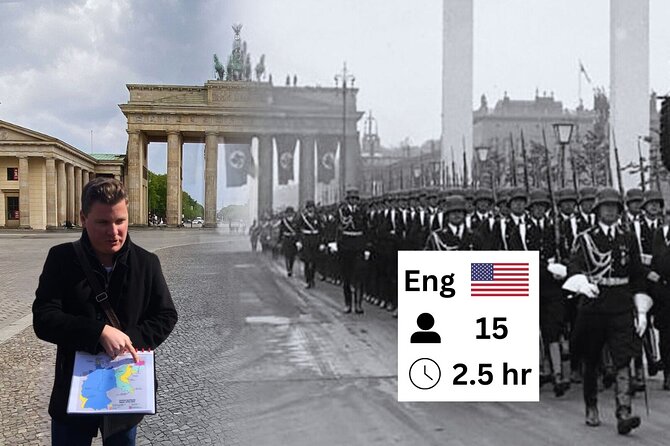
I like the way the route includes lesser-known memorials, including those for Sinti and Roma people and homosexual victims of the Nazi regime. I also like the small-group format, with no more than 15 people, and the use of historic maps and Then & Now photographs. The main consideration is that this is a serious, information-heavy walk, and some people may find the amount of detail or the subject matter demanding.
Key points to know before you book
- The route connects nine important sites between Brandenburg Gate and the Topography of Terror.
- The small group is capped at 15 people, allowing time for questions and discussion.
- The subject is broad, covering Nazi politics, persecution, resistance, war, and post-war remembrance.
- Several guides are praised for clear storytelling, including Scott, Johan, Roshana, Jochen, Matt, and Johan.
- The walk is compact but requires comfortable shoes, with several outdoor stops and mixed surfaces.
- The price is $54.44 per person, reasonable if you want a guided introduction rather than a quick look at memorials on your own.
Starting at Brandenburg Gate and the Sinti and Roma Memorial
The tour begins at Brandenburg Gate, a useful meeting point in central Berlin and a fitting place to start. This famous landmark is not itself the main subject of the walk. Instead, it places you in the political heart of the capital before the guide takes you toward the people and institutions shaped by National Socialism.
The first stop is the Memorial to the Sinti and Roma Victims of National Socialism. You spend about 10 minutes here learning how Roma and Sinti people were targeted by Nazi racial policy. This is an important opening because it shows that Nazi persecution was not aimed at one group alone.
The stop also introduces the cruel ideas that supported later mass murder. That context matters. The tour is not simply a parade of buildings connected with Hitler. It asks how prejudice became government policy, how discrimination became organized persecution, and how that process led to the Holocaust.
The memorial is a quiet place, so your guide’s explanation carries much of the meaning. Listen carefully, especially if this is your first tour of Berlin’s Nazi-era sites. The early material helps make sense of the memorials that follow.
More Third Reich Tours in Berlin
- Berlin: Third Reich and Cold War 2 Hour Walking Tour
★ 4.9 · 6,830 reviews - Berlin’s Best: 2 Hour Walking Tour Third Reich and the Cold War
★ 5.0 · 5,486 reviews - Third Reich Berlin: Hitler and WWII Walking Tour
★ 5.0 · 3,301 reviews
The Reichstag and Hitler’s path to power
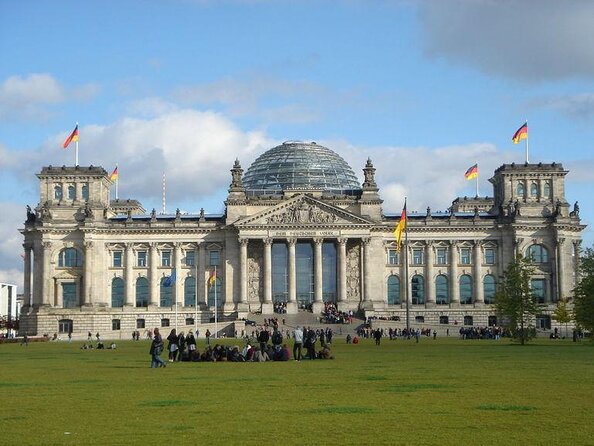
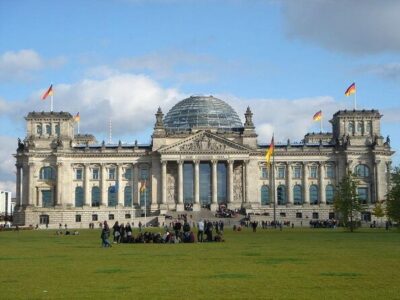
At the Reichstag, Germany’s Parliament building, the guide explains how the Nazi Party was elected into power and how Hitler became Führer. This part of the tour is especially useful because it corrects the simple idea that Hitler simply seized control overnight.
You will hear about the political steps that allowed the Nazi leadership to turn electoral success into dictatorship. The Reichstag is a powerful setting for this discussion. It connects the story of Nazi Germany with the mechanics of government, law, and political collapse.
You do not enter the building as part of this experience, and admission to the stops is not charged. The value here comes from the explanation outside. Guides such as Scott, Jochen, and Matt are praised for turning difficult political material into a story that is easy to follow, while still leaving room for questions.
This section can be dense. If you prefer a light sightseeing walk, it may feel like a lot to take in. If you want to understand how a modern state could slide into dictatorship, it is one of the most useful parts of the route.
Soviet Memorial Tiergarten and the Battle of Berlin
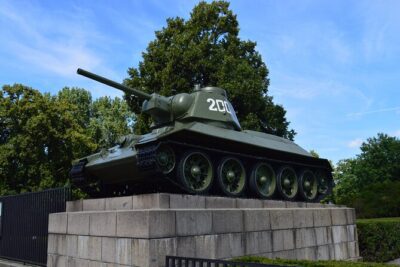
The Soviet Memorial in Tiergarten shifts the story from political power to the final violence of the war. Here, the guide discusses the Battle of Berlin, the fighting that brought the Nazi regime to its end, and the way those events have been remembered since 1945.
The stop lasts about 15 minutes. That is enough time for an explanation and some questions, but not enough for a full military history of the battle. You should think of this as a clear introduction to the final phase of the war in Berlin, not a specialist battlefield tour.
The memorial also adds another layer to the city’s history. Berlin does not remember the war through one national story. Different memorials reflect different victims, armies, and political periods. The guide helps you place the Soviet monument within that larger story.
This is another outdoor stop, so weather matters. The tour operates in all weather conditions, and you should dress for the forecast. Warm layers and comfortable shoes are more important here than fashion.
The Holocaust Memorial and the scale of Nazi murder
The Memorial to the Murdered Jews of Europe is one of Berlin’s most recognizable sites, but a guide can add useful context to a place many people see only briefly. The group spends about 15 minutes discussing the memorial and the Jewish victims of the Third Reich.
The memorial’s rows of concrete blocks invite personal reactions, but the site does not explain the entire Holocaust on its own. The guide’s role is to connect the physical space with the history of persecution, deportation, and murder. You also have time to discuss what the memorial means and how it affects you.
This is one of the emotional centerpieces of the walk. The subject is difficult, and the best approach is quiet attention rather than rushing through for photographs. The tour’s focus on Nazi policy and the people targeted by it gives the memorial a wider frame.
If you have already visited the memorial independently, you may still find the stop useful because the guide links it to the earlier discussion of racial ideology and the later memorials for other persecuted groups.
Same city, a completely different kind of day:
- Berlin: Reichstag, Dome and Government District Guided Tour
★ 4.7 · 18,288 reviews - Berlin: 1-Hour City Tour by Boat with Guaranteed Seating
★ 4.3 · 16,993 reviews - Berlin: Boat Tour Along the River Spree
★ 4.4 · 11,252 reviews - Discover Berlin Half-Day Walking Tour
★ 5.0 · 9,624 reviews
The memorial for homosexual victims
A short five-minute stop at the Monument to Homosexuals Persecuted Under National Socialism broadens the discussion again. The monument recognizes people persecuted by the Nazi regime because of their sexual orientation.
The visit is brief, but its place in the route is important. It reminds you that Nazi persecution affected several communities and that the regime used state power to police private life and identity.
Do not expect a long lecture here. The stop works as part of the larger pattern, adding another group to the story already introduced at the Sinti and Roma memorial and the Holocaust Memorial.
The Führerbunker and Hitler’s final days
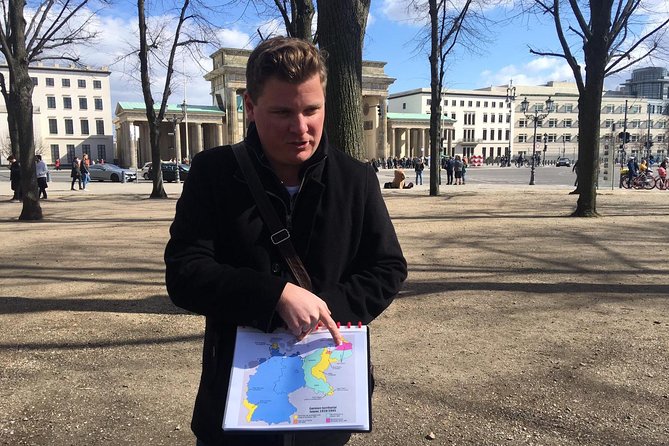
The route then reaches the site of the Führerbunker, where Hitler spent his final days during the Second World War. There is no dramatic underground attraction to enter as part of the walk. The importance of the stop lies in understanding the location and the events that took place there.
The guide explains the bunker’s role at the end of the war and places Hitler’s final days within the wider collapse of Berlin. This helps move the tour beyond the myth and spectacle that can surround Hitler. The focus remains on the consequences of dictatorship and war.
You spend about 15 minutes here. It is a good place to ask questions, particularly if you want to understand what happened in the final days of the regime. The site can feel visually understated, which is precisely why a clear explanation matters.
Johann Georg Elser and resistance to Hitler
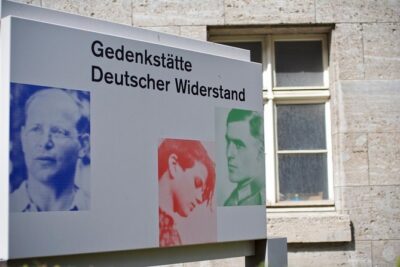
The Johann Georg Elser Memorial provides one of the most human parts of the tour. Elser attempted to assassinate Hitler and is discussed alongside other people who opposed the Nazi regime.
This stop matters because the story is not only about Nazi leaders and victims. It also includes people who recognized the danger of the regime and tried to resist it. The guide explains Elser’s role and places it beside the actions of others who attempted to oppose or kill Hitler.
You spend about 15 minutes here. The stop can prompt useful questions about when resistance began, why it failed, and how dangerous opposition was under the Nazi state.
I find this kind of stop especially valuable for families and teenagers. It gives a human face to the idea of resistance and shows that people did make choices, even under terrifying conditions. One family specifically valued the guide’s ability to answer questions for a teenager, and this section offers a natural opening for discussion.
The Aviation Ministry and the architecture of power
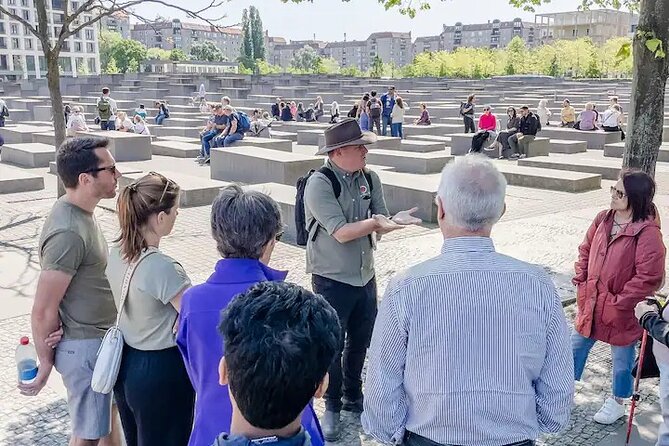
The former Aviation Ministry is a quick five-minute stop, but the building itself gives you a sense of the scale of Nazi administration. At the time it was built, it was the largest office building in Europe. It housed the German Ministry of Aviation, led by Hermann Göring.
The building helps explain that Nazism was not only expressed through rallies and propaganda. It required offices, ministries, paperwork, officials, and a large state machine. Looking at this enormous administrative building makes that point concrete.
Because the stop is brief, the guide will not explore every architectural detail. Its value comes from placing the building within the machinery of government and war. It also provides a useful contrast with the memorials, which focus on the human cost of that system.
The Topography of Terror and the end of the walk
The tour ends at the Topography of Terror, located on the former site of the Gestapo headquarters. This is a fitting finish because it brings the route back to the institutions that enforced Nazi rule.
You spend around 20 minutes here, with time for a break, tea or coffee, and restrooms. The tour itself ends at this point, rather than continuing as an indoor museum visit. Ask your guide about the best connection to your next destination before leaving.
The Topography of Terror is also a useful place to continue your own study. The guided walk gives you the citywide framework, while the site can help you spend more time with documents, photographs, and individual stories. The two experiences work well together if you want more than a brief introduction.
What the small group changes
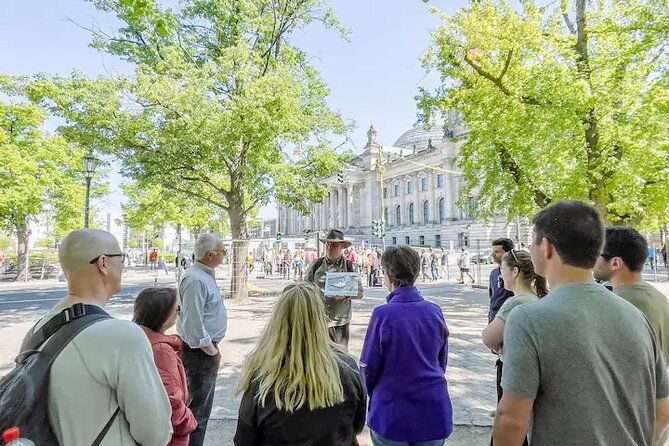
The group size is limited to 15 people, which is small enough for direct contact with the guide without promising a private tour. You can ask questions, hear the explanations more clearly, and take part in discussion at the memorials.
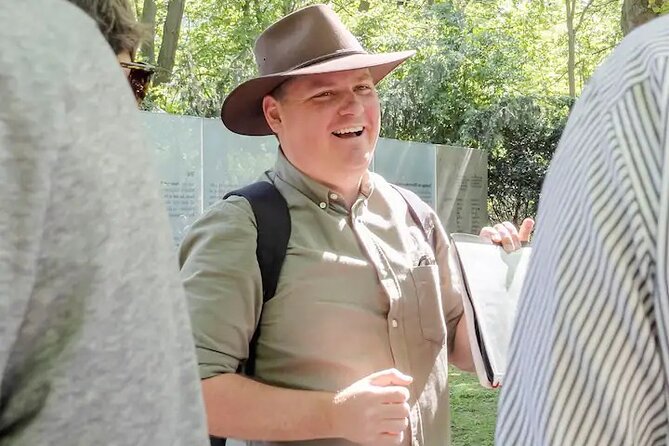
The strongest guide comments focus on Scott, who is described as informed, interactive, articulate, and able to tailor the tour to the group. Johan, Roshana, Jochen, and Matt are also praised for clear explanations, strong storytelling, and an ability to make a difficult subject easier to follow.
Guide quality can vary from one departure to another. One poor experience involved a guide whose English was difficult for the customer to follow, while another person found an otherwise strong guide hard to hear over street noise. This is worth keeping in mind. Outdoor city tours do not offer the quiet acoustics of a museum, so stay close to the guide and speak up if you miss a point.
The tone is serious but not cold. A good guide may use gentle humor when appropriate, but the focus remains on evidence, responsibility, and remembrance.
Timing, walking, and practical comfort
The advertised duration is about two hours and 30 minutes. The route is compact, with one description placing the main walking area at roughly four or five city blocks, but you are on your feet for most of the experience.
Wear comfortable shoes. You will walk on different surface types, and there are several outdoor stops. The tour is suitable for people with a moderate level of physical fitness, but it is not ideal if you need to sit frequently. One useful criticism is that there are long stretches of listening without a seat.
Bring weather protection. The tour operates in all weather conditions, although the cancellation terms also allow a different date or a full refund if poor weather causes the operator to cancel. You should check the conditions close to the tour date and be prepared for cold, rain, or strong sun.
Food and drinks are not included. There is a break at the Topography of Terror where you can get tea or coffee and use the restrooms, but plan to buy anything you need yourself.
Is $54.44 good value?
At $54.44 per person, this is not the cheapest way to walk between central Berlin landmarks. You can see several of the memorials without paying admission, and you can read about many of them on your own.
The price begins to make sense if you want the sites connected into one chronological story. You are paying for an expert local guide, a small group, historic maps, Then & Now photographs, and the chance to ask questions as the route unfolds.
A self-guided visit can also be uneven. You might spend a few minutes at the Holocaust Memorial, pass the former Aviation Ministry, and miss the links between them. This tour explains how political power, persecution, war, resistance, and remembrance fit together.
The value is strongest for a first visit to Berlin, history-focused visitors, families with older children or teenagers, and anyone who wants a firm starting point before visiting museums. It is less suited to you if you prefer unstructured wandering, dislike lectures, or already have a detailed command of Nazi-era Berlin.
Who should book Hitler’s Berlin?
Book this tour if you want a serious introduction to the Nazi period in Berlin and prefer to learn through places rather than a classroom. The route covers more than Hitler himself, including victims whose stories are often left out of a basic overview.
You should also book it if you value discussion. The small group allows questions, and several guides are praised for continuing beyond the scheduled time when the group had more to ask. That extra attention can make the difference on a difficult subject.
I would not choose it as a casual sightseeing walk. The material is heavy, the amount of information is substantial, and the outdoor format requires you to listen carefully in city noise. Still, for $54.44, the combination of a compact route, strong historical framing, and personal attention offers solid value.
FAQ
Where does the tour begin?
The tour begins at Brandenburg Gate, at Pariser Platz, 10117 Berlin, Germany.
Where does the tour end?
The tour ends at the Topography of Terror, Niederkirchnerstraße 8, 10963 Berlin, Germany.
How long does the tour last?
The experience lasts approximately two hours and 30 minutes.
How large is the group?
The tour has a maximum of 15 people.
What language is the tour offered in?
The tour is offered in English.
Are admission tickets included?
The listed stops have free admission, and the tour includes guided visits to the sites and memorials. Food and drinks are not included.
Can I cancel the booking?
You can cancel up to 24 hours before the experience start time for a full refund. Cancellations or changes made less than 24 hours before the start time are not accepted for a refund. If the operator cancels because of poor weather or because the minimum number of people is not reached, you are offered another date or experience, or a full refund.
Just added in Berlin
- Berlin & The Third Reich Private Guided Tour★ 5.0 · 3 reviews
- Third Reich Quest Experience in Berlin★ 4.5 · 7 reviews
- Private Analogue Photography Experience in Berlin★ 5.0 · 3 reviews
- Berlin Urbex Adventure and History Tour★ 5.0 · 9 reviews
- The Beauty of Berlin by Bike: Private Tour★ 5.0 · 59 reviews
- Berlin: Guided Bike tour of the Berlin Wall and Third Reich★ 5.0 · 160 reviews
- Shared Underground Party Tour in Berlin★ 4.5 · 9 reviews
- Beyond Currywurst: Berlin’s Hidden Street Food & Culture Tour★ 5.0 · 100 reviews
Third Reich Tours, compared.

Berlin’s Best: 2 Hour Walking Tour Third Reich and the Cold War
Read our review →
Third Reich Berlin: Hitler and WWII Walking Tour
Read our review →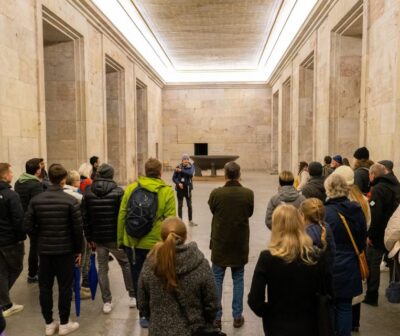
Walking Tour of Former Nazi Party Rally Grounds
Read our review →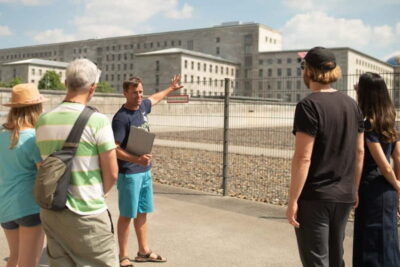
Berlin Third Reich Sites: Half-Day Walking Tour
Read our review →Browse the lists this tour appears in