
Reviewed · ATTRACTION TICKETS
Berlin: Entry Ticket To The Kunstgewerbemuseum
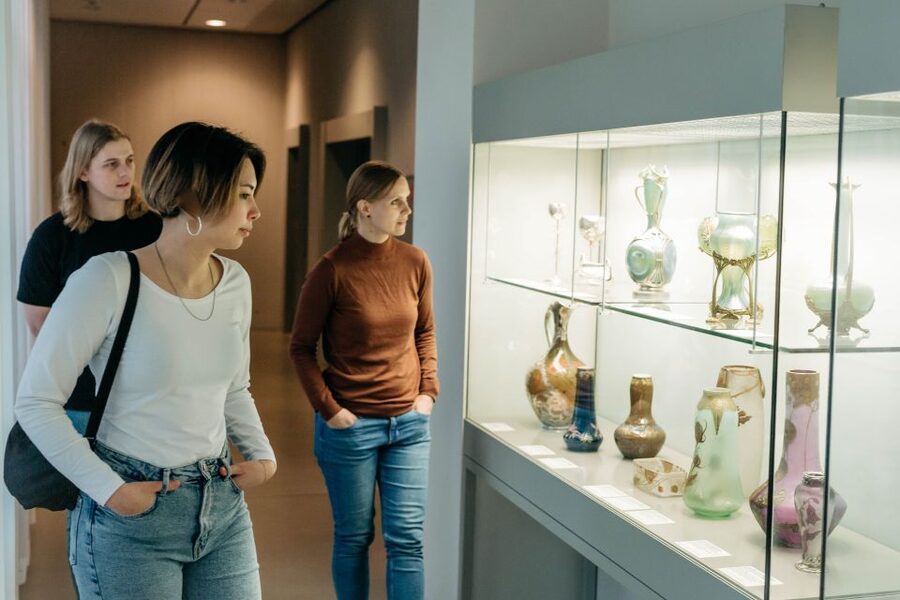
The Kunstgewerbemuseum puts 1,500 years of making in front of you, from glittering medieval reliquaries to dresses, furniture, ceramics, glass, and modern industrial design. It is less about famous painters and more about the things people made, wore, used, and treasured.
I like the unusually broad collection and the $11 price. I also like that you can see both grand historical craft and modern design in one museum visit. The main drawback is presentation: some galleries can feel dark, and the collection may seem modest if you are hoping for a huge fashion display or a packed museum.
Key points
- Medieval craftsmanship: See gold and precious-stone reliquaries, carved woodwork, and objects that show how skilled European makers were long before modern factories.
- A wide range of design: The collection includes porcelain, glass, silver, furniture, embroidered clothing, and industrial design.
- Two Berlin settings: The museum’s displays can be found at the Kulturforum near Potsdamer Platz and at Köpenick Castle on a peninsula in the Dahme.
- One-day value: The $11 ticket gives you a full day to explore at your own pace, with no tour group to keep up with.
- Open architectural setting: Spacious rooms, an open staircase, and planted areas give the museum a different feel from a standard box of galleries.
- Bring your own interpretation: An audio guide and tour guide are not included, so you will explore independently.
Why the Kunstgewerbemuseum feels different
Berlin has museums devoted to paintings, ancient artifacts, photography, and political history. The Kunstgewerbemuseum takes another route. It asks you to look closely at objects made for use, ceremony, display, and daily life.
That makes the collection surprisingly readable. A reliquary tells you about faith, wealth, and skilled metalwork. A dress shows changing taste, fabric technology, and social status. A chair or cabinet reveals how decoration and function were balanced in a particular period.
I like this kind of museum because it rewards close looking. You do not need to recognize a famous name to appreciate a beautifully worked vessel or an intricate piece of furniture. The objects carry the story through their material, construction, and detail.
The museum is described as one of Germany’s oldest museums of decorative arts. Its collection reaches from medieval objects to modern industrial design, so you get a long view of European making rather than a narrow period display.
More Attraction Tickets in Berlin
- Berlin: Jewish Museum Berlin Entrance Ticket
★ 4.5 · 8,393 reviews - Berlin: Berlin Story Bunker Entry Ticket
★ 4.6 · 6,759 reviews - Berlin: Illuseum Berlin Entrance Ticket
★ 4.1 · 3,970 reviews
Start at Matthäikirchplatz near Potsdamer Platz
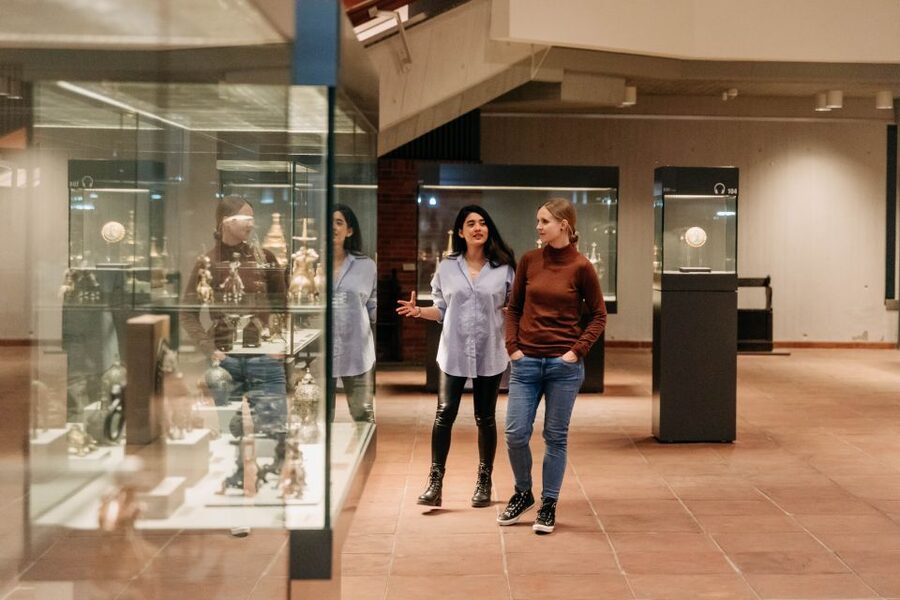
The main meeting point is the Kunstgewerbemuseum at Matthäikirchplatz, 10785 Berlin, in the Kulturforum area near Potsdamer Platz. This is the practical starting point for the experience and the place to expect the broadest look at the collection.
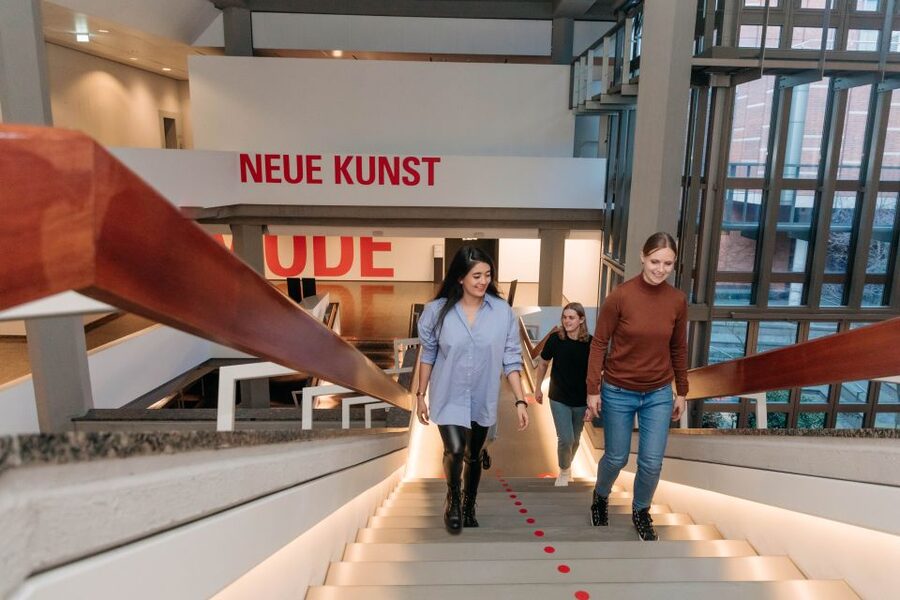
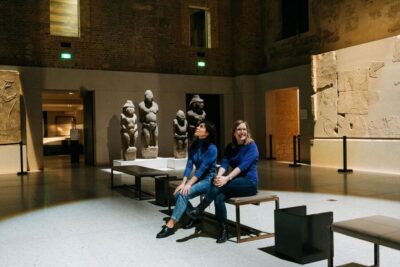
The Kulturforum setting puts several major cultural attractions in the same part of Berlin, but this museum has its own visual character. Its rooms are spacious, and the open staircase helps create a sense of movement between the galleries.
The building was designed as a kind of built garden, with greenery tied to the nearby Tiergarten. That matters because the museum does not feel like a sealed container. The planted areas and open spaces offer a change of pace between groups of objects.
You should allow enough time to look without rushing. The ticket is valid for one day, but the experience is self-guided. You can move at your own speed, pause in front of a small object, or leave a section when your attention starts to fade.
Begin with gold, stone, and medieval skill
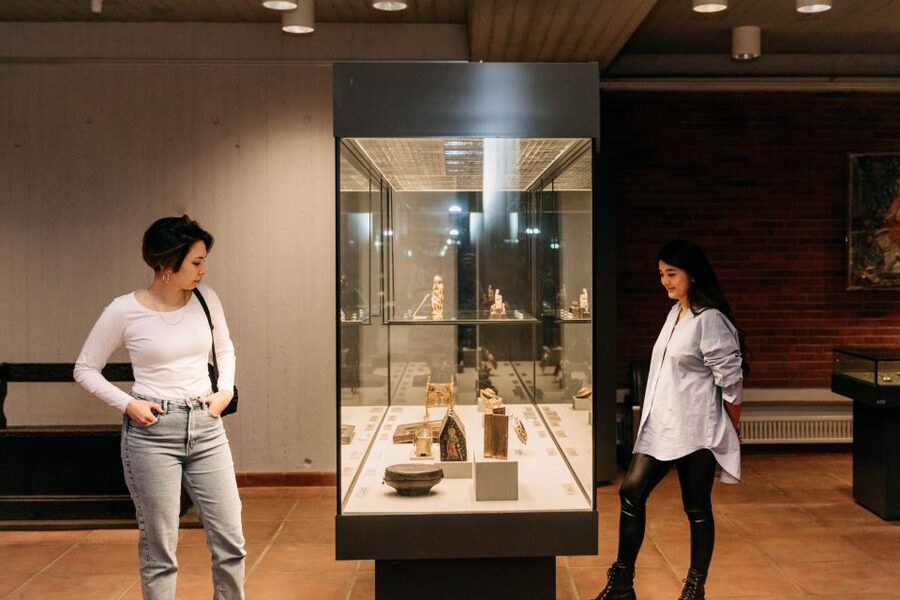
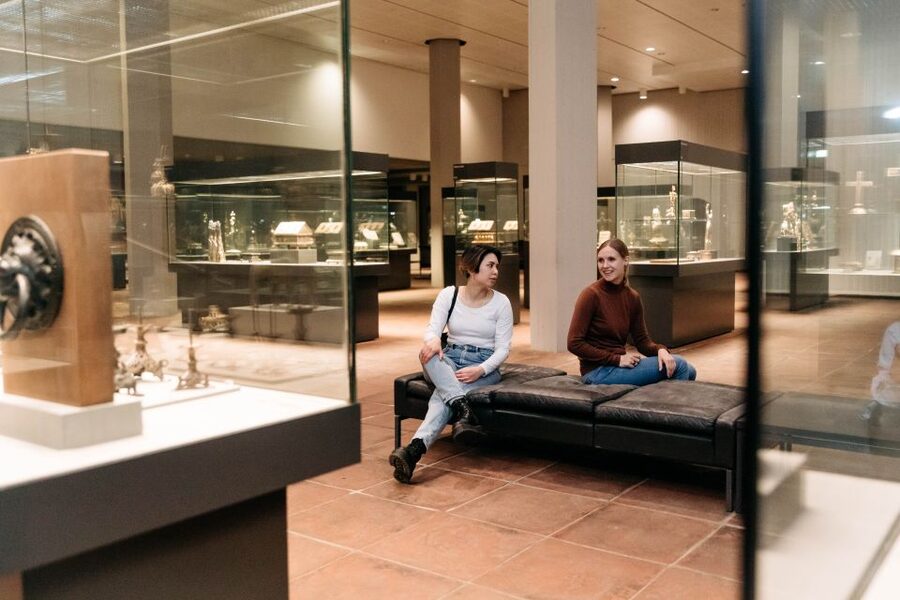
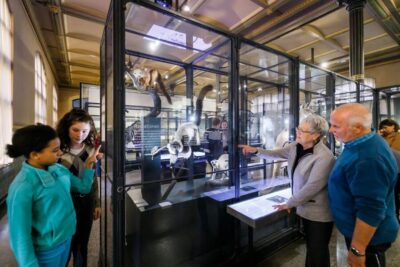
The historical art collection is the strongest reason to visit. Its reliquaries, made with gold and precious stones, show how decorative arts could serve both spiritual and political purposes.
These objects were not simple containers. Their materials and workmanship were meant to signal importance. Look for the tiny details, the metal surfaces, the stones, and the way each piece was shaped to hold meaning as well as contents.
The collection also reaches far beyond religious objects. Carved woodwork is a particular pleasure, and one recent account singled out wooden pictures as especially memorable. That is a useful reminder to look beyond the brighter metals and glass. Wood can carry just as much detail, even when it appears more restrained at first glance.
You may also find examples that show how advanced European craft was more than 1,500 years ago. That long time span gives the historical galleries their strongest appeal. Instead of seeing isolated antiques, you can compare changing methods and tastes across centuries.
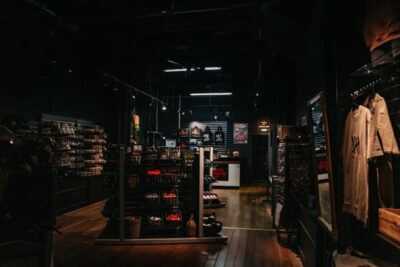
The lighting may not suit everyone. Some displays are quite dark, which can make delicate surfaces harder to inspect. Dark conditions can protect the mood of historic objects, but they are less helpful when you want to study fine decoration or read every label.
Compare glass, porcelain, silver, and furniture
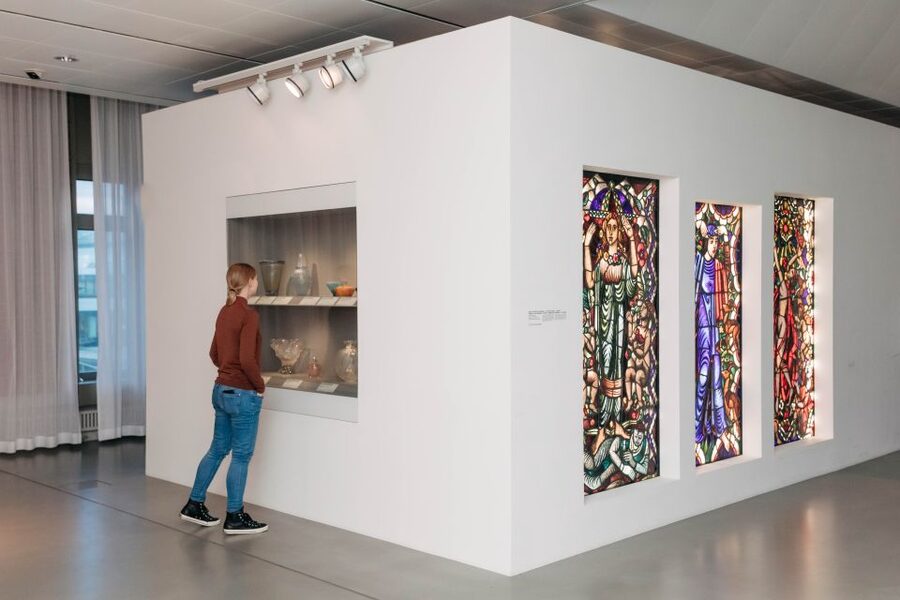
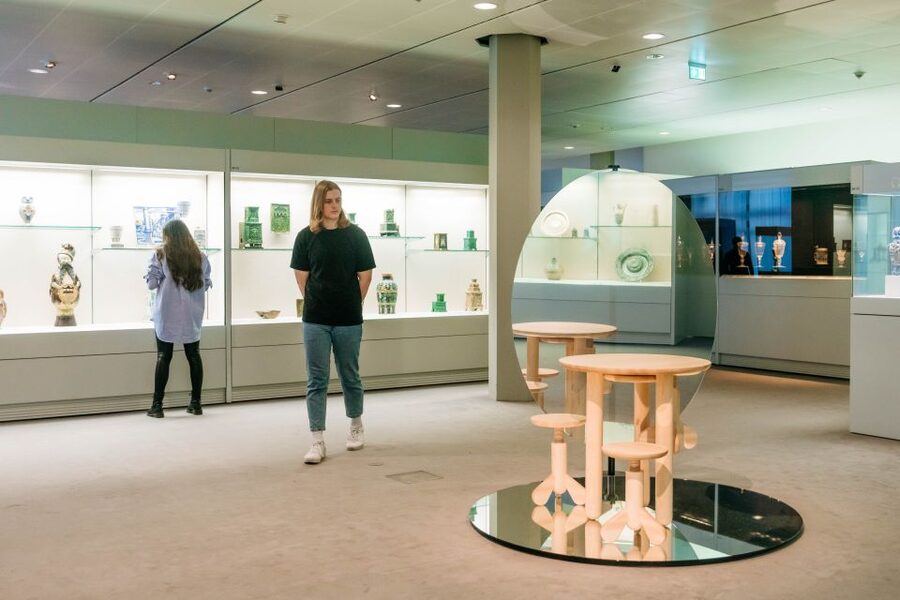
The museum becomes more approachable when you treat it as a collection of materials. Move from glass to porcelain, then compare those objects with silver, wood, and furniture.
Glass rewards close inspection because its appeal often comes from form and surface rather than size. Porcelain brings a different character, with its smooth finish and carefully shaped profiles. Silver and goldsmithing let you see how precious materials were turned into useful or ceremonial objects.
Furniture gives the collection a larger scale. It also helps you understand how decorative arts shaped interiors. A cabinet, chair, or other furnishing is not only an object on display. It suggests how people arranged rooms, expressed status, and lived with design.
The range is one of the museum’s best features. You are not confined to one style or one type of object. The mix also means that a section you find less interesting is likely to be followed by something more appealing.
Still, do not expect a huge collection in every category. The fashion display, in particular, may feel smaller than you hope. If clothing is your main reason for visiting, keep your expectations measured. The museum offers historic dress within a much wider decorative-arts collection, rather than presenting fashion as its sole subject.
Same city, a completely different kind of day:
- Berlin: Reichstag, Dome and Government District Guided Tour
★ 4.7 · 18,288 reviews - Berlin: 1-Hour City Tour by Boat with Guaranteed Seating
★ 4.3 · 16,993 reviews - Berlin: Boat Tour Along the River Spree
★ 4.4 · 11,252 reviews - Discover Berlin Half-Day Walking Tour
★ 5.0 · 9,624 reviews
Make time for clothing and modern design
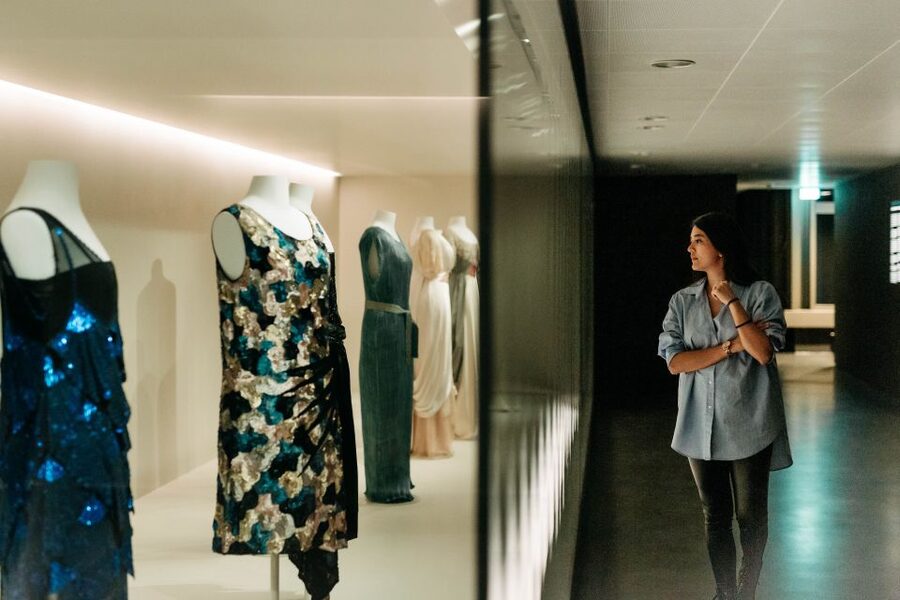
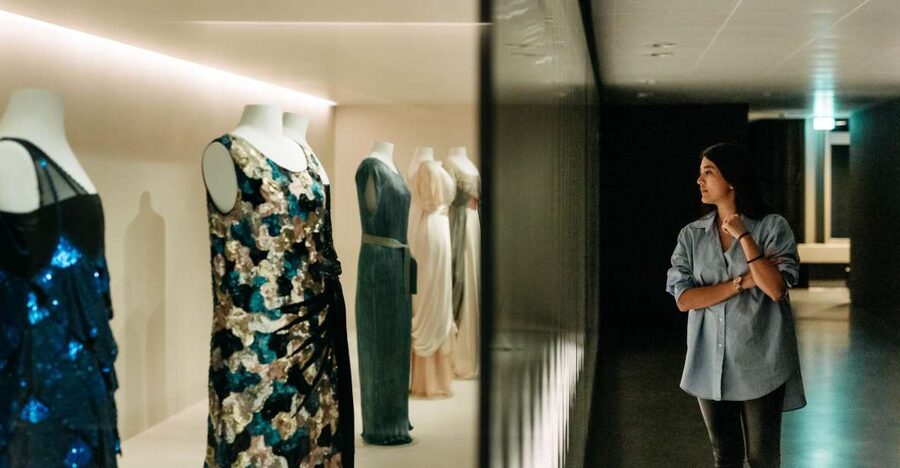
The fashion displays give the museum a human scale. Embroidered dresses and historic clothing show how decoration moved from furniture and vessels onto the body.
Clothing also helps connect the museum’s objects to real life. A reliquary may feel distant from your daily experience, but a garment makes questions of comfort, ceremony, status, and taste easier to picture. Even when the display is not large, it adds variety to the visit.
The collection then moves toward modern industrial design. That shift is important. Decorative arts are not limited to ornate historic pieces. Modern design often asks the same basic questions: How should an object work? What should it look like? Which materials suit its purpose?
This makes the museum useful for anyone interested in design as well as art. You can compare handmade luxury with the cleaner forms of industrial production. The contrast helps explain how European design changed as manufacturing and daily life changed.
The balance between fashion and industrial design may vary across the displays. The historic craft sections are likely to make the strongest impression if you enjoy detail, age, and material. Modern design is more valuable if you want to trace the move from ornament toward practical form.
Consider the Köpenick Castle setting
The Kunstgewerbemuseum’s displays can also be seen at picturesque Köpenick Castle, set on a peninsula in the Dahme. The castle presentation focuses on masterpieces of interior art from the 16th through the 18th century.
This gives the collection a different setting from the Kulturforum. At Matthäikirchplatz, the museum’s open rooms and greenery frame the objects in a modern cultural complex. At Köpenick, historic interiors and a waterside setting add context to period furniture and room design.
The two locations are not identical experiences. Köpenick is especially relevant if you enjoy historic interiors and want to see objects in a setting that matches their period better than a modern gallery can. The Kulturforum is the clearer choice if you want the broadest range, including modern design and fashion.
The available information does not specify how much time you need between the two places or exactly how the one-day ticket works across both sites. Check the current availability and entry details before planning a two-location visit. Do not assume you can fit both comfortably into a tight schedule.
What the $11 ticket is really worth
At $11 per person, this is a good-value museum ticket for Berlin, especially if you enjoy design, craft, or objects with a practical purpose. You receive entrance for one day, rather than a timed guided tour with a fixed route.
That flexibility is the real value. You can spend more time with the historical art, move quickly through a section that does not hold your attention, or return to an object after seeing another gallery. A guided experience might give you more explanation, but it would also set the pace.
The ticket does not include an audio guide or a tour guide. That is not a serious problem for an independent museum visitor, but it changes how you should prepare. If you want a narrated story for every room, this is not that kind of experience.
I would choose this ticket when I want a focused museum visit at a low cost, especially on a day when I am already near the Kulturforum. I would think twice if my main goal is a large fashion exhibition, a guided tour, or a museum packed with famous paintings.
The activity is non-refundable, so make sure the date works before buying. It is valid for one day, with starting availability shown during booking.
Who should visit this museum?
I would recommend the Kunstgewerbemuseum to several kinds of Berlin visitors:
- Design fans who want to see how objects move from handmade craft to industrial production.
- History-minded visitors who enjoy religious art, historic interiors, and evidence of earlier technical skill.
- Fashion followers who want historic clothing as part of a broader art and design collection.
- Families with mixed interests because the collection changes material and scale from room to room.
- Museum regulars looking for something less predictable than another painting gallery.
- Independent visitors who prefer to set their own pace and do not need a guide.
It may be less satisfying if you want a quick, single-theme attraction. The collection covers many centuries and materials, so it asks you to make connections for yourself.
Wheelchair access is available. A medical or FFP2 mask is recommended but not mandatory. Those details make the museum easier to fit into a practical Berlin day, though you should still check current arrangements before setting out.
A simple way to plan your visit
Start at the Kulturforum and give yourself time for the historical collection before moving to fashion and modern design. The older objects provide the clearest sense of the museum’s purpose, while the later displays show how decorative arts changed.
Watch for the smaller details rather than racing toward the largest object. Examine wood, embroidery, glass, and metal as separate forms of skill. If the lighting feels too dark, step closer where permitted and give your eyes a moment to adjust.
If Köpenick Castle is part of your plan, treat it as a separate half of the day rather than an automatic add-on. The two settings offer different strengths, and the castle is most useful when you specifically want historic interior art from the 16th to 18th centuries.
Because there is no included guide, you should decide in advance how much interpretation you want. The museum works well for people who enjoy looking first and reading second. It is less suited to anyone who needs a continuous spoken explanation.
Should you book the Kunstgewerbemuseum ticket?
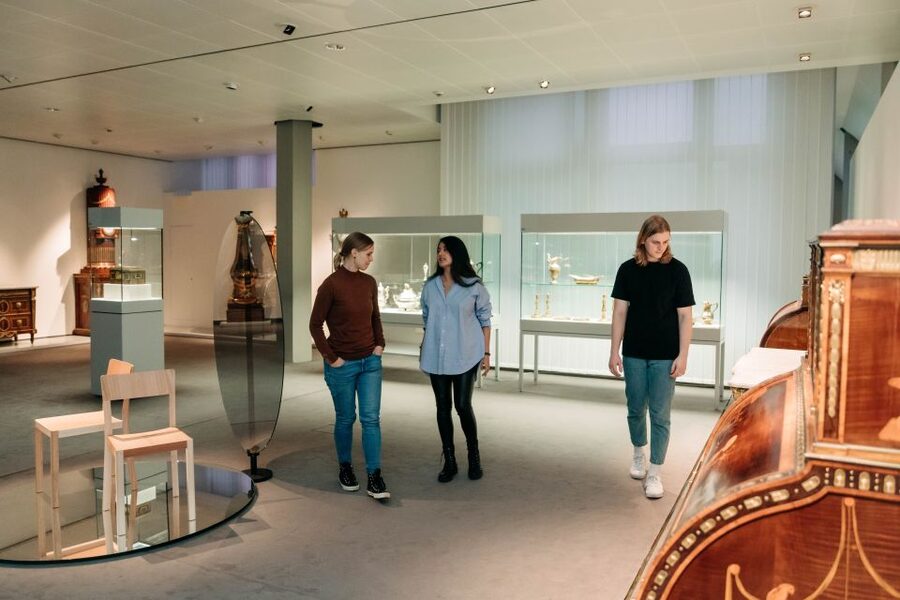
Book it if you like objects that reveal how people lived, worshipped, dressed, and designed their surroundings. The $11 price is reasonable, the collection covers an unusually long period, and the mix of goldwork, wood, glass, porcelain, furniture, fashion, and modern design gives you plenty of variety.
Skip it if you want a major fashion-only display, bright galleries, or a guided experience. For the best match, choose this ticket as a calm, self-paced design museum visit, with the strongest appeal in historic craftsmanship and material detail.
FAQ
Where is the Kunstgewerbemuseum meeting point?
The meeting point is the Kunstgewerbemuseum at Matthäikirchplatz, 10785 Berlin, in the Kulturforum area near Potsdamer Platz.
How much does the entry ticket cost?
The listed price is $11 per person.
How long is the ticket valid?
The ticket is valid for one day. Starting availability can be checked when booking.
Does the ticket include an audio guide?
No. An audio guide is not included.
Is a tour guide included?
No. The ticket includes entrance only, so you explore independently.
Is the museum wheelchair accessible?
Yes. The activity is listed as wheelchair accessible.
Just added in Berlin
- Berlin & The Third Reich Private Guided Tour★ 5.0 · 3 reviews
- Private Analogue Photography Experience in Berlin★ 5.0 · 3 reviews
- Third Reich Quest Experience in Berlin★ 4.5 · 7 reviews
- Berlin Urbex Adventure and History Tour★ 5.0 · 9 reviews
- The Beauty of Berlin by Bike: Private Tour★ 5.0 · 59 reviews
- Berlin: Guided Bike tour of the Berlin Wall and Third Reich★ 5.0 · 160 reviews
- Beyond Currywurst: Berlin’s Hidden Street Food & Culture Tour★ 5.0 · 100 reviews
- Berlin Third Reich & Cold War Walking Tour With A Guide★ 5.0 · 7 reviews
Attraction Tickets, compared.
Munich Hop-On Hop-Off Tour: 1-Day or 2-Day Ticket
Read our review →

Browse the lists this tour appears in