
Reviewed · MUSEUMS
Stuttgart: Mercedes-Benz Museum Entry Ticket
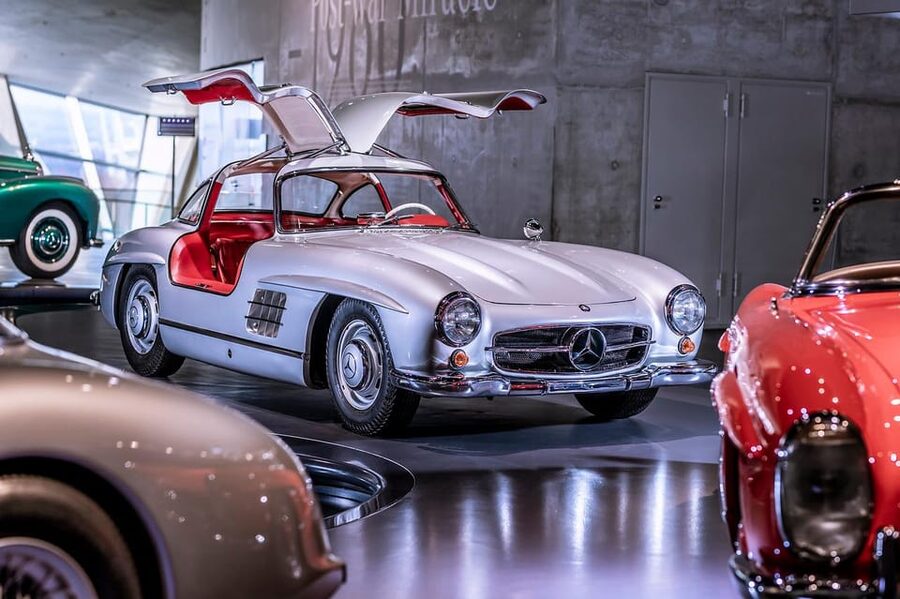
The Mercedes-Benz Museum does more than line up beautiful cars. It connects Carl Benz’s 1886 invention with changes in technology, industry, daily life, sport, and popular culture, using more than 160 vehicles as the main characters. The building’s multi-level layout turns the visit into a long chronological journey, with plenty to see before you reach the racing cars and futuristic research vehicles.
I like the clear two-route design, which lets you follow the Legend story or browse the Collection displays, and I like the free audio guide in eight languages. The museum also gives children useful ways to stay involved, including a kids’ audio guide and puzzles.
The main drawback is time. Ninety minutes is not enough if you want to listen to the commentary and study the cars, and even three hours can pass quickly. The audio units have occasionally been hard to activate, while background noise and low volume can make some commentary difficult to hear.
Key points to know before you go
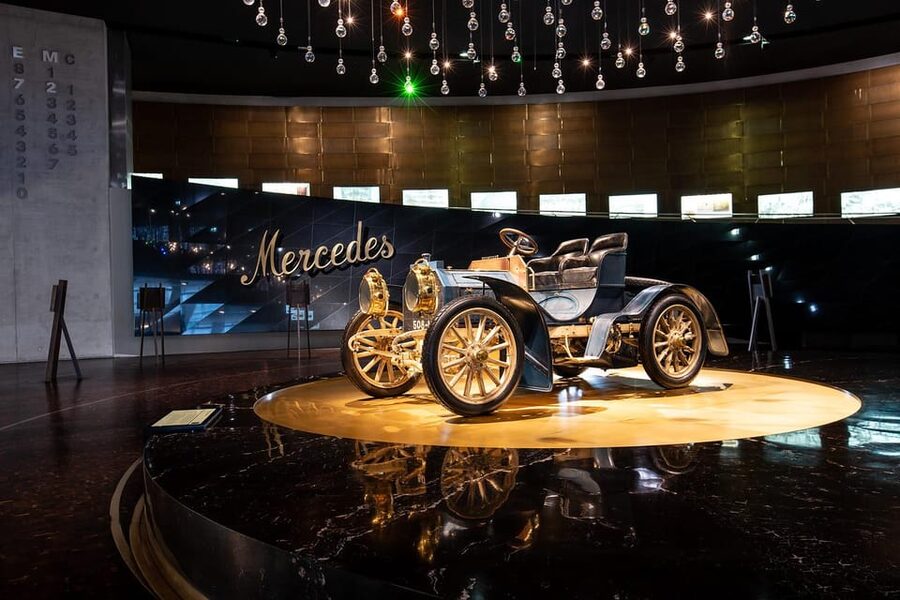
- More than 160 vehicles: See early motorcars, classic Mercedes models, racing cars, buses, aircraft-related engines, and futuristic concepts.
- Two ways through the museum: The Legend and Collection routes organize the 12 exhibition rooms around different themes.
- Allow at least two to three hours: Car enthusiasts may want four or five hours, while a rushed visit can take 90 minutes.
- Free audio guide included: Choose German, English, Italian, Spanish, French, Chinese, Japanese, or Russian.
- A strong family option: Children can use a kids’ audio guide and puzzles, while the historical timeline gives older children and adults plenty to discuss.
- Open Tuesday through Sunday: Hours are 9 a.m. to 6 p.m., with last admission at 5 p.m.
Why this museum is more than a car showroom
The first thing to understand is that this is not simply a room full of expensive vehicles. The Mercedes-Benz Museum uses the automobile to tell a wider story about invention and change. The exhibits place cars beside the technology, social events, industrial developments, and popular culture of their time.
That approach helps even if you are not a serious car enthusiast. You can look at an early motorcar and think about how strange and new it must have seemed in the late 19th century. Later, you can see how design, speed, manufacturing, and everyday transport changed from one era to the next.
The museum’s permanent exhibition covers 16,500 square meters in 12 rooms. It is set across several levels, with the route unfolding through roughly seven floors. You do not just walk from one parked car to another. You move through a planned sequence, with each section adding another piece to the story.
I especially like the way the museum gives the company’s history a larger setting. The displays cover Mercedes-Benz, but they also show how the engine and the car affected other fields, including aircraft and trams. That makes the visit useful for anyone interested in engineering, German industry, design, or 20th-century life.
More Attraction Tickets in Stuttgart:
- Stuttgart: Museum of Illusions Entry Ticket
★ 4.2 · 507 reviews - Stuttgart: Landesmuseum Württemberg Old Castle Entry Ticket
★ 4.5 · 15 reviews - Berlin: Jewish Museum Berlin Entrance Ticket
★ 4.5 · 8,393 reviews
Starting with Carl Benz and the first motorcar
The story begins with the automobile associated with Carl Benz and the invention of the first motorcar in 1886. This opening section gives the visit its purpose. You see where the modern car began before the museum moves through later models, technical changes, and brand milestones.
The early vehicles are valuable because they make the past feel practical rather than abstract. An automobile from this period does not look like a smaller version of a modern Mercedes. It looks experimental, exposed, and unfamiliar, which helps you understand how bold the idea was.
Use the audio guide here if you have enough time. The museum is strongest when you connect the object with its place in history, rather than simply admiring its shape. The guide is included with admission and is available in German, English, Italian, Spanish, French, Chinese, Japanese, and Russian.
You can move at your own speed, but do not rush the opening rooms. If you start by skipping too much, the later displays may become a long parade of models instead of a story about how the automobile developed.
Following the Legend route through seven floors
The Legend route is the natural choice if you want a chronological journey. It follows the development of the company and the automobile through different periods, showing how the vehicles changed as technology, industry, and society changed around them.
This route is especially useful for first-time visitors. You begin with the earliest cars, move through important stages in Mercedes-Benz history, and eventually reach famous racing machines and more recent designs. The steady timeline helps you see links between one generation and the next.
The museum also places major world events and social changes along the route. That wider timeline is one of the strongest parts of the experience. It gives you a sense of how the company was affected by industrial growth and how its products fit into the history of Germany and the wider world.
You may find the chronological layout easy to follow, but it also creates a time commitment. Each floor adds another layer of information. If you stop for every audio segment, video, label, and vehicle, the visit can easily run to three or four hours.
Taking the Collection route for a different view
The Collection route organizes the displays by themes and types of vehicles rather than asking you to follow only a straight historical sequence. This gives you a different way to understand the company’s work.
The two routes are useful for different kinds of visits. Choose Legend if you want to understand the story from beginning to end. Choose Collection if you are more interested in a particular type of vehicle or in seeing how Mercedes-Benz has been used across different parts of transport and industry.
The collection includes more than passenger cars. You may see racing vehicles, commercial transport, engines connected with aircraft, trams, classic models, and research vehicles. That range is important because it shows that the company’s story is not limited to luxury sedans or road cars.
If you have limited time, you probably will not be able to give both routes equal attention. A short visit is better handled with a clear choice. The museum does not provide a specific express route in the information available, so it is sensible to decide before entering whether you want the full timeline or a selective look at the collection.
More Museum Tours in Stuttgart:
- Stuttgart: Stuttgart Wine Museum Wine Tasting
★ 4.7 · 55 reviews - Berlin: DDR Museum Tickets
★ 4.3 · 3,443 reviews - Berlin: Natural History Museum Entrance Ticket
★ 4.6 · 3,382 reviews - Berlin: Neues Museum Entry Ticket
★ 4.6 · 3,261 reviews
Racing cars, concept vehicles, and the final rooms
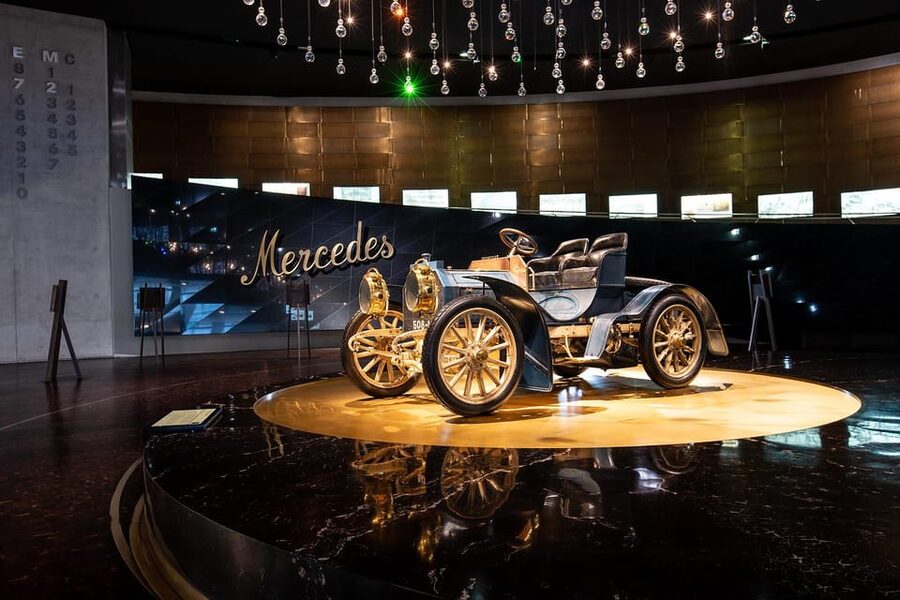
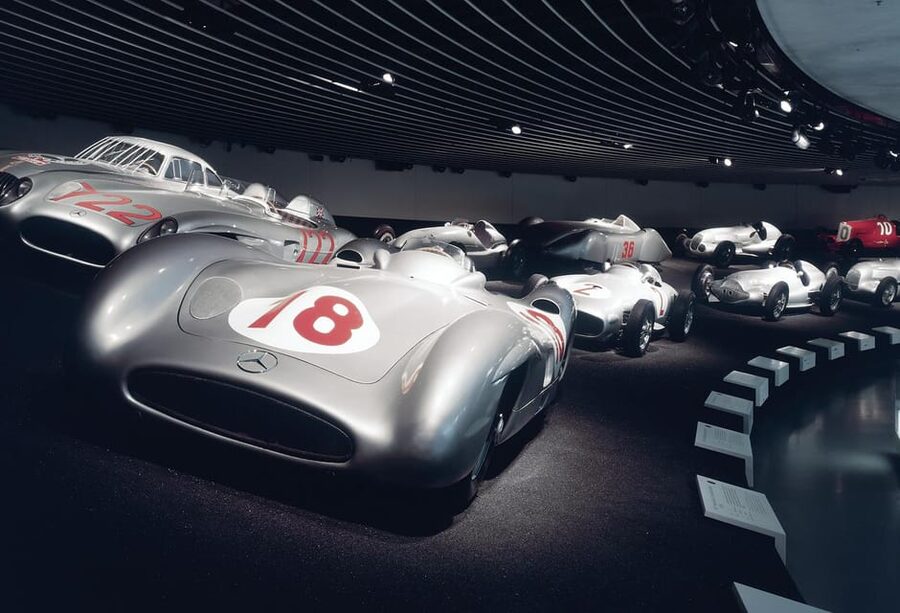
The racing cars provide one of the most memorable endings to the museum. After seeing the slow, early stages of automobile development, you reach machines built around speed, competition, and technical performance.
These vehicles have a different visual force from the early cars. Their shapes are more dramatic, their purpose is more focused, and their place in popular culture is easy to understand. Even if you are not drawn to motorsport, the racing section gives the visit a strong finish.
The futuristic research vehicles add another shift in mood. They show Mercedes-Benz thinking beyond familiar production models and experimenting with what vehicles might become. Together, the racing and research displays help explain why the museum is not only about the past.
I would save proper time for these final sections. A rushed one-hour visit may leave you with only a quick look at the most famous cars, while a longer stay lets you understand how the early motorcar led to machines built for racing and future design.
The building and the way it shapes your visit
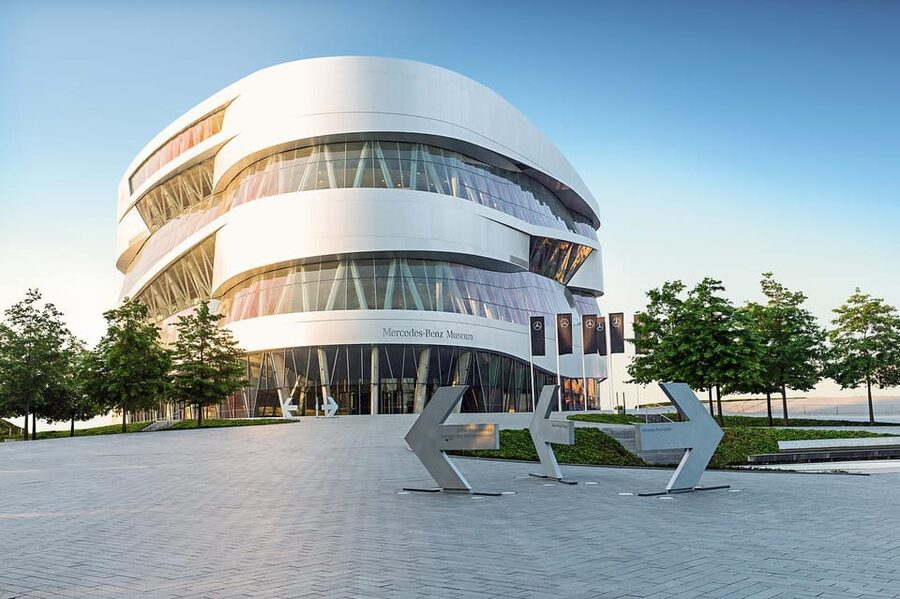
The museum itself is part of the experience. Its modern design and multi-story interior create a sense of movement as you pass from level to level. The building helps the displays feel like a journey rather than a collection of separate rooms.
The layout is also practical. You can see the scale of the exhibition as you progress, and the large number of vehicles never feels like a small temporary display. The arrangement gives you a sense of the company’s long timeline and the sheer variety of its work.
There are trade-offs. This is a large museum, and the amount of walking and listening can become tiring. One visitor specifically wanted more resting points, so plan your pace rather than trying to force the entire exhibition into a tight schedule.
The museum can also become noisy. The audio guide is useful, but some commentary may be hard to hear if the volume is low or the galleries are busy. If a unit does not activate, move on and ask staff for help rather than wasting several minutes standing at one exhibit.
How much time should you set aside?
Your ideal visit depends on what you want from the museum.
Ninety minutes is enough for a fast look at the building, a selection of major cars, and the final racing displays. It is not enough for a full chronological visit with the audio guide. A late entry at 4:30 p.m. gives you only 90 minutes before the 6 p.m. closing time, which is a poor fit if you want to hear and read most of the material.
Two to three hours is the practical minimum for a satisfying first visit. This gives you time to move through the main displays, listen to selected audio sections, and pause at the vehicles that interest you most.
Four to five hours suits serious car enthusiasts and anyone who wants to take the museum at a relaxed pace. You can give proper attention to both the automobile story and the wider historical context.
The museum is open Tuesday through Sunday from 9 a.m. to 6 p.m. Last admission is at 5 p.m. I would choose an earlier entry if possible, especially if you are visiting with children or plan to use the audio guide throughout.
Families, children, and non-car enthusiasts
You do not need to know the difference between every Mercedes model to enjoy this museum. The story covers engines, design, transport, industry, racing, and social change, so there are several ways into the exhibition.
Families have useful support. Children can use a kids’ audio guide and puzzles, and coloring activities are available for younger visitors. Older children may prefer the videos placed through the exhibition, while a 10-year-old who already loves cars can spend much longer examining the vehicles.
The size of the museum can be a challenge for young children. A full four-hour visit may be too much for some families, so choose a few sections rather than insisting on every label. The early cars, racing displays, and unusual research vehicles are likely to hold attention better than a long run of similar models.
For adults who are not motor enthusiasts, the historical timeline is the best reason to go. You can focus on how the automobile affected daily life and industry instead of treating every exhibit as a technical object.
Is the $18 ticket good value?
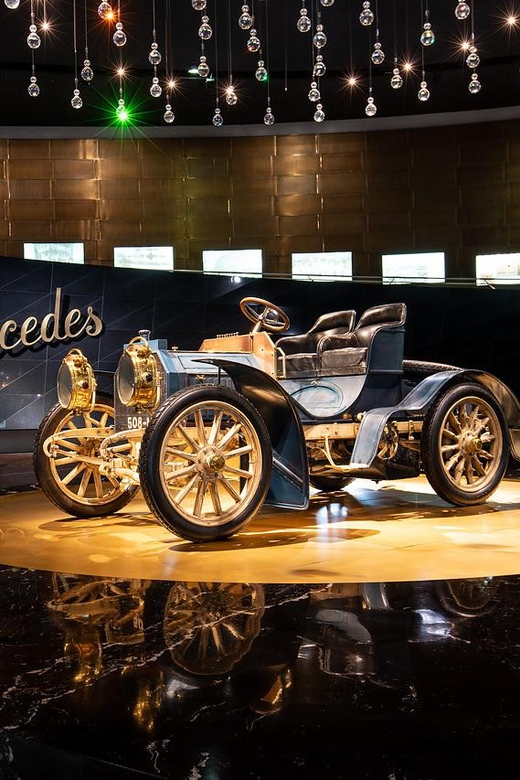
At $18 per person, the ticket offers strong value if you have time to use it. Admission covers the permanent exhibition and the audio guide, and the museum can occupy anywhere from two hours to half a day.
The value is weaker if you arrive late or have only an hour before another commitment. You may still see the building and several remarkable cars, but you will not get the full benefit of the historical sequence.
The included audio guide adds real value. Eight language choices make the museum accessible to a wide international audience, and the commentary helps turn the vehicles into part of a larger story. Just check that your unit is working and that you can hear it clearly in the gallery.
You can cancel up to 24 hours in advance for a full refund, and the reserve-now, pay-later option can help if your schedule is still changing. The ticket allows you to enter through the main entrance, and advance tickets can help you avoid the main ticket line, although you should still look for clear staff direction when you arrive.
The museum is wheelchair accessible. That matters in a large, multi-level exhibition, particularly if you need to plan a slower route.
Who should book the Mercedes-Benz Museum?
I would book this experience if you have at least two hours in Stuttgart and any interest in cars, engineering, German industry, design, or modern history. It is also a good family choice because the exhibition offers more than technical labels and includes activities for children.
Car enthusiasts should allow four or five hours. The number of vehicles is large, the racing section deserves time, and the audio guide adds detail that a quick walk-through misses.
I would hesitate only if your schedule gives you 90 minutes or less, especially with a 4:30 p.m. entry. You can still enjoy a short visit, but you will be choosing highlights rather than seeing the museum properly. For most people, the $18 ticket is worthwhile, provided you treat the museum as a substantial half-day stop rather than a quick attraction.
FAQ
Where is the Mercedes-Benz Museum?
The museum is in Stuttgart, in the Baden-Württemberg region of Germany. Enter directly through the main entrance.
How much does admission cost?
The listed price is $18 per person.
How long is the ticket valid?
The ticket is valid for one day.
What are the museum’s opening hours?
The museum is open Tuesday through Sunday from 9 a.m. to 6 p.m. Last admission is at 5 p.m.
Is an audio guide included?
Yes. The audio guide is included with admission and is available in German, English, Italian, Spanish, French, Chinese, Japanese, and Russian.
How many vehicles are on display?
The permanent exhibition includes more than 160 vehicles, ranging from early automobiles to racing cars and futuristic research vehicles.
Is the museum wheelchair accessible?
Yes, the museum is wheelchair accessible.
Just added in Stuttgart
- Stuttgart: Landesmuseum Württemberg Old Castle Entry Ticket★ 4.5 · 15 reviews
- Stuttgart: Walking Custom Tour with a Local Guide★ 3.8 · 4 reviews
- Stuttgart: Winter Sunday Brunch Buffet★ 4.6 · 16 reviews
- Stuttgart: Swabian Cuisine Guided Walking Tour with Tastings★ 4.0 · 7 reviews
- Stuttgart: Wine Tour with wines of the best winemakers★ 4.0 · 7 reviews
- Stuttgart: Exklusive Floßboote Finne & Fischle★ 4.5 · 23 reviews
- Stuttgart: Stand Up Paddling Rental★ 4.6 · 55 reviews
- SUP Yoga with Guide★ 4.1 · 4 reviews
Museums, compared.




Skip-the-Line: Berlin Wall Museum at Checkpoint Charlie
Read our review →
Browse the lists this tour appears in