
Reviewed · THIRD REICH TOURS
Hitler’s Germany: Berlin During the Third Reich & WWII
Berlin’s Nazi past is not tucked away in one museum. It is spread through ordinary streets, office blocks, memorials, empty spaces, and the famous Reichstag. This four-hour walking tour connects those pieces, from the Jewish Quarter to Hitler’s bunker site and the final battle for Berlin.
I like two things here: the route shows where Nazi power actually operated, and the guides make room for the human stories behind the dates. Guides such as Glen, Jonathan N, Emma, and Artie have been praised for clear explanations, humor, and thoughtful handling of painful subjects. The main drawback is simple: you spend most of the tour outside, and you do not enter buildings.
Key points to know before booking
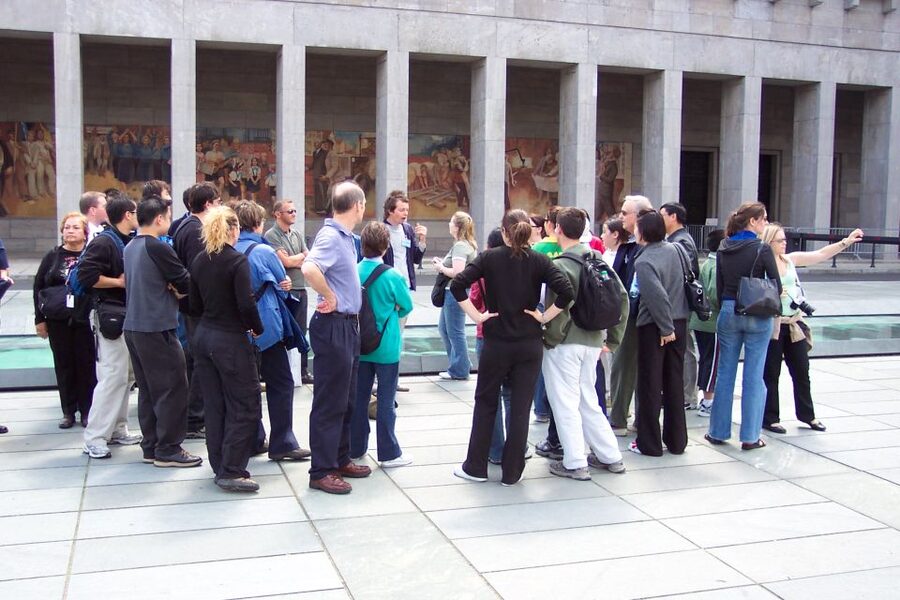
- Follow the Nazi government district on foot: See the former Luftwaffe headquarters, Gestapo and SS sites, and the Propaganda Ministry area.
- Visit places many people miss: The route includes the Sinti and Roma memorial and the memorial to 96 politicians arrested in 1933.
- Begin with Jewish Berlin: The tour explains the destruction of the nearby Jewish district and how Berlin remembers persecution.
- Use public transport once: A single AB ticket is needed for the short metro ride to Anhalter Bahnhof.
- Expect serious history with a human touch: Guides are praised for storytelling, questions, and keeping groups engaged for four hours.
- Pay $23 for a substantial overview: That is strong value if you want structure, context, and many sites in one outing.
What this Berlin Third Reich tour actually does
This is not a tour of grand Nazi monuments. Very little of Hitler’s Berlin survives intact, and that is part of the lesson. The guide helps you read the city: a surviving government building here, an empty site there, a memorial placed beside a busy road, and a bunker location now marked in a fairly unremarkable area.
The tour begins in central Berlin, with the exact meeting point depending on the option you book. You can join a shared group or choose a private group. The available guide languages are English and German, and the English guides are described as native-level speakers.
The route combines walking with a short metro trip. You should be ready for four hours on your feet, in changing weather, with time spent listening outdoors. It operates on public holidays and in all weather, so a good coat, comfortable shoes, and an umbrella are sensible parts of your plan.
More Third Reich Tours in Berlin
- Berlin: Third Reich and Cold War 2 Hour Walking Tour
★ 4.9 · 6,830 reviews - Berlin’s Best: 2 Hour Walking Tour Third Reich and the Cold War
★ 5.0 · 5,486 reviews - Third Reich Berlin: Hitler and WWII Walking Tour
★ 5.0 · 3,301 reviews
Starting with Jewish Berlin and the loss of a district
The opening discussion focuses on Berlin’s nearby Jewish district and the Nazi destruction of Jewish life there. This gives the tour a useful human starting point. You are not thrown straight into military dates or Hitler’s final days. Instead, you begin with a community, its persecution, and the way memory has been placed into the modern city.
That approach matters. Nazi history can become a list of leaders, battles, and dates if it is taught only from the top down. Here, the guide sets the political crimes against the lives of the people affected by them.
This first part also prepares you for the memorials later in the route. Berlin’s memorial culture can seem scattered if you encounter it without context. With a guide, you can better understand why some sites are large and formal, while others are modest markers that are easy to pass without noticing.
The exact route through the Jewish Quarter can vary with the booked option and meeting point, so do not expect every tour to begin at the same street corner. The important point is that Jewish life and Nazi persecution frame the rest of the day.
Anhalter Bahnhof and the scars of wartime Berlin
A short metro ride takes you to Anhalter Bahnhof, once a huge railway station and now one of Berlin’s most striking wartime remnants. The station was destroyed during the Second World War, and its surviving fragment helps explain the scale of the damage Berlin suffered.
This is a good early stop because it shifts the focus from ideology to the physical city. Berlin was not merely the headquarters of a regime. It was also a capital that was bombed, fought over, damaged, and rebuilt.
The metro ride is brief, but you need a single AB public transport ticket if you do not already have a valid one. That cost is not included in the $23 tour price. It is a minor extra, though it is worth knowing before you arrive.
After Anhalter Bahnhof, the experience becomes mainly a walking tour. The route is designed to link sites that can look unrelated when visited alone. The guide supplies the connections, especially between the Nazi state apparatus and the destruction that followed.
The former Luftwaffe headquarters
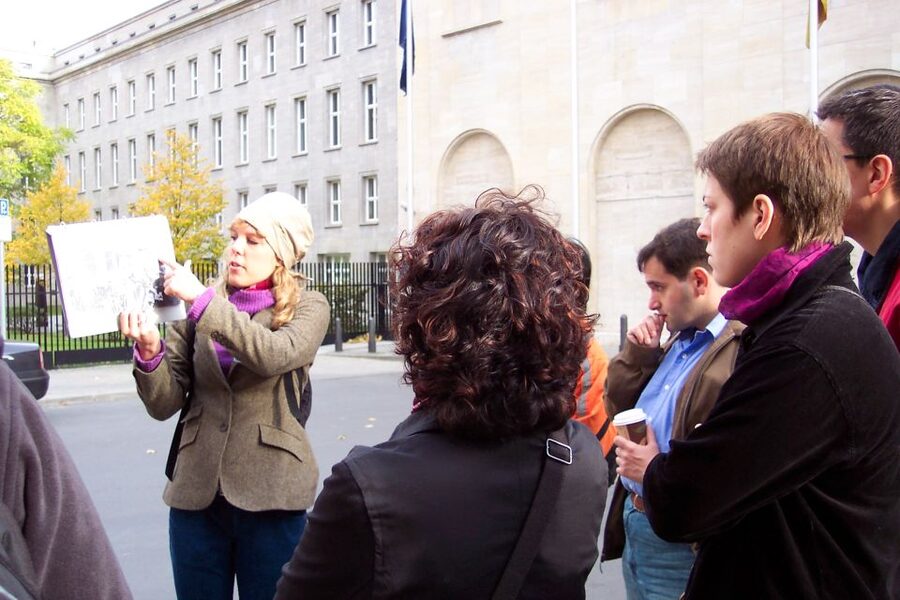
The former Luftwaffe headquarters is one of the strongest surviving examples of Nazi architecture on the route. The German air force was headed by Hermann Göring, one of the most powerful figures in the Nazi leadership.
The building is especially useful for understanding how architecture supported power. Its huge scale and severe design were meant to convey authority. You are looking at a working center of government, not a ceremonial ruin.
The tour does not enter the building. That limitation is important. You see the exterior and hear how it functioned within the Nazi government district, but this is not an indoor architectural tour.
I find that the outdoor format works well here because the guide can place the building in its surrounding streets. The point is not simply to admire a surviving façade. It is to understand how offices, ministries, police agencies, and propaganda operations were gathered together in the capital.
Same city, a completely different kind of day:
- Berlin: Reichstag, Dome and Government District Guided Tour
★ 4.7 · 18,288 reviews - Berlin: 1-Hour City Tour by Boat with Guaranteed Seating
★ 4.3 · 16,993 reviews - Berlin: Boat Tour Along the River Spree
★ 4.4 · 11,252 reviews - Discover Berlin Half-Day Walking Tour
★ 5.0 · 9,624 reviews
Gestapo and SS headquarters at the Topography of Terror
The next major section covers the former Gestapo and SS headquarters, now associated with the Topography of Terror Museum. The Gestapo was the secret police, while the SS played a central role in Nazi terror and mass murder.
This is one of the most important stops because it shows that persecution was organized through institutions, paperwork, police work, and administration. The crimes were not carried out by a single figure in isolation. They depended on an entire system of authority.
There is a museum break in this part of the tour, but the walking tour itself does not enter buildings. If you want time inside the Topography of Terror Museum, plan a separate visit rather than assuming the four-hour route includes an indoor museum session.
That division can be a benefit. You get a broad outdoor route first, then you can decide later how much museum time you want. The drawback is that four hours cannot provide the same detail as a dedicated museum visit.
Propaganda, T4, and the machinery of murder
From here, the guide turns to Joseph Goebbels and the use of propaganda. This part helps explain how the Nazi regime shaped public messages, controlled information, and presented its policies to the German population.
The route also covers the T4 euthanasia program, in which disabled people were murdered by the Nazi state. Including T4 is valuable because it shows how mass killing developed through policies that targeted vulnerable people before the Holocaust reached its full scale.
The Holocaust is treated as the central crime of the regime, but the tour places it within this wider system of exclusion, state violence, propaganda, and administrative control. That context gives you more than a sequence of famous names.
You should know that this is a serious subject. The guides are often praised for being warm, engaging, and even funny at suitable moments, but humor does not make the material light. It simply helps keep a group attentive through a long and emotionally demanding walk.
Memorials near the Tiergarten
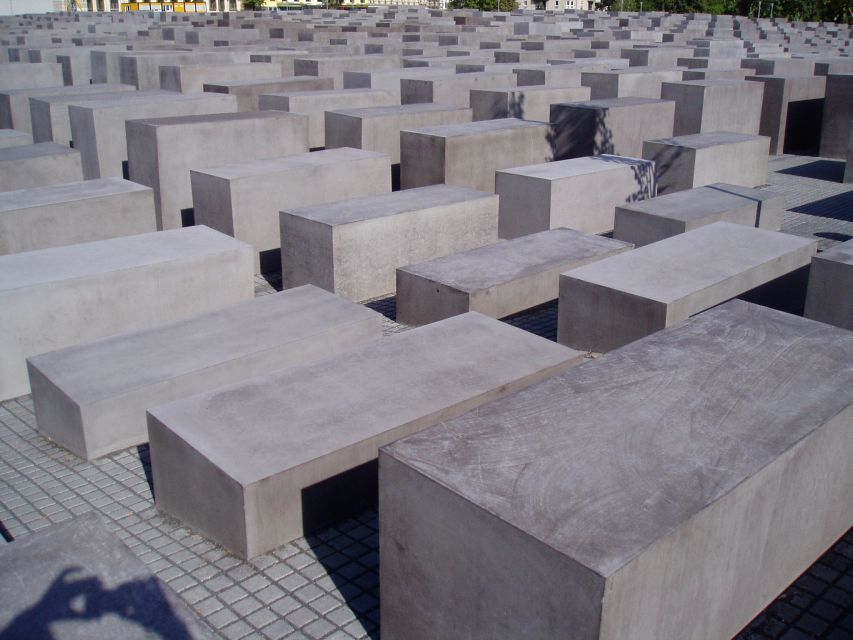
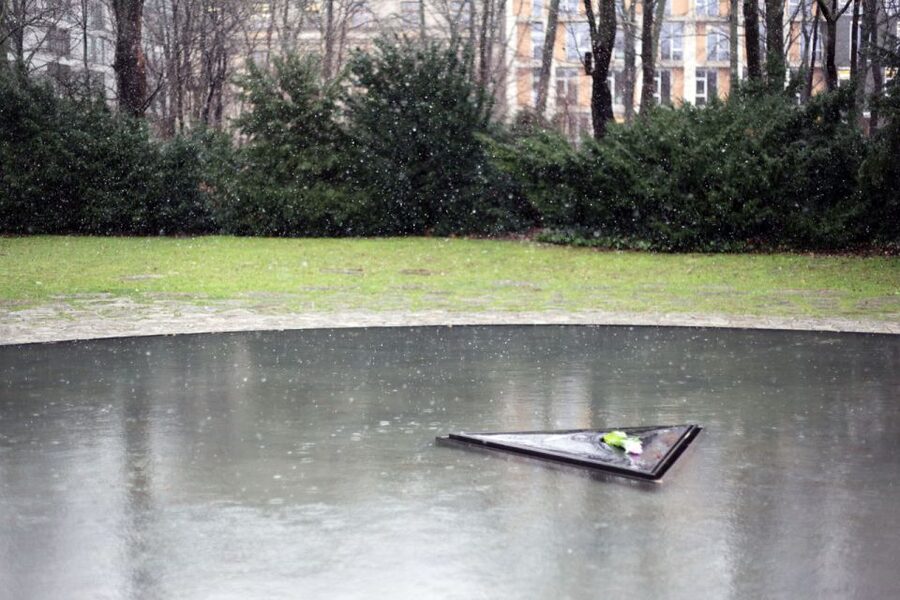
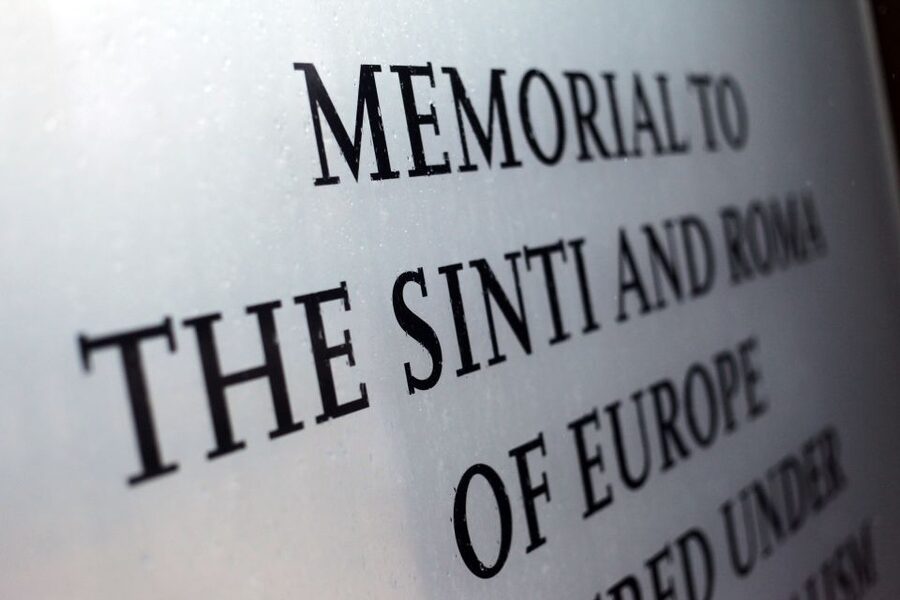
As the route moves toward the Tiergarten, Berlin’s large central park, you visit the Memorial to the Sinti and Roma Victims of National Socialism. This memorial recalls a group persecuted and murdered under the Nazi regime, and its inclusion broadens the story beyond the most familiar names and sites.
You also visit the memorial for 96 politicians arrested by the Nazis as they seized power in 1933. This stop shows how quickly democratic opposition was attacked. The Nazi takeover was not just a change of government at the top. Political opponents were targeted as the new regime tightened its grip.
These smaller and less obvious memorials are a strong reason to take the tour. You could walk through central Berlin and miss them entirely. A guide gives each one a place in the larger story and explains why its location matters.
This part of the walk also changes the pace. After the government offices and police headquarters, the memorials ask you to pause and remember victims and opponents. The route is not only about where Nazi leaders worked. It is also about who suffered and who resisted.
Hitler’s bunker site and the final days
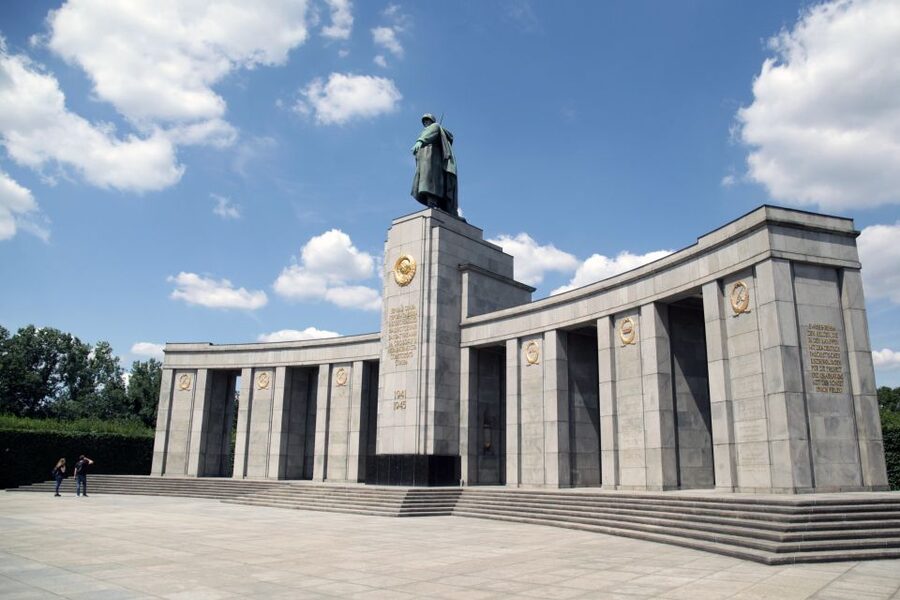
The tour includes the site of Hitler’s bunker, one of Berlin’s most sought-after Second World War locations. You do not visit an intact bunker interior. The site is remembered in the modern city, and the guide explains what happened there during the final days of the regime.
This is a place where expectations matter. Popular images can make the bunker seem like a dramatic underground attraction, but the experience here is about location, context, and the end of Nazi power. There is no preserved grand interior to explore.
The guide also explains Hitler and Albert Speer’s plan to redesign Berlin as Germania, a gigantic capital for a projected world empire. That unrealized plan reveals the regime’s ambition and its interest in architecture as political theater.
By this point, the tour has moved from the early Nazi seizure of power to the regime’s collapse. The contrast is sharp: enormous plans for a new imperial capital, followed by a ruined city and a leadership hiding underground.
Finishing at the Reichstag and the Battle of Berlin
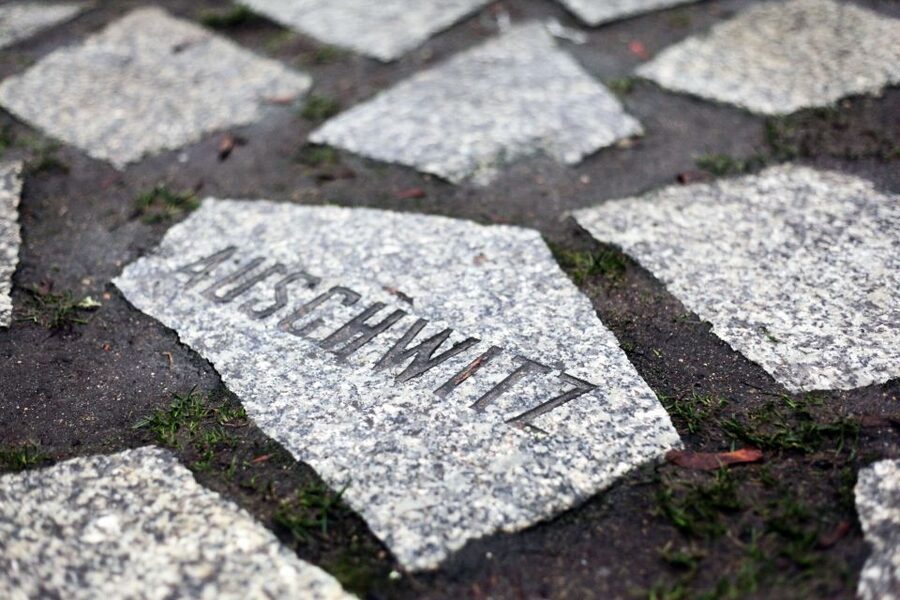
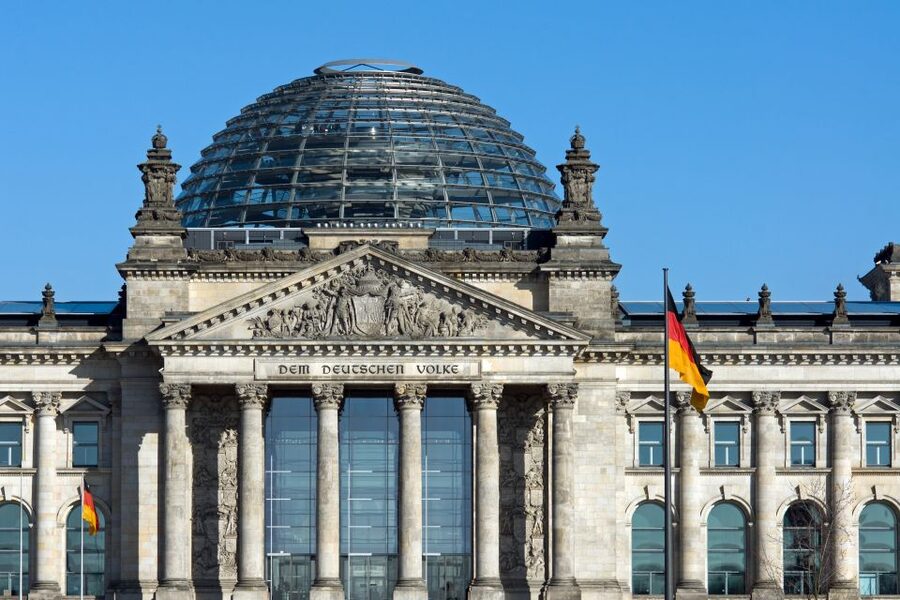
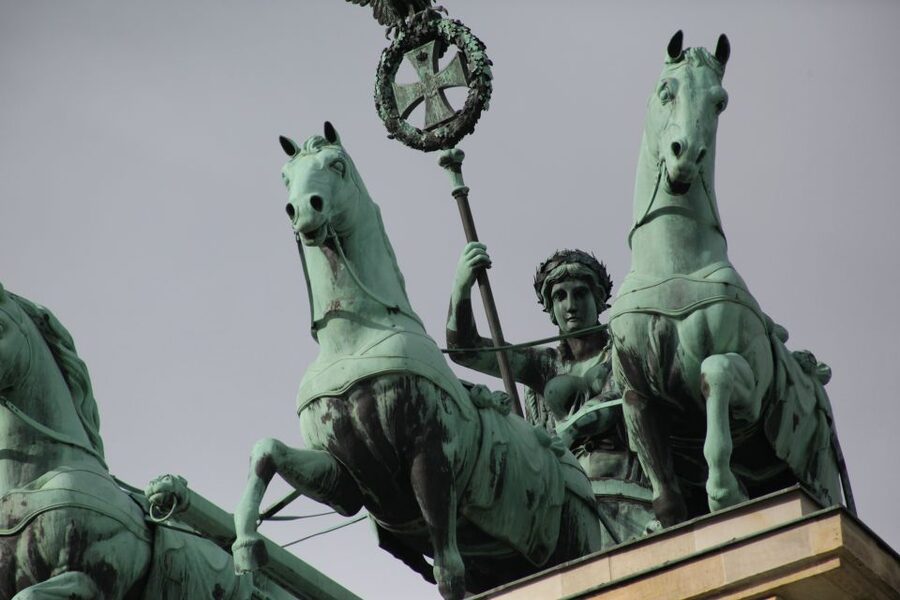
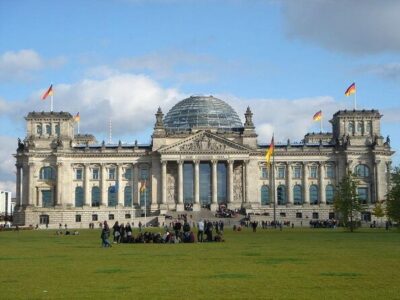
The walk ends in front of the Reichstag, Germany’s parliament building. The guide explains the final battle for Berlin, including the Soviet assault on the Reichstag under anti-aircraft fire.
You also learn how close the Reichstag was to Hitler’s bunker and how Hitler died by suicide during the battle. Ending here gives the route a clear final point: the building that became a symbol of the defeat of the Nazi regime.
The Reichstag is a visually impressive finish, but the value comes from the historical contrast. Today it represents Germany’s parliament. The tour explains how the building and surrounding district were caught up in the last violent struggle of the Third Reich.
Because the tour ends outside, you should not assume that it includes a Reichstag interior visit, dome reservation, or parliament tour. Those are separate experiences. This tour is about the building’s place in the Battle of Berlin and the planned transformation of the capital.
The guides make or break a serious subject
The strongest part of this experience is the guide. A four-hour route covering Nazi government, persecution, war, and memory needs clear organization. The most praised guides, including Glen, Jonathan N, Emma, Rohan, Jimmy, Artie, and Amelie, are described as engaging, well prepared, and able to answer questions.
Several guide styles appear in the feedback. Some rely on storytelling and humor to keep the pace moving. Amelie has used maps, photographs, and other documents to help explain how Berlin looked and changed. One guide was a West Berliner who added personal stories about the divided city, giving the broader history a local connection.
That range means your exact experience can differ by guide. Still, the consistent pattern is clear: the guide is expected to supply the detail, connect the sites, and keep the group together.
A small group can make it easier to hear and ask questions, and private groups are available. Shared group size can vary. One group was reported as nine people, which is a comfortable number for an outdoor history walk, but you should not assume every departure will be that small.
Is $23 good value for four hours?
At $23 per person, this is a strong-value tour if you want a structured introduction to Berlin’s Nazi past. You get four hours with a live guide, a public transport connection, and a route covering many important locations that would take effort to organize alone.
The price is especially fair because the route is broad. You cover the Jewish Quarter, Anhalter Bahnhof, the former Nazi government district, the Luftwaffe headquarters, Gestapo and SS sites, several memorials, Hitler’s bunker site, and the Reichstag.
The value drops if you expect admission to museums or buildings. You do not enter buildings, and the AB public transport ticket is extra. If your main goal is a long visit inside the Topography of Terror Museum, book that separately.
The tour earns its price through interpretation rather than entry tickets. You are paying for the route, the historical links, and the guide’s ability to make ordinary streets readable.
Practical advice for a better day
Wear shoes suitable for a long walk and dress for the forecast. The tour runs in all weather and on public holidays, so rain can become part of the experience. One earlier group found that poor weather did not ruin the day, but you should still bring an umbrella or rain jacket.
Arrive ready for an outdoor tour. You will hear about buildings and museums, but the tour does not take you inside them. If you want indoor time, add a museum visit before or after the walk.
Allow for the public transport ticket. A single AB ticket is required for the metro portion if you do not already have one. The meeting point may vary, so check the details for your selected option before setting out.
The subject suits older children and teenagers who can handle difficult history. One family found that three teenagers stayed interested, but the material includes persecution, murder, and the Holocaust. This is not a light sightseeing stroll.
The activity offers free cancellation up to 24 hours before the start and allows you to reserve now and pay later. Those terms are useful if your Berlin plans are still shifting.
Who should book it?
Book this tour if you want to understand how Nazi power operated in Berlin, not just see the Reichstag and Hitler’s bunker site. It is a good first historical walk, especially early in your stay, because it gives later museum visits more context.
I would choose it if you value a strong guide, outdoor memorials, and a route that includes places you might otherwise overlook. It suits history enthusiasts, first-time visitors, and anyone who wants a serious account of the Third Reich presented in a human and accessible way.
Skip it if you dislike long walks, outdoor tours in poor weather, or difficult wartime subjects. Also skip it if you want extensive indoor museum time. For everyone else, $23 buys four useful hours and a thoughtful route through Berlin’s most important Nazi-era sites.
FAQ
How long does the tour last?
The tour lasts four hours.
What price should I expect?
The listed price is $23 per person.
Is the tour offered in English?
Yes. The tour is available in English, and English-speaking guides have native-level fluency.
Is German also available?
Yes. German is one of the available tour languages.
Do I need a public transport ticket?
Yes. You need a single AB public transport ticket for the metro ride if you do not already have a valid ticket.
Does the tour enter the buildings?
No. The tour does not enter buildings.
Does the route include Hitler’s bunker?
Yes. The tour visits the site of Hitler’s bunker and explains the final days of the Nazi regime.
Does it visit the Reichstag?
Yes. The tour finishes outside the Reichstag, where the guide discusses the Battle of Berlin and the building’s role in the final fighting.
Is a private tour option available?
Yes. You can choose a private group option, depending on availability.
Does the tour run in bad weather?
Yes. It runs in all weather and on public holidays, so you should dress accordingly.
Just added in Berlin
- Berlin & The Third Reich Private Guided Tour★ 5.0 · 3 reviews
- Third Reich Quest Experience in Berlin★ 4.5 · 7 reviews
- Private Analogue Photography Experience in Berlin★ 5.0 · 3 reviews
- Berlin Urbex Adventure and History Tour★ 5.0 · 9 reviews
- The Beauty of Berlin by Bike: Private Tour★ 5.0 · 59 reviews
- Berlin: Guided Bike tour of the Berlin Wall and Third Reich★ 5.0 · 160 reviews
- Beyond Currywurst: Berlin’s Hidden Street Food & Culture Tour★ 5.0 · 100 reviews
- Berlin Third Reich & Cold War Walking Tour With A Guide★ 5.0 · 7 reviews
Third Reich Tours, compared.

Berlin’s Best: 2 Hour Walking Tour Third Reich and the Cold War
Read our review →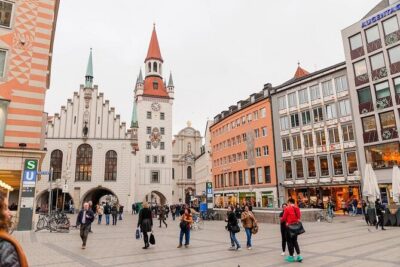
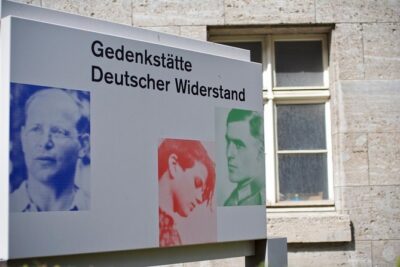
Third Reich Berlin: Hitler and WWII Walking Tour
Read our review →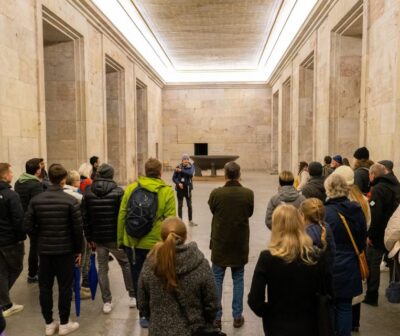
Walking Tour of Former Nazi Party Rally Grounds
Read our review →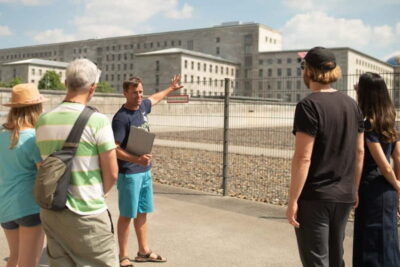
Berlin Third Reich Sites: Half-Day Walking Tour
Read our review →Browse the lists this tour appears in