
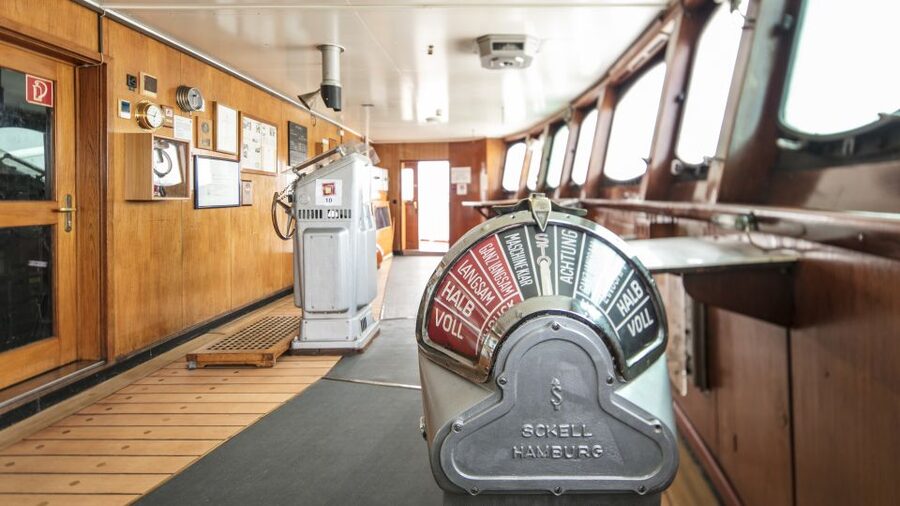
Reviewed · MUSEUMS
Hamburg: Entrance to the Museum Ship Cap San Diego
The most interesting thing about Cap San Diego is that it is not a replica or a tidy maritime display. It is a working-size 1961 cargo ship that lets you walk through the spaces built for real Atlantic voyages. You can take the imaginary lookout post on the bridge, follow the ship down toward the engine room, and picture a long run to Rio de Janeiro or Buenos Aires.
I like the freedom of the self-guided visit and the mix of working machinery, passenger spaces, and cargo history. I also like the way the ship connects Hamburg’s maritime past with the story of emigrants who passed through the port between 1850 and 1930. The main caution is practical: there are many stairs and narrow areas, so this is not a good choice for wheelchair users, people with limited mobility, or anyone uneasy in confined spaces.
Key points
- A genuine 1961 cargo ship: Cap San Diego is the last surviving vessel in a six-ship series built for Hamburg South.
- A full-ship visit: You can explore the bridge, saloon, cargo holds, machinery spaces, and other parts of the vessel.
- A South America route brought to life: The ship recalls voyages between Hamburg, Rio de Janeiro, and Buenos Aires.
- Two useful exhibitions: See the film A Suitcase Full of Hope and the cargo-handling display in Hatch 2.
- A flexible $14 outing: Your ticket is valid for one day, with opening hours from 10 AM to 6 PM.
- A self-guided experience: An audio guide is available if you select that option, but there is no live guide.
Meet Cap San Diego at Überseebrücke
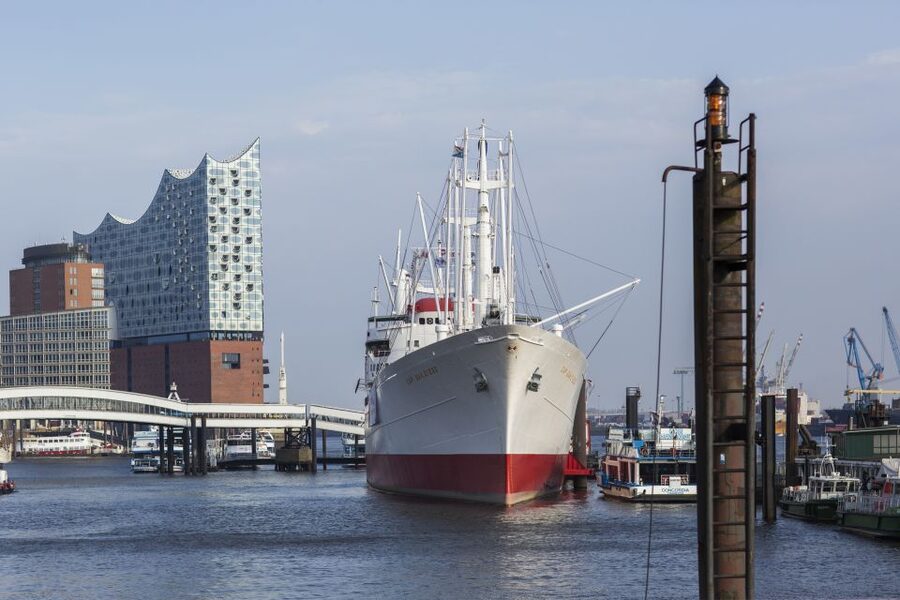
You enter Cap San Diego at the end of Überseebrücke, an easy-to-find waterfront location in Hamburg. Go directly to the ship entrance rather than looking for a separate museum building. The setting matters here: the museum is the vessel itself, and your visit begins before you reach the first exhibit.
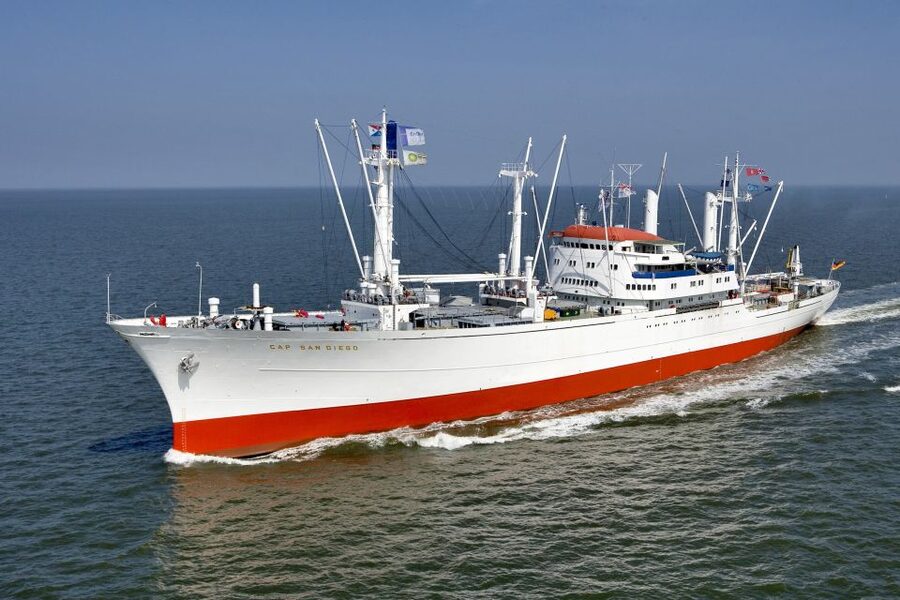
Cap San Diego was built in 1961 as one of six fast general cargo ships for the shipping company Hamburg South. These ships carried goods to South America until the end of 1981. Cap San Diego became a museum ship in 1988 and is now described as the largest civil museum ship in the world.
That scale changes the experience. You are not simply looking at a model, a few maritime objects, or a row of engines behind glass. You are moving through the original setting, from the ship’s upper working areas down into its cargo and machinery sections. The ship has a slightly maze-like quality, which is part of the fun for some people and a real drawback for others.
You should allow yourself time to get oriented. The route could be marked more clearly in places, but the ship is not difficult to figure out once you begin exploring. Think of the visit as a wandering tour with useful stops rather than a tightly scripted museum circuit.
More Museum Tours in Hamburg
- Hamburg: International Maritime Museum Entrance Ticket
★ 4.7 · 547 reviews - Hamburg: RICKMER RICKMERS Museum Entry Ticket
★ 4.6 · 269 reviews - Hamburg: Museum of Illusions Ticket
★ 4.2 · 122 reviews
Take the bridge and imagine the Atlantic crossing
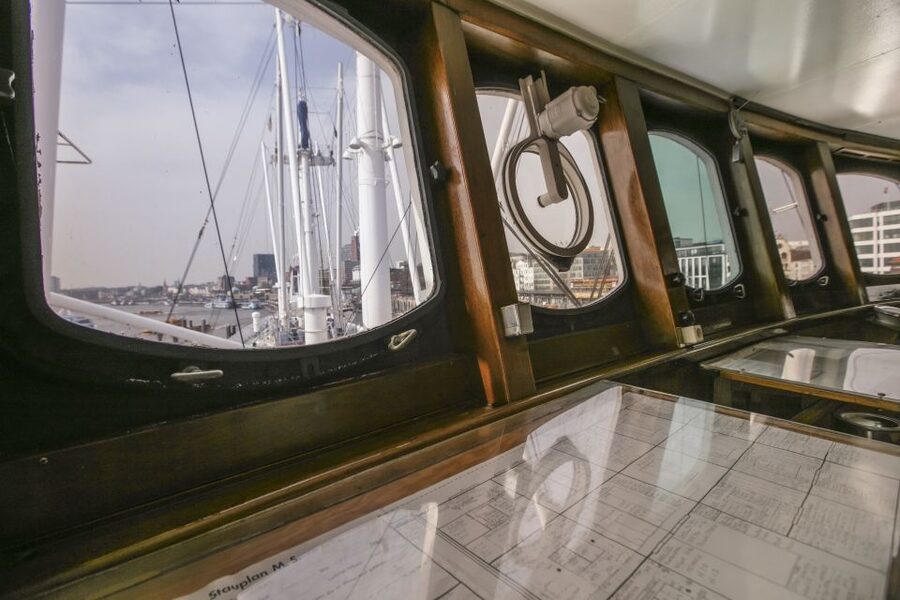
The bridge is one of the best places to begin. From here, you can imagine the role of a lookout during a voyage, with the ship running across the Atlantic toward South America. The experience does not depend on a live narrator. Instead, the physical setting asks you to supply the missing sounds and motion.
This imaginative element is especially effective because Cap San Diego was built for long-distance commercial service. The South America route was not a brief harbor trip. It was part of the ship’s working life, and the bridge gives you a clear sense of the decisions and watchkeeping that kept a vessel moving.
I like this part of the visit for its restraint. You are not being pushed through a theatrical attraction. You can pause, look around, and consider what the bridge meant to the people who worked there. If you prefer museums with labels at every turn and a fixed walking direction, you may find the freedom less convenient.
The ship’s upper areas also help you understand that maritime work was divided into many separate jobs. The bridge, passenger spaces, cargo areas, and engineering sections each tell a different part of the voyage. You see the vessel as a workplace, not just as a historic object.
Feel the pulse of the machine room
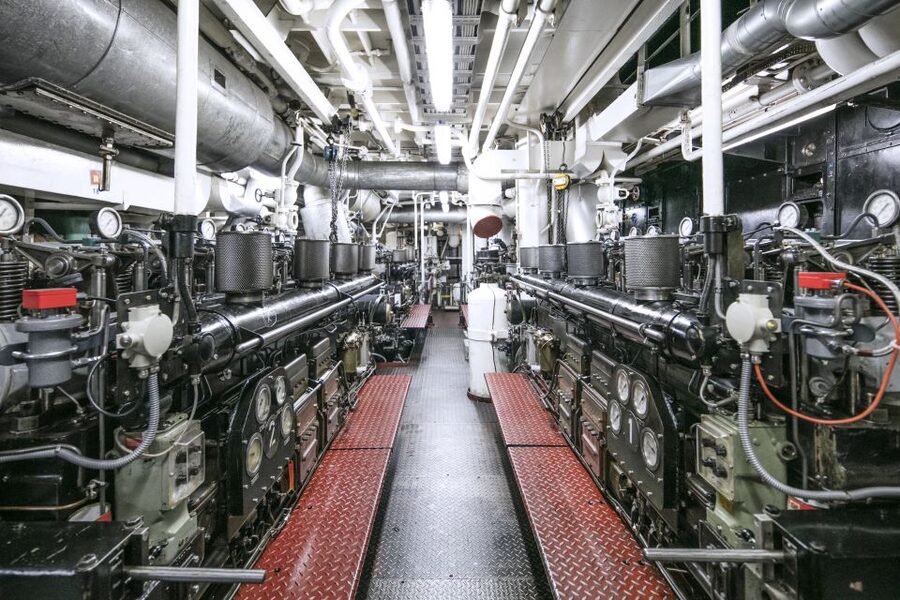
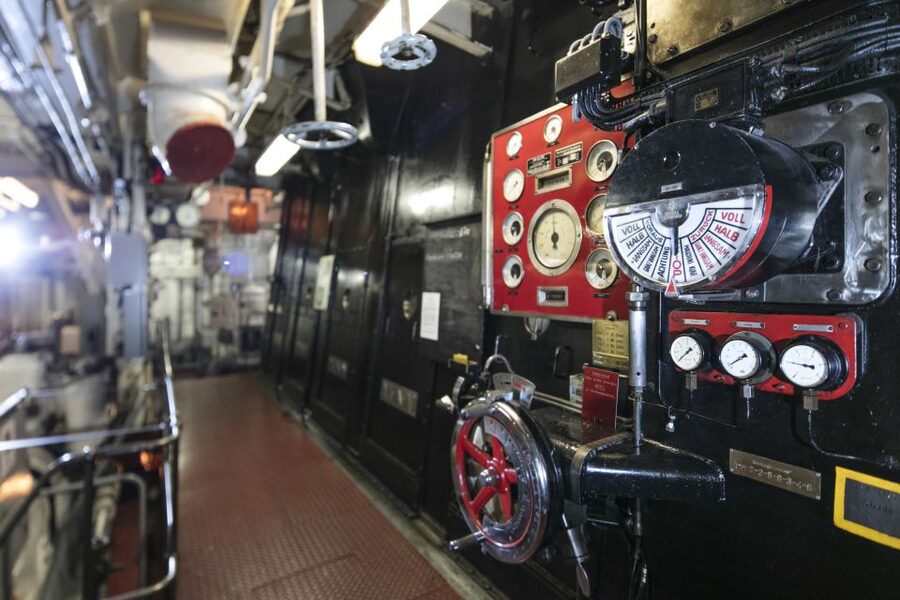
The engine room is the ship’s most physical stop. It takes you below deck and close to the machinery that powered these Atlantic runs. The description of the experience rightly focuses on the steady pulse of the engines, since the room offers a direct reminder that a cargo ship is a machine before it is a museum.
Even without a live guide, the engine room gives you plenty to look at. You can stand among the working spaces and imagine the heat, noise, and constant attention required during a long crossing. The contrast with the bridge is sharp. Up top, the view is open and outward-looking. Here, the ship closes around you.
This is where the warnings about claustrophobia and mazeophobia matter most. Some passages and interior sections can feel tight, and several flights of stairs connect the ship’s levels. If you prefer broad, level museum floors, Cap San Diego will demand more effort than a standard city attraction.
For anyone interested in ships, machines, or old transport systems, that effort is the point. The engine room turns an abstract story about ocean travel into something you can understand with your eyes and body. You do not need specialist knowledge to appreciate it. The size of the machinery and the layout of the room do much of the explaining.
See the saloon and the passenger side of the ship
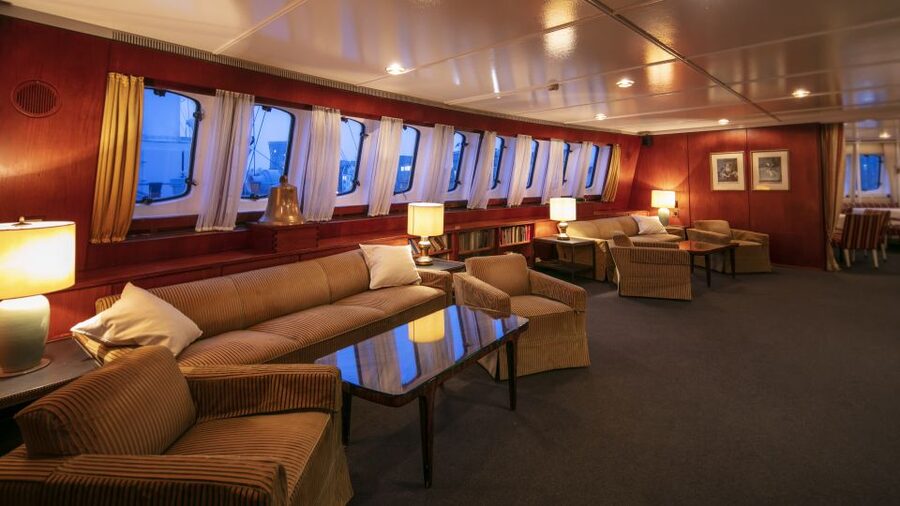
Cap San Diego was a cargo ship, but the visit is not limited to freight and machinery. The saloon gives you a different view of life on board. The suggested scene is a voyage to South America with passengers relaxing to light music, a quieter counterpoint to the engine room below.
This is a useful part of the visit because it keeps the ship from becoming only a technical exhibit. A long voyage involved rest, routine, and social space as well as work. The saloon helps you imagine the human rhythm of the journey.
You can also use this area as a natural pause during your visit. Because the tour is self-guided and valid for the full day, you do not need to rush from one compartment to the next. The ship rewards a slower pace, especially if you want to read the explanatory material and move carefully between decks.
The atmosphere is still shaped by the vessel itself. You are not entering a recreated hotel lounge built for a museum. You are seeing one part of the ship’s original world, alongside cargo spaces and crew working areas. That mixture is one of the strongest reasons to choose Cap San Diego over a more conventional maritime exhibit.
Same city, a completely different kind of day:
- Hamburg: Sex and Crime in St. Pauli Tour for Ages 18+
★ 4.7 · 15,447 reviews - Hamburg: 1.5-Hour Harbor and Speicherstadt Day Cruise
★ 4.6 · 14,200 reviews - Hamburg: 90-Minute Evening Lights Harbor Cruise
★ 4.5 · 7,728 reviews - Hamburg: 2-Hour XXL Port of Hamburg Cruise Tour
★ 4.7 · 6,979 reviews
Follow the story of Hamburg’s emigrants
One of the most important parts of the visit is the documentary A Suitcase Full of Hope: Emigration Port of Hamburg. It focuses on the fate of emigrants between 1850 and 1930, a period when Hamburg served as a major departure point for people leaving Europe.
The film adds human weight to the ship’s wider story. Cap San Diego itself belongs to the later age of commercial shipping, but Hamburg’s port history reaches back much further. The emigrant story helps you see the harbor not only as a place where cargo moved, but also as a place where people made difficult decisions about home, family, and the future.
This section is valuable because it broadens the visit beyond engines and ship design. You begin with a vessel that carried goods to South America, then connect that maritime network with the people who traveled through Hamburg in earlier decades. The two subjects are not identical, but together they show how strongly the port shaped the city’s connection with the wider world.
You should make time for the film rather than treating it as an optional extra. It gives the museum a more serious tone and helps explain why Hamburg’s maritime past cannot be reduced to handsome ships and harbor views. The film is especially useful if you want historical context, not just access to the ship’s decks.
Understand freight in Hatch 2
Hatch 2 contains the permanent exhibition General Cargo and Container Handling. It explains the history of sea freight from 1960 to today through historical photographs and explanatory text.
This exhibition gives you a practical way to understand the work Cap San Diego was built to do. General cargo shipping involved moving many kinds of goods, while container handling later changed how freight was packed, transferred, and loaded. The display connects the ship’s original working life with the later development of modern shipping.
I find this kind of exhibit most useful after seeing the cargo areas in person. The ship gives you the physical setting. Hatch 2 supplies the wider explanation. Together, they help you understand why cargo ships changed and how the industry moved toward container transport.
The exhibition also keeps the visit from becoming a simple trip into the past. The story continues from the ship’s 1961 construction through changes that reach to the present day. You can compare the vessel’s original general cargo role with the more standardized methods that followed.
Do not hurry through the photographs and text. This is one of the parts that rewards attention, especially if you have little background in shipping. It may be less immediately thrilling than the engine room, but it gives the whole visit a clearer purpose.
Build your own route through the ship
There is no live guide leading a group from stop to stop. You explore the ship on your own, and that has both advantages and limits.
The advantage is control. You can spend extra time in the engine room, pause in the saloon, watch the emigrant documentary, or focus on the cargo exhibition. You are not tied to a departure time or forced to move on when an organized group reaches the next station.
The limitation is that you need to read and orient yourself. The route is not always perfectly obvious, and a large ship has plenty of changes in level and direction. You may need a few minutes to get your bearings fast, particularly when moving between upper decks and internal sections.
An audio guide is included if you choose that option when booking. If you prefer to learn through spoken explanation, it may help give your visit more structure. Without it, the ship remains a quiet, independent exploration, supported by displays, photographs, and explanatory texts.
I would plan to visit early enough that you can use the full opening window if needed. The museum is open daily from 10 AM to 6 PM, and the ticket is valid for one day. That is generous for a single museum ship, but the hours are useful because you may want to pause rather than race through every section.
What $14 gets you in Hamburg
At $14 per person, Cap San Diego is a strong-value choice if you enjoy hands-on history. You are paying for access to a large historic vessel, not just a small exhibit room. The ticket covers the ship’s major areas, including the bridge, saloon, engine room, cargo-related spaces, film, and exhibitions.
The value depends on your interests. If you want a quick photo stop with a simple route, the price may feel less attractive because the ship asks for time and attention. If you enjoy transport history or like to explore at your own pace, the combination of scale and access makes the admission reasonable.
The self-guided format also helps keep the visit flexible. You can fit it around other plans in Hamburg, provided you arrive during the 10 AM to 6 PM opening period. The ticket is valid for one day, so you do not need to complete the ship in a short timed slot.
Free cancellation up to 24 hours in advance and the option to reserve now and pay later add practical flexibility. Those terms are useful if your Hamburg schedule is still changing, but the main value remains the same: you get a substantial museum experience for a moderate admission fee.
Who should choose Cap San Diego
I would recommend this experience to you if you like ships, engineering, port history, or museums that let you move through original spaces. It also suits anyone who wants something different from Hamburg’s standard city sights. The combination of a real cargo ship, South America route, emigrant history, and freight exhibition gives the visit more range than the price might suggest.
Families with older children may find the ship engaging because there are different kinds of spaces to discover. The bridge offers imagination, the engine room offers machinery, and the cargo areas offer a clearer sense of how goods moved. The museum does not depend on a single long lecture, so you can adjust the pace to suit your group.
I would hesitate to recommend it if you have limited mobility. There are multiple flights of stairs, and the ship is not wheelchair accessible. It is also a poor fit if narrow passages or maze-like interiors make you uncomfortable.
The lack of a live guide is another consideration. Some people prefer a guided story with a clear route and someone available to answer questions. Here, you need to read, listen to the optional audio guide if selected, and make sense of the ship at your own pace.
Final call: book it if you want Hamburg’s port from the inside
You should book Cap San Diego if you want a museum where the building is part of the story. For $14, you can move from the bridge to the machinery, from the passenger saloon to the cargo hold, and from the ship’s 1960s South America route to Hamburg’s earlier emigrant history.
I especially like the way the visit joins technical detail with human stories. The engine room explains how the ship worked. The saloon suggests how people lived on board. The film about emigrants and the Hatch 2 freight exhibition show why Hamburg mattered far beyond its waterfront.
Choose another attraction if you need step-free access, a live guide, or a simple, clearly marked route. For everyone else, give yourself time, wear comfortable shoes, and treat the ship as an exploration rather than a quick checklist stop. Cap San Diego is at its best when you slow down and let each deck reveal another part of Hamburg’s connection with the sea.
FAQ
Where is Cap San Diego located?
The ship entrance is at the end of Überseebrücke in Hamburg, Germany.
How much does admission cost?
Admission costs $14 per person.
How long is the ticket valid?
The ticket is valid for one day.
What are the museum’s opening hours?
The museum is open daily from 10 AM to 6 PM.
Is this a guided tour?
No. The visit is self-guided, and there is no live guide.
Is an audio guide available?
An audio guide is available if you select that option.
What parts of the ship can I see?
You can explore the bridge, saloon, engine room, cargo-related areas, and other parts of the ship.
What exhibitions are included?
You can watch the documentary A Suitcase Full of Hope: Emigration Port of Hamburg and visit the permanent Hatch 2 exhibition about general cargo and container handling.
Is Cap San Diego wheelchair accessible?
No. The museum ship is not wheelchair accessible.
Is the experience suitable for people with limited mobility or claustrophobia?
It is not recommended for people with limited mobility or claustrophobia. The ship has multiple flights of stairs and confined, maze-like areas.
Just added in Hamburg
- Hamburg: St. Pauli Food and Bier Tour★ 4.7 · 5 reviews
- St. Pauli Tour: Drag-Attack with Barbie Stupid & Lee Jackson★ 4.8 · 280 reviews
- Hamburg: Private Tour Red Light District Walking Tour★ 4.7 · 227 reviews
- St. Michael’s, Elbe Tunnel & Harbor 2-Hour Hamburg Tour★ 4.9 · 21 reviews
- Hamburg: Safari tour in St. Pauli★ 4.9 · 11 reviews
- Satt Pauli – der kulinarische Rundgang durch St. Pauli★ 4.8 · 12 reviews
- Radtour um die Alster & durch traumhafte Alsterviertel★ 4.9 · 34 reviews
- Hamburg: Reeperbahn Comedy Club★ 4.3 · 53 reviews
Museums, compared.




Skip-the-Line: Berlin Wall Museum at Checkpoint Charlie
Read our review →
Browse the lists this tour appears in