
Reviewed · NUREMBERG TOURS
Tour del tercer Reich por Núremberg en español
Nuremberg’s medieval image made it useful to Hitler. The Nazis presented this old imperial city as the heir to Germanic tradition, then used it as a stage for rallies, propaganda, and anti-Semitic law. This Spanish-language tour connects that dark political story to places you can see in the city today.
I like the clear three-hour focus and the chance to examine both the Nazi Party Congress grounds and the Nuremberg Trials. I also like the Spanish-speaking guide, Federico, whose documented, didactic approach gives the subject structure rather than reducing it to a string of grim facts. The main consideration is that this is a serious history tour, not a light city walk, and the information provided does not promise entry to every site discussed.
Key points
- Nuremberg’s role in Nazi propaganda: Learn why Hitler selected the city as a symbolic center of the Third Reich.
- Spanish-language guidance: Federico leads the private tour with historical explanation and supporting documentation.
- Nuremberg Trials: Understand how the postwar trials shaped the city’s place in modern history.
- Zeppelin Field and Nazi Party Congresses: Explore the sites tied to mass demonstrations and political theater.
- Street of Human Rights: Connect Nuremberg’s Nazi past with its later public statement against persecution.
- Practical format: The three-hour tour starts and ends at Frauenkirche, costs $19 per person, and requires comfortable shoes.
Why Nuremberg Became Hitler’s Chosen Stage
Nuremberg can look like a postcard of old Germany: a market square, a church, and centuries of imperial associations. That was precisely the point for the Nazi regime. Hitler wanted to link his movement with the old Germanic and imperial past, and Nuremberg offered the symbols he needed.
For centuries, the city had played an important role in the Holy Roman Empire. The Nazis took that older prestige and repackaged it as political theater. Nuremberg became the preferred site for party congresses, mass rallies, and carefully staged displays of loyalty.
That context gives this tour a useful starting point. You are not simply looking at old Nazi buildings. You are examining how a government used architecture, ceremony, history, and crowd psychology to build power.
I appreciate that the experience places Nuremberg inside a larger story. The city was not only the setting for Nazi crimes. It was also deliberately turned into a symbol, and understanding that symbolic role helps explain why events held here mattered so much.
A few more half-days in Nuremberg worth comparing
- Nuremberg: City Tour with the Bimmelbahn Train
★ 4.4 · 2,475 reviews - Nuremberg: Old Town Guided Walking Tour
★ 4.6 · 2,416 reviews - Nuremberg: Tunnels and Secret Passages in the City Wall Tour
★ 4.8 · 2,334 reviews
The Nazi Party Congresses and Mass Demonstrations
A major part of the tour deals with the Nazi Party Congresses and the National Socialist demonstrations held in Nuremberg. These gatherings were designed to overwhelm the individual. Uniforms, banners, speeches, formations, lights, and monumental spaces all worked together to create the impression of unity and strength.
The city became a stage on which the regime acted out its ideal version of Germany. The goal was not simply to hold a political meeting. It was to create images that could be shown across the country and abroad.
As you discuss these events, pay attention to the difference between genuine public support and carefully managed spectacle. The Nazis understood that political power could be reinforced through repeated images and rituals. Nuremberg gave them a setting where that message could be presented on a huge scale.
The tour’s private-group format should help here. You can ask for clarification when a term or event is unfamiliar, which matters when dealing with Nazi institutions and propaganda. At $19 per person, the guide’s time is being used for interpretation, not just directions between sights.
Zeppelin Field and the Architecture of Power
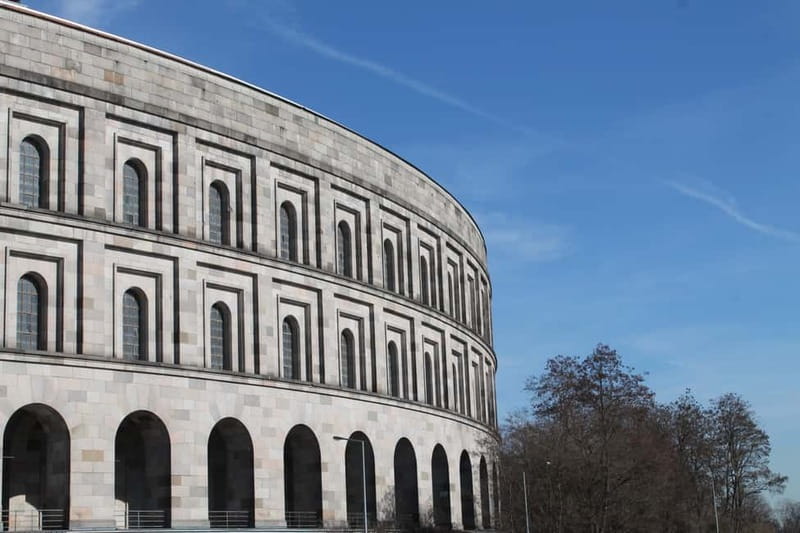
Zeppelin Field is one of the most important places connected with Nazi pageantry. It was used for large demonstrations and is associated with the monumental visual style the regime wanted the world to see.
The site is valuable because it shows how physical space can serve political goals. Large-scale architecture can make people feel small, while regimented movement and mass attendance can suggest order and inevitability. A guide can point out how these elements worked together, helping you read the site as propaganda rather than simply as a collection of structures.
Do not expect the subject to be comfortable. That is part of the value, but it also means you should allow mental space for the material. The experience deals with dictatorship, racism, antisemitism, and organized persecution. It is best suited to people who want serious historical explanation.
The supplied information connects Zeppelin Field with the broader story of the Nazi Party Congresses. It does not confirm that every part of the area is entered or that all surviving structures are visited, so you should think of this as a guided examination of the site and its meaning rather than a guaranteed museum tour.
The Nuremberg Laws and Julius Streicher
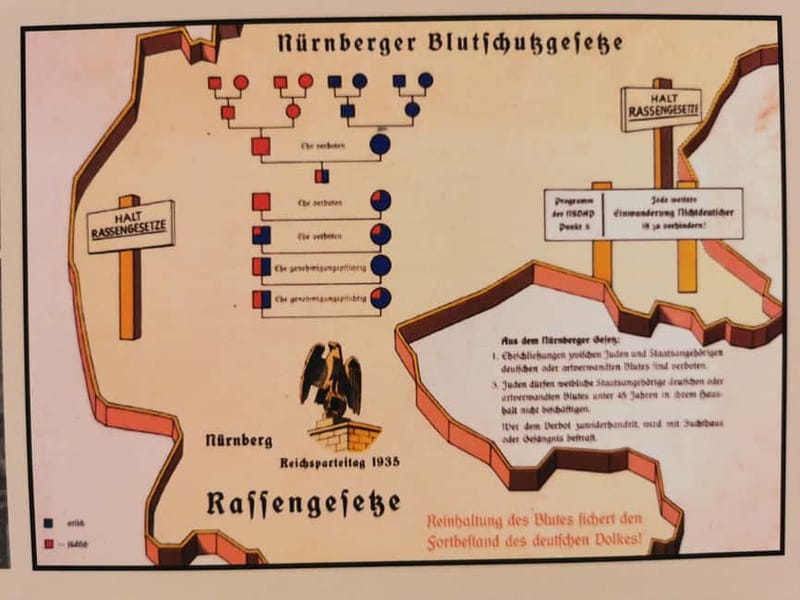
Nuremberg’s importance was not limited to rallies. The city is also linked with the Nuremberg Laws, anti-Semitic legislation written under Wilhelm Frick. These laws helped turn Nazi racial ideology into official policy.
That is a crucial point in the tour. Antisemitism did not remain at the level of speeches or newspaper articles. It was translated into legal restrictions that stripped Jewish people of rights and placed discrimination inside the machinery of government.
The tour also discusses Julius Streicher, one of the regime’s most active anti-Semitic figures. Streicher owned and promoted Der Stürmer, a weekly newspaper built around hateful propaganda. His role shows how newspapers and repeated racist messaging helped normalize persecution.
I find this part especially useful for visitors who know the broad outline of Nazi history but want to understand how prejudice became public policy. The tour links political language, media, law, and place. That makes the subject easier to follow and harder to dismiss as the work of a few isolated extremists.
Same city, a completely different kind of day:
- Nuremberg: Medieval Dungeons Guided Tour
★ 4.8 · 1,726 reviews - Nuremberg: Walking Tour of Former Nazi Party Rally Grounds
★ 4.7 · 1,665 reviews - Medieval Tour in Nuremberg in Spanish
★ 5.0 · 1,374 reviews - Nuremberg: Historischer Kunstbunker WWII Art Bunker Tour
★ 4.8 · 921 reviews
The Jewish Quarter and Nuremberg’s Antisemitic Past
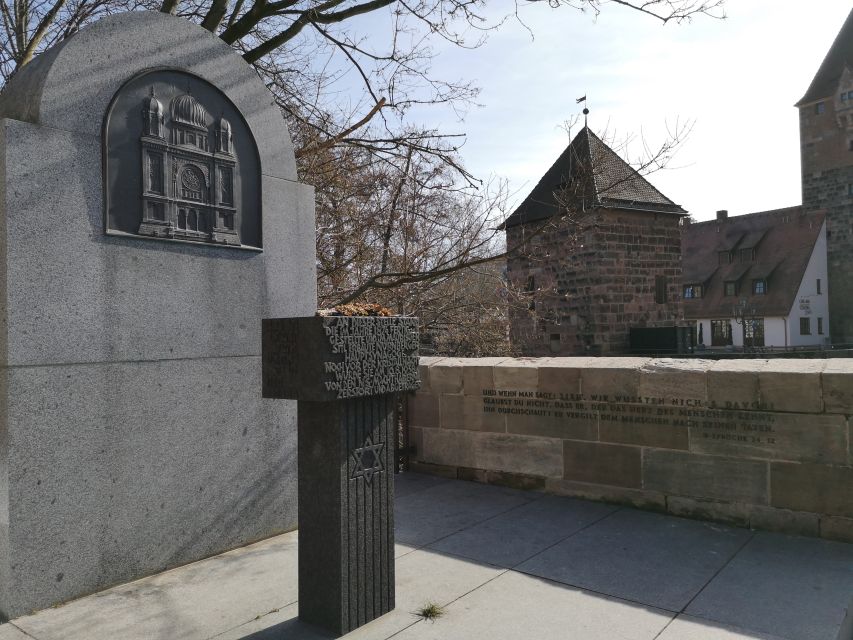
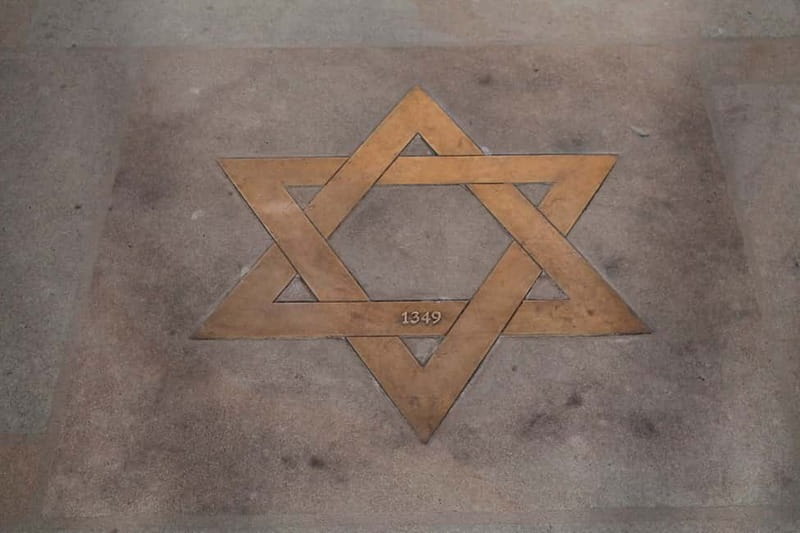
The itinerary includes discussion of Nuremberg’s Jewish quarter and the city’s history of antisemitism. This adds an important local layer to the tour.
The Nazi period did not appear from nowhere. Antisemitism had older roots in European history, and a serious account needs to distinguish medieval prejudice from the modern racial ideology and state persecution of the Nazi era. The tour’s focus on the Jewish quarter provides a way to consider that longer story within Nuremberg itself.
You should listen for how the guide separates historical periods and political systems. It is easy for a fast tour to treat antisemitism as one unchanging idea, but the causes, language, and consequences shifted over time.
The information provided does not give a full list of stops in the former Jewish quarter, so I would not book this expecting a detailed architectural walking tour of Jewish Nuremberg. Instead, expect the area and its history to form part of the wider discussion about persecution, propaganda, and the city’s role under the Nazi regime.
The Nuremberg Trials and the Street of Human Rights
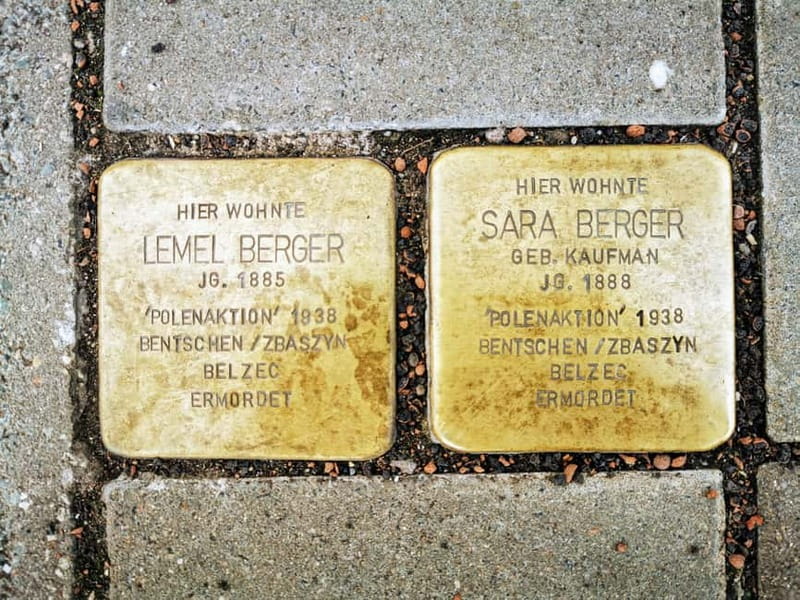
The Nuremberg Trials are another central subject. After the Second World War, leading Nazi figures were brought before an international military tribunal in Nuremberg. The trials made the city famous for a very different reason, linking it with the effort to prosecute crimes committed by the regime.
A guided explanation is useful here because the trials involved more than a courtroom event. They raised major questions about responsibility, aggressive war, crimes against humanity, and how individuals could be held accountable for actions carried out through a state.
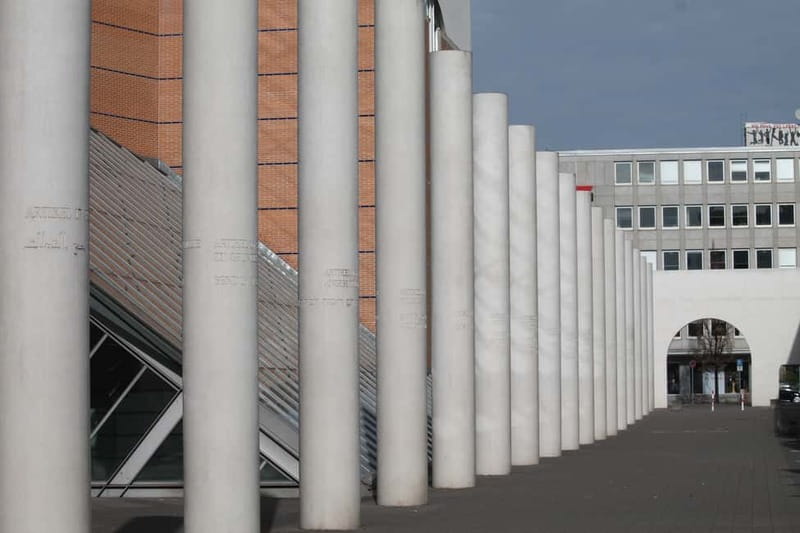
The tour also includes the Street of Human Rights. This public installation provides a sharp contrast with the Nazi use of Nuremberg. Instead of celebrating racial hierarchy and obedience, it presents human rights as a shared principle.
That contrast gives the walk a strong shape. You begin with a city used to glorify dictatorship and end with a public reminder of universal rights. I like this movement because it does not leave Nuremberg trapped in its Nazi past. It shows how the city has tried to address that past in public space.
Flossenbürg and the Wider Camp System
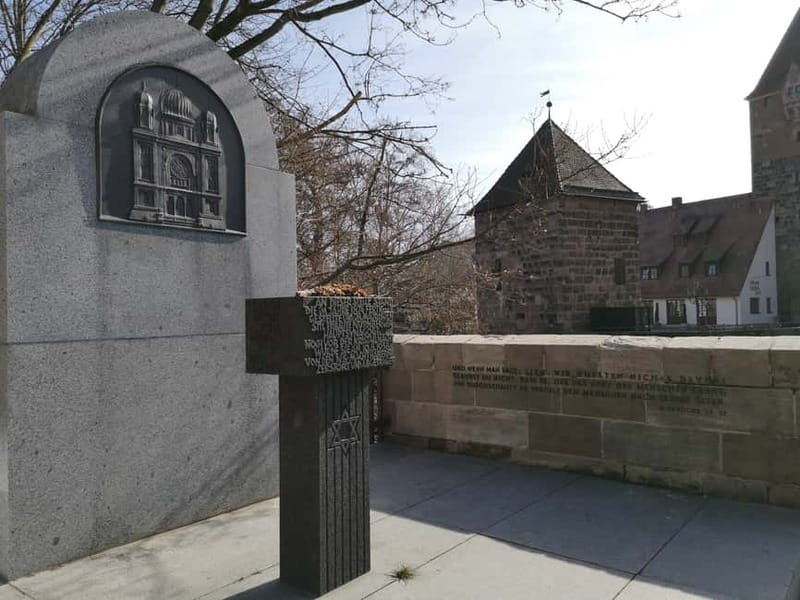
The experience includes Flossenbürg concentration camp among its subjects. The information supplied does not say that the tour travels to the camp, so you should expect it to be discussed rather than assume it forms part of the three-hour city route.
That distinction matters. Flossenbürg was outside Nuremberg, and no transport is listed. The tour begins and ends at Frauenkirche, with no hotel pickup, drop-off, food, or drinks included. You are booking a city-based guided experience, not a separate excursion to a concentration camp memorial.
Even as a topic, Flossenbürg helps place Nuremberg within the wider system of Nazi imprisonment and forced labor. It reminds you that rallies and laws were part of a much larger structure of violence.
If visiting a concentration camp memorial is a main purpose of your trip, check the exact scope before booking. This tour can provide historical context, but the available details do not promise a visit to Flossenbürg.
Federico’s Teaching Style and the Private Format
The Spanish-speaking guide is Federico. His role is more than pointing out buildings. The experience is built around explanation, historical documents, and the connections between events.
The strongest praise concerns his cultured presentation, broad command of the subject, and ability to explain difficult moments in a clear, didactic way. That matters on a topic filled with names, dates, organizations, and political terms. A guide who can organize the material keeps the tour from becoming a blur of Nazi symbols and grim locations.
The private-group format is another advantage. You have more room to ask about subjects such as the Nuremberg Laws, Der Stürmer, the trials, or the difference between party propaganda and government policy. It also makes the experience more adaptable to your level of background knowledge.
There is one point to watch: the price is listed as $19 per person, while the group type is listed as private. Confirm the booking details for your party size and final cost. The value is strong if you want a focused Spanish-language history lesson with a guide. It is less compelling if you only want a quick overview of Nuremberg’s old town.
Timing, Walking, and What to Bring
The tour lasts three hours and starts in front of the main entrance of Frauenkirche on Hauptmarkt. Look for the white and red umbrellas. It returns to the same meeting point, which makes planning around the experience straightforward.
Comfortable shoes are important. The tour is guided on foot, and three hours is long enough for tired feet to distract you from the subject. No meal or drink is included, so plan those separately around the start or finish.
The tour is wheelchair accessible according to the available information. Still, if you use a wheelchair, you may want to confirm the exact route and any site-specific conditions before arrival, since the details do not describe every surface or interior access point.
Spanish is the only language listed. That makes this a good choice if you want to discuss the subject in Spanish rather than rely on an English-language explanation or translated signage.
Who Will Get the Most From This Tour
I would choose this tour if you want to understand why Nuremberg mattered to the Third Reich, not simply photograph its surviving sites. It is especially useful for visitors interested in political history, propaganda, antisemitism, the Nuremberg Trials, or the way modern Germany addresses Nazi crimes.
It also suits Spanish-speaking couples, families with older children, and private groups who prefer questions and conversation. The three-hour length gives enough time to build a coherent story without taking up an entire day.
I would be more cautious if you want a casual introduction to Nuremberg or a tour centered on medieval architecture. The Nazi period is the subject here, and the material is grave. Also, if you specifically want to enter a courtroom, visit Flossenbürg, or tour an indoor museum, confirm what is included before paying.
Is This Three-Hour Nuremberg Tour Worth Booking?
At $19 per person, this is a good value for a focused Spanish-language tour, especially when you consider the private format and the subject’s complexity. The strongest reason to book is Federico’s structured approach, with historical documentation and clear explanations of Nuremberg’s role in Nazi Germany.
Book it if you want the Nazi Party Congresses, Zeppelin Field, the Nuremberg Laws, antisemitism, the trials, and the Street of Human Rights connected into one story. Skip it if you are looking for a light city walk or a confirmed excursion to Flossenbürg. For a serious, accessible introduction to Nuremberg’s Third Reich history, this tour earns a place in your plans.
FAQ
How long does the tour last?
The tour lasts three hours. Starting times vary, so check availability when choosing a date.
Where does the tour begin?
It begins in front of the main entrance of Frauenkirche at Hauptmarkt. Look for the white and red umbrellas.
Where does the tour end?
The activity ends back at the Frauenkirche meeting point.
What language is the tour in?
The tour is conducted in Spanish with a live Spanish-speaking guide.
Is the tour wheelchair accessible?
Yes, the activity is listed as wheelchair accessible.
What should I bring?
Bring comfortable shoes. Food and drinks are not included, and hotel pickup and drop-off are not provided.
Just added in Nuremberg
- Tour en español al Campo Zeppelin★ 5.0 · 8 reviews
- Stein: Public guided tour of the “Old Mine” museum★ 4.5 · 18 reviews
- “Rotes Bier” and “Blaue Zipfel”. A historical-culinary walk★ 4.4 · 190 reviews
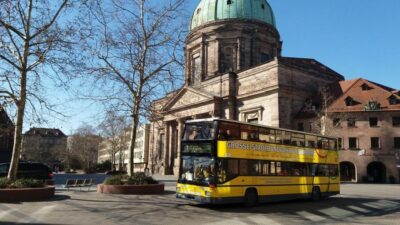
- Nuremberg: Old Town Guided Tour By Bus★ 4.4 · 198 reviews
- Nürnberg Bachelor(ette) Party with Night PubCrawl★ 4.2 · 5 reviews
- Nuremberg: Bar and Club Tour with Free Shots and Free Entry★ 3.8 · 23 reviews
- Nuremberg: WWII Tour, Courtroom 600 and 3rd Reich Sites★ 4.6 · 94 reviews
- Nürnberg kennenlernen: Highlights in der Altstadt★ 4.7 · 189 reviews
Nuremberg Tours, compared.
Walking Tour of Former Nazi Party Rally Grounds
Read our review →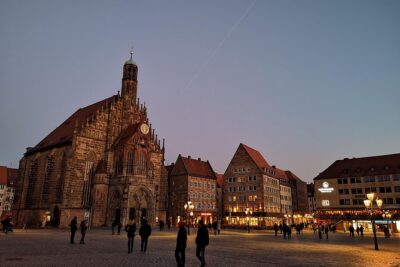
Browse the lists this tour appears in