
Reviewed · WALKING TOURS
Queer Berlin Walking Tour
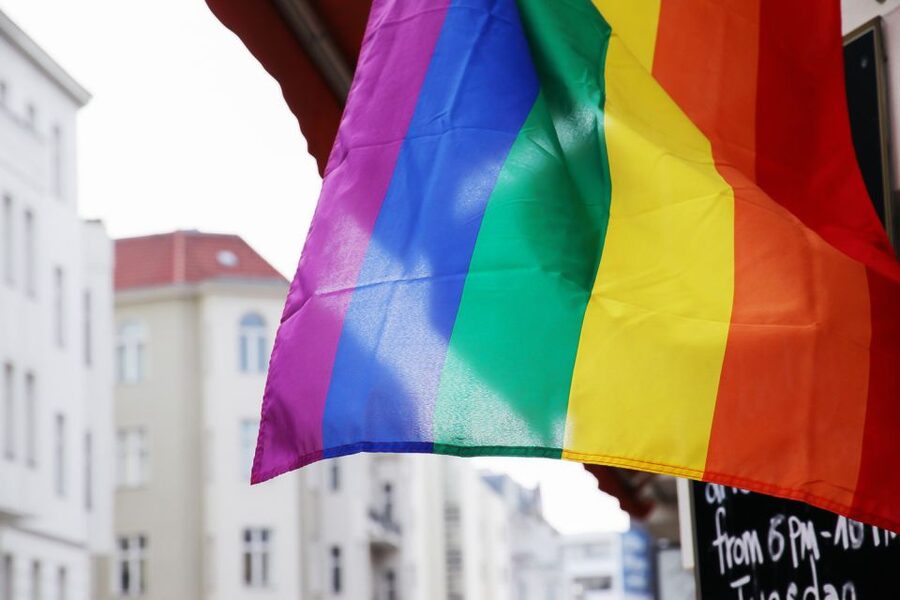
Berlin’s queer story is not tucked away in a museum. It is written across Schöneberg’s streets, former bars, memorials, parks, and meeting places. This walking tour brings that story into focus, from Frederick the Great and early sexology to Christopher Isherwood, Marlene Dietrich, Nazi persecution, and the city’s modern gay identity.
I like two things right away: the tour connects queer history with the wider story of Berlin, and it gives real attention to women, trans people, and lesbian life rather than treating gay history as a one-man tale. The stops at the former Eldorado and Magnus Hirschfeld’s Institute for Sexual Science are especially useful.
The main drawback is simple: three and a half hours on foot is a long stretch, and public transport or entrance fees are not included. The route runs in all weather, so wear good shoes and bring water. Guides have included Tom, Tobi, Finn, Beth, Kyle, and Jared, depending on the date.
Key points at a glance
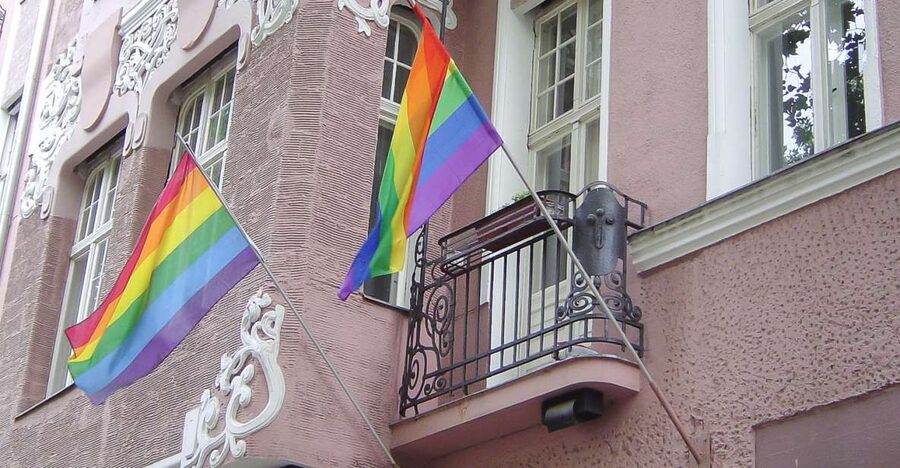
- Schöneberg comes first: Walk through Berlin’s best-known queer neighborhood and connect former nightlife sites with the people who made the area famous.
- The former Eldorado: See the site of one of Berlin’s oldest gay and trans bars, a place linked to the city’s early queer nightlife.
- Magnus Hirschfeld’s work: Learn how his Institute for Sexual Science offered help and support before the Nazis shut it down in 1933.
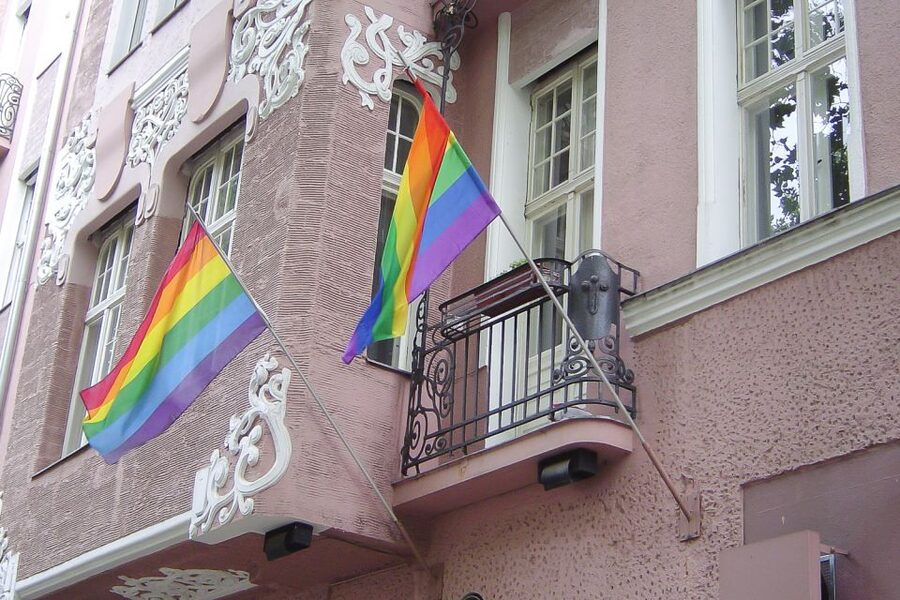
- A sober Nazi-era stop: Visit the memorial to homosexual people persecuted and sent to concentration camps.
- The Tiergarten route: Walk through Berlin’s best-known gay meeting place, in the shadow of the former Berlin Wall.
- Good value for history fans: At $23 per person, the price is modest for a 3.5-hour guided walk with a clear focus and live discussion.
Why Schöneberg is the right place to begin
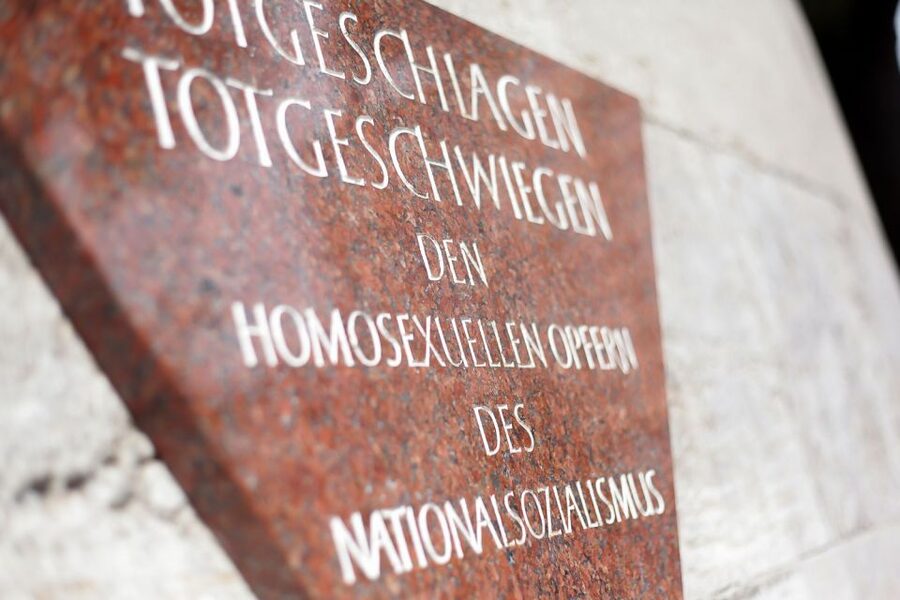
Schöneberg gives you a useful starting point because it is not just a symbolic gay neighborhood. Its streets connect nightlife, politics, art, migration, persecution, and ordinary daily life.
You will hear how Berlin became a pioneer of gay and lesbian rights in the late 19th century, even as German law continued to punish male homosexuality under Section 175. That contradiction is one of the tour’s central ideas. Berlin could offer freedom and danger at the same time, sometimes within the same decade.
The guide helps you place famous names in real locations. Marlene Dietrich lived and worked in the area. Christopher Isherwood wrote about Berlin’s cabaret world, while artist Otto Dix captured its harder, more theatrical side. These are not isolated celebrity stories. They show how queer life shaped the city’s culture and how artists helped preserve a picture of Berlin’s nightlife.
I appreciate that the tour does not present Schöneberg as a perfect refuge. The district’s reputation grew from real communities and meeting places, but those communities faced police pressure, legal restrictions, political violence, and later the destruction brought by the Nazis. That balance makes the walk more useful than a simple parade of famous names.
More Walking Tours in Berlin
- Discover Berlin Half-Day Walking Tour
★ 5.0 · 9,624 reviews - Berlin: Third Reich and Cold War 2 Hour Walking Tour
★ 4.9 · 6,830 reviews - Berlin: Discover Berlin Walking Tour
★ 4.9 · 5,998 reviews
The former Eldorado and Berlin’s nightlife
One of the most memorable stops is the site of the former Eldorado, one of Berlin’s oldest gay and trans bars. You will not be entering a preserved club, so set your expectations correctly. The value is in understanding what the address represented and how queer people found room for self-expression in a city that could be both permissive and threatening.
The Eldorado helps explain the role of bars in queer history. These places were not only for drinking or entertainment. They offered contact, identity, performance, romance, and a chance to find other people who understood your life. The mention of trans people is important here, since many general city tours leave that part of Berlin’s past almost untouched.
The nightlife stories also bring in Isherwood and Dix. Their work gives you two different ways to look at the city: one through personal observation and literary memory, the other through art that could be sharp, strange, and unsparing.
You may also hear about the former lesbian bars and later changes in East Berlin’s gay neighborhood. That wider reach matters. The tour is not limited to one male, prewar nightlife story. It follows different communities and shows how queer Berlin changed over time.
Magnus Hirschfeld and the lost Institute for Sexual Science
The section on Magnus Hirschfeld is likely to be the intellectual center of the walk. Hirschfeld was a doctor and sexologist who created the Institute for Sexual Science, a groundbreaking place that supported openly queer and transgender people.
The important point is practical: people could seek advice, assistance, and a degree of recognition at a time when the law and much of society offered little protection. Hirschfeld’s work treated sexuality and gender as subjects for study and care rather than simple grounds for punishment.
The institute was shut down in 1933. Its library was destroyed during the Nazi book burnings, a powerful reminder that the attack on queer life was also an attack on research, education, and public memory.
This stop gives the tour more depth than a nightlife walk. You learn not only where people gathered, but also where people tried to build institutions that could help them live with dignity. It is a good example of how the tour moves between personal lives, public policy, science, and politics.
The site itself may not offer the visual impact of a major museum. You are looking at a location and listening to the guide, so the quality of the explanation matters. Past guides such as Tom, Tobi, and Jared have been praised for making the material clear, adding personal touches, and answering questions without rushing the group.
Remembering Nazi persecution
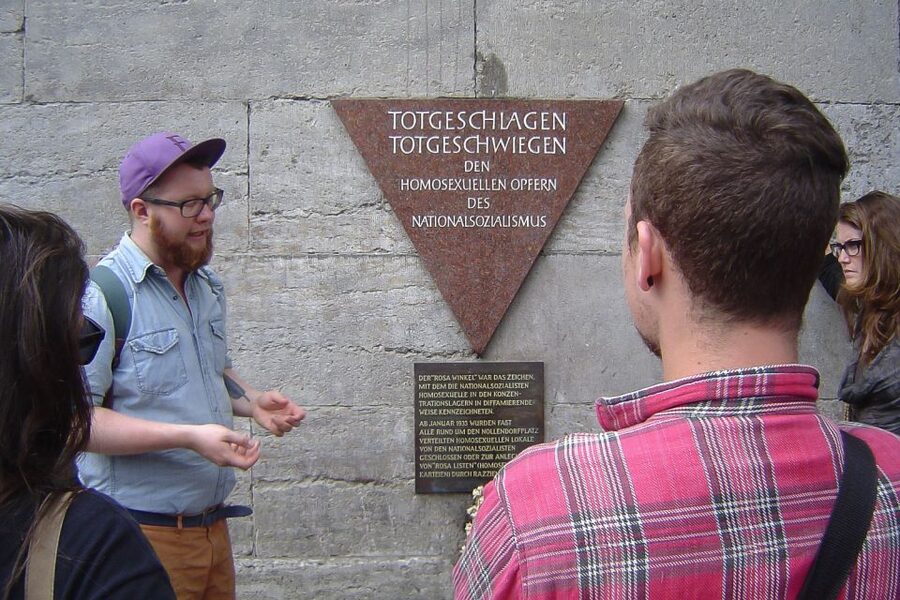
The memorial to homosexual people persecuted by the Nazis is one of the walk’s more serious moments. It places queer history within the broader Nazi system of imprisonment and murder, rather than treating it as a side note.
The tour explains how homosexual men were targeted under Nazi rule and sent to concentration camps. The subject is painful, but the memorial gives the history a place of public recognition. It also helps you understand why Berlin’s later queer culture cannot be separated from the city’s memory work.
This is where the tour’s tone matters. The experience includes entertaining anecdotes, but it does not turn persecution into a novelty. The strongest parts of the route move carefully between humor, nightlife, resistance, loss, and survival.
You should allow yourself time to listen here. A three-and-a-half-hour walk can create a temptation to focus only on the next stop, but this memorial deserves attention. It is one of the points where the past feels less abstract.
Same city, a completely different kind of day:
- Berlin: Reichstag, Dome and Government District Guided Tour
★ 4.7 · 18,288 reviews - Berlin: 1-Hour City Tour by Boat with Guaranteed Seating
★ 4.3 · 16,993 reviews - Berlin: Boat Tour Along the River Spree
★ 4.4 · 11,252 reviews - Berlin: Hop-on Hop-off Bus Tour with Live Commentary
★ 4.3 · 8,579 reviews
The Tiergarten and the shadow of the Wall
The walk continues through the Tiergarten, Berlin’s best-known gay meeting place. The park gives the tour a different setting from Schöneberg’s streets. Here, queer life is connected to public space, privacy, risk, and the ways people created community outside formal institutions.
The location in the shadow of the former Berlin Wall adds another layer. Berlin’s division affected how people moved, met, and understood the city. The tour uses the Tiergarten to show that queer history was not confined to clubs or private apartments. Parks and open areas could also become important meeting points.
The Tiergarten section may feel less structured than the Schöneberg portion because a park offers fewer obvious storefronts and signs. That is not a flaw, but it does mean you are relying more heavily on the guide’s storytelling. If you prefer a tour packed with interiors and formal exhibits, this walk may feel light on physical attractions.
If you enjoy seeing how a city’s public spaces work, the park is a strong part of the route. You get a better sense of how queer Berlin existed in everyday places, not only in celebrated venues.
From Frederick the Great to Klaus Wowereit
The tour reaches across several centuries. You will hear about Friedrich the Great, the Prussian king, and Klaus Wowereit, Berlin’s openly gay former mayor. Their inclusion shows that queer Berlin cannot be reduced to the 1920s cabaret era.
The contrast is useful. One figure belongs to Prussian royal history, while the other represents modern electoral politics. Between them are legal changes, social movements, wartime destruction, division between East and West, and the gradual shift toward greater public acceptance.
Section 175 remains a key part of this story. The law criminalized male homosexuality for decades, including years after World War II. That fact challenges the easy idea that Berlin has always been a free and welcoming city. The tour makes clear that progress was uneven and that bravery by individuals helped preserve and advance more progressive values.
I like this broad time span because it gives you a better sense of cause and effect. You are not simply hearing a list of queer figures. You are seeing how rulers, artists, scientists, activists, city officials, and ordinary people all shaped Berlin’s identity.
What the guides add to the walk
The guide is central to this experience. There are no included entrance fees and no major indoor collection doing the teaching for you. The person leading the walk has to explain locations, handle sensitive subjects, answer questions, and keep the group moving.
Guides named in past departures include Tom, Tobi, Finn, Beth, Kyle, and Jared, with some names also appearing as Gerard in a past account. Their styles may differ, but the information available points to a tour that encourages questions and discussion. One guide helped a late-arriving friend reconnect with the group, while another handled day-of logistics without disrupting the walk.
The best fit for you is a guide who can keep the historical facts straight while allowing room for personal stories and current queer culture. This tour appears to aim for that balance. You can ask about a figure, a neighborhood, a former bar, or advice for a night out, although the tour itself is a history walk rather than a nightlife event.
Do not expect every guide to tell the tour in exactly the same way. That can be a benefit. The walk has enough material for different personalities to bring their own emphasis, from women’s history and resistance to current culture and Berlin’s wider political story.
Is $23 a fair price?
At $23 per person, I consider this good value if queer history is a serious interest for you. Three and a half hours is a substantial amount of guide time, and the route covers several districts and periods rather than stopping at one monument.
The price includes an English or German-speaking guide. Public transport, if needed, is extra, and entrance fees are not included. Since the experience is primarily outdoors, there is no admission ticket hidden inside the price, but you should budget for transport if the particular meeting point or route requires it.
The cost is less convincing if you want a short orientation walk or a tour centered on interiors. This is a long, story-driven outing. You are paying for context, connections, and interpretation rather than a series of ticketed attractions.
The free cancellation window and reserve-now, pay-later option also make it easier to fit into a changing Berlin schedule. You can cancel up to 24 hours ahead for a full refund, according to the booking terms.
Practical advice before you go
Wear comfortable shoes. Past accounts describe a lot of walking, and the tour lasts 3.5 hours. Bring water and a small snack, especially since there is no included meal and one past route included a lunch break at an important local spot, but you should not assume that stop is part of every departure.
The tour runs in all weather. A light rain jacket, sun protection, and clothing suited to the forecast will make a real difference. The guide will wear a blue Original Berlin Walks name badge, which helps you identify the group at the meeting point.
Check the exact meeting point when you book because it can change with the option selected. The tour is offered in English and German, and the starting time depends on availability.
I would also leave some mental space for the subject matter. The walk includes nightlife and funny stories, but it also covers Nazi persecution, concentration camps, destroyed research, and the long effects of Section 175. It is much better approached as serious social history with moments of humor than as a light sightseeing stroll.
Who should book this tour?
Book it if you want to understand Berlin through queer lives and institutions, not just visit a gay neighborhood for a night out. It suits first-time Berlin visitors who want a strong historical framework, as well as returning visitors who have already seen the major monuments.
It is especially useful if you want women’s, lesbian, trans, and gay stories presented together. It also works well for anyone interested in the links between art, cabaret, law, medicine, public space, and politics.
You may want to skip it if three and a half hours of walking sounds tiring, if you need an indoor activity, or if you are looking mainly for current bars and clubs. The tour can point you toward contemporary queer Berlin, but its main purpose is to explain how the city got here.
For me, the former Eldorado, Hirschfeld’s institute, the Nazi memorial, and the Tiergarten create a strong route. Add the broad range of figures, from Friedrich the Great to Klaus Wowereit, and you get a thoughtful introduction to a part of Berlin that is often reduced to cabaret and nightlife. At $23, it is an easy recommendation for anyone who wants the city’s queer past treated with care and proper context.
FAQ
How long does the Queer Berlin Walking Tour last?
The tour lasts 3.5 hours.
How much does the tour cost?
The listed price is $23 per person.
Which languages are available?
The tour is offered in English and German.
Is public transport included?
No. Public transport is not included if it is needed during the experience.
Are entrance fees included?
No. Entrance fees are not included.
Where does the tour meet?
The meeting point may vary depending on the option you book. Check the details for your selected option before setting out.
Does the tour run in bad weather?
Yes. The tour runs in all weather, so dress for the forecast and wear comfortable shoes.
How can I identify the guide?
The guide will be wearing a blue Original Berlin Walks name badge.
What places are covered on the walk?
The route includes Schöneberg, the former Eldorado site, the Tiergarten, and the memorial to homosexual people persecuted by the Nazis. It also covers sites connected with Magnus Hirschfeld, Marlene Dietrich, Christopher Isherwood, and queer Berlin’s wider history.
Can I cancel for a refund?
Yes. You can cancel up to 24 hours in advance for a full refund. The reserve-now, pay-later option lets you book without paying immediately.
Just added in Berlin
- Berlin & The Third Reich Private Guided Tour★ 5.0 · 3 reviews
- Third Reich Quest Experience in Berlin★ 4.5 · 7 reviews
- Private Analogue Photography Experience in Berlin★ 5.0 · 3 reviews
- Berlin Urbex Adventure and History Tour★ 5.0 · 9 reviews
- The Beauty of Berlin by Bike: Private Tour★ 5.0 · 59 reviews
- Berlin: Guided Bike tour of the Berlin Wall and Third Reich★ 5.0 · 160 reviews
- Shared Underground Party Tour in Berlin★ 4.5 · 9 reviews
- Beyond Currywurst: Berlin’s Hidden Street Food & Culture Tour★ 5.0 · 100 reviews
Walking Tours, compared.



Berlin’s Best: 2 Hour Walking Tour Third Reich and the Cold War
Read our review →
Third Reich Berlin: Hitler and WWII Walking Tour
Read our review →Browse the lists this tour appears in