
Reviewed · NUREMBERG TOURS
Nürnberg: Mörder, Fälscher, Messerstecher
Nuremberg’s Old Town looks polished today, but this walk reveals a far harsher past. You’ll follow the trail of Franz Schmidt, the city’s famous hangman, then connect old streets and squares with witch hunts, public punishment, debtors, and the cramped medieval prison known as the Lochgefängnisse.
I like the tour’s tight route, which covers major sights without wasting time, and its focus on real people and legal practices rather than vague legends. The main drawback is that the tour is in German, and several important interiors, including the Hangman’s House and medieval dungeons, are not included in the $15 price.
Key points
- Franz Schmidt’s Hangman’s House: Begin with the life and work of Nuremberg’s best-known executioner.
- Witch hunts at Weinmarkt: See a familiar Old Town square through the uneasy story of medieval accusations and punishment.
- Medieval justice at the town hall: Learn how crime was handled before modern courts and prisons.
- Lochgefängnisse and the Schuldturm: Explore the purpose of underground cells and the fate of debtors.
- Hauptmarkt and Fleischbrücke: Connect everyday city life with executions and corporal punishment.
- Two hours in German for $15: A compact walking tour with a qualified guide, but no interior admissions.
A crime walk through Nuremberg’s familiar streets
This is not a general introduction to Nuremberg. It is a themed walk about crime, punishment, and justice, using the Old Town as its classroom. The route is short and easy to follow, with most stops only a few minutes apart.
That focus gives the tour a clear shape. Instead of stopping at each landmark simply to admire its architecture, you learn how the place functioned in the city’s legal and social life. The subjects can be grim, but the walk is designed as history, not shock entertainment.
The tour has a rating of 4.8 from 53 bookings, and the strongest praise centers on the guides’ clear delivery, professional approach, and ability to answer questions. One particularly useful detail is that the tour can remain engaging even in rain and darkness, though you should still dress for the weather.
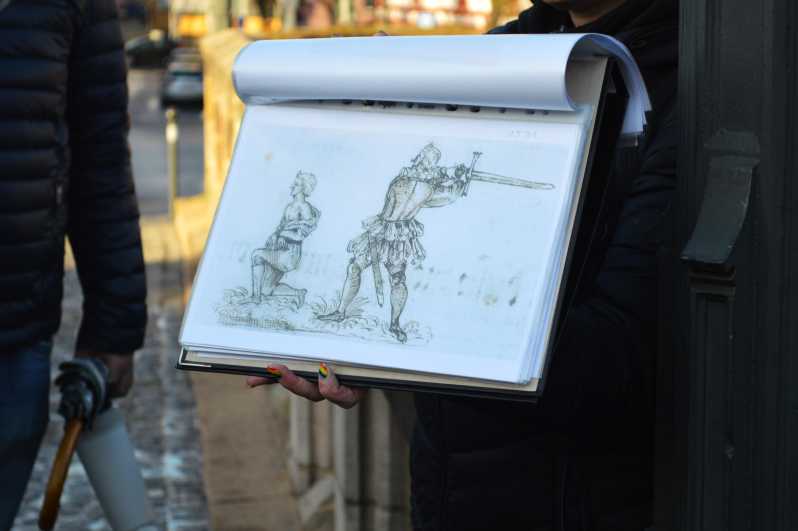
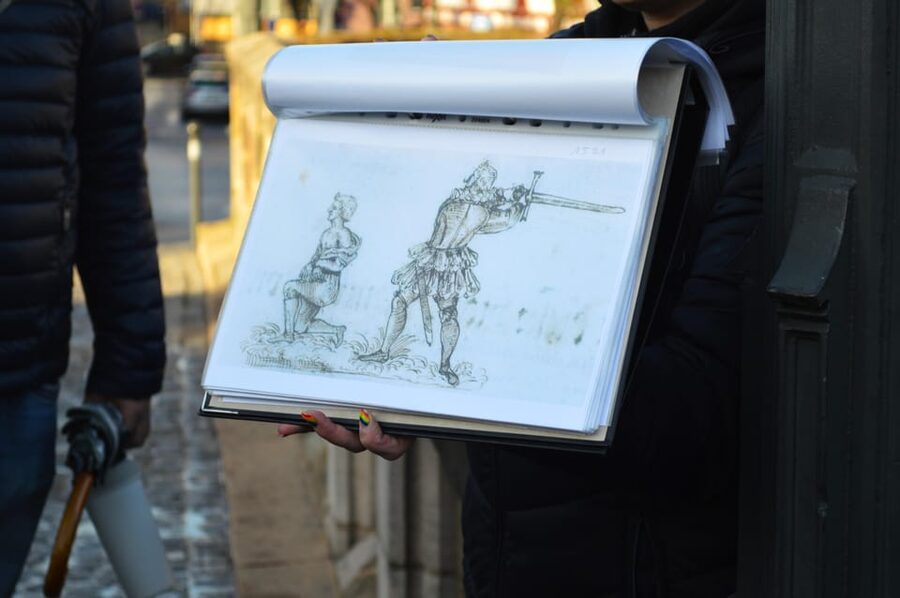
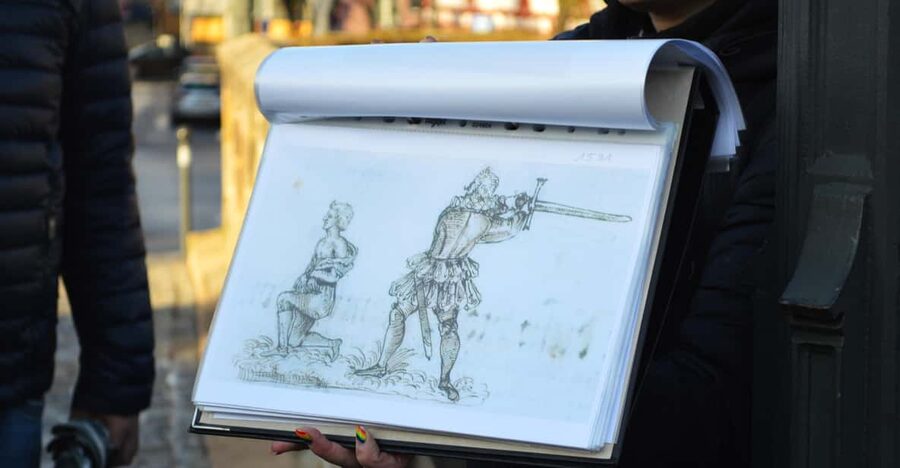
The guide speaks German, and the meeting point is directly in front of the Hangman’s House entrance. Look for a picture folder and a green name tag marked Geschichte Für Alle.
A few more half-days in Nuremberg worth comparing
- Nuremberg: City Tour with the Bimmelbahn Train
★ 4.4 · 2,475 reviews - Nuremberg: Old Town Guided Walking Tour
★ 4.6 · 2,416 reviews - Nuremberg: Tunnels and Secret Passages in the City Wall Tour
★ 4.8 · 2,334 reviews
The Hangman’s House and Franz Schmidt
The tour starts at the Henkerhaus Museum, or Hangman’s House. This is the right opening point because it introduces one of the most unusual figures in Nuremberg’s past: Franz Schmidt, the city’s famous hangman.
You’ll learn about the house, the role of the executioner, and Schmidt’s place in the city’s justice system. The subject gives you an immediate sense of how different public life was in the medieval and early modern city. Punishment was visible, official, and often tied closely to the social order.
The guide explains the story outside the museum. Entry to the Hangman’s House is not part of the tour, so you should not expect to go inside as part of the $15 booking. If you want a fuller look at the building and its displays, you’ll need to arrange that separately.
I like this opening because it sets a human face on an otherwise abstract topic. You are not simply hearing about laws and punishments. You are hearing about the person appointed to carry them out, and about the place connected with his work.
Weinmarkt and the history of witch hunts
From the Hangman’s House, you walk about four minutes to Weinmarkt. This is a quick transfer, and the route keeps you within the historic center rather than sending you out toward distant attractions.
Here, the subject shifts to witch hunts in Nuremberg. The stop shows how accusations could become part of a city’s legal process and how fear, belief, and authority could shape the treatment of individuals.
This section is valuable because it adds a wider social dimension to the tour. Crime history is not only about thieves, murderers, and official punishments. It also includes the ways communities identified supposed threats and used the courts to respond to them.
The tour does not present the Old Town as a stage set. Instead, familiar public spaces become evidence of how people once thought about danger and guilt. You might look at Weinmarkt today as a pleasant square, then picture it within a system where accusation could carry serious consequences.
Town hall and medieval justice
After Weinmarkt, the route continues for roughly three minutes to Nuremberg’s Old City Hall. The town hall is one of the most important stops because it connects the stories of individual offenders with the machinery of city government.
Here, the guide explains more about Nuremberg’s medieval justice system. You’ll get a better sense of how authority was organized and how crimes were judged before modern legal protections and institutions existed.
This is also a good point to ask questions. The strongest praise for this tour focuses on the guides’ ability to explain difficult material clearly and respond to questions with care. The exact guide name is not provided in the booking information, but the tour is operated by Geschichte Für Alle e.V., a local historical organization.
Entry to the town hall is not included. The guide’s talk takes place as part of the outdoor walk, so plan on seeing the building as a landmark and hearing its legal context rather than touring its interior.
Same city, a completely different kind of day:
- Nuremberg: Medieval Dungeons Guided Tour
★ 4.8 · 1,726 reviews - Nuremberg: Walking Tour of Former Nazi Party Rally Grounds
★ 4.7 · 1,665 reviews - Medieval Tour in Nuremberg in Spanish
★ 5.0 · 1,374 reviews - Nuremberg: Historischer Kunstbunker WWII Art Bunker Tour
★ 4.8 · 921 reviews
The Lochgefängnisse and life below the town hall
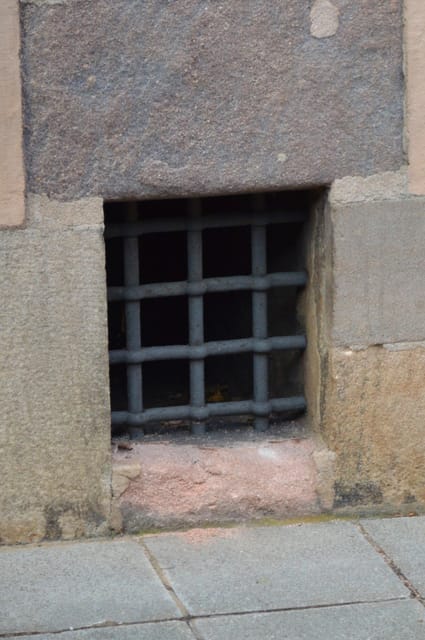
The next stop is the Medieval Dungeons, known in German as the Lochgefängnisse. These cells were used as a prison, and the tour explains their purpose and conditions.
This is one of the most distinctive stops on the route. The name itself suggests the setting: enclosed, severe, and far removed from the open streets above. The guide’s explanation helps you understand why such spaces existed and what imprisonment meant in a period when detention, trial, punishment, and public order did not work as they do today.
Entry to the medieval dungeons is not included in this walking tour. That matters when you compare the experience with a museum visit. You receive the historical explanation, but the $15 price does not cover access to the underground rooms.
If seeing the cells inside is a priority, check separately for admission details before booking. If you mainly want a guided framework for the city’s justice system, the exterior stop and explanation may be enough.
Hauptmarkt, Christkindlesmarkt, and public punishment
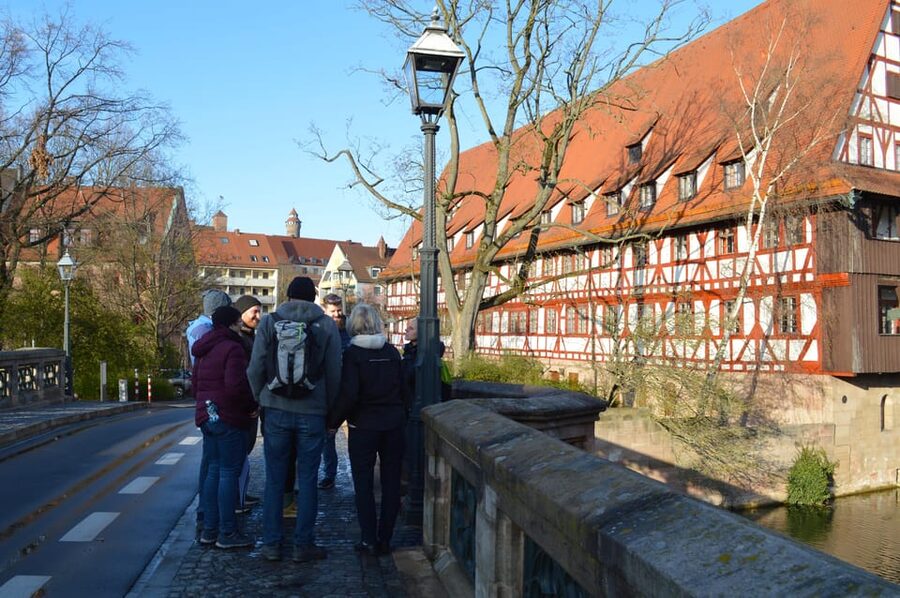
A one-minute walk brings you to Hauptmarkt, Nuremberg’s famous main market. In December, this is where the Christkindlesmarkt takes place, so the square may be especially crowded and festive during the Christmas season.
The tour takes a darker look at this well-known public space. You’ll learn about its connection with everyday crime and the death penalty. That contrast is one of the walk’s most effective ideas: the same square known today for shopping and Christmas lights also had a role in the public life of punishment.
The guide helps you connect the city’s daily business with its legal practices. In a historic market square, trade, ceremony, announcements, and public penalties could all exist close together. You do not need a separate crime museum to understand that justice was once part of the ordinary city scene.
Hauptmarkt is also a practical place to orient yourself. If you are visiting Nuremberg independently, you will probably pass through it anyway. This tour gives you a reason to look beyond the market stalls and architecture.
Fleischbrücke and corporal punishment
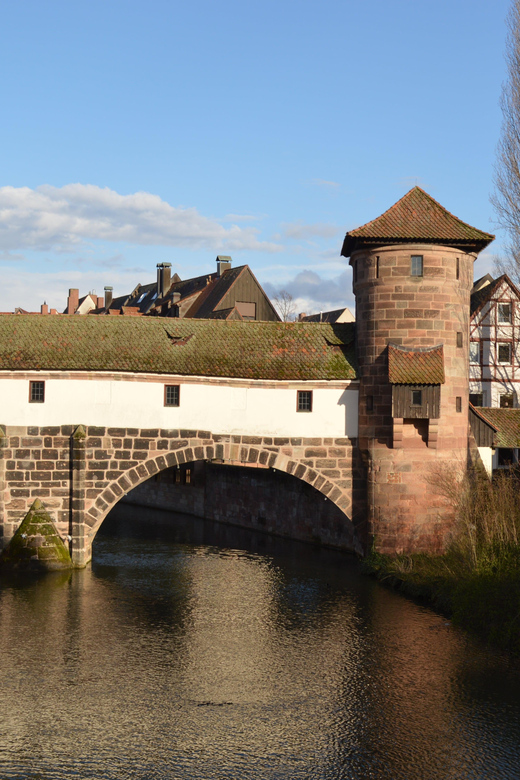
From Hauptmarkt, the walk takes about two minutes to Fleischbrücke. Here, the subject turns to corporal punishment in the Middle Ages.
The stop helps explain how punishment was intended to work in public. It was not only a private penalty imposed behind prison walls. It could also serve as a warning to everyone nearby.
This part of the tour may be uncomfortable, but it is historically useful. You’ll see how physical penalties fit into a justice system that relied heavily on deterrence, reputation, and public example.
The short distance between Hauptmarkt and Fleischbrücke keeps the pace lively. You are not standing in one place for long periods, and the route continues to use ordinary Old Town streets as part of the lesson.
Findelgasse and the story of Peter Henlein
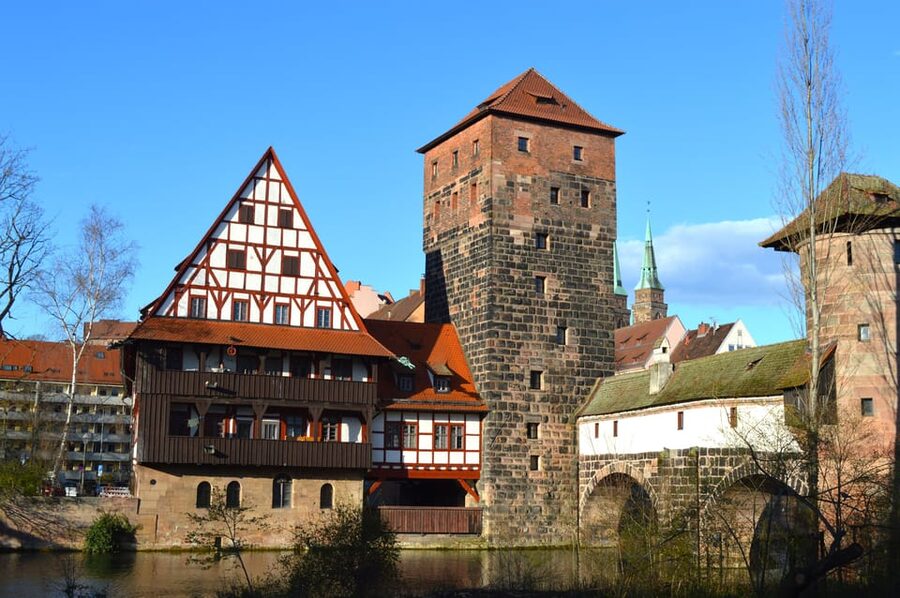
The route then moves toward Findelgasse, with about five minutes of walking. Here, the guide tells the story of Peter Henlein, a famous watchmaker.
This stop adds variety to the tour. Not every story concerns a court case or a punishment. Henlein’s connection gives the guide a chance to show how an individual craftsman could become part of Nuremberg’s wider story.
The information provided does not spell out every detail of Henlein’s connection with crime history, so you should expect the guide to place him within the tour’s broader themes rather than treat this as a full watchmaking lesson. It is a useful change of pace before the final stop.
The five-minute walk is the longest transfer listed in the route, but the full tour remains manageable at two hours. Comfortable shoes are important because this is a continuous walking experience over historic streets.
The Schuldturm and the final stop
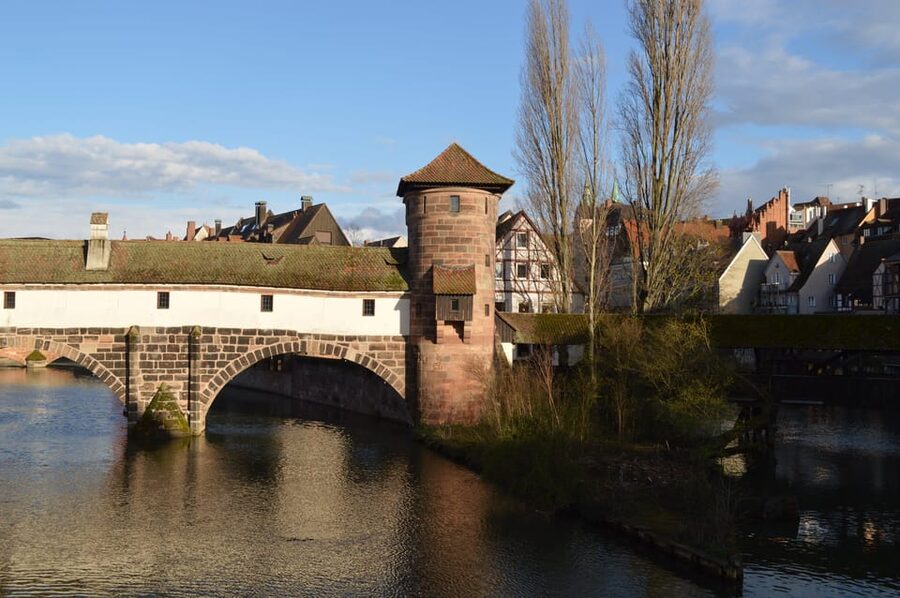
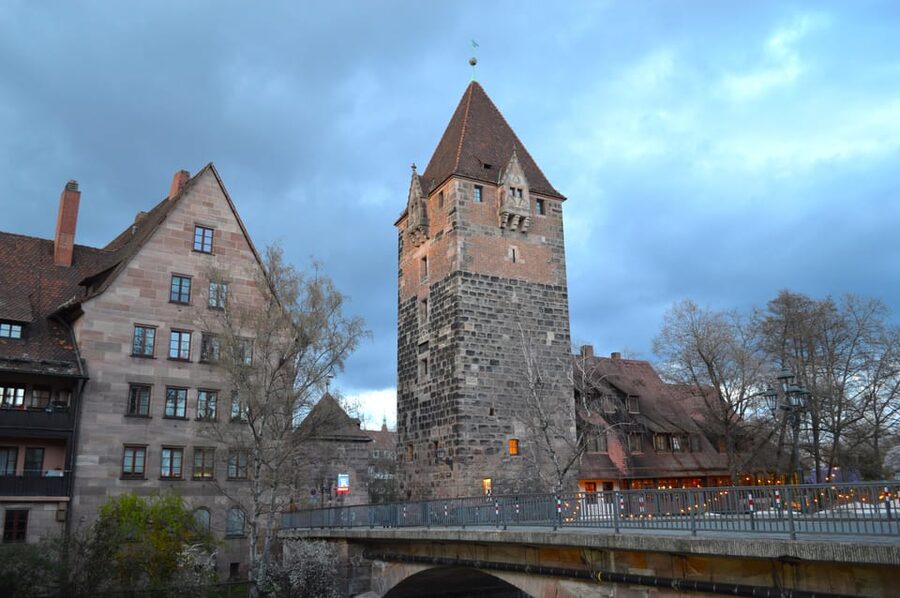
The tour ends at the Schuldturm, a former debtors’ tower. Here, you’ll learn about the tower’s purpose and the people held inside it.
This final stop brings the tour back to the relationship between money, law, and imprisonment. The story of debt shows that medieval justice was not limited to violent crime. Economic failure could also place a person under legal control.
The tour ends at Vordere Insel Schütt, in Nuremberg-Mitte. That is useful to know when planning the rest of your day. You will not finish back at the Hangman’s House, so check your map before the walk and allow a little time to orient yourself afterward.
The final location also leaves you near the Old Town rather than at a distant transport stop. The supplied details do not specify a particular tram, train, or bus connection, so use a local map if you need to reach another part of Nuremberg.
What the $15 price really covers
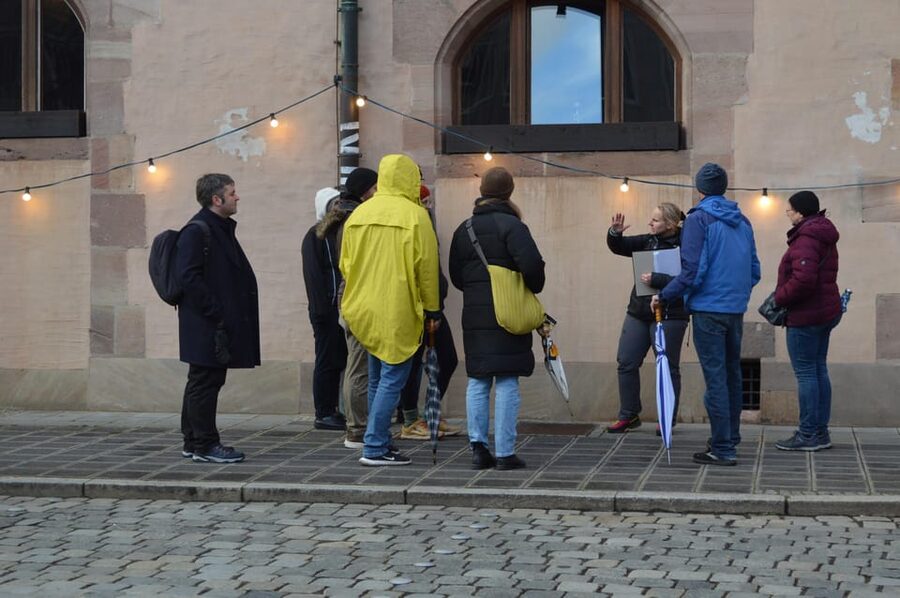
At $15 per person, this is a good-value tour if you want a guided theme rather than a full museum visit. The price covers two hours on foot with a qualified guide, and the route includes several major landmarks that you might otherwise see without understanding their legal past.
The value comes from the connections. You are not paying simply to walk through the Old Town. You are paying for a narrative that links the Hangman’s House, Weinmarkt, town hall, dungeons, Hauptmarkt, Fleischbrücke, Findelgasse, and Schuldturm.
The limits are clear. Admission to the Hangman’s House, town hall, and medieval dungeons is not included. You also receive the tour in German only, so this is best for German speakers who can follow historical explanation and ask questions in that language.
At two hours, the walk works well as a focused addition to a day in Nuremberg. It is long enough to cover the subject properly, but short enough to leave time for the Christmas market, museums, meals, or other Old Town sights.
Weather, walking, and who should book
Wear comfortable shoes and clothing suited to the weather. The tour is outdoors and continues in rain and darkness, so a waterproof layer and warm clothing can make a real difference, especially in late autumn and winter.
The route is not suitable for people with mobility impairments. The supplied information does not give a detailed surface description or step count, so anyone concerned about stairs, uneven streets, or the dungeon area should ask the provider before booking.
I would recommend this tour to:
- German-speaking visitors who enjoy social history and unusual city stories
- People who have already seen Nuremberg’s main landmarks and want a new angle
- History-minded visitors interested in law, punishment, and public life
- Anyone looking for a compact two-hour walk at a modest price
I would be more cautious if you want a light sightseeing stroll, dislike grim subjects, need an English-language tour, or require interior access to the museums and dungeons.
The tour’s strongest qualities are its focused route and the guide’s reported ability to make dense material clear and engaging. It has also held up well in poor weather, but that does not mean you should arrive unprepared.
Booking details worth knowing
You meet in front of the entrance to the Henkerhaus Museum. Identify the guide by the picture folder and green Geschichte Für Alle name tag.
The tour is offered with a live German-speaking guide and lasts two hours. You can cancel up to 24 hours before the start for a full refund, and a reserve-now, pay-later option is available.
Groups of 10 or more should contact Geschichte Für Alle e.V. by email at [email protected]. For bookings made through GetYourGuide, the booking confirmation serves as proof of payment, and no separate invoice can be issued.
Should you book this Nuremberg crime tour?
Book it if you want Nuremberg’s Old Town explained through crime, punishment, and the people who enforced the law. The $15 cost is fair for two hours with a qualified guide, especially because the route covers major sights while adding stories you will not get from a standard city walk.
Skip it if you need English, want a museum admission included, or prefer a cheerful introduction to Nuremberg. For German-speaking visitors who like serious history told in a direct, approachable way, this is a focused and worthwhile choice.
FAQ
Where does the tour start?
The tour starts in front of the entrance to the Henkerhaus Museum, also known as the Hangman’s House.
Where does the tour finish?
The tour finishes at Vordere Insel Schütt, 90403 Nürnberg-Mitte, Germany.
How long does the walking tour last?
The tour lasts two hours.
What language is the tour in?
The live guided tour is conducted in German.
Are museum and dungeon admissions included?
No. Entry to the Hangman’s House, town hall, and medieval dungeons is not included.
Is the tour suitable for people with mobility impairments?
No. The activity is listed as unsuitable for people with mobility impairments.
What should I bring?
Bring comfortable shoes and clothing suitable for the weather.
Just added in Nuremberg
- Tour en español al Campo Zeppelin★ 5.0 · 8 reviews
- Stein: Public guided tour of the “Old Mine” museum★ 4.5 · 18 reviews
- “Rotes Bier” and “Blaue Zipfel”. A historical-culinary walk★ 4.4 · 190 reviews
- Nuremberg: Old Town Guided Tour By Bus★ 4.4 · 198 reviews
- Nuremberg: Bar and Club Tour with Free Shots and Free Entry★ 3.8 · 23 reviews
- Nürnberg Bachelor(ette) Party with Night PubCrawl★ 4.2 · 5 reviews
- Nuremberg: WWII Tour, Courtroom 600 and 3rd Reich Sites★ 4.6 · 94 reviews
- Nürnberg kennenlernen: Highlights in der Altstadt★ 4.7 · 189 reviews
Nuremberg Tours, compared.

Walking Tour of Former Nazi Party Rally Grounds
Read our review →
Browse the lists this tour appears in