
Reviewed · WALKING TOURS
East Berlin: City of Shadows Walking Tour
The most useful thing about this tour is its clear route through East Berlin’s former power centers. In three hours, you move from the Brandenburg Gate and the old Soviet Embassy to the Berlin Wall Memorial, Stasi headquarters, and Alexanderplatz, seeing how a divided city shaped daily life.
I like the small maximum of eight people and the local historian format. I also like the mix of famous sights and less obvious traces, especially the Palace of Tears and the ghost stations. The main catch is that this is an outdoor overview, not a museum tour. You will need public transport, and the Stasi Museum itself is not included.
Key points at a glance
- A Cold War route with a strong sense of place: The tour links seven important sites rather than treating the Berlin Wall as an isolated monument.
- A group capped at eight: A small party should make it easier to hear the guide and ask questions.
- Public transport is part of the experience: Plan on several U-Bahn or S-Bahn rides and budget for a day pass or individual tickets.
- Museum interiors are not included: The Stasi headquarters stop provides context, but you’ll need to return on your own for the museum visit.
- A fast introduction to divided Berlin: The three-hour schedule works well early in a Berlin stay, but it leaves little time at each stop.
- Good value for history-focused visitors: At $156.53 per person, the guide is the main purchase, not entry tickets or transport.
What this East Berlin tour really gives you
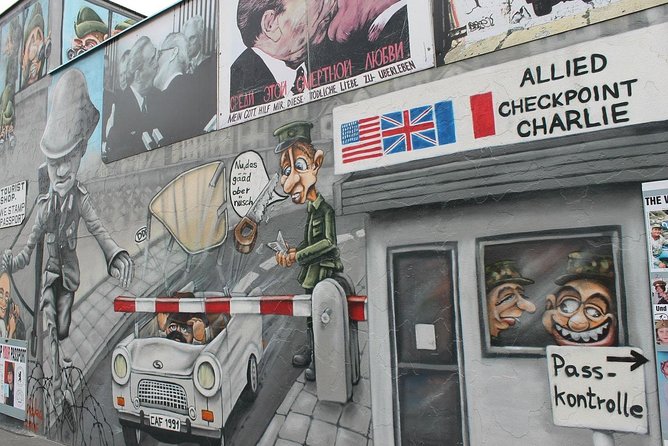
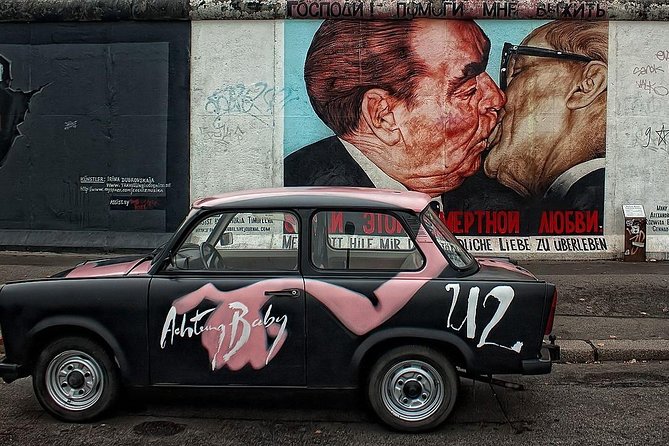
This is a history walk with several short transfers, not a slow stroll through one neighborhood. The route covers the political story of Communist East Germany, from Soviet control after World War II to the public protests that helped bring the regime down in 1989.
That broad reach is the tour’s strength. You see grand architecture, train stations, memorials, and former government sites in one compact outing. The guide’s job is to connect these places: how a postwar division became a permanent border, how the East German government controlled movement, and how fear affected ordinary families.
The trade-off is time. Most stops last between 10 and 20 minutes. You’ll get the story and the setting, but not a long visit inside a museum or a chance to study every memorial panel. One practical assessment of the tour called it a nice brief overview and suggested returning independently for museums such as the Stasi Museum. That is exactly how I would use it: as an introduction that helps you choose where to spend more time later.
The tour is offered in English and is limited to eight people. That small size matters on a topic with many dates, names, and political terms. You are less likely to lose the thread than in a large city group, and you can ask for clarification when the history gets dense.
More Walking Tours in Berlin
- Discover Berlin Half-Day Walking Tour
★ 5.0 · 9,624 reviews - Berlin: Third Reich and Cold War 2 Hour Walking Tour
★ 4.9 · 6,830 reviews - Berlin: Discover Berlin Walking Tour
★ 4.9 · 5,998 reviews
Brandenburg Gate and the Soviet Embassy
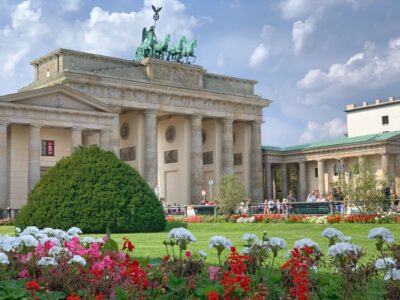
The tour begins at Unter den Linden 42, near the Brandenburg Gate. This is an effective starting point because the gate is more than Berlin’s best-known landmark. It was once beside the Wall, cut off from ordinary movement between East and West.
Here, you’ll hear how the Allies divided Germany and Berlin into four zones after World War II. That arrangement helped create decades of tension between the Soviet Union and the Western powers. The guide also explains the Communist government’s growing opposition to its own people, including the ways discontent was suppressed.
Nearby, the former Soviet Embassy adds a striking piece of physical evidence. Built in 1945 among the ruins of the war, its grand scale expressed Soviet ambition in Berlin. You do not need a ticket to see these sites, and the opening discussion should help you read the buildings around you instead of treating them as scenery.
The Brandenburg Gate also connects the tour to the final years of the Cold War. In 1987, President Ronald Reagan called on Soviet leader Mikhail Gorbachev to tear down the Wall here. The point is not simply to repeat a famous speech. It is to understand how this once-divided spot became a stage for the conflict between two political systems.
Allow about 20 minutes here. Bring your own questions about the postwar division, because this is where the guide lays out the framework for the rest of the route.
Friedrichstrasse and the Palace of Tears
The next stop is Friedrichstrasse station, once a major crossing point between East and West Berlin. The station’s most painful story is tied to families separated by East Germany’s strict rules on emigration and travel.
The office known as the Palace of Tears was where people said goodbye after visits across the border. The name captures the human scale of the Cold War better than a list of treaties or leaders can. Political decisions reached right into family life, and this station became a place of repeated farewells.
You’ll spend about 15 minutes here. That is enough to understand the site’s role, though not enough for a long interior visit if one is available. This is one of the tour’s best stops for showing that the division of Berlin was not only about concrete barriers and armed guards. It was also about missed birthdays, separated relatives, and uncertain reunions.
Nordbahnhof’s ghost stations
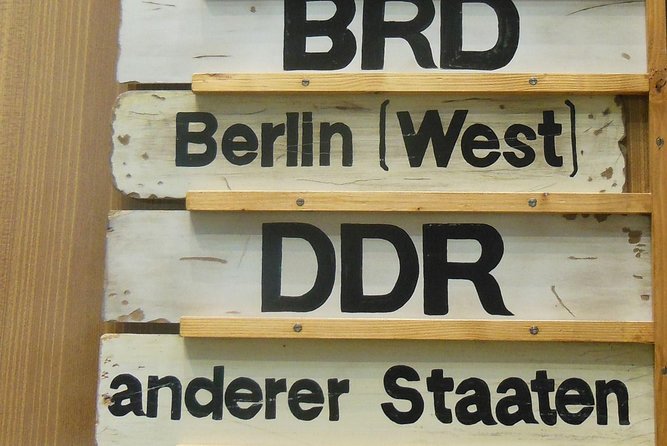
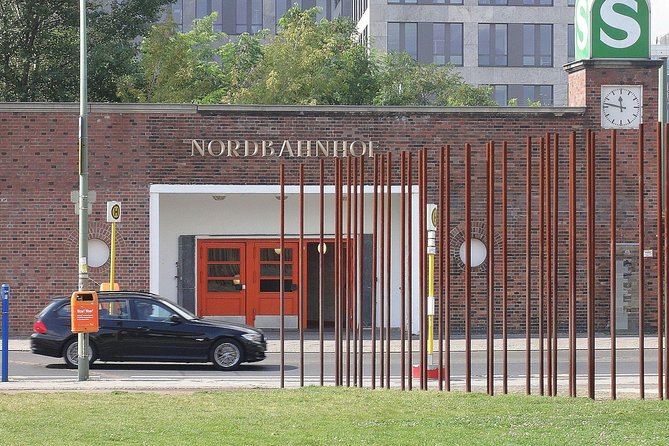
At Park am Nordbahnhof, the focus shifts underground. Berlin’s division created ghost stations, unused and guarded stops on West Berlin subway lines that passed through East German territory.
The idea is strange until you picture a train crossing under a hostile state without stopping. The stations remained part of the rail system, yet passengers could not use them. This detail shows the level of control the East German government tried to maintain over movement inside and around the city.
You’ll spend roughly 10 minutes here. It is a short stop, so do not expect a full station tour or a long technical explanation. Its value comes from the connection between infrastructure and politics. A subway map became evidence of division, surveillance, and restricted access.
Public transport helps connect this part of the route with the next stops. If you do not already have a Berlin transit pass, the tour information suggests buying a day ticket. An individual AB one-way ticket is listed at 2.80 euros, with a senior fare of 1.70 euros. A one-person day ticket is listed at 7 euros, with a senior fare of 4.70 euros. Your guide can help you buy a ticket at the first station if needed.
Same city, a completely different kind of day:
- Berlin: Reichstag, Dome and Government District Guided Tour
★ 4.7 · 18,288 reviews - Berlin: 1-Hour City Tour by Boat with Guaranteed Seating
★ 4.3 · 16,993 reviews - Berlin: Boat Tour Along the River Spree
★ 4.4 · 11,252 reviews - Berlin: Hop-on Hop-off Bus Tour with Live Commentary
★ 4.3 · 8,579 reviews
Karl-Marx-Allee and the promise of socialism
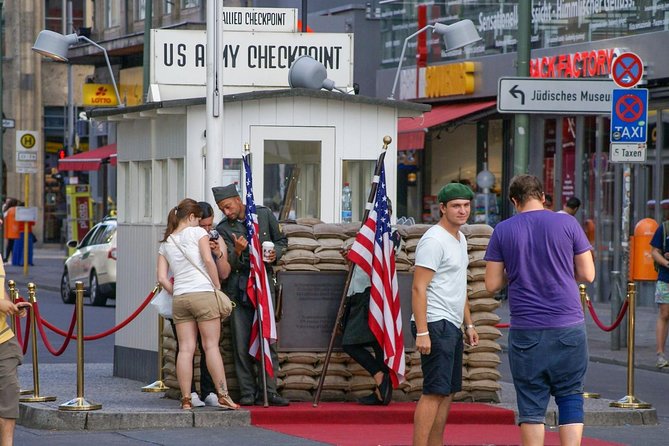
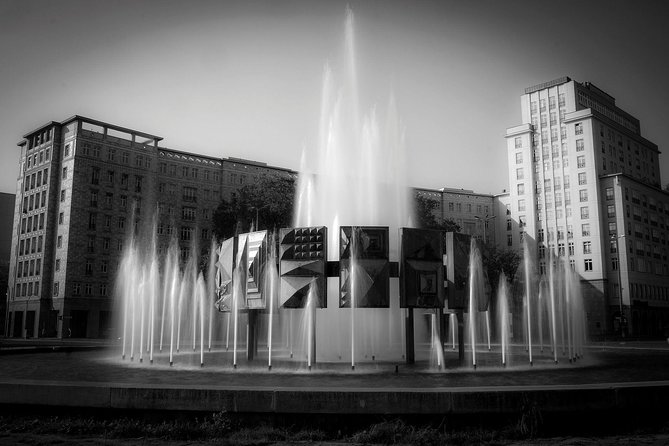
Karl-Marx-Allee presents a different face of East Germany. Instead of a border crossing or secret police office, you see a grand housing complex built along a broad mile-long avenue.
The architecture was meant to project confidence. It presented the idea of a Socialist city where workers had modern homes and a better future. The guide uses the avenue to explain how those promises collided with shortages, political pressure, and daily suspicion.
You’ll spend about 10 minutes here, so this is primarily a visual stop. Look up at the scale of the buildings and consider the message they were designed to send. The avenue helps explain why Communist governments invested so heavily in monumental streets and public buildings. They were not just housing projects. They were political statements.
This stop also keeps the tour from becoming a simple story of walls and prisons. East Berlin was a functioning city with homes, transport, public spaces, and official ideals. The guide’s interpretation should help you compare what the government wanted the city to represent with the experience of living under its rules.
The Berlin Wall Memorial and the Death Strip
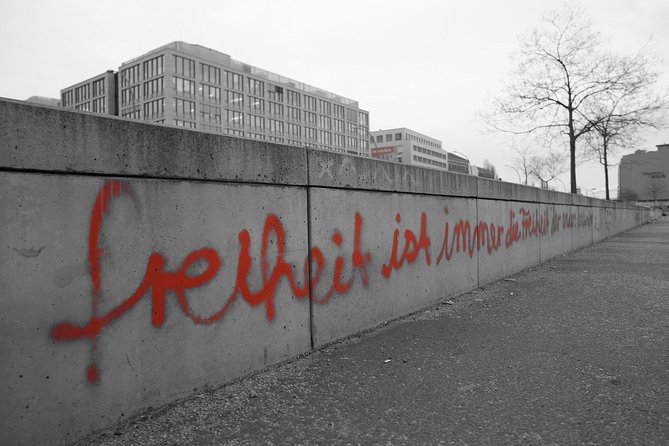
The Berlin Wall Memorial offers the most direct encounter with the border system. Here, you can see the former Death Strip and learn about East Berliners who tried to escape and died in the attempt.
This is an important distinction. A preserved section of Wall can look like a piece of concrete in isolation. The memorial restores the wider setting: barriers, open space, watchfulness, and the danger faced by anyone trying to cross.
The stop lasts about 15 minutes. That is enough for a focused explanation, but you may want to return later if you prefer a slower visit. The memorial has more material than can fit into a short tour stop, and the personal stories deserve attention.
For me, this is one of the strongest parts of the route because the history becomes physical without turning into a spectacle. You are not simply told that escape attempts were dangerous. You are shown the space in which those attempts took place and reminded that the people involved were residents of the city, not abstract figures in a political story.
The Stasi headquarters and the limits of a short visit
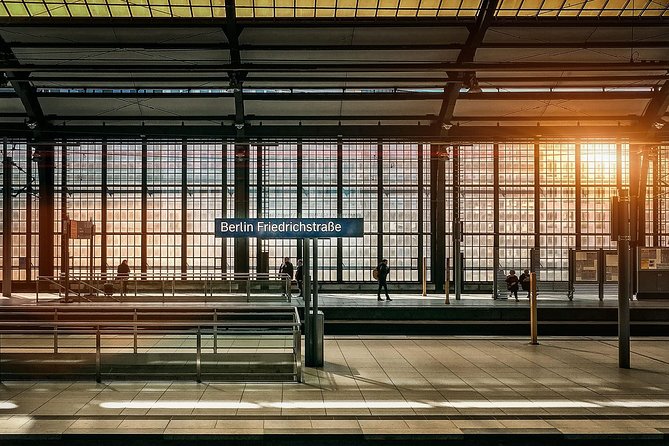
The Stasi stop introduces East Germany’s secret police and its wide network of informants. The guide explains how officials pressured neighbors and family members to spy on one another, and how Stasi leader Erich Mielke helped build a system based on surveillance and fear.
This is a powerful subject, but the timing needs to be clear. The stop is listed at about 10 minutes, and admission to the Stasi Museum is not included. You’ll receive an outdoor orientation or a look at the former headquarters area, then need to return independently if you want the museum’s full exhibits.
That is not necessarily a flaw. A short introduction can help you visit the museum with better questions. It can also prevent the tour from spending most of its limited time indoors. Still, if the Stasi is your main reason for coming to East Berlin, plan a separate museum visit and allow much more time than this stop provides.
Alexanderplatz and the end of Communist rule
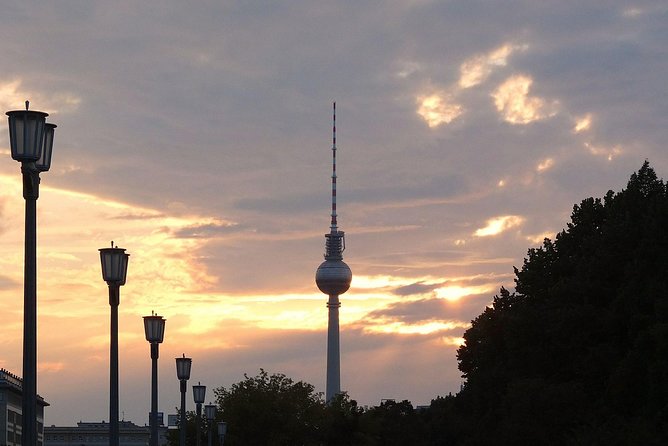
The final stop is Alexanderplatz, the center of public life in East Berlin. The square was rebuilt in the 1960s and fitted with monuments that expressed the government’s confidence, including the TV Tower and a futuristic parliament building.
The TV Tower is especially useful as a symbol. It was intended to show the strength and modernity of East Germany, yet Alexanderplatz later became the site of huge demonstrations against the regime in 1989. Those protests helped end four decades of Communist rule.
You’ll spend about 10 minutes here. The stop works well as the closing chapter because it brings the story from official pride to public rejection. After seeing controlled borders, guarded stations, grand housing, and secret police offices, you finish in the public square where people gathered to demand change.
Alexanderplatz is also a useful place to continue your own Berlin sightseeing. The organized tour ends in Berlin rather than returning you to the original meeting point, so confirm your exact endpoint with the provider and plan your next move from there.
Price, transport, and the question of value
The price is $156.53 per person. Since the tour includes no food, drinks, attraction admission, or hotel drop-off, that is a serious price for three hours. You are mainly paying for the historian’s guidance, the small group, and the carefully connected route.
The value improves if you want context rather than simple sightseeing. Seven stops would be difficult to understand fully on your own in one morning, especially if you are new to Berlin’s Cold War story. A good guide can show how the locations relate, saving you time and giving meaning to places you might otherwise pass without noticing.
The value is weaker if you expect a long museum visit or a full day of included transportation. You will pay your own transit costs, though the listed fares are modest compared with the tour price. You should also budget for a later Stasi Museum visit if that subject matters to you.
Pickup is offered, but the practical details say hotel pickup and drop-off are not included. Treat this as a meeting-point tour unless the provider confirms another arrangement. The published meeting point is Unter den Linden 42, and you should clarify any pickup request before booking.
The activity requires a moderate level of physical fitness. You will walk between sites and use public transport several times. Comfortable shoes, a transit pass, and a willingness to keep moving will make the day easier.
Free cancellation is available if you cancel at least 24 hours before the start time. Changes or cancellations inside that window are not accepted for a refund.
Who should book this history tour
I would choose this tour early in a Berlin visit if you want a firm orientation to the city’s divided past. It suits history-minded visitors who prefer explanation and connections over a checklist of photo stops.
It is also a good fit for a small family group or friends who want to ask questions without joining a large crowd. The English-language format and group limit of eight make the experience easier to follow.
I would not choose it as your only East Berlin activity if you want extensive museum time. The brief stops give you a framework, but you will need to return to the Wall Memorial or Stasi Museum for a fuller look.
The published rating is 4.8 from 11 reviews, with 91 percent recommending it. That is a positive signal, though the sample is small. The clearest caution is also fair: this is a brief overview of several places, not an exhaustive study of the DDR period.
Should you book East Berlin: City of Shadows?
Book it if you want a compact, guide-led introduction to Communist Berlin and you value a small group. The route is well chosen, moving from Soviet ambition and divided families to ghost stations, state surveillance, the Wall, and the protests of 1989.
Skip it if you need included museum admission, a relaxed walking pace, or a lower-cost overview. At $156.53, the tour makes sense only when the historian’s interpretation is central to what you want. If that is what you are buying, the route gives you a useful base for exploring East Berlin on your own afterward.
FAQ
How long is the East Berlin: City of Shadows Walking Tour?
The tour lasts approximately three hours.
What language is the tour offered in?
The tour is offered in English.
How many people can join the tour?
The group has a maximum of eight travelers.
Is hotel pickup and drop-off included?
No. Pickup is offered in the tour details, but hotel pickup and drop-off are listed as not included. The published meeting point is Unter den Linden 42 in Berlin.
Do I need to pay for public transportation?
Yes. You will use public transport several times because some sites are too far apart to walk. A Berlin AB one-way ticket is listed at 2.80 euros, and a day ticket is listed at 7 euros for one person. Senior fares are also listed.
Is admission to the Stasi Museum included?
No. The local guide provides information at the former Stasi headquarters, but museum admission is not included. You can return on your own for a longer visit.
Can I cancel for a full refund?
Yes, if you cancel at least 24 hours before the experience starts. Cancellations or changes made less than 24 hours before the start time are not refunded.
Just added in Berlin
- Berlin & The Third Reich Private Guided Tour★ 5.0 · 3 reviews
- Third Reich Quest Experience in Berlin★ 4.5 · 7 reviews
- Private Analogue Photography Experience in Berlin★ 5.0 · 3 reviews
- Berlin: Guided Bike tour of the Berlin Wall and Third Reich★ 5.0 · 160 reviews
- Berlin Urbex Adventure and History Tour★ 5.0 · 9 reviews
- The Beauty of Berlin by Bike: Private Tour★ 5.0 · 59 reviews
- Beyond Currywurst: Berlin’s Hidden Street Food & Culture Tour★ 5.0 · 100 reviews
- Berlin Third Reich & Cold War Walking Tour With A Guide★ 5.0 · 7 reviews
Walking Tours, compared.

Berlin’s Best: 2 Hour Walking Tour Third Reich and the Cold War
Read our review →
Third Reich Berlin: Hitler and WWII Walking Tour
Read our review →Browse the lists this tour appears in