
Reviewed · CONCENTRATION CAMP MEMORIALS
Dachau Small-Group Half-Day Tour from Munich By Train
Dachau is not a sightseeing stop in the usual sense. It is a place of remembrance, and this five-hour guided visit gives you the historical framework needed to understand what you are seeing. The route covers the main gate, prisoner registration, the barracks area, memorials, religious buildings, and the former crematorium grounds.
I like two things right away: round-trip public transport is included, and a guide handles the train and bus connections from Marienplatz. I also like the small-group limit of 20, which makes it easier to hear the guide and ask difficult questions. The main drawback is the pace: you will walk on gravel and concrete, spend time outdoors, and have only some time to read exhibits on your own.
Key points to know before booking
- The day begins at 9:00 a.m. at Marienplatz: Arrive by 8:45 because the group leaves on time.
- Train and bus travel are part of the tour: You do not need to work out the route to the memorial site alone.
- The history starts before you reach Dachau: The guide covers Hitler’s rise, the Reichstag fire, and the creation of the camp system.
- The visit is serious and emotionally demanding: This is a memorial experience, not casual sightseeing.
- Groups are limited to 20 people: That helps with hearing the guide and staying together in crowded areas.
- Children under 14 cannot join guided tours at the memorial: Students may use the youth price with valid identification.
Why a guided visit matters at Dachau
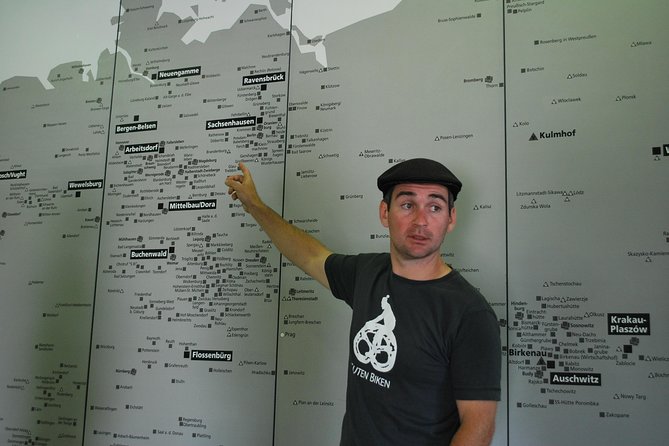
Dachau can be visited independently, but the site asks difficult questions that are not always answered by a quick walk through the grounds. Why was this camp created? How did it become a model for other camps? How were prisoners classified? What happened after liberation? A good guide connects those pieces.
This tour begins with the rise of Hitler and the Nazi Party during the 1920s, followed by Hitler’s appointment as chancellor in 1933. You then learn how the Reichstag fire and the political climate that followed helped the Nazi government create a system of imprisonment outside normal legal protections.
That early context matters. If you arrive knowing only that Dachau was a concentration camp, the site can feel like a series of stark buildings and empty spaces. The guide shows how Dachau developed through three major phases and how it became an SS training facility and a model for the wider camp network.
Guides named James and Samuel have led this experience. James is particularly associated with keeping the train and bus connections organized while continuing the historical discussion during waiting time. The guide’s role is not just to point out buildings. It is to explain how policy became practice, and how the camp system expanded from political repression to racial persecution and mass murder across Europe.
More Concentration Camp Memorials in Munich
- Dachau Concentration Camp Memorial Site Tour from Munich by Train
★ 4.5 · 5,637 reviews - From Munich: Dachau Memorial Site Day Tour
★ 4.8 · 2,723 reviews - From Munich: Dachau Memorial Site Half-Day Trip
★ 4.7 · 2,526 reviews
From Marienplatz to Dachau by train and bus
The meeting point is Marienplatz 15, in central Munich. The tour starts at 9:00 a.m., but you should be there by 8:45 for check-in. This is not a loose meeting time. The group leaves sharply at 9:00 and cannot wait for late arrivals.
The public transport route includes a train and then a bus to the memorial site. For someone unfamiliar with Munich’s transport system, this is a real benefit. You do not have to identify the correct train platform, figure out where to change, or work out the final bus connection while also watching the clock.
The route itself becomes part of the lesson. Guides use the journey to explain the growth of the Nazi Party and the creation of the first concentration camps. Waiting for a connection does not have to mean dead time, especially when the guide is using those minutes to fill in the political background.
The trip from central Munich also helps you shift mentally from a city morning to a memorial visit. Once at Dachau, you will walk between indoor and outdoor areas, so check the weather and dress for it. There are no included refreshments or snacks during the tour, though food and drinks can be purchased at several locations around the meeting area.
Entering through the Jourhaus and the camp gate
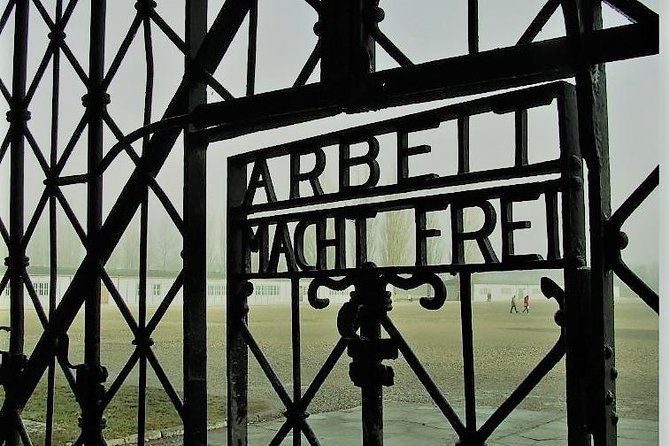
The Jourhaus, or main gate building, is one of the most important early stops. It is where the camp entrance was controlled, and it carries the infamous slogan Arbeit Macht Frei. Seeing the gate in person can be unsettling, but the guide places it within the structure of the camp rather than treating it as a single dramatic photo stop.
You learn how prisoners arrived, were registered, and assigned categories. The system used different labels and colored markings to classify prisoners, including political prisoners, Jewish prisoners, and other targeted groups. The categories were not neutral paperwork. They were tools of control, separation, and dehumanization.
The discussion also includes Kristallnacht, the November 1938 pogrom against Jewish people, and the first major influx of Jewish prisoners to Dachau. This helps show how persecution changed over time. Dachau did not begin as an extermination camp, but its history is part of the larger process that led from political imprisonment and terror to the Nazi program of mass murder.
You may find the entrance area crowded with other groups. That is one reason the small-group format helps. Guides such as James have adjusted the order of stops to avoid the worst congestion while still covering the site.
Understanding daily life inside the camp
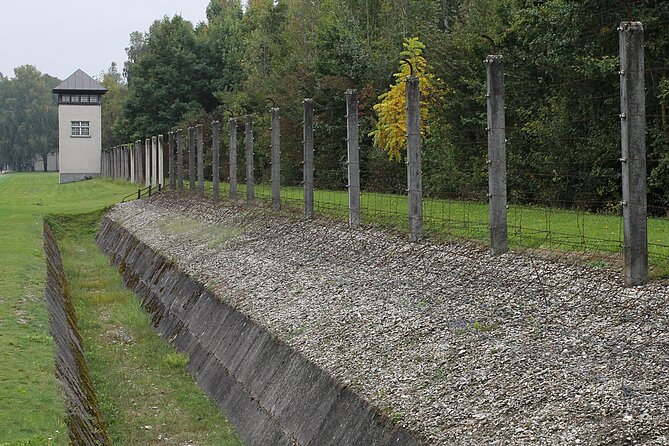
The tour continues through the areas accessible to the public, including the former prisoner compound and exhibits explaining camp life. The guide describes arrival procedures, registration, prisoner categories, work, punishment, disease, starvation, and the way the camp was organized.
This is where the value of guided interpretation becomes clearest. Empty spaces can be hard to read. A barracks area may look simple at first, but the guide explains its function and the crowded conditions imposed on prisoners. You begin to see the camp not as a collection of preserved structures, but as a system designed to control every part of a person’s life.
Dachau’s role as a model for other concentration camps is another central theme. The SS used the camp to develop methods of administration, discipline, forced labor, and terror. The site also served as an SS training facility, which gives it a wider importance in the history of the camp network.
The tour includes an explanation of the three major phases of the camp system. That structure helps you follow how the Nazi government expanded its use of camps before and during the Second World War. You also learn about the relationship between concentration camps, ghettos, and extermination camps, which were related but not identical parts of Nazi persecution.
The subject matter is difficult, and the tour does not soften it. At the same time, the guide’s job is to keep the history precise. Several accounts of this experience praise the respectful tone and the attention given to victims rather than to sensational details.
Same city, a completely different kind of day:
- Munich: Third Reich & WWII Walking Tour
★ 4.6 · 6,181 reviews - Third Reich Walking Tour Munich
★ 4.5 · 4,291 reviews - Munich Hop-On Hop-Off Tour: 1-Day or 2-Day Ticket
★ 4.3 · 4,161 reviews - Munich: Old Town & Viktualienmarkt City Walk in German
★ 4.7 · 2,304 reviews
The museum and the need for your own reading time
The memorial includes indoor exhibits and a documentation center. These displays allow you to see photographs, documents, prisoner information, and historical explanations at your own pace.
The main limitation is time. A five-hour tour must include transport in both directions, so the guided portion cannot give you unlimited time in every exhibit. You may have a few minutes to look around on your own, but some people will want longer to read the museum panels.
I see this as a trade-off rather than a flaw. The guide provides a clear route and historical explanation, while the exhibits offer detail that you can absorb quietly. If museum reading is your main priority, an independent visit with more time may suit you better. If you want help understanding the site and do not want to manage the transportation, the guided option makes more sense.
Bring comfortable shoes. The route involves walking on gravel and concrete, and the day includes outdoor areas. A cold or rainy day can make the experience more tiring, although the guide can keep the group indoors when possible.
The crematorium area and memorial spaces
The crematorium area is among the most emotionally difficult parts of the visit. The guide discusses how the site functioned and places it within the wider history of Nazi persecution. This section should be approached quietly and with respect.
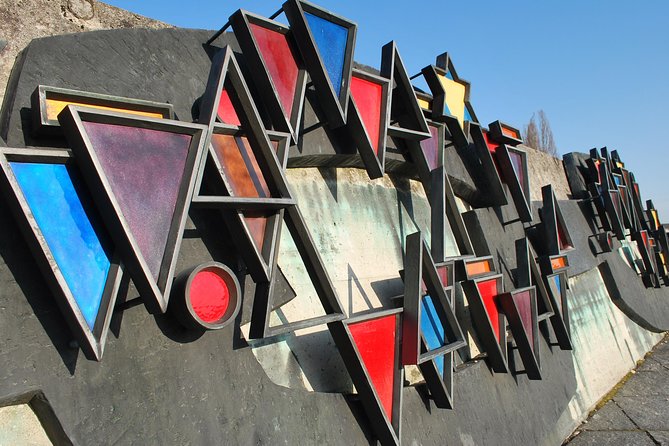
Dachau also contains memorial buildings and religious spaces created to remember those who died and to acknowledge the suffering of survivors. These areas change the feel of the visit. You move from the machinery of imprisonment and death toward spaces shaped by mourning, faith, and remembrance.
The memorial site is intentionally not presented like a theme park or a dramatic historical attraction. Its power comes from the ordinary setting around it. The nearby town continued to exist while the camp operated, and the grounds do not need theatrical effects to convey what happened. You are asked to pay attention, listen, and think.
That can make the visit emotionally intense. You might feel fine during one section and need quiet time during the next. The tour is not designed to entertain, and you should not book it expecting a light half-day outing.
Liberation, 1945, and what happened afterward
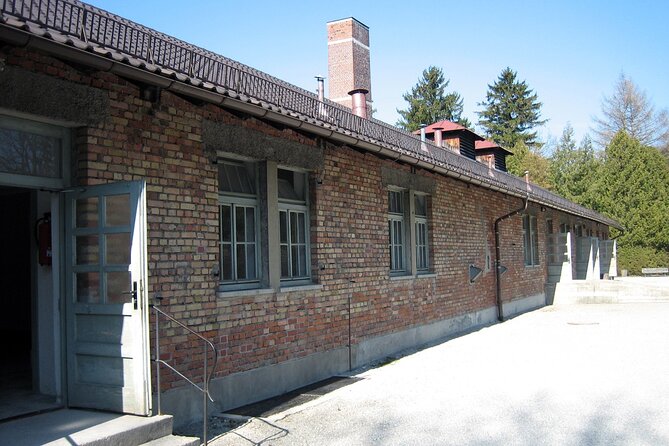
The final historical sections cover liberation and the years that followed. You learn what happened at Dachau after 1945 and how the site changed before the documentation center was unveiled in 1965.
That later history is important because a memorial does not appear automatically when a camp closes. The site had to be interpreted, preserved, and given a public purpose. The tour explains how Dachau became a place of education and remembrance rather than leaving you with the mistaken impression that the story ended on liberation day.
The guide also returns to the broader consequences of the camp system. You are encouraged to understand not only what happened inside Dachau, but also how the system operated across Europe and how prisoners were categorized and moved through it.
A strong guide can make this final part feel connected to the opening discussion in Munich. You see the path from political extremism and the destruction of democratic safeguards to imprisonment, racial persecution, forced labor, and mass death. That arc gives the five-hour experience a clear shape.
Price, group size, and overall value
The listed price is $60.46 per person. For that amount, you receive a licensed professional guide, round-trip public transport from central Munich, and roughly five hours of instruction and site interpretation.
The value depends on what you need. If you already know Munich’s transport system, prefer to read every exhibit at length, and want complete control over your pace, an independent visit may offer more freedom. You would also need to arrange and pay for the public transport yourself.
For many people, the guide is the reason to choose this tour. Dachau is easy to reach in theory, but the train and bus connection adds a layer of timing. The guide keeps the group together, reduces waiting, and handles the practical details. Just as important, you receive historical explanation from the moment you meet at Marienplatz.
The maximum group size is 20. That is not a private tour, but it is small enough for the guide to keep track of the group and for you to ask questions. In crowded parts of the memorial, staying together matters.
The high rating and 98 percent recommendation fit the tour’s main strengths: organization, historical detail, respectful presentation, and smooth transport. The most common practical weakness is limited time for independent museum reading, not poor planning.
Who should book this Dachau tour
I would recommend it to adults and older teenagers who want historical context and prefer not to handle the train and bus route alone. Students can select the youth price category, but they must bring valid identification. Children under 14 cannot join guided tours at the memorial.
It is a good choice if you want a serious half-day activity from Munich and can manage several hours of walking. It is also useful for families who want a guide to explain the history to teenagers in clear terms rather than leaving everyone to interpret the site alone.
You should think twice if you are looking for a relaxed outing, dislike structured group timing, or want extensive time with every museum display. The subject is painful, and the physical conditions can be tiring in poor weather.
Book at least a day ahead if your schedule is fixed, and do not risk arriving late. Free cancellation is available up to 24 hours before the start time. If the minimum number of participants is not reached and the activity is canceled, you will be offered another date or experience, or a full refund.
Should you book it?
Book this tour if you want Dachau explained clearly, respectfully, and in the context of the Nazi rise to power and the wider camp system. The included train and bus travel, small group, and experienced guides such as James and Samuel make the logistics much easier.
Skip it only if you need a self-guided visit with long, unhurried reading time. For most people visiting Munich, this is a well-organized way to approach a difficult memorial, provided you arrive prepared for a somber day rather than a conventional tour.
FAQ
Where does the Dachau tour begin?
The tour begins at Marienplatz 15, 80331 München, Germany. Check-in is at 8:45 a.m. for the 9:00 a.m. departure.
How long does the experience last?
The tour lasts approximately five hours and ends back at the meeting point in Munich.
Is transportation to Dachau included?
Yes. Public transport costs to and from the memorial site are included. The route uses a train and a bus.
Is admission to the Dachau Memorial Site included?
The tour information lists the admission ticket as free. A professional guide accompanies the group through the areas open to the public.
What language is the tour offered in?
The tour is offered in English.
How large is the group?
The activity allows a maximum of 20 participants.
Can children join the guided tour?
Children under 14 are not allowed to join guided tours at the memorial site. Students may select the youth price category but must present valid identification on the day.
Are food and drinks included?
No. Food, drinks, refreshments, and snacks are not included. Refreshments can be purchased at several locations near the meeting point, but nothing is provided during the tour.
More Half-Day in Munich
- Early-Start Dachau Memorial Half-Day Tour from Munich
★ 5.0 · 942 reviews - Discover Berlin Half-Day Walking Tour
★ 5.0 · 9,624 reviews - Berlin Third Reich Sites: Half-Day Walking Tour
★ 5.0 · 835 reviews - Potsdam Half-Day Walking Tour from Berlin
★ 4.5 · 398 reviews
Just added in Munich
- Private transfer: Vilshofen to Munich with 2h sightseeing stop★ 5.0 · 6 reviews
- Pub crawl incl. Oktoberfest museum guided tour with beer tasting (private)★ 5.0 · 5 reviews
- South Tyrolean specialties and wine tasting★ 5.0 · 5 reviews
- Size Matters Beer Tour Munich★ 4.6 · 105 reviews
- Short & sweet: Tasting the Viktualienmarkt★ 4.8 · 37 reviews
- Secret Food Tours Munich★ 4.8 · 5 reviews
- Munich: Romantic Wine Experience for Two at Viktualienmarkt★ 4.2 · 14 reviews
- Munich: Resistance against Hitler – Historical Walking Tour★ 5.0 · 5 reviews
Concentration Camp Memorials, compared.
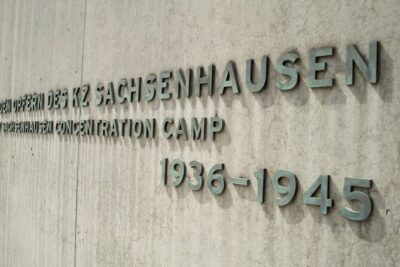
Sachsenhausen Concentration Camp Tour in English
Read our review →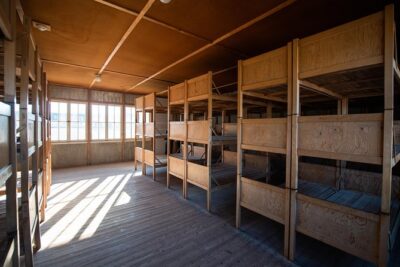
Dachau Concentration Camp Memorial Site Tour from Munich by Train
Read our review →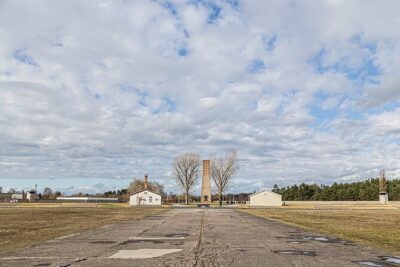
Sachsenhausen Concentration Camp Memorial Tour
Read our review →
From Munich: Dachau Memorial Site Half-Day Trip
Read our review →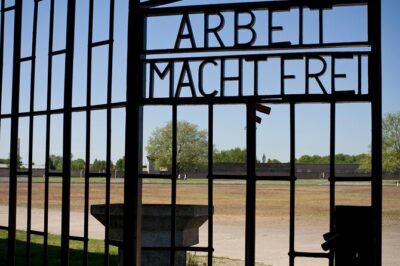
Sachsenhausen Concentration Camp Bus Tour in English from Berlin
Read our review →Sachsenhausen Concentration Camp Tour in English
Read our review →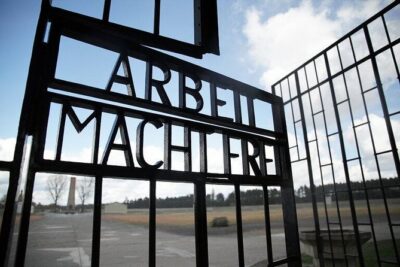
Sachsenhausen Concentration Camp Memorial Tour (Max. 15 Guests)
Read our review →Browse the lists this tour appears in