

Reviewed · COLOGNE TOURS
Cologne: WWII Sites with Optional EL-DE Haus Private Tour
Cologne’s wartime story is written into its streets. On this private walk, you’ll see the Cathedral, memorials, Stumbling Stones, an air raid shelter, and the ruins of St. Alban Church while learning how Nazi terror and bombing changed the city. The four-hour option adds EL-DE Haus, a former Gestapo headquarters where prisoner inscriptions remain on the walls.
I like two things right away. First, the private format lets you shape the discussion, whether your main interest is Jewish history, resistance, the bombing of Cologne, or the Nazi prison system. Second, the guide can adjust the pace and language to your group. The main caution is that this is a serious history tour, not a light sightseeing stroll, and access inside the Cathedral may be limited by Masses or special events.
Key points to know before booking
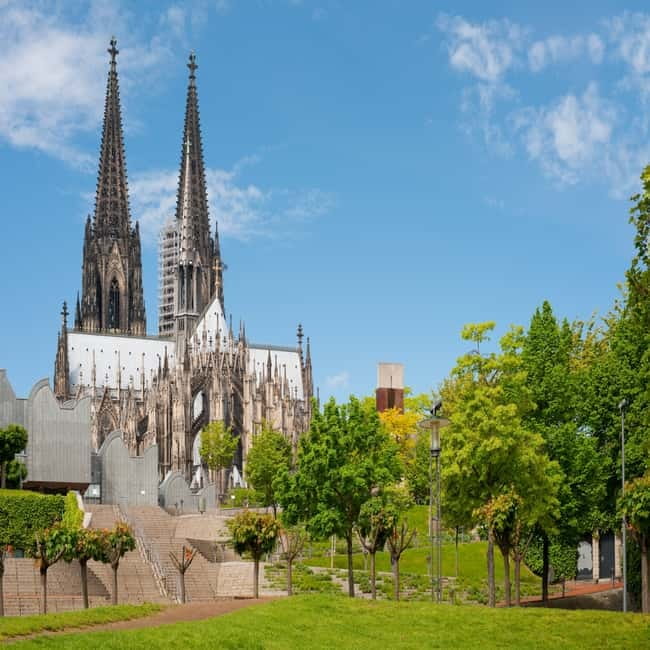
- Nearly 95 percent of Cologne was destroyed: The tour explains what survived and how the city rebuilt around its wartime scars.
- The 4-hour option includes EL-DE Haus: You’ll enter the former Gestapo headquarters and see prison cells with more than 1,800 inscriptions carved by prisoners.
- The private guide is the main asset: Guides such as Michael and Ralph have been praised for tailoring the walk to each group’s interests and for their personal approach.
- The route connects famous sights with quieter memorials: Expect the Cathedral, Stumbling Stones, the Trail of Remembrance, St. Alban Church, Hindenburg Bridge Memorial, and Dombunker.
- It is a walking tour in all weather: Comfortable shoes and suitable clothing matter, especially on cobbled streets.
- The price buys exclusivity, not just entry: At $207 per person, this makes the most sense for families or small groups who value a private, adaptable history lesson.
Starting beneath Cologne Cathedral
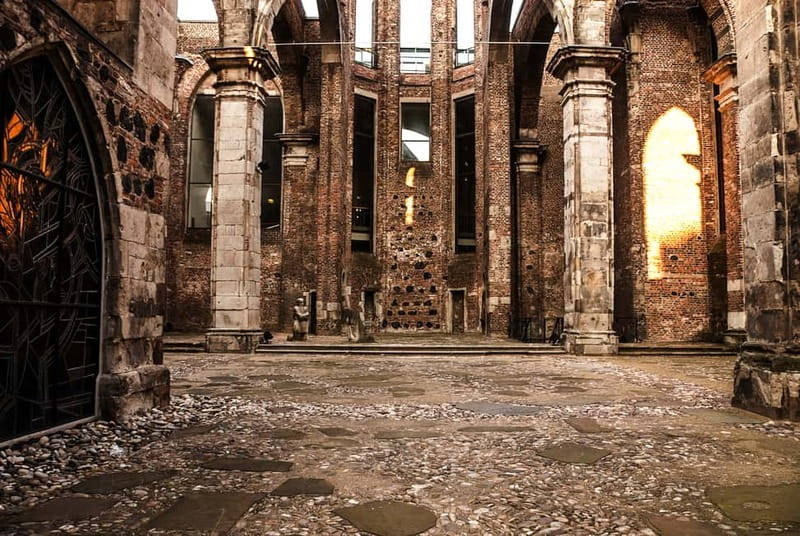
You meet your licensed guide at the Kreuzblume monument in front of Cologne Cathedral. This is a handy meeting point in the center of the city, and the tour ends here too, so you won’t need to arrange transport between the start and finish.
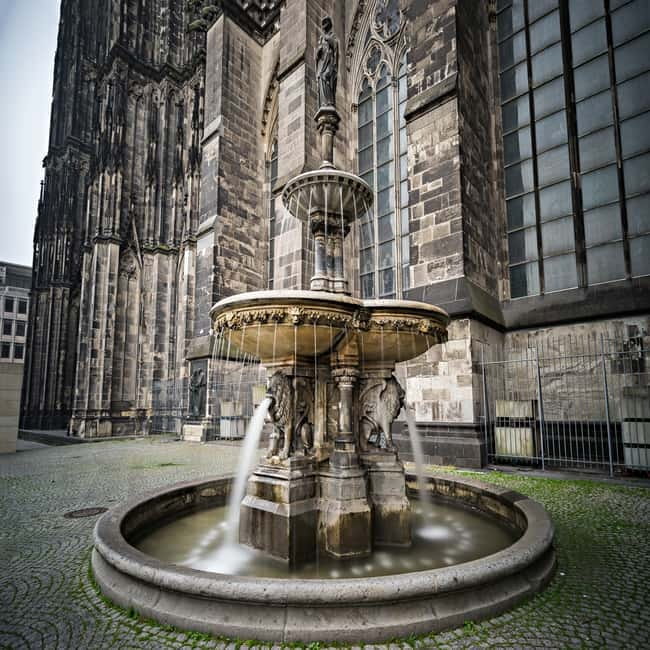
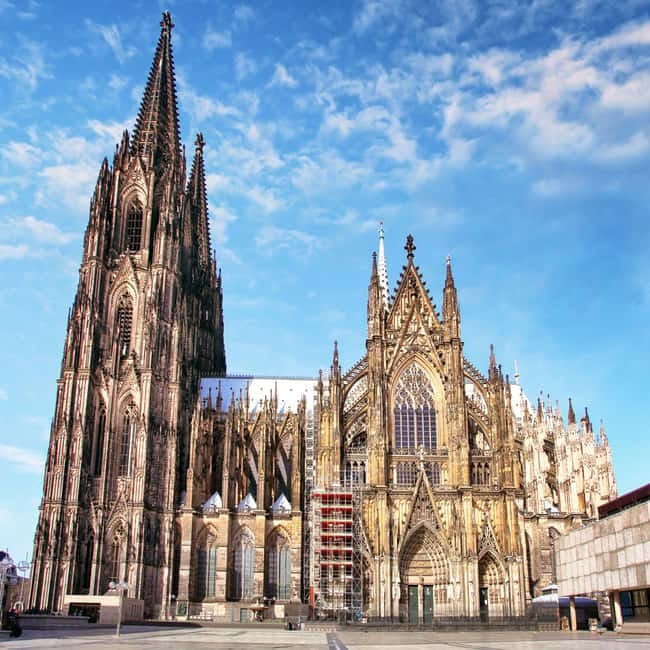
The Cathedral is an apt place to begin. Its Gothic towers dominate Cologne, and the church miraculously survived the heavy bombing that destroyed most of the surrounding city. Your guide points out wartime damage, including bullet holes, and explains why the Cathedral became both a landmark for navigation and a symbol of Cologne’s survival.
You’ll visit the free parts of the Cathedral, but the tour does not include the tower ticket. That distinction matters. If climbing the tower is high on your list, you’ll need to arrange that separately. Access to the interior can also be restricted during Masses and special events, so treat the Cathedral visit as part of the walking route rather than a guaranteed long interior visit.
The opening discussion helps you see the city differently. Instead of treating the Cathedral as an isolated medieval attraction, you begin to understand its place in a modern city marked by war, dictatorship, and reconstruction.
A few more half-days in Cologne worth comparing
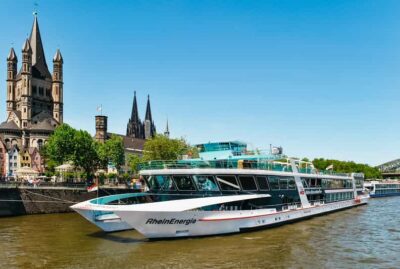
- Cologne: Panoramic City Cruise
★ 4.3 · 5,698 reviews - Cologne: Brewery Tour with 3 Kölsch Beer Tastings
★ 4.7 · 3,108 reviews - Cologne: Top Sights Rhine River Cruise – Skyline Tour
★ 4.4 · 3,030 reviews
Old Town streets and the scale of destruction
The two-hour route continues through Cologne’s Old Town. The city’s surviving historic streets can make the wartime destruction hard to picture, which is why the guide’s context matters. You’ll learn that nearly 95 percent of Cologne was destroyed during World War II and that the city’s present appearance is tied closely to what was lost.
This part of the tour is not simply a list of dates. The guide links streets and landmarks to the people who lived through the period. You’ll hear about destruction, survival, and remembrance while moving between well-known sights and smaller memorials that are easy to miss on your own.
I like this structure because it keeps the subject connected to the city around you. You are not confined to a museum room for two hours, but you also are not left with only postcard views. The route gives you a way to read Cologne’s buildings and open spaces as evidence of a difficult past.
The cobbled streets can be uneven, and the tour runs rain or shine. Wear comfortable shoes and dress for the weather. This is practical advice, not a formality. A private history walk is far more enjoyable when you are not worrying about wet feet or sore soles.
Stumbling Stones and Cologne’s Jewish history
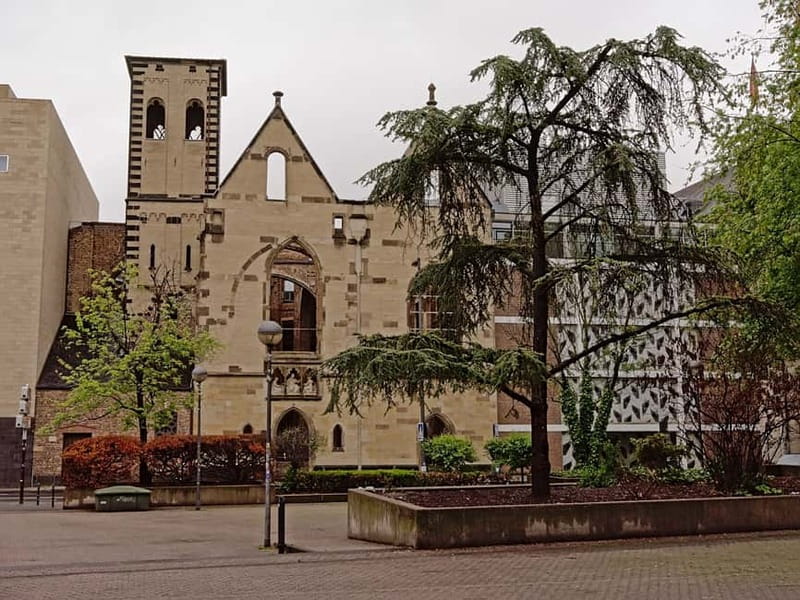
One of the most personal parts of the route is the look at Cologne’s Stumbling Stones. These small brass markers are set into the pavement outside the last known homes of Jewish victims of Nazi persecution.
Their size is part of their effect. You can walk past them without noticing, but once your guide explains what they mark, the pavement becomes a record of individual lives. The stones shift the story away from broad figures and political speeches and toward addresses, families, and people who once belonged to these neighborhoods.
The tour can be especially useful if you want to focus on Jewish history in Cologne. Michael, one of the guides, has been praised for shaping the experience around that subject when requested. That kind of flexibility is one of the clearest benefits of booking privately.
You should also expect the subject matter to be upsetting. The tour deals with Nazi terror and the fate of victims without softening the reality. Families with older children may find it meaningful, but parents should decide in advance how much detail is appropriate. One family with children aged 15, 19, and 25 found the guide’s approach suitable for their group, but every family has a different comfort level.
Roman sewers and wartime survival
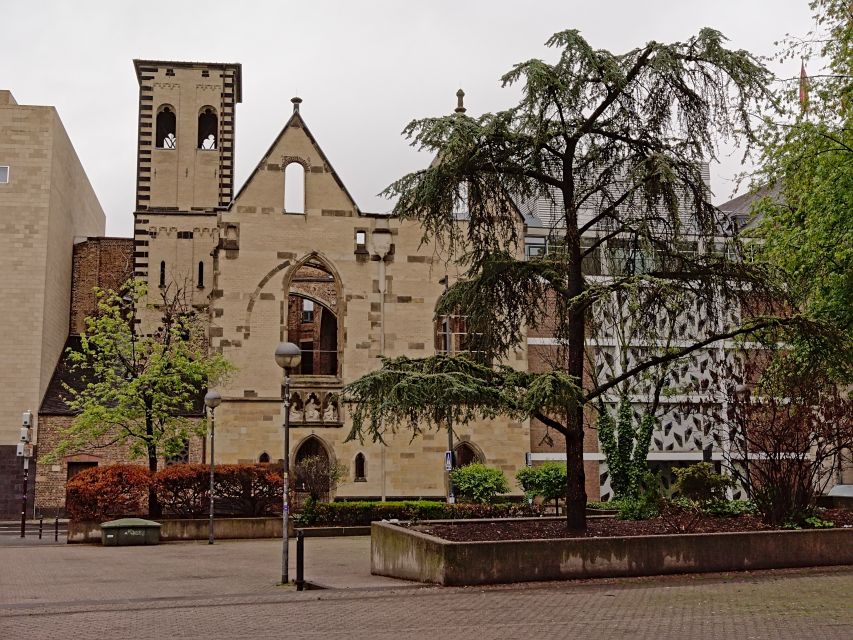
The route also brings in Cologne’s hidden Roman sewers. These ancient structures give the tour a longer view of the city, but their wartime role is the reason they matter here.
Your guide explains how these underground spaces fit into life during the war. The subject adds a practical layer to the history. Wartime Cologne was not only about military decisions and bombing raids. It was also about where people sheltered, how they moved through the city, and how old infrastructure took on new importance.
This stop helps break up the route without weakening its focus. You are still learning about wartime Cologne, but through a physical place with a much older origin. It also reminds you that the city’s past did not begin in 1933 or end in 1945. Different periods overlap under the modern streets.
The tour description does not promise entry into every underground area, so you should think of this as a guided look at the Roman sewer story rather than a guaranteed underground exploration. Your guide will provide the context as the route passes the relevant remains.
Same city, a completely different kind of day:
- Cologne: Chocolate Museum Entrance Ticket
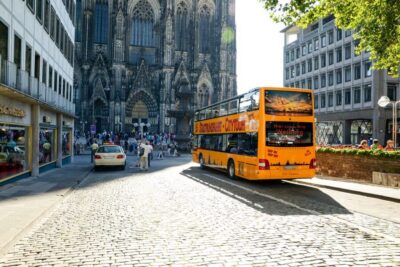
★ 4.4 · 2,790 reviews - Cologne: 24h Hop-On Hop-Off Sightseeing Bus Ticket
★ 4.3 · 2,735 reviews - Cologne: Melaten Cemetery Life, Love and Death Tour
★ 4.9 · 2,728 reviews - Cologne: Virtual Reality Time Travel Experience Ticket
★ 4.6 · 1,958 reviews
St. Alban Church and the Trail of Remembrance
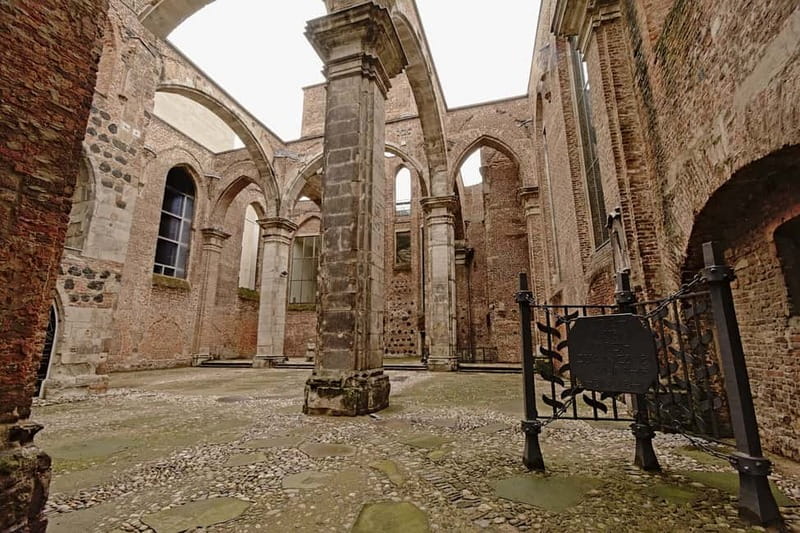
At the ruins of St. Alban Church, the mood becomes especially somber. The damaged church is one of the places where wartime destruction remains visible rather than reconstructed away.
Here, your guide connects the ruins to the wider story of Cologne’s losses. The building is not presented only as an architectural curiosity. It becomes part of the city’s remembrance of bombing, death, and the long process of rebuilding.
The nearby Trail of Remembrance adds another layer. Along the route, you’ll encounter memorial markers that invite you to pause rather than simply pass through. This is one reason a private walk can work better than a large group outing. You can ask a question, take a moment, or spend more time with a memorial without worrying about holding up a crowd.
The route is carefully balanced between famous sights and less obvious places. You get the Cathedral, which nearly everyone wants to see, but also the quieter locations where the war feels more immediate.
Dombunker and the Hindenburg Bridge Memorial
The Dombunker, a preserved air raid shelter near the Cathedral, brings the wartime story down to a more human scale. Air raids are easy to understand as statistics, but an air raid shelter points to the experience of waiting, fear, and uncertainty.
Your guide explains the shelter’s place in Cologne’s wartime life. The stop is particularly useful for understanding how civilians experienced the conflict, rather than focusing only on armies and political leaders.
The Hindenburg Bridge Memorial adds another part of the story. Together, these locations show how the tour covers both civilian survival and the physical damage caused by war. You are not looking at one single memorial style. Instead, the route uses a shelter, a bridge memorial, church ruins, pavement markers, and major architecture to build a wider picture.
The two-hour option has a lot packed into it. The exact number of attractions depends on the option selected and the pace you choose with your guide. If you want long stops, detailed questions, and time for photographs, tell the guide at the start. A private tour gives you that choice, but you still need to be realistic about how much can fit into two hours.
EL-DE Haus: the reason to choose four hours
If you want the most serious and substantial version of the experience, choose the four-hour option with entry to EL-DE Haus, now the NS Documentation Center.
The building was once the Gestapo headquarters in Cologne. Its former prison cells are preserved, along with more than 1,800 inscriptions carved into the walls by prisoners. These marks give the building a direct human presence. You are not only hearing that people were imprisoned there. You can see the traces they left behind.
The cells held forced laborers, political enemies, and members of the resistance. The guide explains how Nazi terror operated in Cologne and what happened to people held in the building. This is the part of the tour that most clearly turns the city walk into a study of persecution and state violence.
The extra two hours are worthwhile if you want more than a general introduction. The Cathedral and Old Town route explains the city’s wartime setting, while EL-DE Haus shows the machinery of repression at close range. Together, they create a fuller experience than either part could provide alone.
You should also know that EL-DE Haus is not a casual museum stop. The prison cells and inscriptions can be disturbing. Give yourself time afterward if you need a quieter break. The full tour ends back at the Cathedral meeting point, so you can plan your next activity from the city center.
How the private format changes the experience
The private setup is the strongest practical feature. You are not sharing the guide with a large group, and the conversation can be adjusted to your interests and pace.
That matters for a subject as broad as World War II in Cologne. You might want to focus on Jewish history and the Stumbling Stones. You might prefer the bombing and reconstruction of the city. You may be traveling with teenagers who need more explanation of the political background. A private guide can spend more time where your questions lead.
Michael has been singled out for tailoring the walk to what a group wanted to see, including Cologne’s Jewish history. Ralph has also been praised for a personal, approachable style. Those details suggest that the guide’s manner may shape the experience as much as the route itself.
The available languages are English, German, French, Italian, Spanish, and Russian. Select your preferred language when booking. You can also contact Rosotravel in advance with special requests or disability-related needs. The tour is listed as wheelchair accessible, but the route includes cobbled streets and historic sites, so advance communication remains sensible.
Is $207 per person good value?
At $207 per person, this is not a budget walking tour. The value depends heavily on your group size, the option you choose, and how much you care about having a private guide.
For a couple or a small family with a strong interest in wartime history, the price buys a flexible discussion rather than a standard route. You can ask questions freely, request more attention to Jewish history, and move at a pace that suits you. For a larger private group, the cost may feel easier to justify because the guide is reserved for your party.
The two-hour option is best viewed as an introduction. It covers a surprising range of sites, but it cannot give every location a long stop. The four-hour option costs more in time and money, yet EL-DE Haus adds the strongest historical evidence on the route. If you are choosing only one version, I would pick four hours for serious students of Nazi history and two hours for visitors who want a focused introduction alongside other Cologne sightseeing.
The tour includes the free parts of the Cathedral and the EL-DE Haus entry ticket in the four-hour option. The Cathedral tower is not included. That is a minor extra cost only if you want the tower experience, but it is worth knowing before you book.
Who should book this Cologne tour?
I would recommend it to you if you want a personal explanation of Cologne’s wartime past rather than a quick glance at memorials. It suits couples, families with older children, and small groups who want to ask questions without a fixed group pace.
The tour is also a good match if Jewish history is important to your visit. Ask for that focus in advance, then expect the Stumbling Stones and Trail of Remembrance to receive more attention.
Choose the four-hour version if EL-DE Haus is central to your plans. The preserved cells and prisoner inscriptions offer the clearest connection to the Nazi terror carried out in Cologne.
You may want to skip it if you are looking for a cheerful orientation walk, if you dislike walking in poor weather, or if you have very limited time and only want to see the Cathedral. The subject is difficult, and the full route demands both time and attention.
Book this tour if you want Cologne’s famous sights placed in their wartime context. Choose two hours for a compact Old Town route. Choose four hours for the more complete experience, with EL-DE Haus and its prison cells providing the strongest reason to stay longer.
FAQ
Where does the tour begin and end?
You meet your guide at the Kreuzblume monument in front of the entrance to Cologne Cathedral. The tour ends back at the same meeting point.
How long is the tour?
The tour lasts either two or four hours, depending on the option you select. Starting times are shown with availability.
Is EL-DE Haus included?
Entry to EL-DE Haus, the NS Documentation Center and former Gestapo headquarters, is included with the four-hour option. It is not part of the two-hour Old Town tour.
Can I visit the Cologne Cathedral tower?
The tour includes the free parts of Cologne Cathedral, but the Cathedral tower ticket is not included.
Which languages are available?
The licensed guide can speak English, German, French, Italian, Spanish, or Russian. Choose your preferred language during reservation.
Is the tour suitable for wheelchair users?
The activity is listed as wheelchair accessible. Contact Rosotravel in advance if you need assistance or have specific accessibility requests.
Just added in Cologne
- The rather unknown Melaten★ 4.9 · 26 reviews
- Rickshaw Glühwein Ride★ 4.6 · 24 reviews
- Informative and fun brewery tour in German, public★ 4.9 · 47 reviews
- Public brewhouse tour Cologne in English★ 4.9 · 154 reviews
- Private photoshoot in Cologne★ 5.0 · 5 reviews
- Panorama tour between Bonn and Königswinter★ 4.7 · 63 reviews
- Cologne: Old City Guided Walking Tour★ 4.9 · 63 reviews
- Cologne-Nippes: wine hopping (wine trip)★ 4.9 · 7 reviews
Cologne Tours, compared.
Virtual Reality Time Travel Experience Ticket
Read our review →
The Night Watchman Old Town Walking Tour in German
Read our review →
Browse the lists this tour appears in