Reviewed · BERLIN TOURS
Clash of Titans: Battle for Seelow Heights WW2 tour
The Battle of Seelow Heights was the last major defensive battle before the Soviet assault on Berlin, and this tour takes you far beyond a museum display. You follow the fighting across actual villages, forest tracks, former trench lines, command posts, and roads used by the advancing Soviet forces.
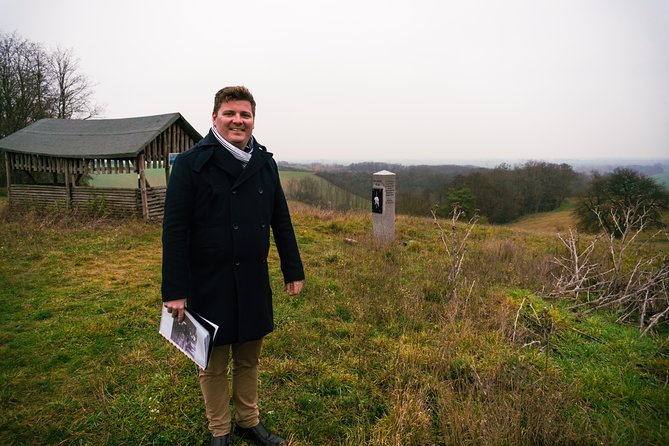
I like the small maximum group of seven, which gives the guide room to answer questions and adjust the pace. I also like the way the tour links the museum maps to what you see outside, including Marshal Zhukov’s command position and the German defenses known as the shooting gallery.
The main drawback is the length and rural setting. You spend about seven hours away from Berlin, with some walking through forests and uneven ground. Lunch is not included, and sturdy footwear is a must.
Key things to know before booking
- You follow the battle in sequence: The route moves from the Soviet buildup near Reitwein through the German defenses and onward toward Berlin.
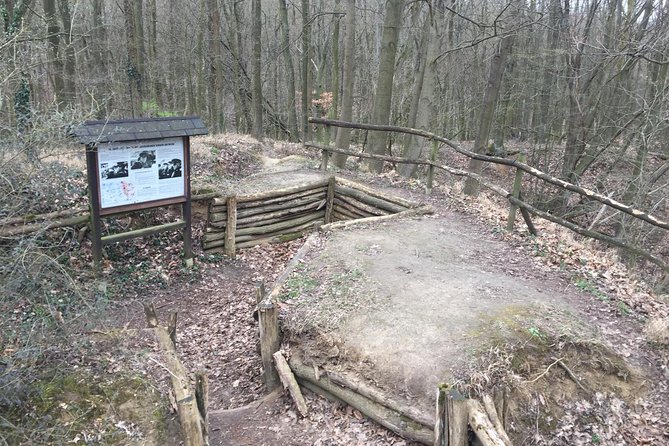
- The museum visit comes first: A 3D model helps you understand the bunker and trench system before seeing its remains in the forest.
- The group is limited to seven people: This is a major advantage if you want detailed explanations rather than a fixed speech.
- Some stops require walking off paved paths: Wear boots or firm walking shoes, especially in wet weather.
- Guides bring the battle to life with maps and photos: Matt and Steve are praised for their clear explanations, preparation, and friendly manner.
- The price is $167.74 per person: Museum entry, transport, Wi-Fi, and water are included, but lunch is extra.
Why Seelow Heights matters
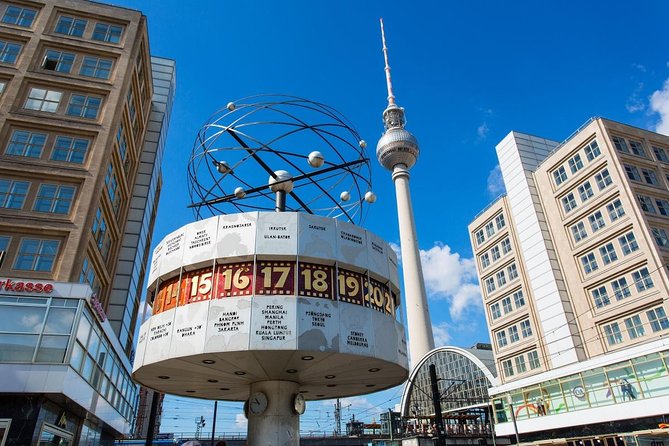
Many Berlin history tours focus on the city itself. This one takes you east into Brandenburg, where the final Soviet drive toward Berlin met a determined German defense in April 1945.
The Seelow Heights formed a natural defensive position overlooking the Oder Valley. The Soviet 1st Belorussian Front needed to break through here before reaching Berlin. The force assembled for the offensive was enormous: 768,000 infantry, including 78,556 soldiers from the Polish 1st Army, along with 3,059 tanks, 16,934 artillery pieces and mortars, and 3,279 combat aircraft.
That scale can be hard to grasp from a book. The value of this tour is that you repeatedly stop, look across the ground, and connect the numbers to the hills, roads, fields, and woods in front of you.
The battle was not a simple Soviet advance. German forces used prepared positions, artillery, trenches, and the height of the ground to slow the attack. The fighting lasted several days and was exceptionally costly. By walking through the area, you get a clearer sense of why the advance was difficult, even though the larger outcome was never really in doubt.
The subject is grim. This is not a light sightseeing trip. The tour deals with mass death, wounded soldiers, destroyed units, and the final collapse of Nazi Germany. A good guide keeps the focus on people and military decisions rather than turning the battle into a parade of weapons and statistics.
A few more half-days in Berlin worth comparing
- Berlin: Reichstag, Dome and Government District Guided Tour
★ 4.7 · 18,288 reviews - Berlin: 1-Hour City Tour by Boat with Guaranteed Seating
★ 4.3 · 16,993 reviews - Berlin: Boat Tour Along the River Spree
★ 4.4 · 11,252 reviews
Starting in Berlin and reaching the front
The advertised start is 9:15 a.m. at Alexanderplatz, at Dircksenstraße 2. From there, you travel in an air-conditioned vehicle toward the Seelow area.
Transport matters here. The sites are scattered across villages, forest, fields, and roads, so trying to visit them by public transport would be awkward and time-consuming. The vehicle lets you see a sequence of positions that would otherwise be difficult to connect.
The tour includes Wi-Fi and a small bottle of water. Several participants also appreciated the guide’s attention to practical needs, including bathroom stops and refreshments offered during the day. Lunch is not included, so keep money available for the meal stop.
Some arrangements may allow hotel pickup for an additional charge, but the standard meeting information lists Alexanderplatz. Confirm your exact pickup details before setting out.
Seelow Heights Museum: getting the battle map
The first stop is the Seelow Heights memorial and museum, officially known as Gedenkstätte Seelower Höhen. You begin with about 40 minutes here, including admission.
This is the right place to start because the battle is difficult to follow without a map. Your guide explains the Berlin-Seelow offensive and sets out the main stages of the fighting before giving you time to look around on your own.
One of the most useful displays is a 3D model showing the Soviet 1st Belorussian Front, including bunker and trench positions. Later, you visit parts of that defensive system in person. That order is important. You first see the overall arrangement, then walk into the terrain where the positions once operated.
The museum visit is not very long, so you should not expect a full morning of exhibits. Its real purpose is to give you a working map of the battlefield. If you already know the campaign well, the guide’s explanation and the connection to the outdoor stops will likely be more useful than the display time itself.
Reitwein and the Soviet starting point
The next drive takes you to Reitwein, a small town that became central to the Soviet attack. The stop lasts about 20 minutes and has no additional admission charge.
At first glance, Reitwein may seem ordinary. That is part of the point. The location does not look like a famous battlefield, yet it was the starting area for the Soviet assault toward Seelow and then Berlin.
Your guide explains how the Soviet forces gathered here and how the attack developed. Large maps and photographs are especially helpful at this point because they show the relationship between the town, the Oder Valley, and the heights ahead.
I like this stop because it makes clear that battlefields are rarely marked by dramatic scenery. Often, you are looking at a quiet road or a group of trees and trying to picture artillery, armor, infantry, smoke, and confusion in the same place.
Same city, a completely different kind of day:
- Discover Berlin Half-Day Walking Tour
★ 5.0 · 9,624 reviews - Berlin: Hop-on Hop-off Bus Tour with Live Commentary
★ 4.3 · 8,579 reviews - Berlin: Government District around the Reichstag Guided Tour
★ 4.7 · 8,447 reviews - Berlin: Reichstag, Plenary Chamber, Cupola & Government Tour
★ 4.6 · 8,422 reviews
Forest trenches and Zhukov’s command position
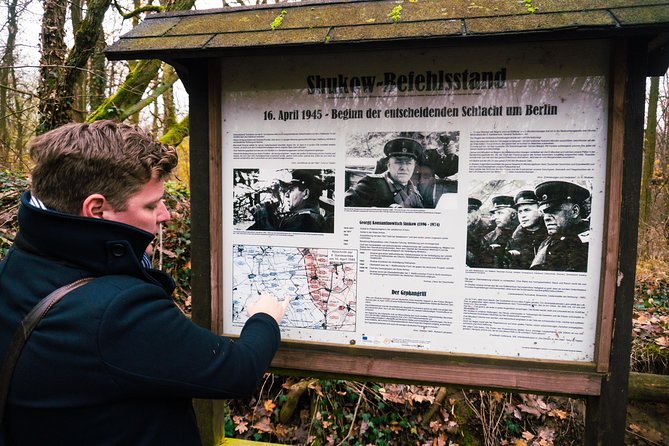
From Reitwein, you take a short walk through the forest to see the surviving remains of the bunker and trench network. This section lasts about 30 minutes.
The remains are not presented as a polished reconstruction. You see traces of the original defensive system in the woods, including the area associated with Marshal Zhukov’s command bunker and observation point. The guide uses the terrain to explain how Soviet commanders watched and directed the attack.
This is one of the strongest parts of the day for anyone who wants to understand military geography. From a map, a command position can seem abstract. Standing on the ground helps you see what could be observed, how the heights affected movement, and why the German positions were so hard to overcome.
Expect uneven ground and some walking away from paved paths. One participant specifically advised wearing sturdy footwear, and that is sensible advice. This is not a museum walkway. In wet weather, forest tracks may be muddy.
The walk is short rather than strenuous, and the small group size helps the guide keep an eye on the slowest walker. If you need a slower pace, mention it at the start of the day.
Dolgelin Railway Station and the shooting gallery
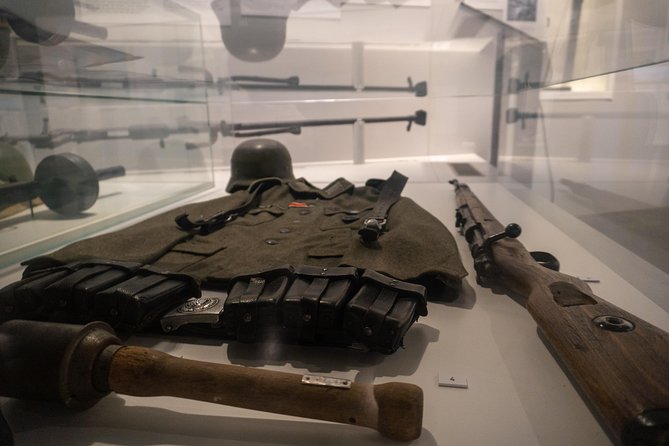
The route continues toward Dolgelin Railway Station, near the site associated with Colonel Scheunemann, commander of the 303rd Infantry Division. You spend about 20 minutes here.
The stop shifts the focus from the Soviet attack to the German defensive position. The guide explains how the defenders used the heights and prepared lines of fire against troops trying to cross the open ground.
The phrase shooting gallery is especially apt here. Soviet and Polish forces had to move through exposed ground under fire, while trying to overcome trenches and artillery positions. Seeing the area in person gives the phrase weight. You are not simply told that the attack was difficult. You can look at the open approaches and understand why movement became so dangerous.
This stop may appeal most to people who enjoy the tactical side of military history. It is less about a famous monument and more about reading the ground. If you prefer grand buildings, dramatic ruins, or a large memorial complex, this portion may feel plain. Its value comes from the explanation.
Lietzen cemetery and a much older past
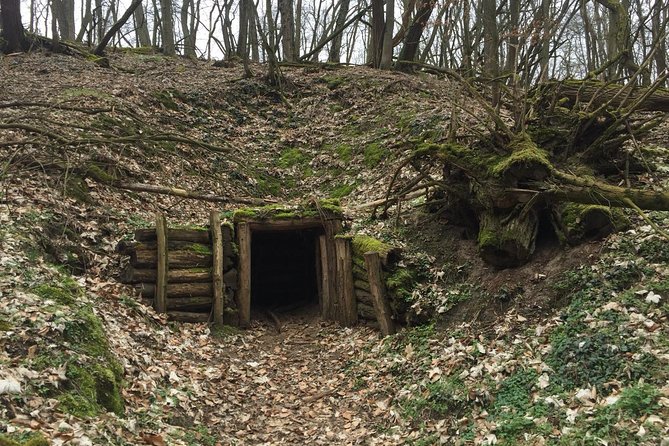
As the vehicle follows the route of the Soviet advance back toward Berlin, you stop in Lietzen for about 30 minutes.
The German field cemetery is a serious and quiet place. Wartime remains continue to be added as they are found, and the cemetery has been expanded since German reunification. That detail gives the site a direct connection to the present. The battle is not only a story finished in 1945. People still uncover evidence of it.
Lietzen also offers a reminder that the region’s history did not begin with the Second World War. The town is associated with a manor house built by the Knights Templar in 1252, as well as what is described as Germany’s oldest barn.
You should not expect a long architectural tour here. The stop is brief and the main focus remains the war cemetery. Still, the older buildings add useful context. The same roads and settlements crossed by armies in 1945 had already been part of European history for centuries.
Jahnsfelde and the final defensive stand
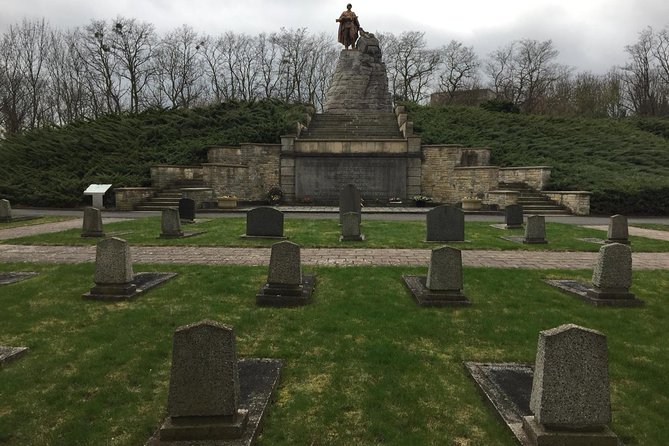
The last battlefield stop is Jahnsfelde, where you spend about 20 minutes near the Schlosskirche and a sports field.
The sports field was once the location of a German field hospital. The site is linked to a particularly disturbing episode in which Soviet aircraft attacked despite the Red Cross markings. The stop underlines how little protection medical symbols could offer during the final, chaotic stages of the war.
The tour also explains the last stand of the 3rd Battalion of Artillery Regiment 18. Caught at a crossroads during the German withdrawal, the unit hurriedly formed defensive positions against advancing Soviet armor. It reportedly destroyed about 100 tanks, but at a terrible cost: eight officers and more than 160 men were killed, over two-thirds of the battalion were wounded, and every gun was lost.
The figures are stark, but the guide’s job is to give them meaning. This was not a clean victory scene. It was a desperate action by a unit being pushed back, with wounded men and retreating forces nearby.
Jahnsfelde is a useful final stop because it shows the human price behind the arrows on a battle map. By this stage, you have seen the Soviet starting area, the defensive positions, the exposed approaches, and the withdrawal route. The final story is one of destruction on both sides.
The guide makes the difference
The tour depends heavily on the guide. A battlefield with few obvious ruins can feel confusing if the commentary is vague. Here, guides such as Matt and Steve are described as prepared, engaging, and able to answer detailed questions.
Matt is particularly praised for using maps and photographs, explaining a timeline at each stop, and including everyone in the group. His background and passion for military history help him move between the broad Eastern Front campaign and small details at a specific crossroads or bunker site.
Steve is also described as especially strong with history questions and eager to discuss the subject with people who already know a lot. At the same time, the tour is designed to work for someone who has only a basic interest in the war.
That balance matters. You can ask about troop movements, armor, command decisions, or the wider Berlin offensive, but you do not need to arrive with a stack of books. The guide explains the sequence in plain language and returns to the map when the ground becomes confusing.
The group limit of seven is a real strength. You can ask questions without holding up a coachload of people, and the guide can adjust explanations to the group. A solo participant may find the small format especially comfortable.
Time, comfort, and the real cost
The listed price is $167.74 per person for about seven hours. That is not a cheap half-day outing, but it covers more than transport to a single museum.
Your payment includes the air-conditioned vehicle, museum admission, Wi-Fi, and water. You also receive a guided route through several locations that would be difficult to connect independently. The cost makes more sense if you value expert interpretation and want to understand the battle as a sequence rather than simply visit the memorial.
Lunch is extra. The day may run closer to seven or eight hours depending on the pace and meal arrangements, so plan accordingly.
The main value is not the number of stops. It is the way the stops fit together. You see the Soviet approach, the command structure, the German defenses, the cemetery, and the final withdrawal. That structure turns scattered rural sites into one understandable story.
I would not choose this tour if you have only a short stay in Berlin or want a relaxed day close to the city center. The drive takes time, and the subject is demanding. But if you have a strong interest in the Second World War, the Eastern Front, or military geography, the price is reasonable for a specialized small-group experience.
Who should book it?
This tour suits history-focused visitors, military enthusiasts, students of the Eastern Front, and people who want to see a less familiar side of the Berlin campaign. It also works for newcomers because the guide builds the story from the beginning.
You do not need to be a man or a dedicated war historian to enjoy it. One participant who expected to be bored found the day engaging because every stop had a clear story and the guide kept the explanations lively.
Wear sturdy shoes, bring weather-appropriate clothing, and be ready for forest paths and outdoor stops. The experience requires good weather, and poor conditions may lead to a different date or a full refund. Free cancellation is available up to 24 hours before the start time. If the minimum number is not reached, the operator offers another date or a full refund.
Should you book the Seelow Heights tour?
Book it if you want a serious, well-explained battlefield visit rather than another general Berlin sightseeing trip. The museum, maps, trenches, command site, cemetery, and village stops build a strong sense of how the battle unfolded.
Skip it if your schedule is tight, you dislike long drives, or you want attractions with lots of preserved buildings and indoor exhibits. For everyone else, especially visitors curious about the Eastern Front, this is one of the more focused ways to understand the final fighting before Berlin fell.
FAQ
Where does the tour start?
The listed meeting point is Alexanderplatz, at Dircksenstraße 2, 10179 Berlin, Germany.
What time does the tour begin?
The scheduled start time is 9:15 a.m.
How long does the tour last?
The tour lasts approximately seven hours, though some arrangements may run closer to seven or eight hours depending on the day.
How many people can join the tour?
The activity has a maximum of seven participants.
Is museum admission included?
Yes. Admission to the Seelow Heights museum is included in the tour price.
Is transportation provided?
Yes. You travel in an air-conditioned vehicle between Berlin and the scattered battlefield sites.
Is lunch included?
No. Lunch is not included, so you should budget separately for food.
Do I need sturdy footwear?
Yes. The tour includes a walk through forest areas and surviving trench and bunker remains. Firm walking shoes or boots are recommended.
Is the tour offered in English?
Yes. The tour is offered in English.
Can I cancel for a full refund?
You can cancel for a full refund up to 24 hours before the experience start time. Cancellations or changes made less than 24 hours before the start are not refunded, and poor weather or an unmet minimum group size may result in a different date or a full refund.
Just added in Berlin
- Berlin & The Third Reich Private Guided Tour★ 5.0 · 3 reviews
- Third Reich Quest Experience in Berlin★ 4.5 · 7 reviews
- Private Analogue Photography Experience in Berlin★ 5.0 · 3 reviews
- Berlin Urbex Adventure and History Tour★ 5.0 · 9 reviews
- The Beauty of Berlin by Bike: Private Tour★ 5.0 · 59 reviews
- Berlin: Guided Bike tour of the Berlin Wall and Third Reich★ 5.0 · 160 reviews
- Beyond Currywurst: Berlin’s Hidden Street Food & Culture Tour★ 5.0 · 100 reviews
- Berlin Third Reich & Cold War Walking Tour With A Guide★ 5.0 · 7 reviews
Berlin Tours, compared.
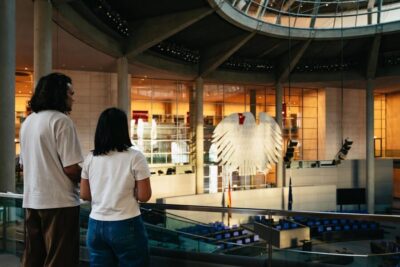
Reichstag, Dome and Government District Guided Tour
Read our review →
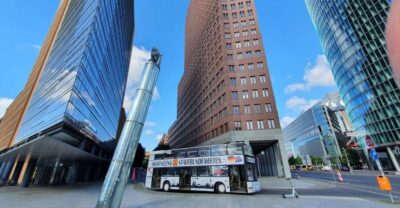
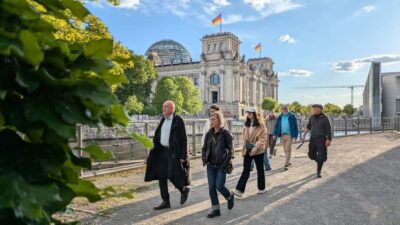
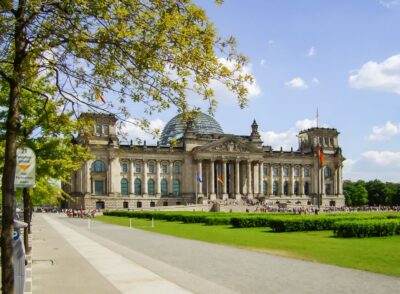
Reichstag, Plenary Chamber, Cupola & Government Tour
Read our review →