
Reviewed · WALKING TOURS
Berlin: Walking Tour of the Top 10 Sightseeing Attractions
Berlin’s past is packed into this brisk walk, from the modern government quarter to the Brandenburg Gate, Bebelplatz, and Museum Island. You get a quick look at how imperial Berlin, Nazi Germany, the divided city, and today’s capital fit together.
I like the strong route and the guides’ personal style. Max, one of the guides named in the feedback, answered questions carefully and allowed time for photos. I also like the mix of major sights and sobering places, including the Holocaust Memorial and Bebelplatz.
The trade-off is speed. Four kilometers in two hours means you will hear a lot while moving often, and most stops are viewed from outside. If you want a slow museum visit or long time at each monument, this is not the right format.
Key points at a glance
- A useful first orientation: The route links the government quarter, Brandenburg Gate, Gendarmenmarkt, and Museum Island in one walk.
- About 4 kilometers on foot: Comfortable shoes and water matter, especially in poor weather.
- Serious history with a light touch: Guides combine stories about the Nazi era, the Cold War, the Berlin Wall, and reunification with Berlin humor.
- Photo time is built in: The Brandenburg Gate, Reichstag area, Berlin Cathedral, and TV Tower views give you plenty to frame.
- Small groups or private tours: The format allows questions and a more personal pace than a large city walk.
- A central finish: The tour ends at Friedrichsbrücke, near Museum Island and the city center.
Why this two-hour route works for a first look at Berlin
Berlin is spread out, and its sights do not form one tidy old-town cluster. This tour solves that problem by connecting several important areas on foot. You begin beside the Federal Chancellery, pass the Reichstag and Brandenburg Gate, then continue east through historic Berlin toward Museum Island.
That route gives you a clear sense of the city’s changing character. The first section feels modern and political. The middle brings imperial avenues, war memorials, and places tied to Nazi rule. The final stretch leads into Prussian Berlin, the rebuilt City Palace area, and the city’s oldest quarter near Nikolaiviertel.
I see this as an orientation tour rather than a full historical study. You will not have time to enter the Reichstag, Berlin Cathedral, or the museums. You will get the framework you need to decide where to return later.
The guides add personality through stories, questions, and Berlin humor. That matters in a city where the dates and political changes can become a blur. A good guide helps you connect the buildings to the people and events behind them.
More Walking Tours in Berlin
- Discover Berlin Half-Day Walking Tour
★ 5.0 · 9,624 reviews - Berlin: Third Reich and Cold War 2 Hour Walking Tour
★ 4.9 · 6,830 reviews - Berlin: Discover Berlin Walking Tour
★ 4.9 · 5,998 reviews
Starting at Paul-Löbe-Haus and the Federal Chancellery
The meeting point is in front of the main entrance to Paul-Löbe-Haus on Konrad-Adenauer-Straße 1. It sits opposite the Federal Chancellery, in the center of Berlin’s government district. Look for a TourguideMe guide at the entrance.
The opening view is distinctly modern. You can see Berlin Central Station, the Chancellery, and the Bell Tower in Tiergarten. This is a useful reminder that Berlin is not only grand avenues and old stone buildings. The capital has been reshaped repeatedly, with new government buildings filling the open spaces left by war and division.
You then walk toward the Reichstag, home of the German Parliament. The guide explains its role and places it within the story of modern Germany. The building is a key photo stop, but the tour does not describe an interior visit or dome entry, so plan on seeing it from outside.
This first section is especially good for anyone who has just arrived in Berlin. It helps you understand the location of the national government before the route moves into the city’s older core.
Brandenburg Gate and Berlin’s big symbols
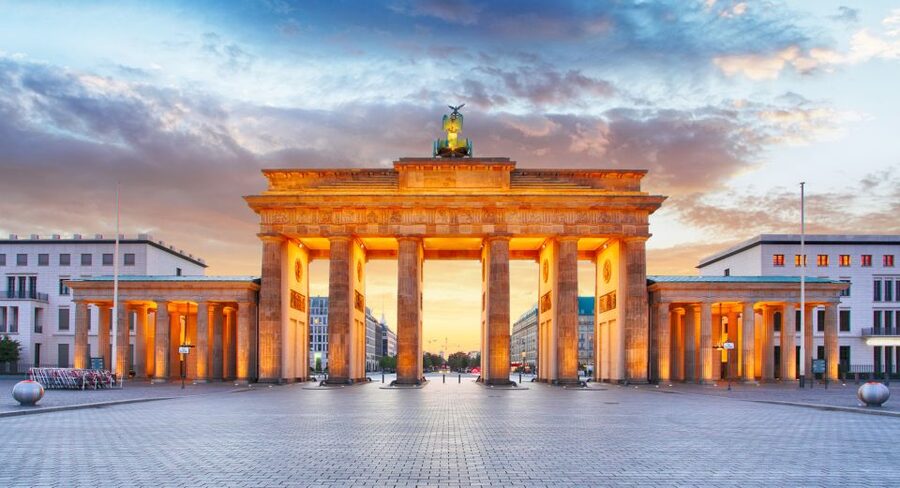
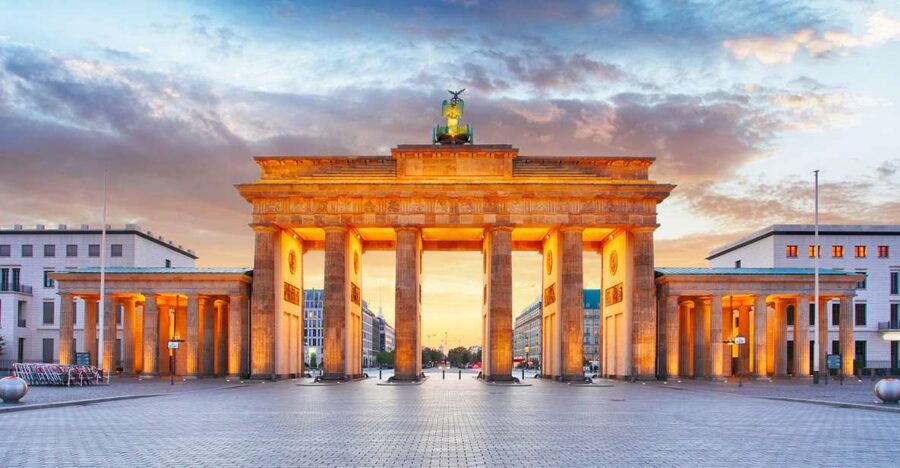
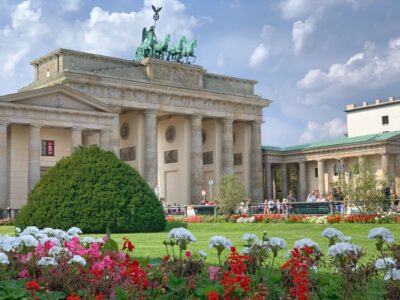
The Brandenburg Gate is the tour’s central landmark. It once marked a city entrance, later became a symbol of division, and now represents unity and change. Your guide uses the gate to explain how one structure can take on different meanings as Berlin changes around it.
The location also gives you several notable views. You can look toward the American and French embassies, the Hotel Adlon, the Victory Column, and the Soviet War Memorial in the distance. The guide points out how these buildings and monuments sit within Berlin’s political geography.
This is a good place for photos, and time is allowed for them. Still, the stop is part of a moving tour, not a long pause. If you want portraits without a crowd or a detailed look at every architectural feature, you may need to return on your own.
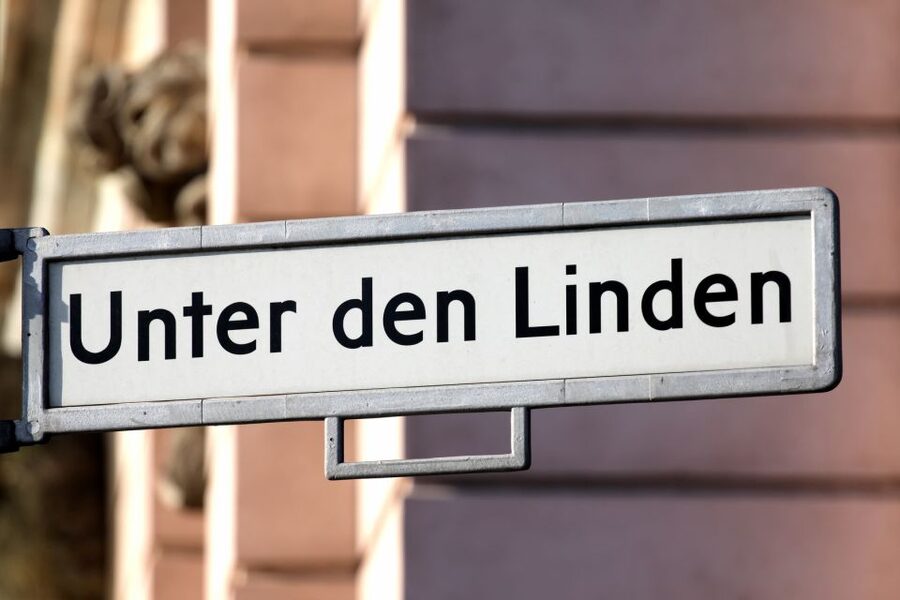
From the gate, the walk continues along Unter den Linden. This famous boulevard links the Brandenburg Gate with the historic center. Along the way, the guide covers emperors, revolutionaries, dictatorship, war, and the Wall years. The avenue gives the story a physical shape, moving you from the former edge of the city toward its ceremonial and intellectual center.
The Holocaust Memorial and Potsdamer Platz
The Holocaust Memorial brings a serious change in tone. Its field of concrete blocks is a place for reflection and discussion, and the guide connects it to the persecution and murder of Europe’s Jews under the Nazi regime.
This is not a stop to rush through with a camera. You will receive historical context, but the short schedule limits the amount of time available for quiet reflection or a visit to the underground information center. The tour information does not promise entry there.
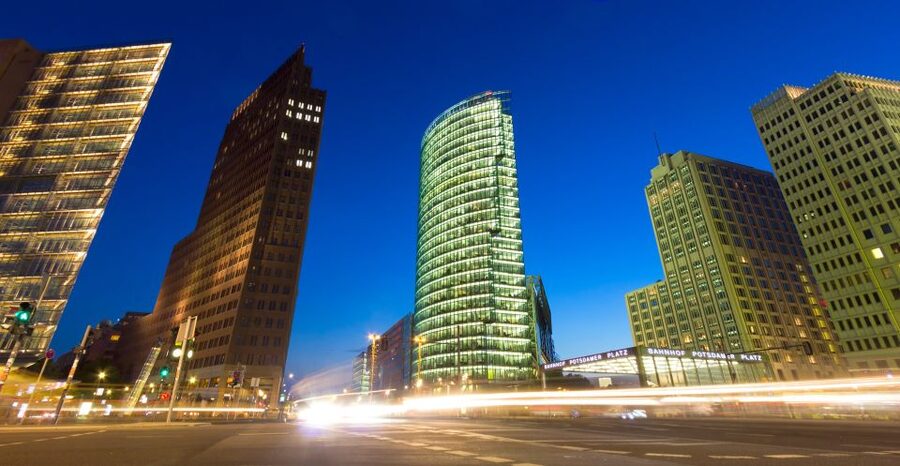
The route also includes Potsdamer Platz, a major symbol of Berlin’s postwar division and later rebuilding. The area helps explain how the Wall cut through the city and how much of central Berlin was reconstructed after reunification. It also adds a modern urban contrast to the older monuments nearby.
The combination of the memorial and Potsdamer Platz is one of the route’s strengths. You move from remembrance to the physical rebuilding of the city. That pairing makes Berlin’s recent past easier to understand than a list of dates would.
Same city, a completely different kind of day:
- Berlin: Reichstag, Dome and Government District Guided Tour
★ 4.7 · 18,288 reviews - Berlin: 1-Hour City Tour by Boat with Guaranteed Seating
★ 4.3 · 16,993 reviews - Berlin: Boat Tour Along the River Spree
★ 4.4 · 11,252 reviews - Berlin: Hop-on Hop-off Bus Tour with Live Commentary
★ 4.3 · 8,579 reviews
Gendarmenmarkt and Berlin’s grand architecture
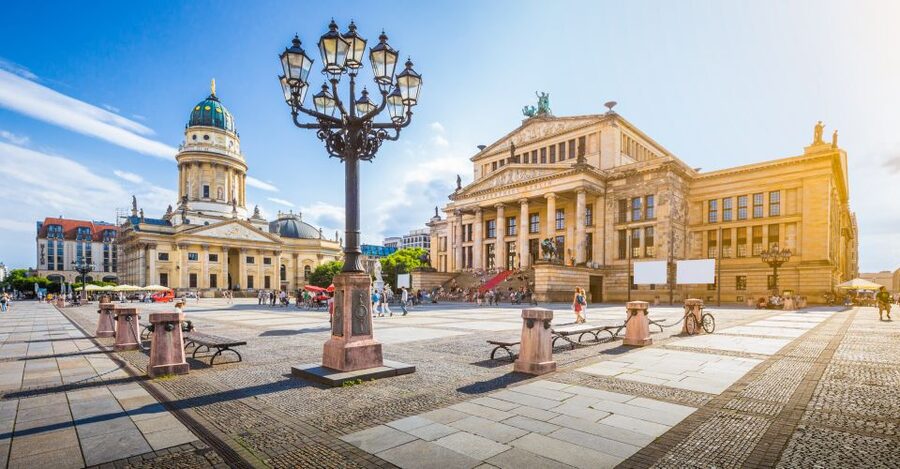
Gendarmenmarkt is one of the prettiest squares on the route. Three major buildings frame it: the German Cathedral, the French Cathedral, and the Konzerthaus. The square shows Berlin at its most formal, with carefully arranged architecture designed to express power, culture, and civic ambition.
Your guide explains the role of the square and the buildings around it. You should expect an exterior visit rather than time inside the cathedrals or concert hall. That is enough to appreciate the setting, but it will not satisfy anyone hoping for a full architectural tour.
Gendarmenmarkt also gives the walk a welcome pause from the political weight of the Holocaust Memorial. The guide’s humor can help keep the pace human without making light of difficult subjects. Based on the available feedback, guides are willing to answer questions rather than simply recite a prepared script.
The square is a strong photo stop, though construction or city activity can sometimes affect the view. Since the tour runs in all weather, bring a rain layer or sun protection according to the forecast.
Bebelplatz and the warning beneath the square
Bebelplatz is one of Berlin’s most important historical stops. It is associated with the Nazi book burning of 1933, when works by Jewish, socialist, and other writers were destroyed in public ceremonies. The site asks you to consider how repression can begin with attacks on ideas and culture.
The tour allows some free time here. That matters because the square can look calm and elegant at first glance, while its history is far darker. Your guide gives the setting its needed context and points out the memorial connected with the book burning.
This is another place where the two-hour format has limits. You will get the meaning of the site, but not a long lecture or extended time to examine every detail. I recommend listening closely here, since a quick glance alone will not explain why the square matters.
Bebelplatz is one of the route’s most valuable stops because it is less immediately famous than the Brandenburg Gate, yet it carries a powerful lesson about Berlin’s past.
Lustgarten, Berlin Cathedral, and Museum Island
The walk then reaches Lustgarten, an open space beside the Berlin Cathedral and Museum Island. This area brings you into the heart of Berlin’s Prussian and royal past. It also offers a view of the rebuilt Berlin City Palace and the TV Tower, which rises in the distance as a reminder of the former East Berlin.
Berlin Cathedral is among the most impressive buildings on the route. The tour focuses on its exterior and the surrounding view, so you can appreciate the dome, scale, and position beside the Spree without entering. Museum Island adds another layer, placing Berlin’s major collections within the city’s old ceremonial center.
The guide also discusses Berlin’s development from a smaller settlement into a capital. Nearby Nikolaiviertel is linked with Berlin’s beginnings in 1237, and the area gives you a sense of the city’s oldest roots.
The route finishes at Friedrichsbrücke, close to Museum Island. This is a practical ending point. You can continue exploring the museums, walk toward Nikolaiviertel, or remain in the central district for lunch and further sightseeing.
What the guide adds to the experience
The strongest part of this tour is the human explanation between the sights. The route contains plenty of buildings, but the value comes from learning why they matter and how their meanings changed.
The guide covers:
- Berlin’s Prussian and imperial period
- The Nazi era and the book burning at Bebelplatz
- The destruction and division caused by the Second World War
- The Cold War and the Berlin Wall
- The fall of the Wall and reunified Berlin
- Modern government and the rebuilt center
The tone is intended to be lively, with local humor alongside serious history. That style will suit you if you prefer a guide who talks naturally and welcomes questions. The feedback describes guides who took time with questions, allowed photo stops, and sometimes continued beyond the planned end.
Max received particular praise for answering questions and giving people time to take in the sights. Other comments describe guides as friendly, well informed, and willing to extend the tour. That does not guarantee the same guide or an overlong visit every day, but it suggests that the company places real value on personal contact.
Tours are offered in English, Spanish, and German. Private and small-group options are available, so check the format when booking if group size matters to you.
Price, pace, and practical value
The listed price is $82 per person for two hours. That is not a budget walk, especially since the tour does not include museum admissions or a long interior visit. You are paying mainly for the guide’s time, the route design, the historical explanation, and the chance to ask questions in a smaller group.
For a first morning in Berlin, the value can be strong. You cover a large central area and see many places that would otherwise take careful planning. A private group may also find the price worthwhile if you want to shape the questions around your own interests.
The tour covers about four kilometers and is described as suitable for all ages and fitness levels. It is wheelchair accessible, but the route is still an outdoor city walk with several hours of standing and moving. Ask about the exact group format and route conditions if you have specific mobility needs.
Tours run daily at 10:00 AM and 2:00 PM. The morning time works well for getting your bearings early in a Berlin stay. The afternoon option suits you if you want to visit a museum first or arrive in the city later.
Wear comfortable walking shoes. Bring water and a camera, and dress for changing weather since tours operate in all conditions. The walk ends at Friedrichsbrücke rather than returning to the start, so plan your next stop from central Berlin.
Cancellation is free up to 24 hours before the tour, and you can reserve now and pay later. Those terms are useful if your Berlin plans are still shifting.
Who should book this Berlin walk?
I would choose this tour if you have limited time, want a clear overview, or prefer history explained by a local guide instead of a phone screen. It suits first-time visitors, families, small groups, and anyone who wants to see the major central sights before deciding which ones deserve a longer visit.
It also works well for visitors interested in difficult history. The Holocaust Memorial and Bebelplatz receive proper attention, while the guide connects them to the wider story of dictatorship, war, and political change.
You may want a different plan if you dislike brisk walking, need extended time at each stop, or want to enter the Reichstag, Cathedral, or museums. In that case, use this walk only as an introduction, then return independently with more time.
Should you book it?
Book it if you want a fast, well-planned introduction to Berlin with a live guide, a clear route, and plenty of major sights in one outing. The best parts are the logical progression from the government quarter to Museum Island, the serious historical stops, and the chance to ask questions in a small or private group.
Skip it if your priority is slow sightseeing or indoor visits. At $82, the tour earns its value through guiding rather than admissions. For many people, especially on a first visit, that is a fair trade for two focused hours and a much clearer sense of Berlin.
FAQ
How long is the walking tour?
The tour lasts two hours and covers approximately four kilometers on foot.
Where does the tour begin?
It begins in front of the main entrance to Paul-Löbe-Haus at Konrad-Adenauer-Straße 1, opposite the Federal Chancellery.
Where does the tour finish?
The tour finishes at Friedrichsbrücke, near Museum Island and central Berlin.
What languages are available?
The tour is offered in English, Spanish, and German.
Which major sights are included?
The route includes the German Chancellery, Reichstag, Brandenburg Gate, Holocaust Memorial, Potsdamer Platz, Gendarmenmarkt, Bebelplatz, Lustgarten, Berlin Cathedral, and Museum Island.
Is the tour wheelchair accessible?
Yes, the activity is described as wheelchair accessible.
What happens if the weather is poor?
Tours operate in all weather conditions, so bring suitable clothing, comfortable shoes, and water.
Just added in Berlin
- Berlin & The Third Reich Private Guided Tour★ 5.0 · 3 reviews
- Third Reich Quest Experience in Berlin★ 4.5 · 7 reviews
- Private Analogue Photography Experience in Berlin★ 5.0 · 3 reviews
- Berlin Urbex Adventure and History Tour★ 5.0 · 9 reviews
- The Beauty of Berlin by Bike: Private Tour★ 5.0 · 59 reviews
- Berlin: Guided Bike tour of the Berlin Wall and Third Reich★ 5.0 · 160 reviews
- Shared Underground Party Tour in Berlin★ 4.5 · 9 reviews
- Beyond Currywurst: Berlin’s Hidden Street Food & Culture Tour★ 5.0 · 100 reviews
Walking Tours, compared.




Berlin’s Best: 2 Hour Walking Tour Third Reich and the Cold War
Read our review →


Third Reich Berlin: Hitler and WWII Walking Tour
Read our review →Browse the lists this tour appears in