Reviewed · BERLIN TOURS
Berlin: The Feuerle Collection Meditation Experience
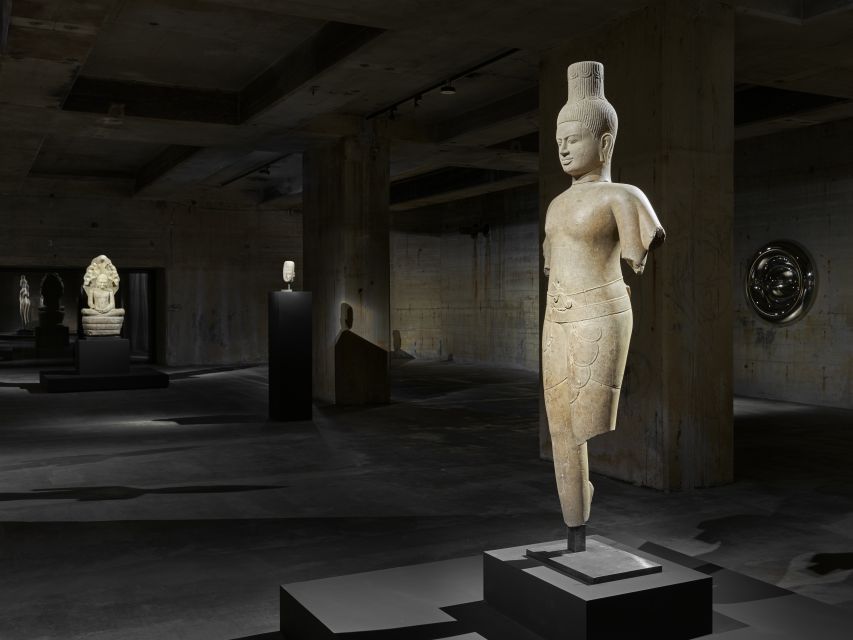
The Feuerle Collection offers a rare Berlin experience: one silent hour with no phone in hand, surrounded by art that spans centuries and cultures. You pass through the Sound Room and into the underground Lake Room, where Khmer sculptures, Imperial Chinese furniture, and contemporary pieces share an intentionally unusual setting.
I like the clear break from sightseeing noise, and I like that meditation is optional. You can sit on the supplied mat, use the blanket, and contemplate a single object, or simply walk quietly through the rooms. The main drawback is just as clear: this is not a guided tour, so you need to bring your own curiosity and patience.
Key points to know before booking
- A true mobile-detox hour: The visit is built around silence, stillness, and time away from your phone.
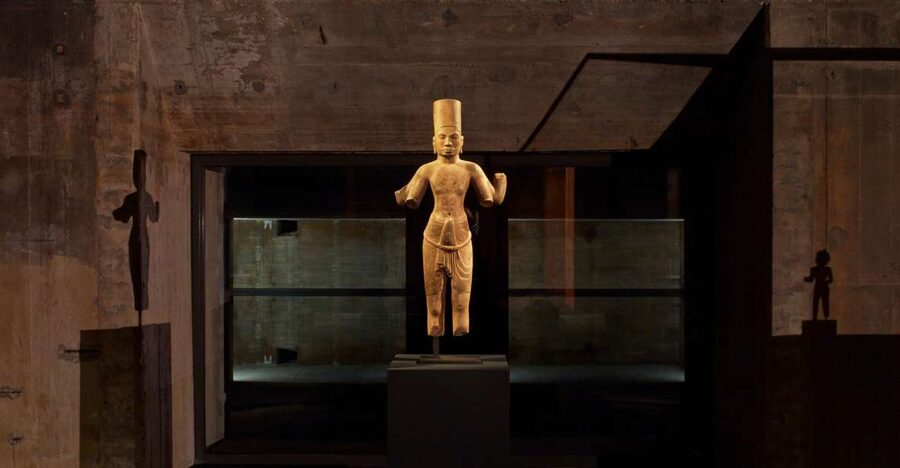
- Three very different art traditions: Khmer sculpture, Imperial Chinese furniture, and contemporary works appear together.
- The Sound Room leads to the underground Lake Room: The passage between these spaces is part of the experience, not just a way to reach the galleries.
- Meditation is optional: You may sit, contemplate, or walk quietly without taking part in formal meditation.
- A yoga mat and blanket are included: You do not need to bring these basic items yourself.
- Not a guided museum visit: Children under 16 are not admitted, and the collection opens for meditation rather than a standard tour.
Why this Berlin visit feels different
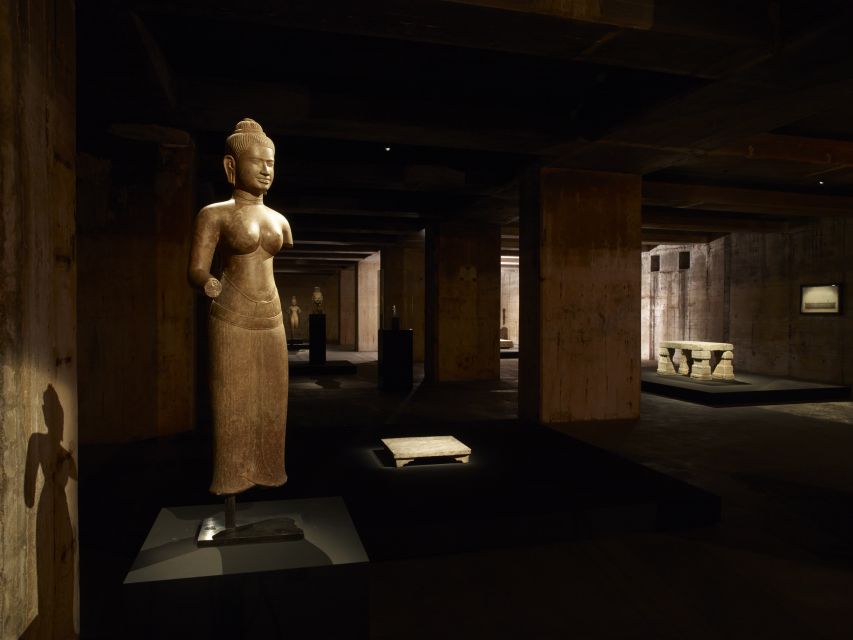
Many museum visits ask you to move from object to object, read labels, and keep pace with a crowd. This one asks you to slow down. For one hour, the Feuerle Collection places silence at the center, with the art becoming something to look at carefully rather than something to rush past.
That difference matters. You are not signing up for a lecture about Asian art, and you are not getting a conventional introduction to the collection. You are being given a quiet setting for contemplation, with art as your focus and the phone left out of the room.
I find the idea appealing after a busy day in Berlin. The city can be loud, fast, and full of visual input. This visit gives you a firm reason to stop checking messages and stop chasing the next sight. It is a small reset, not a full spa session or a formal yoga class.
The overall score attached to the experience is very high, with 16 submitted ratings producing a 4.9 average. The strongest response centers on the calm, unusual nature of the visit. One German booking described it as an extraordinary and relaxing small-group experience, while another captured its appeal as a moment of disconnection.
A few more half-days in Berlin worth comparing
- Berlin: Reichstag, Dome and Government District Guided Tour
★ 4.7 · 18,288 reviews - Berlin: 1-Hour City Tour by Boat with Guaranteed Seating
★ 4.3 · 16,993 reviews - Berlin: Boat Tour Along the River Spree
★ 4.4 · 11,252 reviews
Entering the collection and leaving your phone behind
The visit begins at The Feuerle Collection in Berlin. The collection is open only for this one-hour meditation experience during the scheduled session, so you should arrive ready for a quiet format rather than expecting a regular museum admission.
The mobile-detox rule is one of the most important details. Put your phone away before you enter and treat the hour as protected time. If you are the sort of person who wants to photograph every room or look up every artist as you go, this format may feel restrictive. If you want one hour without alerts and screens, it is a welcome relief.
The group setting also matters. The information describes the experience as an open meditation visit, and a German participant called it a relaxing small-group activity. Do not expect to be alone in the rooms, but do expect the pace to be quiet and controlled.
There is no named guide leading the session, and no guide is included. That is not an oversight. The lack of narration is part of the design. You will not receive a spoken introduction, a tour of the collection, or an explanation of each work.
The Sound Room creates the transition
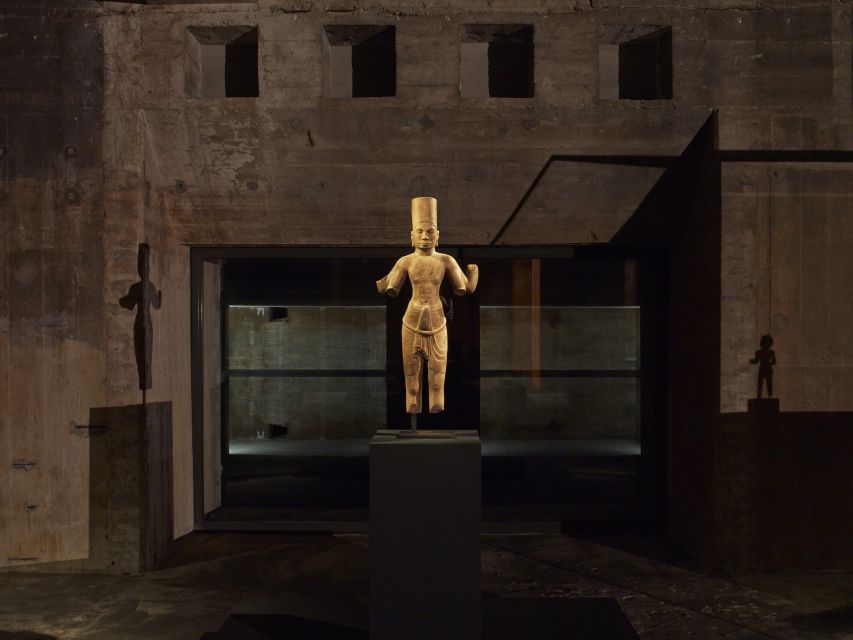
Your route takes you through the Sound Room before continuing to the underground Lake Room. Even without a detailed description of the room’s contents, the route gives the experience a sense of progression. You are leaving the ordinary museum visit behind and moving toward a darker, more inward setting.
This passage is valuable because it helps you adjust your attention. Instead of entering a bright gallery, reading a wall panel, and moving on, you have a clear transition into a place meant for quiet thought. The sound-based setting also adds another sense to the experience, which fits the collection’s focus on the senses rather than the intellect.
A note from one German participant described the exhibition as a place where the senses, rather than the mind, are challenged. That is a useful way to prepare yourself. You are not expected to identify every period, compare dates, or form a complete art-historical opinion in an hour. You are being asked to notice atmosphere, scale, texture, silence, and your own response to the objects.
The underground Lake Room and Khmer sculpture
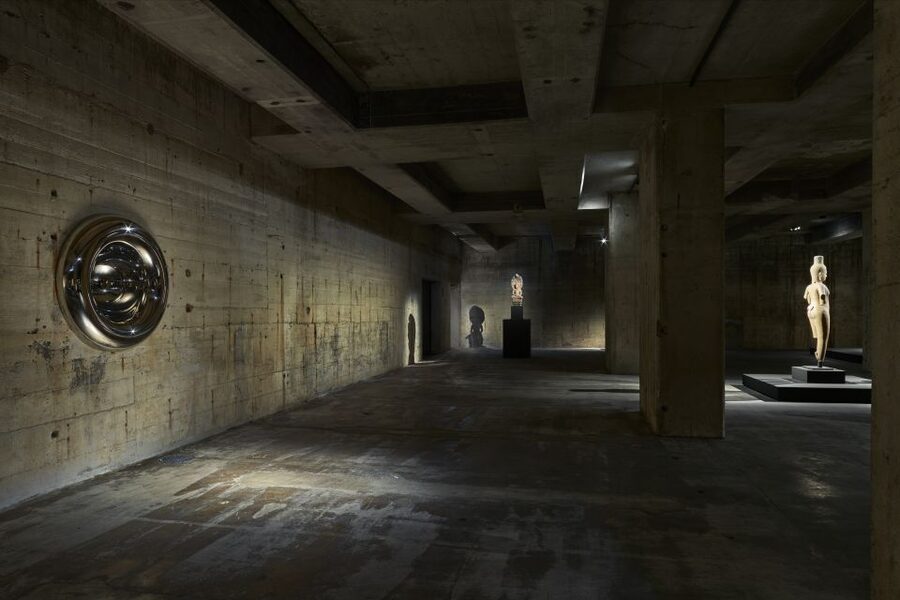
The Lake Room is the main visual setting for the visit. You walk through this underground space and stop to meditate among the works. The collection includes early Khmer sculptures dating from the 7th to the 13th century AD.
That long period gives the Khmer works a strong historical presence. You may find that sculpture rewards stillness more than a quick glance. Sitting near a work for several minutes lets you notice its outline, surface, posture, and expression in a way that is difficult during a normal museum circuit.
The format also changes your relationship with the room. You are not simply looking at a sculpture and then following an arrow to the next gallery. You can choose one object as a focus, sit with it for a while, and let the room’s quiet shape your attention.
Keep your expectations practical. There is no docent to explain the religious or cultural setting of the Khmer pieces. If you want dates, background, and expert interpretation, you will need another museum visit or your own preparation. If you enjoy forming a personal response first, the lack of explanation can work in your favor.
Same city, a completely different kind of day:
- Discover Berlin Half-Day Walking Tour
★ 5.0 · 9,624 reviews - Berlin: Hop-on Hop-off Bus Tour with Live Commentary
★ 4.3 · 8,579 reviews - Berlin: Government District around the Reichstag Guided Tour
★ 4.7 · 8,447 reviews - Berlin: Reichstag, Plenary Chamber, Cupola & Government Tour
★ 4.6 · 8,422 reviews
Imperial Chinese furniture beside contemporary art
The collection also includes Imperial and Scholar Chinese furniture, dating from the 2nd century BC through the 17th century AD. This gives the visit a second historical thread, with furniture joining sculpture as an object of close observation.
Furniture can be easy to overlook in a large museum, especially when it is displayed as a historical artifact rather than something with a daily purpose. Here, the quiet setting encourages you to look at its form and material. A chair, table, or cabinet can hold your attention through proportion, construction, and the traces of use or age.
The unusual part is the meeting between the older works and contemporary art. The collection includes pieces by Anish Kapoor, Cristina Iglesias, Adam Fuss, Zeng Fanzhi, James Lee Byars, and Nobuyoshi Araki. These artists bring very different ideas and materials into conversation with the Khmer sculpture and Chinese furniture.
You should not expect a tidy chronological display. This is a place of contrasts. Ancient sculpture may sit in visual or emotional tension with a modern piece. Imperial furniture may feel unexpectedly close to a work made in your own time. The point is not to follow a straight story, but to notice what happens when these objects share a silent room.
That approach will suit you if you enjoy art that raises questions without immediately answering them. It may frustrate you if you prefer clear labels, a chronological route, or a firm explanation of the connection between every object.
Meditation is optional, and that changes the appeal
You do not have to meditate. This is important, since the word meditation can make the experience sound more formal than it is. You can sit on the mat and concentrate on your breathing, focus on a sculpture, or simply remain still. You can also walk around quietly and look at the collection without taking part in a structured practice.
The supplied yoga mat and blanket make sitting easier. They also signal that the visit is designed for time on the floor rather than a quick standing circuit. If you have physical needs that make floor sitting uncomfortable, you can still appreciate the option of quiet walking, but the experience is centered on slowing down.
There is no indication of a meditation teacher, spoken instruction, or particular technique. You should therefore treat this as self-directed meditation in an art setting. Beginners may appreciate the freedom, since nobody is asking them to follow a complicated method. People looking for a taught class may find the format too bare.
I like this flexibility. A couple can visit together even if only one person wants to meditate. An art lover can focus on the collection. Someone tired from sightseeing can sit quietly for an hour without needing to perform relaxation correctly.
Art that may not suit every visitor
The art collection includes works by Nobuyoshi Araki, and one French-language comment specifically highlighted Chinese art and erotic art as part of the appeal. That is a useful warning for anyone planning a family outing or anyone who prefers strictly non-erotic displays.
The age restriction is clear: children under 16 are not suitable for this experience. The limit also fits the quiet setting. This is not a lively family museum activity with hands-on stations or a child-focused explanation.
For adults, the range of work is part of the attraction. You may find the combination thoughtful, unsettling, beautiful, or difficult to interpret. The collection does not appear designed to give you easy answers, and the silent format leaves you alone with your reaction.
Is one hour enough for $25?
The price is $25 per person for one hour. That is not cheap if you measure value by the amount of information delivered. You are not paying for a guided tour, a lecture, or a long museum visit.
The value improves if you see it as a planned pause in your Berlin schedule. For $25, you receive access to a collection that is not presented as a standard walk-through museum, plus a yoga mat and blanket, and one hour of quiet in a distinctive setting. You are paying for atmosphere, access, and time to look slowly.
I would not book this as your only art visit in Berlin. It will not replace a full museum day if your goal is context and broad coverage. I would consider it a good companion to a busy cultural itinerary, especially if you want an experience that asks less of your eyes and more of your attention.
The price also makes the no-guide format easier to judge. Some people will see the absence of commentary as a saving grace. Others may feel they are paying too much to sit quietly without an expert present. Know which kind of museum visit you prefer before booking.
Accessibility, timing, and practical expectations
The experience is wheelchair accessible, which makes it available to a wider range of visitors. The session lasts one hour, and starting times depend on availability.
Free cancellation is available up to 24 hours before the scheduled visit, with a full refund. You can also reserve now and pay later, which is useful if your Berlin plans are still shifting.
Do not book this expecting a standard museum route or a flexible drop-in visit. The collection is open for the meditation experience, and the session has a defined length. Check the available start times and allow yourself enough calm before the visit so you are not arriving in a rush.
Bring the right mindset rather than extra equipment. A mat and blanket are provided. The most useful things to bring are patience, comfortable expectations, and a willingness to leave your phone alone.
Who will enjoy the Feuerle Collection most?
I would recommend this experience to adults who like contemporary art, Asian art, unusual museum formats, or quiet spaces. It is especially suited to people who want a pause between more active Berlin sightseeing.
It also works for art lovers who enjoy making their own connections. The pairing of Khmer sculpture, Chinese furniture, and contemporary artists is not a simple historical lesson. It gives you room to compare mood, shape, material, and scale for yourself.
You may want to skip it if you need a guide to explain every room. You should also think twice if you dislike silence, sitting still, underground spaces, or art that may include erotic content. The one-hour limit is helpful for a first try, but the lack of spoken context will not suit everyone.
Should you book this meditation experience?
Book it if you want a quiet, adult art encounter rather than a conventional tour. The combination of a mobile detox, Khmer sculpture, Imperial Chinese furniture, contemporary works, the Sound Room, and the underground Lake Room gives you something far removed from a standard gallery visit.
Skip it if your priority is detailed art history, a named guide, or a long museum admission. At $25, the best value comes from treating the hour as a focused pause and not as a bargain sightseeing stop. For the right mood, it offers a rare chance to let Berlin go quiet for a while.
FAQ
How long does the Feuerle Collection meditation experience last?
The experience lasts one hour.
How much does the experience cost?
The price is $25 per person.
Is meditation required?
No. Meditation is optional. You may also walk around quietly and enjoy the art.
Is this a guided tour?
No. A guided tour is not included, and the collection is open only for meditation during this experience.
What art can I see?
The collection includes Khmer sculptures from the 7th to the 13th century AD, Imperial and Scholar Chinese furniture from the 2nd century BC to the 17th century AD, and contemporary works by Anish Kapoor, Cristina Iglesias, Adam Fuss, Zeng Fanzhi, James Lee Byars, and Nobuyoshi Araki.
What rooms are included in the visit?
You pass through the Sound Room and walk in the underground Lake Room.
Are a yoga mat and blanket provided?
Yes. A yoga mat and blanket are included.
Is the experience wheelchair accessible?
Yes, the experience is wheelchair accessible.
Can children attend?
No. The experience is not suitable for children under 16.
Can I cancel for a refund?
Yes. You can cancel up to 24 hours in advance for a full refund. You can also reserve now and pay later.
Just added in Berlin
- Berlin & The Third Reich Private Guided Tour★ 5.0 · 3 reviews
- Third Reich Quest Experience in Berlin★ 4.5 · 7 reviews
- Private Analogue Photography Experience in Berlin★ 5.0 · 3 reviews
- Berlin Urbex Adventure and History Tour★ 5.0 · 9 reviews
- The Beauty of Berlin by Bike: Private Tour★ 5.0 · 59 reviews
- Berlin: Guided Bike tour of the Berlin Wall and Third Reich★ 5.0 · 160 reviews
- Beyond Currywurst: Berlin’s Hidden Street Food & Culture Tour★ 5.0 · 100 reviews
- Berlin Third Reich & Cold War Walking Tour With A Guide★ 5.0 · 7 reviews
Berlin Tours, compared.
Reichstag, Dome and Government District Guided Tour
Read our review →



Reichstag, Plenary Chamber, Cupola & Government Tour
Read our review →