Reviewed · BERLIN TOURS
Berlin: Highlights of the City – a Private Bus Tour
Berlin’s story comes at you fast on this private tour: the Berlin Wall, Checkpoint Charlie, the Reichstag, and Brandenburg Gate all fit into two hours. You move between former East and West Berlin by modern minivan or bus, with a local guide supplying the links between the sights.
I like the hotel pickup and the private format. You do not have to find a departure point or share the guide with a large public group. I also like the chance to shape the commentary with questions and special requests, a point praised in the feedback for guides including Christian B. The tradeoff is simple: two hours gives you a sharp first look, not enough time to enter museums or study each monument at length.
Key points to know before booking
- Private pickup anywhere in Berlin: Meet your guide at your hotel or another agreed address, with a name sign at the meeting point.
- A compact history lesson on wheels: See former Wall sites, Cold War landmarks, imperial avenues, government buildings, and modern Potsdamer Platz in one route.
- Brandenburg Gate is the main walking stop: You can get out for photographs, stretch your legs, and take a short stroll.
- Small groups use a minivan: Groups of up to six ride with a driver and local guide in a modern minivan. Groups of seven or more use a coach.
- English and German guiding: The guide can explain Berlin’s past in either language and answer questions along the way.
- Strong value for a quick orientation: At $22 per person, this is an efficient way to see a lot of central Berlin before exploring on your own.
Why two hours can work well in Berlin
Berlin is spread out. Its major sights are not gathered around one compact old town, so walking from the Wall to the Reichstag to the Victory Column would take much of a day. A vehicle changes the equation.
This tour takes you through both former western and eastern parts of central Berlin. You remain seated for much of the route, listening to stories while the city passes outside the window. That is useful if you have limited time, are traveling with family, or want a first look before choosing where to return.
The two-hour limit also sets a clear expectation. You are not visiting the Reichstag interior, entering the museums on Museum Island, or spending a long stretch at the Berlin Wall. Most sights are viewed from the vehicle, with Brandenburg Gate described as the place for a proper stop and short walk.
I would think of this as a city orientation with a private guide, not a full historical tour. The route gives you names, locations, and basic context. You can then use the rest of your Berlin stay to explore the places that catch your attention.
A few more half-days in Berlin worth comparing
- Berlin: Reichstag, Dome and Government District Guided Tour
★ 4.7 · 18,288 reviews - Berlin: 1-Hour City Tour by Boat with Guaranteed Seating
★ 4.3 · 16,993 reviews - Berlin: Boat Tour Along the River Spree
★ 4.4 · 11,252 reviews
From Checkpoint Charlie to Museum Island
Checkpoint Charlie is an immediate reminder that Berlin was once split by a fortified border. The famous crossing point connected the American sector of West Berlin with East Berlin during the Cold War. Today, it is a busy central stop with a strong historical name, but the modern streets around it do not recreate the old border in full.
That contrast is part of the lesson. The guide can help you separate the surviving history from the later reconstruction and commercial activity. Since the tour is private, this is a good place to ask direct questions about how the crossing worked and what happened to the Wall.
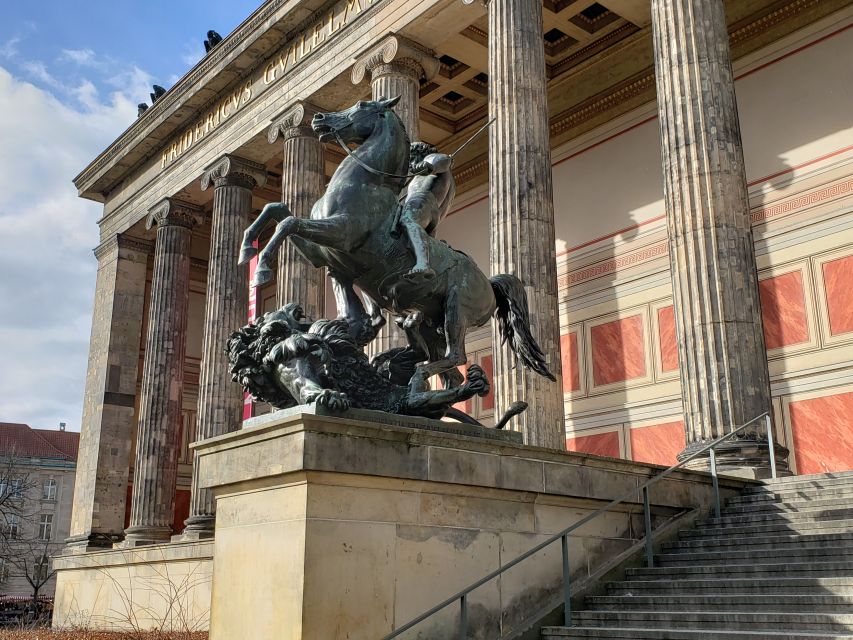
The route continues toward Museum Island, one of Berlin’s major cultural areas. The island is home to several famous museums and sits in the heart of the former eastern city center. On a two-hour driving tour, you should expect to see the area and hear about its place in Berlin, not tour the collections.
That limitation matters if you are selecting this tour for art or archaeology. The vehicle gives you orientation, but museum admission and a separate visit would be needed for the interiors.
Unter den Linden and the route to Brandenburg Gate
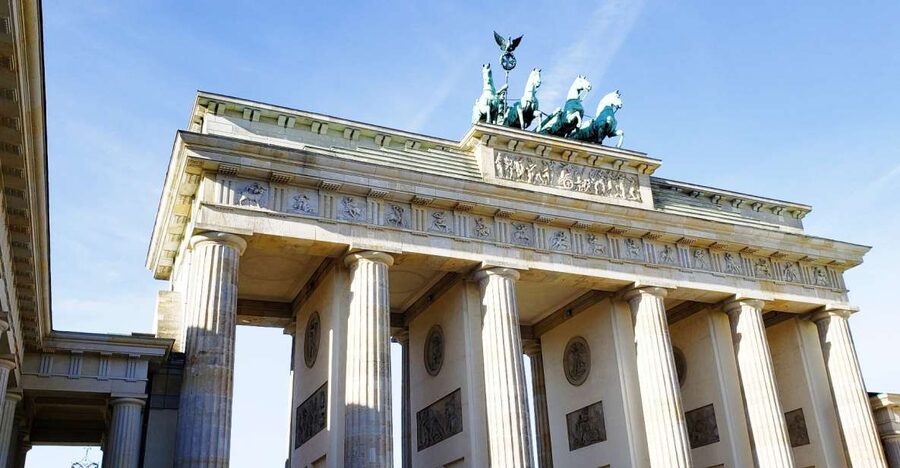
Unter den Linden is Berlin’s grand central boulevard, lined with important historic buildings and linked to many of the city’s best-known sights. Passing along it helps you understand how the eastern center was arranged around ceremonial and government spaces.
This is one of the places where a guide adds more than a map. A street full of impressive facades can blur together when you see it alone. Live commentary can point out which buildings belong to which period and explain how the boulevard fits into Berlin’s changing political story.
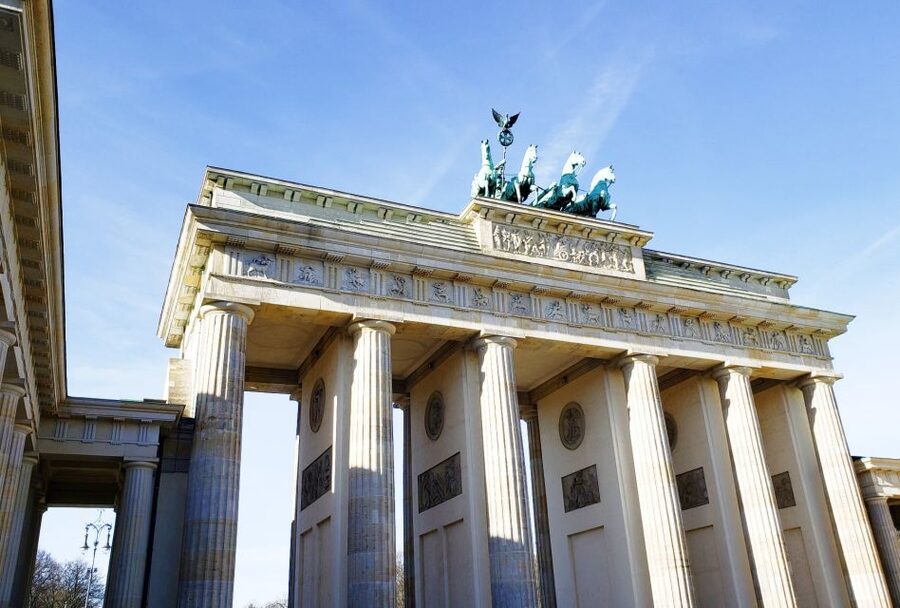
The route leads to Brandenburg Gate, the tour’s clearest chance to leave the vehicle. You can stop for photographs, stretch your legs, and take a short walk through or around the landmark. Allow yourself to look beyond the standard front-facing picture. The gate has served as a royal entrance, a Cold War symbol, and a sign of German reunification.
Because this is the planned walking stop, bring the practical basics: comfortable shoes and a camera that is ready before you get out. The stop is described as a small stroll, so you should not expect a long free period in the area.
The Reichstag and Berlin’s government district
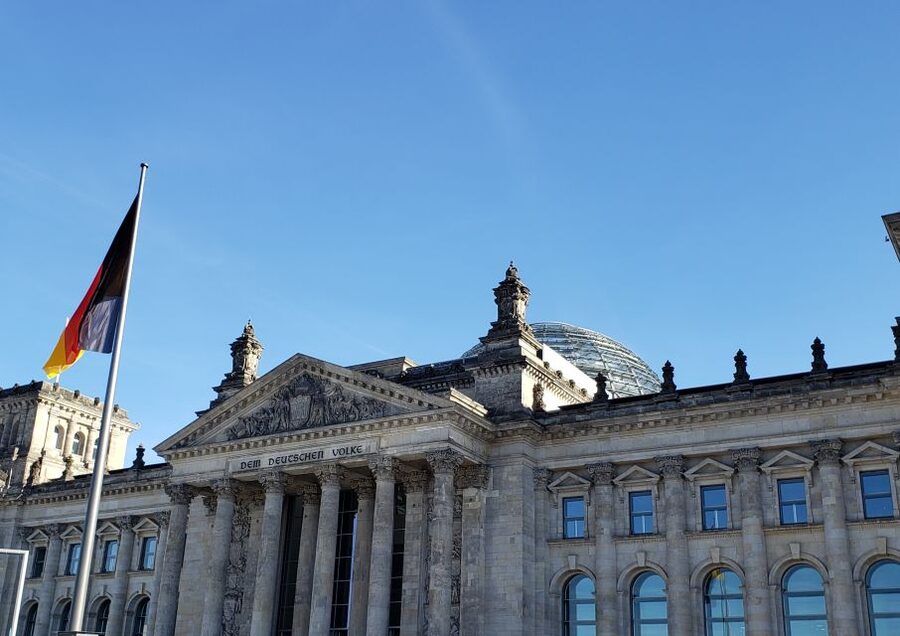
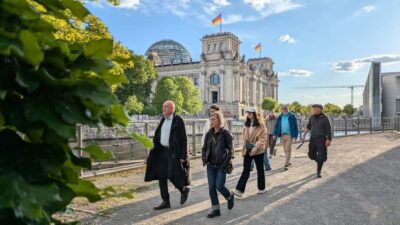
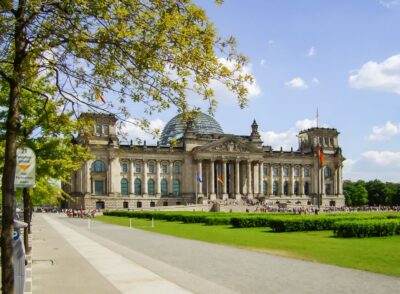
The Reichstag Building is one of Berlin’s most recognizable political landmarks. It now houses the German Bundestag, and its location beside the Spree places it at the center of the modern government district.
The tour provides an outside view and an explanation from the guide. That is valuable because the building carries several layers of meaning: imperial Germany, the parliamentary era, the fire of 1933, wartime damage, division, and the return of the national government to Berlin.
You should not confuse this sightseeing stop with a visit inside the Reichstag. The activity does not include interior access or a dome visit. If that is a priority, plan it separately and check the required arrangements rather than relying on this tour.
The surrounding government district also shows how Berlin has made room for a new political center after reunification. From the vehicle, you can take in the broad layout without using your own energy to cross the city. The guide’s answers are especially useful here, since this part of Berlin can raise questions about the capital’s move from Bonn and the role of the Bundestag.
Same city, a completely different kind of day:
- Discover Berlin Half-Day Walking Tour
★ 5.0 · 9,624 reviews - Berlin: Hop-on Hop-off Bus Tour with Live Commentary
★ 4.3 · 8,579 reviews - Berlin: Government District around the Reichstag Guided Tour
★ 4.7 · 8,447 reviews - Berlin: Reichstag, Plenary Chamber, Cupola & Government Tour
★ 4.6 · 8,422 reviews
Victory Column and Tiergartenviertel
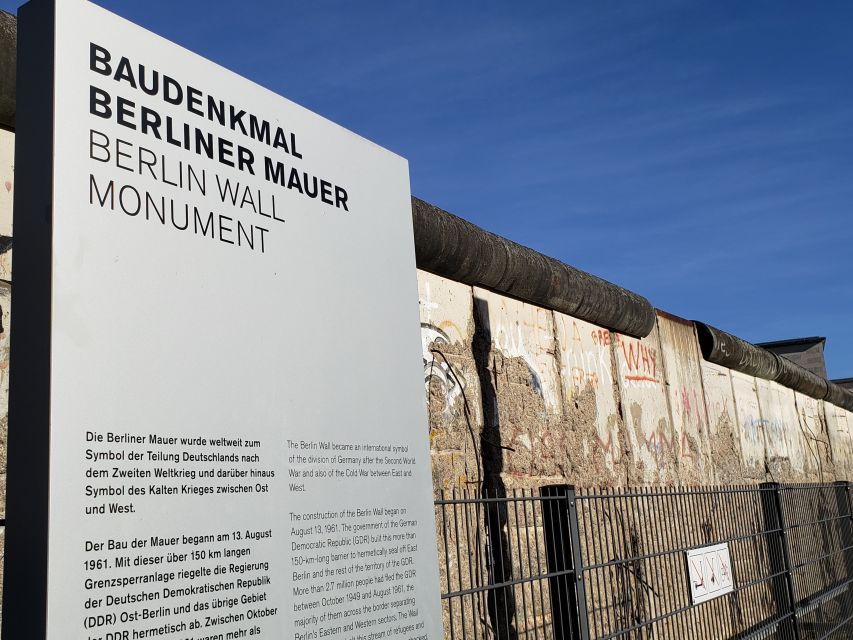
The Berlin Victory Column, or Siegessäule, rises in the Tiergarten area. Its golden figure is visible from a distance, and the monument’s location in a large green zone gives the central city a different feel from the dense streets around Checkpoint Charlie and Unter den Linden.
The column commemorates Prussian military victories and therefore offers another reminder that Berlin’s public monuments were built for political reasons, not just decoration. A guide can place it in the wider story of Prussia and the German capital.
The surrounding Tiergartenviertel adds useful geographic context. Berlin is not only government buildings and Wall memorials. It also includes broad parkland and distinct neighborhoods, each tied to a different period of the city’s growth.
The drawback is that a drive-by view is brief. If you want to study the Victory Column or walk in the Tiergarten, you will need to return later. For a first pass, though, seeing it from the road helps you understand how the city’s major avenues connect.
Potsdamer Platz and the rebuilt center
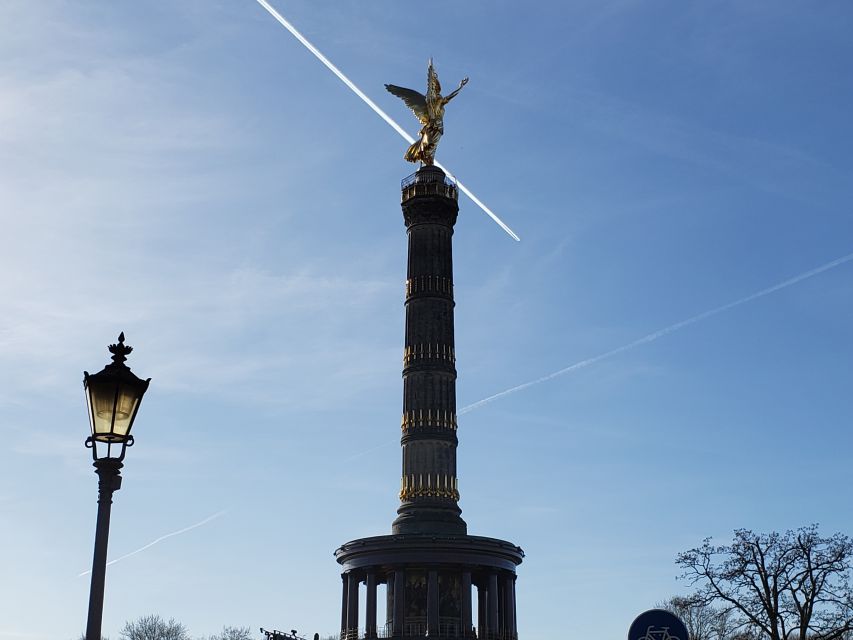
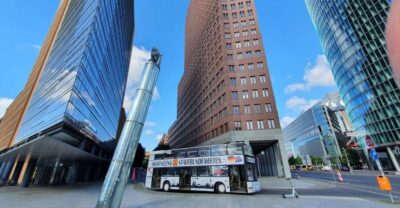
Potsdamer Platz is one of the clearest examples of Berlin’s dramatic change after reunification. Once split by the Wall and left as a no man’s land in the divided city, it became a major redevelopment zone after 1989.
Today, the area is known for modern architecture, large buildings, and busy urban activity. Its value on this route comes from the contrast. Within a short distance, you move from older monumental Berlin to a center shaped by reunification and new construction.
Do not expect the tour to stop for a long architectural walk here. The attraction is the overview and the story of what occupied this space before the current buildings appeared. If your interest is modern design, note the location and return on foot or by public transport.
Potsdamer Platz also helps tie the Wall story to daily city life. The division was not an abstract line on a map. It cut through central Berlin, separating streets, neighborhoods, and transport links that later had to be reconnected.
Seeing the remaining traces of the Berlin Wall
The Berlin Wall is one of the main reasons to choose this tour. You will see remains and former Wall locations, although the experience is not presented as a long memorial walk.
That distinction is important. Berlin has several different Wall sites, and each tells a different part of the story. Some show preserved sections, while others mark where the barrier once ran through streets that now look ordinary. A short vehicle tour can introduce the geography of the division, but it cannot replace a slower visit to a dedicated memorial.
The guide’s role matters most here. The physical remains are often shorter and less obvious than first-time visitors expect. Context explains what you are seeing, how the border worked, and why so little of the original barrier remains in some parts of the city.
If you have a strong interest in the Wall, use this ride to identify a site for a later visit. If you have only two hours in Berlin, the route gives you a useful first sense of how the former border cut across the city.
A private vehicle, not a large sightseeing circuit
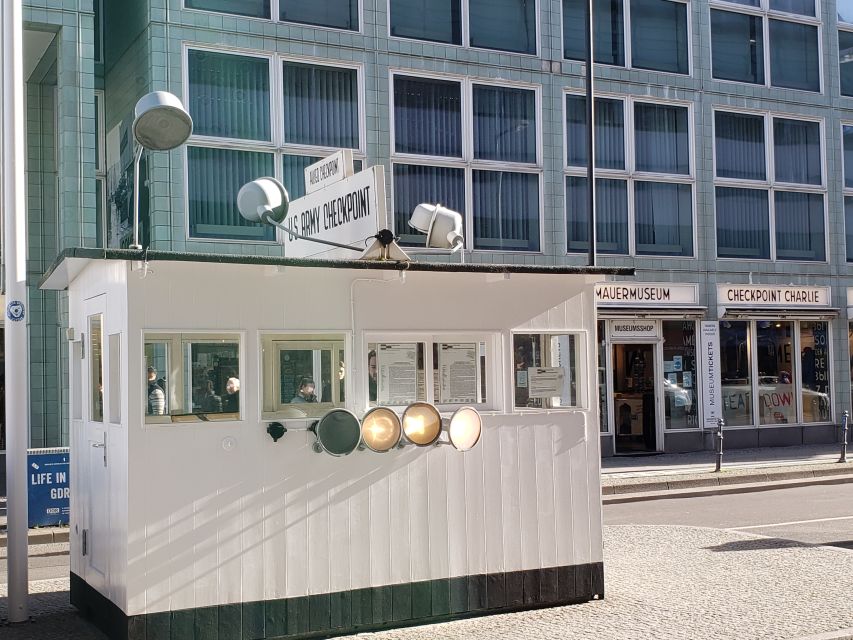
For groups of up to six people, the tour uses a modern minivan with a driver and local guide. Groups of seven or more use a coach with the same two-person setup. The private arrangement means your group is not combined with strangers, and the guide can respond to your questions and interests.
The feedback gives special weight to the guide’s manner. The strongest praise centers on clear explanations, pleasant communication, competent answers, and a willingness to adapt to requests about particular sights. Christian B. is one guide named in the feedback, and the wider comments describe the guiding as informative without being heavy or hard to follow.
That flexibility is worth using. Before setting off, tell the guide if you are especially interested in the Cold War, the government district, architecture, or the former eastern center. The tour still has a fixed route, but private guiding works best when you explain what you want to understand.
The vehicle also makes the experience easier for anyone who does not want a long walking tour. You can sit between stops and cover more ground. On the other hand, traffic and road conditions can affect how much time you spend looking at each sight. You are seeing Berlin through vehicle windows for much of the tour, so choose this format for coverage and context rather than long photo sessions.
Is $22 per person good value?
At $22 per person, the tour is priced well for a private two-hour introduction, especially when the price is shared among several people. The package includes the vehicle, driver, guide, and pickup and drop-off in Berlin. You are paying for time saved as much as for transport.
A solo visitor may find the total value less striking than a group of four, five, or six, since the private format becomes more economical as people share the cost. Still, avoiding the task of planning a route between scattered sights has practical value.
The price does not include museum entries or interior visits. It also does not turn every stop into a walking tour. If you want deep time at the Wall, a Reichstag visit, or several museums, you will need extra plans and likely extra transport.
For a first morning or afternoon in Berlin, I consider the cost sensible. You get a broad map of the center, a local guide, and a chance to decide what deserves more of your own time.
Who should book this Berlin tour?
I would recommend it to first-time visitors, couples, families, older visitors, and small private groups who want an overview without a full day on foot. It also suits people arriving in Berlin with only a short stay, since hotel pickup removes one more planning task.
The tour is particularly useful if you are unsure how Berlin’s main districts fit together. By the end, you should have seen the main government area, the grand eastern boulevard, major Cold War landmarks, Potsdamer Platz, and the western center around the Tiergarten.
I would choose another format if your main goal is museum interiors, a long Wall memorial visit, or detailed architectural photography. A walking tour gives you more time on the ground, and a museum visit gives you far more detail inside each collection.
The best way to use this experience is as a beginning. Take notes on the places that interest you, then return independently with more time. That approach makes the two-hour route feel focused rather than rushed.
Practical details that matter
Pickup is available at any location in Berlin, such as your hotel. At the agreed meeting point, the guide carries a sign with your name. If you are delayed or cannot locate the guide, the local office can be reached at +49-30-220118880.
Guiding is available in English or German. The tour is private, and the exact starting time depends on availability when you book.
Cancellation is free up to 24 hours before the tour for a full refund. You can also reserve now and pay later, which helps if your Berlin schedule is still changing.
Should you book it?
Book this tour if you want a fast, private introduction to Berlin’s divided past and reunited present. The route covers a lot, the pickup is convenient, and the guide can adjust the explanation to your questions.
Skip it if you want long walks, museum access, or detailed time at every landmark. At $22 per person, it is best viewed as a practical orientation, especially for a small group. Use it to get your bearings, then return to the Berlin places that deserve more than a glimpse through a vehicle window.
FAQ
How long is the Berlin private bus tour?
The tour lasts two hours.
Where does pickup take place?
Pickup is available at any location in Berlin, including your hotel. The guide meets you at the agreed point with a sign showing your name.
Which languages are available?
The live guide can conduct the tour in English or German.
What type of vehicle is used?
Groups of up to six people use a modern minivan with a driver and local guide. Groups of seven or more use a coach with a driver and local guide.
Does the tour stop at Brandenburg Gate?
Yes. You can stop at Brandenburg Gate to take photographs, stretch your legs, and take a short stroll.
Does the tour include entry to the Reichstag or museums?
No interior entry is listed. The Reichstag, Museum Island, and the other landmarks are sightseeing stops along the route.
Just added in Berlin
- Berlin & The Third Reich Private Guided Tour★ 5.0 · 3 reviews
- Third Reich Quest Experience in Berlin★ 4.5 · 7 reviews
- Private Analogue Photography Experience in Berlin★ 5.0 · 3 reviews
- Berlin Urbex Adventure and History Tour★ 5.0 · 9 reviews
- The Beauty of Berlin by Bike: Private Tour★ 5.0 · 59 reviews
- Berlin: Guided Bike tour of the Berlin Wall and Third Reich★ 5.0 · 160 reviews
- Beyond Currywurst: Berlin’s Hidden Street Food & Culture Tour★ 5.0 · 100 reviews
- Berlin Third Reich & Cold War Walking Tour With A Guide★ 5.0 · 7 reviews
Berlin Tours, compared.
Reichstag, Dome and Government District Guided Tour
Read our review →
Reichstag, Plenary Chamber, Cupola & Government Tour
Read our review →