Reviewed · BERLIN TOURS
Berlin: Hansaviertel “The City of Tomorrow” Guided Tour
Hansaviertel is where Berlin’s postwar story takes architectural form. In two hours, you walk through a district planned as a model city for the 1957 International Building Exhibition, with homes, cultural buildings, a church, a library, a hospital, and a U-Bahn station designed as parts of one modern vision. The buildings are the main event, but the history gives them weight.
I like the way this tour connects individual buildings to a larger idea about city life. I also like that it takes you beyond the usual Berlin route, into a district many people, including long-term residents, have never explored. Guides such as Tobias and Mr. Schwabe are praised for clear explanations, humor, and patience with questions.
The main drawback is simple: this is a specialist walking tour. If modern architecture leaves you cold, some of the stops may feel like a long procession of buildings. Winter timing may also matter, since one booking noted that a later start and finish can be less convenient in the darker months.
Key points to know before you book
- 1957 International Building Exhibition: See a planned postwar city shaped by modern urban design.
- A strong lineup of buildings: Visit the Berlin Pavilion, Müller-Rehm/Siegmann House, Gropius-Haus, and Academy of Art.
- More than private homes: The route includes Hansaplatz station, the library, hospital, Kaiser-Friedrich Memorial Church, and cultural sites.
- Guides with personality: Tobias and Mr. Schwabe are known for lively explanations, humor, and close attention to questions.
- Two hours on foot: The pace is leisurely, but you should still expect outdoor walking between stops.
- Good value at $23: The price is modest for a focused architecture tour with a live English or German guide.
Why Hansaviertel tells a different Berlin story
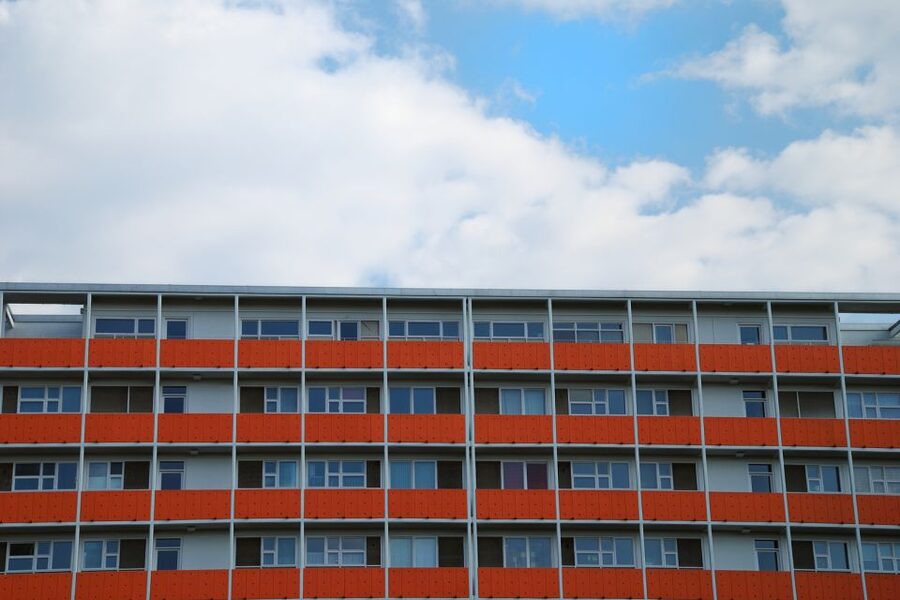
Berlin is full of dramatic reminders of war, division, and political power. Hansaviertel tells a quieter story: how a damaged city tried to imagine a better daily life after the war.
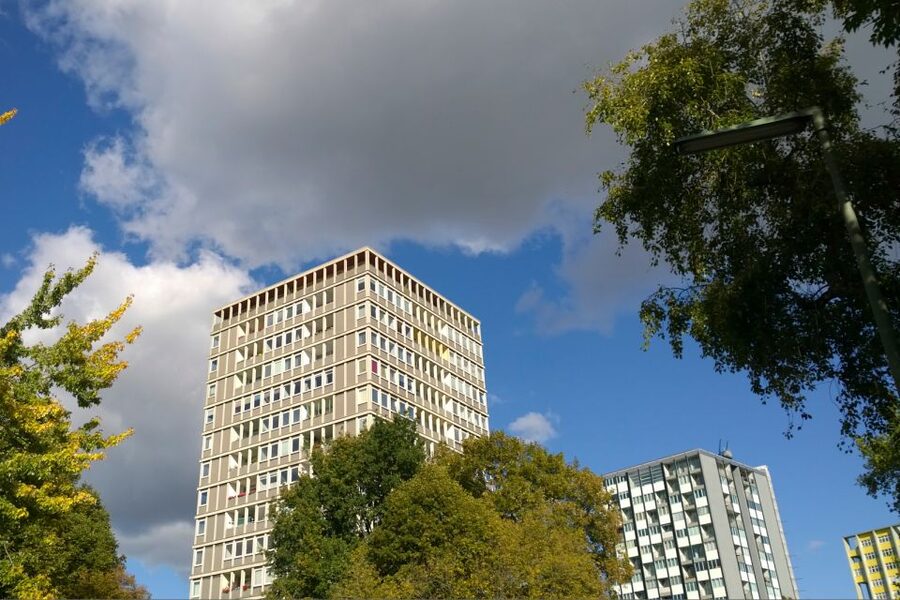
The district was newly designed for the 1957 International Building Exhibition. Its planners wanted a structured, spacious city, with modern housing and public buildings arranged according to new ideas about urban living. The result was a collection of buildings by German and international architects, placed within a broader plan rather than built as isolated monuments.
That context matters. You are not simply looking at unusual apartment blocks. You are seeing a public argument about how a city should work. Hansaviertel presents modern architecture as part of ordinary life, with homes beside transit, education, health care, religion, and the arts.
I find that idea more rewarding than a standard architecture walk that only points out famous façades. Here, the route asks you to consider how design affects the way people live. The buildings were intended to form a model of the city of tomorrow, and much of that planned district still exists today.
The tour also adds a layer of Berlin’s political and cultural history without turning the walk into a textbook lesson. You see how architecture became a way to express optimism, renewal, and new thinking during a turbulent period.
A few more half-days in Berlin worth comparing
- Berlin: Reichstag, Dome and Government District Guided Tour
★ 4.7 · 18,288 reviews - Berlin: 1-Hour City Tour by Boat with Guaranteed Seating
★ 4.3 · 16,993 reviews - Berlin: Boat Tour Along the River Spree
★ 4.4 · 11,252 reviews
Starting with the Berlin Pavilion and Müller-Rehm/Siegmann House
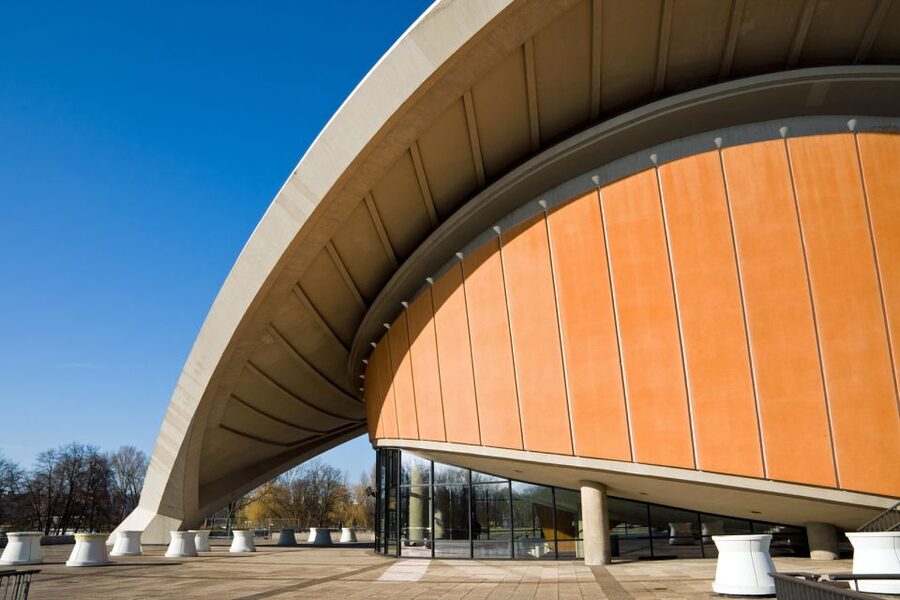
The Berlin Pavilion is one of the early stops and helps set the tone for the walk. It gives your guide a chance to explain the purpose of the building exhibition and why Hansaviertel was treated as a showcase for modern urban planning.
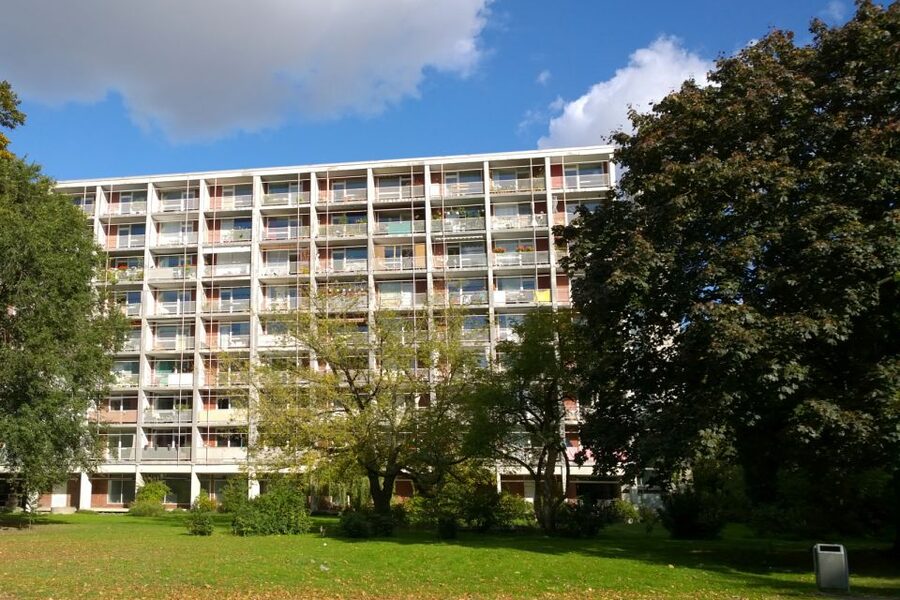
From there, the Müller-Rehm/Siegmann House offers a closer look at the domestic side of the project. The large public buildings may catch your eye first, but individual homes are essential to understanding the district. The exhibition was not only about grand civic design. It was also about how ordinary residents might live in a modern city.
This is where a good guide makes a real difference. A quick visit on your own might leave you wondering why one apartment building matters. With Tobias, Mr. Schwabe, or another live guide, you get the ideas behind the design and the historical reasons these homes were included in the exhibition.
You should expect plenty of standing while the guide explains what you are seeing. The walking pace is described as leisurely, so this is not a race between photo stops. That suits the subject. Modern buildings often reveal more when you pause to compare their shapes, placement, and relationship to the open space around them.
Gropius-Haus and the architectural argument

The Gropius-Haus is one of the route’s major highlights. Its name alone will attract anyone interested in twentieth-century architecture, but the tour is not just a name-spotting exercise. The point is to see how a building fits into Hansaviertel’s larger plan.
The route allows you to compare different approaches within the same district. You encounter buildings by several architects, each responding to the same broad goal of creating a modern urban setting. That variety keeps the tour from becoming repetitive.
I like this part of the itinerary because it turns Hansaviertel into a conversation between buildings. You can see that modern architecture was not one fixed style with a single answer. The district contains different interpretations of the future, all placed within one planned neighborhood.
The guide’s explanation is especially useful if you do not already speak the language of architecture. You do not need to know technical terms before arriving. The strongest part of the tour is the connection between form and purpose: how a building was intended to function, and what its design says about the era that produced it.
Kaiser-Friedrich Memorial Church and the Swedish House
The Kaiser-Friedrich Memorial Church adds another kind of contrast. In a district associated with new construction and postwar ideas, a church brings questions of memory, continuity, and community into the route.
The Swedish House adds an international note. Along with the other buildings, it shows that Hansaviertel was not a local project in a narrow sense. The exhibition drew on architectural ideas from beyond one architect or one national tradition.
These stops help prevent the tour from becoming purely residential. You are not walking past one apartment block after another. The route moves through religious, cultural, institutional, and residential buildings, giving you a clearer picture of how the proposed city was meant to operate.
I would pay attention to the contrasts here. The value is not only in deciding which building you like best. It is in seeing the district as a collection of experiments, with different answers to the same question: what should a modern city provide for its residents?
Same city, a completely different kind of day:
- Discover Berlin Half-Day Walking Tour
★ 5.0 · 9,624 reviews - Berlin: Hop-on Hop-off Bus Tour with Live Commentary
★ 4.3 · 8,579 reviews - Berlin: Government District around the Reichstag Guided Tour
★ 4.7 · 8,447 reviews - Berlin: Reichstag, Plenary Chamber, Cupola & Government Tour
★ 4.6 · 8,422 reviews
Hansaplatz station, the library, and the hospital
Hansaplatz station is an important stop because public transport is part of city planning. The station belongs to the same vision as the surrounding buildings, where daily movement was considered alongside housing and public services.
The Hansaviertel Library and Hansaviertel Hospital broaden the tour again. Together, these sites show that the 1957 project was meant to cover more than appearance. A functioning city needs places for reading, health care, transit, worship, culture, and home life.
This part of the walk may appeal most to people who enjoy urban planning. If you are mainly looking for famous landmarks, the station, library, and hospital may seem less exciting than the Gropius-Haus or Academy of Art. But they are important precisely because they show how the district was meant to work day to day.
I appreciate that the route does not treat architecture as a parade of isolated objects. The public buildings help you understand Hansaviertel as a complete neighborhood. They also give the guide more ways to explain the social aims behind the exhibition.
Van den Broek House, Schwippert House, and Academy of Art
The Van den Broek House and Schwippert House return the focus to residential design. Seeing several homes on the same walk lets you compare how architects handled similar needs. The tour gives you a chance to consider scale, shape, and setting rather than judging one building on its own.
The Academy of Art brings the route back to culture and public life. It is a fitting stop for a district presented as a new model for the city, since art and architecture were central to the exhibition’s sense of progress.
This section should appeal to anyone who enjoys details that are easy to miss from a passing bus or a fast city walk. You get time to stop, listen, and connect each building to the postwar setting.
The route also has an authentic quality because Hansaviertel is not presented as a staged historic quarter. It is a living district shaped by a particular moment in Berlin’s past. Some of the buildings may look dated to modern eyes, and that is part of their interest. They show the hopes and design choices of the 1950s rather than pretending to be timeless.
What the guides add to the walk
The guide is central to the experience. Tobias is repeatedly singled out for his friendly, funny, and engaging style, while Mr. Schwabe is praised for being kind and exceptionally well informed. The tour is available in English or German, and the guide’s ability to answer questions is a major advantage over exploring alone.
Tobias has also led tours about Karl-Marx-Allee, another Berlin route tied to architecture and history. If you enjoy this walk, that related subject may interest you, though it is a separate tour.
The best guide style for Hansaviertel is one that explains without burying you in jargon. You want enough architectural detail to understand the buildings, but also enough historical context to see why the district was built this way. The feedback about humor and patience suggests that the tone is conversational rather than stiff.
Still, the exact guide can vary. Tobias and Mr. Schwabe are names associated with the experience, but you should not assume that either will lead every departure. The meeting point may also vary with the option you choose, so check those details when booking.
Is $23 a fair price for two hours?
At $23 per person, this is a good value if you have a real interest in architecture, planning, or Berlin’s postwar story. You receive a two-hour walking tour with a live guide and a route that covers a substantial group of buildings and public spaces.
The value comes from interpretation. Most of the sites are viewed from outside, and this is not a ticketed attraction tour with elaborate interiors or a major museum visit. You are paying for the guide’s context, route planning, and ability to make sense of a district that can be difficult to read on your own.
For a first-time visitor with only a day or two in Berlin, other parts of the city may deserve priority. For a returning visitor, architecture student, design enthusiast, or resident who wants to understand a less familiar neighborhood, the price is easier to justify.
You can cancel up to 24 hours before the tour for a full refund, and the reserve-now, pay-later option gives you some flexibility. Wheelchair access is available, but because the experience is a walking route, you should confirm the specific meeting point and departure option when booking.
Who will enjoy this Hansaviertel walk?
I would recommend it most strongly to:
- People interested in 1950s architecture and modern urban planning
- Visitors who have already seen Berlin’s major historical sights
- Residents who want a fresh look at their own city
- Students and design professionals
- Anyone curious about how a city rebuilt its identity after wartime destruction
- Travelers who prefer a calm neighborhood walk to a crowded landmark
You may enjoy it less if you want dramatic interiors, a fast-moving overview of all Berlin, or a tour centered on royal, Nazi, or Cold War landmarks. Hansaviertel is subtler. Its story comes through in the relationship between buildings and the ideals behind them.
Wear comfortable shoes and allow time to stop outdoors. The two-hour format is long enough to build a clear picture of the district without taking up an entire day, but it still requires attention and walking between sites.
Should you book the Hansaviertel tour?
Book it if you want to understand a side of Berlin that many visitors miss. The combination of the 1957 building exhibition, modern homes, public buildings, transit, and cultural sites gives you a fuller view of postwar city planning than a quick look at one landmark can provide.
I would especially choose it with Tobias or another guide who brings humor and patience to the subject, though guide availability can vary. At $23, the tour offers strong value for anyone who wants ideas and context, not just photographs.
Skip it if your Berlin plans are already packed with major museums and historic monuments, or if architecture is not your interest. For the right audience, though, Hansaviertel is one of the city’s most useful lessons in how buildings can express a society’s hopes for the future.
FAQ
Where does the Hansaviertel tour meet?
The meeting point may vary depending on the option you book. Tours can also be arranged to begin from specific points at certain times.
How long does the tour last?
The walking tour lasts two hours.
What languages are available?
The tour is available with a live guide in English or German.
What buildings can I see?
The route includes the Berlin Pavilion, Müller-Rehm/Siegmann House, Gropius-Haus, Kaiser-Friedrich Memorial Church, Swedish House, Van den Broek House, Schwippert House, and Academy of Art.
Does the tour include public buildings?
Yes. The route includes Hansaplatz U-Bahn station, the Hansaviertel Library, and Hansaviertel Hospital, along with residential and cultural buildings.
What is the focus of the tour?
The tour focuses on Hansaviertel’s history, architecture, and redevelopment for the 1957 International Building Exhibition. It explains the district’s modern urban planning ideas and its place in Berlin’s past.
Is the tour wheelchair accessible?
Yes, the activity is listed as wheelchair accessible.
Can I cancel the booking?
You can cancel up to 24 hours in advance for a full refund. A reserve-now, pay-later option is also available.
Just added in Berlin
- Berlin & The Third Reich Private Guided Tour★ 5.0 · 3 reviews
- Third Reich Quest Experience in Berlin★ 4.5 · 7 reviews
- Private Analogue Photography Experience in Berlin★ 5.0 · 3 reviews
- Berlin Urbex Adventure and History Tour★ 5.0 · 9 reviews
- The Beauty of Berlin by Bike: Private Tour★ 5.0 · 59 reviews
- Berlin: Guided Bike tour of the Berlin Wall and Third Reich★ 5.0 · 160 reviews
- Beyond Currywurst: Berlin’s Hidden Street Food & Culture Tour★ 5.0 · 100 reviews
- Berlin Third Reich & Cold War Walking Tour With A Guide★ 5.0 · 7 reviews
Berlin Tours, compared.
Reichstag, Dome and Government District Guided Tour
Read our review →
Reichstag, Plenary Chamber, Cupola & Government Tour
Read our review →