
Reviewed · WALKING TOURS
Berlin: Guided Walking Tour in English
Berlin’s past comes at you in layers on this 2.5-hour walking tour, beginning with medieval Berlin at Alexanderplatz and ending at the Brandenburg Gate, where Germany’s divided past gives way to a more hopeful present. The route makes sense of the city instead of treating each monument as a disconnected photo stop.
I like the chronological design, which gives you a clear storyline, and I like the range of places covered on foot, from Museum Island and Gendarmenmarkt to Checkpoint Charlie and the former bunker site. The main drawback is the pace: you cover a lot of ground, and there is no included meal, drink, or planned hotel pick-up.
Key points at a glance
- A clear route through Berlin’s past: Start with the medieval town, move through Prussian power and Nazi rule, then reach the Cold War and reunification.
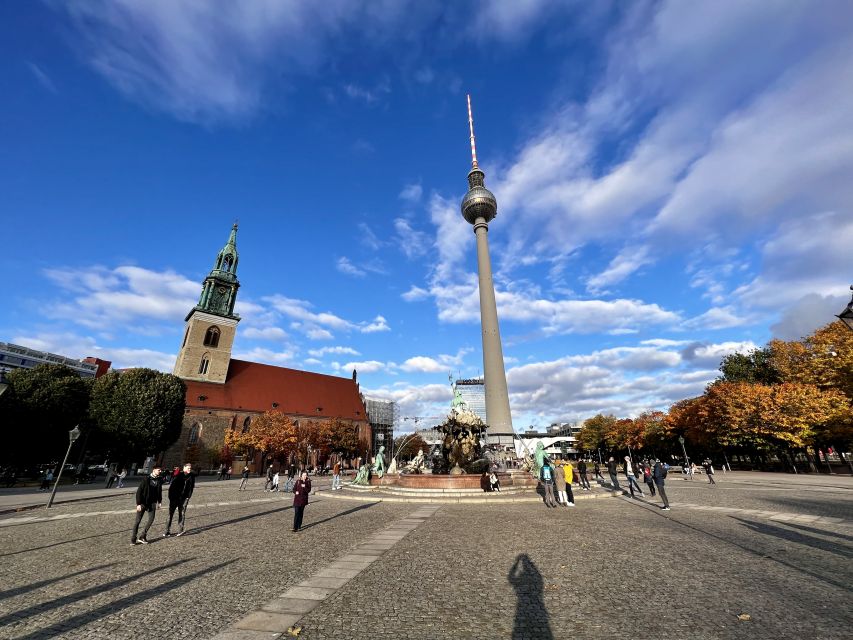
- Alexanderplatz is the starting point: Meet near the Red Town Hall, TV Tower, and Neptune Fountain.
- Museum Island provides a scenic pause: Enjoy views of Berlin Cathedral and the open space around the museums.
- The tour tackles difficult history directly: Checkpoint Charlie and Hitler’s former bunker site are part of the walk.
- English-speaking local guides lead the route: Guides named JR, Jule, Ru, and Will have received particularly strong praise for clear explanations and practical advice.
- The $31 price includes the guide’s payment: This is described as a pay-as-you-wish tour with a reservation fee included in the amount you pay.
Starting at Alexanderplatz and the Red Town Hall
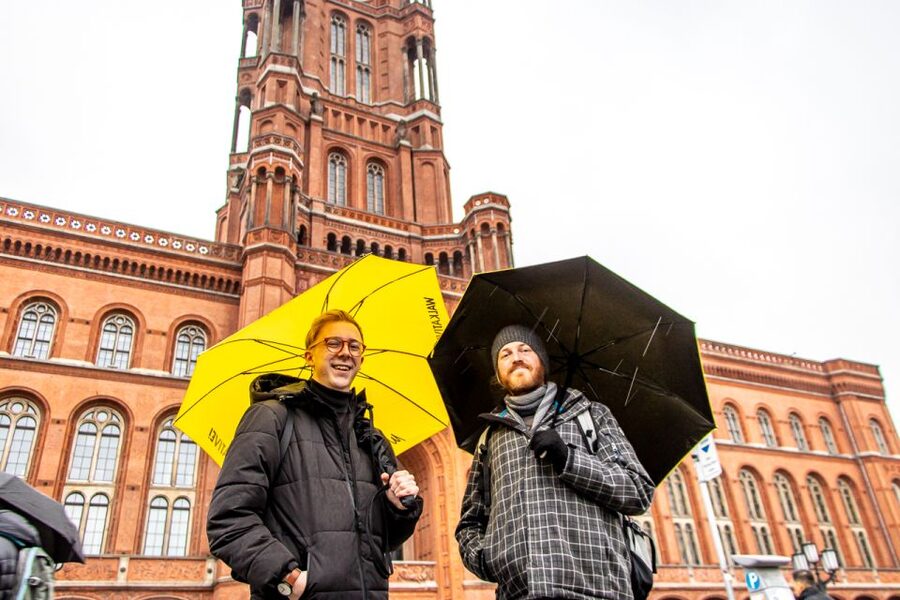
Meet in front of the Red Town Hall, close to the TV Tower and Neptune Fountain. Arrive about 10 minutes early, since the group begins on foot and you will want time to find the exact meeting point.
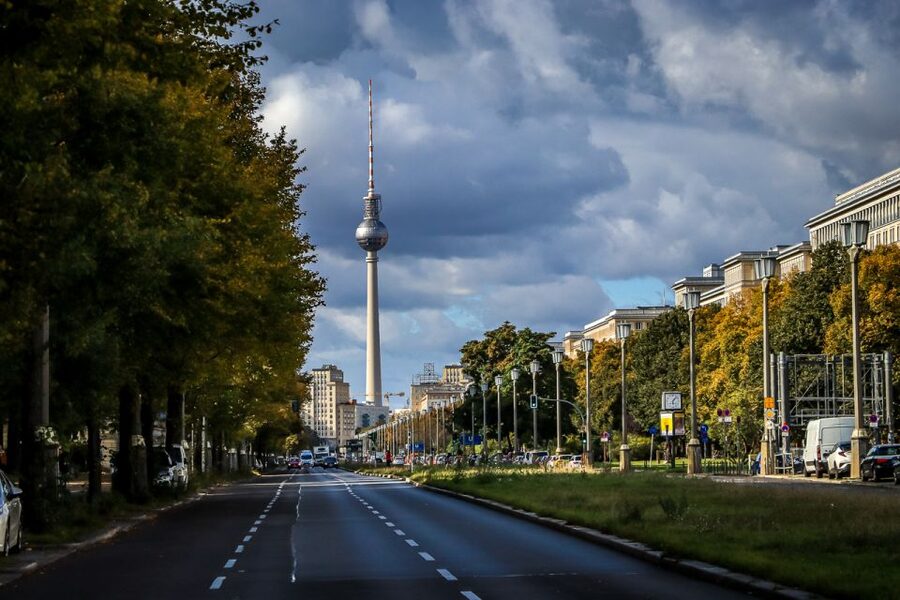
Alexanderplatz is a useful place to begin because it shows Berlin in several moods at once. The TV Tower points to the former East German capital, while the Red Town Hall and nearby remnants of the old town reach back much further. Your guide uses this contrast to explain that Berlin was not always the grand imperial or divided capital you may picture today.
The route begins with the smaller, older Berlin that existed before the city became a major European power. This opening gives you a frame for the rest of the walk. You are not simply moving from one famous building to another. You are following the city’s growth, destruction, division, and repair.
The meeting point is central and easy to connect with from the surrounding sights, though the tour does not include hotel pick-up. Plan on using public transport or making your own way to Alexanderplatz.
More Walking Tours in Berlin
- Discover Berlin Half-Day Walking Tour
★ 5.0 · 9,624 reviews - Berlin: Third Reich and Cold War 2 Hour Walking Tour
★ 4.9 · 6,830 reviews - Berlin: Discover Berlin Walking Tour
★ 4.9 · 5,998 reviews
Medieval Berlin beside the modern TV Tower
The TV Tower is one of Berlin’s most recognizable markers, but this tour does not treat it as the whole story. Instead, the guide points out the older traces around Alexanderplatz and explains how modest Berlin once was compared with the capital you see today.
That contrast is one of the route’s strengths. You get a quick sense of how a compact settlement expanded into a royal seat, then an imperial capital, then a divided city. A guide who can connect those changes is more useful here than one who simply lists dates.
The walking format also helps you understand the city’s scale. Berlin’s historic center is spread out rather than packed into one tight old quarter. You will get exercise, and you will see how the major areas connect, but comfortable shoes are essential.
Because the tour lasts only two and a half hours, this section is about orientation rather than detailed museum-style interpretation. If you want an exhaustive look at medieval Berlin, you will need separate time afterward. For a first introduction, the broad outline works well.
The former Royal Palace and Museum Island
From Alexanderplatz, the route continues toward the reconstructed former Royal Palace of the Hohenzollern. The building is controversial, and that is part of its value as a stop. Berlin often presents difficult questions through its architecture: What should be rebuilt? What should remain lost? How should a modern city handle symbols of royal power?
You do not simply see a handsome facade and move on. The guide places the palace within Berlin’s changing political story. Its setting also leads naturally to Museum Island, one of the most atmospheric parts of the walk.
Museum Island gives the group a more open stretch of space after the denser central streets. From here, you get a fine view of Berlin Cathedral, and the setting helps you understand how the city’s cultural and political center was arranged.
This is a photo-friendly part of the route, but the tour is not designed as a museum visit. Entry to the museums is not included, and there is no scheduled time to explore their collections. If you want to visit the Pergamon Museum or another institution on the island, plan that for another part of your day and check opening information separately.
I like this stop because it balances the heavier political material with architecture and public space. You have room to look around, take photographs, and absorb the scale of central Berlin before the route returns to a tighter urban setting.
Humboldt University and Berlin’s central streets
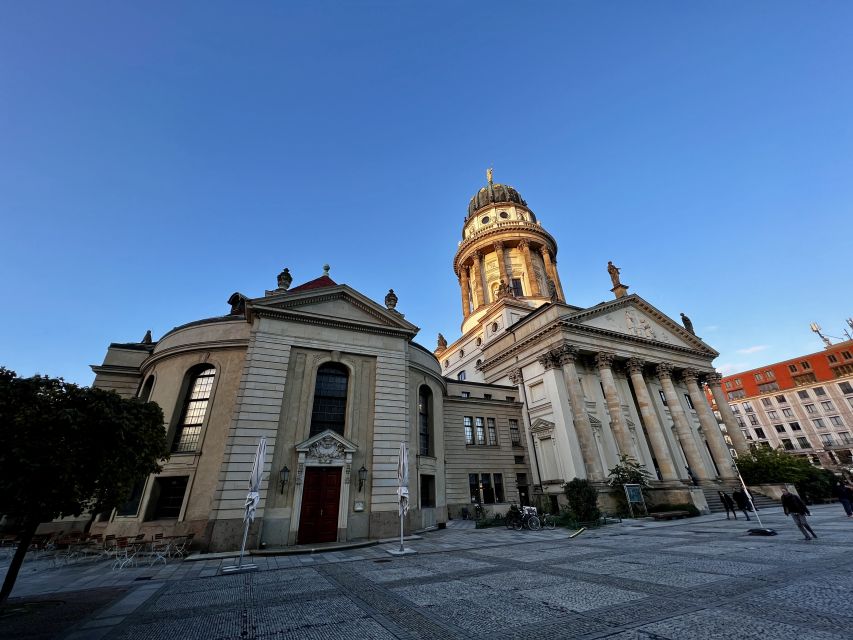
After Museum Island, the walk passes Humboldt University. The university adds another layer to the story, linking Berlin’s historic center with education, public life, and the city’s intellectual traditions.
From here, you move through a maze of central streets. This part may feel less dramatic than the Brandenburg Gate or Berlin Wall, but it gives the tour its connective tissue. You see how Berlin’s major sights are woven into ordinary streets rather than isolated in a purpose-built sightseeing zone.
The guide’s narration matters most here. A strong guide can turn a walk between landmarks into an explanation of how the city works. JR, Jule, Ru, and Will are among the guides associated with especially positive feedback for clear, engaging presentations. Your guide may be someone else, so the experience can vary, but the tour is built around a live local guide rather than an audio recording.
One useful feature is the practical advice you may receive along the way. JR was praised for offering tips that could help you plan the rest of your time in Berlin. This is one reason I would schedule the tour early in your stay, not on your final morning.
Same city, a completely different kind of day:
- Berlin: Reichstag, Dome and Government District Guided Tour
★ 4.7 · 18,288 reviews - Berlin: 1-Hour City Tour by Boat with Guaranteed Seating
★ 4.3 · 16,993 reviews - Berlin: Boat Tour Along the River Spree
★ 4.4 · 11,252 reviews - Berlin: Hop-on Hop-off Bus Tour with Live Commentary
★ 4.3 · 8,579 reviews
Gendarmenmarkt, Berlin’s most polished square
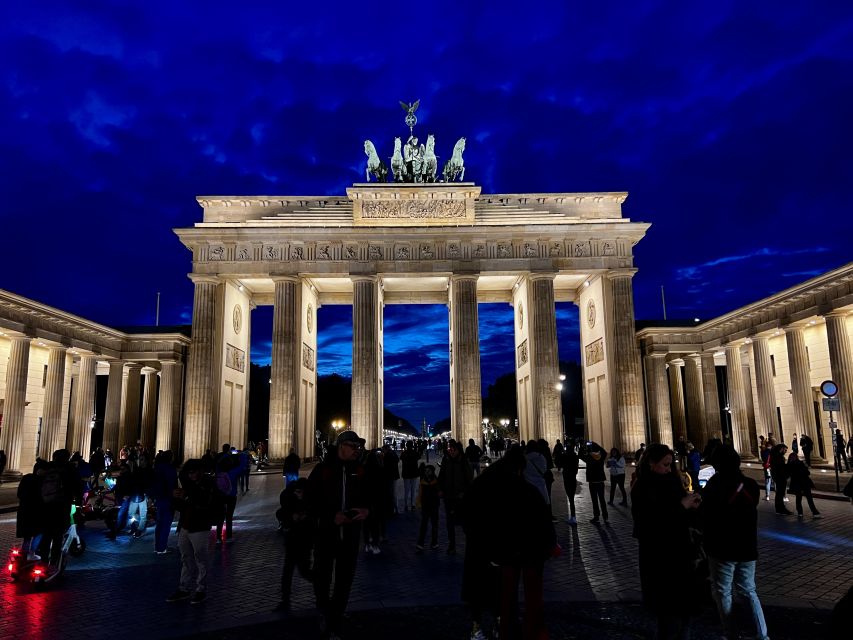
Gendarmenmarkt is often considered Berlin’s prettiest square, and it gives the walking tour a welcome change of tone. The space is formal and balanced, with grand buildings framing an open public area.
After the medieval beginnings and the political weight of Museum Island, Gendarmenmarkt shows Berlin at its most composed. It is an excellent place to pause and consider the city’s Prussian and imperial ambitions.
The square also works well in a chronological tour because it represents the kind of ordered, powerful capital Berlin wanted to become. Your guide can connect its design and buildings to the wider story of the German capital.
Do not expect a long break here unless the guide creates one. The tour is designed to keep moving, and the square is one part of a larger route. If you want time for a coffee, photographs, or a close look at every facade, you may need to return independently.
The walk can operate in cold weather, as shown by the winter departures, but dress properly. One guide, Ru, was specifically praised for keeping an eye on the cold. That is a useful reminder that Berlin’s broad squares can feel exposed in winter.
Checkpoint Charlie and the Berlin Wall
The route then turns to the Berlin Wall and Checkpoint Charlie. This is where the story moves into the city’s divided era, and the change is striking. You are no longer looking mainly at royal buildings and formal squares. You are examining the physical and political lines that separated East and West Berlin.
Checkpoint Charlie is a famous name, but it can be easy to treat it as a quick photograph. The guide helps place it within the larger Wall story, including the meaning of border crossings and the way division shaped daily life.
The tour’s chronological order is especially useful here. By the time you reach Checkpoint Charlie, you have already followed Berlin from a small settlement through royal rule and modern state-building. The Wall becomes part of a long sequence rather than a disconnected Cold War attraction.
Keep your expectations realistic. This is a walking explanation, not a museum visit or a full Wall memorial tour. You will see the area and learn its place in Berlin’s past, but you should set aside additional time if the Wall is a main interest.
The former bunker site and Berlin’s darkest chapter
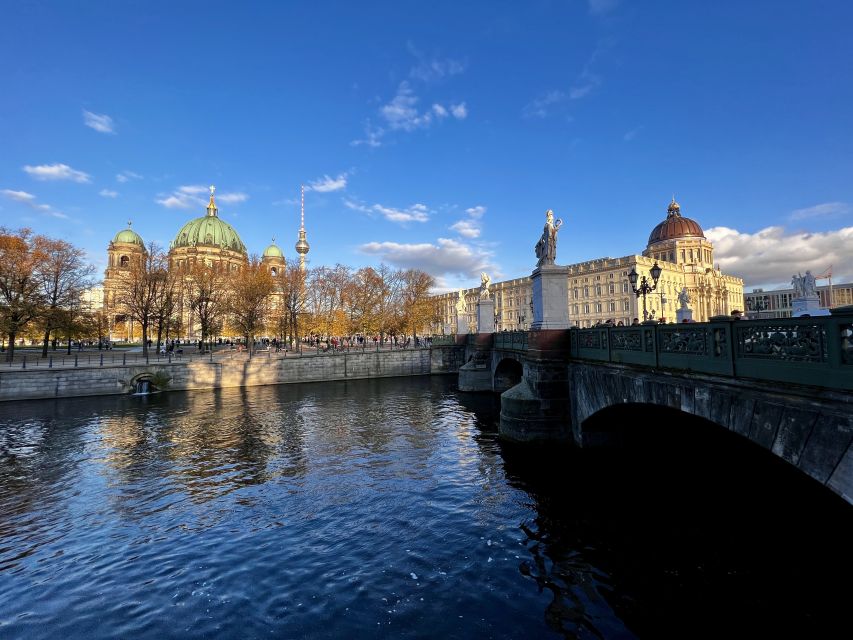
The walk also passes the place where Hitler’s former bunker stood. The stop is deliberately understated. There is no grand surviving monument to admire, and that absence is important.
Your guide uses the location to discuss Germany’s Nazi past and the final days of the regime. The site can feel strange because the physical remains do not match the historical importance. You are standing near a place tied to one of the most destructive periods in European history, yet the setting itself does not offer a dramatic ruin.
This is a valuable part of the tour because it avoids presenting Berlin as a city of only attractive squares and restored buildings. The route asks you to look at uncomfortable history in ordinary surroundings.
Expect serious subject matter here. The tour covers a lot of ground, so the explanation cannot replace a full museum visit, but it provides a useful first orientation. I would pair this walk with a separate visit to one of Berlin’s dedicated memorials or museums if Nazi history is central to your trip.
Ending at the Brandenburg Gate
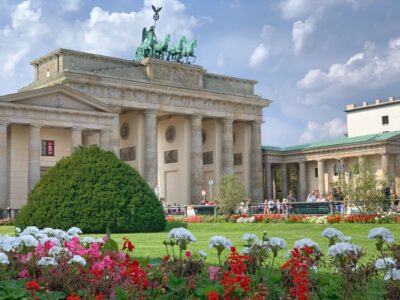
The final stop is the Brandenburg Gate, one of Berlin’s clearest symbols of unity. Its classical archways once marked a boundary connected with the old city and later became associated with division, political confrontation, and reunification.
Ending here gives the tour a strong sense of direction. You begin near the TV Tower and the remains of old Berlin, then pass through royal, cultural, Nazi, and Cold War chapters before arriving at a symbol linked with a new era for Germany and Europe.
The gate is also a practical place to finish. It is a major sightseeing area, so you can continue exploring central Berlin afterward. The route’s final location makes it easy to connect the tour with nearby attractions, though the activity itself does not include onward transportation.
I like this ending because it is symbolic without requiring a long explanation to understand the basic message. Berlin’s past remains visible, but the Brandenburg Gate now represents connection rather than separation.
What $31 means in practical terms
The listed price is $31 per person. The tour is described as a general pay-as-you-wish walk, with the amount covering the reservation fee and the guide’s payment. In other words, this is not a free walk where you are expected to decide later how much to give. Your booking payment handles the stated fee.
For two and a half hours with an English-speaking local guide and a route covering many of central Berlin’s major historical points, I consider the price fair. You are paying for structure and interpretation, not entrance tickets. The value is highest if you are new to Berlin and want a useful overview before visiting museums on your own.
The price is less compelling if you prefer a slow pace, long stops, or detailed interior visits. Food and drinks are not included, and the tour does not include hotel pick-up. Bring water, and use the restroom before setting out if you prefer not to interrupt the walk.
The activity has free cancellation up to 24 hours before the start time, and you can reserve now and pay later. It is wheelchair accessible, though the route is still a city walk with a fair amount of distance, so confirm that the path suits your needs when booking.
Who will get the most from this Berlin walk?
I would choose this tour for a first visit, especially if you want Berlin’s major historical themes explained in an order that is easy to follow. It suits adults, families with older children, and anyone who learns better by walking through a city than by reading a guidebook alone.
It is also a good choice for someone arriving with limited time. In 2.5 hours, you cover a wide section of the historic center and finish near one of the city’s best-known landmarks.
You may want a different format if you dislike walking, need long breaks, or want extensive time inside museums. The tour gives you context, but it does not replace a full day devoted to Museum Island, the Wall, or Berlin’s memorial sites.
Book it near the start of your stay if possible. The chronological explanation can help you understand later visits, and practical suggestions from guides such as JR may help shape the rest of your plans. Guides including Jule, Ru, and Will have also been singled out for strong presentation and care with the group, especially in cold weather.
Should you book this Berlin guided walking tour?
Book it if you want a clear first overview of Berlin and are happy to cover major sights on foot. The chronological route is the main selling point, and the combination of medieval traces, royal architecture, Nazi history, the Wall, and the Brandenburg Gate gives you a useful map of the city’s past.
Skip it if you want museum entry, a meal, hotel collection, or a slow specialist tour focused on just one period. For most first-time visitors, though, $31 is a reasonable way to get your bearings and learn why Berlin’s central sights matter before exploring them in greater detail.
FAQ
Where does the Berlin walking tour meet?
The meeting point is in front of the Red Town Hall, or Rotes Rathaus, near the TV Tower and Neptune Fountain at Alexanderplatz.
How long does the tour last?
The walking tour lasts 2.5 hours.
What language is the tour conducted in?
The tour is conducted in English by a live local guide.
Which Berlin sights are included?
The route includes Alexanderplatz, the TV Tower area, medieval remnants of Berlin, the reconstructed former Royal Palace, Museum Island, Berlin Cathedral views, Humboldt University, Gendarmenmarkt, Checkpoint Charlie, the former Hitler bunker site, and the Brandenburg Gate.
Is the tour wheelchair accessible?
Yes, the activity is listed as wheelchair accessible.
What should I bring?
Bring weather-appropriate clothing and arrive at the meeting point 10 minutes before the scheduled start. Food and drinks are not included.
Just added in Berlin
- Berlin & The Third Reich Private Guided Tour★ 5.0 · 3 reviews
- Third Reich Quest Experience in Berlin★ 4.5 · 7 reviews
- Private Analogue Photography Experience in Berlin★ 5.0 · 3 reviews
- Berlin Urbex Adventure and History Tour★ 5.0 · 9 reviews
- The Beauty of Berlin by Bike: Private Tour★ 5.0 · 59 reviews
- Berlin: Guided Bike tour of the Berlin Wall and Third Reich★ 5.0 · 160 reviews
- Berlin Third Reich & Cold War Walking Tour With A Guide★ 5.0 · 7 reviews
- Shared Underground Party Tour in Berlin★ 4.5 · 9 reviews
Walking Tours, compared.

Berlin’s Best: 2 Hour Walking Tour Third Reich and the Cold War
Read our review →
Third Reich Berlin: Hitler and WWII Walking Tour
Read our review →Browse the lists this tour appears in