Reviewed · BERLIN TOURS
Berlin: Entry to Alte Nationalgalerie
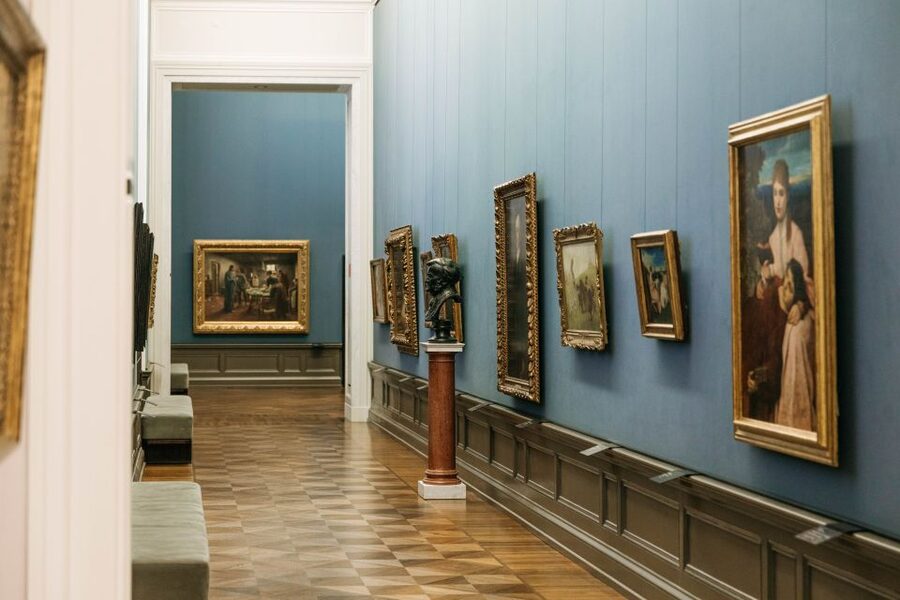
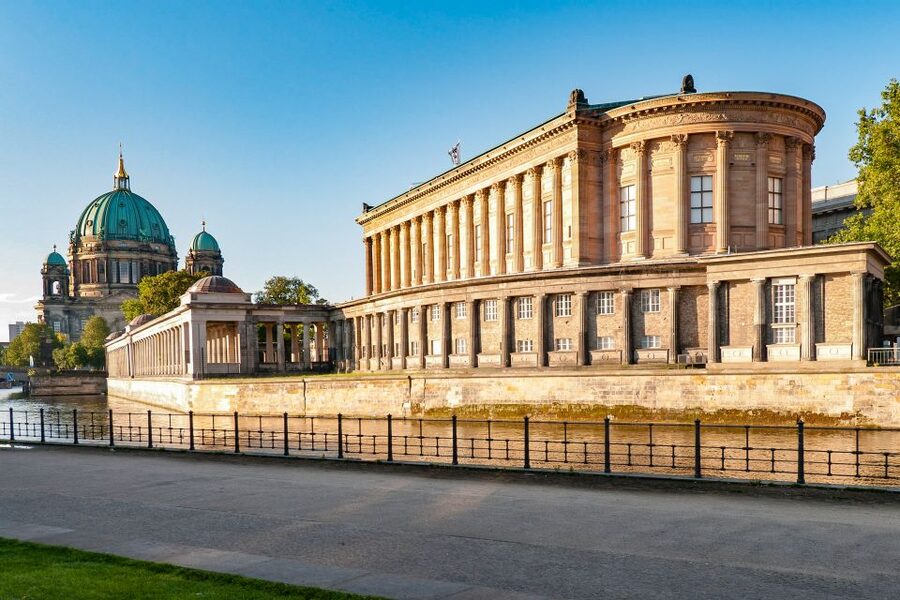
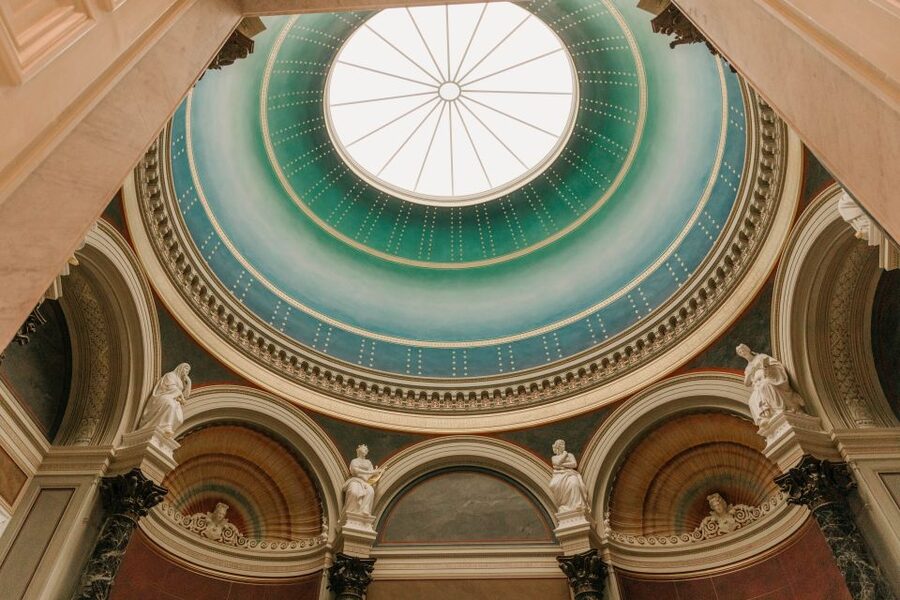
Berlin’s Alte Nationalgalerie gives you an unusually clear tour through 19th-century art, from solemn Romantic paintings to the bright freedom of Monet and Renoir. The building itself feels ceremonial, with grand stairways and sculpture-filled rooms framing the collection.
I like the museum’s strong range of styles, and I like that you can see major works by Friedrich, Menzel, Manet, Monet, and Renoir in one visit. The included audio guide also helps you make sense of the collection without hiring a private guide.
The main caution is that rooms or floors may close temporarily. One visitor found the Impressionist section shut, while another lost access to the third floor, so check current displays before booking if one particular painting is your main reason for going.
Key points
- See Friedrich’s The Monk by the Sea, one of German Romanticism’s most haunting paintings.
- Compare five major art movements, including Classicism, Romanticism, Biedermeier, Impressionism, and early Modernity.
- Look for Menzel’s Eisenwalzwerk, a powerful view of industrial labor and modern Germany.
- Find the Group of Princesses, a graceful portrait linked to Goethe-era Berlin.
- Admire French Impressionists, including Manet, Monet, and Renoir.
- Use the included audio guide, and remember that backpacks are not allowed inside.
A grand start on Berlin’s Museum Island
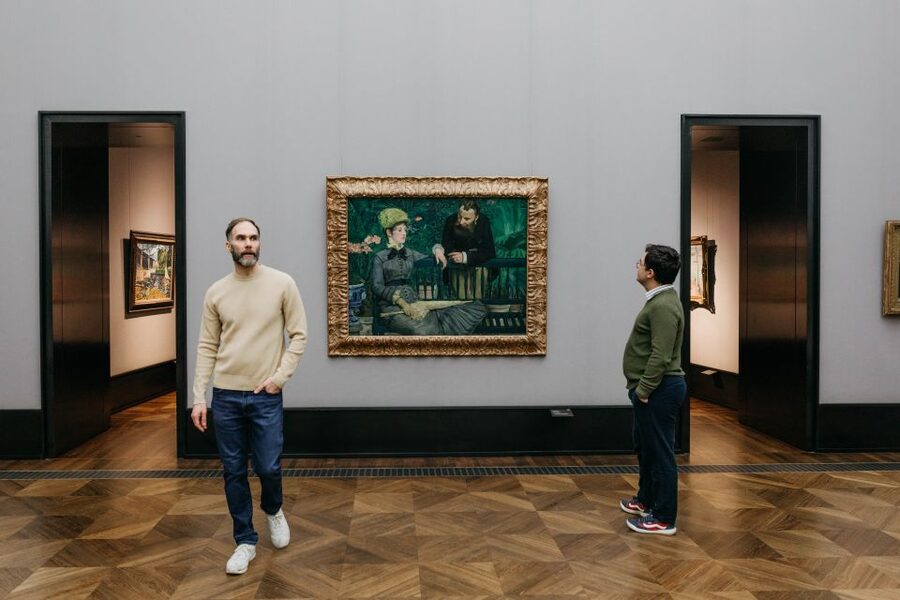
The Alte Nationalgalerie sits on Museum Island, Berlin’s UNESCO World Heritage Site, at Bodestraße 1. You enter through the visitor entrance and return to the same place when you finish.
The museum opened in 1876 as the third museum on the Spree Island. Its original purpose was to create a sanctuary for art and science, an idea associated with Friedrich Wilhelm IV. That phrase may sound lofty, but the building does have the feel of a civic temple. It was designed not simply to store paintings, but to give art a public and almost ceremonial home.
The collection began with works donated by banker Joachim Heinrich Wilhelm Wagener. His gift included paintings from the Düsseldorf school and Belgian history painters, giving the Prussian state a strong starting point for a national collection.
You do not need to know this background before arriving. Still, it helps explain why the museum feels broader than a single artist or movement. This is not a small specialist gallery. It is a long visual account of changing German taste, politics, society, and artistic technique.
A few more half-days in Berlin worth comparing
- Berlin: Reichstag, Dome and Government District Guided Tour
★ 4.7 · 18,288 reviews - Berlin: 1-Hour City Tour by Boat with Guaranteed Seating
★ 4.3 · 16,993 reviews - Berlin: Boat Tour Along the River Spree
★ 4.4 · 11,252 reviews
Romanticism begins with silence and distance
For many people, the emotional center of the visit is Caspar David Friedrich’s The Monk by the Sea. The painting is spare: a tiny figure, a large stretch of water, and a heavy sky. There is little visual clutter, yet the scene asks you to slow down.
Friedrich’s work is a good reminder that Romanticism was not simply pretty scenery. His paintings often place people before nature in a way that feels thoughtful and unsettling. The human figure is present, but not in control.
Look also for Gothic Cathedral at the Water. It carries the same attraction to ruins, distance, and spiritual feeling. Together, these works show why Friedrich remains so important to German art. You can understand the idea quickly, even if you know very little about painting.
The museum’s presentation makes this part of the visit especially useful. You see how artists in the Goethe era turned inward, using old buildings, open water, and distant views to explore memory, faith, and the limits of human knowledge.
From royal portraits to the Group of Princesses
The so-called Group of Princesses offers a very different mood. It presents figures from Berlin’s royal world with an elegance that reflects the social ideals of the period.
This is a good place to consider how portraiture works. A portrait can show a person, but it can also show rank, family connection, clothing, and the public image that a powerful household wanted to project.
The painting is also part of the museum’s wider story about Berlin society. After the solitary mood of Friedrich, you encounter people placed firmly within a courtly world. That change helps the collection feel like a sequence of ideas rather than a random line of famous pictures.
You will find plenty to reward a quick visit here, but the museum becomes more interesting if you pause for these shifts in tone. Move from a lonely figure beside the sea to formal princesses, and you begin to see how much 19th-century art changed depending on its purpose.
A marble tomb with a dramatic past
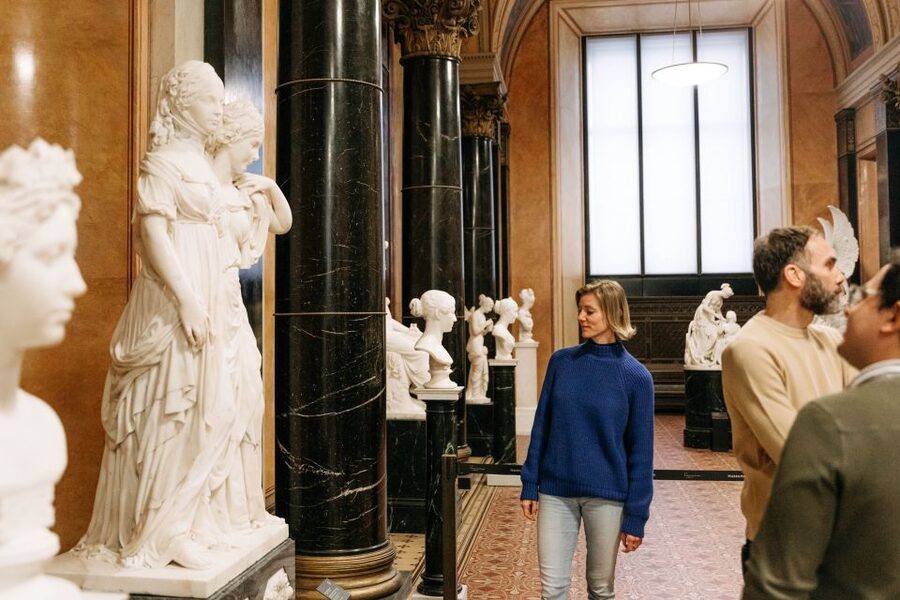
One of the most distinctive sculptures is Johann Gottfried Schadow’s marble tomb for Count Alexander von der Mark, dating from 1790. It is a work worth seeking out rather than simply passing on the way to the next painting.
A tomb sculpture carries a direct emotional purpose. It is meant to preserve memory, express grief, and give physical form to a person’s importance. Marble also changes the way you look. Paintings ask you to face a surface, while sculpture makes you consider the object from different angles.
The museum’s sculpture collection gives you a needed break from rooms of framed canvases. Look for works such as Sleeping Beauty, praised for its beauty and presence. The sculptures show that the Alte Nationalgalerie is not only a painting museum.
This section also helps bridge the gap between older artistic traditions and newer 19th-century concerns. Monumental marble, royal portraiture, and public memorials belong to a different artistic world than Impressionist painting, yet all appear within the same institution.
Same city, a completely different kind of day:
- Discover Berlin Half-Day Walking Tour
★ 5.0 · 9,624 reviews - Berlin: Hop-on Hop-off Bus Tour with Live Commentary
★ 4.3 · 8,579 reviews - Berlin: Government District around the Reichstag Guided Tour
★ 4.7 · 8,447 reviews - Berlin: Reichstag, Plenary Chamber, Cupola & Government Tour
★ 4.6 · 8,422 reviews
Menzel’s factory floor brings modern Germany into view
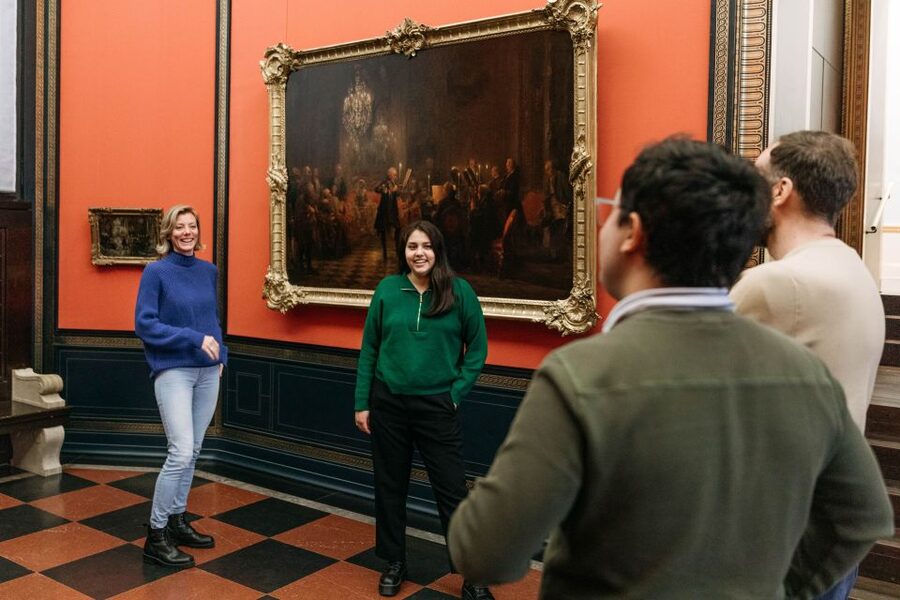
Adolph Menzel’s Eisenwalzwerk is one of the collection’s most important works. The subject is industrial labor inside an iron rolling mill, a sharp change from castles, princesses, and remote seascapes.
The painting gives you a sense of heat, work, machinery, and human effort. It also shows how artists began to take modern industry seriously as a subject. Factories were not just ugly places outside the traditional art world. They were central to the changing society of the 19th century.
This is one of the paintings where a little time pays off. Look at the workers, the equipment, and the crowded interior. Menzel does not present a simple heroic scene. The work feels busy and physical, with people absorbed in a system larger than themselves.
For me, this is a key reason to visit the museum even if Impressionism is your main interest. The Alte Nationalgalerie lets you see how art moved from idealized subjects toward the realities of modern life.
French Impressionism changes the light
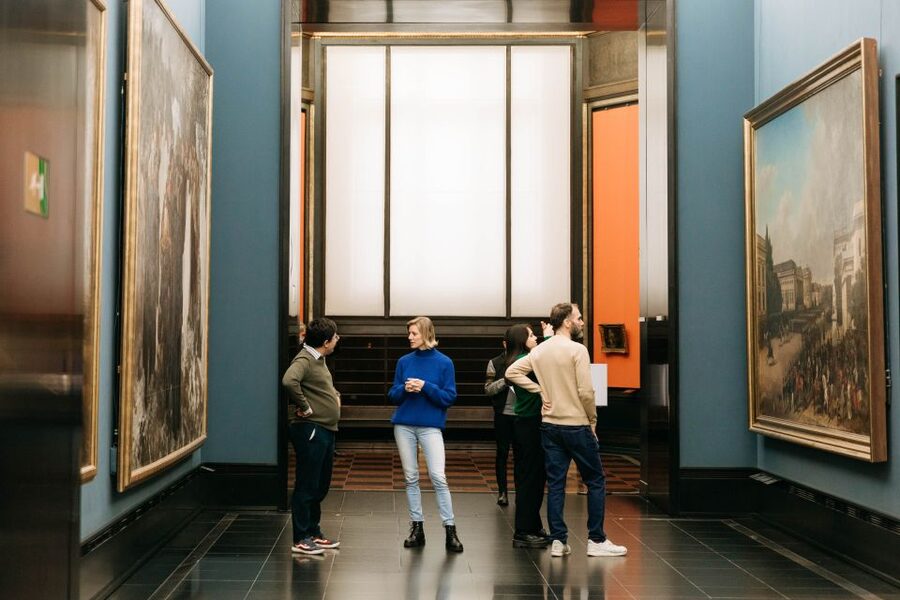
The Impressionist rooms bring a sudden shift in color and brushwork. You can see works by Manet, Monet, and Renoir, three names that give this part of the collection immediate appeal.
If Friedrich asks you to contemplate silence, Monet asks you to watch light. If Menzel makes you feel the heat and pressure of factory labor, Renoir brings you toward social life and the changing pleasure of the modern city.
The Impressionist paintings are a major reason many people choose this museum, so check the current room plan before your visit. A temporary closure affected the second floor for one visitor, and that floor held the paintings they most wanted to see. Another visitor found the third floor closed.
That does not make the museum a poor choice, but it does affect value. At $14 per person, the ticket is reasonable if you plan to spend time with several sections. It is less satisfying if you are paying mainly to see one room and that room is unavailable.
The audio guide is included, which improves the value. You can use it to connect individual paintings with broader movements instead of simply moving from one famous name to the next. The museum also offers exhibition talks and guided tours on different themes for children and adults, though the ticket information does not promise a particular talk or guide at your time of entry.
A visit that works at several speeds
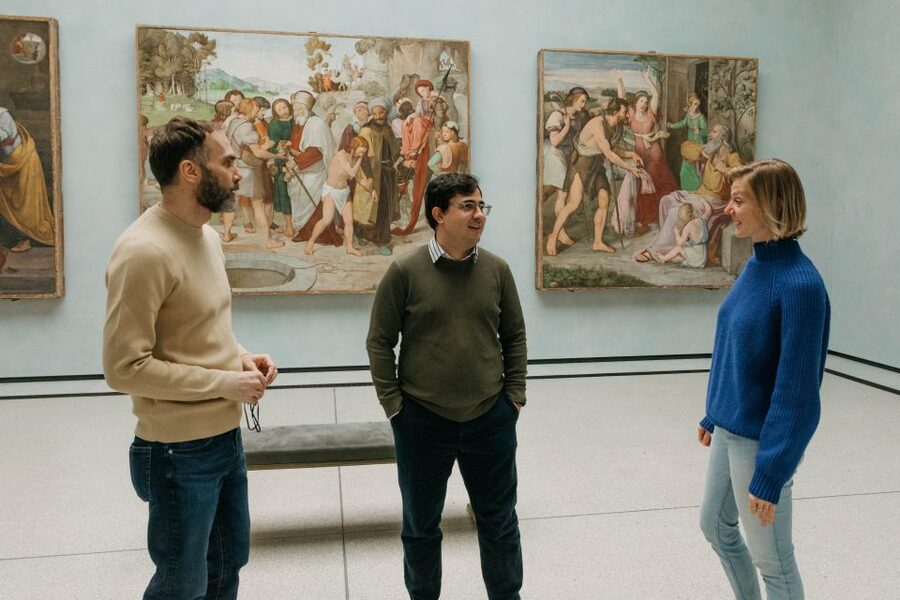
Your ticket is valid for one day, with entry tied to the time slot you book. You must enter within 15 minutes of that time, so do not treat the ticket as an entirely open-ended pass.
Once inside, you can set your own pace. A fast visit could focus on Friedrich, Menzel, the princesses, Schadow’s tomb, and the Impressionists. A slower visit gives you time to compare smaller works, drawings, sculptures, and the changing presentation of art across the building.
A useful approach is to make one pass through the museum without trying to remember everything. Then return to the paintings that held your attention. The collection covers enough ground that trying to absorb every room in one sweep can turn the visit into a march.
The museum is wheelchair accessible throughout. Backpacks are not allowed, so bring as little as possible or check the current cloakroom arrangements before you arrive. Transportation is not included, and tickets to the other museums on Museum Island require separate admission.
What the $14 ticket really buys you
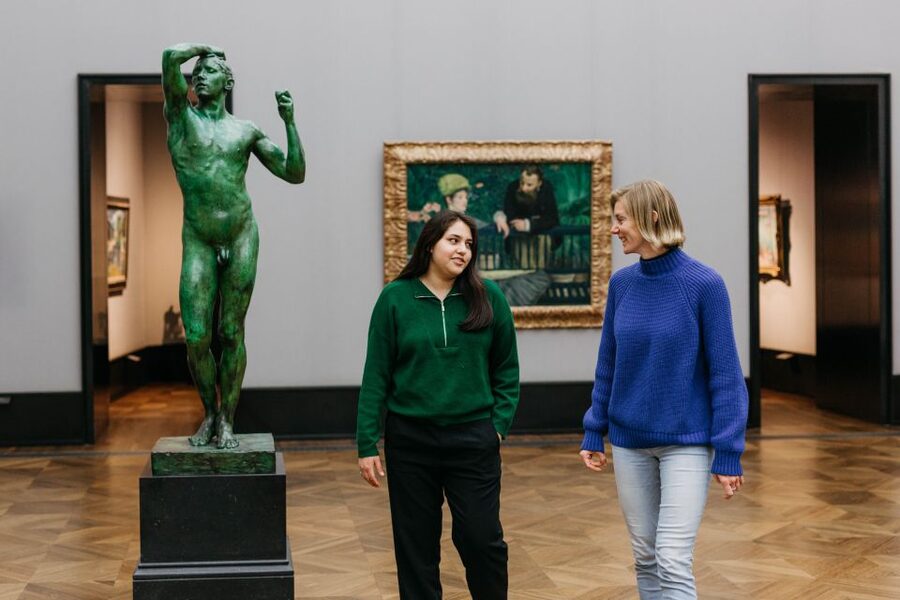
The $14 price is fair for a central Berlin museum with a major national collection, skip-the-ticket-line entry, and an audio guide. You are paying for access to a building and collection that cover several important turning points in European art.
The best value comes when you care about more than one period. You can see German Romanticism, court portraiture, sculpture, industrial painting, and French Impressionism in the same visit. That range makes the ticket useful for couples or families with different interests.
The value drops if you expect every gallery to be open or if you want only one specific painting. Temporary closures are the main practical risk. Check the museum’s current information before booking, especially if the Impressionist rooms or a particular floor are essential to your plan.
The ticket is non-refundable, so choose your time carefully. The skip-the-line feature is helpful, but it does not remove the need to arrive on time.
Who will enjoy the Alte Nationalgalerie most
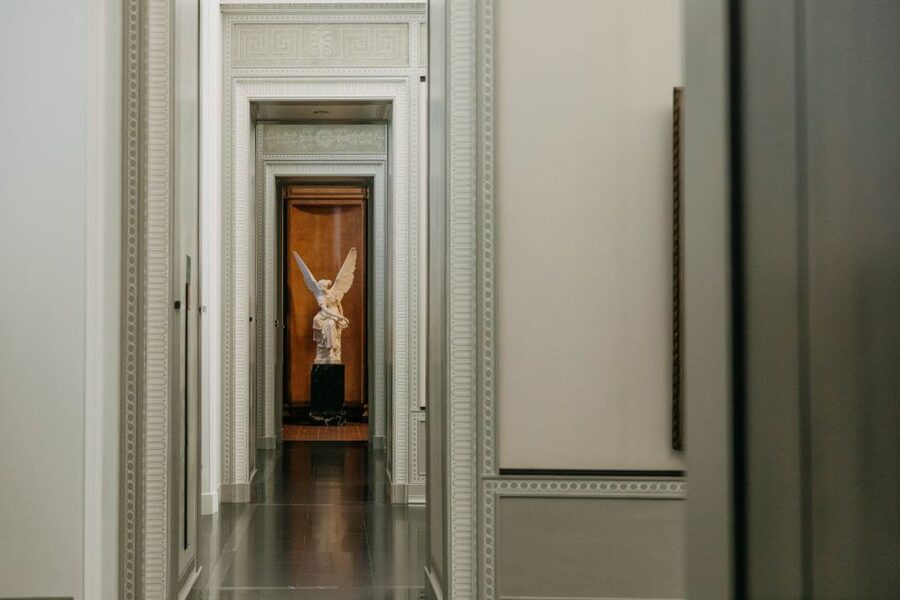
I would choose this museum for anyone who wants a focused art visit without committing to a single artist. It works especially well for:
- People interested in German Romanticism and Friedrich
- Anyone who wants to compare German and French art
- Visitors who enjoy both paintings and sculpture
- Families who can use themed talks or an audio guide
- Museum Island visitors looking for a manageable one-day stop
- Art students and serious enthusiasts interested in the shift toward Modernity
You do not need a formal art background. The main subjects are easy to recognize, and the changes in style give you a natural way to follow the collection.
If your only goal is French Impressionism, check the current exhibition setup first. If those rooms are open, the museum can be an excellent choice. If not, you may prefer another plan for the day.
Should you book this museum ticket?
Book it if you want a broad, well-located look at 19th-century art, especially if Friedrich, Menzel, Impressionism, or sculpture appeals to you. The combination of major works, a striking building, skip-the-line entry, and an included audio guide makes $14 a sensible price.
I would be cautious if you need guaranteed access to one floor or one movement. The museum’s occasional closures can change the experience, and the non-refundable ticket gives you little room to adjust.
For most visitors to Museum Island, though, the Alte Nationalgalerie is a strong choice. Give yourself enough time to move beyond the headline paintings. The best visit is not just a checklist of The Monk by the Sea and Eisenwalzwerk. It is a chance to watch German art move from spiritual solitude and royal display toward factories, modern life, and the play of light.
FAQ
Where is the Alte Nationalgalerie?
The museum is at Bodestraße, 10178 Berlin, on Museum Island.
How much does admission cost?
Admission costs $14 per person.
How long is the ticket valid?
The ticket is valid for one day.
Does the ticket include an audio guide?
Yes. An audio guide is included with the Alte Nationalgalerie ticket.
Does the ticket include admission to other Museum Island museums?
No. Tickets to the other museums on the island are not included.
Do I need to enter at a specific time?
Yes. You should enter within 15 minutes of the booked time slot.
Is the museum wheelchair accessible?
Yes. The entire building is wheelchair accessible.
Can I bring a backpack?
No. Backpacks are not allowed inside the museum.
Can I cancel the ticket?
No. This activity is non-refundable.
Just added in Berlin
- Berlin & The Third Reich Private Guided Tour★ 5.0 · 3 reviews
- Third Reich Quest Experience in Berlin★ 4.5 · 7 reviews
- Private Analogue Photography Experience in Berlin★ 5.0 · 3 reviews
- Berlin Urbex Adventure and History Tour★ 5.0 · 9 reviews
- The Beauty of Berlin by Bike: Private Tour★ 5.0 · 59 reviews
- Berlin: Guided Bike tour of the Berlin Wall and Third Reich★ 5.0 · 160 reviews
- Beyond Currywurst: Berlin’s Hidden Street Food & Culture Tour★ 5.0 · 100 reviews
- Berlin Third Reich & Cold War Walking Tour With A Guide★ 5.0 · 7 reviews
Berlin Tours, compared.
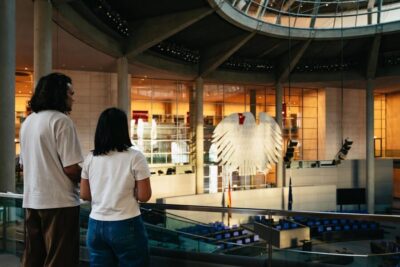
Reichstag, Dome and Government District Guided Tour
Read our review →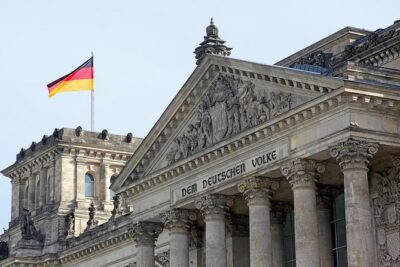
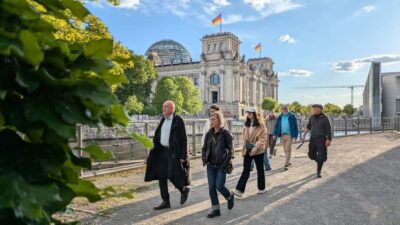
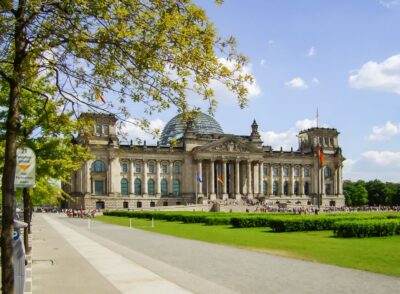
Reichstag, Plenary Chamber, Cupola & Government Tour
Read our review →