Reviewed · BERLIN TOURS
Berlin: E-Trabi City Tour
Berlin sightseeing usually means walking, riding a bus, or staring through a coach window. This tour gives you the wheel of an electric Trabant, the famously small East German car, and sends you through the city in a colorful convoy. It is part city tour, part comedy act, and part rolling museum exhibit.
I like the private car setup, since only your own group rides in your Trabi. I also like the live radio commentary, which lets you hear the guide while keeping your eyes on Berlin traffic. The main drawback is simple: 75 minutes goes quickly, and driving in a convoy can feel a little chaotic if you want a calm, deeply detailed sightseeing tour.
Key points
- Drive your own electric Trabant: Each group gets a private e-Trabi rather than sharing with strangers.
- Follow a guide-led convoy: A guide leads the cars while every vehicle receives live commentary by radio.
- See central Berlin highlights: The route passes the Brandenburg Gate, Reichstag, Potsdamer Platz, Unter den Linden, Berlin Cathedral, and Rotes Rathaus.
- Expect route changes: City events, including a state visit, can require a detour toward places such as the East Side Gallery or Kreuzberg.
- Finish with Trabi culture: The tour ends with a visit to TrabiWorld and the Trabi Museum.
- Bring home a driver’s license: Every participant receives a souvenir license, adding a playful finish for families and first-time visitors.
Why an electric Trabant makes Berlin sightseeing different
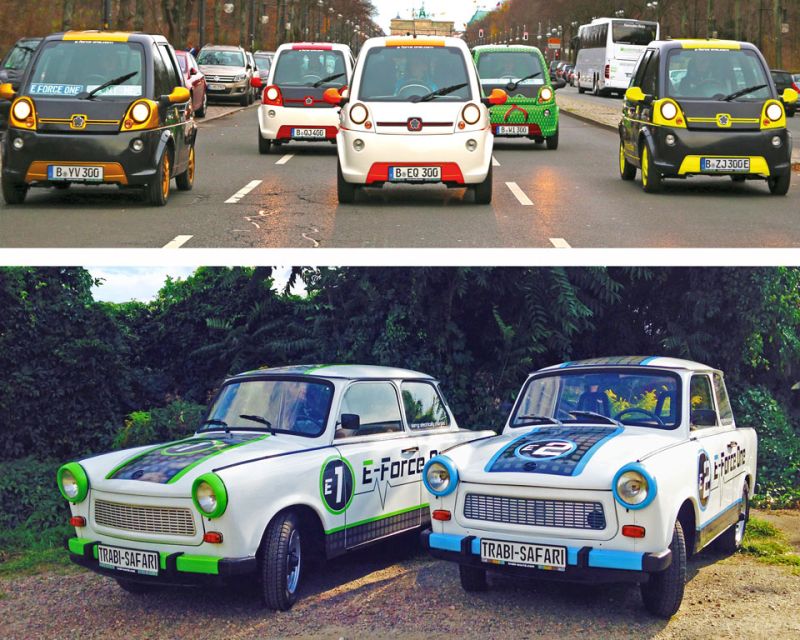
The Trabant is not just a small car. It is one of the clearest symbols of former East Germany, known for its basic design, modest power, and unmistakable shape. Here, the old car body gets an electric motor, so you get a piece of Cold War-era design with a modern power system.
That contrast gives the tour its character. You are not simply looking at Berlin from a vehicle. You are driving a conversation piece through a city shaped by division, reunification, government, art, and constant change.
The e-Trabi also makes the tour social. The cars travel in a convoy, so you can see the other brightly colored vehicles ahead and behind you. That sight is part of the fun, although it also means you need to stay alert and follow the guide closely.
The activity is priced at $81 per person. That is more than a standard public sightseeing bus, but the price includes a private e-Trabi, technical instruction, mileage, insurance, radio commentary, the guide-led route, and a souvenir driver’s license. You are paying for the novelty of driving, not simply for transportation between landmarks.
For two people who want a memorable Berlin activity, the cost can make sense. For a solo visitor mainly interested in detailed history, a walking tour or museum visit may offer more information for less money.
A few more half-days in Berlin worth comparing
- Berlin: Reichstag, Dome and Government District Guided Tour
★ 4.7 · 18,288 reviews - Berlin: 1-Hour City Tour by Boat with Guaranteed Seating
★ 4.3 · 16,993 reviews - Berlin: Boat Tour Along the River Spree
★ 4.4 · 11,252 reviews
Starting at TrabiWorld on Zimmerstrasse
You begin at TrabiWorld, Zimmerstr. 97, in central Berlin. The location puts you near several major sights, including Checkpoint Charlie, although the tour itself is a moving route rather than a stop-by-stop walking visit.
Before setting off, you receive technical instruction. This matters because the Trabi is part of the attraction, not a normal rental car. You need to understand the controls and the convoy rules before joining city traffic.
Each participant needs a ticket, including the driver, co-driver, and passengers. Children need a cost-free ticket, according to the activity information, but they still need to be included in the booking.
The car permits a maximum of four people or 330 kilograms. Drivers can change during the tour, so two adults can share the driving if they wish. You do not share the car with another booking group, which gives your party privacy and makes the ride more relaxed than a shared minibus.
The small-group format is one of the strongest practical features. The booking information describes the activity as limited to two participants, while the car itself allows up to four people from your own group. Check the exact party size when booking so you know how the capacity applies to your reservation.
Following the convoy past Potsdamer Platz
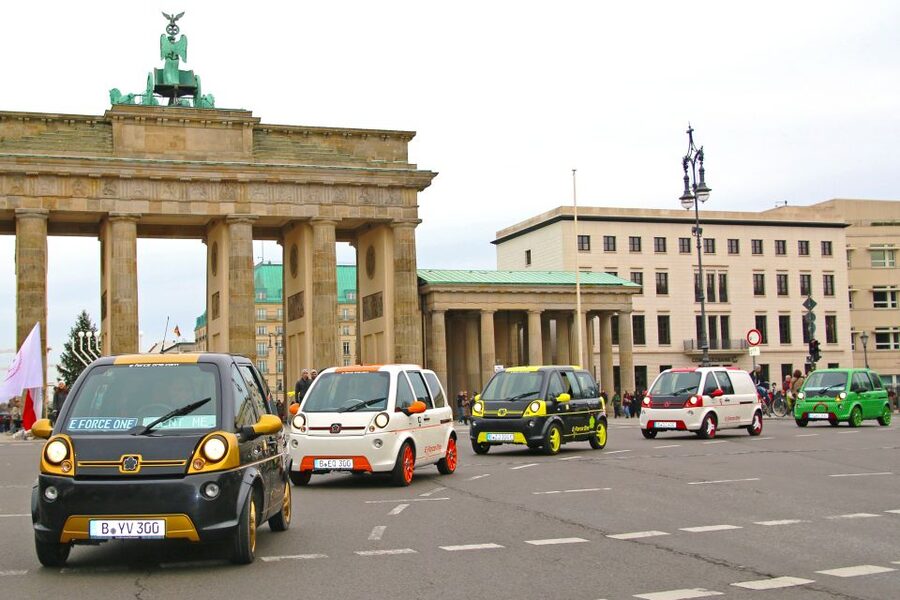
Once the cars leave TrabiWorld, the guide leads the convoy through Berlin. The route is designed to give you a broad look at the central sights rather than a long stop at any single monument.
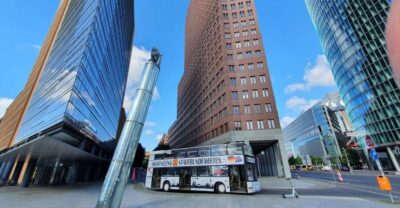
Potsdamer Platz is an early highlight. Before the Second World War, it was a major traffic and commercial center. After the war and the division of Berlin, the area sat near the Berlin Wall and became a wide, empty zone. Today, it is filled with modern buildings and busy streets.
From the driver’s seat, you experience this contrast at street level. The e-Trabi’s small size gives you a close view of the surrounding city, but you should not expect time to study every building. The tour keeps moving.
The Brandenburg Gate is the classic Berlin view. Once a city gate, it later became an image of division because the Berlin Wall ran nearby. After reunification, it became a symbol of a single Berlin.
You will pass the gate as part of the convoy rather than enter a separate monument visit. Keep your camera ready, but remember that the driver’s first job is to watch the road. If you want quiet photographs of the gate, return later on foot.
From the Reichstag to Unter den Linden
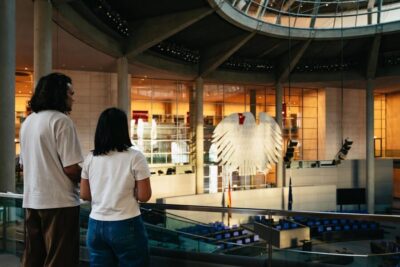
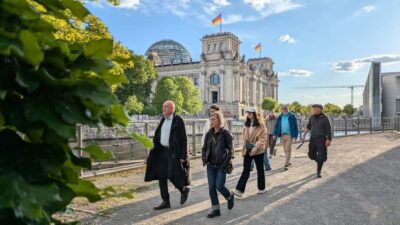
The convoy continues toward the Reichstag, home of Germany’s federal parliament. The building’s glass dome is one of Berlin’s most recognized modern additions, and its position near the Brandenburg Gate makes it a natural part of a central-city route.
The tour then uses Unter den Linden, Berlin’s grand historic boulevard. The avenue connects the Brandenburg Gate area with the old center of Berlin and leads toward Museum Island and the Cathedral.
This section works well as an introduction to Berlin’s layout. You see how the government district, historic boulevard, major monuments, and riverfront center fit together. The guide’s live commentary helps you keep track of what you are seeing, especially if Berlin is new to you.
Commentary is available in English and German. Each car has a radio, so you can hear the guide without needing to sit directly beside that person. That is useful in a convoy, where the guide is usually in a separate lead vehicle.
The balance is practical rather than academic. You get facts, directions, and anecdotes while moving through traffic. If you want a long explanation of Berlin’s political past, plan time for a museum or a dedicated walking tour afterward.
Same city, a completely different kind of day:
- Discover Berlin Half-Day Walking Tour
★ 5.0 · 9,624 reviews - Berlin: Hop-on Hop-off Bus Tour with Live Commentary
★ 4.3 · 8,579 reviews - Berlin: Government District around the Reichstag Guided Tour
★ 4.7 · 8,447 reviews - Berlin: Reichstag, Plenary Chamber, Cupola & Government Tour
★ 4.6 · 8,422 reviews
Berlin Cathedral, Rotes Rathaus, and the TV Tower
Berlin Cathedral marks the transition from the boulevard to the older central district. Its large dome and ornate exterior make it one of the city’s most striking buildings, especially when viewed from the surrounding streets.
The route also passes Rotes Rathaus, Berlin’s red-brick city hall. Its name means Red Town Hall, a useful clue to its appearance. Nearby, the TV Tower rises above Alexanderplatz and provides one of the easiest ways to orient yourself in the city.
These landmarks are valuable because they show different sides of Berlin in a short period. You move from imperial architecture to municipal government to the stark modern symbol associated with East Berlin.
Do not treat the tour as a series of formal monument visits. You are seeing these places from inside a small car, with the road, traffic, and convoy always in play. That limitation is also part of the charm. The city feels less like a postcard and more like a place you are actively moving through.
Checkpoint Charlie and possible route changes
Checkpoint Charlie is one of Berlin’s best-known Cold War sites. The former crossing point connected the American and Soviet sectors and became a symbol of the city’s division.
The tour can also include views of the East Side Gallery or Oberbaumbrücke, along with other central sights. The exact route may change. A state visit once forced the guide to reroute, and the convoy was taken toward the East Side Gallery and a favorite pub in Kreuzberg instead.
That detail tells you something useful. This is a guided drive through a living city, not a fixed rail journey. Official events, closures, and traffic can affect the path. A route change may mean missing one expected view, but it can also bring you to a part of Berlin you had not planned to see.
The East Side Gallery is especially fitting for a Trabi tour. A long remaining section of the Berlin Wall carries painted murals, linking the city’s divided past with its creative present. Oberbaumbrücke, with its distinctive brick towers, is another strong Berlin sight and connects Kreuzberg with Friedrichshain.
The guide’s job is to keep the convoy together while adapting to city conditions. Gerald’s account of a five-car convoy staying together during a changed route points to the practical skill needed here. You should expect some movement and adjustment rather than a rigid schedule.
What it is like to drive in the convoy
The cars are small, distinctive, and not designed to feel like modern luxury vehicles. That is the point. You get a simple driving experience with a strong sense of occasion.
Technical instruction comes before departure, and the guide gives directions at the front of the convoy. Live radio commentary continues inside each car. You can listen to information and anecdotes while following the vehicle ahead.
The convoy format creates the tour’s comic side. Five Trabis moving through Berlin attract attention, and the sight of the cars together adds energy to the ride. At the same time, convoy driving can feel less smooth than a standard private car tour. You need to keep your place, watch signals, and avoid becoming distracted by the passing sights.
The activity is best for people who enjoy participation. You are not just sitting back while someone else handles everything. Even as a passenger, you are part of a small group moving through traffic, and the atmosphere depends on the people in your car and the guide’s handling of the convoy.
Drivers can change during the tour. That is helpful if one person wants the novelty of driving but another person wants a turn. If you plan to switch, do it only when the situation allows and follow the guide’s instructions.
The guide makes the difference
A good guide is especially important on a convoy tour. The guide must lead the route, explain the sights, keep the cars together, and handle changes when streets close.
Thomas is specifically noted as a friendly and helpful guide who shared information and anecdotes. His role shows what you should value here: clear directions, a good sense of humor, and the ability to keep the group moving without making the drive stressful.
The commentary is live rather than a recording. That gives the guide room to react to the city and explain a route change. It also means the tone can vary depending on the day and the guide.
English and German are available. If you are booking in English, confirm the language you want at the time you select your start time. The radio system means you do not need to sit beside the guide to hear the explanation.
TrabiWorld and the souvenir finish
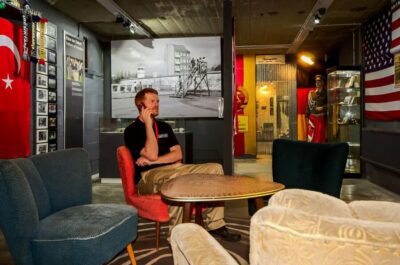
At the end, you visit TrabiWorld and the Trabi Museum. This gives the activity a proper finish instead of leaving you at the last street corner with only a few photographs.
The museum setting adds context to the car itself. After driving an electric version through central Berlin, you can look more closely at the Trabant and its place in East German everyday life.
Every participant receives a driver’s license as a souvenir. It is a small extra, but it fits the playful tone of the tour and gives children something tangible to take home. Adults will likely find it amusing rather than valuable, but that is enough for this kind of outing.
The museum visit also helps answer a question the driving portion raises: why is this particular car so closely tied to Berlin? The tour gives you the answer through the vehicle, the route, and the city’s former East and West divisions.
Who will enjoy the 75-minute tour most
I would choose this for a first visit when you want a quick orientation with a strong local character. It covers many central sights without requiring a long walk, and the unusual car makes the city easier to remember.
It also suits families, couples, and small groups who want to do something beyond the standard bus circuit. Children may enjoy the small cars and driver’s license, while adults get the added interest of the Trabi’s cultural background.
The activity is less suitable if you want a quiet ride, a fully fixed route, or extended time at each monument. You will see a lot in 75 minutes, but you will not explore the Brandenburg Gate, Reichstag, Cathedral, or Checkpoint Charlie in depth.
The experience is wheelchair accessible, which is useful for some visitors, though the supplied information does not explain the exact vehicle arrangements. If this matters for your booking, ask the provider how accessibility works with the e-Trabi before paying.
Free cancellation is available up to 24 hours before the tour, and you can reserve now and pay later. Those terms help if your Berlin plans may shift, but the key choice remains the style of sightseeing: active and playful, not slow and scholarly.
Is the e-Trabi tour worth $81?
At $81 per person, the tour is not the cheapest way to see Berlin. You can cover central sights on foot or by public transport for much less.
The value comes from the combination of a private car, the electric Trabant, a guide-led convoy, live commentary, mileage, insurance, and the museum finish. You are buying a story you can participate in, not just a list of views.
The 4.8 rating from 127 recorded ratings supports the idea that the format works well for the right audience. The strongest praise centers on the authentic Trabis, the friendly guidance, the humor, and the fun of the convoy. The comments also point to the natural tradeoff: the ride can be funny and chaotic.
Remember the €650 insurance deductible in the event of an accident. That is a serious financial consideration, even though liability and comprehensive insurance are included. Read the rental and insurance terms carefully before driving.
Should you book the Berlin e-Trabi City Tour?
Book it if you want Berlin sightseeing to feel like an event. The electric Trabant, private car, live radio, convoy, flexible route, and Trabi Museum create something far more memorable than a standard drive past monuments.
Skip it if your main goal is detailed interpretation, long photo stops, or the lowest possible price. You will get a fast look at many major sights, but the real reward is the unusual way you see them.
For most visitors, I would place this early in a Berlin stay. Use it to get your bearings, enjoy the city’s divided past and modern center from the road, then return to the places that deserve more time on foot.
FAQ
How long is the Berlin e-Trabi City Tour?
The tour lasts 75 minutes.
How much does the tour cost?
The listed price is $81 per person.
Where does the tour begin?
It begins at TrabiWorld, Zimmerstr. 97, 10117 Berlin.
What languages are available?
The live tour guide and audio commentary are available in English and German.
Do I drive the Trabant myself?
Yes. The experience includes a private e-Trabi, and participants can drive during the tour. Drivers can change during the ride.
How many people can ride in one Trabi?
A maximum of four people or 330 kilograms are permitted in each Trabi.
Will other people share my car?
No. Only your own group rides in your car.
What sights does the route include?
The route passes Potsdamer Platz, the Brandenburg Gate, the Reichstag, Unter den Linden, Berlin Cathedral, Rotes Rathaus, and the TV Tower. It may also include Checkpoint Charlie, the East Side Gallery, or Oberbaumbrücke.
Is the tour wheelchair accessible?
Yes, the activity is listed as wheelchair accessible.
What is included in the price?
The price includes technical instruction, a guide leading the convoy, a private e-Trabi, live radio commentary, mileage, a driver’s license for every participant, and liability and comprehensive insurance with a €650 deductible in the event of an accident.
Just added in Berlin
- Berlin & The Third Reich Private Guided Tour★ 5.0 · 3 reviews
- Third Reich Quest Experience in Berlin★ 4.5 · 7 reviews
- Private Analogue Photography Experience in Berlin★ 5.0 · 3 reviews
- Berlin Urbex Adventure and History Tour★ 5.0 · 9 reviews
- The Beauty of Berlin by Bike: Private Tour★ 5.0 · 59 reviews
- Berlin: Guided Bike tour of the Berlin Wall and Third Reich★ 5.0 · 160 reviews
- Beyond Currywurst: Berlin’s Hidden Street Food & Culture Tour★ 5.0 · 100 reviews
- Berlin Third Reich & Cold War Walking Tour With A Guide★ 5.0 · 7 reviews
Berlin Tours, compared.
Reichstag, Dome and Government District Guided Tour
Read our review →

Reichstag, Plenary Chamber, Cupola & Government Tour
Read our review →