
Reviewed · WALKING TOURS
Berlin: City-West Walking Tour with a Real Berliner
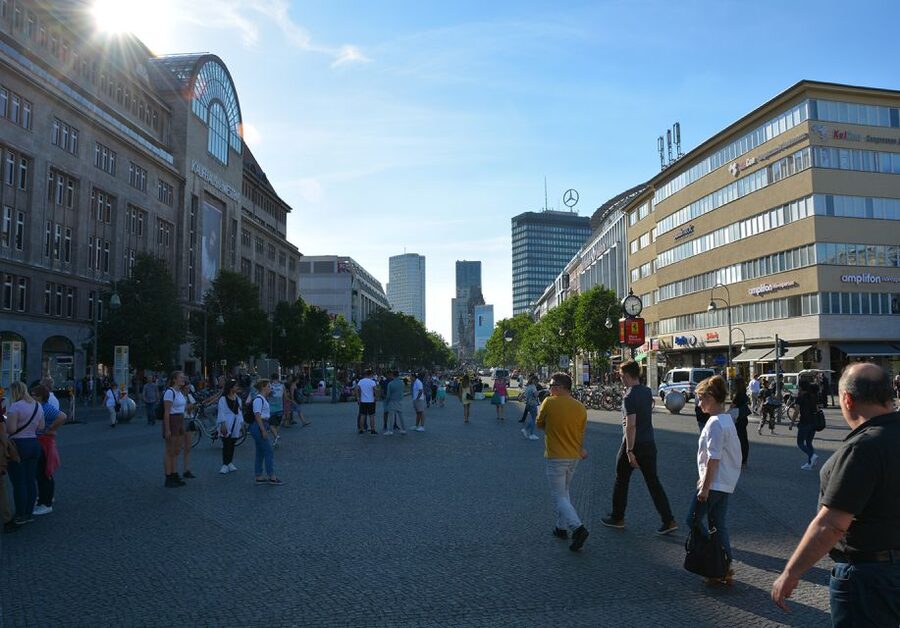
Berlin’s City-West is more than shopping streets and grand facades. With a local Berliner, you connect Kurfürstendamm and Breitscheidplatz to the era when West Berlin was a separated island of freedom, surrounded by East Germany and shaped by Cold War tension.
I like the small-group format, capped at 10 people, and the way the route mixes major sights with personal stories about life in West Berlin. I also like the practical food advice and the chance to ask questions directly, especially with guide Carlo, whose warm, helpful style has earned repeated praise.
The main consideration is pace: two hours gives you a useful introduction, but not a full tour of every City-West attraction. You will spend much of the time outdoors, so suitable clothing matters in every season.
Key points to know before you book
- A personal look at divided Berlin: Hear what made West Berlin feel like an island of freedom during the Cold War.
- The route covers major City-West sights: See KaDeWe, Europa-Center, Kurfürstendamm, Kaiser Wilhelm Memorial Church, Zoologischer Garten, and Savignyplatz.
- Carlo is a named guide to look for: He leads tours in German, English, and Italian and has been praised for his humor, preparation, and willingness to answer questions.
- Small groups keep the walk conversational: With no more than 10 participants, you should have a better chance to ask questions and hear the guide clearly.
- Evening timing can be smart in summer: One participant found the cooler evening air and late sunset especially pleasant for walking.
- You finish at Savignyplatz: The tour ends in a useful dining area, with tips on where to try typical Berlin food.
Why City-West tells a different Berlin story
Many first-time visitors focus on Berlin’s former eastern center, with Museum Island, the Brandenburg Gate, and the Wall memorials. This tour takes you in the other direction, into the district that became the commercial and cultural heart of West Berlin after the city was divided.
That difference matters. City-West can look polished and modern at first glance, but its streets carry the story of a city cut in two. Shops, cinemas, hotels, offices, and transport links helped West Berlin function as a political statement as much as a city center.
Your guide places the sights in that setting. You learn why this part of Berlin became so important during the Cold War and how it developed into a center of culture, art, tolerance, lifestyle, and creative work.
I like this approach because it gives familiar landmarks a reason to matter. KaDeWe is not simply a department store. Kurfürstendamm is not just a wide avenue for shopping. The area around Zoologischer Garten is not only a station and traffic hub. Each place helps explain how West Berlin worked and how it wanted to be seen.
More Walking Tours in Berlin
- Discover Berlin Half-Day Walking Tour
★ 5.0 · 9,624 reviews - Berlin: Third Reich and Cold War 2 Hour Walking Tour
★ 4.9 · 6,830 reviews - Berlin: Discover Berlin Walking Tour
★ 4.9 · 5,998 reviews
Starting at Wittenbergplatz and KaDeWe
The meeting point is at Wittenbergplatz U-Bahn station, at the Tauentzienstrasse exit. Look for the guide holding the Get Your Guide, You in Berlin flag.
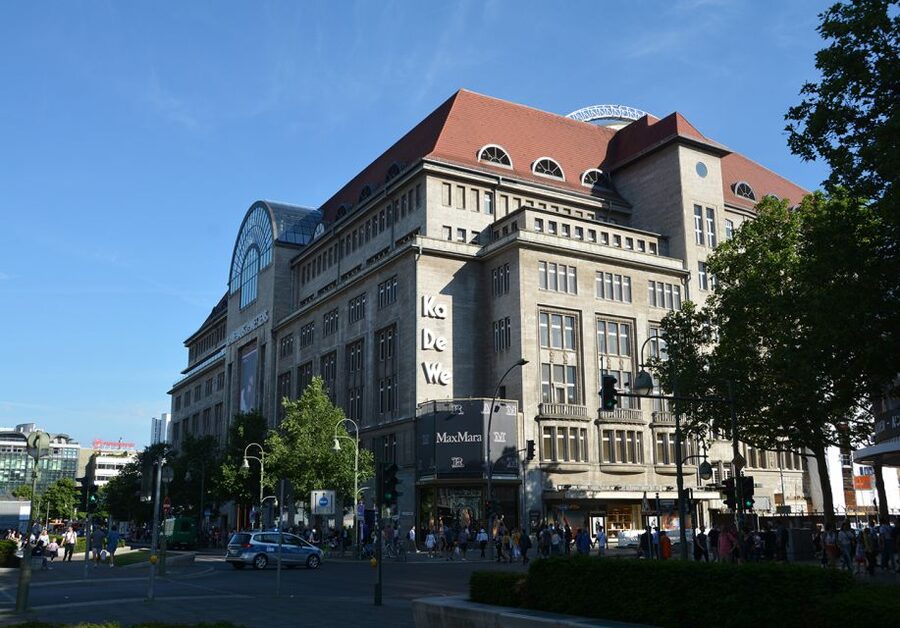
The tour then begins near KaDeWe, the Kaufhaus des Westens. It is described as continental Europe’s biggest department store, and its location makes it an ideal first stop. Even if you are not interested in shopping, the building represents the spending power and western identity that grew around this part of Berlin.
Your guide gives the department store context rather than simply pointing at it. You can expect to hear how this section of the city became a major commercial center and why it drew such attention during the years of division.
KaDeWe is also a practical stop at the start of the walk. If you need a restroom or water before setting off, this busy retail area may be useful, though the tour itself does not promise specific facilities. Wear shoes suited to pavement and keep your clothing flexible for changing weather.
Europa-Center and the energy of Breitscheidplatz
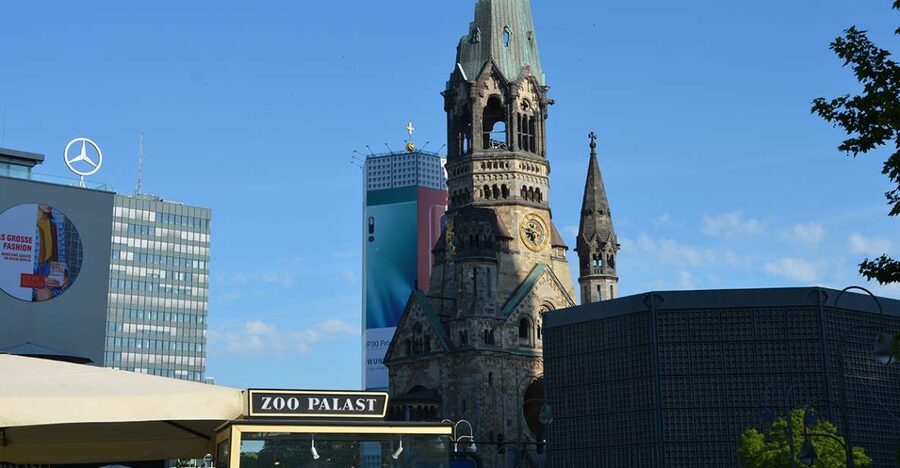
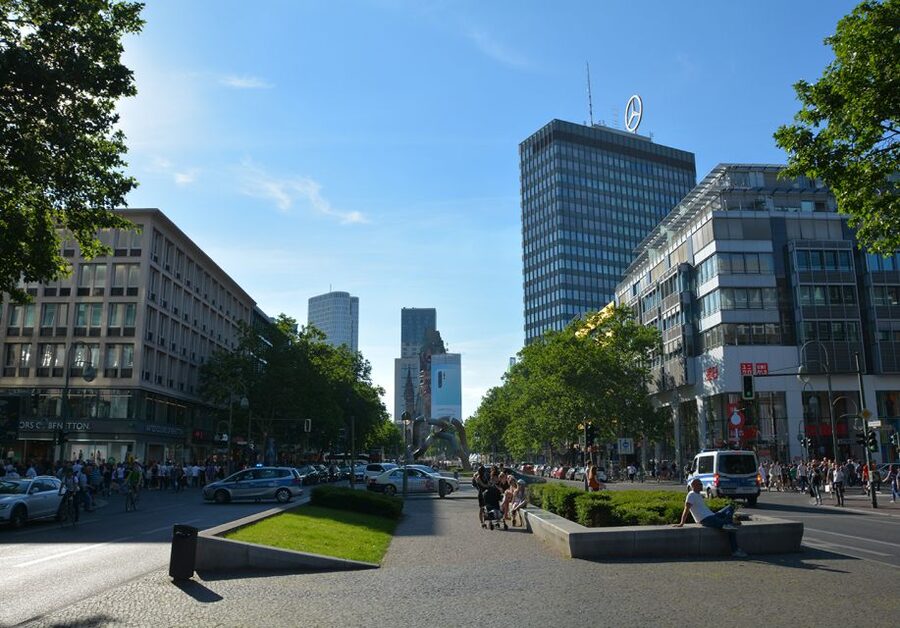
From KaDeWe, the route moves toward Europa-Center and Breitscheidplatz. The Europa-Center is one of the best-known markers of postwar West Berlin, while Breitscheidplatz brings several important sights together in one busy urban setting.
This is where the tour begins to show the contrast between Berlin’s commercial confidence and its wartime scars. You are not walking through a preserved historic quarter. Instead, you see a city center shaped by rebuilding, traffic, shopping, tourism, and public memory.
That mix is one of the route’s strengths. You get a sense of how Berlin’s west functions as a real city district, not a museum display. The area is active and central, but the guide keeps bringing the story back to the political meaning of West Berlin.
A two-hour walk cannot cover every detail around the square. Still, a good guide can help you see why this particular cluster of buildings became such an important symbol of the western half of the city.
The Kaiser Wilhelm Memorial Church and Berlin’s visible scars
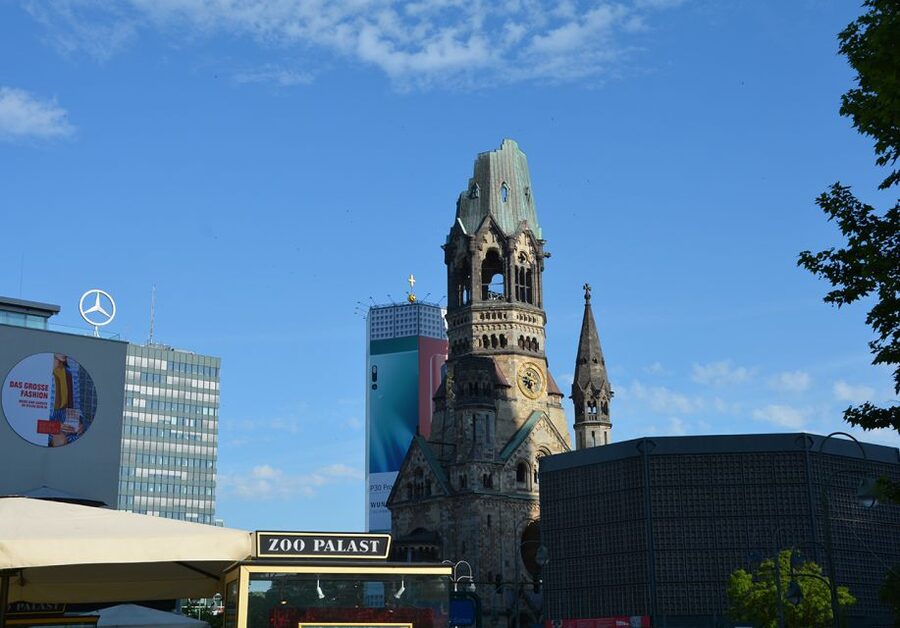
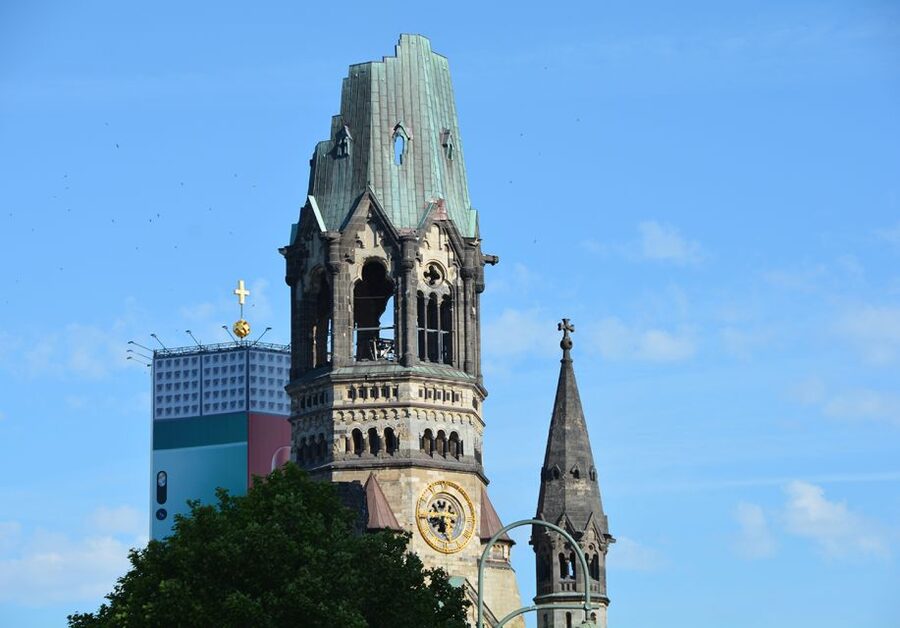
The Kaiser Wilhelm Memorial Church is the tour’s most striking historical landmark. Its damaged tower remains beside a newer church building, creating a direct reminder of the destruction of the Second World War.
You should expect a guided sightseeing stop rather than a long interior visit. The supplied details do not promise entry inside, so plan on hearing the church’s story from the square and seeing the exterior as part of the walking route.
This stop adds a different layer to the tour. The Cold War story is about division and political pressure, but the church also points to the earlier destruction that shaped modern Berlin. In a short walk, you get a link between wartime damage, postwar rebuilding, and the divided city that followed.
The church sits on busy Breitscheidplatz, so this is not a quiet pause. That is part of the experience. You see memory and daily city life occupying the same space, with shoppers, buses, pedestrians, and tourists moving around a major monument.
Same city, a completely different kind of day:
- Berlin: Reichstag, Dome and Government District Guided Tour
★ 4.7 · 18,288 reviews - Berlin: 1-Hour City Tour by Boat with Guaranteed Seating
★ 4.3 · 16,993 reviews - Berlin: Boat Tour Along the River Spree
★ 4.4 · 11,252 reviews - Berlin: Hop-on Hop-off Bus Tour with Live Commentary
★ 4.3 · 8,579 reviews
Kurfürstendamm and the golden twenties
Kurfürstendamm, often called Ku’damm, gives the walk its grand avenue. The route uses this famous boulevard to explain Berlin during the golden twenties, when the city had a reputation for nightlife, culture, and modern urban life.
The guide’s job here is to connect the avenue you see today with the city it once represented. You will hear about the roaring city center of the 1920s, then move forward to the years when Ku’damm became a key part of West Berlin.
I find this kind of street history more useful than a list of dates. A broad avenue, department stores, theaters, and traffic corridors tell you how people used the city. The guide’s stories help you picture the social role of the street, not just its architecture.
Do not expect a specialist architecture tour. The focus is the character and history of the district, with major points of interest along the way. If you want detailed information on individual buildings, ask questions while you walk. Carlo has been specifically praised for answering questions and offering extra advice about Berlin.
Zoologischer Garten and the center of West Berlin
The area around Zoologischer Garten was one of Berlin’s most important transport centers, and the tour uses it to explain why the west developed as the city’s center during the Cold War.
Transport is a key part of the story. A divided city needed reliable links, and West Berlin’s commercial and public life gathered around major connections. You will learn why this area mattered beyond its railway and U-Bahn services.
This section may be especially useful early in your stay because it helps you understand Berlin’s layout. One participant specifically valued learning the shape of the city and receiving suggestions for other places to visit. A walking tour cannot replace a map, but it can give you a mental framework for deciding where to go next.
The area can also feel more functional than scenic. If you want uninterrupted historic streets and quiet squares, this may not be your favorite part of the route. If you want to understand how Berlin operates and why City-West grew where it did, it earns its place.
Cold War stories from a native Berliner
The most personal part of the experience is the focus on living in West Berlin during the city’s division. A native Berliner can explain the feeling of growing up or living in a place that was politically isolated from the surrounding country but closely tied to the western world.
The tour promises stories about West Berlin as an island of freedom. That phrase is not just a slogan here. It describes the unusual position of a western enclave surrounded by East Germany, with the Wall and Cold War politics affecting ordinary movement and daily life.
The exact stories will depend on your guide, group, and questions. The tour is led in German, English, or Italian, and Carlo has been praised for being prepared, friendly, and willing to help. If you are curious about daily routines, transport, food, or the feel of the city during the division, ask directly.
This is where the small group has real value. A maximum of 10 people is much better suited to conversation than a large crowd. One booking even operated with just one participant, allowing an almost private walk. That will not be guaranteed, but the small capacity gives the guide room to respond to the group.
Savignyplatz and food tips for the west
The walk ends at Savignyplatz, a pleasant and useful place to finish a City-West route. The supplied details emphasize local food advice, including where to try typical Berlin dishes in the western part of town.
That makes the endpoint practical. You do not simply finish at an anonymous corner and need to figure out your next move. You can ask where to eat and use the guide’s suggestions to continue your evening.
The tour does not include a meal or food tastings, so keep your expectations clear. You are receiving recommendations, not a culinary tour. Still, food advice from a local guide can be more useful than a generic restaurant list, especially if you want to stay in the area after the walk.
Savignyplatz also gives you a chance to continue exploring City-West on your own. The tour ends there at 10629 Berlin, Germany, so check your plans before booking if you need to return to the starting point. The activity is a walking route, not a loop back to Wittenbergplatz.
How much value do you get for $43?
At $43 per person, this is not the cheapest way to walk around Berlin. You can follow Ku’damm and Breitscheidplatz independently with a map, and the main sights are in public areas.
The value comes from interpretation and local context. For two hours, you get a structured route through several major City-West landmarks, a guide who can explain the Cold War setting, and the chance to ask questions in a small group.
I would consider the price fair if you are new to Berlin, interested in twentieth-century history, or unsure how City-West fits into the rest of the capital. It is also useful at the start of a visit because the route helps you get your bearings and offers suggestions for later sightseeing.
The value is weaker if you already know Berlin well or prefer to explore at your own pace. You will not receive a full museum visit, a meal, or a long stop at every sight. Think of this as a focused orientation walk with personal history, not a complete City-West survey.
Timing, weather, and accessibility
The walk lasts two hours and is offered at different starting times, depending on availability. An evening departure can work well in summer. One participant noted that late sunsets, sometimes around 9:30 p.m., made the cooler evening hours comfortable for walking.
That tip is less useful in winter, when daylight and temperatures change quickly. The tour runs in all weather and on public holidays, so you need to dress for the forecast rather than assume Berlin will be mild.
Wear suitable walking clothes and shoes. Bring water, particularly if you choose a warm afternoon. A participant specifically appreciated that the guide was willing to stop for water or a restroom, but this should be treated as a helpful part of the guide’s style, not a formal schedule.
The activity is wheelchair accessible. Since this is an urban walk, ask at booking if you need details about the exact route and pavement conditions. The provided information confirms accessibility but does not give a step-by-step account of every surface or entrance.
Who will get the most from this walk?
I would recommend it to first-time visitors who want Berlin’s west explained in plain language. It also suits anyone who has already seen the Brandenburg Gate and central museums but wants a better sense of the former western half of the city.
History fans will appreciate the Cold War focus, while shoppers and food-minded visitors will like the attention to KaDeWe, Ku’damm, and local eating advice. It is also a good choice if you want a guide who can move between major landmarks and personal stories instead of giving only formal historical facts.
The tour may be less suitable if you want to spend most of the time inside museums or churches. It is also not ideal for visitors looking for a very slow photo walk, since the two-hour route covers several locations.
The language choice is useful for international visitors. Guides operate in German, English, and Italian, and the small group size should make it easier to follow the explanation and ask for clarification.
Should you book the City-West walk?
Book this tour if you want to understand why Berlin’s western center became so important, not just take pictures of its best-known buildings. The strongest reasons are the personal West Berlin stories, the compact route through KaDeWe, Europa-Center, Kurfürstendamm, the Kaiser Wilhelm Memorial Church, Zoologischer Garten, and Savignyplatz, plus useful advice about food and further sightseeing.
I would especially choose it early in a Berlin visit, or for an evening walk in summer. Skip it if you already know City-West well and would rather spend $43 on a museum or explore independently.
For most first-time visitors, the small group and local guide make this a sensible two-hour introduction. Look for Carlo if he is leading your departure, bring weather-ready clothing, and arrive ready to ask questions. That is where this walk offers its best value.
FAQ
How long is the Berlin City-West walking tour?
The tour lasts two hours.
Where does the tour meet?
Meet at Wittenbergplatz U-Bahn station, at the Tauentzienstrasse exit. Look for the guide holding the Get Your Guide, You in Berlin flag.
Where does the tour finish?
The walk finishes at Savignyplatz, 10629 Berlin, Germany.
Which places are included on the route?
The route includes KaDeWe, Europa-Center, Kurfürstendamm, Kaiser Wilhelm Memorial Church, the area around Zoologischer Garten, and Savignyplatz.
Which languages are available?
The live guide can lead the tour in German, English, or Italian.
How many people can join the tour?
This is a small-group walk limited to 10 participants.
Is the tour wheelchair accessible?
Yes, the activity is listed as wheelchair accessible.
Does the tour run in bad weather and on public holidays?
Yes. The walk takes place in all weather conditions and on all public holidays. Suitable clothing is recommended.
How much does the tour cost?
The listed price is $43 per person.
Just added in Berlin
- Berlin & The Third Reich Private Guided Tour★ 5.0 · 3 reviews
- Private Analogue Photography Experience in Berlin★ 5.0 · 3 reviews
- Third Reich Quest Experience in Berlin★ 4.5 · 7 reviews
- Berlin Urbex Adventure and History Tour★ 5.0 · 9 reviews
- The Beauty of Berlin by Bike: Private Tour★ 5.0 · 59 reviews
- Berlin: Guided Bike tour of the Berlin Wall and Third Reich★ 5.0 · 160 reviews
- Beyond Currywurst: Berlin’s Hidden Street Food & Culture Tour★ 5.0 · 100 reviews
- Berlin Third Reich & Cold War Walking Tour With A Guide★ 5.0 · 7 reviews
Walking Tours, compared.




Berlin’s Best: 2 Hour Walking Tour Third Reich and the Cold War
Read our review →


Third Reich Berlin: Hitler and WWII Walking Tour
Read our review →Browse the lists this tour appears in